Lenny.com
Explore
Create
ActivitiesNewMathEnglish Language ArtsScience & EngineeringSocial StudiesGlobal LanguagesHealth & Physical EducationSpecial EducationCounseling & Life SkillsArts & CreativityESL
Lenny.com
Lenny.com
Explore
Create
ActivitiesNewMathEnglish Language ArtsScience & EngineeringSocial StudiesGlobal LanguagesHealth & Physical EducationSpecial EducationCounseling & Life SkillsArts & CreativityESL
Lenny.com
Lenny.com

Solutions

Lenny for EducatorsLenny for SchoolsLenny for Districts

Product

ExploreSign inCreateSupportAbout

Resources

Getting startedMTSS Acceleration Program

© 2026 Lenny Learning Inc.

TermsPrivacyAccessibility
LinkedInInstagramX
Lenny
Counseling & Life SkillsSelf-AwarenessBasic Emotion RecognitionComplex Emotion IdentificationEmotional Nuance & Mixed FeelingsBuilding Positive Self-ImageRecognizing Strengths & Growth AreasAccurate Self-AssessmentPersonal Values IdentificationCultural & Individual Identity ExplorationValues-Based Decision MakingSelf-ManagementStop-and-Think StrategiesDelaying GratificationIndependent Impulse ManagementIdentifying Stress TriggersShort-Term Goal SettingSMART Goals DevelopmentGoal Monitoring & AdjustmentBuilding Perseverance & ResilienceInternal Motivation DevelopmentComprehensive Stress Reduction PlanningSocial AwarenessRecognizing Others' FeelingsDemonstrating EmpathyRespecting Individual DifferencesUnderstanding Cultural DiversityComplex Empathetic ResponsesMultiple Viewpoint ConsiderationMulti-Perspective AnalysisChallenging Stereotypes & BiasRelationship SkillsActive ListeningClear Verbal & Nonverbal CommunicationBuilding Positive FriendshipsWorking Cooperatively in GroupsCommunicating Personal BoundariesRespecting Others' BoundariesAssertive ExpressionPeaceful Problem-SolvingContributing to Team GoalsComplex Conflict NavigationMediation & NegotiationHealthy Romantic RelationshipsResponsible Decision-MakingDaily Problem IdentificationBrainstorming Multiple SolutionsEvaluating Pros & ConsRecognizing Risks & ConsequencesApplying Ethical FrameworksInformed Risk-Benefit DecisionsRoot Cause AnalysisMindfulnessMindful BreathingBody Scan MeditationDaily Mindfulness ApplicationDaily Self-Care RoutinesBalancing Life DemandsAdvocating for Wellness NeedsMental Health SupportUnderstanding Anxiety SymptomsWorry Management StrategiesProgressive Muscle RelaxationRecognizing Depression SignsBuilding Mood-Supporting RoutinesBehavioral Activation for MoodUnderstanding Grief StagesHealthy Grief CopingCreative Expression of LossBehavioral SupportDaily Check-In ProceduresDaily Goal Setting & ReviewRecognizing Escalation Warning SignsRequesting Breaks & SupportSelf-Calming During DistressUnderstanding Positive ReinforcementToken Economy ImplementationBehavior Chart TrackingAnalyzing Behavior PatternsIdentifying Antecedents & ConsequencesDetermining Behavior FunctionFunction-Based InterventionsIndividualized Behavior ContractsData-Driven Behavior AdjustmentTherapeutic ApproachesThoughts-Feelings-Behaviors ConnectionRecognizing Thinking PatternsChallenging Negative ThoughtsPositive Self-Talk PracticeThought Record TrackingAdvanced Cognitive RestructuringComprehensive CBT PlansBehavioral Activation TechniquesBuilding Positive ExperiencesExposure Hierarchies for AnxietyPresent-Moment AwarenessNon-Judgmental ObservationSelf-Soothing & DistractionComplex Emotion LabelingReducing Emotional Vulnerability (PLEASE)DEAR MAN CommunicationGIVE Skills for RelationshipsFAST Skills for Self-RespectRadical Acceptance PracticeCrisis Survival Skills (TIPP)Understanding Trauma EffectsTrauma Responses & TriggersIdentifying Trauma FeelingsGrounding TechniquesRegulation During Trauma DistressSafe Place VisualizationProcessing Through NarrativeDeveloping Trauma StoryPersonalized Safety PlanningGroup SupportTurn-Taking & SharingGroup Conversation SkillsSharing in Supportive EnvironmentLearning from Similar ChallengesBuilding Community & BelongingNavigating Peer RelationshipsGroup Skill PracticeGroup Mental Health EducationStress & Anxiety UnderstandingCrisis Support & SafetyKnowing When to Seek HelpIdentifying Mental Health CrisesGrounding During CrisisUsing Crisis HotlinesBuilding Support NetworksAccessing Mental Health ResourcesWarning Signs & Coping StrategiesDeveloping Personal Safety PlansUnderstanding Suicide Warning SignsGatekeeper Skills for PeersDigital LiteracySocial MediaTechnology BasicsProductivity ToolsInternet and Online ResearchWeb Design and PublishingDigital CitizenshipOnline Safety and PrivacyEmerging TechnologiesFinancial LiteracyMaking Financial DecisionsBanking and AccountsConsumer SkillsSaving and InvestingCredit and DebtEmployment and IncomeTaxesInsuranceMajor PurchasesEconomic ConceptsFinancial PlanningCollege & Post-Secondary PlanningCareer ExplorationUnderstanding Post-Secondary OptionsCollege Research & SelectionAdmission RequirementsCollege Application ProcessPersonal Statement WritingFAFSA CompletionScholarship Search & ApplicationsUnderstanding Student LoansContinuing Education PlanningInterview PreparationResearching EmployersCommon Interview QuestionsSTAR Method ResponsesProfessional Interview PresenceVirtual Interview SkillsInterview Follow-UpJob Search SkillsUnderstanding Job PostingsEffective Job Search StrategiesNetworking for OpportunitiesResume Writing BasicsAction Verbs & AchievementsTailoring Resumes to JobsCover Letter WritingProfessional ReferencesProfessional CommunicationBusiness Email EtiquettePhone & Voicemail ProfessionalismMeeting ParticipationPresentation SkillsProfessional Work EthicTime Management & ProductivityTeamwork & CollaborationAdaptability & FlexibilityProblem-Solving at WorkConstructive FeedbackWorkplace RightsUnderstanding Employment LawsPay & Benefits UnderstandingWorkplace SafetyAnti-Discrimination & Harassment

Task Tacklers

An engaging 3rd-grade executive functioning and SEL lesson teaching students how to identify off-task triggers, use practical calming and focus coping skills, and speak up with confident self-advocacy phrases through collaborative role plays.

HCHannah Cyr

Task Tacklers

An engaging 3rd-grade executive functioning and SEL lesson teaching students how to identify off-task triggers, use practical calming and focus coping skills, and speak up with confident self-advocacy phrases through collaborative role plays.

HCHannah Cyr

Problem: Missed oral instruction

The Scene: The teacher gave 3 directions while you were searching for an eraser. Now everyone is cutting and pasting, but you don't know what gets glued where. You feel nervous that you will get in trouble.

Actor A (Stuck Student):

Coping Move: 5-Finger Wave breath. Walk to teacher or raise hand calmly.
Script: “I missed step two while getting my pencil. Could you please repeat where this piece belongs?”

Actor B (Teacher):

Action: Validate the honesty.
Script: “Thank you for telling me right away instead of guessing. Step two is gluing the yellow title box to the top.”

4

Scenario 4: The Blank Page Freeze

Problem: Writer's block & daydreaming

The Scene: It's Writer's Workshop. The prompt is “An unforgettable weekend.” Your notebook page is completely blank after 10 minutes. You keep peeling your pencil eraser and staring at the clock.

Actor A (Stuck Student):

Coping Move: Quick desk reset. Draw 1 tiny doodle of your idea in the margin.
Script: “My brain feels frozen on how to start my first sentence. Can I tell you my idea out loud first?”

Actor B (Partner / Teacher):

Action: Listen to the idea.
Script: “Yes! Tell me what happened first... Great, now write down that exact sentence you just said!”

5

Scenario 5: The Bouncy-Body Surge

Problem: Restless energy & fidgeting

The Scene: You've been sitting for 30 minutes during social studies. Your legs are bouncing against the desk, you're rocking back on two legs, and your pencil keeps dropping on the floor.

Actor A (Restless Student):

Coping Move: Secret arm squeeze + 3 shoulder rolls. Feet flat.
Script: “My body is feeling super wiggly. May I do 5 silent wall pushes or stand at the back table to finish?”

Actor B (Teacher):

Action: Appreciate the proactive self-regulation.
Script: “Awesome self-awareness. Do 5 silent wall pushes, then take a standing clipboard.”

Mission Debrief: Rate Your Partner Team

Check all boxes you achieved:

We practiced deep breaths/resets

We used strong, polite voices

We gave helpful feedback

One sentence we will actually use this week when we get stuck:

Page 2 of 2 • Task Tackler Executive Functioning Practice ★ Mission Completed! ★

When You Don't Understand:

“Could you please explain step one in a different way?”

Polite & Specific

When the Room is Too Loud:

“May I move to the quiet corner or wear headphones to finish?”

Offers a Solution

When You Need to Check Your Start:

“I finished the first two problems. Can you check if I'm on track?”

Shows Effort First

🚫 Don't say: “I can't do this!”   ⭐ Instead say: “I need help with step one.”


Action Time

Partner Role-Play Challenge!

Actor A: The Stuck Student

    1. Act out the problem (sigh, look stuck, drop pencil).
    1. Do your coping move (take a breath or chunk the page).
    1. Say your advocacy script in a confident, clear voice!

Actor B: The Helpful Partner

    1. Look at your partner and listen with patience.
    1. Read your helpful teacher/peer response script.
    1. Give your partner a high-five and switch roles!

⏱️ Target Time: 3 minutes per scenario • 📄 Open your Role Play Activity sheet to Scenario 1

Ready? Action!

“Did this help my brain? What will happen next?”

✓ Tackler Example (What We Do)

Teacher pauses, sits tall, does 1 deep breath, covers the bottom half of the sheet, raises hand calmly: “I tried reading question 1, but I am confused by what this word means. Could you explain it?” Student volunteer responds as teacher.

Page 1 of 2 • Instructional Sequence & Fishbowl Task Tacklers Facilitator Guide

Facilitation Guide • Part 2

Partner Lab Management, Debrief & Differentiation

Grade 3 SEL

Phase 4: Partner Role Play Stations (15 Minutes)

Active Practice

Pair students purposefully (pair a socially confident student with a more hesitant student, or similar-ability peers who feel safe together). Hand out the Task Tacklers Role Play Activity.

Teacher Circulation Look-Fors:

  • Are students actually performing the physical coping tool?
  • Is Actor A maintaining polite eye contact while speaking?
  • Are partners switching roles after each scenario?

Immediate In-Flight Coaching Prompts:

  • “Try that line again, but use your confident 'restaurant ordering' voice.”
  • “Show me your chunking shield before you say your script.”
  • “Partner B, did their question tell you exactly what they needed?”

Phase 5: Debrief & Long-Term Classroom Routines (5 Minutes)

Wrap-Up

Whole-Group Reflection Questions: 1. “Which scenario felt the most like real life for you?” 2. “Why is asking for specific help different from saying 'I don't get anything'?”

Classroom Integration Tip: Have students tape the Focus Toolkit Reference Sheet inside their main daily folder or on their desk corner. Establish a silent hand signal (e.g. thumb and index finger in a gentle 'C' for 'Chunk-It' or flat palm for 'Reset') so students can self-advocate discreetly during tests.

Targeted Accommodations & Differentiation Guide

Students with ADHD / Fidgeting

Provide a resistance band on chair legs or an air cushion. Pre-teach the 'Secret Arm Squeeze' and validate movement breaks (wall pushes) as legitimate work stamina tools.

English Language Learners (ELL)

Provide cut-out sentence strips of the advocacy frames with visual icons. Allow partner practice in primary language first before practicing English scripts.

High-Anxiety / Selective Mutism

Introduce the 'Help Card' flip system: green side = 'Working fine', yellow side = 'Need chunking check', red side = 'I am stuck on step 1'. Lowers verbal barrier.

3 Common Misconceptions & How to Correct Them

1. “Asking help means I'm not smart.” Reframe: Real scientists and engineers ask questions every day. Smart learners ask early before they get frustrated.

2. “Coping skills are just play breaks.” Reframe: Coping moves are like pit-stops for race cars. You tune up the tire for 15 seconds to drive faster!

3. “The teacher will be angry if I didn't listen.” Reframe: Teachers respect students who say: “I missed step two, can you repeat it?” far more than guessing.

Page 2 of 2 • Task Tacklers Facilitation Guide © Grade 3 Executive Functioning Series

You might also like

Initiation Hurdles Slides

Execution Lab

An executive functioning and work completion curriculum designed specifically for gifted middle schoolers. Students learn cognitive strategies to dismantle perfectionism paralysis, accurately pace multi-phase projects, and conquer the final submission hurdle.

MB

Michele Berning

6
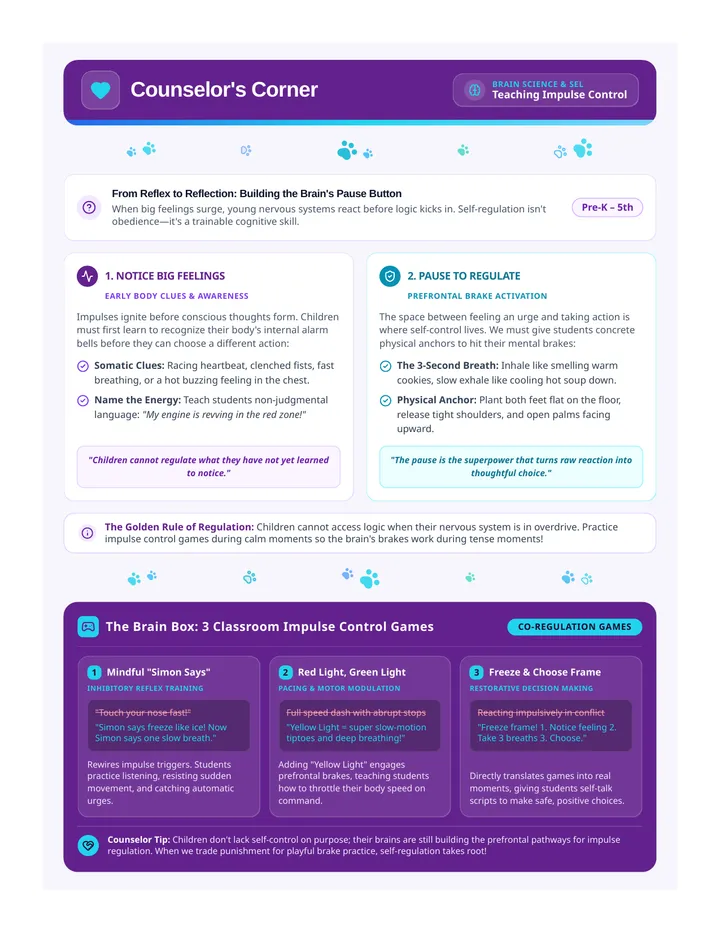
Impulse Control Newsletter Page

Counselor Corner Series

A collection of printable school counselor newsletter editions providing teachers with actionable SEL strategies, restorative scripts, and classroom tools.

E

elizabeth.graham

2
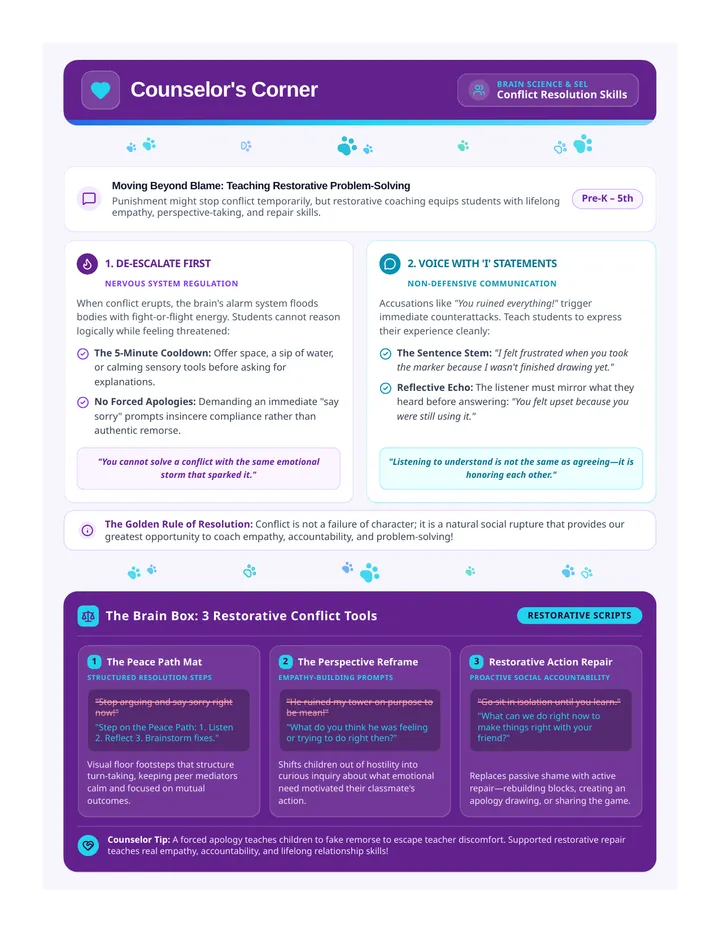
Conflict Resolution Newsletter Page

Conflict Resolution Newsletter Page

A printable school counselor newsletter page focused on classroom conflict resolution, featuring the signature Counselor's Corner purple banner, blue heart, ombre bar, pawprints, and restorative problem-solving frameworks.

E

elizabeth.graham

Leadership Playbook Curriculum Guide

Leadership Skills Program

An adaptable 8-week high school leadership and self-regulation curriculum program. Each weekly unit provides targeted facilitation, interactive labs, and student application materials for social intelligence and composure.

MP

Madison Paz

13
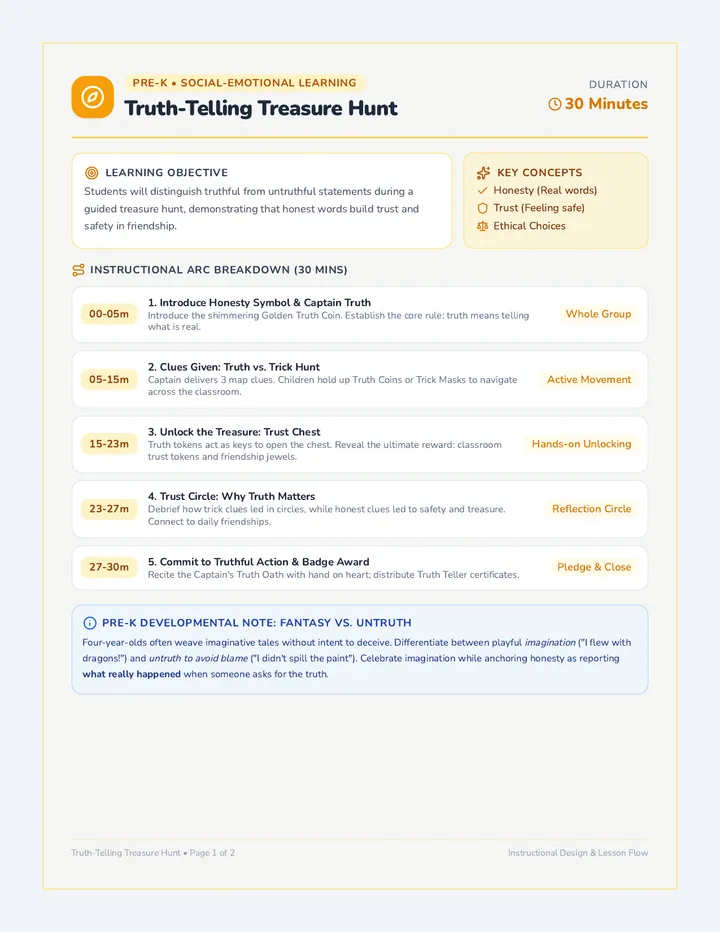
Treasure Hunt Lesson Plan

Truth Telling Treasure Hunt

A vibrant 30-minute Pre-K lesson where students join Captain Truth on an island treasure hunt, learning to distinguish true statements from tricks to build trust and ethical choices.

NB

Nneoma Butler

4
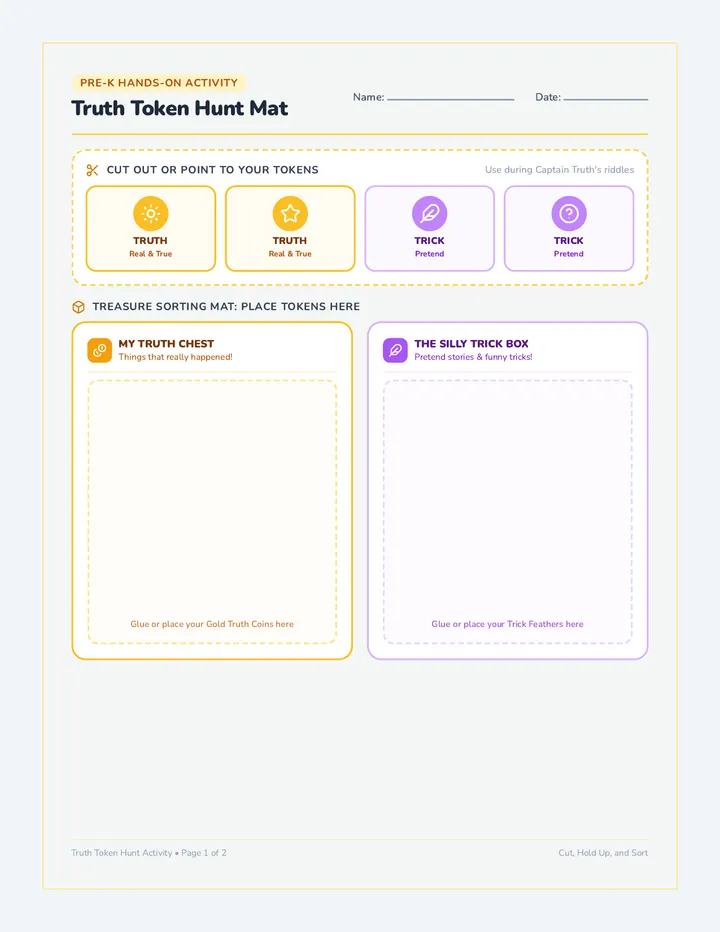
Truth Token Hunt Activity

Truth Token Hunt Activity

A 2-page Pre-K student printable featuring cut-out Truth Tokens and Trick Feathers, a treasure chest sorting mat, and a personal truth-teller drawing activity.

NB

Nneoma Butler

Launch Ignition Slides

Spark to Finish

A structured multi-day sequence designed to build executive function routines, overcome task initiation friction, sustain momentum through completion, and cultivate self-confidence.

MB

Michele Berning

9
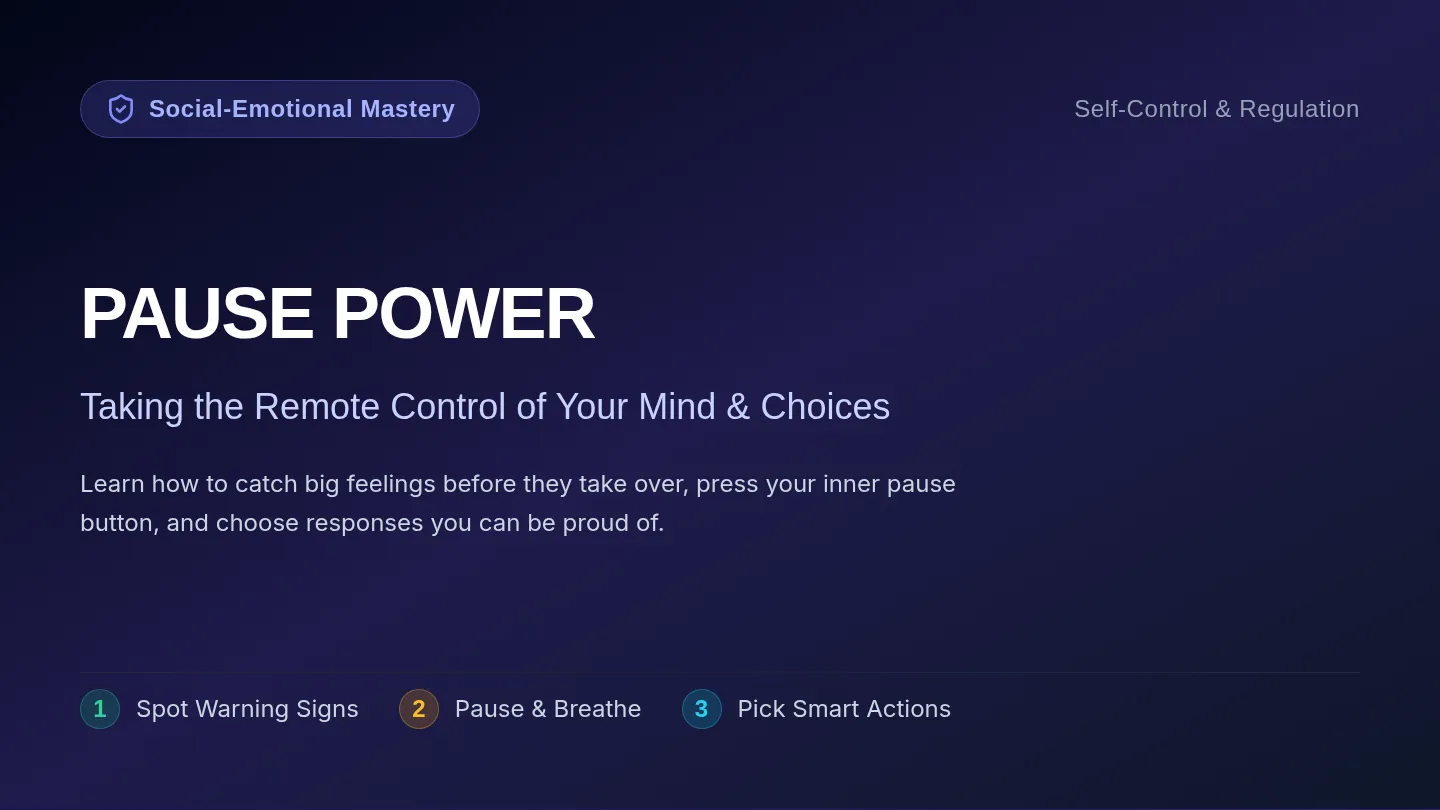
Pause Power Slides

Pause Power

A comprehensive social-emotional learning lesson that equips students with actionable self-control tools, the "Pause-Breathe-Choose" technique, and emotional regulation strategies for high-stress moments.

JD

Julie Donovan

4
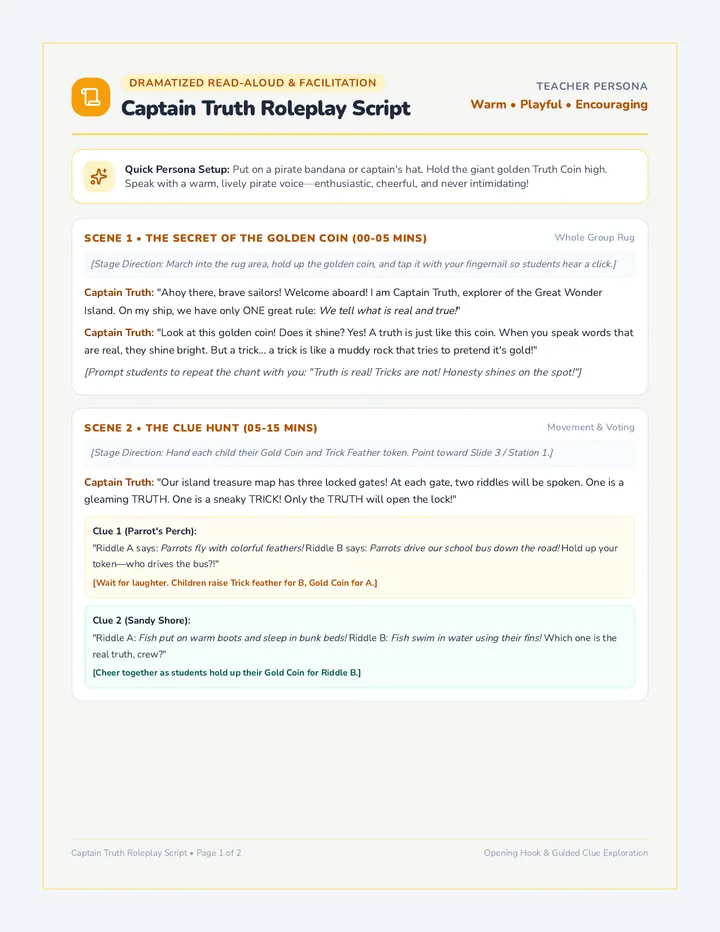
Captain Truth Script

Captain Truth Script

A scripted teacher read-aloud and roleplay dialogue guide for Captain Truth, complete with stage directions, call-and-response chants, and Pre-K coaching prompts.

NB

Nneoma Butler

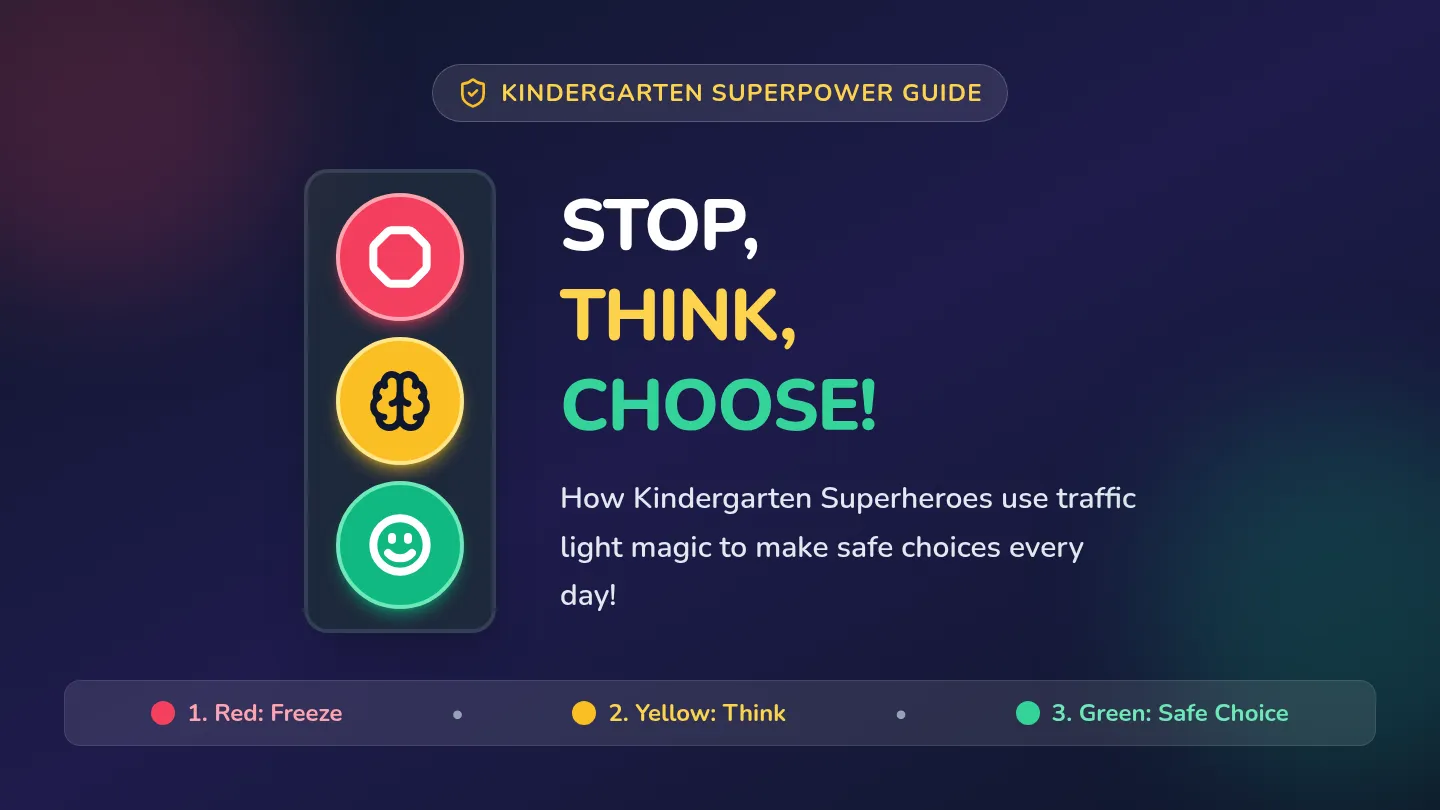
Stoplight Strategy Slides

Stop Think Choose

A foundational 30-minute social-emotional learning lesson for Kindergarten teaching students to regulate impulses, pause, reflect, and make safe choices using the visual metaphor of a traffic stoplight.

SB

Severa Beltran

5
Honesty Map Slides

Honesty Map Slides

A 7-slide visual presentation featuring Captain Truth, guiding Pre-K students through interactive clue choices that contrast truth versus trickery to unlock the chest of trust.

NB

Nneoma Butler

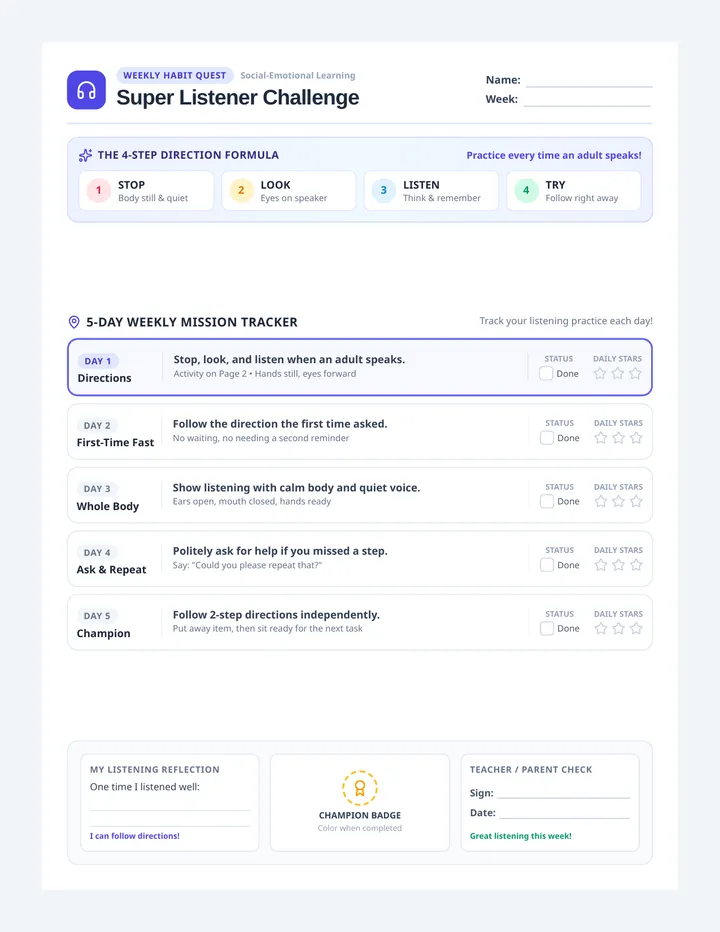
Super Listener Challenge Tracker

Calm Listener Habits

A multi-week social-emotional learning series focused on following directions, emotional regulation, and positive behavior choices. Each week equips students with a 5-day habit tracker and interactive scenario labs.

A

acrisafulli

2