Spooky Signals Teacher Guide SEL Master Guide Grades 3–6 • 45–60 Minutes
Spooky Signals: Unmasking Anxiety & Summoning Help
Halloween SEL Edition
Learning Goals
Identify physical anxiety cues
Classify 3 levels of worry intensity
Execute a 3-step help request script
CASEL Competencies
Self-Awareness: Body cluesSelf-Management: RegulatingRelationship Skills: Asking help
Materials Needed
Spooky Signals Slides
Student Activity Worksheets
Desk Coping Cards & scissors
The Core Metaphor: The Haunted House Alarm
Anxiety is not a character flaw or a ghost out to ruin your day—it is your brain's internal alarm system acting like a smoke detector in a haunted house. Sometimes it rings for real danger, but often it shrieks at harmless cobwebs. Learning your body's early warnings lets you summon help before the ghost alarm takes over!
Pacing Guide & Instructional Protocol (Part 1)
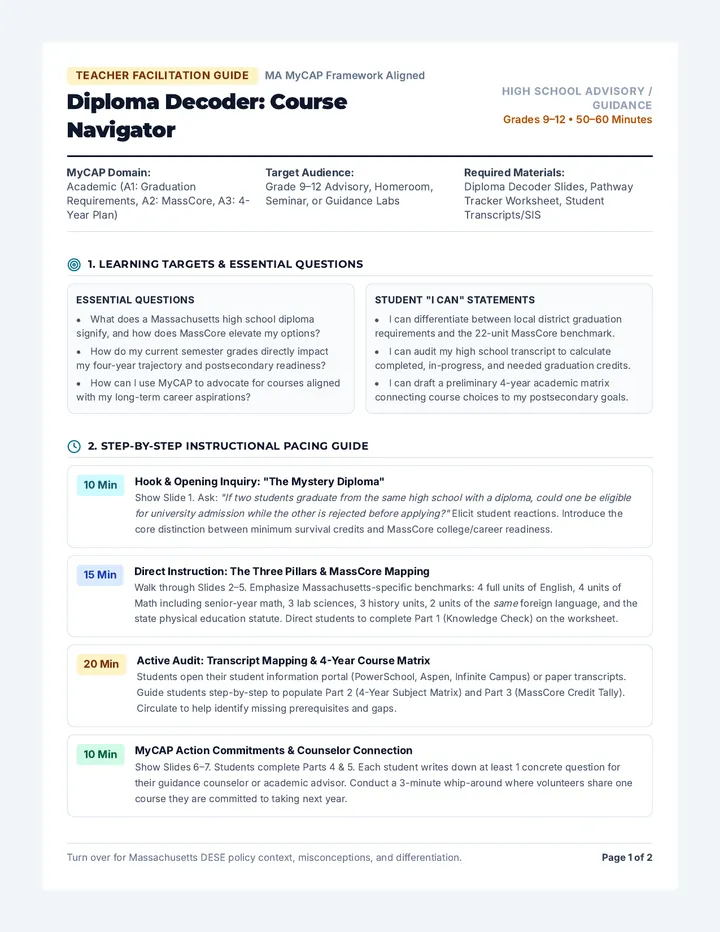
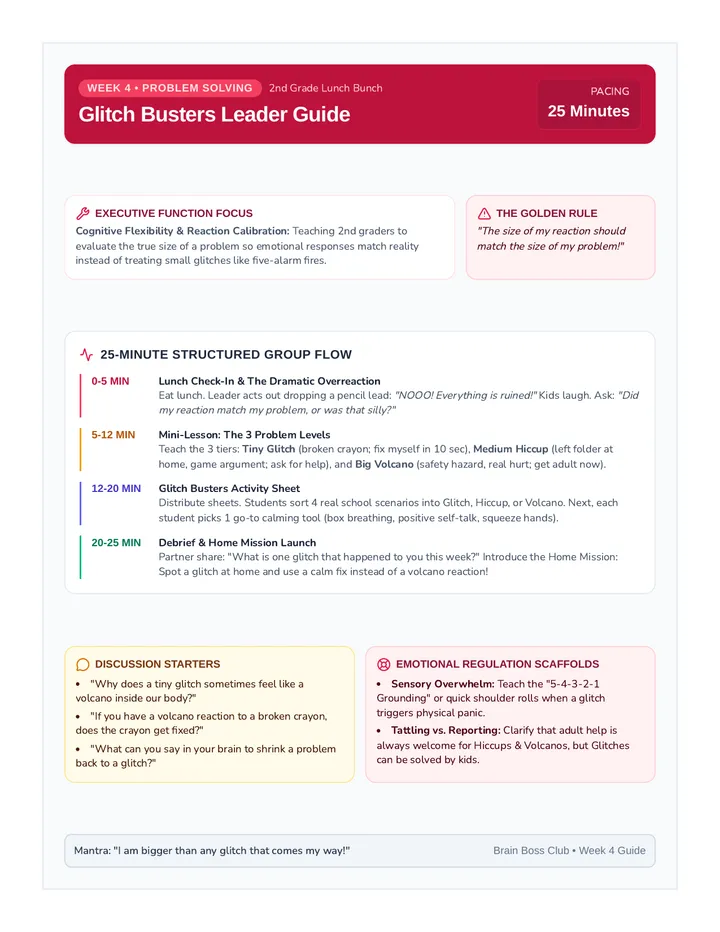
1 The Hook: Ghostly Clues in the Room (8 Mins) Slides 1–2
Begin by projecting Slide 1. Ask: "Have you ever walked through a spooky hallway and suddenly your stomach churned or your heart thumped like a drum?" Explain that our nervous system has ancient monster sensors called the Fight-Flight-Freeze system .
Teacher Script: "Our brains sometimes mistake hard math problems, reading out loud, or messy friendship drama for a spooky creature. The alarm goes off inside our bodies first!"
2 Decoding the Body Clues: The Monster Meter (12 Mins) Slides 3–4
Walk through the 4 zones of somatic clues: The Head (foggy thoughts, spinning mind), The Throat & Chest (lump in throat, racing heartbeat), The Belly (fluttering bat wings, tight knots), and The Limbs (clammy palms, fidgety feet).
Guided Interaction: Have students do a 30-second silent "Body Scan" to spot where their own goblin jitters live most often. Distribute Page 1 of the Student Activity Worksheet.
Spooky Signals • Facilitation Protocol Page 1 of 2 • Turn for Pacing Part 2 & Strategies
Pacing Guide (Part 2) & Teacher Strategies
Execution & Differentiation
3 The 3-Step Help Summoning Spell (15 Mins) Slide 5
Introduce the constructive formula for seeking assistance before meltdowns or avoidance occur:
Step 1: Signal Pause Breathe in 4 counts, out 4 counts. Notice the alarm.
Step 2: Name the Monster Identify what feels scary: "I'm stuck on problem 4."
Step 3: Summon Help Use the script: "I need help with [specific item]."
4 Role-Play & Pocket Toolkit Creation (10 Mins) Slide 6 & Page 2 Sheet
Have partners practice scenario role-play: one plays the "Anxious Student" practicing their 3-step request while the other plays the "Helpful Ghostbuster" (teacher or classmate). Students finalize their Desk Coping Cards to keep in pencil cases.
Common Student Misconceptions & Reframes
Misconception 1: "Asking for help means I'm weak or failing." Reframe: Asking for help is like calling backup in a video game—smart navigators never explore a haunted forest alone.
Misconception 2: "I should wait until I can't take it anymore." Reframe: Address the "Whispering Ghost" (small worry) before it transforms into a "Raging Poltergeist" (meltdown).
Misconception 3: "The teacher should just know I'm upset." Reframe: Adults don't possess crystal balls; specific words are the flashlight that shows us where you're trapped.
Differentiation & Accommodations
Non-Verbal / Low-Energy Signals:
For students with selective mutism or high test anxiety, implement the "Ghost Signal Slip": student places a colored pumpkin marker on desk corner to signal silent assistance.
Sentence Stems for Multilingual Learners:
Pre-populate desk strips with bilingual sentence frames: "Can you explain step [number]?" and "I need 2 minutes of quiet breathing."
Assessment Check: Can student independently identify at least 2 body clues and articulate a 1-sentence help request?
Exit Goal
Spooky Signals Slides Halloween SEL Expedition
Grades 3–6
Spooky Signals Unmasking Anxiety & Summoning Help
Learn how your body sounds the alarm, what your internal monsters are trying to say, and how to summon help like a brave wizard.
Decode the Clues
•
Rate the Spook
•
Summon Support
The Brain Science
The Haunted House Smoke Alarm
Anxiety is a Protector!
Your brain has a smoke detector called the Amygdala . When it senses danger, it triggers quick alarms to keep you safe.
The Ghostly False Alarm
Sometimes it sounds the alarm for toast crumbs, tricky tests, or raising your hand! The danger isn't real, but the feelings inside are 100% real.
Remember This Truth:
"Having anxiety doesn't mean you are broken. It means your body's alarm system is working overtime!"
— Catch the alarm early, and you hold the power.
When the alarm sounds, your body gives you instant physical clues...
Somatic Clues
Where Does the Spook Strike?
The Brain Fog
Mind goes totally blank, thoughts spinning like bats in a cave.
"I can't think!"
Thumping Heart
Heart drum-rolls fast, chest feels tight, short shallow breaths.
"Heart is racing!"
Belly Bats
Fluttering butterflies, twisted knots, or sudden nausea.
"Tummy hurts!"
Jittery Limbs
Cold sweaty palms, shaky fingers, bouncing legs, clenched jaw.
"Can't sit still!"
Turn and whisper to a partner: Which body clue visits you first?
Worry Intensity Meter
The 3 Spook Levels
Level 1
Whispering Ghost
A small flutter. You notice slight nervous energy, but you can still focus.
Action: 3 deep breaths, drink water, keep trying!
Best Time to Ask!
Level 2
Creepy Cobwebs
You're stuck, frustration is bubbling, thoughts are tangled.
Action: Pause & cast your Help Summoning Spell now!
Level 3
Haunted Meltdown
Tears, shutting down, hiding head, or feeling ready to explode.
Action: Need an adult co-regulator right away to calm body first.
Catch the problem at Level 2 before it becomes a Level 3 haunted house!
Spooky Signals Worksheet Activity Packet SEL Expedition • Part 1
Name:
Date:
The Haunted Anatomy: Map Your Body Signals
When anxiety creeps up, your body acts like a haunted house alarm. Spotting where you feel the alarm first helps you catch the worry before it gets too big!
1 Check Your Body's Monster Alarms (Select all that visit you)
Head & Thoughts
Brain fog (mind suddenly goes blank) Spinning thoughts ("What if I mess up?") Warm or flushed ears and face
Heart & Chest
Rapid drum-beat heartbeat Tight chest or quick shallow breathing Lump in throat / hard to speak out loud
Stomach & Belly
Fluttering bats / nervous butterflies Tightly clenched knots in tummy Feeling sudden nausea or losing appetite
Hands & Feet
Cold or sweaty clammy palms Fidgeting hands or shaking pencil Bouncing legs or tense shoulders
My #1 First Alarm: Which body clue above is your personal earliest warning sign?
2 Rate the Spook: Whisper, Cobweb, or Meltdown?
Read each classroom moment. Decide if it is Level 1 (Whispering Ghost) , Level 2 (Creepy Cobwebs - Need Help!) , or Level 3 (Haunted Meltdown) .
Situation A: The Stuck Math Step
You understand problems 1 through 3, but problem 4 has fractions you’ve never seen. Your hands are getting sweaty and you're re-reading the line over and over.
Circle Level:
Lv 1 Lv 2 Lv 3
Situation B: Pop Quiz Surprise
Teacher announces a surprise quiz. Your stomach does one quick flip, but you take a breath and remember you studied yesterday.
Circle Level:
Lv 1 Lv 2 Lv 3
Situation C: Complete Overload
You lost your packet, someone bumped your chair, your throat is completely closed with tears, and you want to crawl under your desk.
Circle Level:
Lv 1 Lv 2 Lv 3
Spooky Signals Activity Packet Turn page to practice summoning help scripts →
Part 2: Summoning Spells
Crafting Your 3-Step Help Request
Remember: Pause • Name • Ask
The Golden Request Formula:
"Excuse me, I'm feeling stuck on [specific roadblock]. Could you help me with [what you need]?"
1 Scenario 1: The Confusing Science Lab Sheet
Your teacher gave directions for setting up the microscope slides, but you were looking down for two seconds and missed step 3. Your stomach tightens and you are tempted to just sit quietly and pretend you understand.
Spooky Signals Pocket Toolkit Print & Cut Toolkit Classroom Desk Companion
Spooky Signals Pocket Help Toolkit
Cut along the dashed lines. Keep in your pencil case or desk corner!
Item 1: Foldable Desk Signal Tent (Fold in half along center line) Silent Help Marker
SIDE A (Facing Out)
Working Smoothly
I am focused and moving forward.
"No wizard backup needed right now!"
SIDE B (Facing Out)
Cobweb Alert
I am stuck or feeling nervous. Please check in!
"Quiet assistance requested when you have a moment."
Pocket Script Card
When words feel hard:
For stuck work: "Could you explain what step [___] means?"
For anxiety/overload: "My alarm is ringing. May I have 2 quiet minutes?"
For confirmation: "Am I on the right track with this?"
Specific words bring quick help!
Monster Breath Guide
1. The Ghost Whisper: Inhale quietly through nose for 4... Exhale soft "whoooo" for 4.
2. Pumpkin Lantern: Place hand on tummy. Breathe deep into belly until it glows big like a pumpkin.
3. Spider Shakeout: Gently shake fingers and roll shoulders 3 times to drop physical tension.
Calm body first → Clear words second
Worry Meter Bookmark
Level 1: Whisper Slight flutter. Take deep breath; keep going.
Level 2: Cobweb Stuck or frustrated. Summon help now!
Level 3: Meltdown Tears or freeze. Seek an adult co-regulator.
Slide into your reading book!
Spooky Signals Desk Toolkit • Grades 3–6 Laminate or tape onto desks for best durability