Space Bubble Slides Grades K–2 Classroom Lesson
Space Bubble Squad
Keeping Our Hands to Ourselves
Personal Space
Ask First
Safe Hands
What Is a Space Bubble?
ME
One Arm's Length
Stretch your arms out—that is your bubble!
Everyone has an invisible bubble.
It goes all the way around your body.
Don't pop a friend's bubble!
Give classmates room to sit, stand, and move.
Why Do Space Bubbles Matter?
We Feel Safe
No bumping, poking, or surprises.
We Feel Calm
Everyone gets the room they need.
We Can Learn
Eyes and ears stay focused on learning.
Skill 1
Recognize & Respect Personal Space
On the Carpet
Sit on your own spot with hands in your lap.
In Line
Leave a bubble between you and the person ahead.
At Tables
Keep elbows, feet, and supplies in your own space.
Skill 2
Ask Before Touching
Touching People
Always ask before a hug, high-five, or tap.
"May I give you a high-five?"
Touching Belongings
Always ask before using someone else's things.
"May I borrow your marker?"
If someone says "No, thank you," we respect their answer!
Skill 3
Use Safe Hands All Day
During Play
Keep hands gentle. Tag softly and share toys safely.
Transitions
Hold your own hands or keep them at your sides in the hall.
Routines
Hands clean up your own area and stay off walls and cubbies.
Let's Practice: Bubble Check!
Show a Thumbs Up if it's Safe Hands, or Bubble Hands if we need a redo!
1
Leo grabs Maya's crayon without asking.
2
Nora keeps her hands in her lap on the carpet.
3
Sam asks, "Can I give you a high-five?"
Our Space Bubble Promise
I will respect my friends' space bubbles.
I will ask before touching people or things.
I will use safe hands all day long!
Space Bubble Lesson Plan Teacher Lesson Plan • Grades K–2
Space Bubble Squad
Total Time
25–30 min
Learning Objectives
Personal Space: Recognize and respect the one-arm space bubble around classmates.
Ask First: Ask permission before touching people or their belongings.
Safe Hands: Keep hands safe during play, transitions, and routines.
Materials Needed
Space Bubble Slides (projected)
Safe Hands Worksheet (1 per student)
Hands to Self Poster (posted on wall)
Space Bubble Family Note (send home)
Pencils and crayons
Instructional Sequence
1. Hook: The Arm-Stretch Bubble Check
5 min
Have students stand on the carpet with room to move. Say: "Stretch your arms out like airplane wings and turn slowly. That invisible circle around you is your space bubble!" Have students lower their arms and notice how their bubble stays around them even when they sit.
2. Direct Instruction: Three Space Bubble Rules
8 min
Walk through Slides 1–6. Pause to model each skill visibly:
Personal Space (Slide 4): Show "too close" vs. "just right" on the carpet and in line.
Ask Before Touching (Slide 5): Practice the two magic starters: "May I borrow..." and "Can I give you a high-five?" Emphasize accepting "No, thank you" kindly.
Safe Hands (Slide 6): Model holding your own hands or resting them at your sides during hallway transitions.
3. Guided Practice: Bubble Check & Role-Play
7 min
Read the 3 scenarios on Slide 7 aloud. Students show a Thumbs Up for safe hands or Bubble Hands (hands cupped in front) for a redo. Then pair students to practice asking: "May I borrow your pencil?" and answering "Yes, you may" or "No, I'm using it right now."
4. Independent Practice: Safe Hands Worksheet
7 min
Distribute the Safe Hands Worksheet. Read the directions aloud for each part. Students circle the safe-hands choices, draw themselves inside their personal space bubble, and write an asking-permission sentence. Circulate to praise specific safe-hands behaviors at tables.
5. Wrap-Up & Routine Connection
3 min
Echo-read Slide 8 (Our Space Bubble Promise) together. Point to the Hands to Self Poster on the wall so students know where to look for a quick reminder before lining up or starting centers.
Differentiation for Grades K–2
Kindergarten & Emerging Readers
Read worksheet prompts aloud one at a time. Use physical cues (hands in lap or holding a clipboard) during transitions.
1st–2nd Grade Extension
Have students write their own "Ask First" question on the worksheet and role-play a polite "No, thank you" response.
Multilingual Learners
Pair gestures (thumbs up, open palms, arm-length circle) with short sentence frames posted on the board.
Sensory & Movement Needs
Offer a designated carpet spot, a quiet hand fidget during whole-group time, or the "line caboose" spot with extra room.
Positive Redirection Scripts for Everyday Routines
Carpet Time: "Check your bubble! Show me hands in your lap so your neighbor has room."
Hallway Line: "Bubble check! Hold your own hands or put them at your sides."
Centers / Play: "Pause and ask first: 'May I have a turn when you're done?'"
Table Supplies: "Hands on your own desk. Ask before reaching into a friend's supply box."
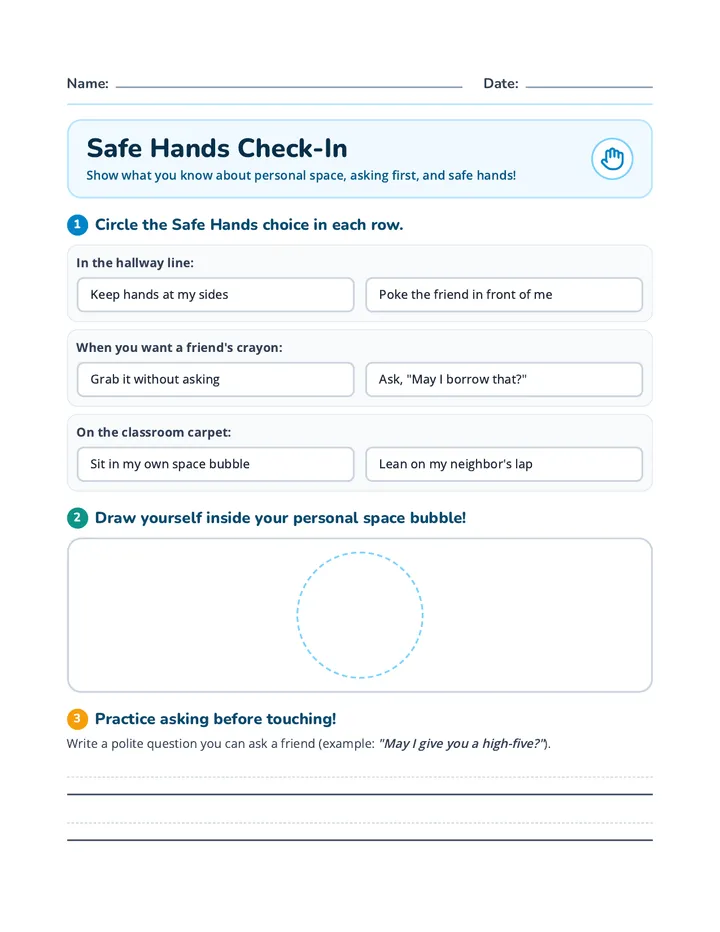
Safe Hands Worksheet Name:
Date:
Safe Hands Check-In
Show what you know about personal space, asking first, and safe hands!
1 Circle the Safe Hands choice in each row.
In the hallway line:
Keep hands at my sides
Poke the friend in front of me
When you want a friend's crayon:
Grab it without asking
Ask, "May I borrow that?"
On the classroom carpet:
Sit in my own space bubble
Lean on my neighbor's lap
2 Draw yourself inside your personal space bubble!
3 Practice asking before touching!
Write a polite question you can ask a friend (example: "May I give you a high-five?").
Hands to Self Poster Classroom Reminder
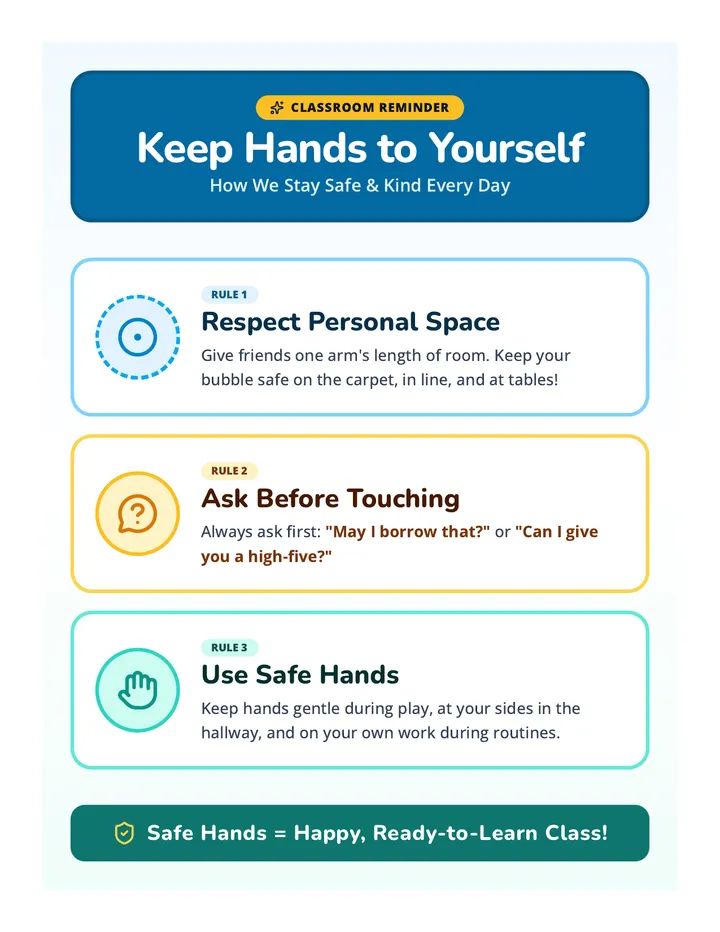
Keep Hands to Yourself
How We Stay Safe & Kind Every Day
Rule 1
Respect Personal Space
Give friends one arm's length of room. Keep your bubble safe on the carpet, in line, and at tables!
Rule 2
Ask Before Touching
Always ask first: "May I borrow that?" or "Can I give you a high-five?"
Rule 3
Use Safe Hands
Keep hands gentle during play, at your sides in the hallway, and on your own work during routines.
Safe Hands = Happy, Ready-to-Learn Class!
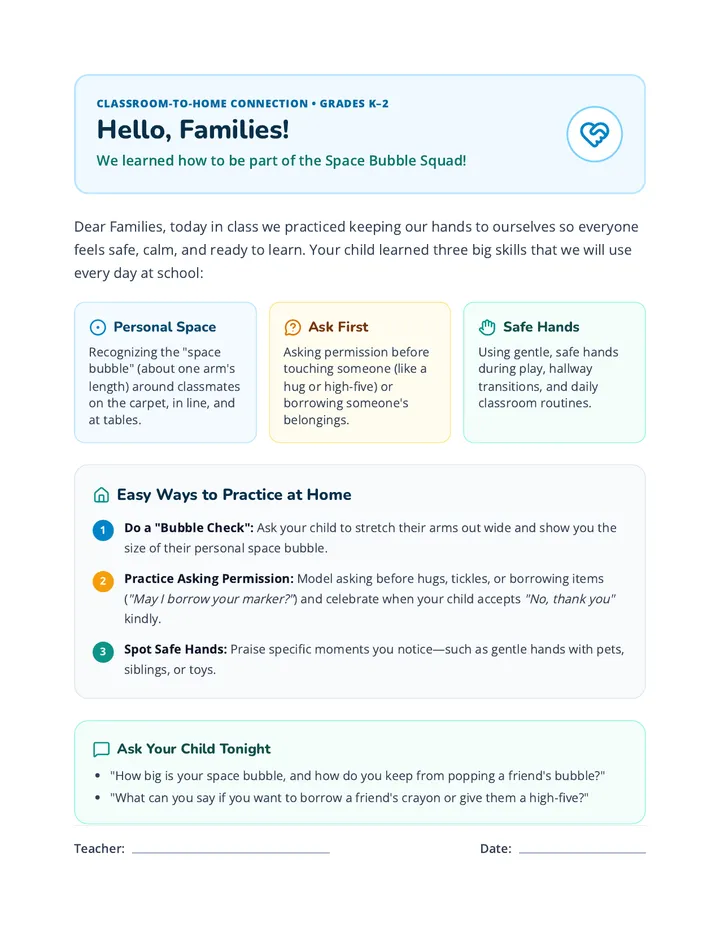
Space Bubble Family Note Classroom-to-Home Connection • Grades K–2
Hello, Families!
We learned how to be part of the Space Bubble Squad!
Dear Families, today in class we practiced keeping our hands to ourselves so everyone feels safe, calm, and ready to learn. Your child learned three big skills that we will use every day at school:
Personal Space
Recognizing the "space bubble" (about one arm's length) around classmates on the carpet, in line, and at tables.
Ask First
Asking permission before touching someone (like a hug or high-five) or borrowing someone's belongings.
Safe Hands
Using gentle, safe hands during play, hallway transitions, and daily classroom routines.
Easy Ways to Practice at Home
1 Do a "Bubble Check": Ask your child to stretch their arms out wide and show you the size of their personal space bubble.
2 Practice Asking Permission: Model asking before hugs, tickles, or borrowing items ("May I borrow your marker?") and celebrate when your child accepts "No, thank you" kindly.
3 Spot Safe Hands: Praise specific moments you notice—such as gentle hands with pets, siblings, or toys.
Ask Your Child Tonight
"How big is your space bubble, and how do you keep from popping a friend's bubble?"
"What can you say if you want to borrow a friend's crayon or give them a high-five?"
Teacher:
Date: