Lenny.com
Explore
Create
ActivitiesNewMathEnglish Language ArtsScience & EngineeringSocial StudiesGlobal LanguagesHealth & Physical EducationSpecial EducationCounseling & Life SkillsArts & CreativityESL
Lenny.com
Lenny.com
Explore
Create
ActivitiesNewMathEnglish Language ArtsScience & EngineeringSocial StudiesGlobal LanguagesHealth & Physical EducationSpecial EducationCounseling & Life SkillsArts & CreativityESL
Lenny.com
Lenny.com

Solutions

Lenny for EducatorsLenny for SchoolsLenny for Districts

Product

ExploreSign inCreateSupportAbout

Resources

Getting startedMTSS Acceleration Program

© 2026 Lenny Learning Inc.

TermsPrivacyAccessibility
LinkedInInstagramX
Lenny
Counseling & Life SkillsSelf-AwarenessBasic Emotion RecognitionComplex Emotion IdentificationEmotional Nuance & Mixed FeelingsBuilding Positive Self-ImageRecognizing Strengths & Growth AreasAccurate Self-AssessmentPersonal Values IdentificationCultural & Individual Identity ExplorationValues-Based Decision MakingSelf-ManagementStop-and-Think StrategiesDelaying GratificationIndependent Impulse ManagementIdentifying Stress TriggersShort-Term Goal SettingSMART Goals DevelopmentGoal Monitoring & AdjustmentBuilding Perseverance & ResilienceInternal Motivation DevelopmentComprehensive Stress Reduction PlanningSocial AwarenessRecognizing Others' FeelingsDemonstrating EmpathyRespecting Individual DifferencesUnderstanding Cultural DiversityComplex Empathetic ResponsesMultiple Viewpoint ConsiderationMulti-Perspective AnalysisChallenging Stereotypes & BiasRelationship SkillsActive ListeningClear Verbal & Nonverbal CommunicationBuilding Positive FriendshipsWorking Cooperatively in GroupsCommunicating Personal BoundariesRespecting Others' BoundariesAssertive ExpressionPeaceful Problem-SolvingContributing to Team GoalsComplex Conflict NavigationMediation & NegotiationHealthy Romantic RelationshipsResponsible Decision-MakingDaily Problem IdentificationBrainstorming Multiple SolutionsEvaluating Pros & ConsRecognizing Risks & ConsequencesApplying Ethical FrameworksInformed Risk-Benefit DecisionsRoot Cause AnalysisMindfulnessMindful BreathingBody Scan MeditationDaily Mindfulness ApplicationDaily Self-Care RoutinesBalancing Life DemandsAdvocating for Wellness NeedsMental Health SupportUnderstanding Anxiety SymptomsWorry Management StrategiesProgressive Muscle RelaxationRecognizing Depression SignsBuilding Mood-Supporting RoutinesBehavioral Activation for MoodUnderstanding Grief StagesHealthy Grief CopingCreative Expression of LossBehavioral SupportDaily Check-In ProceduresDaily Goal Setting & ReviewRecognizing Escalation Warning SignsRequesting Breaks & SupportSelf-Calming During DistressUnderstanding Positive ReinforcementToken Economy ImplementationBehavior Chart TrackingAnalyzing Behavior PatternsIdentifying Antecedents & ConsequencesDetermining Behavior FunctionFunction-Based InterventionsIndividualized Behavior ContractsData-Driven Behavior AdjustmentTherapeutic ApproachesThoughts-Feelings-Behaviors ConnectionRecognizing Thinking PatternsChallenging Negative ThoughtsPositive Self-Talk PracticeThought Record TrackingAdvanced Cognitive RestructuringComprehensive CBT PlansBehavioral Activation TechniquesBuilding Positive ExperiencesExposure Hierarchies for AnxietyPresent-Moment AwarenessNon-Judgmental ObservationSelf-Soothing & DistractionComplex Emotion LabelingReducing Emotional Vulnerability (PLEASE)DEAR MAN CommunicationGIVE Skills for RelationshipsFAST Skills for Self-RespectRadical Acceptance PracticeCrisis Survival Skills (TIPP)Understanding Trauma EffectsTrauma Responses & TriggersIdentifying Trauma FeelingsGrounding TechniquesRegulation During Trauma DistressSafe Place VisualizationProcessing Through NarrativeDeveloping Trauma StoryPersonalized Safety PlanningGroup SupportTurn-Taking & SharingGroup Conversation SkillsSharing in Supportive EnvironmentLearning from Similar ChallengesBuilding Community & BelongingNavigating Peer RelationshipsGroup Skill PracticeGroup Mental Health EducationStress & Anxiety UnderstandingCrisis Support & SafetyKnowing When to Seek HelpIdentifying Mental Health CrisesGrounding During CrisisUsing Crisis HotlinesBuilding Support NetworksAccessing Mental Health ResourcesWarning Signs & Coping StrategiesDeveloping Personal Safety PlansUnderstanding Suicide Warning SignsGatekeeper Skills for PeersDigital LiteracySocial MediaTechnology BasicsProductivity ToolsInternet and Online ResearchWeb Design and PublishingDigital CitizenshipOnline Safety and PrivacyEmerging TechnologiesFinancial LiteracyMaking Financial DecisionsBanking and AccountsConsumer SkillsSaving and InvestingCredit and DebtEmployment and IncomeTaxesInsuranceMajor PurchasesEconomic ConceptsFinancial PlanningCollege & Post-Secondary PlanningCareer ExplorationUnderstanding Post-Secondary OptionsCollege Research & SelectionAdmission RequirementsCollege Application ProcessPersonal Statement WritingFAFSA CompletionScholarship Search & ApplicationsUnderstanding Student LoansContinuing Education PlanningInterview PreparationResearching EmployersCommon Interview QuestionsSTAR Method ResponsesProfessional Interview PresenceVirtual Interview SkillsInterview Follow-UpJob Search SkillsUnderstanding Job PostingsEffective Job Search StrategiesNetworking for OpportunitiesResume Writing BasicsAction Verbs & AchievementsTailoring Resumes to JobsCover Letter WritingProfessional ReferencesProfessional CommunicationBusiness Email EtiquettePhone & Voicemail ProfessionalismMeeting ParticipationPresentation SkillsProfessional Work EthicTime Management & ProductivityTeamwork & CollaborationAdaptability & FlexibilityProblem-Solving at WorkConstructive FeedbackWorkplace RightsUnderstanding Employment LawsPay & Benefits UnderstandingWorkplace SafetyAnti-Discrimination & Harassment

Professionalism Power Up

A comprehensive review lesson for 11th-grade students covering workplace professionalism, financial literacy, portfolio development, and ethics. This lesson prepares students for their Quarter 3 assessment through summaries, matching activities, and practice quizzes.

TOTia Osley

D I want to make a lot of money as a surgeon.

9. What is a "Credit Score"?

A A ranking of your popularity on LinkedIn

B The total amount of cash in your bank account

C A number representing your likelihood of paying back a loan

D The percentage of tax you pay on your income

10. Why should you research a company before attending a Career Fair?

A To ask better questions and show genuine interest

B To find out if they have free food at their booth

C So you can avoid the recruiters who look mean

D It is not necessary to research before a fair

11. What is an example of a "Transferable Skill"?

A Leadership ability gained from a sports team

B Knowing how to use a specific company's software

C A secret code to the office safe

D Only being able to work at one specific location

12. Which outfit is best for a "Business Professional" interview?

A Clean jeans, a polo shirt, and sneakers

B A matching suit (jacket and slacks/skirt)

C Athletic wear or high-quality yoga pants

D A tuxedo or evening gown

13. An "Elevator Pitch" should ideally last how long?

A 10-15 seconds

B 30-60 seconds

C 5-10 minutes

D As long as the other person keeps listening

14. What is "Gross Pay"?

A The amount of money you take home after taxes

B The total amount earned before any deductions

C Money you owe to the government

D The cost of health insurance benefits

15. What is the role of a Mentor in a professional setting?

A To do your work for you when you are busy

B To provide guidance, advice, and professional support

C To act as your spy and report on other coworkers

D A mentor is not useful in the workplace

16. Which tax form is used to determine how much federal tax is withheld from your paycheck?

A W-2

B W-4

C 1040

D I-9

17. Workplace "Diversity and Inclusion" policies are designed to:

A Create a more homogenous and identical workforce

B Foster a respectful environment for people of all backgrounds

C Increase the amount of paperwork for managers

D Ensure everyone gets paid the exact same salary regardless of role

18. If you witness workplace harassment, what is the most professional first step?

A Post about it on social media immediately

B Ignore it and hope it goes away

C Report it to a supervisor or Human Resources (HR)

D Confront the person and start an argument

19. What does OSHA stand for in the context of workplace safety?

A Office of Super High Achievement

B Occupational Safety and Health Administration

C Organization for Standard Health Awareness

D Official Safety and Hazard Agency

20. An emergency fund is meant for which of the following?

A Buying a new video game console on sale

B Covering unexpected costs like a car repair or medical bill

C Funding a vacation with friends

D Paying for a monthly Netflix subscription

Part II: Terminology Matching

Match the term on the left with its correct definition. (1 point each)

21. Liability

22. Asset

23. Hard Skill

24. Cover Letter

25. Net Pay

A. Teachable, measurable abilities such as coding or typing.

B. A document sent with your resume to introduce yourself.

C. Anything of value that you own (e.g., savings, property).

D. The "take-home" pay after taxes and deductions.

E. Something you owe, such as a loan or credit card debt.

Part III: Short Answer & Scenario

Provide complete and thoughtful responses. (5 points each)

26. Applying the STAR Method

Situation: You are in an interview and asked: "Tell me about a time you had a conflict with a teammate." Briefly explain how you would use the A (Action) and R (Result) parts of your answer to show professionalism.

27. The Attendance Connection

How does consistent attendance in 11th grade directly prepare you for success in your first full-time job? Provide two specific reasons.

28. Financial Decision Making

Why is "Net Worth" often a more accurate measure of financial health than just looking at a person's monthly paycheck or salary? Explain using the concept of assets and liabilities.

29. Digital Footprint & Professionalism

Identify one thing a student might have on their public social media that could hurt their job prospects, and explain how a recruiter might interpret it.

Part IV: Portfolio Mastery

30. You are building your professional portfolio. Below is a list of items. Circle the THREE (3) most essential items that MUST be included for a graduating high school student. (3 points)

Updated Resume

Middle School Honor Roll

Letters of Recommendation

List of Hobbies

Work Samples/Certifications

Personal Photo Album

Part V: Ethics Case Study

31. The Gym Time Dilemma (10 points)

Scenario: You work at a tech company. Your best friend is also a coworker. You notice that your friend has been logging "work hours" for time they actually spent at the gym. This is essentially stealing money from the company.

How would you handle this situation while maintaining professional integrity? Mention the concept of "whistleblowing" or "accountability" in your answer.

Rubric Check:

  • • Clear identification of the ethical issue (3 pts)
  • • Proposed professional action steps (4 pts)
  • • Use of key terminology (Integrity, Accountability, etc.) (3 pts)

Part VI: Professional Correspondence

32. Below is an email sent from a student to a potential employer. Identify THREE (3) professional errors and then rewrite the email correctly. (10 points)

Subject: hey

Yo Mr. Smith,

I saw ur job post online. Is it still open?? I rly need a job lol. hit me back when u can. thx.

Sent from my iPhone

List 3 Errors:

Rewrite Professionally:

Part VII: Goal Implementation

33. Transform the following "weak" goal into a full SMART goal. (5 points)

Weak Goal: "I want to save more money for college."

Specific • Measurable • Achievable • Relevant • Time-Bound

Bonus Zone

34. Professional Growth (+3 points)

What is one specific skill you hope to master in the next year to improve your professional profile, and why? Justify your choice with a real-world application.

Quarter 3 Career Readiness Summative Assessment Final Page • Review your work carefully

Scoring: 1 point per SMART element present.

Bonus Question Guidance (+3 pts)

Q34: Full points for identifying a specific skill (e.g., Project Management, SQL, Advanced CPR) and explaining its career benefit.

Final Point Allocation Matrix

40

Part I: MC

5

Part II: Match

20

Part III: SA

3

Part IV: Port

10

Part V: Ethics

10

Part VI: Email

5

Part VII: SMART

93

Total Base

+3 Bonus Possible (Max Score: 96)

Confidential Document • Career Launch Curriculum • © 2026

You might also like

Initiation Hurdles Slides

Execution Lab

An executive functioning and work completion curriculum designed specifically for gifted middle schoolers. Students learn cognitive strategies to dismantle perfectionism paralysis, accurately pace multi-phase projects, and conquer the final submission hurdle.

MB

Michele Berning

6
Meditation Monday Slides

Meditation Monday

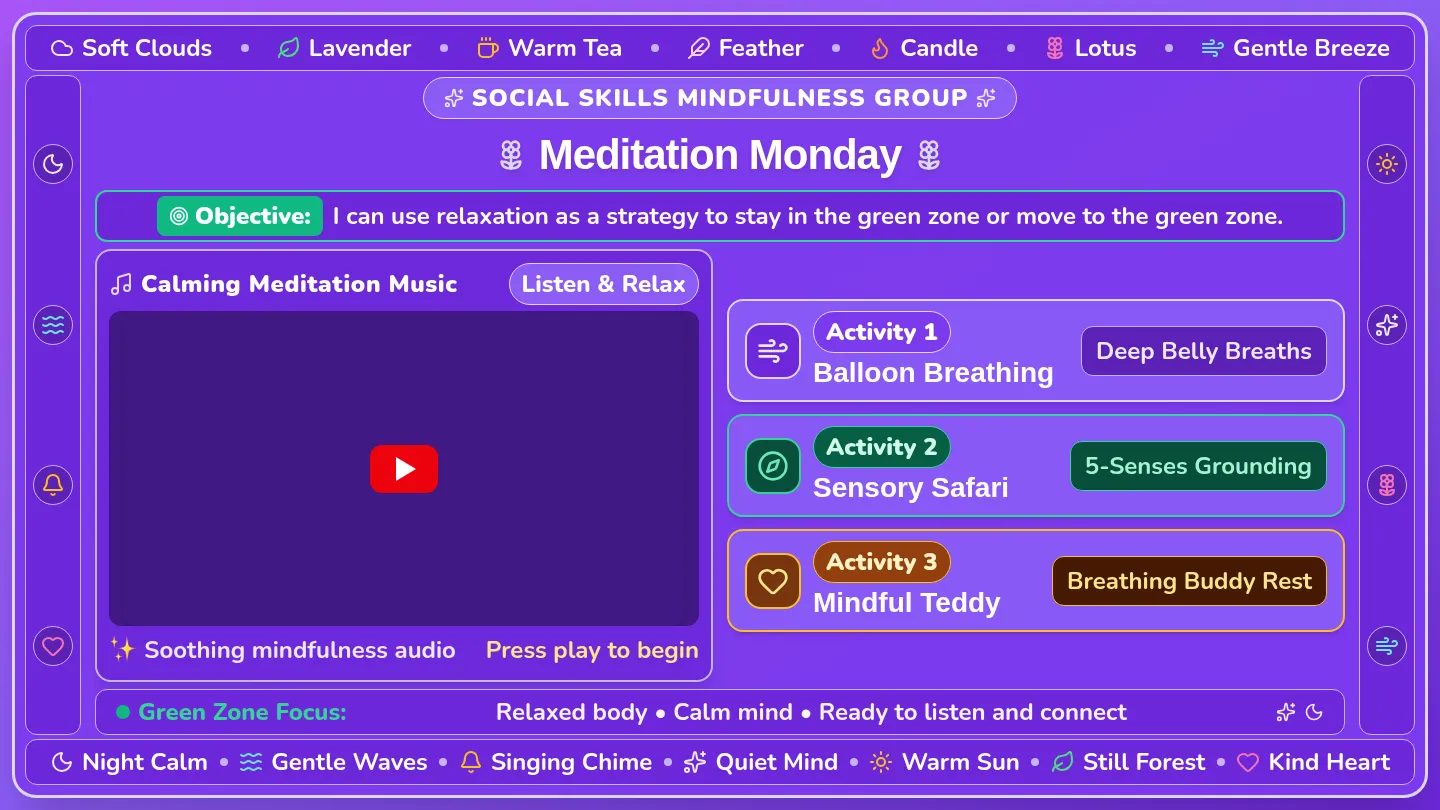
A social skills mindfulness lesson focusing on relaxation strategies, self-regulation in the Green Zone, and sensory awareness through guided practice and personal reflection.

JR

JUDI-ANN REID

4
Budget Choices Poster Rubric

Budget Choices Poster Rubric

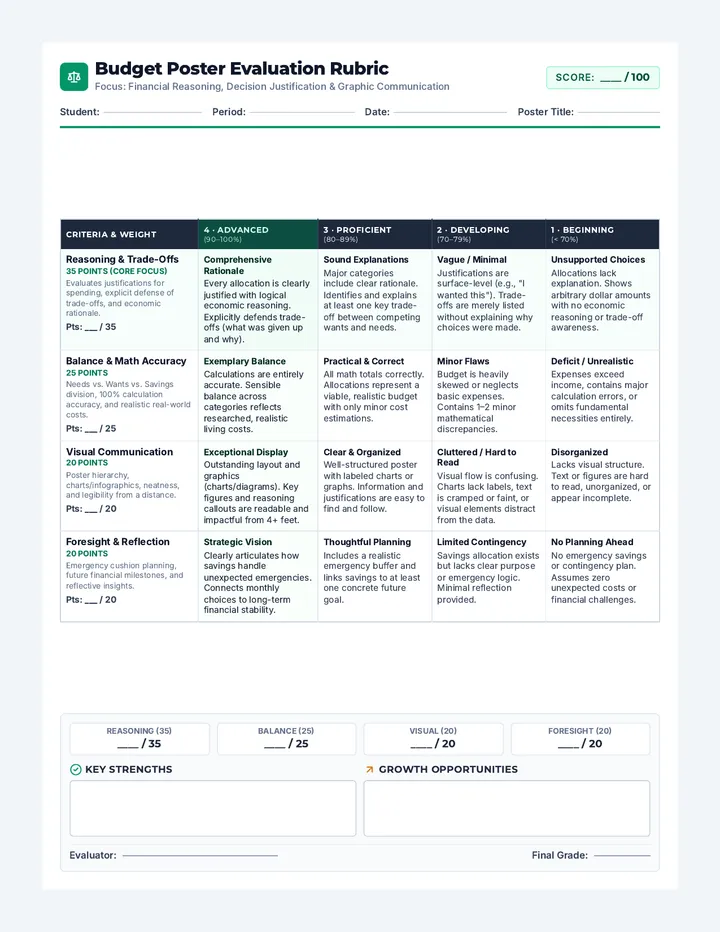
A comprehensive single-page grading rubric designed to evaluate student budget posters, with an explicit emphasis on financial reasoning, trade-off justifications, and visual communication.

MK

Mesha Komorek

Leadership Playbook Curriculum Guide

Leadership Skills Program

An adaptable 8-week high school leadership and self-regulation curriculum program. Each weekly unit provides targeted facilitation, interactive labs, and student application materials for social intelligence and composure.

MP

Madison Paz

13
Cozy Turtle Lesson Plan

Cozy Turtle Cocoon

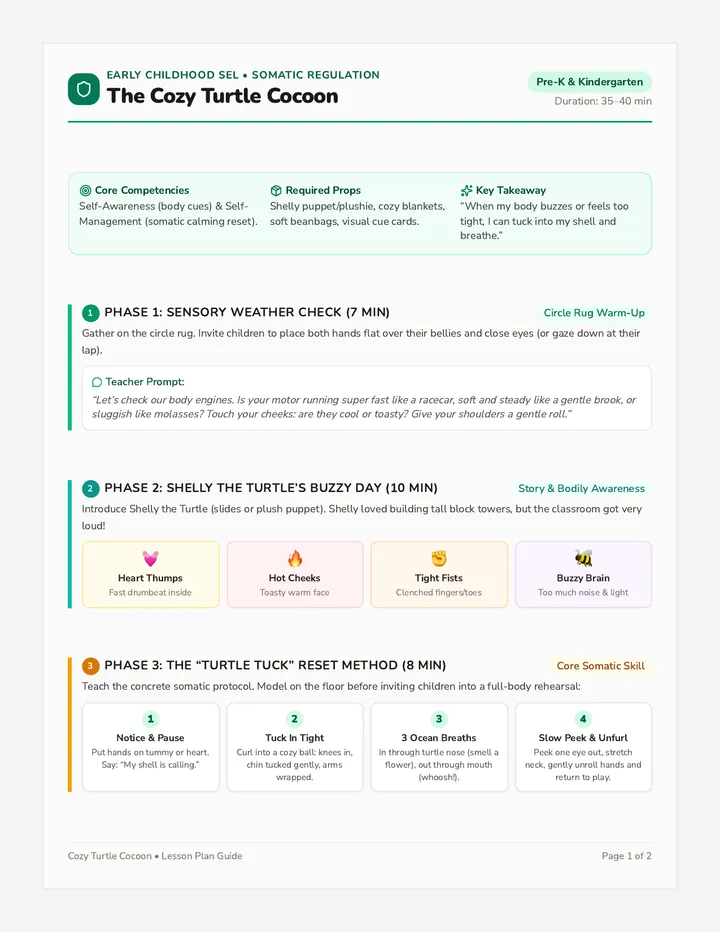
A gentle social-emotional learning lesson for Pre-K and Kindergarten students to discover physical signals of emotional overwhelm and practice the somatic 'Turtle Tuck' calming technique. Learners explore Shelly the Turtle's story, map their own bodily clues, and build safe space reset routines.

CH

Celi Henderson

4
Digraph Reading Slides

Digraph Reading Slides

A minimalist, ultra-clean reading flashcard slide deck with 9 plain white slides displaying each target word (pack, lock, thick, quack, shock, duck, moth, path, check) centered without borders or decoding clues.

JR

JUDI-ANN REID

Launch Ignition Slides

Spark to Finish

A structured multi-day sequence designed to build executive function routines, overcome task initiation friction, sustain momentum through completion, and cultivate self-confidence.

MB

Michele Berning

9
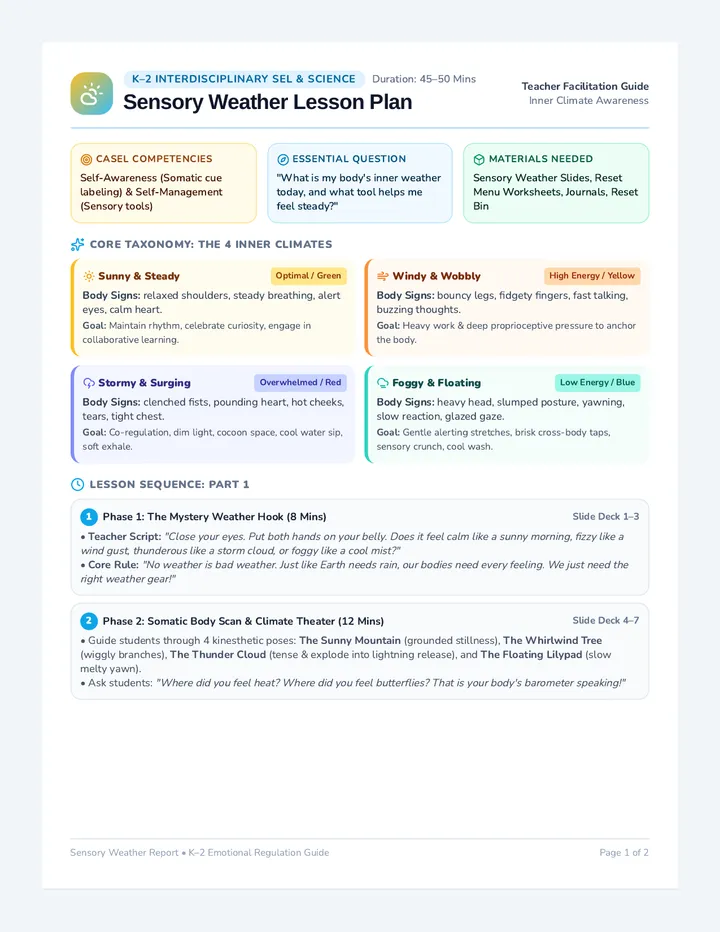
Sensory Weather Lesson Plan

Sensory Weather Report

An interdisciplinary emotional literacy lesson for K-2 students to identify inner energy states through weather metaphors. Students learn to map physical sensations, recognize four core inner climates, and independently select sensory resets to self-regulate.

CH

Celi Henderson

4
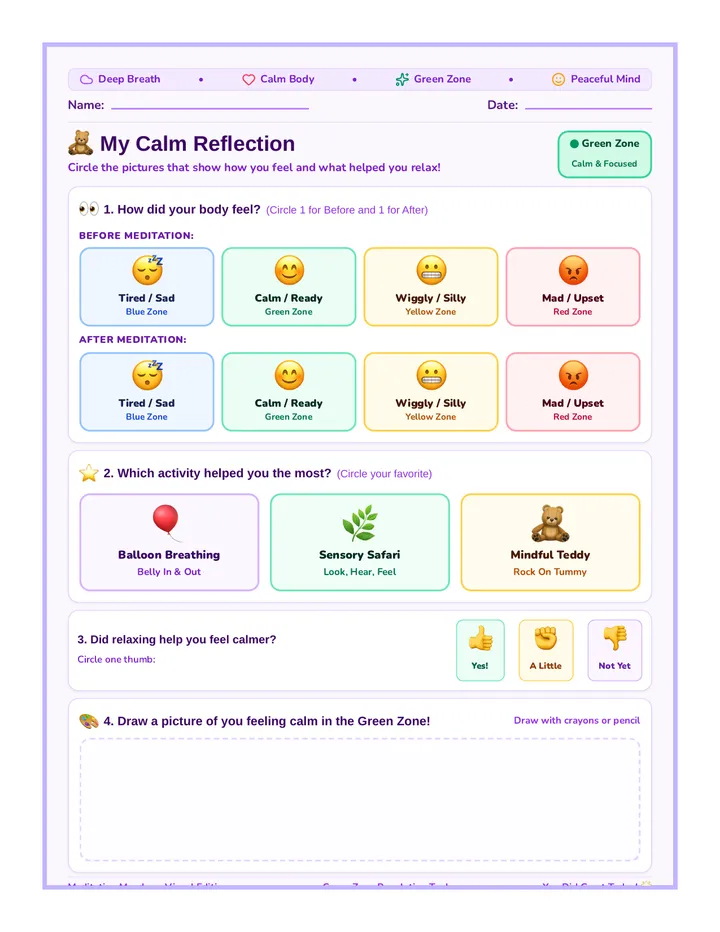
Visual Meditation Worksheet

Visual Meditation Worksheet

A picture-supported, visual reflection worksheet for Meditation Monday designed for low readers, featuring large Zones of Regulation feeling faces, illustrated strategy choices, thumbs ratings, and a drawing box.

JR

JUDI-ANN REID

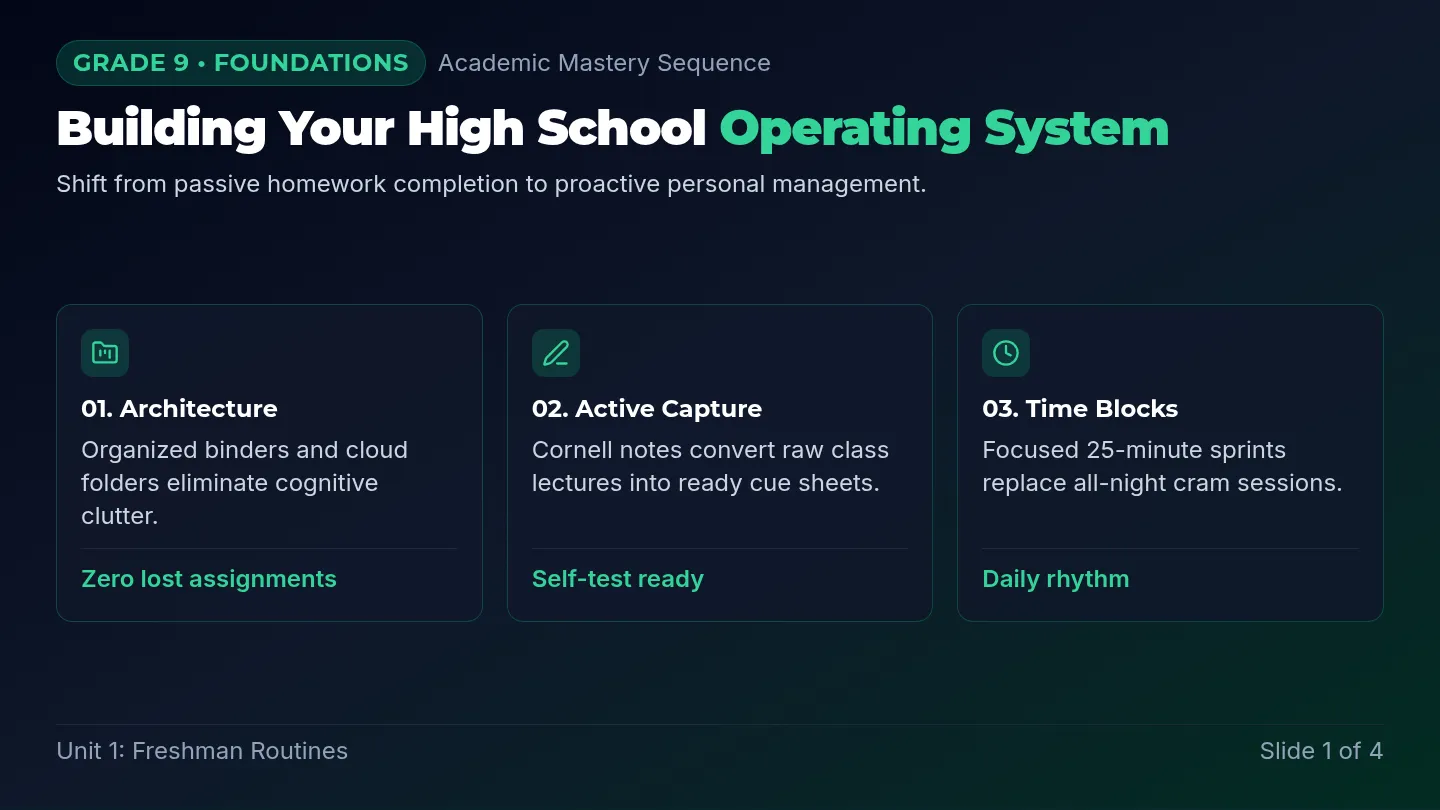
Freshman Launch Slides

Mindset to Mastery

A four-year developmental progression of academic study skills designed for high school educators. Guides students through foundational habits, active memory encoding, sustained project management, and college-ready metacognition.

S

smikamo

8
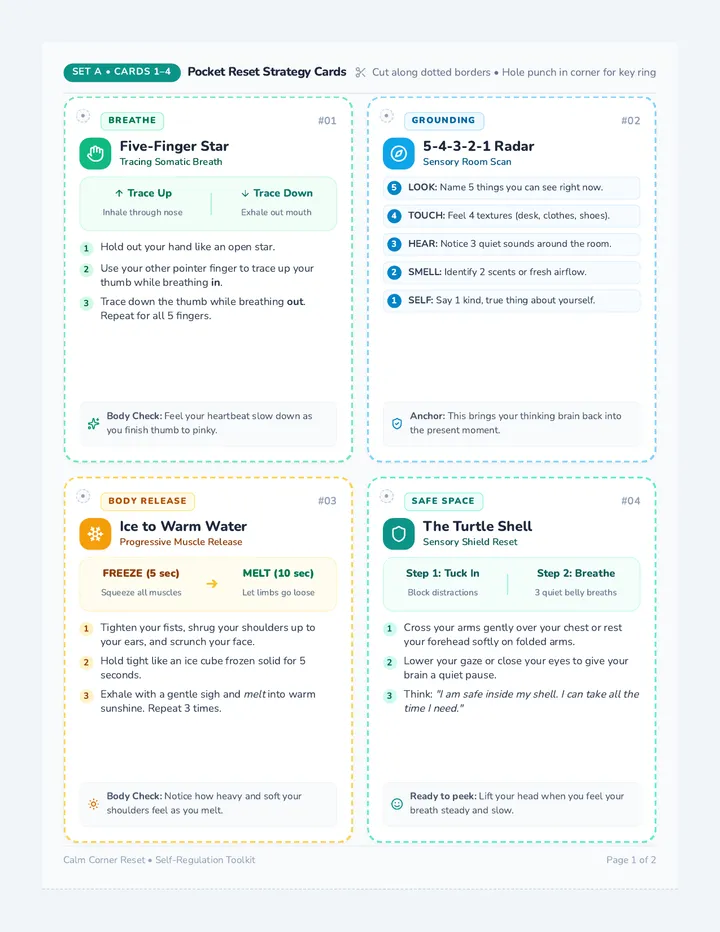
Calm Down Strategy Cards

Calm Corner Reset

An evidence-based social-emotional learning lesson bundle designed to teach elementary students practical self-regulation, somatic reset tools, and emotional awareness. Includes visual calm-down strategy cards for classroom peace corners, interactive instruction slides, student self-regulation plans, and a comprehensive facilitation guide.

RA

Ruaro Annie

4
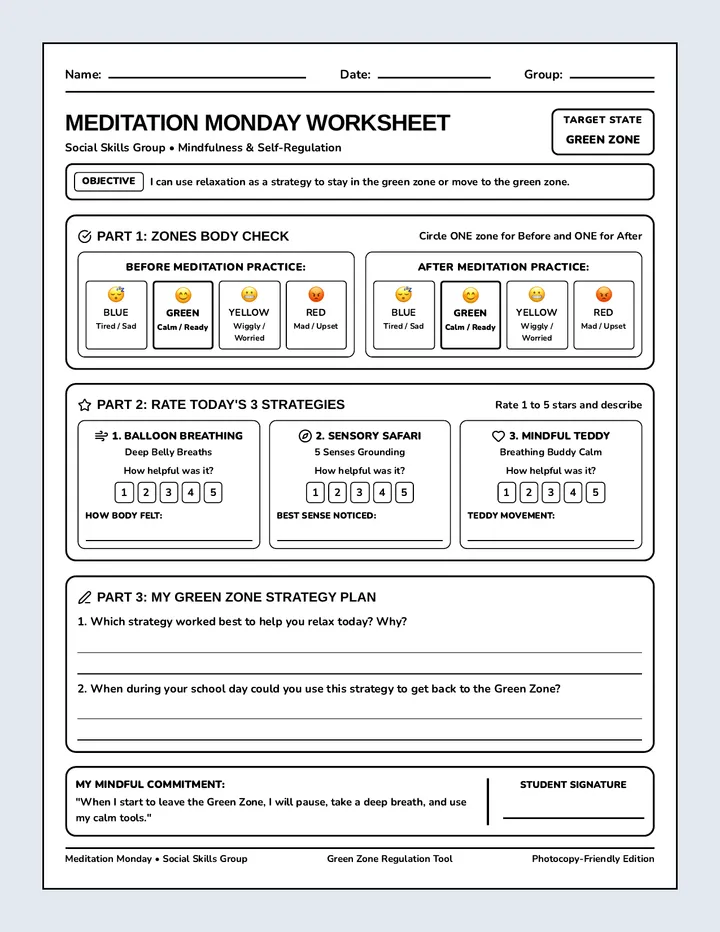
Meditation Reflection Worksheet

Meditation Reflection Worksheet

A plain black-and-white, ink-saving printable worksheet for Meditation Monday, featuring Zones of Regulation check-ins, evaluation of the three calm strategies, and personal coping reflection.

JR

JUDI-ANN REID