Mind Rewired Lesson Plan Educator Instructional Guide
Mind Rewired Lesson Plan
Grade Band: 6–10
Duration: 60 Minutes
Instructional Focus
Students investigate neuroplasticity to understand how deliberate effort, targeted feedback, and flexible strategy selection physically strengthen neural pathways. They transition from self-limiting beliefs to constructive reframing and actionable goal setting.
Key Deliverables
Reframed self-talk matrix
Strategy selection catalog
Actionable goal sprint
Reflective exit ticket
Student Learning Targets
1. Reframe Setbacks
Detect defeatist internal monologue and convert fixed statements into growth-oriented self-coaching.
2. Persist Through Challenge
Identify constructive behavioral resets when encountering cognitive friction or failure.
3. Utilize Effective Strategies
Distinguish raw brute-force effort from strategic iteration, feedback loops, and resource use.
4. Build Learning Goals
Formulate a concrete mastery-oriented goal accompanied by progress milestones.
Lesson Sequence (Part 1: 0–30 Min)
00–10m Hook
The Neural Wiring Challenge (Slide 1–2)
Present the brain-teaser or non-dominant hand challenge. Ask students: "What did your inner voice say when it felt awkward?" Define neuroplasticity—synaptic connections strengthening like trail paths in a forest.
10–22m Explore
Fixed Trap vs. Growth Engine (Slide 3–4)
Contrast fixed mindset (talent is capped, errors mean inadequacy) with growth mindset (mistakes provide high-signal data). Introduce the Power of "Yet" and model reframing aloud.
22–30m Guided
Reframing Laboratory (Slide 5 & Activity Part 1)
Distribute Mind Rewired Activity Sheet . Model live conversion: Change "I'm terrible at math" to "I haven't mastered this specific formula yet; I need a fresh strategy."
Mind Rewired Lesson Plan • Section 1 of 2 Instructional Outline continued on Page 2
Implementation & Teacher Strategies
Part 2: Execution & Support
Lesson Sequence (Part 2: 30–60 Min)
30–42m Applied
Strategy Over Pure Effort (Slide 6 & Activity Part 2)
Address false growth mindset. Explain that repeating the same failing action 50 times is not growth—it is stubborness. Walk through the 3-Prong Strategy Toolbox : Resource pivot, breakdown pacing, and asking targeted feedback.
42–52m Sprint
Learning Goal Formulation (Slide 7 & Activity Part 3)
Students construct a SMART learning goal (not just "get an A", but "master graphing linear equations through 15 minutes of daily practice and error logging").
52–60m Synthesis
Debrief & Exit Ticket Collection (Slide 8)
Distribute the Mind Rewired Exit Ticket . Students diagnose a real obstacle they currently face, prescribe two tangible strategies, and formulate their growth pledge.
Critical Misconception: "False Growth Mindset"
The Pitfall: Praising effort alone ("At least you tried hard!") without teaching new strategies reinforces helplessness. Effort is only the vehicle; effective strategies, self-assessment, and iteration are the steering wheel. Never praise futile effort—praise process, curiosity, and strategic pivots.
Differentiation & Scaffolding
Support / Scaffolding
Provide sentence starters: "When I get stuck on ___, I will try ___ before giving up." Pair students for partner reframing drills.
Target / On-Grade
Students independently identify 3 personal fixed mindset triggers (e.g., timed tests, public critique) and map tailored coping protocols.
Extension / Advanced
Investigate the neuroscience of myelin sheath development during deliberate practice and compose a peer-mentoring tip guide.
Mind Rewired Lesson Plan • Teacher Reference Ready for Classroom Delivery
Mind Rewired Slides Neuro-Lab Workshop
Target: Growth Mindset
Mind Rewired
How deliberate struggle, smart strategies, and resilient self-talk physically upgrade your brain.
Neuroplasticity
Cognitive Reframing
Strategic Goals
The Science of Learning
Your Brain Is Built to Stretch
Neuroplasticity in Action
Every time you tackle a problem that makes you pause, your neurons form new synaptic connections and thicken their myelin sheath.
Confusion is growth in progress
The Forest Trail Analogy
The first time through thick brush, the path is hard. Walk it twenty times with deliberate focus, and a clear, fast highway appears.
Ease comes after intentional friction
Core Principle: Ability is not fixed at birth—it is developed through practice.
Two Mental Operating Systems
Which Lens Are You Wearing?
Fixed Mindset
Belief: Talent is born, not builtMistakes: Proof of personal failureObstacles: Back down and save faceFeedback: Taken as a personal attack
Growth Mindset
Belief: Skills improve with deliberate practiceMistakes: High-value data on what to fixObstacles: An invitation to switch strategiesFeedback: Free coaching toward mastery
We all toggle between both mindsets. The goal is noticing when fixed thoughts take the wheel.
Reframe the Script
The Magic of a Three-Letter Word
Fixed Self-Talk
"I can't solve this equation."
Growth Reframe
"I can't solve this yet without a new approach."
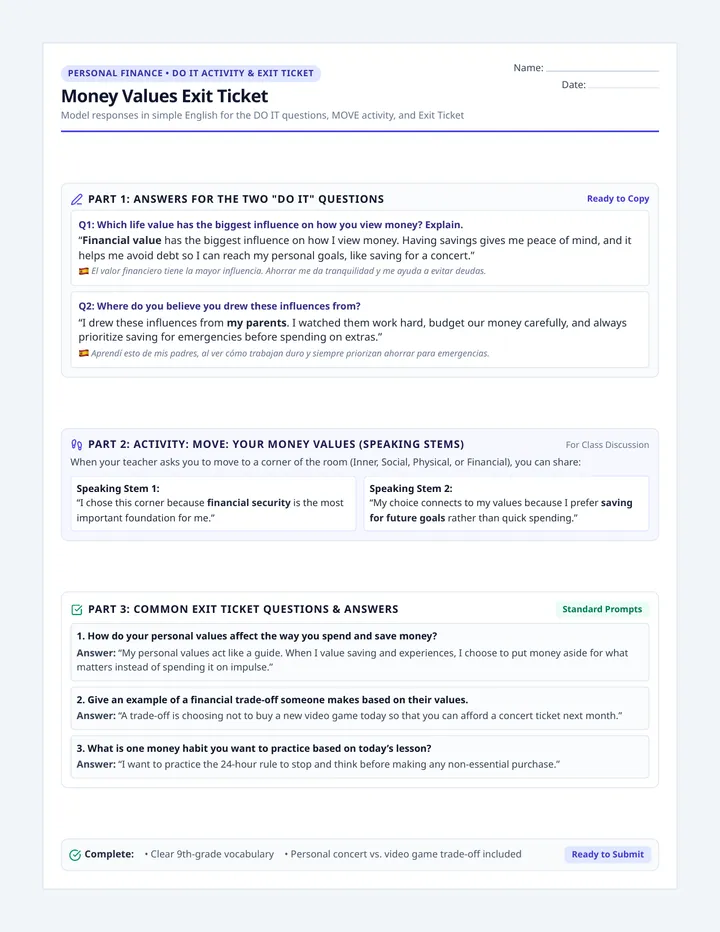
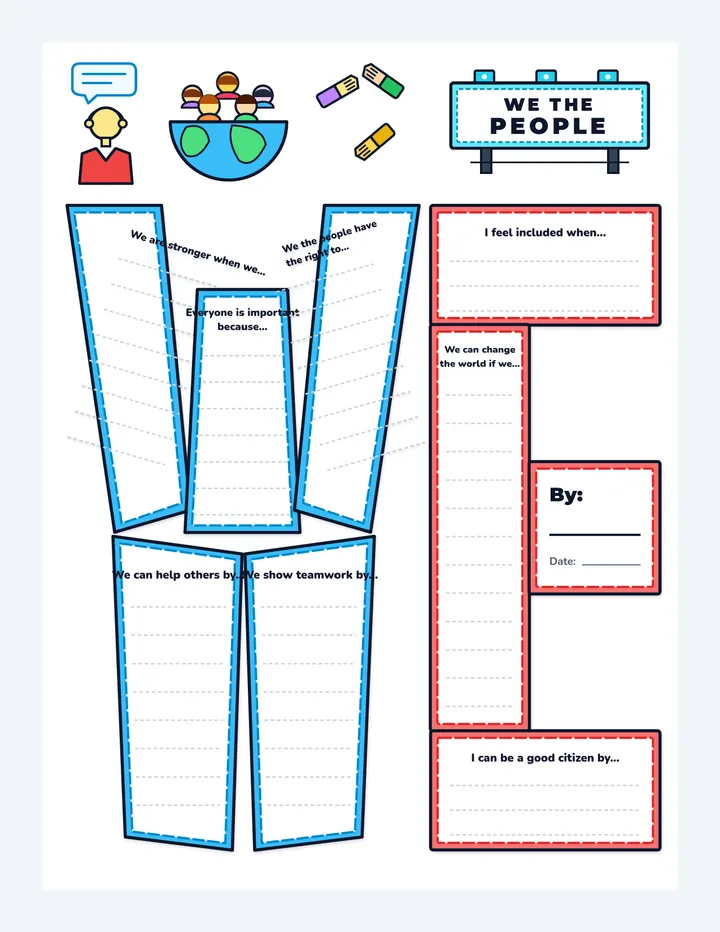
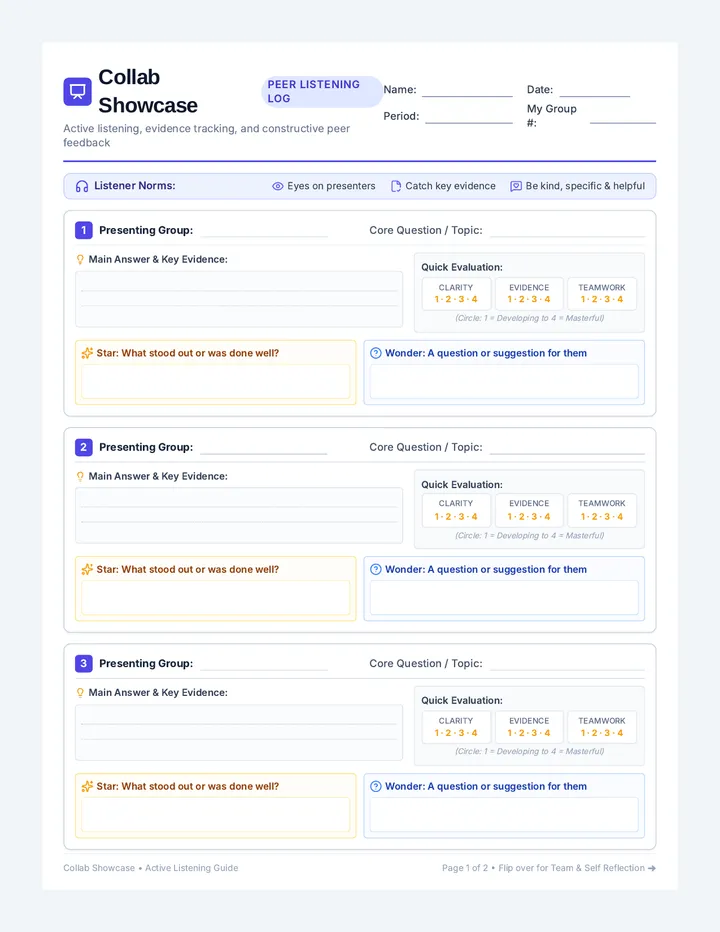
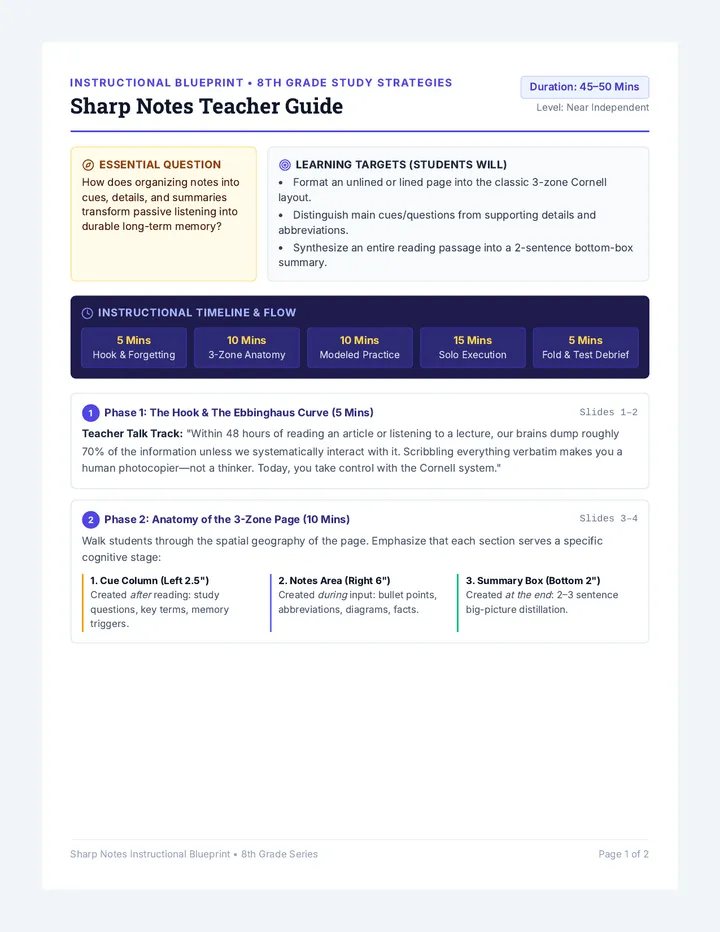
Fixed Self-Talk
"I'm just not a writer."
Growth Reframe
"Writing this essay takes drafting, editing, and time."
Fixed Self-Talk
"This is way too hard. I quit."
Growth Reframe
"This is challenging, which means my brain is leveling up."
Key insight: Add "YET" to any limitation to open a runway for progress. Activity Sheet: Section 1
Beyond "Just Try Harder"
The 3-Part Strategy Engine
1. Pivot Methods
Mind Rewired Activity Sheet Student Activity Lab • Part 1
Mind Rewired Activity Sheet
Name:
Date:
The Neural Rule: When you hit cognitive friction, your brain is actively wiring new pathways. Defeatist thoughts are just old habits—reframing them directs new growth.
Section 1: The Thought Transformer
Practice adding "YET" and identifying growth angles
Fixed Trigger: "I failed the practice quiz. I'm just terrible at this subject." Defeatist
Growth Reframe (Focus on what this quiz reveals and what strategy you will change):
Fixed Trigger: "Everyone else finished the assignment in 10 minutes, but I'm still stuck." Comparison Trap
Growth Reframe (Focus on your individual learning curve and process):
Fixed Trigger: "My teacher gave me so many corrections on my draft. It ruined my paper." Defensive
Growth Reframe (Focus on feedback as free coaching and step-by-step editing):
Section 2: Personal Trigger Investigation
Think of a school or personal task that currently frustrates you (e.g., public speaking, coding, complex reading, a sports skill, or learning an instrument).
My Frustration Trigger Area:
The Fixed Thought I Usually Say:
My High-Power Growth Reframe (Include the word "Yet" and 1 actionable step):
Mind Rewired Activity Sheet • Page 1 of 2 Turn over for Strategy Selection & Goal Sprint
Student Activity Lab • Part 2
Persistence, Strategy & Goals
Effort + Effective Strategy = Growth
Section 3: Match the Roadblock to the Strategy
Read each challenge scenario. Connect it to the most effective strategy by writing the corresponding letter (A, B, C, or D) in the box.
A. Chunking: Break down into 15-minute micro-tasks.
B. Method Pivot: Switch from reading to sketching or teaching.
C. Targeted Inquiry: Ask an expert for a specific checkpoint check.
D. Error Audit: Re-examine missed steps to find the exact glitch.
1. "I've reread this chapter three times and none of the science concepts make sense."
2. "I have a 10-page research paper due next week and I don't know where to start."
3. "I followed all the lab instructions, but my final calculation is way off."
4. "I think my thesis statement is strong, but I'm unsure if my evidence truly supports it."
Section 4: The 4-Step Growth Goal Blueprint
Design one learning goal for the next two weeks. Focus on building capability and habits, not just test scores.
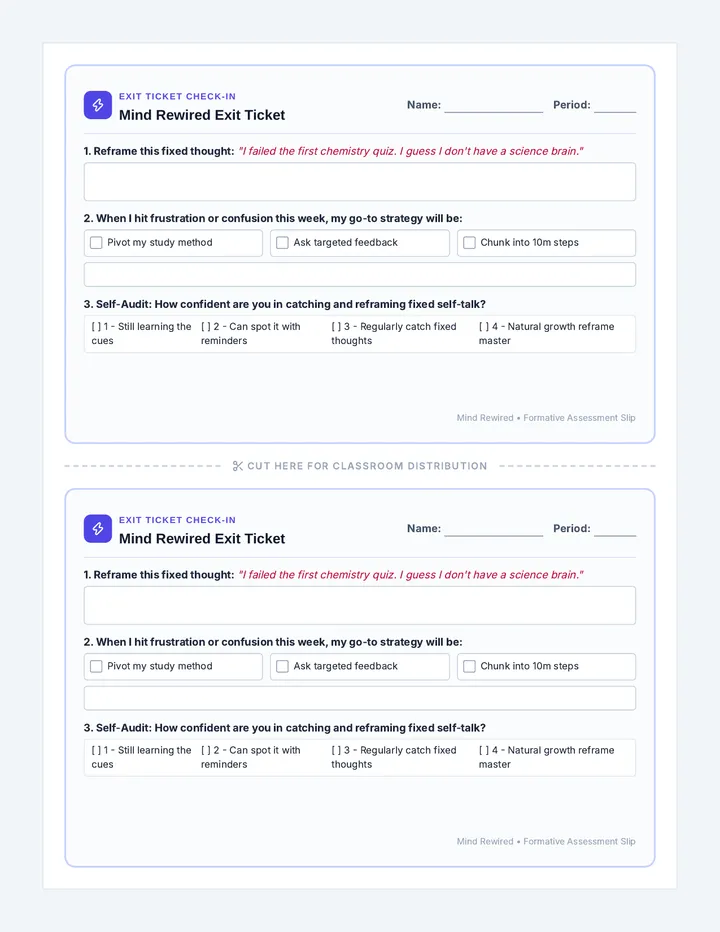
Mind Rewired Exit Ticket Exit Ticket Check-In
Mind Rewired Exit Ticket
Name:
Period:
1. Reframe this fixed thought: "I failed the first chemistry quiz. I guess I don't have a science brain."
2. When I hit frustration or confusion this week, my go-to strategy will be:
Pivot my study method
Ask targeted feedback
Chunk into 10m steps
3. Self-Audit: How confident are you in catching and reframing fixed self-talk?
[ ] 1 - Still learning the cues [ ] 2 - Can spot it with reminders [ ] 3 - Regularly catch fixed thoughts [ ] 4 - Natural growth reframe master
Mind Rewired • Formative Assessment Slip
Cut Here For Classroom Distribution
Exit Ticket Check-In
Mind Rewired Exit Ticket
Name:
Period:
1. Reframe this fixed thought: "I failed the first chemistry quiz. I guess I don't have a science brain."
2. When I hit frustration or confusion this week, my go-to strategy will be:
Pivot my study method
Ask targeted feedback
Chunk into 10m steps
3. Self-Audit: How confident are you in catching and reframing fixed self-talk?
[ ] 1 - Still learning the cues [ ] 2 - Can spot it with reminders [ ] 3 - Regularly catch fixed thoughts [ ] 4 - Natural growth reframe master
Mind Rewired • Formative Assessment Slip