Listen Up Lesson Plan Listen Up!
Lesson Plan • 6th Grade Communication
30 MINS
OBJECTIVE
Students will develop active listening skills through a structured 30-minute session featuring a warm-up activity, a guided pair-work practice, and an exit ticket assessment.
WHY IT MATTERS
Effective active listening improves communication and builds stronger relationships, enhancing classroom engagement and overall learning.
Preparation
Review the "Focus Finders" Warm-Up and "Echo Chamber" Activity.
Print student worksheets (Warm-Up, Activity, Exit Ticket).
Familiarize yourself with the "Signal Check" Exit Ticket prompts.
Instructional Steps
1
Warm-Up Activity (5 Mins)
• Begin with a brief discussion on what active listening means (eye contact, nodding, not interrupting).
• Conduct the Focus Finders Warm-Up: Tell a 60-second funny story or share a series of surprising facts about an animal. Students must listen without taking notes.
2
Main Guided Activity (15 Mins)
• Distribute the Echo Chamber Activity sheet.
• Have students pair up. Partner A speaks for 90 seconds while Partner B practices active listening techniques.
• Partners switch roles. Circulate around the room, offering quiet feedback on body language and focus.
3
Reflection & Assessment (5 Mins)
• Distribute the Signal Check Exit Ticket.
• Ask students to write a brief reflection on their biggest challenge and their biggest success during the session.
• Collect as a formative assessment of their understanding of active listening principles.
Instructional Approach
Engage students through high-energy interactive activities and reflective peer-to-peer practice to normalize empathy in communication.
Listen Up Slides Listen Up!
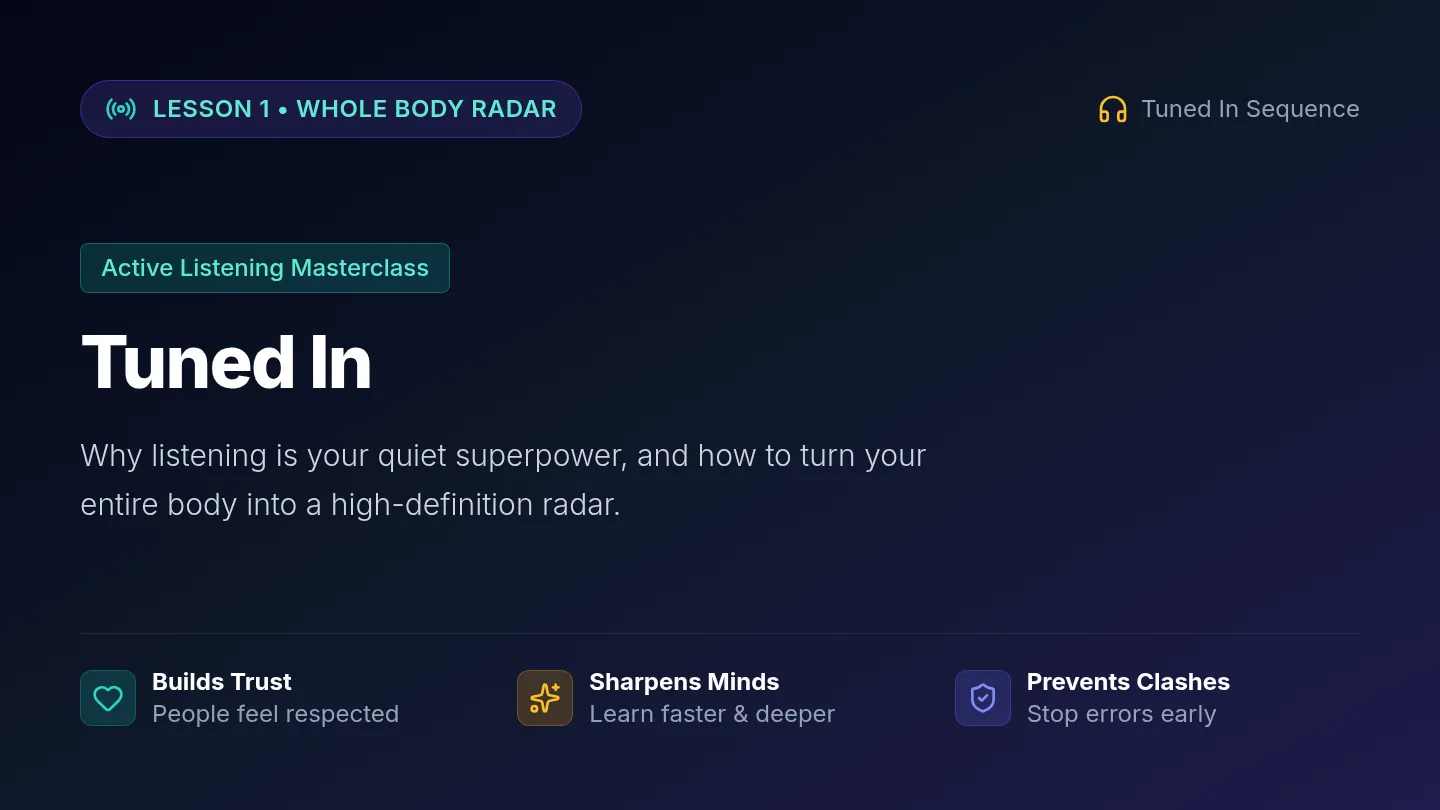
Mastering the art of active listening to build better connections and boost your learning.
Unit 1: Communication 6th Grade
Warm-Up Activity
1
Define: What does it actually mean to listen actively?
2
Focus Finders: Listen to the story. No notes. No interruptions.
3
Reflect: Share the specific details you managed to catch.
Think: How much do we miss when we aren't fully tuned in?
Echo Chamber Practice
The Mission
Work in pairs. Practice the Hear-Hold-Honesty method.
The Roles
Speaker: Share a story or hobby (1-2 mins).
Active Listening Tips:
Eyes on the speaker
Open body language
Wait for the pause
Repeat what you heard
Signal Check
Before you go, take 5 minutes to complete your Signal Check Exit Ticket.
1
New Insight
2
Daily Plan
"We have two ears and one mouth so that we can listen twice as much as we speak."
Focus Finders Warm Up Focus Finders
Active Listening • Warm-Up
Student Name
Date
HOW IT WORKS
Welcome to the Focus Finders Warm-Up! Today, your teacher is going to share a short story or a list of fun facts. Your job is to be a human recorder—listen for every detail without writing anything down yet.
1
LOCK IN
Eyes on the teacher. Hands away from pens.
2
RECALL
When the story ends, wait for the signal to start.
3
RECORD
Write down everything you remember below.
MY BRAIN RECORDING
Quick Chat
Turn to a neighbor. Did you catch the same details? What was one thing they remembered that you missed?
Echo Chamber Activity Echo Chamber
Main Activity • Pair Work Practice
15 MINS
Student Name
Partner Name
THE MISSION
Active listening is about more than hearing—it's about understanding. In this activity, you'll take turns being the Broadcaster and the Receiver.
ROLE: THE BROADCASTER
Share a story, a hobby, or a recent experience for 2 minutes.
• Keep it detailed and honest.
• Pause occasionally to let your partner process.
ROLE: THE RECEIVER
Listen carefully without interrupting.
• Use "NVC" (Non-Verbal Communication): Nod and make eye contact.
• When they finish, summarize what you heard.
OBSERVATIONS
What key points did you remember from their story?
How did it feel to listen without interrupting?
What strategy helped you stay focused?
Reflective Summary
Write 3-5 sentences about your experience. How did active listening change the way you understood your partner?
Active listening is about understanding the message and showing empathy.
Signal Check Exit Ticket Signal Check
Exit Ticket • Final Reflection
End of Session
Student Name
Date
1
What is one new insight you gained about active listening today?
2
How do you plan to use active listening skills in your daily life?
"One of the most sincere forms of respect is actually listening to what another has to say."
— Bryant H. McGill
End of Listen Up Session • Active Listening