Anger Anatomy Worksheet Anger Anatomy
EMOTION FILE #01
INTENSITY POTENTIAL
What is it?
Anger is a powerful, protective emotion that acts like an internal alarm system. It signals that something is unfair, a boundary has been crossed, or you're being prevented from reaching a goal. It's often called a "secondary emotion" because it frequently hides more vulnerable feelings underneath, like hurt or fear.
The Purpose
Evolutionarily, anger prepared us to "fight" against threats. Today, it gives us the energy to stand up for ourselves. When channeled correctly, anger is the fuel for justice and personal growth.
The "Iceberg" Effect
Anger is the tip you see. Under the surface, there might be: Disappointment, Rejection, Insecurity, Exhaustion, or Grief.
Common Triggers
Feeling ignored or unheard.
Perceiving an unfair situation.
Feeling emotionally threatened.
Frustration with unmet plans.
Observation Note
Anger is information. The goal isn't to stop feeling it, but to understand what it is trying to tell you.
NAME: _________________________________________________ DATE: _______________________
The Anger Breakdown
Thoughts
What is your mind yelling? (e.g., "This isn't fair!")
Behaviors
What do you do or feel the urge to do?
Physical Sensations
Where do you feel it in your body? (e.g., hot face, clenched fists)
The Reality Check (CBT Lab)
Original Thought:
Evidence FOR:
Evidence AGAINST:
"Cool Down" Thought (Balanced view):
The Underground Feeling
If your anger was a protective mask, what softer feeling might be hiding underneath it right now?
Sadness Spectrum Worksheet Blueprints of Sadness
EMOTION FILE #02
INTENSITY POTENTIAL
What is it?
Sadness is a heavy, quiet emotion that occurs when we lose something important, feel disappointed, or realize a hard truth. It is a temporary response to life's shifts and often feels like a fog or a weight.
The Purpose
Sadness slows us down. It signals to others that we need support, and it gives us time to process change. It acts as a "reset button," helping us heal before moving forward.
The "Heavy" Truth
Trying to "force" happiness often makes sadness stay longer. Acknowledging it is the first step toward letting it pass.
Common Triggers
Friendship shifts or exclusion.
Academic disappointment or failure.
Missing a person, place, or past self.
Feeling overwhelmed by pressures.
Compassion Note
You don't need a "big reason" to be sad. Your feelings are valid simply because you are feeling them.
NAME: _________________________________________________ DATE: _______________________
The Sadness Breakdown
Thoughts
What is the "sad voice" saying?
Behaviors
What are your "shutdown" habits?
Physical Sensations
How does your body feel? (e.g., heavy chest, fatigue)
The Compassionate Reframe
Absolute Thought (Always/Never):
Exceptions/Evidence Against:
Advice to a Friend:
A Balanced Thought:
Self-Care Micro-Steps
What is one tiny thing that might help right now (e.g., a glass of water, opening a window, one deep breath)?
Joy Mechanics Worksheet Joy Mechanics
EMOTION FILE #03
EXPANSION LEVEL
What is it?
Joy is more than just "feeling good." It is a sense of well-being, connection, and accomplishment. Unlike fleeting pleasure, joy often stems from meaningful experiences, deep relationships, or personal growth.
The Purpose
Joy broadens our thinking and builds our resources. It encourages us to explore, play, and connect. Physiologically, it releases "happy hormones" that lower stress and improve health.
The "Glitter" Effect
Joy is contagious. When we feel it, we naturally want to share it, strengthening our bonds with the people around us.
Common Triggers
Authentic connection with others.
Achieving a goal after hard work.
Immersing yourself in a passion.
Feeling understood or seen.
Savoring Note
You can "stretch" joy by paying attention. Savoring means noticing details of a happy moment while it's happening.
NAME: _________________________________________________ DATE: _______________________
The Joy Breakdown
Thoughts
What is your mind saying?
Behaviors
What are your joy habits?
Physical Sensations
Where do you feel the "glow"?
The Savoring Lab
A Recent "Micro-Joy":
Sensory Details:
Why it mattered:
Future Anchor (Creating space for this):
Joy Resistance
Sometimes we feel guilty for being happy. What is a balanced thought about allowing yourself to feel joy?
Fear Anxiety Files Worksheet Fear & Anxiety Files
EMOTION FILE #04
ALERT STATUS
What are they?
Fear is a reaction to immediate danger. Anxiety is the anticipation of future threat. Both act as a brain-level smoke detector designed to keep you safe by scanning for problems.
The Purpose
They trigger the "Flight, Fight, or Freeze" response, preparing your body to escape danger. While uncomfortable, they are your brain's way of protecting you.
The "False Alarm"
Sometimes the smoke detector is too sensitive. It might go off when there’s no real danger (like just thinking about a social situation).
Common Triggers
Social evaluation or judgment.
Uncertainty or change in routine.
High-pressure academic expectations.
Physical vulnerability or health.
Regulation Note
Deep breaths tell your body you are safe, allowing your logical brain to come back online.
NAME: _________________________________________________ DATE: _______________________
The Anxiety Breakdown
Thoughts
What is the "What If?"
Behaviors
How do you react or avoid?
Physical Sensations
What signals appear? (e.g., butterflies, fast breath)
The Probability Check
Worst-Case Scenario:
Best-Case Scenario:
Most Likely Scenario:
Coping Plan (If the worst happened):
Anxiety as an Advisor
If this anxiety was trying to tell you to prepare for something specific, what would it be? What's one small action you can take?
Shame Shield Worksheet The Shame Shield
EMOTION FILE #05
SOCIAL RISK LEVEL
What is it?
Shame is a painful feeling that we are "flawed" or "not good enough" to be accepted. While Guilt is feeling bad about an action , Shame is feeling bad about who you are .
The Purpose
Shame evolved as a social "emergency brake" to prevent behaviors that would get us rejected by the group. Today, it often attacks self-worth instead of guiding behavior.
The Secret Killer
Shame grows in silence. When we talk about it with someone we trust, its power begins to fade.
Common Triggers
Visible public mistakes.
Feeling like an "outsider."
Harsh criticism or bullying.
Failing to reach "perfection."
Resilience Note
Self-compassion is the antidote. Treating yourself as you would a friend breaks the cycle of self-attack.
NAME: _________________________________________________ DATE: _______________________
The Shame Breakdown
Thoughts
The "I am..." statements. (e.g., "I'm broken")
Behaviors
Hiding habits (avoiding, lying, withdrawing).
Physical Sensations
Body alerts (flushing, slumped posture, sinking stomach).
The Truth vs. The Attack
Shame Thought (Attack):
The Fact (What happened?):
Compassionate View:
Growth Thought (Focus on action):
Breaking the Silence
Who is one person you feel safe talking to? How might talking about the "secret" help take its power away?
Guilt and Frustration Log Worksheet Guilt & Frustration Log
EMOTION FILE #06
FRICTION STATUS
What are they?
Guilt is the feeling that you’ve done something wrong. Frustration occurs when you encounter an obstacle that prevents you from reaching a goal. Together, they create "internal friction."
The Purpose
Guilt is your "moral compass," encouraging repair. Frustration is your "persistence engine"—it signals that you need to change your strategy to overcome a challenge.
The "Action" Signal
Guilt wants you to fix a relationship. Frustration wants you to fix a problem. Both move you toward action.
Common Triggers
Breaking a promise or expectation.
System or tech failure during a task.
Being misunderstood by others.
Procrastinating on important work.
Strategy Note
Take a 5-minute pause. Stepping away allows your brain to find a new way to solve the problem.
NAME: _________________________________________________ DATE: _______________________
The Action Breakdown
Thoughts
The "Shoulds." (e.g., "I should have known")
Behaviors
Habits (apologizing, repeating mistakes, giving up).
Physical Sensations
Build-up (jaw tightness, stomach knot, restless legs).
The Repair & Resolve Lab
Repair Action (Guilt):
Resolve Action (Frustration):
The "Should" Challenge (Replace with "Next time I can"):
Letting Go
If you have already done everything you can to fix the situation, what do you need to tell yourself to move on?
Jealousy Radar Worksheet Jealousy Radar
EMOTION FILE #07
COMPARISON LEVEL
What is it?
Jealousy (and Envy) arise when we compare ourselves to others and feel like we are lacking something they have. It feels like a mix of sadness, anger, and insecurity regarding status or skills.
The Purpose
Jealousy is a "Value Pointer." It highlights what is important to you. It shows you what you want for yourself by pointing at what others have achieved.
The "Social Media" Trap
Social media encourages us to compare our "behind-the-scenes" with everyone else's "highlight reel," amplifying the sting.
Common Triggers
Seeing someone else get an award.
Feeling "replaced" in a relationship.
Comparing appearance to others.
Believing someone has an "easier" life.
Abundance Note
Someone else's success doesn't take away from your own potential. There is room for everyone.
NAME: _________________________________________________ DATE: _______________________
The Comparison Breakdown
Thoughts
The "Lack" thoughts (e.g., "They're better than me").
Behaviors
Habits (hate-scrolling, snarky comments).
Physical Sensations
Sharp signals (sharp pang in chest, tight throat).
The Value Decoder
What or who am I comparing myself to?
The Value Pointer (What do I want?):
Growth Step Action:
Reframing Success
How would it feel to see this person as "proof it can be done," rather than a threat? What's one thing you appreciate about your own progress?
Loneliness Logic Worksheet Loneliness Logic
EMOTION FILE #08
DISCONNECT LEVEL
What is it?
Loneliness is the distressing feeling that your social needs aren't being met. It is different from Solitude , which is the choice to be alone. Loneliness feels like a "social hunger."
The Purpose
Just as hunger tells you to eat, loneliness tells you to seek connection. It is a survival signal that encouraged us to bond with the tribe, keeping us safe in history.
The "Echo" Effect
Loneliness can make our thoughts louder. It often tells us that we are "unlikable." These are usually "loneliness lies."
Common Triggers
Changing schools or groups.
Feeling like peers don't "get" you.
Passive social media scrolling.
A major transition or breakup.
Connection Note
A 5-minute meaningful conversation or even a smile to a peer can start to quiet the signal.
NAME: _________________________________________________ DATE: _______________________
The Loneliness Breakdown
Thoughts
The "Lies" (e.g., "I'm unwanted," "Nobody cares").
Behaviors
Isolation habits (declining invites, avoiding).
Physical Sensations
Empty signals (hollow stomach, coldness, fatigue).
The Bridge Builder
Evidence Against the "Loneliness Lie":
Micro-connection to try:
Solo activity I enjoy:
The Shared Experience
Millions of people feel exactly like this. How does it feel to know you aren't alone? What would you say to someone else feeling lonely?
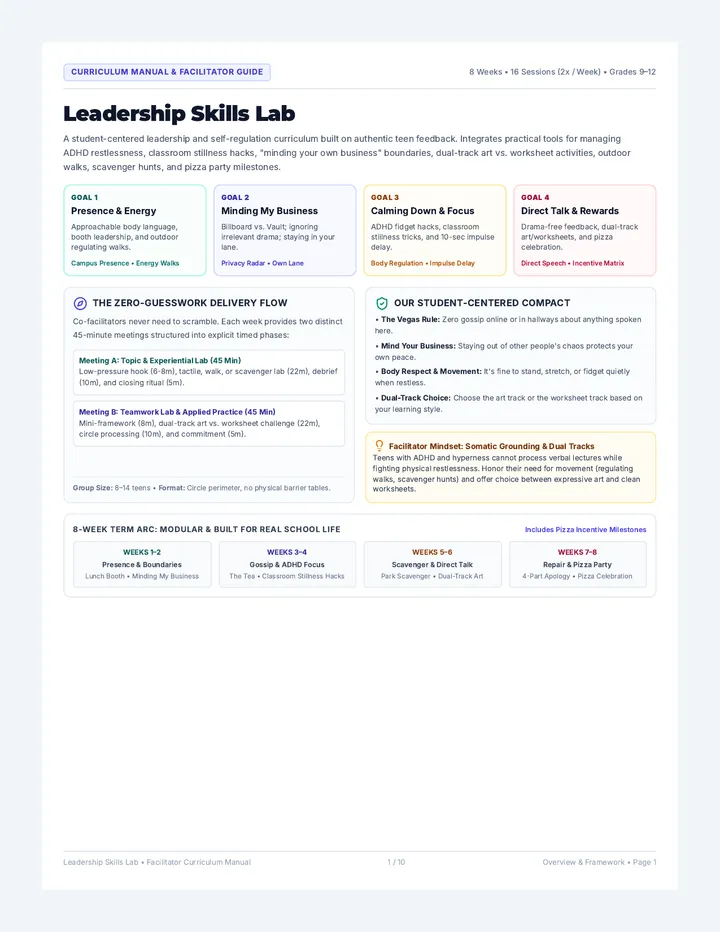
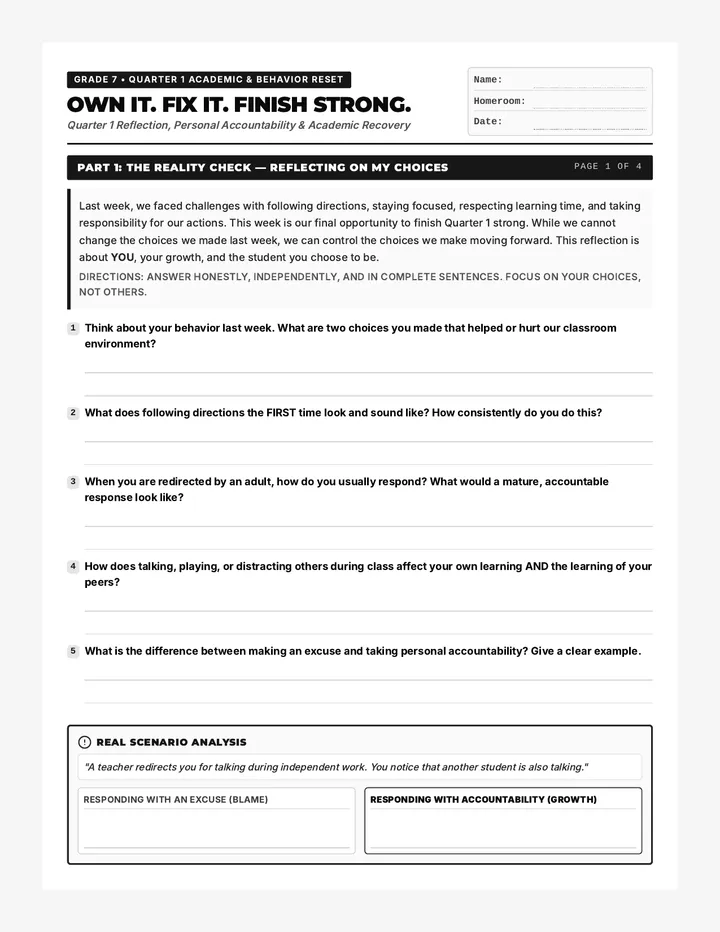
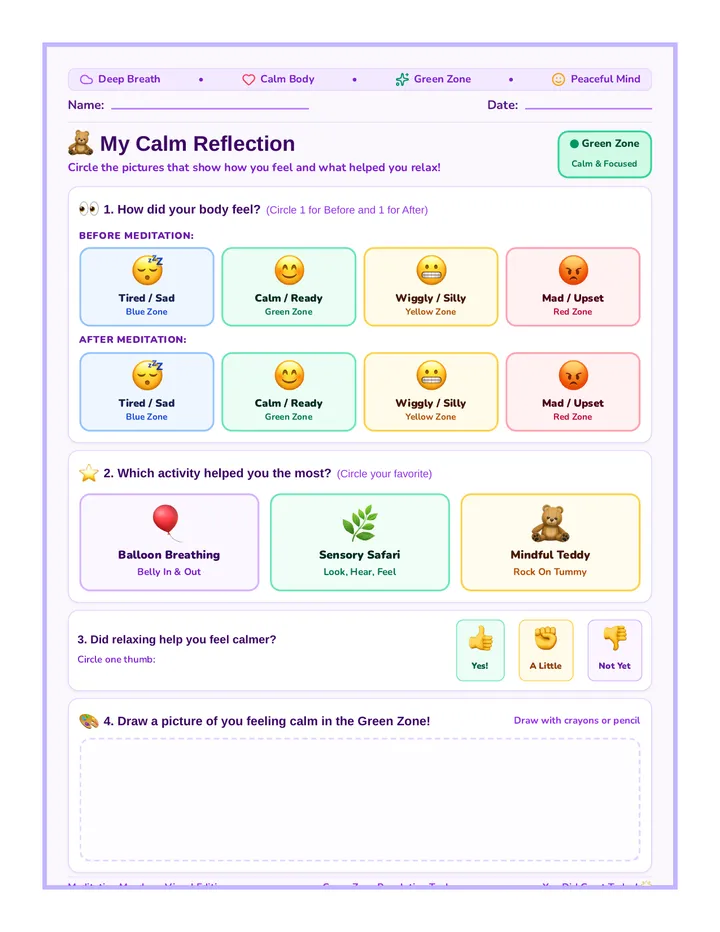
Facilitator Guide Facilitator Guide
Inner Explorer Manual
Overview
This series of worksheets is designed to build emotional literacy and provide Cognitive Behavioral Therapy (CBT) tools for teenagers. Each "Emotion File" validates the intensity of the teen experience while providing a structured, logical framework for processing feelings.
Key Concepts
The CBT Triangle: Helping students see the interplay between Thoughts, Behaviors, and Physical Sensations.Evolutionary Purpose: Normalizing emotions as tools for survival rather than "good" or "bad" traits.Thought Challenging: Actively questioning the accuracy of "emotional logic."
Implementation Tips
Validation First: Before starting the "Breakdown," acknowledge the reality of the feeling.Privacy: These are highly personal. Allow students to choose what they share.Micro-steps: Focus on small, achievable changes in behavior.
Discussion Framework
Step 1: The Anatomy
"Why do you think humans evolved to have this emotion? What is it trying to protect or signal?"
Step 2: The Physicality
"Where do you feel this first? If you could give this feeling a color or temperature, what would it be?"
Step 3: The Logic
"Is what your brain is telling you 100% true? What is another way to see the situation that is also true?"
Safety Note
These worksheets are for educational purposes. If a student expresses persistent feelings of hopelessness, self-harm, or severe distress, follow your institution's mental health protocols and refer them to a licensed professional.