Lenny.com
Explore
Create
ActivitiesNewMathEnglish Language ArtsScience & EngineeringSocial StudiesGlobal LanguagesHealth & Physical EducationSpecial EducationCounseling & Life SkillsArts & CreativityESL
Lenny.com
Lenny.com
Explore
Create
ActivitiesNewMathEnglish Language ArtsScience & EngineeringSocial StudiesGlobal LanguagesHealth & Physical EducationSpecial EducationCounseling & Life SkillsArts & CreativityESL
Lenny.com
Lenny.com

Solutions

Lenny for EducatorsLenny for SchoolsLenny for Districts

Product

ExploreSign inCreateSupportAbout

Resources

Getting startedMTSS Acceleration Program

Newsletters

School Funding Newsletter

© 2026 Lenny Learning Inc.

TermsPrivacyAccessibility
LinkedInInstagramX
Lenny
Counseling & Life SkillsSelf-AwarenessBasic Emotion RecognitionComplex Emotion IdentificationEmotional Nuance & Mixed FeelingsBuilding Positive Self-ImageRecognizing Strengths & Growth AreasAccurate Self-AssessmentPersonal Values IdentificationCultural & Individual Identity ExplorationValues-Based Decision MakingSelf-ManagementStop-and-Think StrategiesDelaying GratificationIndependent Impulse ManagementIdentifying Stress TriggersShort-Term Goal SettingSMART Goals DevelopmentGoal Monitoring & AdjustmentBuilding Perseverance & ResilienceInternal Motivation DevelopmentComprehensive Stress Reduction PlanningSocial AwarenessRecognizing Others' FeelingsDemonstrating EmpathyRespecting Individual DifferencesUnderstanding Cultural DiversityComplex Empathetic ResponsesMultiple Viewpoint ConsiderationMulti-Perspective AnalysisChallenging Stereotypes & BiasRelationship SkillsActive ListeningClear Verbal & Nonverbal CommunicationBuilding Positive FriendshipsWorking Cooperatively in GroupsCommunicating Personal BoundariesRespecting Others' BoundariesAssertive ExpressionPeaceful Problem-SolvingContributing to Team GoalsComplex Conflict NavigationMediation & NegotiationHealthy Romantic RelationshipsResponsible Decision-MakingDaily Problem IdentificationBrainstorming Multiple SolutionsEvaluating Pros & ConsRecognizing Risks & ConsequencesApplying Ethical FrameworksInformed Risk-Benefit DecisionsRoot Cause AnalysisMindfulnessMindful BreathingBody Scan MeditationDaily Mindfulness ApplicationDaily Self-Care RoutinesBalancing Life DemandsAdvocating for Wellness NeedsMental Health SupportUnderstanding Anxiety SymptomsWorry Management StrategiesProgressive Muscle RelaxationRecognizing Depression SignsBuilding Mood-Supporting RoutinesBehavioral Activation for MoodUnderstanding Grief StagesHealthy Grief CopingCreative Expression of LossBehavioral SupportDaily Check-In ProceduresDaily Goal Setting & ReviewRecognizing Escalation Warning SignsRequesting Breaks & SupportSelf-Calming During DistressUnderstanding Positive ReinforcementToken Economy ImplementationBehavior Chart TrackingAnalyzing Behavior PatternsIdentifying Antecedents & ConsequencesDetermining Behavior FunctionFunction-Based InterventionsIndividualized Behavior ContractsData-Driven Behavior AdjustmentTherapeutic ApproachesThoughts-Feelings-Behaviors ConnectionRecognizing Thinking PatternsChallenging Negative ThoughtsPositive Self-Talk PracticeThought Record TrackingAdvanced Cognitive RestructuringComprehensive CBT PlansBehavioral Activation TechniquesBuilding Positive ExperiencesExposure Hierarchies for AnxietyPresent-Moment AwarenessNon-Judgmental ObservationSelf-Soothing & DistractionComplex Emotion LabelingReducing Emotional Vulnerability (PLEASE)DEAR MAN CommunicationGIVE Skills for RelationshipsFAST Skills for Self-RespectRadical Acceptance PracticeCrisis Survival Skills (TIPP)Understanding Trauma EffectsTrauma Responses & TriggersIdentifying Trauma FeelingsGrounding TechniquesRegulation During Trauma DistressSafe Place VisualizationProcessing Through NarrativeDeveloping Trauma StoryPersonalized Safety PlanningGroup SupportTurn-Taking & SharingGroup Conversation SkillsSharing in Supportive EnvironmentLearning from Similar ChallengesBuilding Community & BelongingNavigating Peer RelationshipsGroup Skill PracticeGroup Mental Health EducationStress & Anxiety UnderstandingCrisis Support & SafetyKnowing When to Seek HelpIdentifying Mental Health CrisesGrounding During CrisisUsing Crisis HotlinesBuilding Support NetworksAccessing Mental Health ResourcesWarning Signs & Coping StrategiesDeveloping Personal Safety PlansUnderstanding Suicide Warning SignsGatekeeper Skills for PeersDigital LiteracySocial MediaTechnology BasicsProductivity ToolsInternet and Online ResearchWeb Design and PublishingDigital CitizenshipOnline Safety and PrivacyEmerging TechnologiesFinancial LiteracyMaking Financial DecisionsBanking and AccountsConsumer SkillsSaving and InvestingCredit and DebtEmployment and IncomeTaxesInsuranceMajor PurchasesEconomic ConceptsFinancial PlanningCollege & Post-Secondary PlanningCareer ExplorationUnderstanding Post-Secondary OptionsCollege Research & SelectionAdmission RequirementsCollege Application ProcessPersonal Statement WritingFAFSA CompletionScholarship Search & ApplicationsUnderstanding Student LoansContinuing Education PlanningInterview PreparationResearching EmployersCommon Interview QuestionsSTAR Method ResponsesProfessional Interview PresenceVirtual Interview SkillsInterview Follow-UpJob Search SkillsUnderstanding Job PostingsEffective Job Search StrategiesNetworking for OpportunitiesResume Writing BasicsAction Verbs & AchievementsTailoring Resumes to JobsCover Letter WritingProfessional ReferencesProfessional CommunicationBusiness Email EtiquettePhone & Voicemail ProfessionalismMeeting ParticipationPresentation SkillsProfessional Work EthicTime Management & ProductivityTeamwork & CollaborationAdaptability & FlexibilityProblem-Solving at WorkConstructive FeedbackWorkplace RightsUnderstanding Employment LawsPay & Benefits UnderstandingWorkplace SafetyAnti-Discrimination & Harassment

Growth Game Plan

A high-energy 30-minute goal-setting workshop for 7th and 8th graders using athletic playbook metaphors to master SMART criteria and proactive perseverance strategies.

EGElijah Glenn

Growth Game Plan

A high-energy 30-minute goal-setting workshop for 7th and 8th graders using athletic playbook metaphors to master SMART criteria and proactive perseverance strategies.

EGElijah Glenn
Game Plan Blueprint

04

Two Perseverance Plays: The If-Then Strategy

Strategy Calling

PLAY #1 Immediate Strategy Pivot

When you hit mental fatigue or get stuck on a tough concept:

IF: I study for 20 minutes and feel confused...

THEN: I switch to flashcards or draw a diagram for 10 minutes.

Fix: Don't quit the workout—change the drill.

PLAY #2 Support & Coaching Call

When you miss a score benchmark or lose momentum:

IF: I score below my target on a checkpoint quiz...

THEN: I attend office hours with 2 written questions within 48 hours.

Fix: Seeking feedback is what elite players do daily.

Perseverance is an action, not an emotion. Script your 2 plays on Page 2!


05

Huddle Up: Peer Quality Audit

Peer Review • 7 Min

1. Check S & M

Can a spectator clearly see whether they achieved the goal? Are numbers and dates included?

No Fuzzy Language

2. Pressure Test

Are both perseverance plays realistic? Does Play #1 trigger immediately when obstacles arise?

Action-Ready Backup

3. Coach Feedback

Offer 1 specific praise and 1 refinement tweak using your Goal Quality Check sheet.

Help Your Teammate Win

Partner switch cue: Swap cards, run the audit, sign off. Transfer to SMART Goal Card!


06

Gallery Walk & Game Day Launch

Final 5 Minutes

Step 1: Post Your Goal Card

Tape your official SMART Goal Card along the classroom locker wall.

Silently walk the perimeter: read 3 teammates' cards and leave one sticky-note encouragement or high-five icon.

Public accountability turns commitments into reality.

Step 2: Exit Ticket Verbal Call

Before you leave the locker room today, complete the bottom of your Goal Quality Check sheet:

• State your 1 SMART goal to your coach/partner.

• Name your #1 perseverance play when obstacles appear.

You are now game-ready!

"Champions do daily what others do occasionally."

Prompt to Class Before Hitting Play: "Watch the athlete's eyes right after the fall. Do they pout? Watch how fast they transition from setback to their reset routine."

Growth Game Plan • Teacher Facilitation Guide Continue to Direct Teach & Interventions → Page 1 of 2

02

FACILITATION PLAYBOOK & INTERVENTIONS

Direct instruction talking points, peer review facilitation cues, and troubleshooting.

Execution Guide

Direct Teach Script: Dismantling Fuzzy Goals (Min 5:00–10:00)

Teaching S & M (The Scoreboard):

Say: "If a referee walked in, could they tell if you scored? If you say 'I want to read more,' the ref blows the whistle—what does 'more' mean? Make it countable: 20 pages, 4 nights a week."

Teaching A, R, & T (Reality & Clock):

Say: "Achievable doesn't mean easy; it means stretching your muscle without tearing it. And Time-Bound means a real calendar date. 'Someday' is not a day on the calendar."

Modeling the 2 Perseverance Plays (Min 10:00–13:00)

Key Concept to Emphasize: Research shows students are 3x more likely to persevere when they pre-decide their defensive response using an IF [obstacle] → THEN [action] rule.

Play #1 (Strategy Pivot): "When I'm tempted to shut my laptop, I will set a 5-minute timer and switch to diagramming."

Play #2 (Support Call): "When I score under 80%, I will take my quiz to coach/teacher during homeroom Tuesday."

Common Student Pitfalls & Live In-Class Fixes

Pitfall 1:

"I will get all A's." (Too broad, no daily habit)

Coach Correction: "That's an outcome, not a game plan. What specific subject is your biggest challenge right now? Let's build a play for that subject first."

Pitfall 2:

"When I get stuck, I'll just try harder." (Vague perseverance)

Coach Correction: "Trying harder with the wrong technique just wears you out. What new tool, person, or strategy will you deploy? Name the exact resource."

Differentiation & Scaffolding Strategies

For Striving Writers / ELL Students:

Provide sentence starters: "By [date], I will increase [score/minutes] from [X] to [Y] by doing [habit]." Allow pairing with a peer partner.

For Advanced / Fast Finishers:

Challenge students to create a "Milestone Track" with 2 mini-deadlines and identify a peer accountability partner they must check in with weekly.

Growth Game Plan • Teacher Facilitation Guide Ready for Classroom Execution Page 2 of 2
You might also like

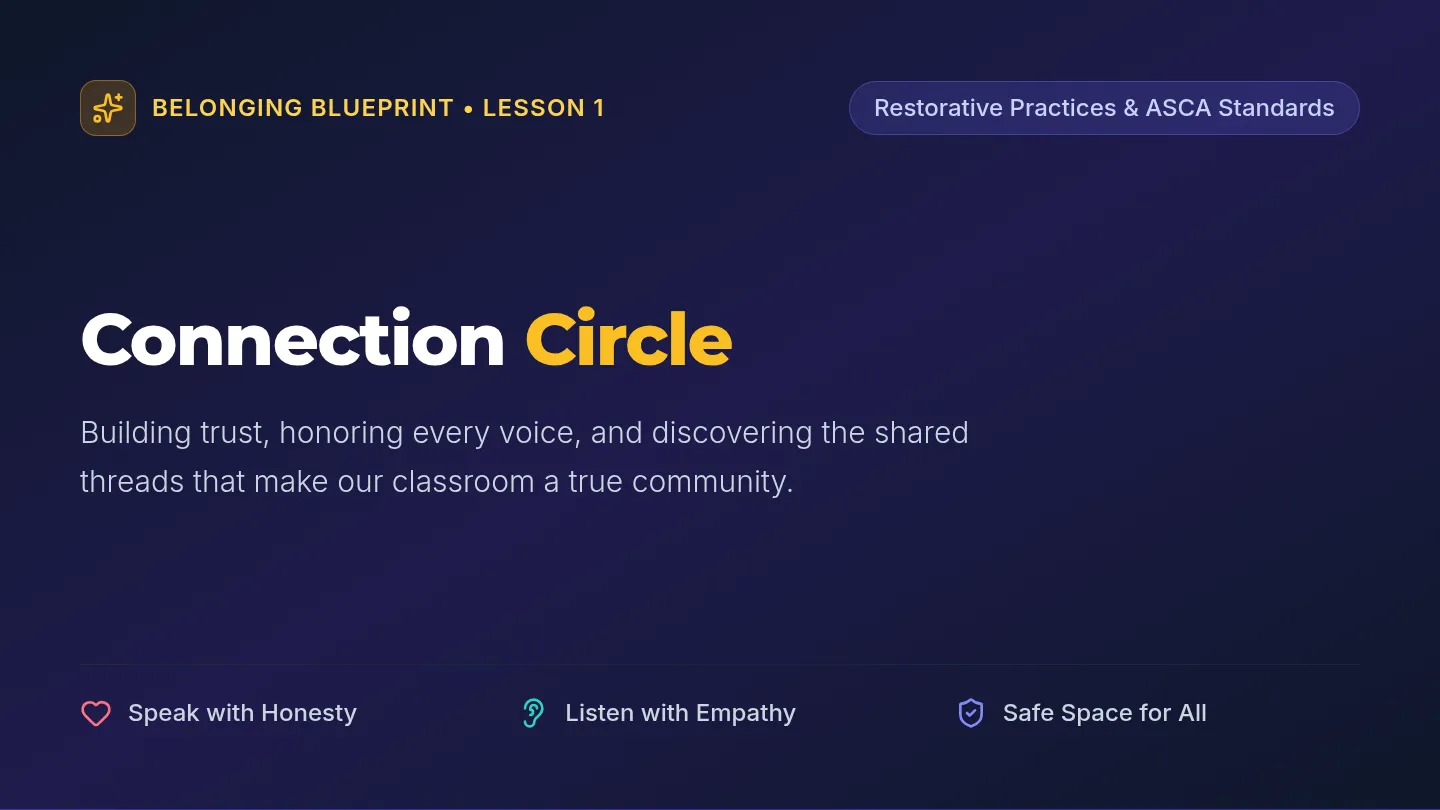
Connection Circle Slides

Belonging Blueprint

A foundational multi-day classroom culture sequence rooted in restorative practices and ASCA student behavior standards. Students cultivate relational trust, practice active empathy, and co-create enduring community agreements that foster emotional safety and shared belonging.

NF

Natalie Frahm

6
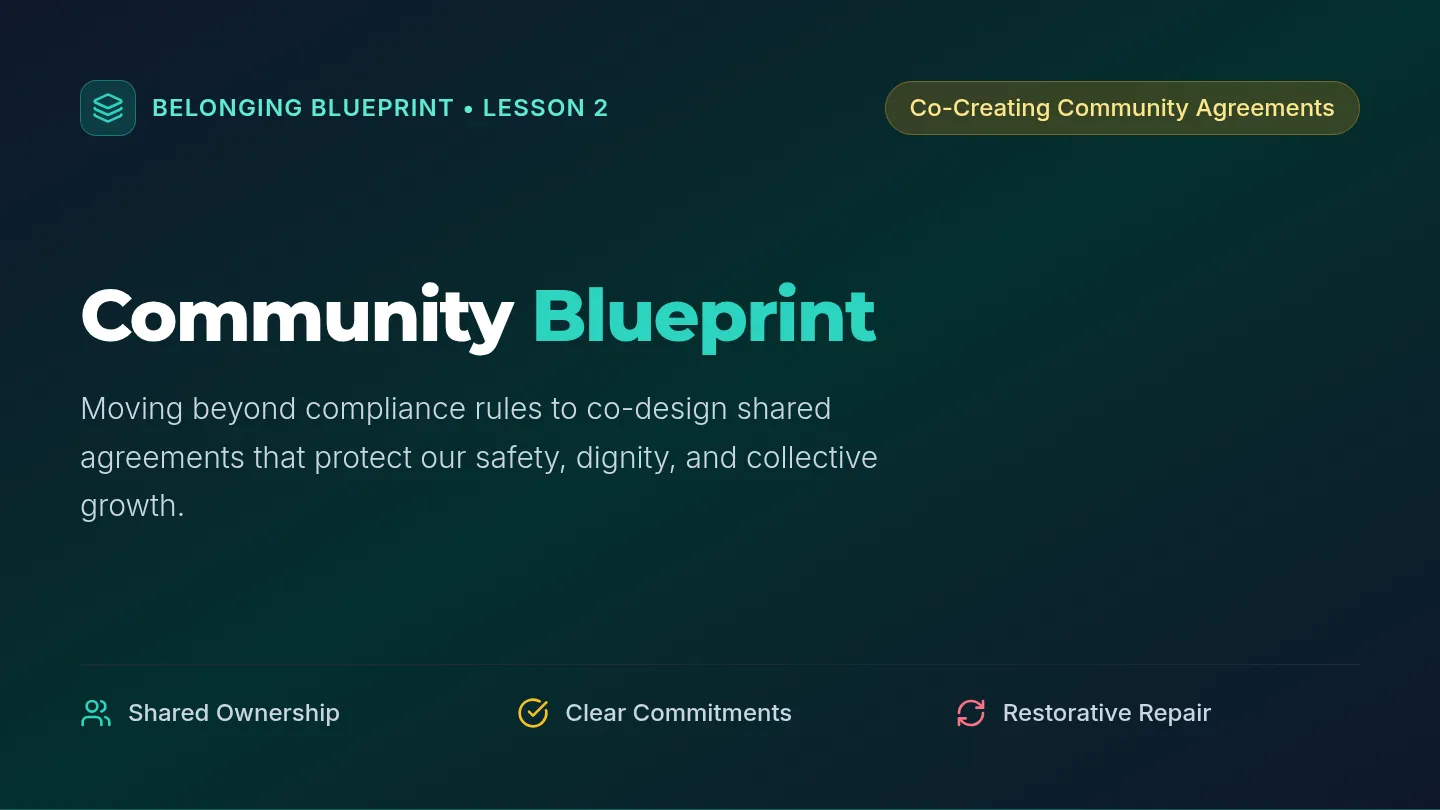
Community Blueprint Slides

Shared Agreements Lab

Students translate shared core values into actionable community agreements, practicing restorative problem-solving frameworks and personal accountability aligned with ASCA self-management standards.

NF

Natalie Frahm

3
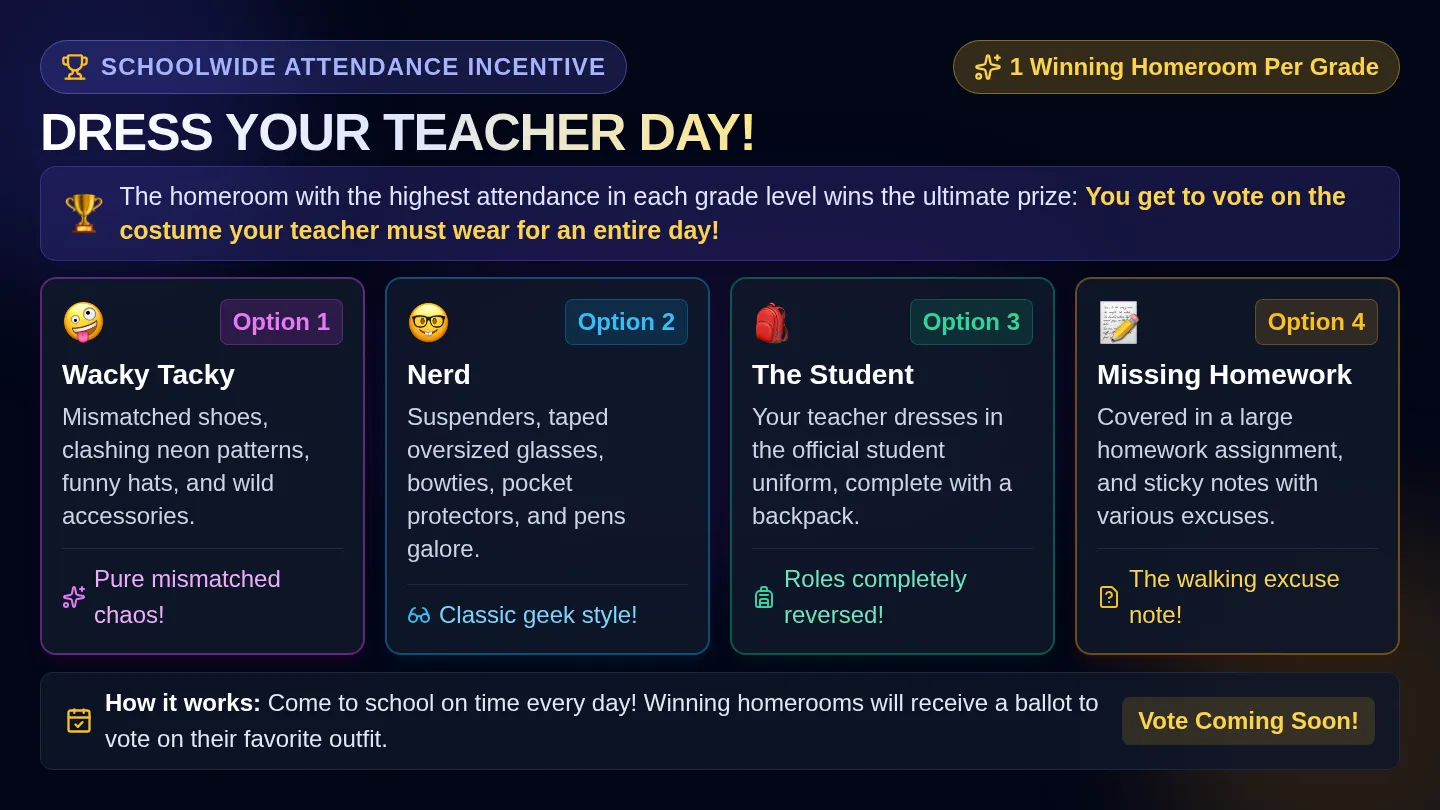
Teacher Costume Clash Slides

Teacher Costume Clash Slides

A schoolwide attendance incentive announcement slide featuring the teacher costume voting prize and the four candidate costume themes.

MC

Megan Cilano

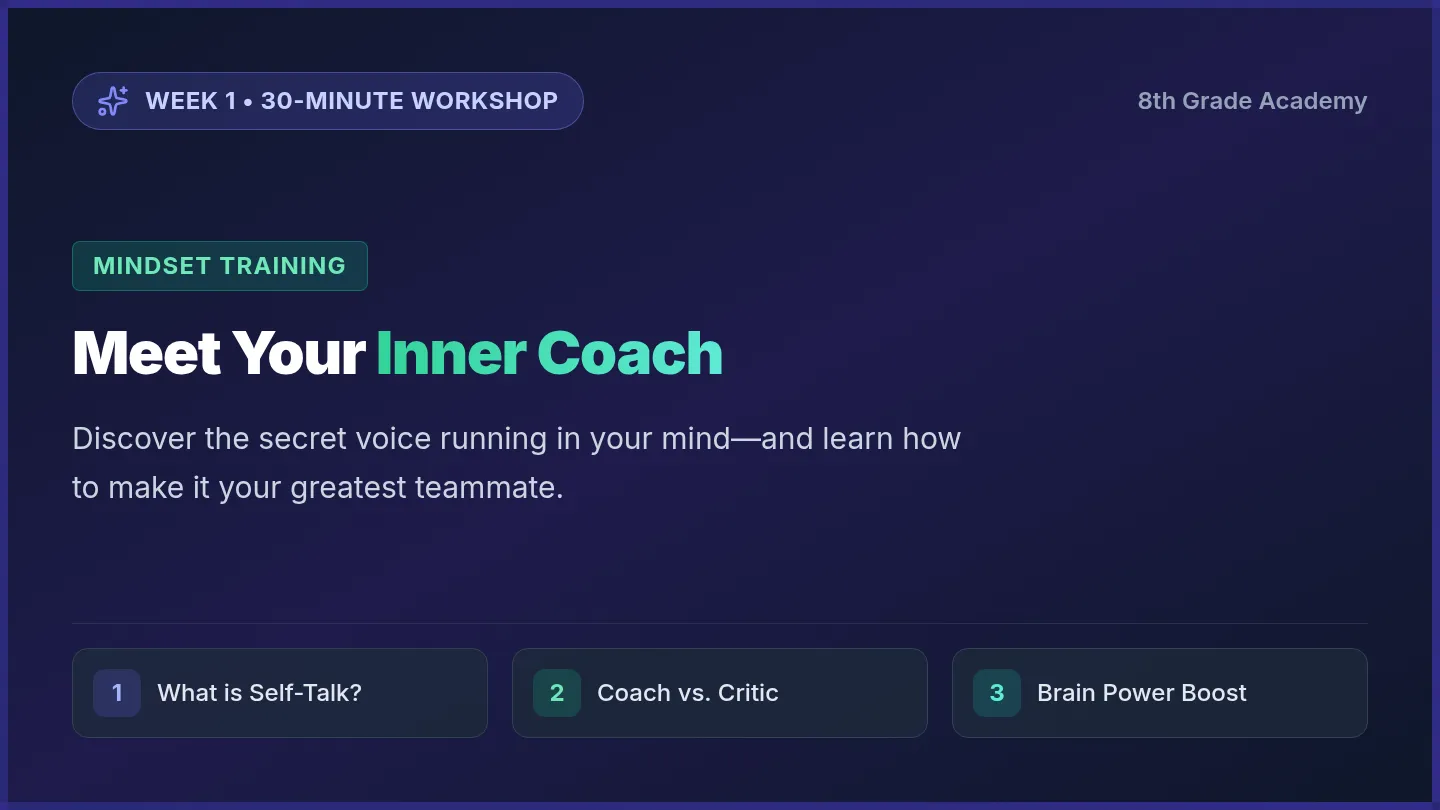
Inner Coach Slides

Inner Coach Academy

A 4-week small-group intervention sequence designed for 8th grade students (ASD and IDML) to understand, build, and apply positive self-talk. Each 30-minute session uses visual anchors, concrete scripts, and guided practice to transform inner criticism into empowering self-advocacy.

LS

Laura-Ashley Shury

9
Connection Circle Slides

Circle of Connections

Students engage in restorative circles and paired empathy interviews to establish peer trust, attentive listening norms, and mutual care aligned with ASCA social skills standards.

NF

Natalie Frahm

3
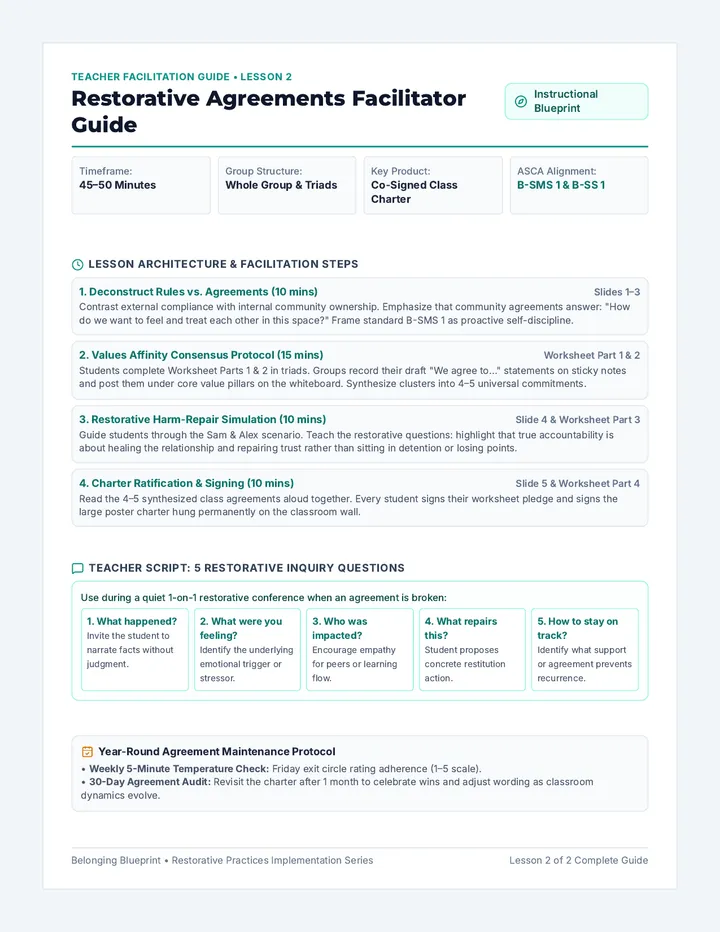
Restorative Agreements Teacher Guide

Restorative Agreements Teacher Guide

A step-by-step facilitator guide for guiding classroom consensus, conducting 5-step restorative problem-solving chats, and sustaining agreements year-round.

NF

Natalie Frahm

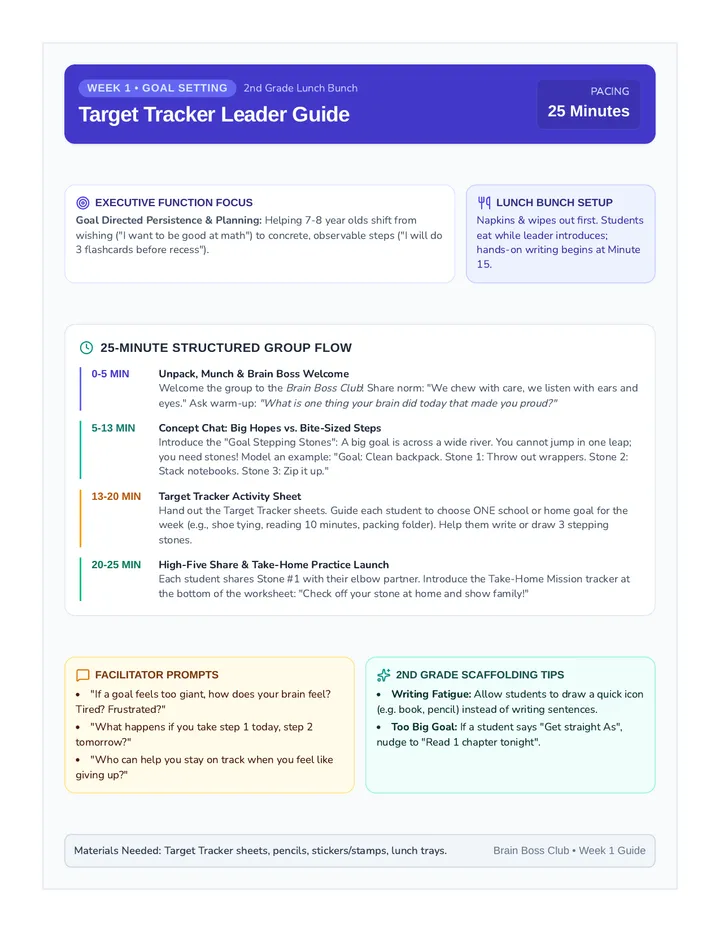
Target Tracker Leader Guide

Brain Boss Club

A 6-week lunchtime executive functioning curriculum for second graders focusing on goal setting, time awareness, decision making, problem solving, focus, and self-reflection.

K

Kathryn.Sanders

13
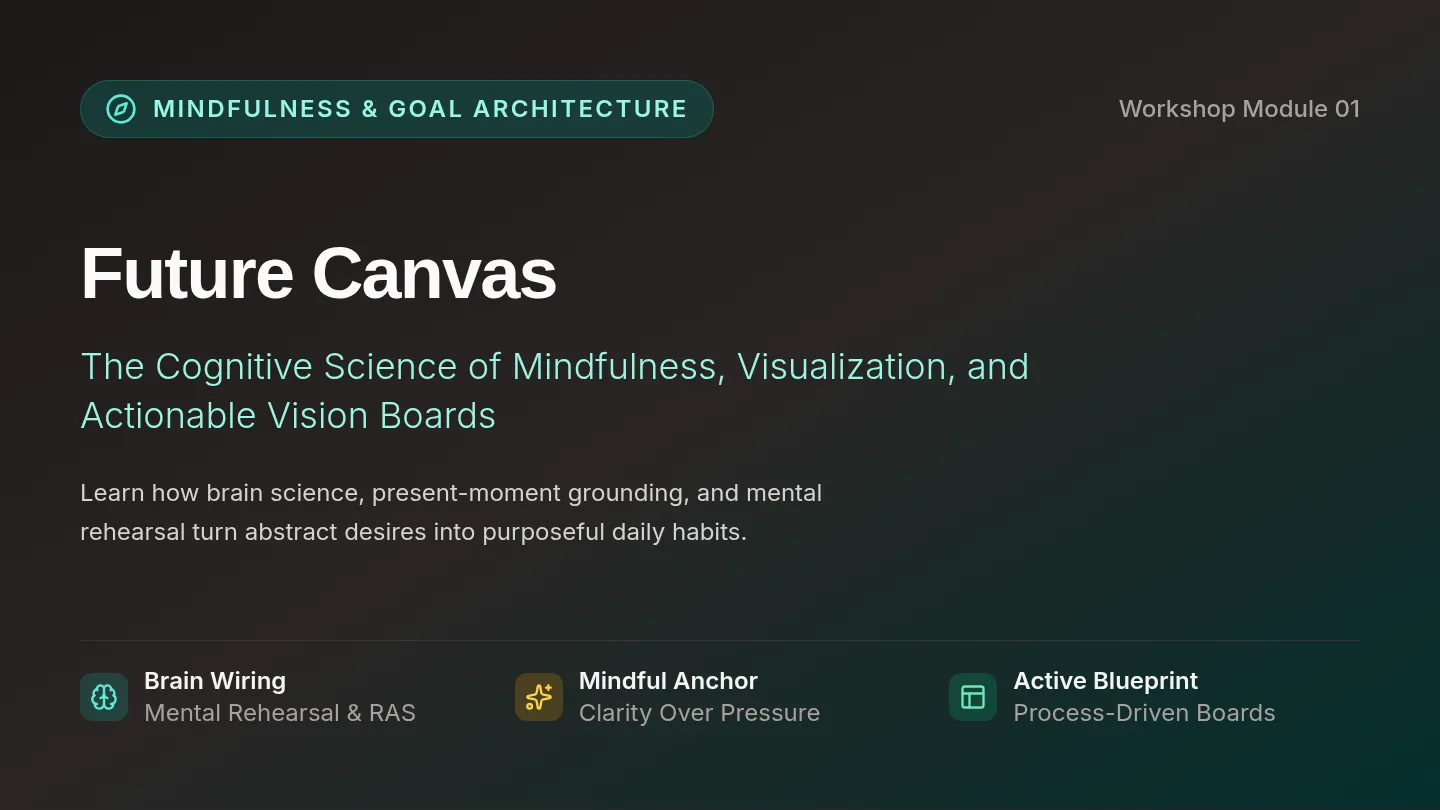
Future Canvas Slides

Future Canvas

A dynamic lesson exploring the cognitive science of mindfulness and visualization, guiding students to anchor their personal goals through intentional vision board design. Students learn mental rehearsal techniques, identify core values, and construct actionable visual maps for personal growth.

KM

Keyarow Mosley

3
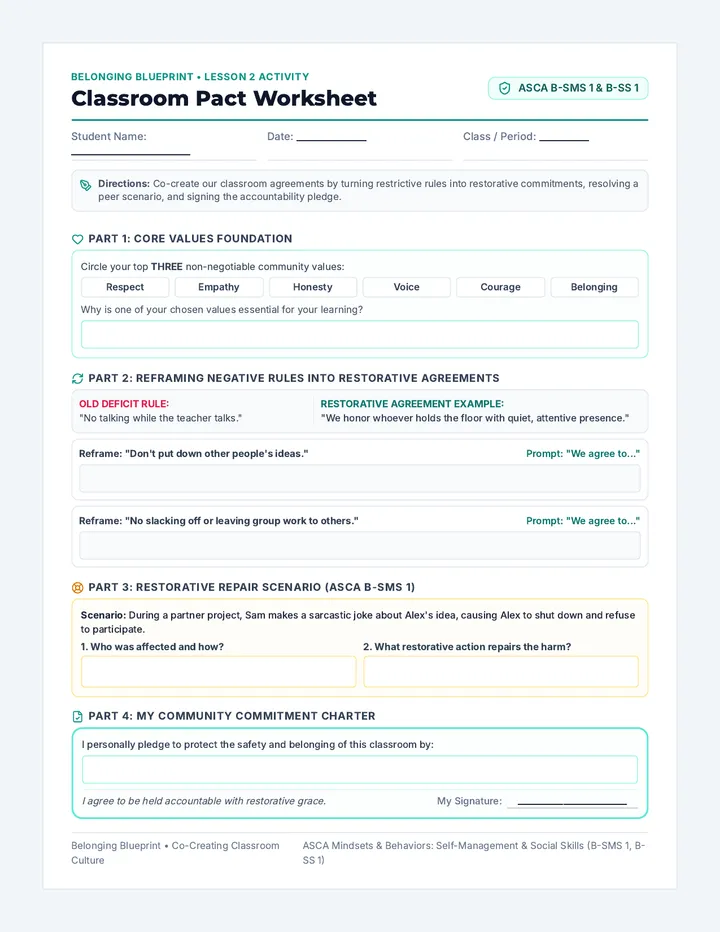
Classroom Pact Worksheet

Classroom Pact Worksheet

A student-facing graphic organizer to reframe deficit rules into affirmative restorative agreements, resolve relational scenarios, and sign an accountability pledge.

NF

Natalie Frahm

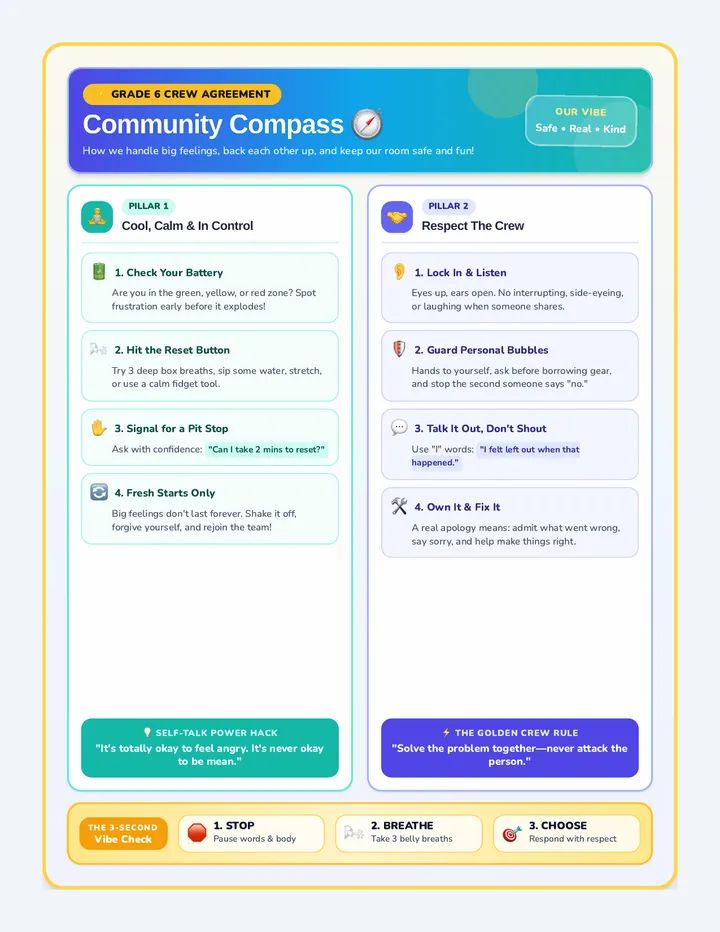
Community Compass Poster

SEL Pathways

A comprehensive social-emotional learning sequence featuring structured lessons for self-regulation, emotional awareness, and positive peer connection across grade levels.

TM

Tanya McMichael

5
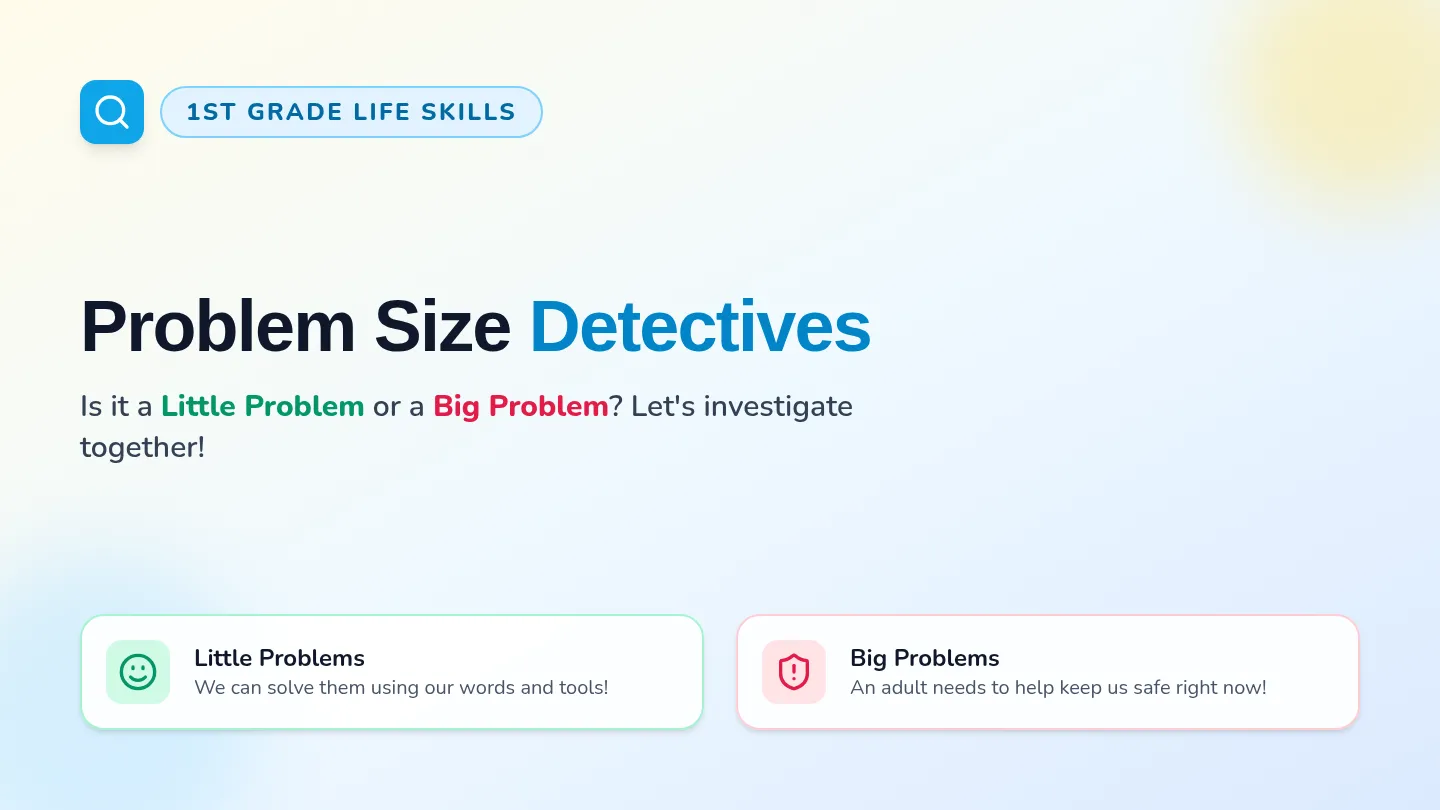
Problem Size Slides

Problem Size Detectives

A dynamic first-grade social-emotional learning lesson that teaches students how to differentiate between big and little problems, pause with calming strategies, and pick safe, proactive solutions.

L

lbateman

4
Community Blueprint Slides

Community Blueprint Slides

Visual slides guiding students through the transition from imposed rules to co-created community agreements and restorative harm-repair frameworks.

NF

Natalie Frahm