Friendship First Slides Growing at Your Own Pace
Friendship First
Understanding why childhood is for friendships, play, and growing—and why romantic dating waits until later.
45-Minute Lesson
Friendships & Boundaries
Today's Class Timeline
1
Warm-Up Discussion
What makes childhood fun and special right now?
2
The Growing-Up Timeline
Seeing how life stages change from kid to teen to adult.
3
Friendship vs. Dating
Why romantic dating requires older-teen & adult readiness.
4
Scripts & Activity
Practicing smart replies and building your own timeline.
Warm-Up Discussion
What makes being a kid awesome right now?
Play & Hobbies
Time to explore sports, art, games, reading, and imagination.
Great Friends
Laughing, sharing, and learning how to be a kind teammate.
Family Support
Having trusted adults help you learn and stay safe.
Turn & Talk: Share one thing you love doing with your friends that doesn't require growing up fast!
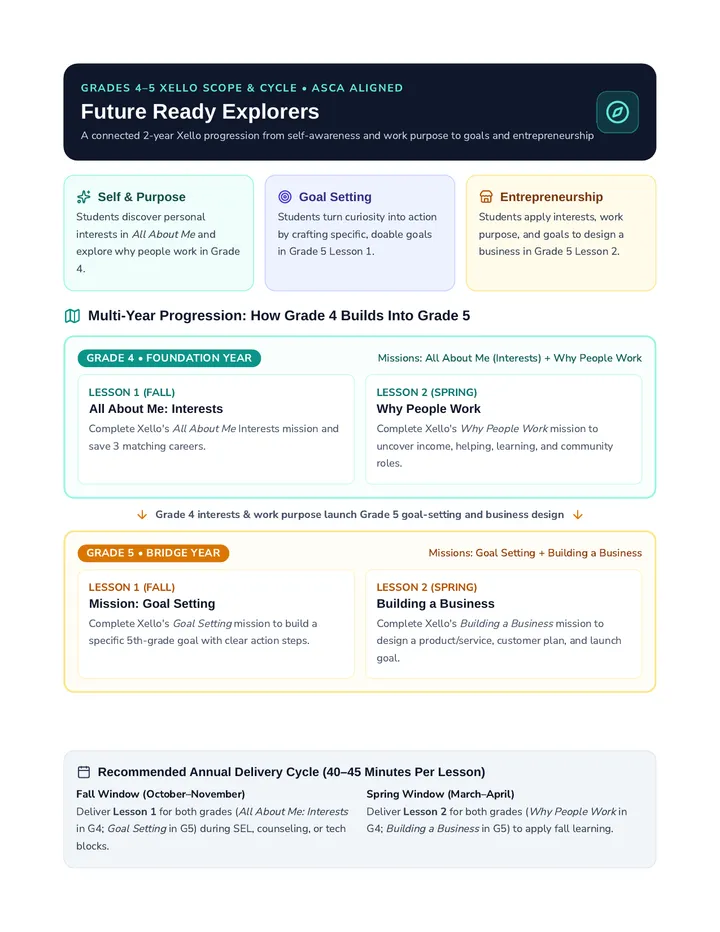
The Growing-Up Timeline
Every stage of life has its own special focus. Just like learning to ride a bike before driving a car, relationships grow in stages too!
Stage 1: Childhood
Ages 5–12
Building friendships
Learning who you are
School, play & hobbies
Stage 2: Older Teens
Ages 15–19
More independence
Deeper communication
Some teens begin dating
Stage 3: Adulthood
Ages 20+
Jobs & life decisions
Long-term partnerships
Full emotional maturity
Why Wait? Friendship vs. Dating
Childhood Friendship
• Fun, playful, and low-pressure
• You can have lots of different friends
• Focuses on kindness, sharing, and games
• Adults help guide you through disagreements
Romantic Dating
• Involves big, complex romantic feelings
• Needs strong emotional maturity & boundaries
• Takes time away from play and family
• Designed for older teens and adults—not kids!
What About Crushes or Teasing?
Sometimes kids hear about "boyfriends" or "girlfriends" in movies or on the playground. Here is what to remember:
Admiring someone is normal: Thinking someone is cool or fun to be around just means they are a great friend!
No rush to "date": You don't need a boyfriend or girlfriend to fit in or be grown-up.
Respect everyone's space: Never tease classmates about "liking" each other—it makes friendships awkward.
Kid-Smart Boundary Scripts
What can you say if someone teases you or asks you to "date"?
Friendly & Clear
"I'm just focusing on being friends right now!"
When Teased
"We're just good friends. Please stop teasing us."
Getting Help
"I'm not comfortable with that. I'm going to talk to an adult."
Your Turn: Growth Timeline
On your worksheet, map out what belongs in each stage of life, sort friendship vs. dating choices, and write your own boundary script.
Closing Thought
"Every stage of growing up has its own best season. Right now, your job is to be a kid, be a great friend, and enjoy growing!"
Growing Up Timeline Worksheet Growing Up Timeline
Friendship First • Student Activity
Name: _________________________
Date: __________________________
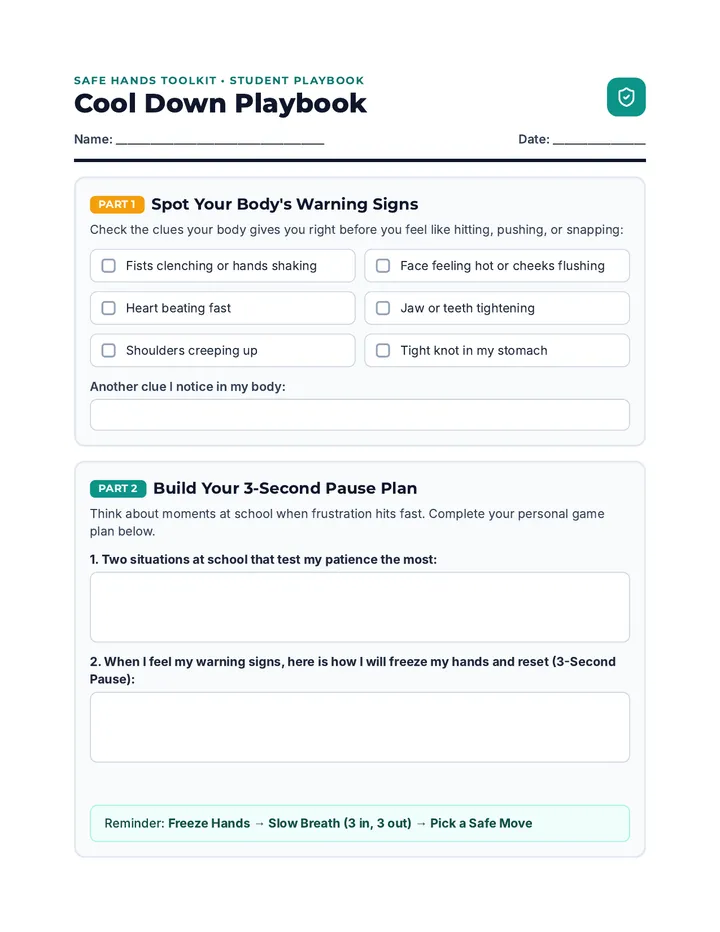
Part 1: My Growing-Up Timeline
Every stage of life has its own focus. In each box below, write or draw 2–3 things that fit best in that stage of growing up.
Stage 1
Childhood (5–12)
Stage 2
Older Teens (15–19)
Stage 3
Adulthood (20+)
Part 2: Which Stage Does It Belong To?
Read each example. Check the box that shows whether it belongs to Childhood Friendship or Older Teen / Adult Dating .
1. Playing tag at recess, sharing snacks, and cheering each other on in sports.
Childhood Friendship
Older Teen / Adult Dating
2. Going on romantic dates and making big life plans together as partners.
Childhood Friendship
Older Teen / Adult Dating
3. Thinking a classmate is super kind and fun to sit with at lunch.
Childhood Friendship
Older Teen / Adult Dating
4. Navigating serious romantic feelings with full emotional maturity.
Childhood Friendship
Older Teen / Adult Dating
Growing Up Timeline • Page 2 Friendship First
Part 3: What Would You Say?
Write a kind, confident boundary response you could use in each situation below.
Scenario A: At recess, a group of kids starts teasing you and your friend, saying, "Ooh, you two are boyfriend and girlfriend!" What can you say?
Scenario B: A classmate asks you to "date" them or be their boyfriend/girlfriend, but you know dating is for older teens and adults. What can you say?
Part 4: My Childhood Superpower
Write or draw one thing you love about being a kid right now and one way you can be a great friend this week.
Friendship First Teacher Guide Friendship First: Teacher Guide
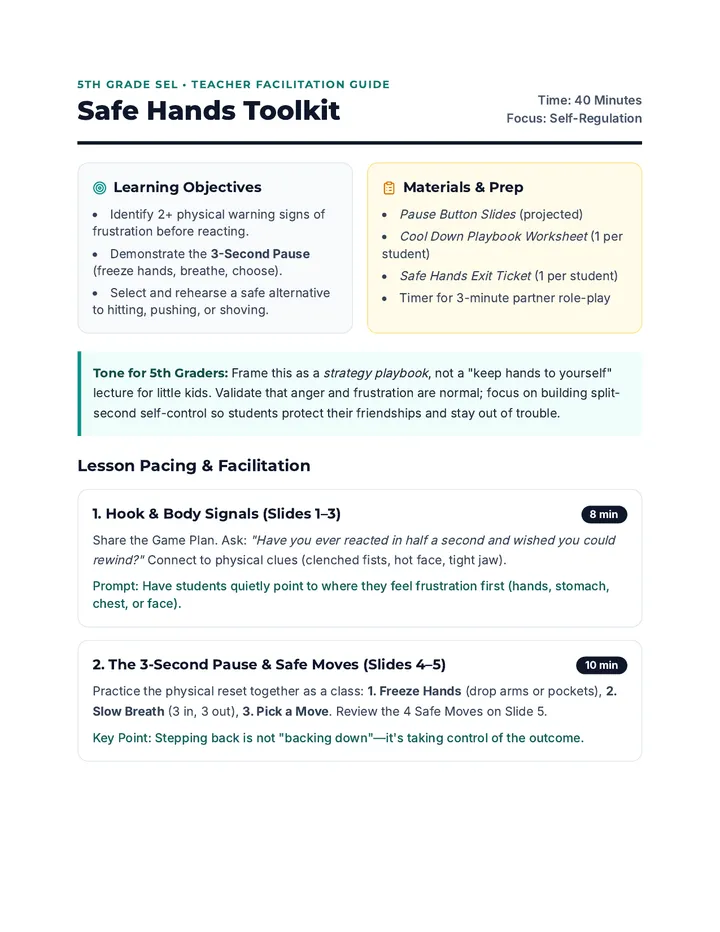
45-Minute Single-Class Lesson Plan • Grades 3–5
45 Min Pacing
Learning Objectives
• Explain why childhood is a season for friendships, play, and personal growth rather than romantic dating.
• Sequence key relationship and responsibility milestones across a 3-stage Growing-Up Timeline.
• Practice respectful, confident boundary scripts when faced with peer teasing or pressure to "date."
45-Minute Class Pacing Timeline
Time
Lesson Phase
Teacher Moves & Student Action
0–5 min
Warm-Up Hook
Slides 1–3
Welcome students and introduce the theme. Ask Turn & Talk: "What makes being a kid awesome right now?" List hobbies and friend activities on the board.
5–15 min
Growing-Up Timeline
Slide 4
Walk through Stage 1 (Childhood), Stage 2 (Older Teens), and Stage 3 (Adulthood). Use the bike-to-car analogy: every stage builds skills for the next.
15–25 min
Friendship vs. Dating
Slides 5–6
Compare low-pressure childhood friendships with the emotional maturity required for dating. Normalize admiring a friend without needing to label it "dating."
25–38 min
Scripts & Worksheet
Slide 7 + Handout
Model the 3 boundary scripts chorally. Distribute Growing Up Timeline Worksheet ; students complete Parts 1–3 independently or in pairs.
38–45 min
Reflection & Wrap-Up
Slide 8 + Part 4
Students complete Part 4 ("My Childhood Superpower"). Invite 2–3 volunteers to share one way they will be a great friend this week.
Guiding Sensitive Moments Without Shame
If a student says, "My cousin is 10 and has a boyfriend," or "I already have a girlfriend," respond warmly without embarrassment: "Sometimes kids use those words to mean a special best friend, or because they see it on TV. Real romantic dating is something grown-ups and older teens do when they're ready for big responsibilities—right now, being great friends is plenty!"
Friendship First: Teacher Guide • Page 2 Discussion & Answer Key
Facilitated Discussion Prompts
1. On Growing in Stages (Slide 4)
"Why do we wait until age 16 to drive a car instead of age 9? How is emotional readiness for dating similar?"
2. On Teasing (Slide 6)
"How does it feel when classmates tease two friends about 'liking' each other? How can we keep our class respectful?"
Differentiation & Supports
Visual & ELL Learners: Allow students to draw pictures in Part 1 and Part 4 of the worksheet instead of writing full sentences.
Quiet / Shy Students: Practice the Slide 7 boundary scripts as a whole-class choral read before asking pairs to role-play.
Extension: Have fast finishers add a third scenario to Part 3 about seeing "dating" on a TV show or game and how they'd respond.
Worksheet Answer Key & Sample Responses
Part 1: My Growing-Up Timeline (Sample Answers)
• Childhood (5–12): Making friends, playing sports/games, learning hobbies, family time.
• Older Teens (15–19): Part-time jobs, driving, deeper communication, some teens begin dating.
• Adulthood (20+): Careers, living independently, long-term romantic partnerships.
Part 2: Which Stage Does It Belong To?
1. Childhood Friendship
2. Older Teen / Adult Dating
3. Childhood Friendship
4. Older Teen / Adult Dating
Part 3: What Would You Say? (Sample Scripts)
• Scenario A: "We're just good friends. Please stop teasing us!"
• Scenario B: "I'm just focusing on being friends right now—I'm not into dating."
Part 4: My Childhood Superpower
Accept any thoughtful response celebrating childhood activities and specific acts of kindness toward friends.