Through a comparative graphing activity, students explore the impact of time on investing, discovering why starting early is more powerful than saving larger amounts later in life.
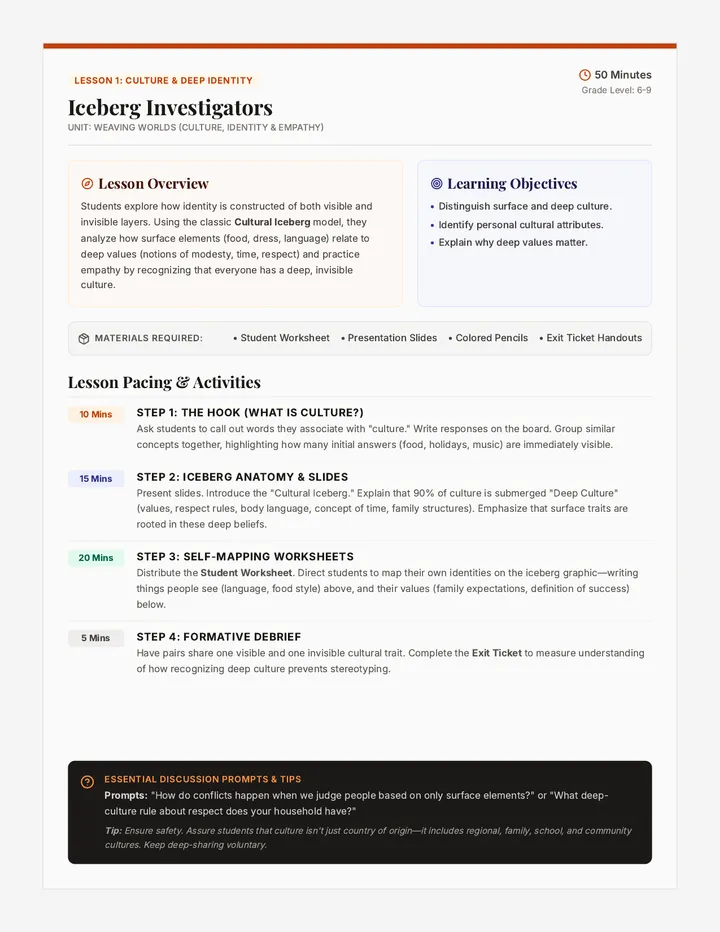
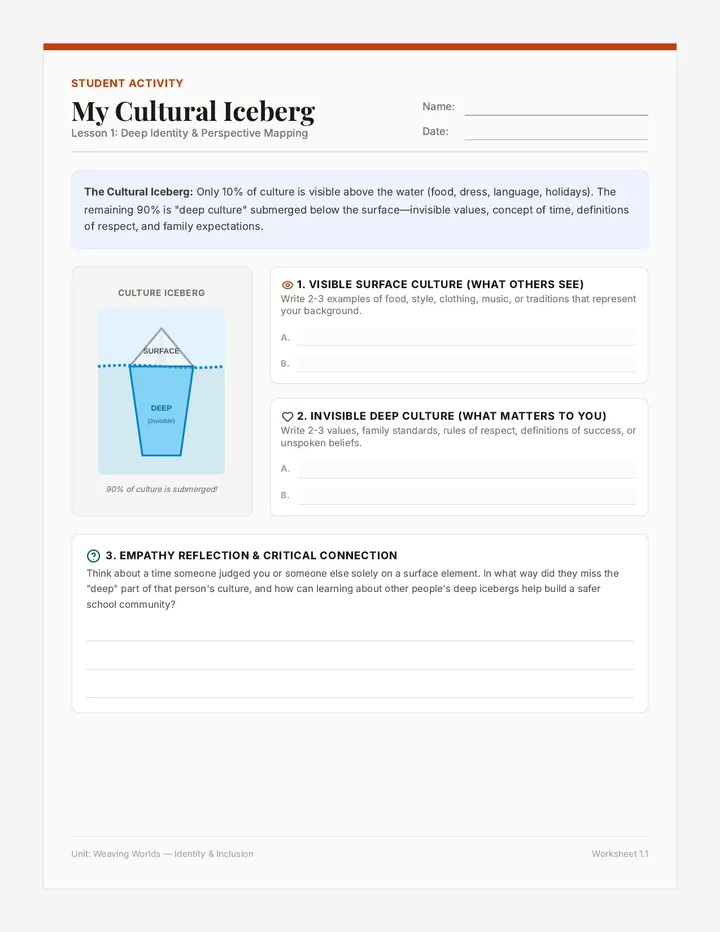
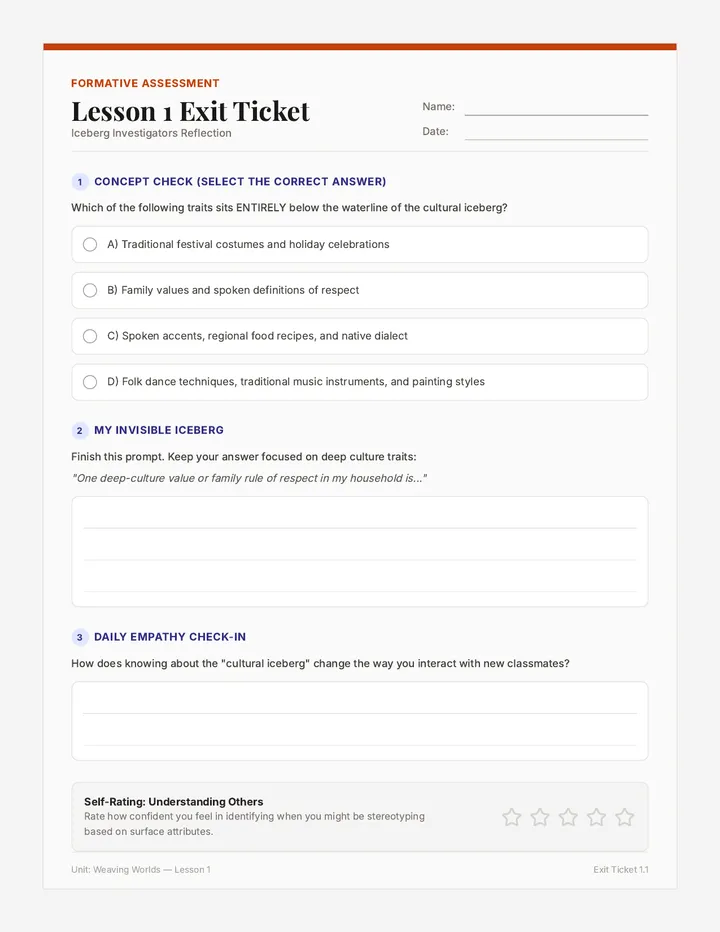
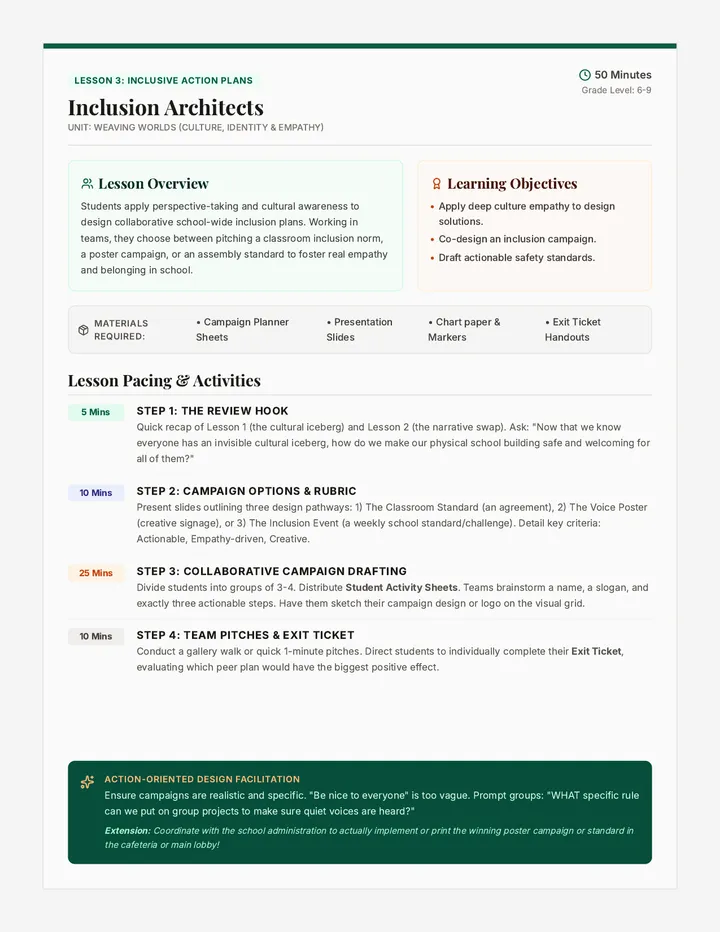
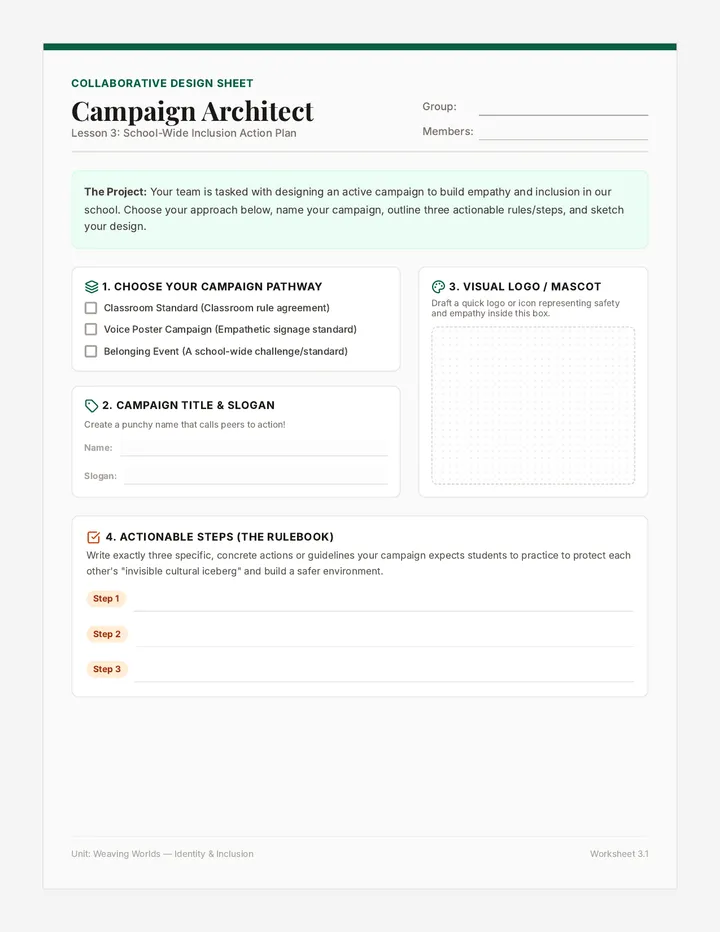
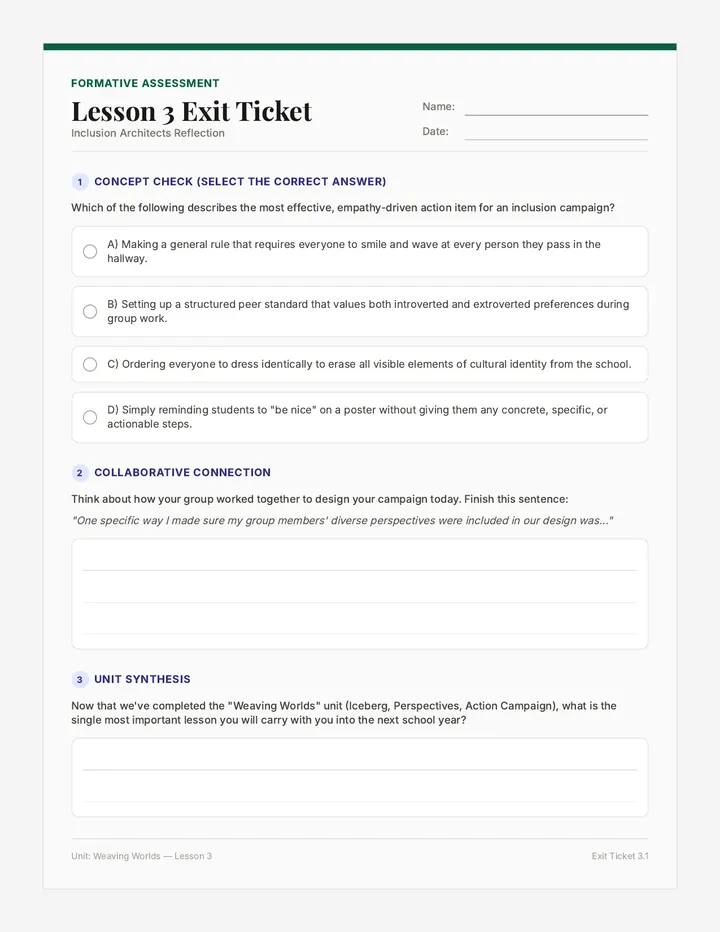
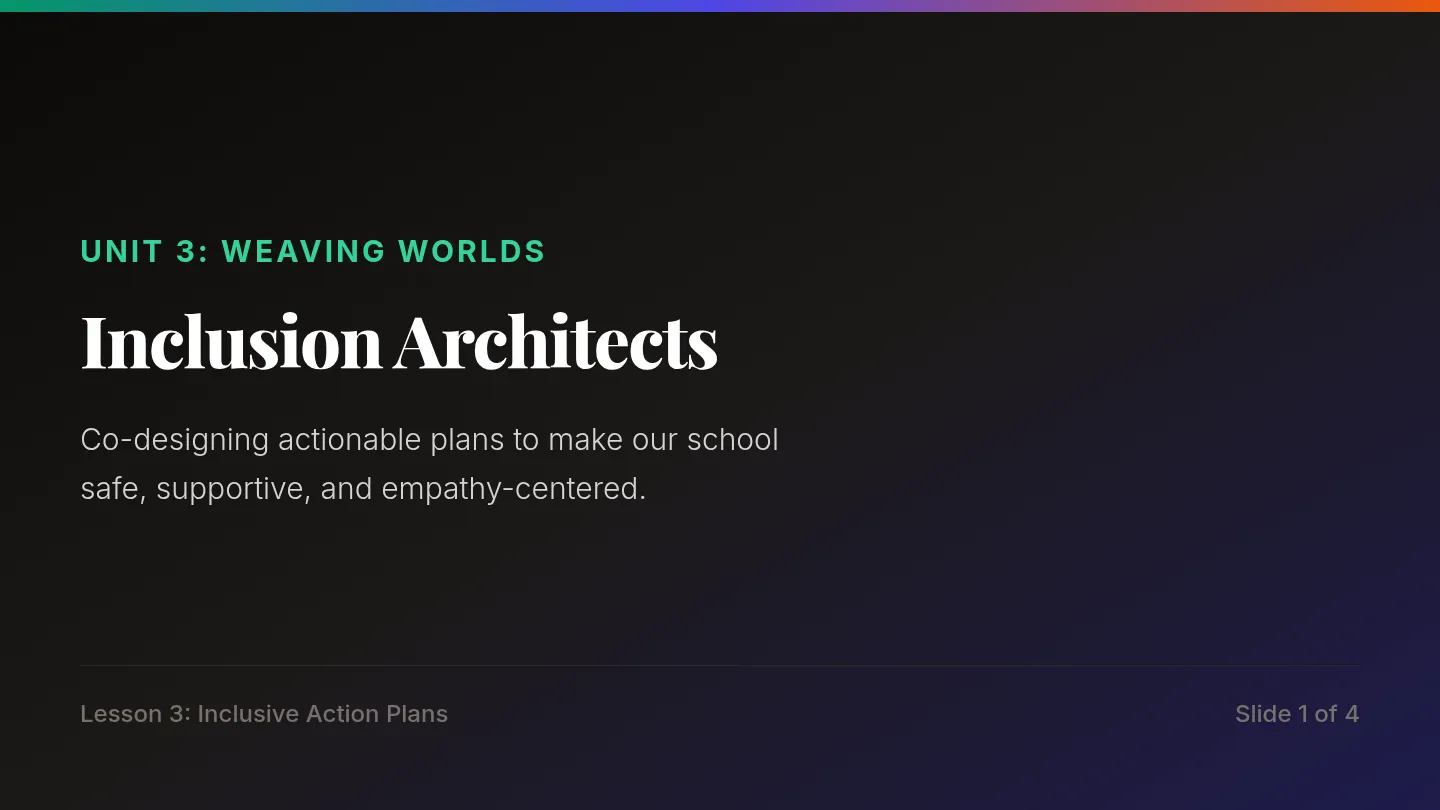
A 3-lesson unit on culture, identity, empathy, and building an inclusive school community. Students explore the cultural iceberg, share personal perspective narratives, and collaborate on actionable school-wide inclusion plans.
A collection of visual prompts and break cards designed to support students in self-regulation and managing emotions within the school environment.
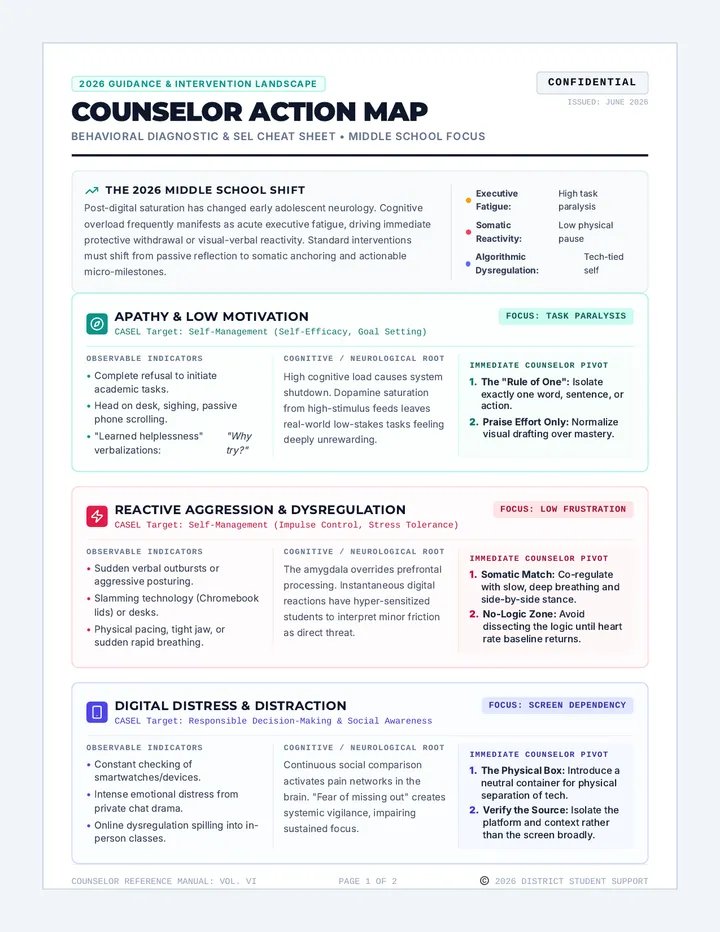
A highly professional, 2-page print-ready Counselor Reference Sheet for middle school counselors in 2026. It covers three major behavioral priorities: Apathy & Low Motivation, Reactive Aggression & Dysregulation, and Digital Distress & Distraction. Includes actionable immediate pivots, a Tiered Intervention Matrix, a Rapid Assessment Protocol, and a writable follow-up log with spacious writing areas.
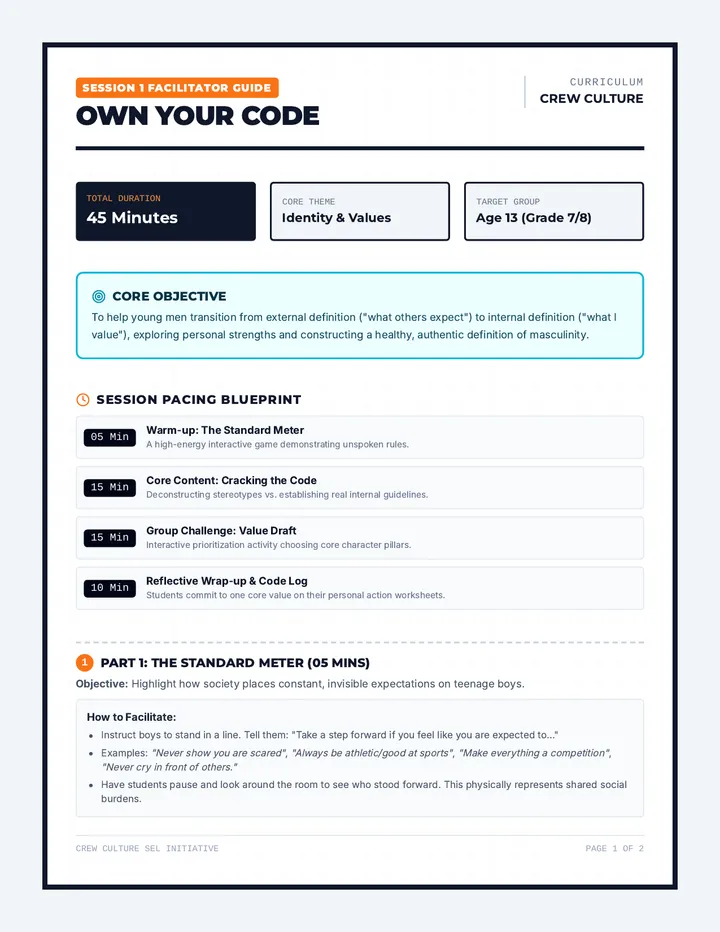
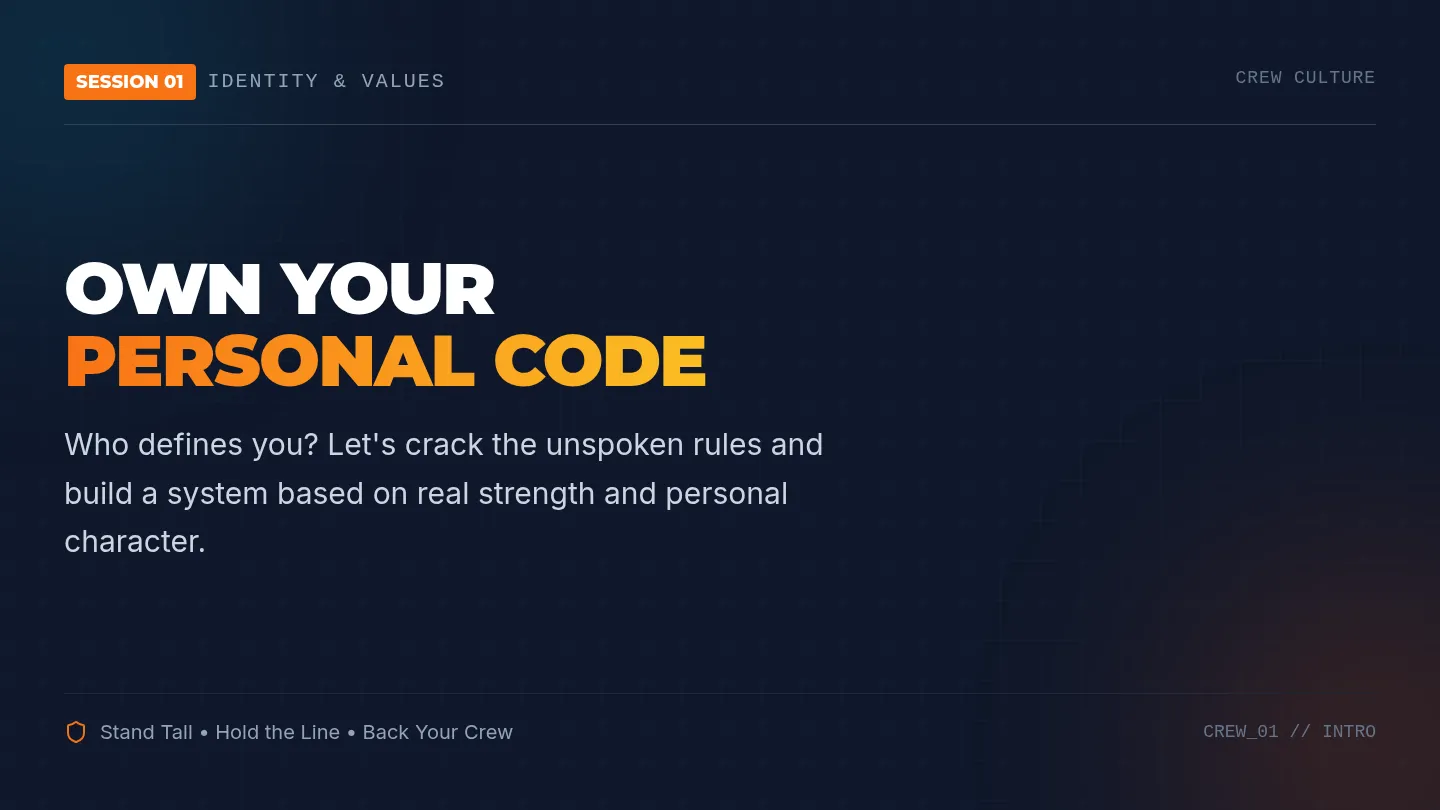
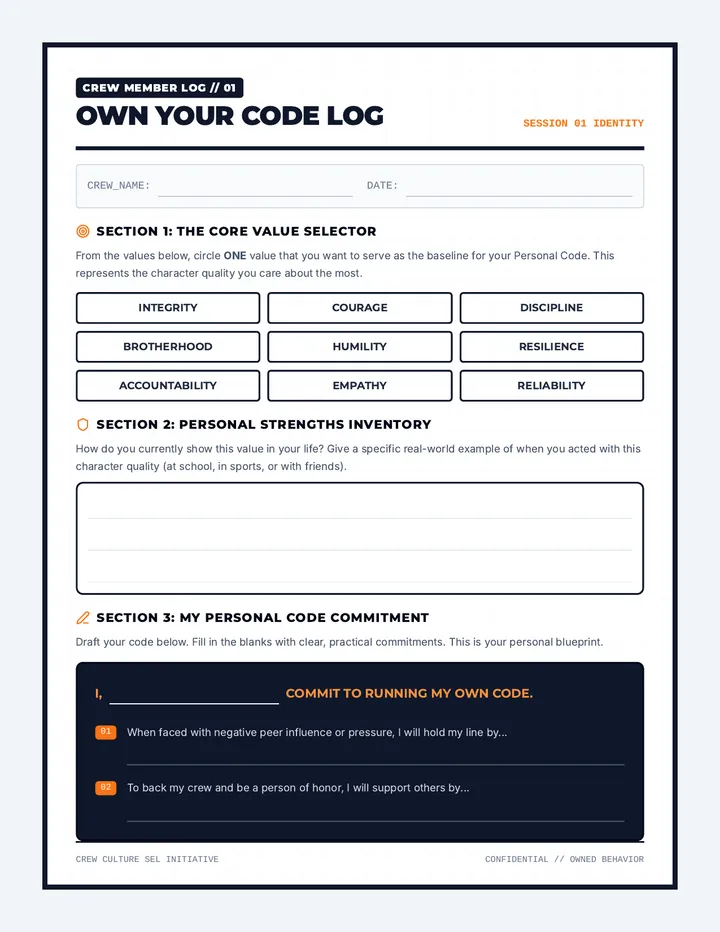
A three-part social-emotional learning curriculum designed specifically for middle school boys to develop self-esteem, manage digital pressure, and build authentic peer relationships.
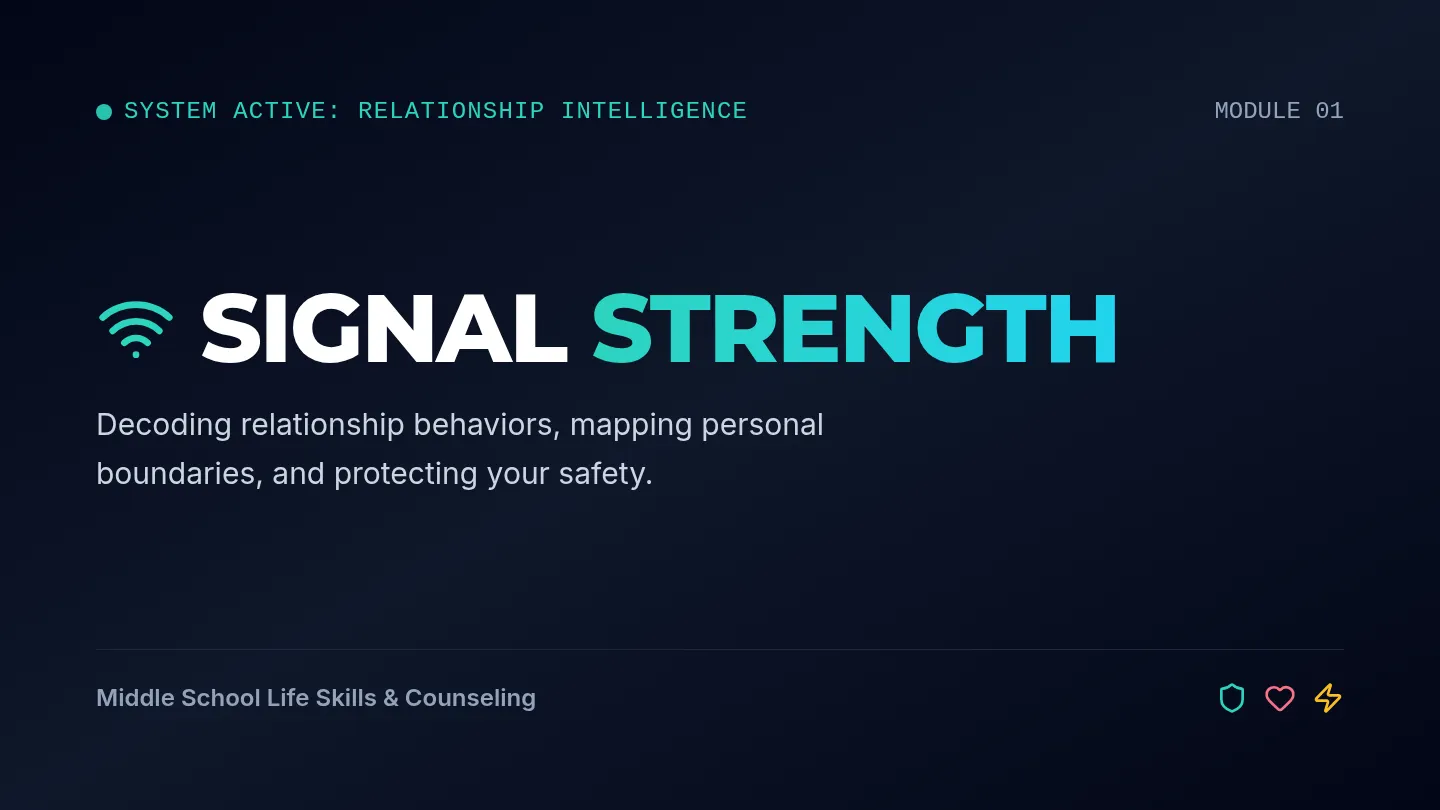
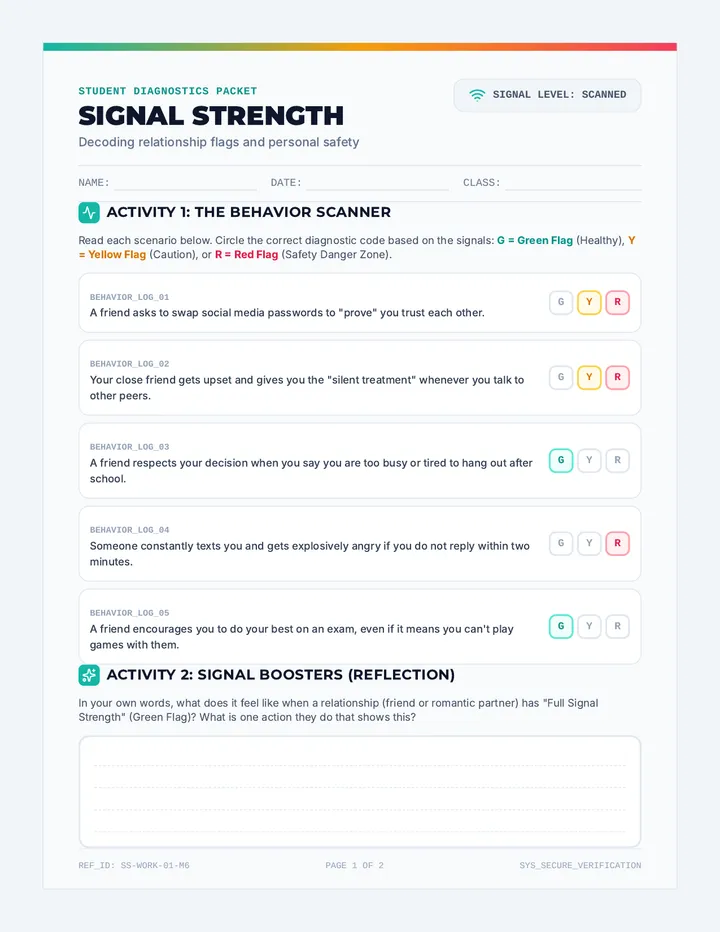
A middle school counseling lesson on healthy relationships and personal safety. Students learn to decode relationship signals, identify red and yellow flags, map their personal boundaries, and practice navigating peer pressure through interactive discussions and guided reflections.
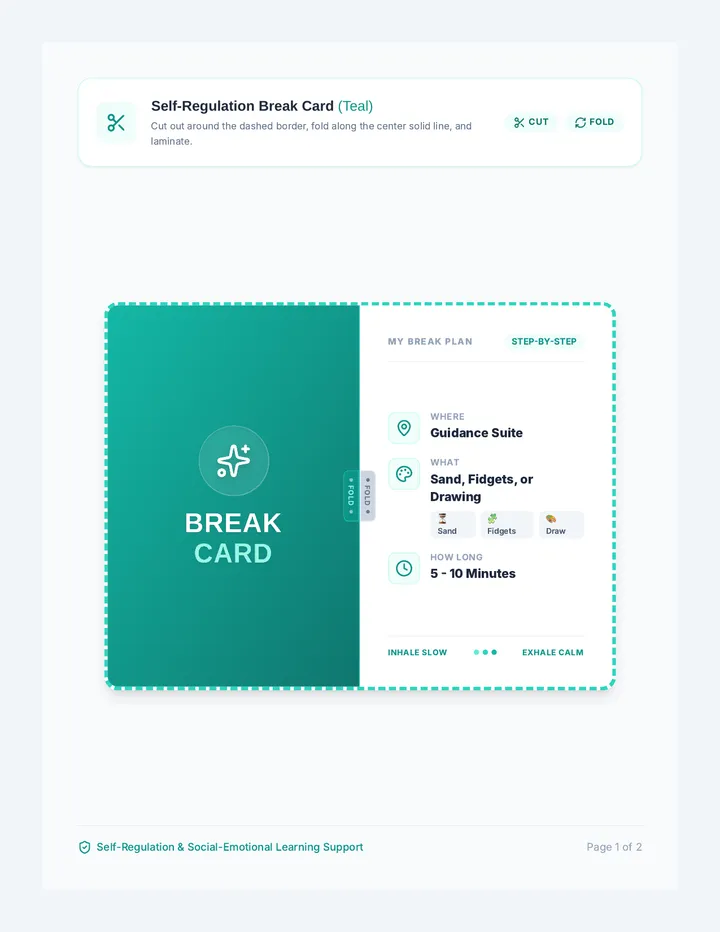
Two versions (Teal and Lilac) of a double-sided printable break card for student self-regulation. Each card template features a front face and a details back face, featuring the Guidance Suite location, eligible sensory/mindfulness activities, and duration limits.
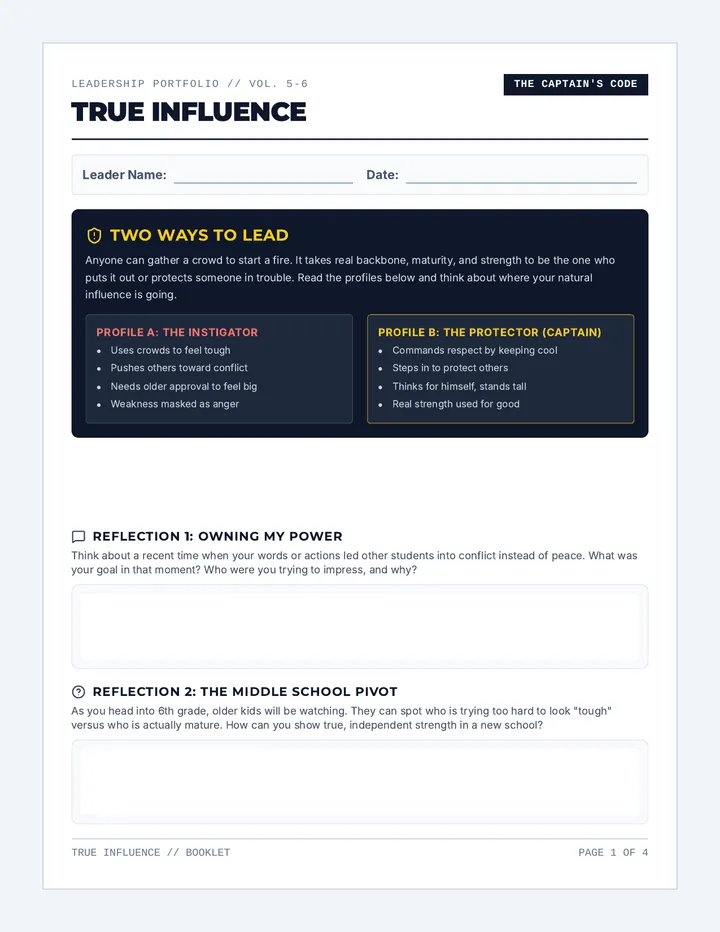
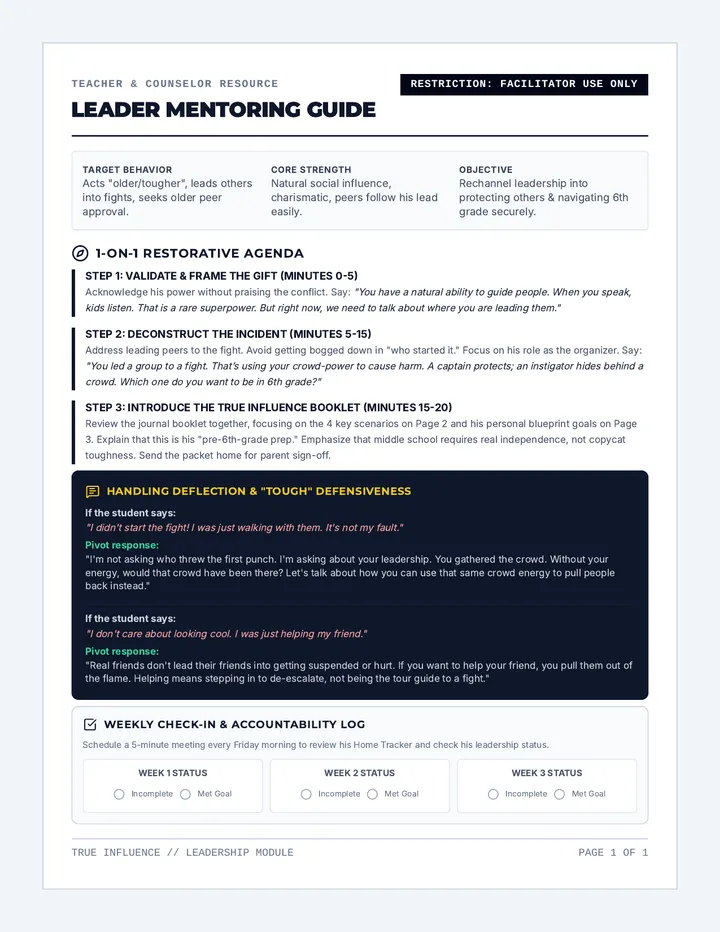
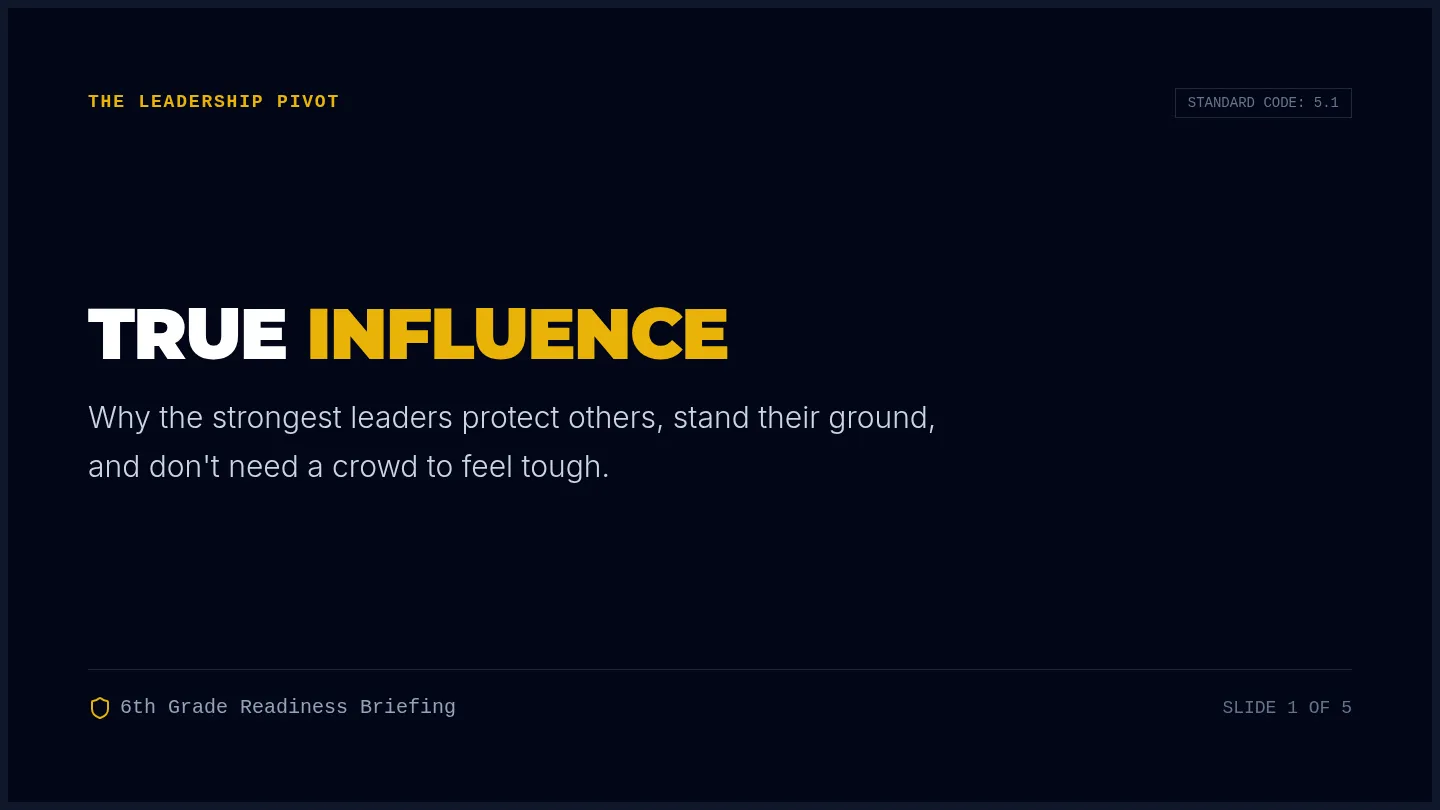
A comprehensive restorative leadership and peer advocacy sequence designed for students transitioning to middle school. It guides students from understanding their social influence to actively protecting peers and spreading positive school culture.
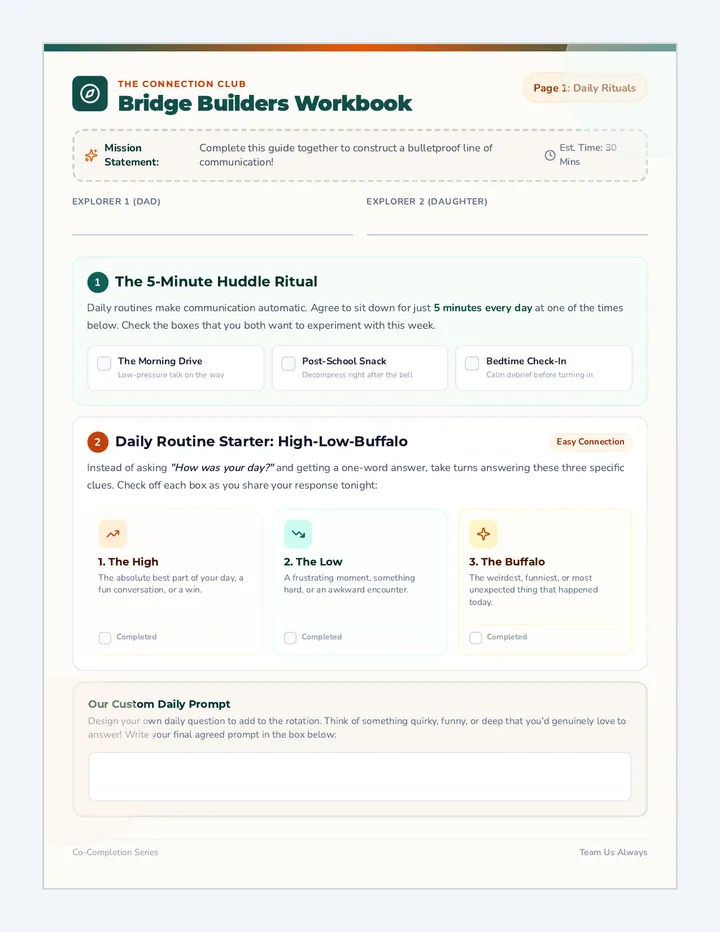
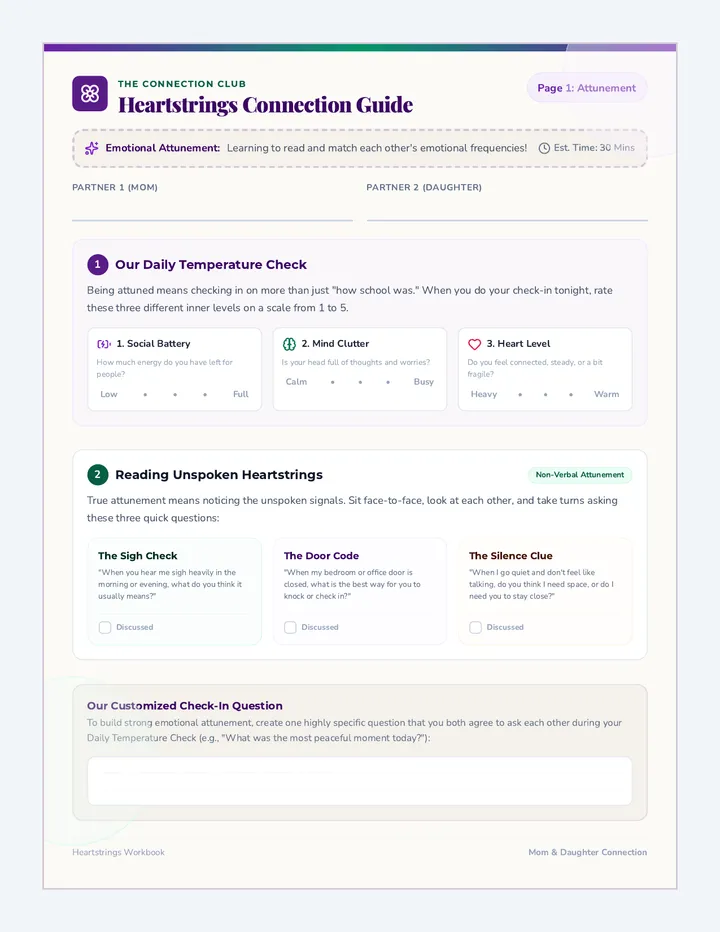
A high-quality co-completion toolkit for parents and 11-year-old pre-teens. Focuses on active listening, emotional attunement, conflict de-escalation, and establishing daily connection rituals.
An optimized 11-page school handbook that combines Page 9 (Athletics Requirements) and Page 10 (Athletic Conduct & Spectators) into a single, content-dense Athletics Master Guide. It preserves all policy wording, checklists, seasons, and penalty ladders in a symmetrical 2x2 grid layout. It structures Page 6 into two distinct, horizontally stacked sections: Family Engagement & PTO at the top, and Cafeteria Information at the bottom, complete with parent visitation policies.
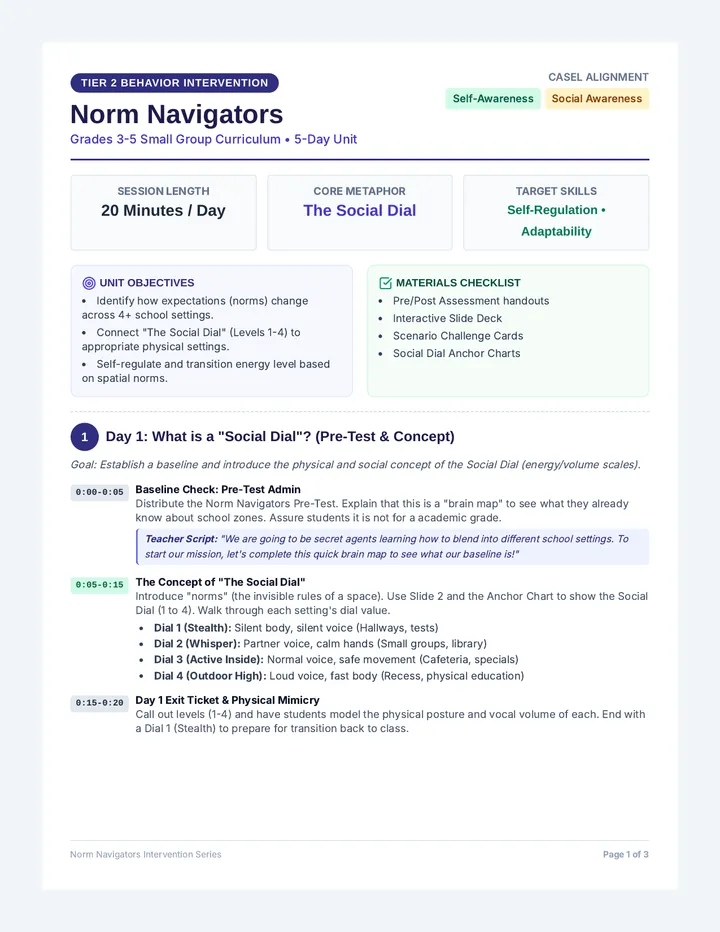
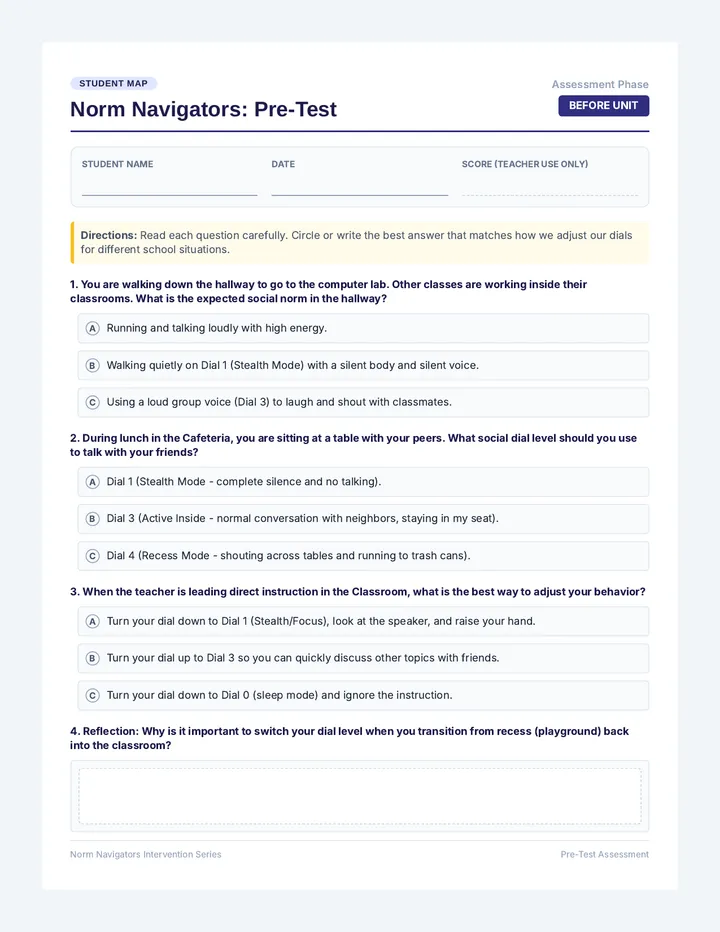
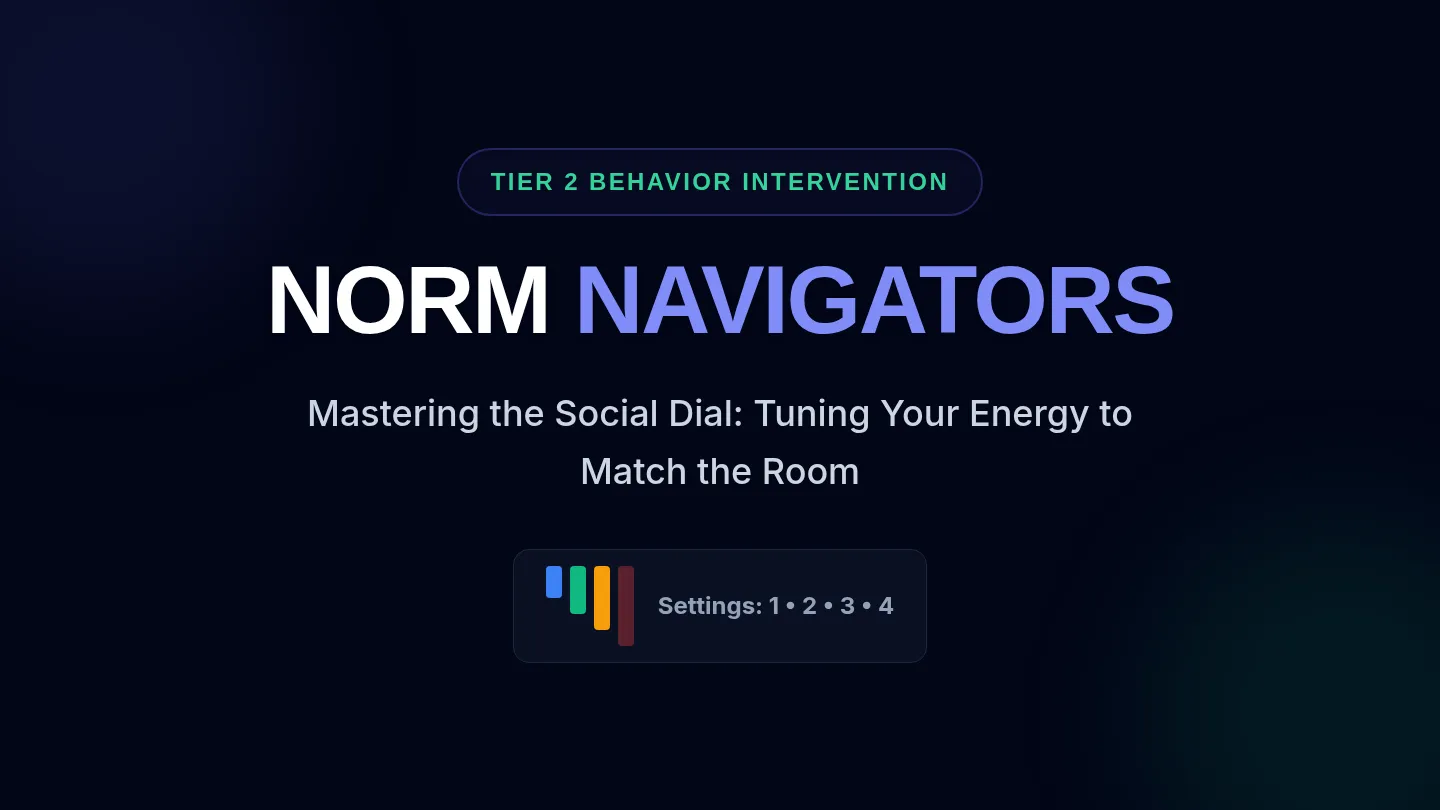
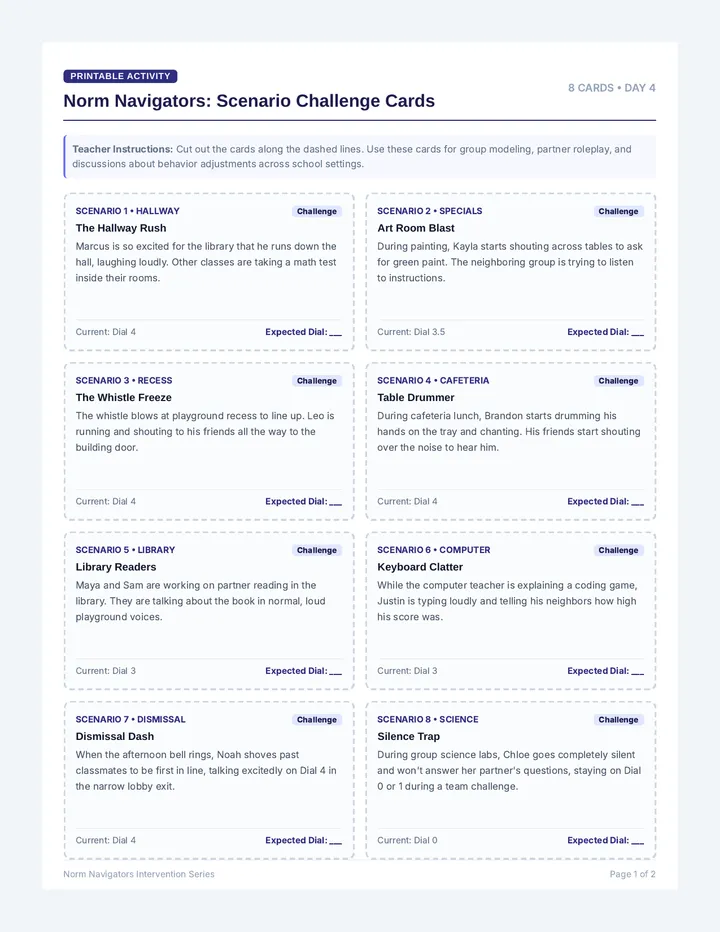
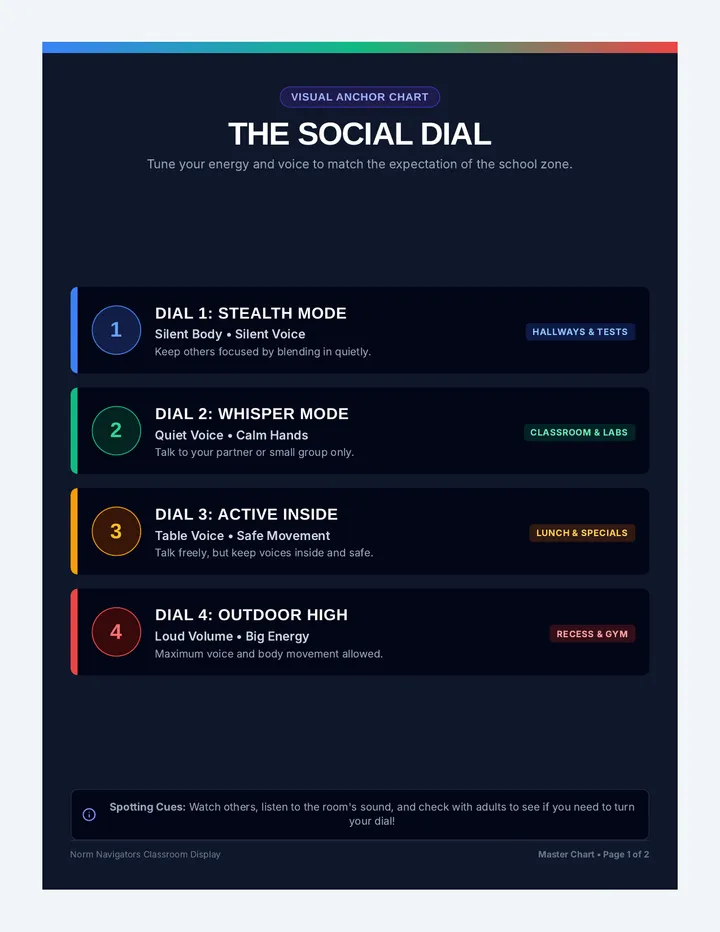
A 5-day Tier 2 behavior intervention sequence for grades 3-5 focused on recognizing and adapting to social norms across different school settings. Aligned with CASEL Self-Awareness and Social Awareness competencies, the sequence uses the concept of the 'Social Dial' to help students regulate their energy and volume.
Students apply their deep listening and empathy skills to design a school-wide inclusion campaign or classroom standard, designing collaborative action items.
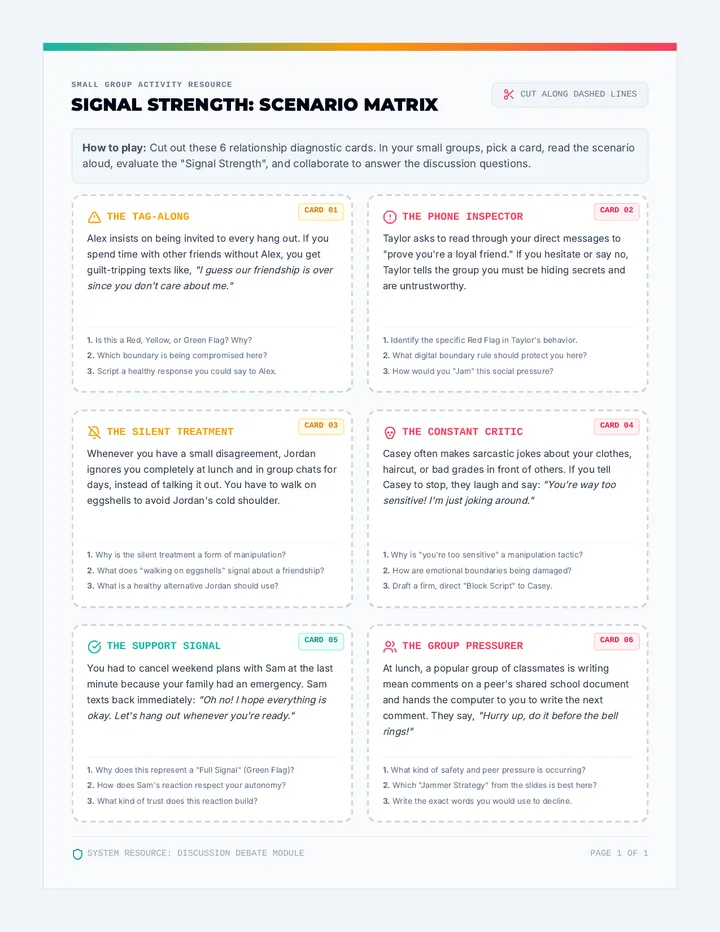
Print-ready small group scenario debate cards. Features 6 detailed scenarios designed to guide middle schoolers through peer pressure, boundary calibration, and red/yellow flag diagnostics.