Students use a hands-on simulation to compare linear growth (simple interest) with exponential growth (compound interest), visualizing how interest earned on interest accelerates savings.
A social skills lesson focused on the 'back-and-forth' nature of conversation using a ping pong analogy. Students learn how to serve (start), return (respond), and toss (ask back) in a balanced dialogue.
A quick 10-minute exploration of the science of generosity, explaining the 'Helper's High' and the community-wide ripple effect of kind acts.
A comprehensive campaign package for the March Madness Attendance Competition, including promotional flyers, a tracking bracket, staff communication templates, and a media press release.
A 10-minute lesson for 5th graders using an app developer theme to teach positive self-talk. Students learn to 'debug' their negative thoughts (glitches) and replace them with positive 'patches' to manage stress.
A high-energy setup for the RRPS Attendance League, including the scoreboard for tracking points, badge templates for team identity, and a playbook for rules and roles.
A 20-minute 5th-grade lesson focused on building community responsibility and collective action to prevent bullying. Students collaborate to design a classroom pledge and individual upstander action plans.
A 20-minute lesson for 5th graders focused on developing empathy to prevent bullying through perspective-taking and reflective writing.
A 20-minute SEL lesson for 5th grade focused on shifting from a passive bystander to an active, safe upstander using specific intervention strategies.
A 20-minute lesson for 5th graders to identify social roles in bullying situations and empower them to become upstanders through perspective-taking and role-play.
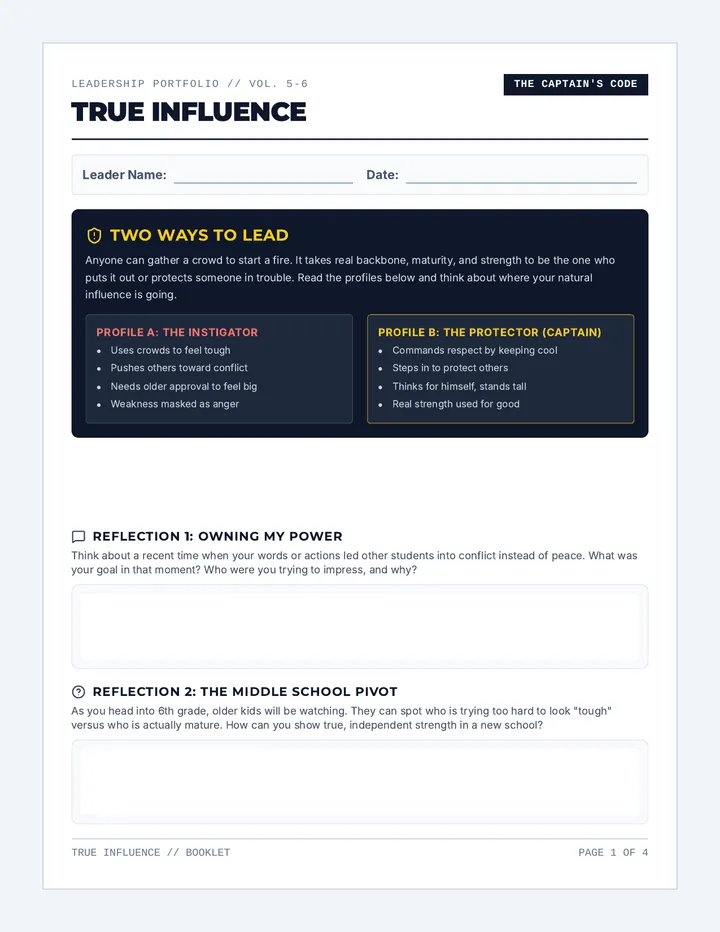
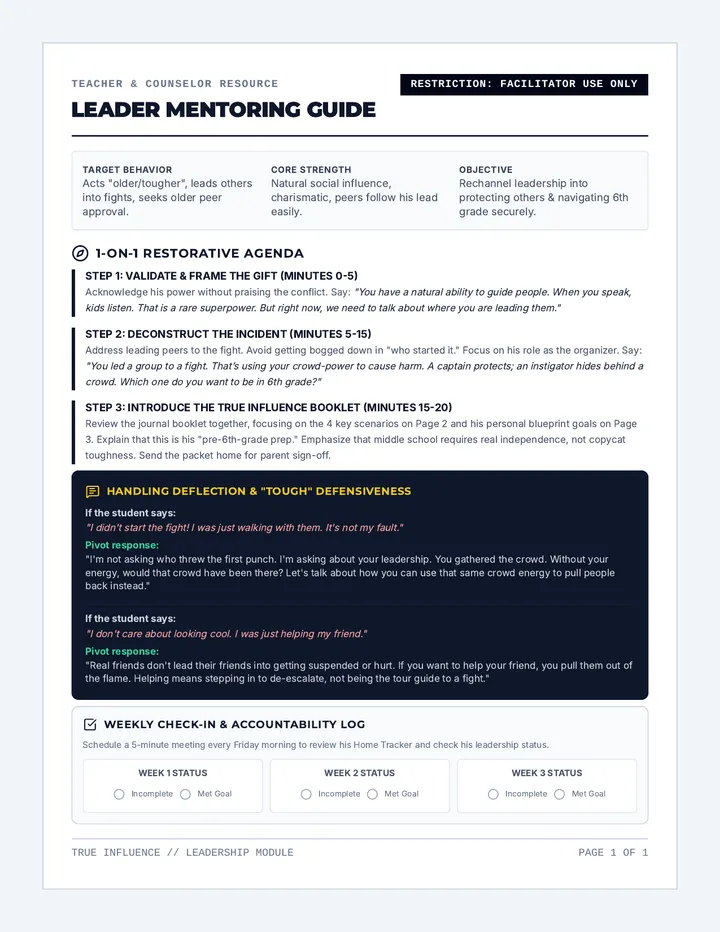
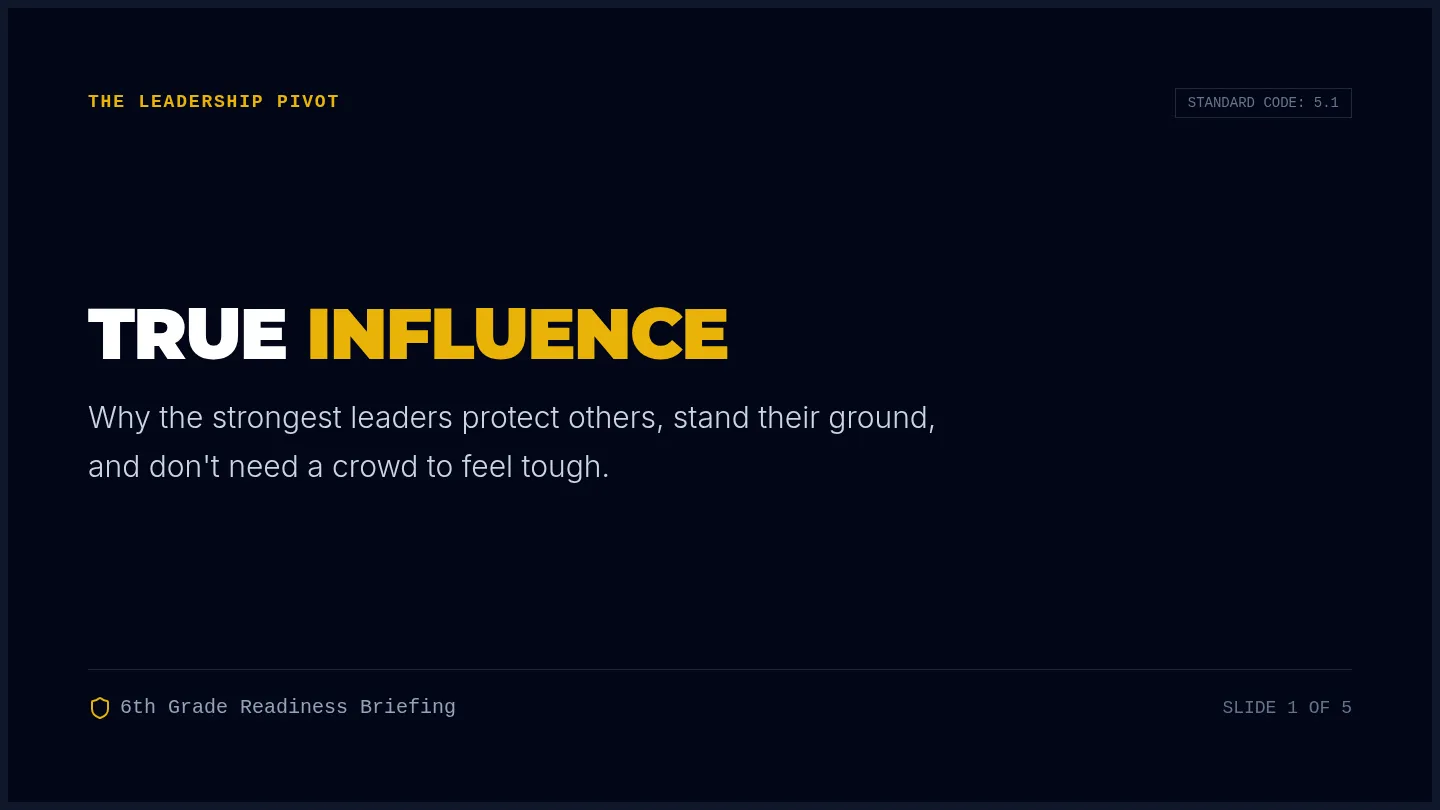
A 20-minute exploration of the social dynamics of bullying, focusing on the roles of the bully, target, bystander, and the transformative power of the upstander.
The final stage of the league where the winning team is celebrated and individual MVPs are recognized.
The implementation phase where students track their attendance and compete for weekly rewards.
A comprehensive school-wide attendance competition program modeled after a professional football league, featuring roles for students and staff, a clear scoring system based on absence rates, and branding activities.
The introductory phase of the league where rules are established, teams are formed, and student excitement is built through a kickoff event.
A general psychoeducation lesson for teen girls to manage anxiety, overstimulation, and social anxiety in various environments like parties, school, or large events. Includes a presentation and a printable action plan.
A comprehensive toolkit for middle schoolers and parents to understand and navigate school refusal, focusing on anxiety triggers, early warning signs, and collaborative coping strategies.
A comprehensive resource pack for middle school parents navigating child anxiety and school refusal, focusing on empathetic communication and practical morning strategies.
An introductory session for students and parents focused on identifying the difference between safety threats and growth-oriented discomfort.
A lesson designed to help middle school students understand the Parent Accommodation Cycle through the lens of a daily morning stomach ache, focusing on how patterns of avoidance reinforce anxiety.
A lesson for 5th graders to apply the 'Orange Cog' by analyzing characters in stories or films, identifying their complex emotions through actions, dialogue, and inner thoughts.
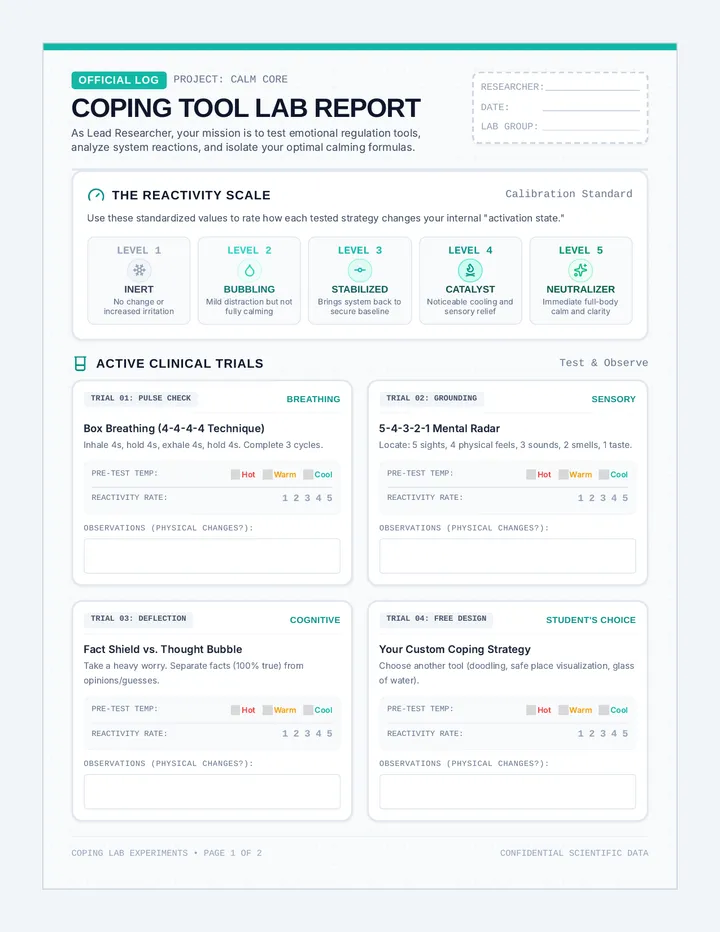
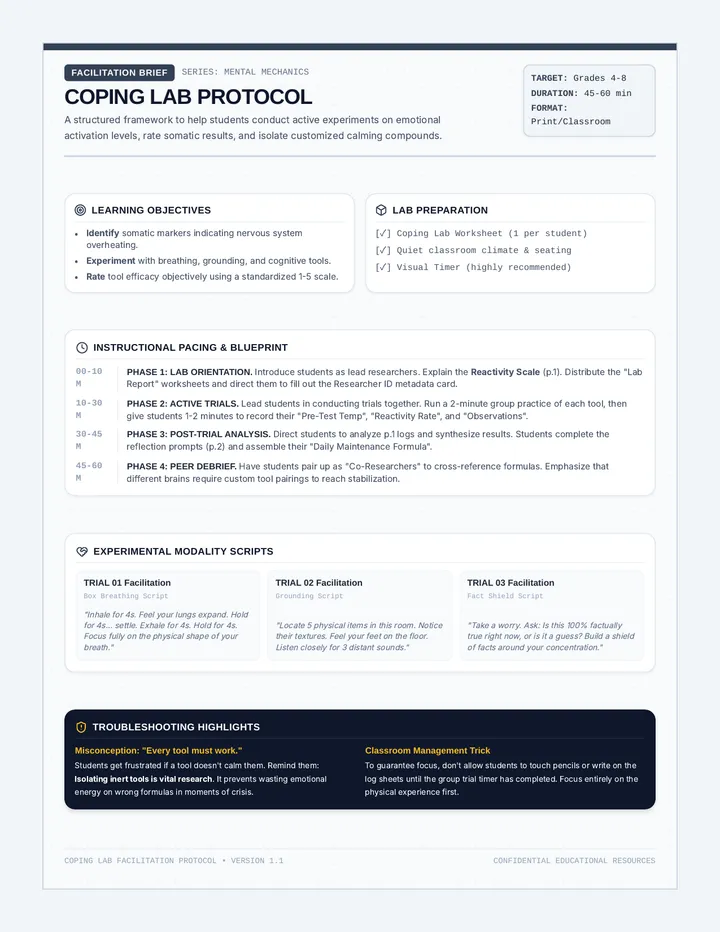
A comprehensive lesson on emotional regulation, teaching students practical strategies for managing frustration through breathing, seeking support from trusted adults, and utilizing a designated cool-down space.
A lesson for 5th graders exploring emotional complexity, specifically how multiple 'Orange Cog' words can describe a single experience, featuring matching tasks with written justifications.
A workshop on de-escalation and Interest-Based Relational (IBR) communication strategies for middle schoolers. Students learn to separate people from problems and identify underlying interests to resolve conflicts effectively.
A warm, science-themed motivational session to prepare 5th-grade students for their state science test, focusing on confidence and shared growth.
A lesson focused on the 'Orange Cog' from the Emotion Works framework, helping students develop a rich vocabulary for their feelings through sorting and scenario analysis.
A social-emotional learning lesson where elementary students identify sensory triggers and design a mental 'safe-house' to manage overstimulation and build self-regulation skills.
A lesson designed for a 6th-grade student to understand the neuroscience of grounding and practice specific techniques (Sensory, Mental, Physical) to manage anger and grief at home.
A lesson for middle schoolers on the neuroscience of grounding, covering the amygdala, prefrontal cortex, and vagus nerve to manage anxiety and anger.
Students practice reframing unhelpful thoughts and building a toolkit of coping strategies to 'bloom' through challenging emotions.
Students explore the concept of the Circle of Control, learning to distinguish between things they can change (inside the garden fence) and things they must accept (outside the fence).
Students learn to identify physical signs of anxiety and recognize 'weed thoughts'—unhelpful or negative thoughts that can crowd out calm ones.
Focuses on deconstructing personal conflicts through multiple lenses, specifically addressing the gap between personal feelings and external impact in school and peer environments.
Una lección de psicoeducación basada en TCC y mentalidad de crecimiento diseñada para niños de 10 años, enfocada en desafiar pensamientos negativos y aumentar la confianza escolar.
A high-energy, in-class simulation where students apply their knowledge of meal planning, unit pricing, and grocery store layout to navigate a 'Supermarket Showdown'.
A comprehensive lesson designed to help middle school students, particularly those with high anxiety, navigate test stress with calming strategies and physical wellness.
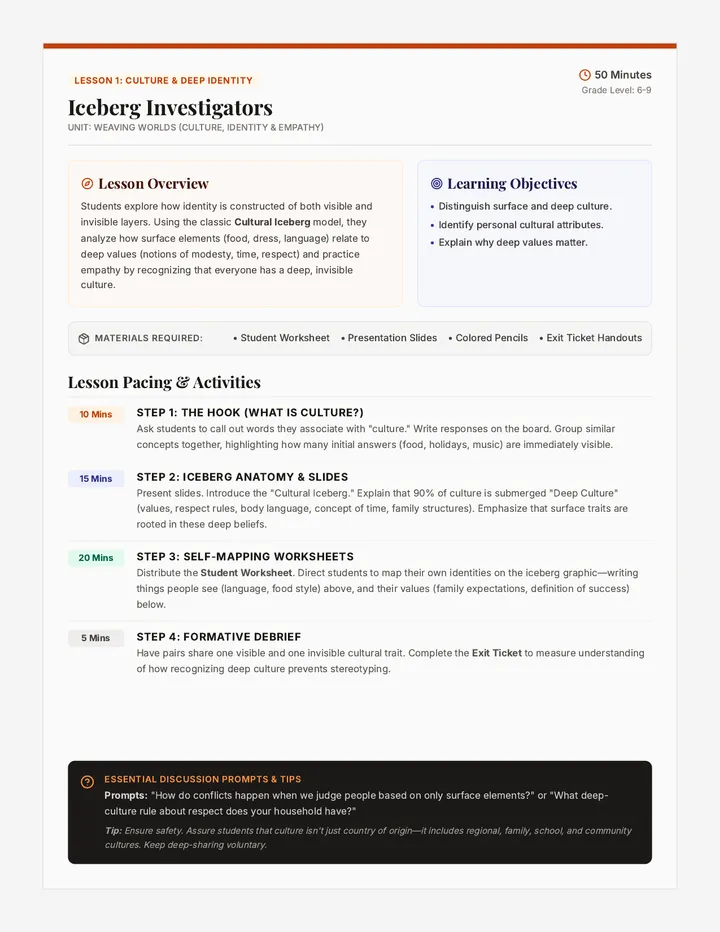
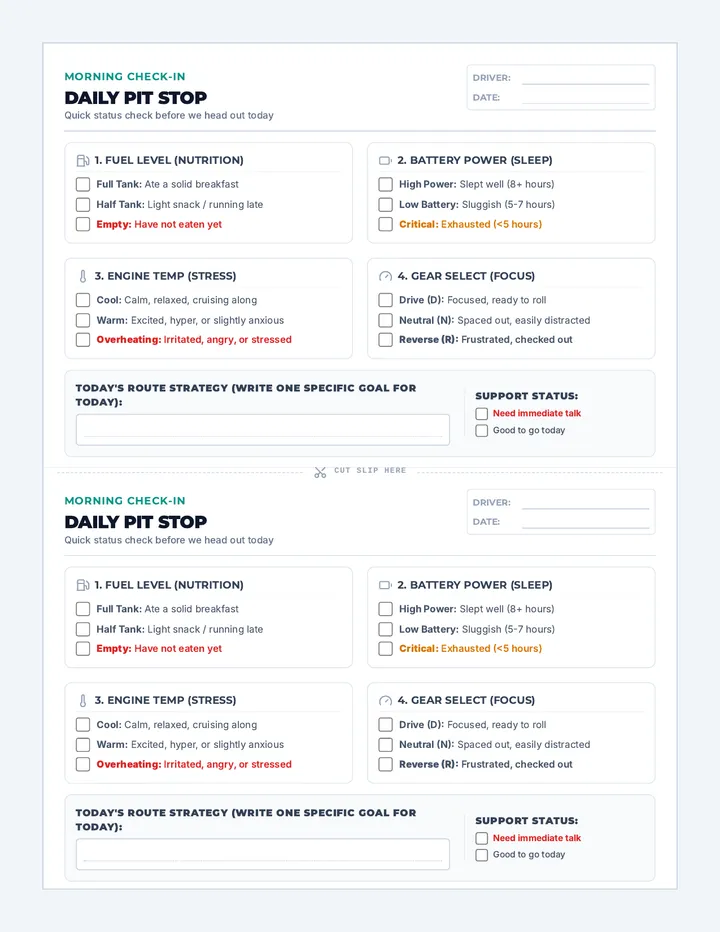
This lesson uses a barbering-inspired theme to help students reflect on the impact of truancy and class-walking on their long-term career goals. It focuses on professionalism, accountability, and the direct connection between classroom behavior and future success in the barbering industry.
A workshop focused on managing testing anxiety by personifying worries as 'Worry Watchmen' who are trying too hard to protect students. Includes cognitive reframing techniques and narrative therapy approaches for 4th and 5th graders.
A stress-management lesson for 4th and 5th graders that transforms testing anxiety into 'superpower' grounding techniques. Students learn discrete, effective physical exercises to maintain focus and emotional control during exams.
A comprehensive lesson focused on building task persistence and frustration tolerance when facing non-preferred tasks, specifically using number sequence challenges.
A collaborative lunch bunch lesson for 3rd and 4th-grade girls focused on building inclusive social habits and mastering the art of making new friends through the lens of a 'Friendship Lab.'
A celebratory closing lesson for a small group focused on anxiety, featuring games and reflection activities to honor students' progress and reinforce coping strategies.
A lesson focused on overcoming task initiation struggles by breaking overwhelming goals into 'micro-steps' that are too small to fail.
A 30-minute introductory lesson on time management skills, focusing on task estimation and prioritization using visual tools and hands-on activities.
A collection of visual support tools to help students identify and communicate their emotions using portable keyring cards.
A lesson for fourth graders focused on dependability, defining it as being reliable and keeping promises to build trust with others. Students will analyze scenarios and track their own dependable actions.
A presentation-based game designed to help incoming middle schoolers navigate the social and logistical changes of their new school. Students will face scenarios, build their 'character stats,' and learn strategies for making friends and managing transitions.
This lesson helps middle school students identify when they need help and practice self-advocacy through a relatable social story, checklists, and sentence starters.