Kindness Carousel Lesson PlanColorful Kindness Carousel Lesson Plan: Tier 1 Social-Emotional Learning Time 60-75 Minutes Audience Elementary School Students (Tier 1) Objective Students will explore and practice kindness through interactive mini-stations, fostering empathy, recognition of good deeds, and positive communication. Materials Needed Kindness Slide Deck Art Station Prompts Kindess Story Cards Role-Play Guide Student Activity Sheets WHY The Purpose This lesson builds social-emotional skills by encouraging students to recognize and celebrate acts of kindness, thereby promoting a supportive, inclusive classroom atmosphere. By rotating through different modalities (visual, auditory, kinesthetic), every learner can find a way to connect with the concept of empathy. SET Preparation (15 mins) Review and set up the mini-station materials (art supplies, story cards, and role-play scripts). Arrange the classroom to allow space for three distinct stations. Familiarize yourself with the Story Cards and Role-Play Guide scenarios. GO Instructional Steps 1 Introduction & Grouping (10 mins) Introduce the lesson by discussing the importance of kindness and recognizing good deeds. Explain each carousel station. Divide students into small groups, ensuring diverse interactions. 2 Mini-Station Carousel (40 mins) Station 1: Art. Students create kindness-themed artwork using supplied materials. Station 2: Storytelling. Using Story Cards, students share personal stories or imagine scenarios. Station 3: Role-Play. Students practice empathetic role-playing with the Role-Play Guide. 3 Reflection & Sharing (15 mins) Gather students to reflect on their experiences. Discuss what kindness means in daily life and how small actions create positive impact.
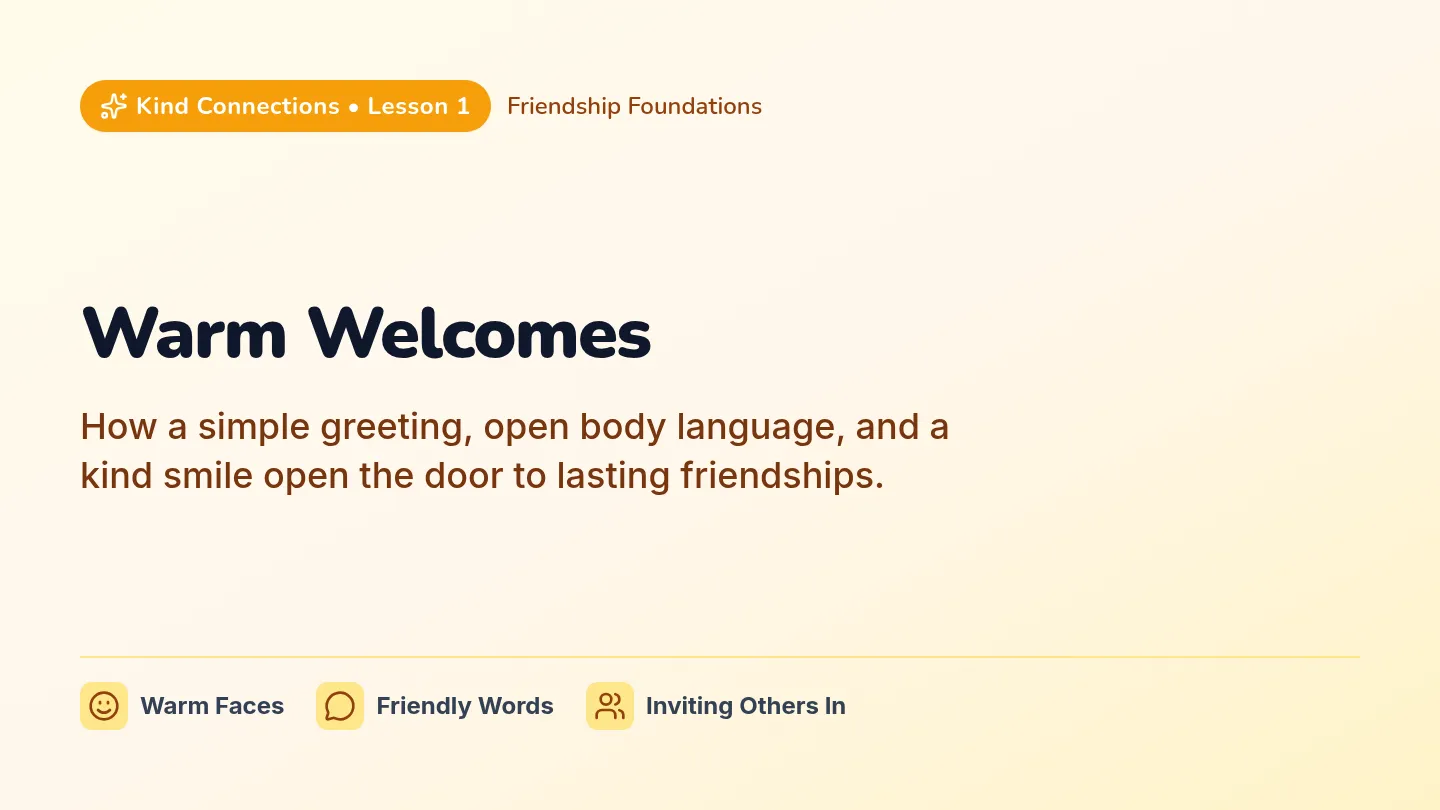
Kindness Carousel SlidesWelcome Colorful Kindness Carousel A vibrant activity to explore kindness through art, storytelling, and role-playing. Introduce the activity. Emphasize that we are exploring and practicing acts of kindness today. Why Kindness? Kindness builds communities, fosters empathy, and creates a supportive environment. Discussion Prompt: "Think about a time when someone showed you kindness – how did it feel?" Explain meaning/importance. Use the prompt to spark a discussion about small acts making a difference. Today's Journey 10m Gathering Introduction & Grouping 40m The Carousel Art Station Storytelling Role-Play 15m Reflection Sharing Our Takeaways Detail the structure. Refer to lesson plan instructions and set clear expectations. Station 1: Art Create a piece of artwork that represents kindness. "Use the provided art supplies to illustrate your feelings and ideas about kindness. What does kindness look like in colors and shapes?" Describe the Art Station: Remind students to be creative and think about kindness in colors and images. Station 2: Storytelling Share a story of kindness: REAL Your own personal experience being kind or receiving kindness. IMAGINED A creative story you make up to highlight kindness. Use the Story Cards as your guide! Encourage recall or creation of stories. Remind them to listen to each other. Station 3: Role-Play Step into someone else's shoes! Follow the Role-Play Guide scripts Practice using kind words and tones Practice listening actively to your partner Emphasize that this is a safe space to practice empathy and positive communication. Reflection & Sharing Learn What did you learn about kindness at each station? Impact How can small acts of kindness change our community? Takeaway Share one key takeaway with the class! Conclude with group reflection. Encourage students to discuss what they learned. Keep the Kindness Rolling! Remember, every act of kindness adds a unique color to our world. Spread Kindness Every Day! Conclude with an inspiring message reinforcing the importance of kindness beyond the classroom.
Kindness Carousel ActivityKindness Carousel Activity Spreading color and care in our classroom! Name: Date: Welcome to the Carousel! Today, you'll rotate through three mini-stations: Art, Storytelling, and Role-Play. At each station, you'll discover new ways to understand and practice kindness. Let's make every act of kindness a unique color in our world! 1 Station 1: The Art of Care Create a piece of artwork that represents kindness. What colors, shapes, or images show care and empathy? 2 Station 2: Story Sharing Share a story of kindness (real or imagined). Use the space below to jot down your main character, the kind act, and how it made people feel. 3 Station 3: Kind Communication Practice an empathetic role-play scenario. How did you use kind words or active listening to change the situation? Final Reflection What did you learn about kindness from the stations? How can one small act of kindness make a big impact? Which station was your favorite and why? "Every act of kindness adds a unique color to our world."
Kindness Story CardsKindness Story Cards Station 2: Share a story, spread a smile! Teacher Instructions: Cut these cards along the dashed lines. Students at the Storytelling Station can pick a card to help them imagine a kindness scenario or use them to spark a memory of a real-life event. Story Card 1 The New Student A new student sits alone at lunch on their first day. They look nervous. What is one small act of kindness you could do to make them feel welcome? How would their face change? Story Card 2 The Dropped Books Someone in the hallway trips and all their papers and books fly everywhere. Everyone else is rushing to class. What do you do? What words would you say? Story Card 3 The Secret Note You want to brighten your teacher's or a friend's day without them knowing it was you. What kind of secret note or "kindness mission" could you plan? How would you feel doing it? Story Card 4 The Playground Problem Two friends are arguing over who gets to use the ball next. You aren't playing, but you see them getting upset. How could you help them find kindness again? What is a "win-win" solution? Story Card 5 Your Greatest Hit Tell a story about a time someone was kind to YOU. What did they do? How did it change your day or your mood? Why was it so special? Story Card 6 The Community Hero Imagine a superhero whose power is ONLY kindness. What would their costume look like? How would they stop a "villain" using only kind words or actions? What is their catchphrase?
Kindness Role-Play GuideKindness Role-Play Guide Station 3: Action, Empathy, and Understanding! How to Role-Play Choose a partner or a small group. Pick one of the scenarios below. Decide who will play each character. Act out the scene! Focus on using a kind tone and active listening. Scenario 1: The Misunderstood Mistake The Situation: Sam accidentally knocked over your water bottle while reaching for a pencil. Your desk is now wet, and your drawing is slightly smudged. Sam looks really embarrassed and scared. Character A: The One Affected Try to react with patience instead of anger. Help Sam feel better while still taking care of your things. Character B: Sam Apologize sincerely and offer to help clean up the mess. "It's okay, Sam! I know it was an accident. Do you have some paper towels?" Scenario 2: Including the Outsider The Situation: You are playing a game of tag with two friends. You notice another student, Maya, standing near the wall watching you play but not asking to join. Character A: You (The Leader) Notice Maya and invite her to play. Make sure your other friends are welcoming too. Character B: The Friends Agree happily and explain the rules to Maya so she feels included. "Hey Maya! Do you want to be the next tagger? We're playing classic tag!" Scenario 3: The Bad Grade Blues The Situation: Your friend Leo just got a math test back and is crying quietly because he studied hard but still didn't do well. Character A: The Comforter Listen to Leo. Don't try to "fix" it right away—just show him you care and that a grade doesn't change who he is. Character B: Leo Share why you're upset. Practice accepting comfort from a friend. "I'm sorry, Leo. I know how much you practiced. That test was really tough for everyone." Practice makes perfect kindness!