An interactive, experience-based shopping simulation game where participants tackle real-life supermarket scenarios, vote on binary purchasing choices, and master smart consumer habits in a game-show style setting.
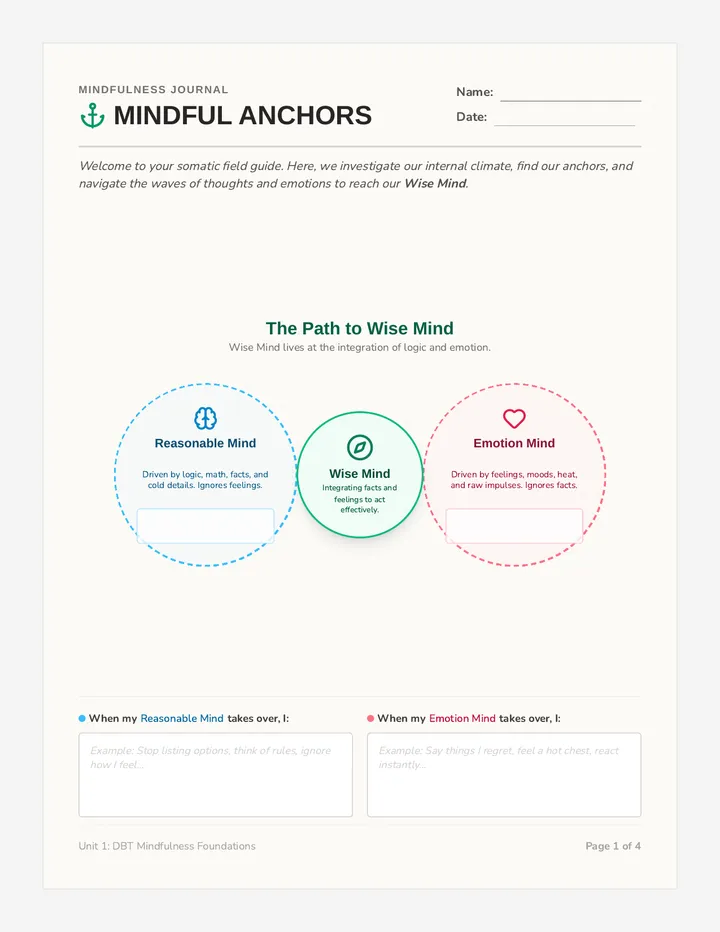
A comprehensive unit on Dialectical Behavior Therapy (DBT) mindfulness skills, taking students from somatic anchoring and cognitive understanding to collaborative, station-based performances that demonstrate 'What' and 'How' skills.
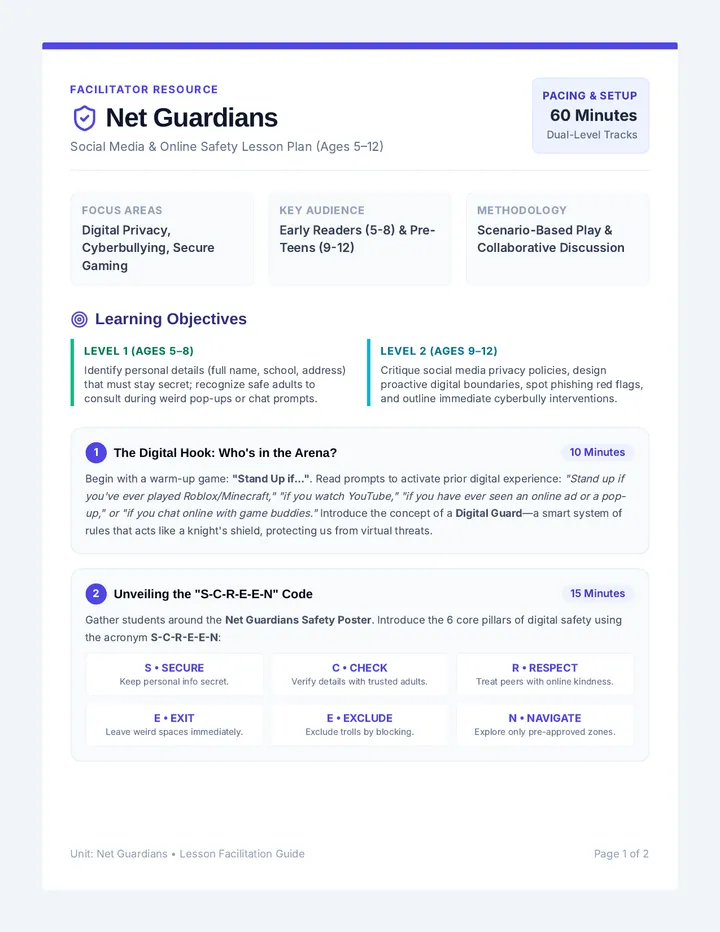
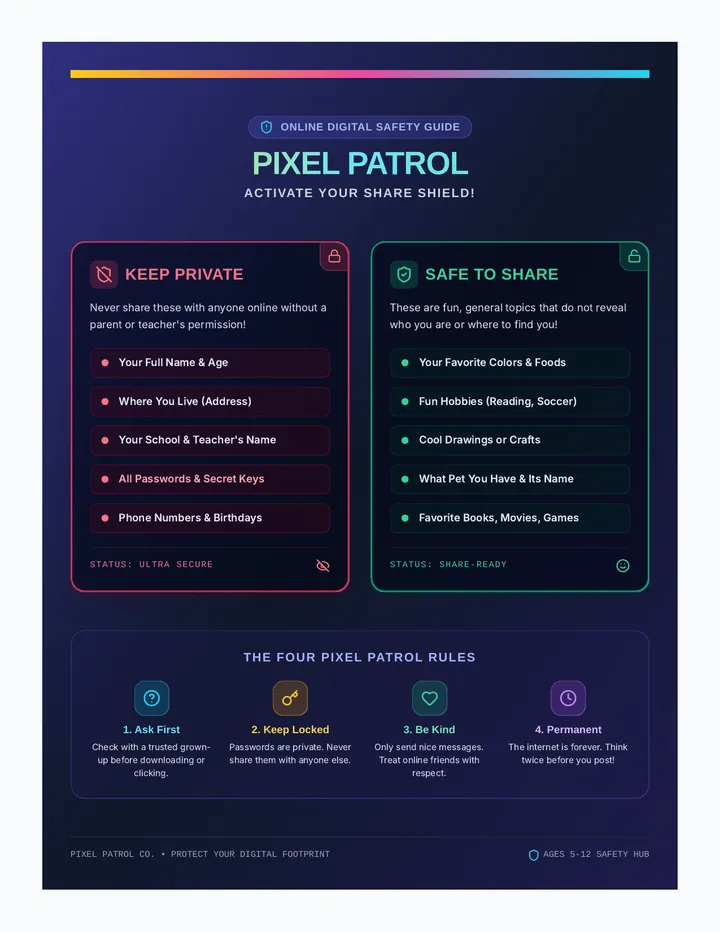
An interactive, dual-level digital safety lesson designed for youth ages 5-12, covering key concepts of digital privacy, cyberbullying, and safe gaming through collaborative activities and differentiated scenario cards.
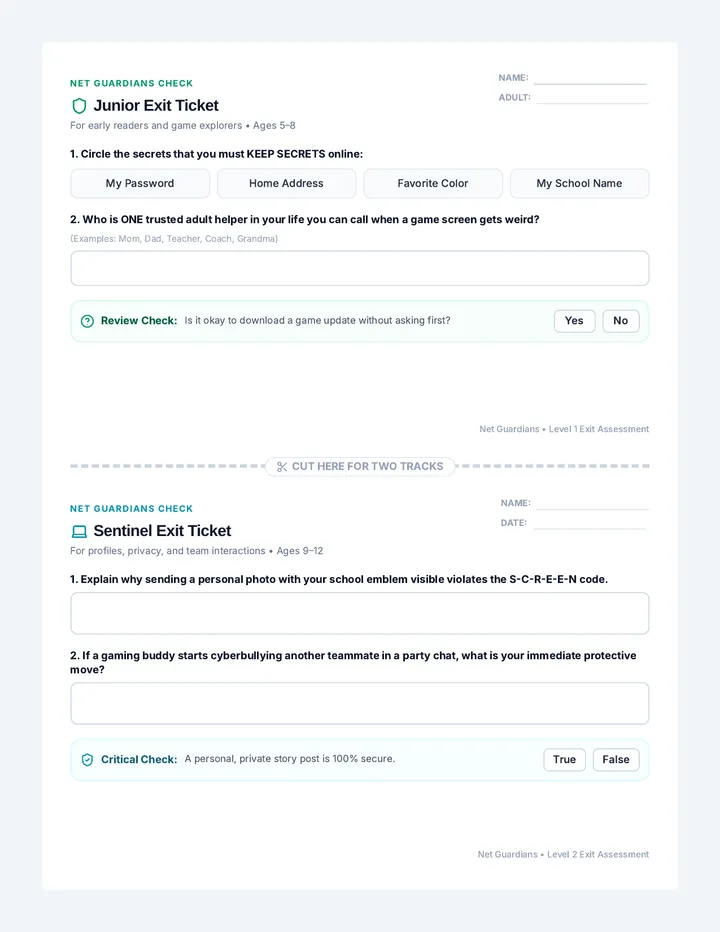
A dual-level, printable 1-page exit ticket (split top/bottom for Junior and Sentinel tracks) to easily assess students' understanding of the S-C-R-E-E-N digital safety rules.
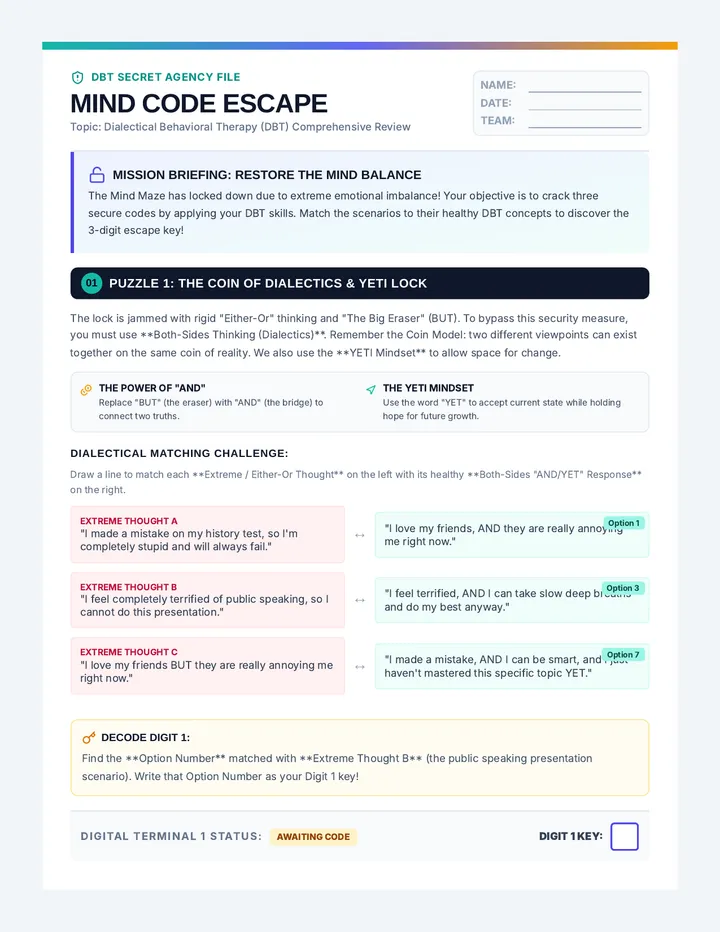
A hands-on sequence designed to empower teens with Dialectical Behavioral Therapy (DBT) concepts. Through engaging escape rooms, creative drama challenges, and real-life scenarios, students master dialectics and emotional regulation.
An interactive, gamified lesson on social media and digital safety designed for youth aged 5-12. Features differentiated pathways for early readers and pre-teens to learn about privacy, sharing limits, and online community respect.
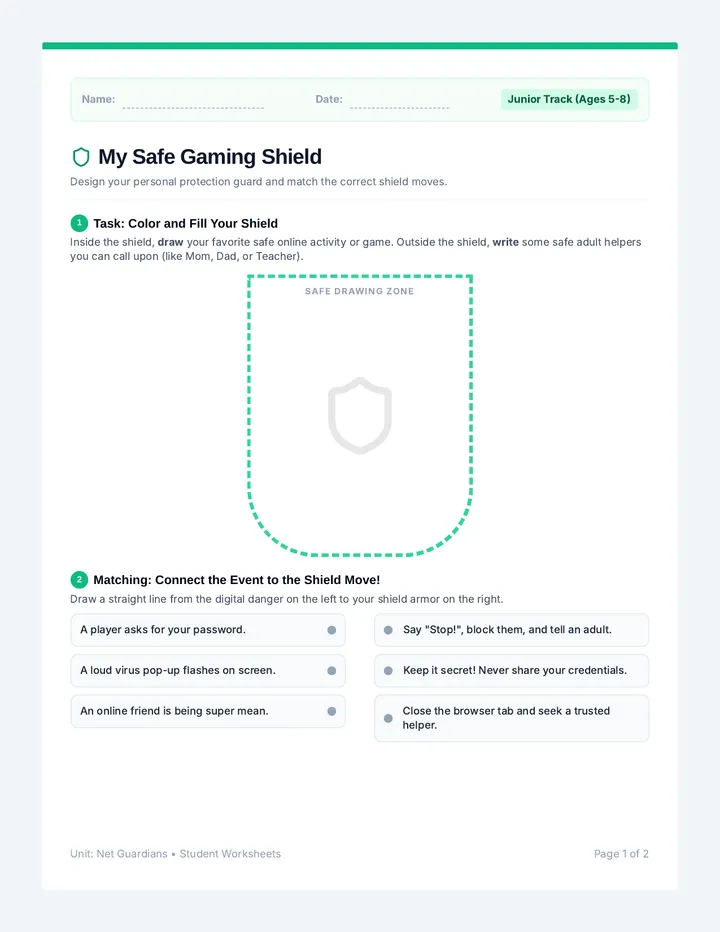
A 2-page student worksheet packet containing "The Safe Gaming Shield" drawing/matching activity for ages 5-8 and "The Privacy Guard Checklist" threat analysis for ages 9-12.
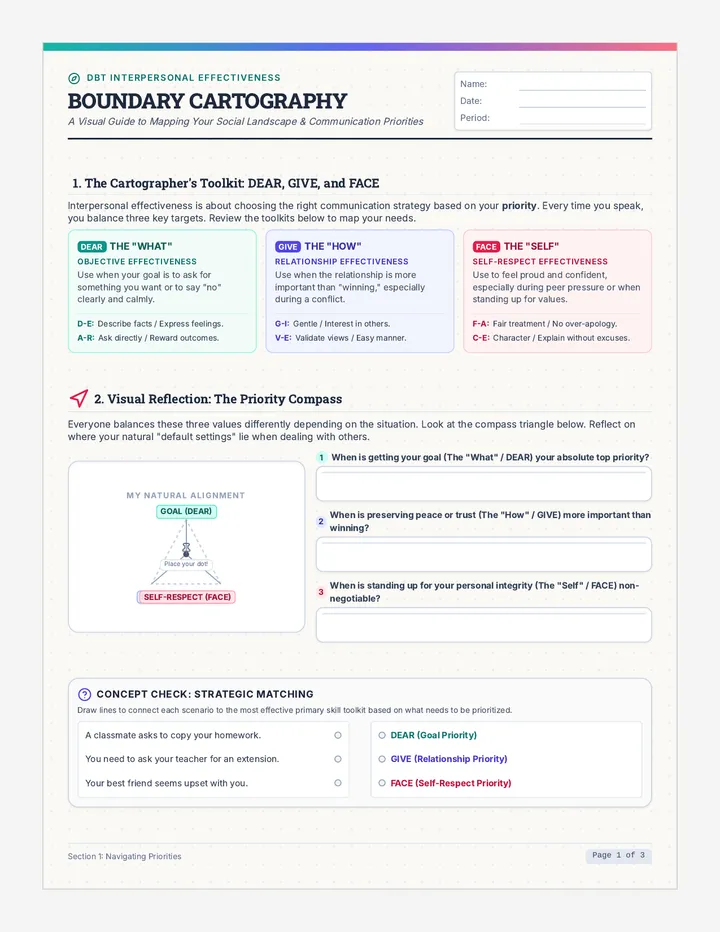
A DBT Interpersonal Effectiveness unit where students map relational boundaries, master communication skills, and engage in interactive, station-based roleplays to navigate teenage social dynamics.
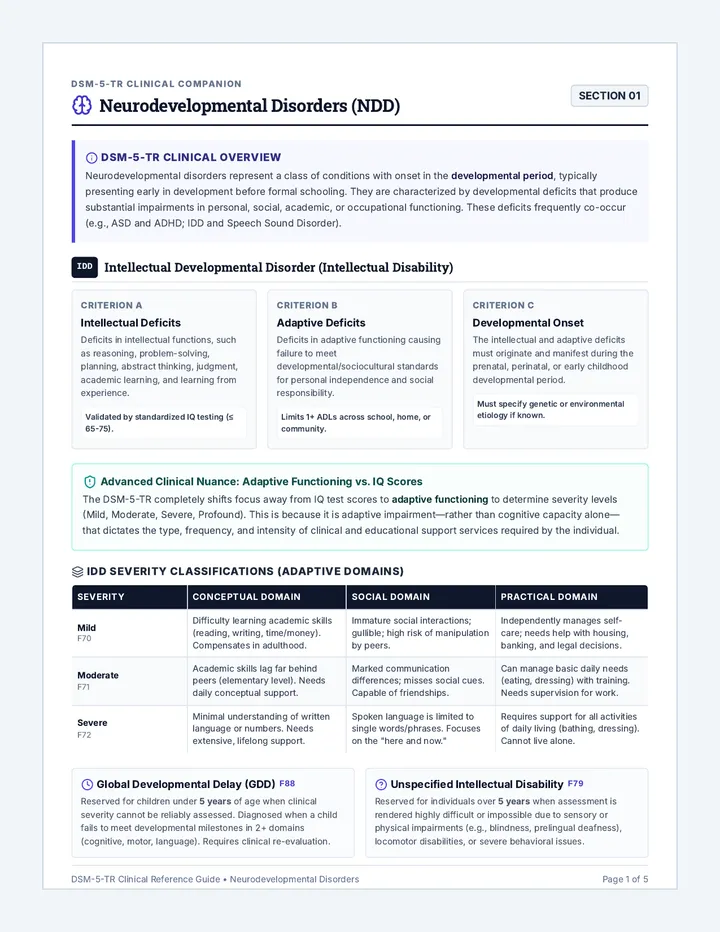
A rigorous clinical exploration of the DSM-5-TR neurodevelopmental disorders, focusing on diagnostic criteria, differential diagnostic boundaries, specifiers, and developmental trajectories for advanced study.
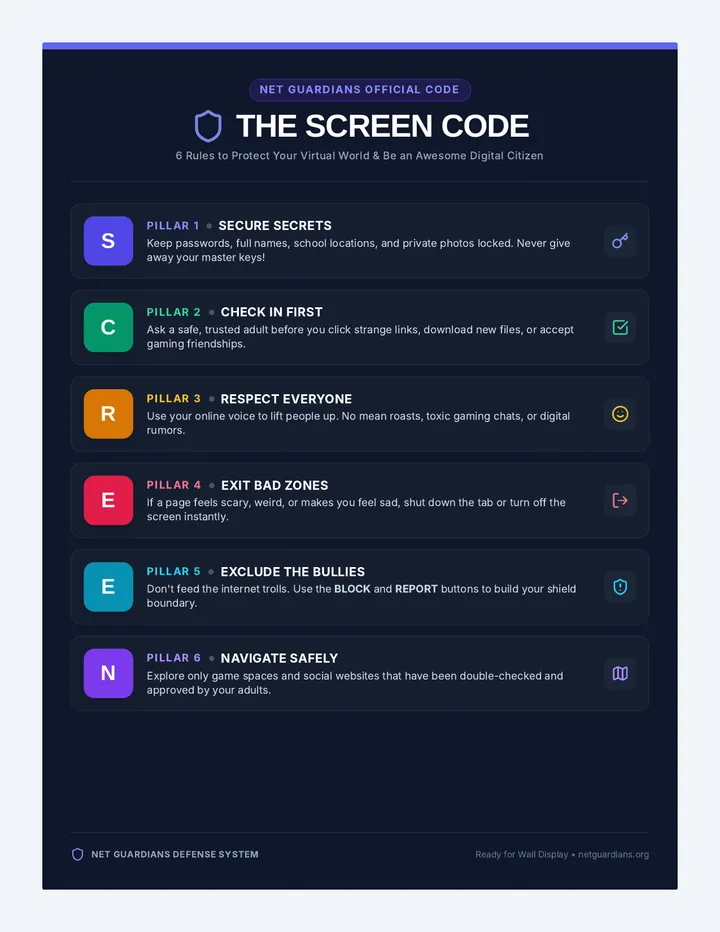
A vibrant, high-impact 1-page digital safety poster displaying the "S-C-R-E-E-N" code of conduct with kid-friendly rules and icons, designed for classroom wall displays or home safety charts.
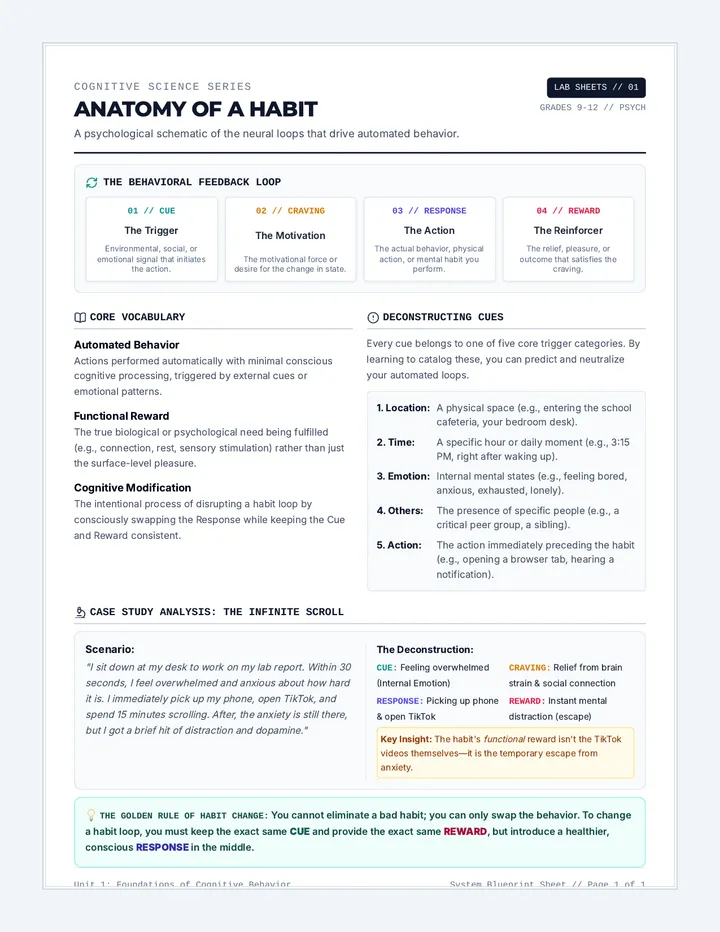
A three-part cognitive psychology series designed for Grades 9-12. Students learn the science of automation, explore how to isolate triggers and cravings, redesign unhelpful routines, and restructure their environments to make habit modification effortless.
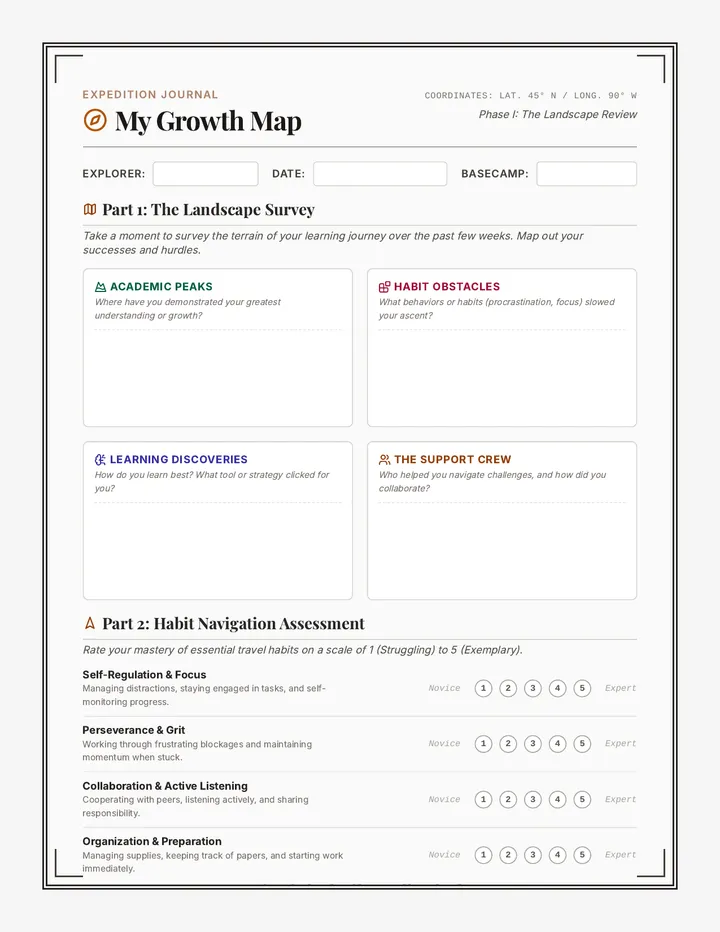
A comprehensive goal-setting and reflection lesson designed to help students analyze their academic and social-emotional progress, identify roadblocks, and create actionable growth plans.
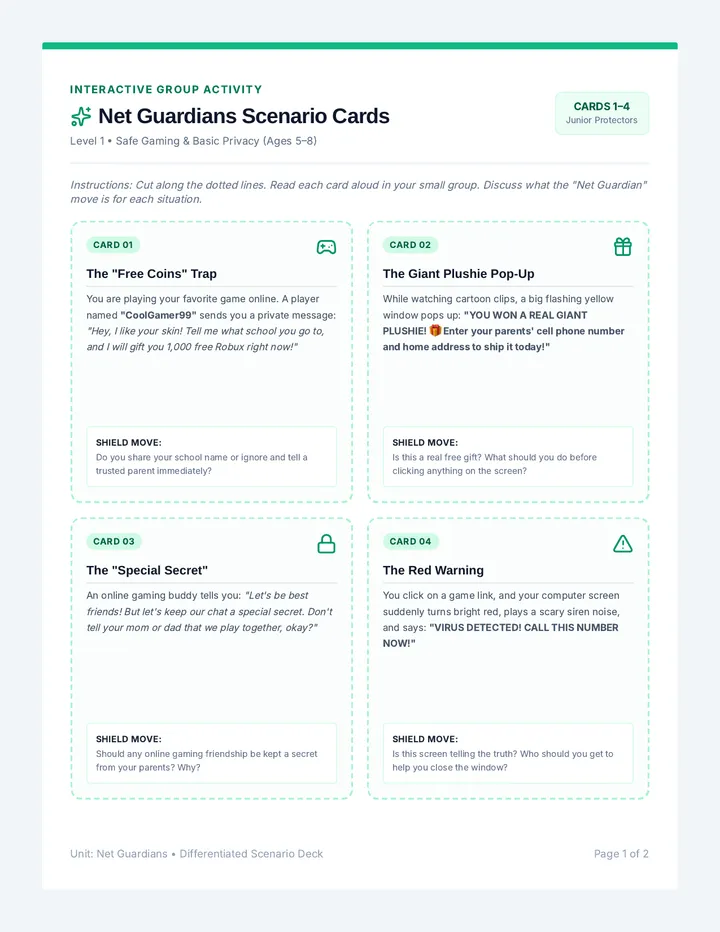
An interactive 2-page print-and-cut deck of 8 scenario cards (4 for ages 5-8, 4 for ages 9-12) featuring realistic gaming and social media safety dilemmas with guided group questions.