A comprehensive goal-setting and reflection lesson designed to help students analyze their academic and social-emotional progress, identify roadblocks, and create actionable growth plans.
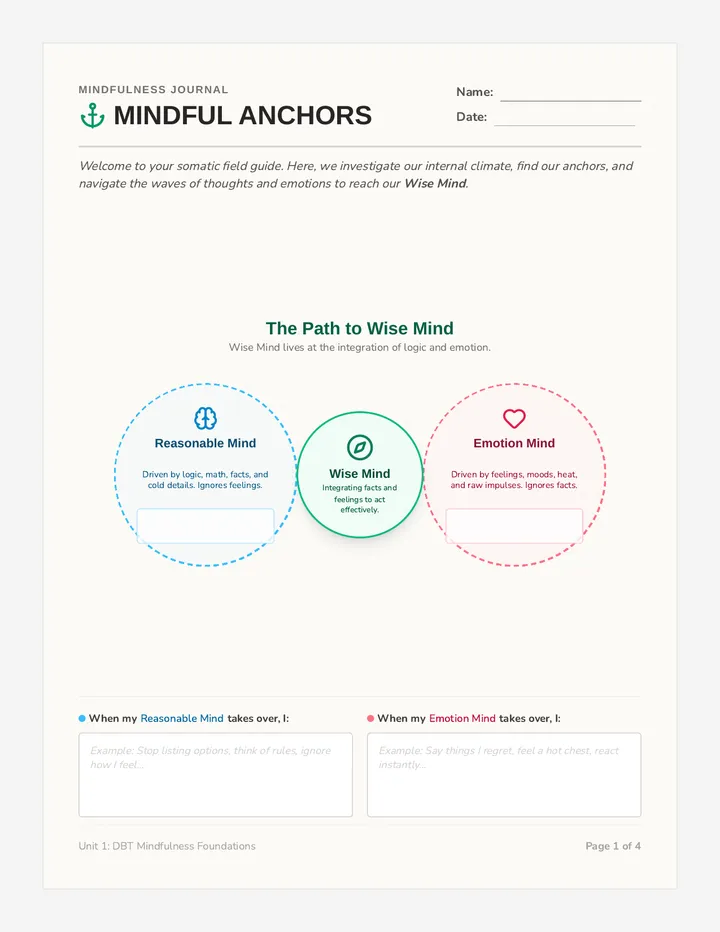
A comprehensive unit on Dialectical Behavior Therapy (DBT) mindfulness skills, taking students from somatic anchoring and cognitive understanding to collaborative, station-based performances that demonstrate 'What' and 'How' skills.
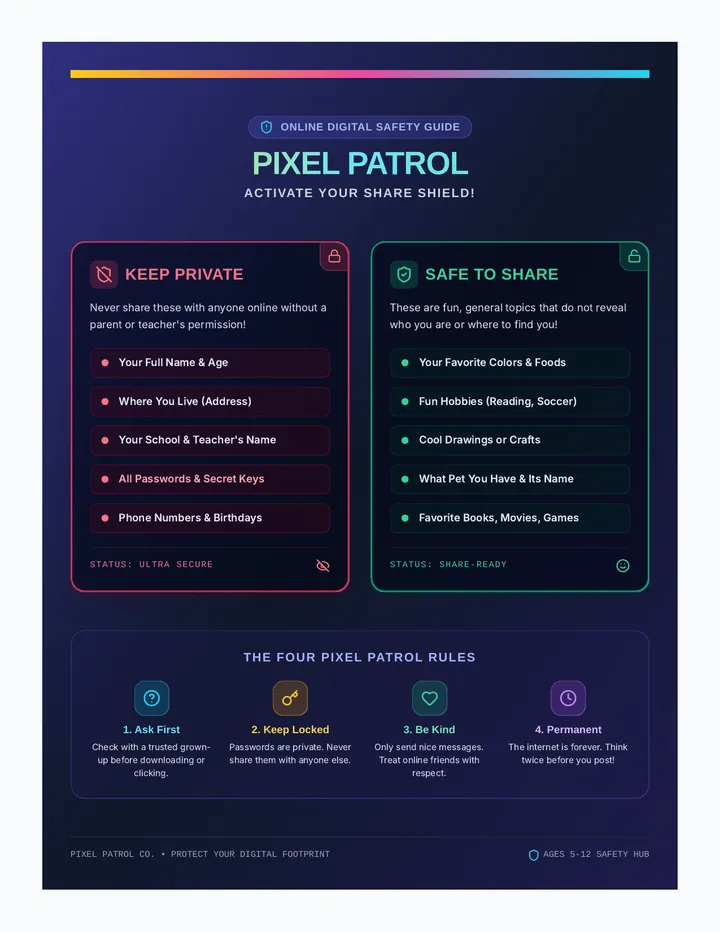
An interactive, gamified lesson on social media and digital safety designed for youth aged 5-12. Features differentiated pathways for early readers and pre-teens to learn about privacy, sharing limits, and online community respect.
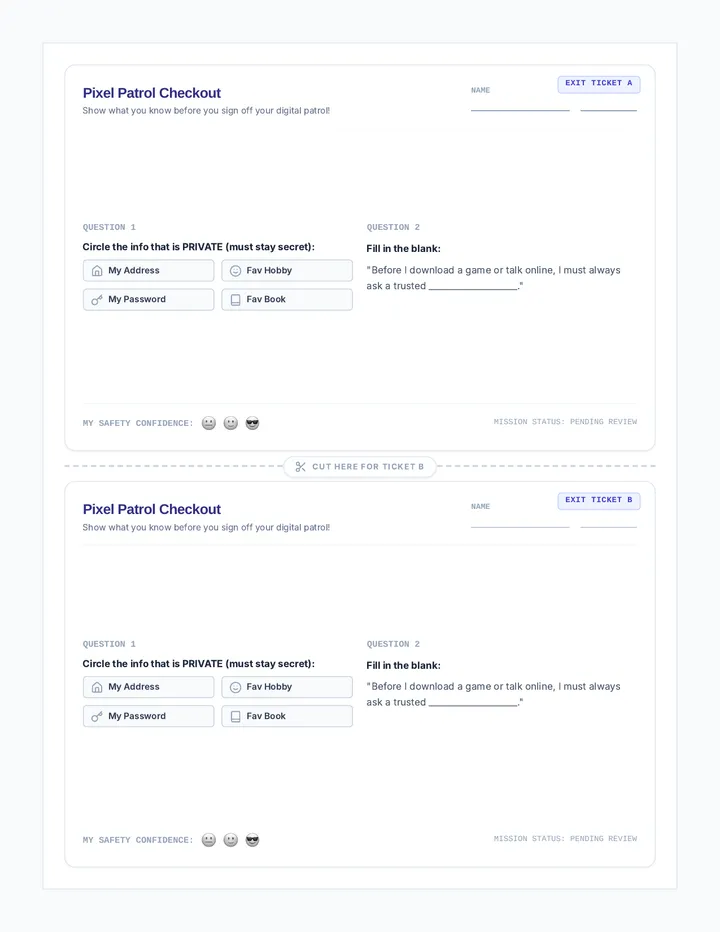
A printable sheet with 2 cut-out Exit Tickets designed to quickly check for understanding of key digital safety concepts at the end of the lesson.
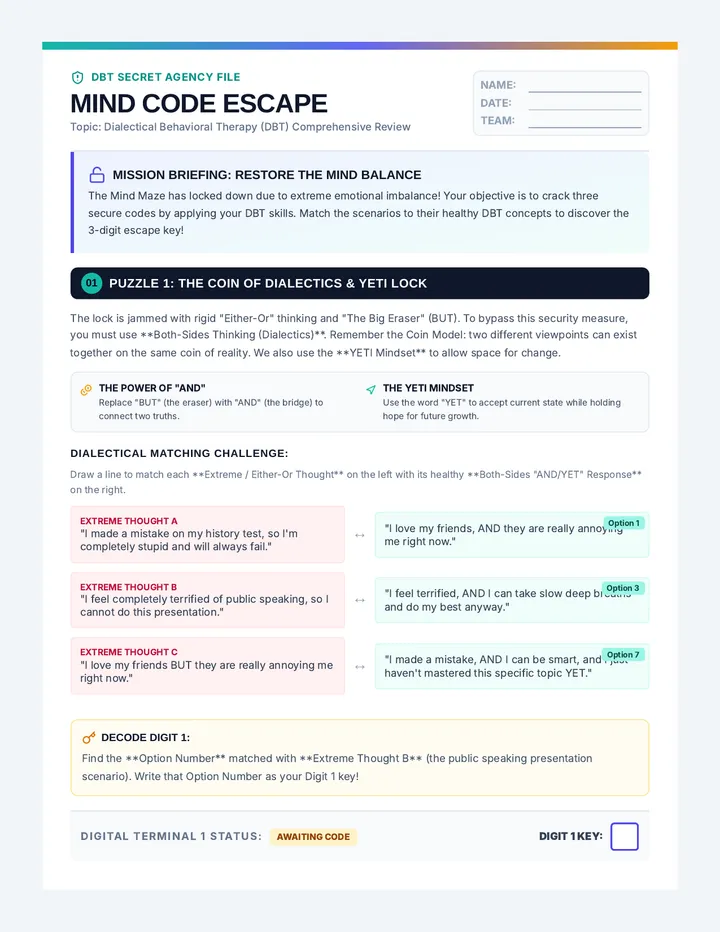
A hands-on sequence designed to empower teens with Dialectical Behavioral Therapy (DBT) concepts. Through engaging escape rooms, creative drama challenges, and real-life scenarios, students master dialectics and emotional regulation.
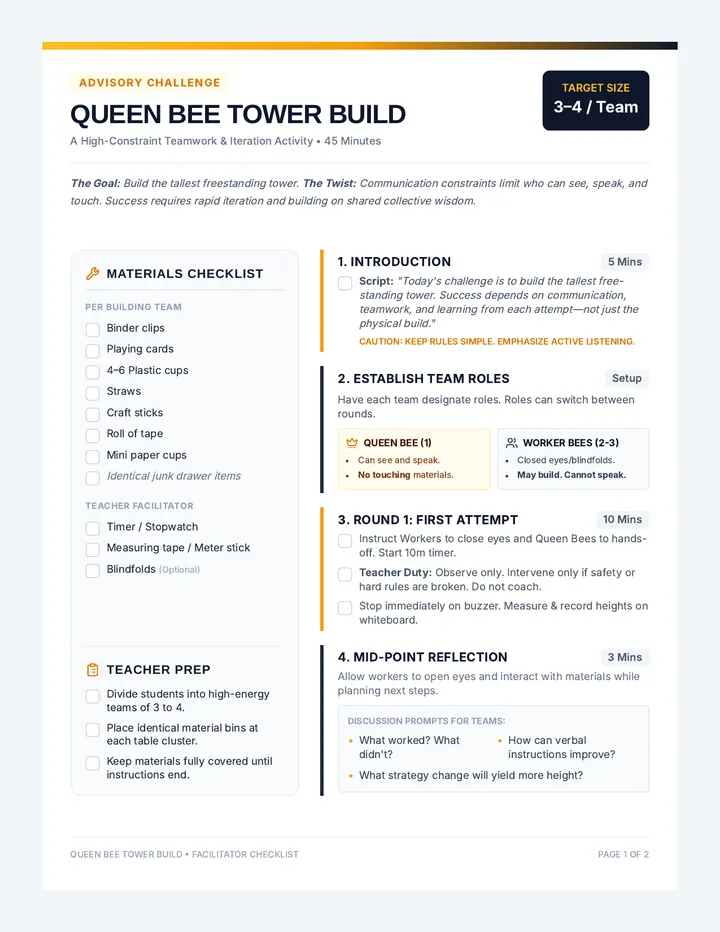
A dynamic, high-energy advisory lesson focused on collaboration, communication, and learning from failure through an interactive tower-building constraint challenge.
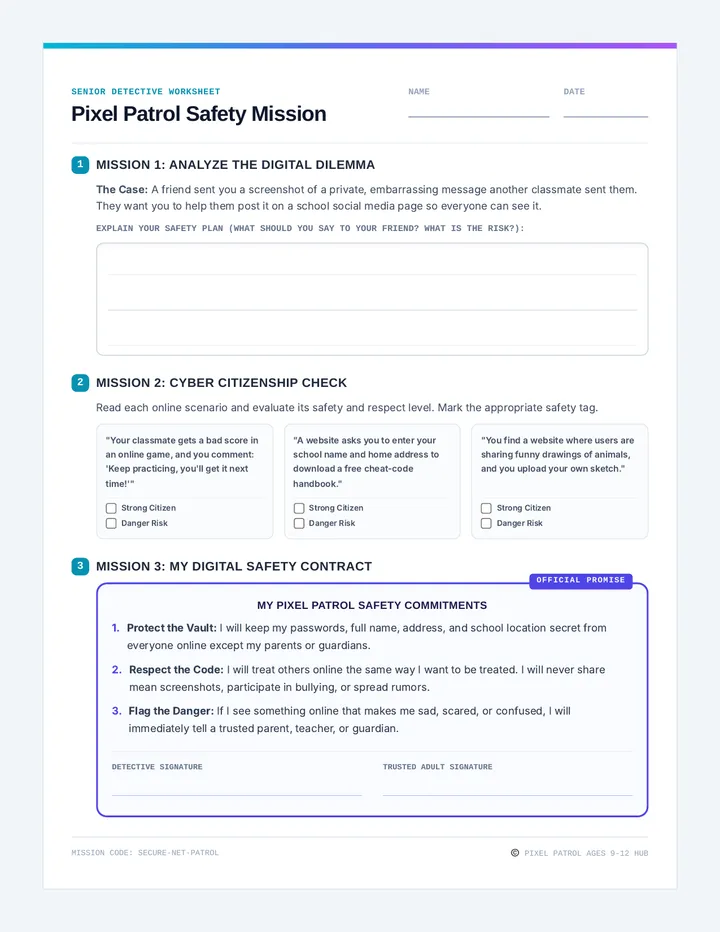
A student worksheet designed specifically for pre-teens (ages 9-12) featuring critical thinking scenario analysis, cyberbullying identification, and a personal Digital Safety Contract.
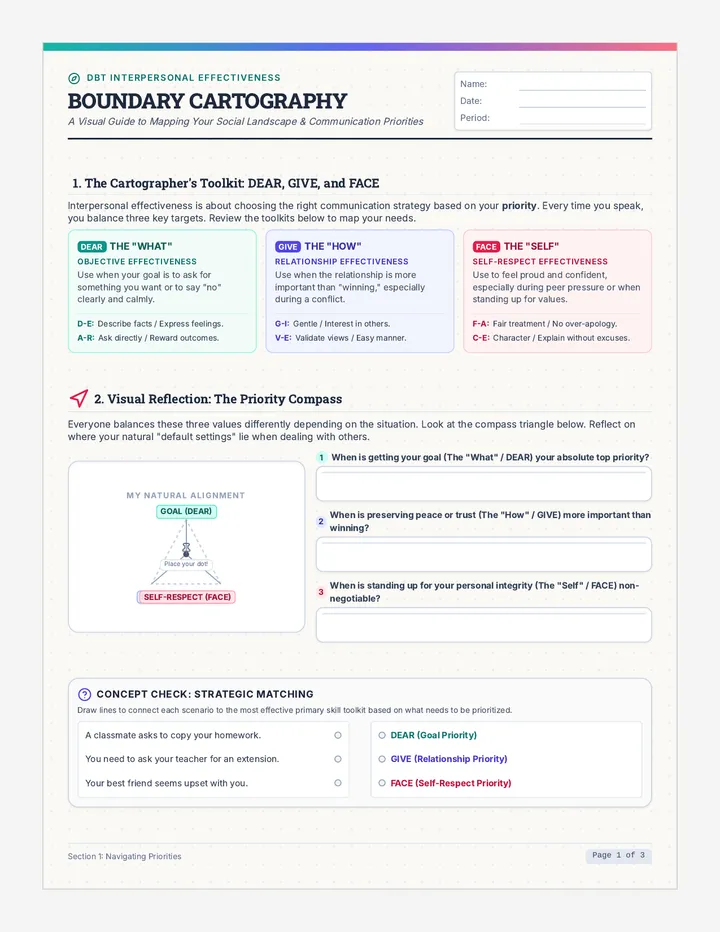
A DBT Interpersonal Effectiveness unit where students map relational boundaries, master communication skills, and engage in interactive, station-based roleplays to navigate teenage social dynamics.
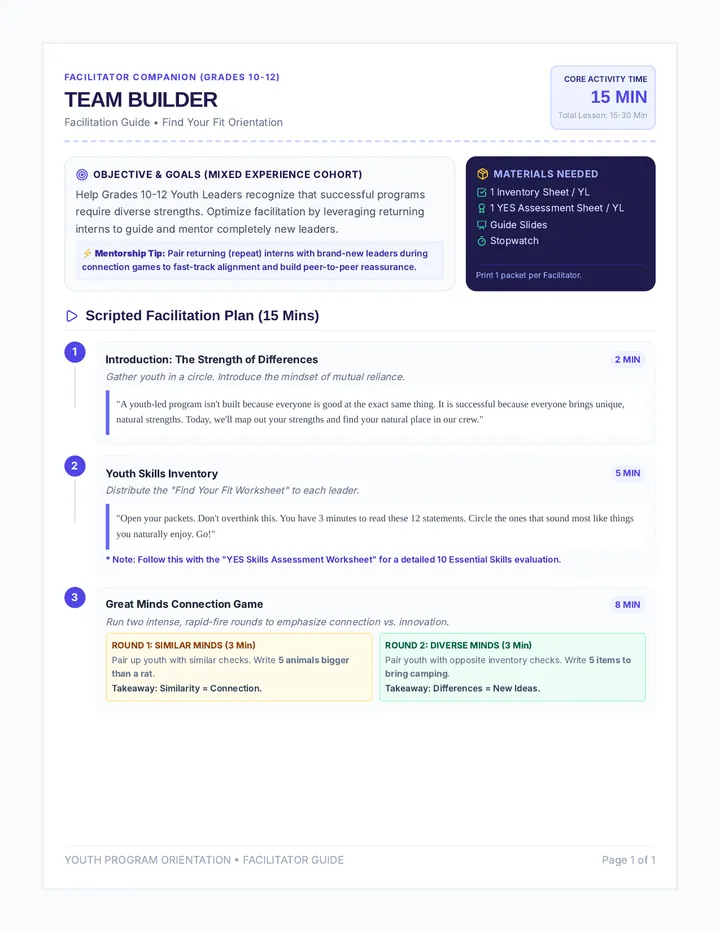
A youth leadership orientation lesson designed to help youth discover their unique strengths, explore the five core leadership roles, and understand how collaborative teamwork drives a successful youth-led program.
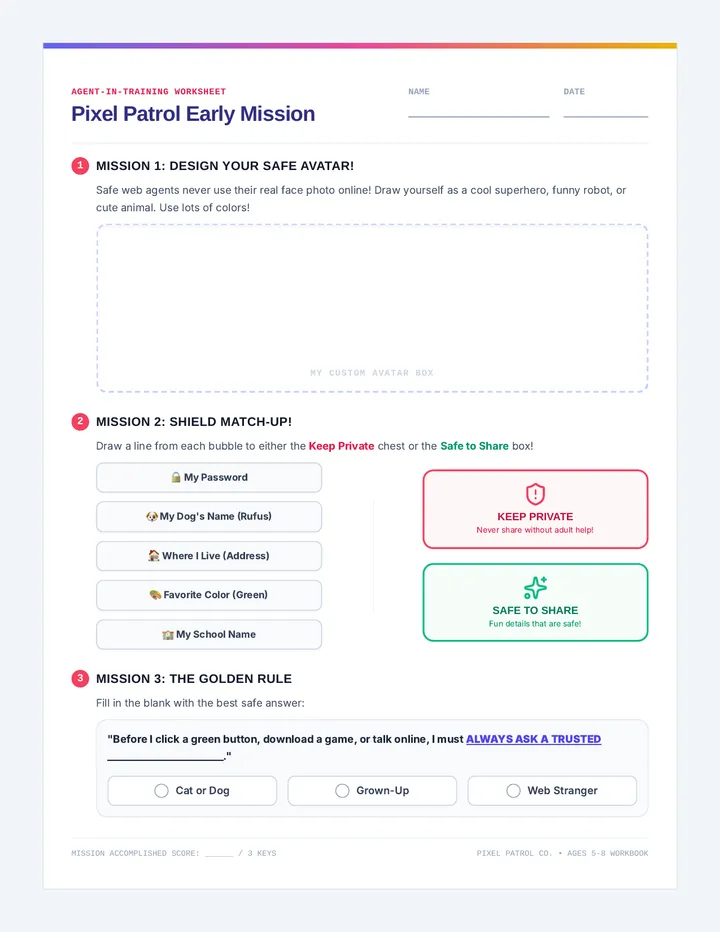
A student worksheet designed specifically for early readers (ages 5-8) to practice safety by drawing a safe avatar and matching public vs. private information.
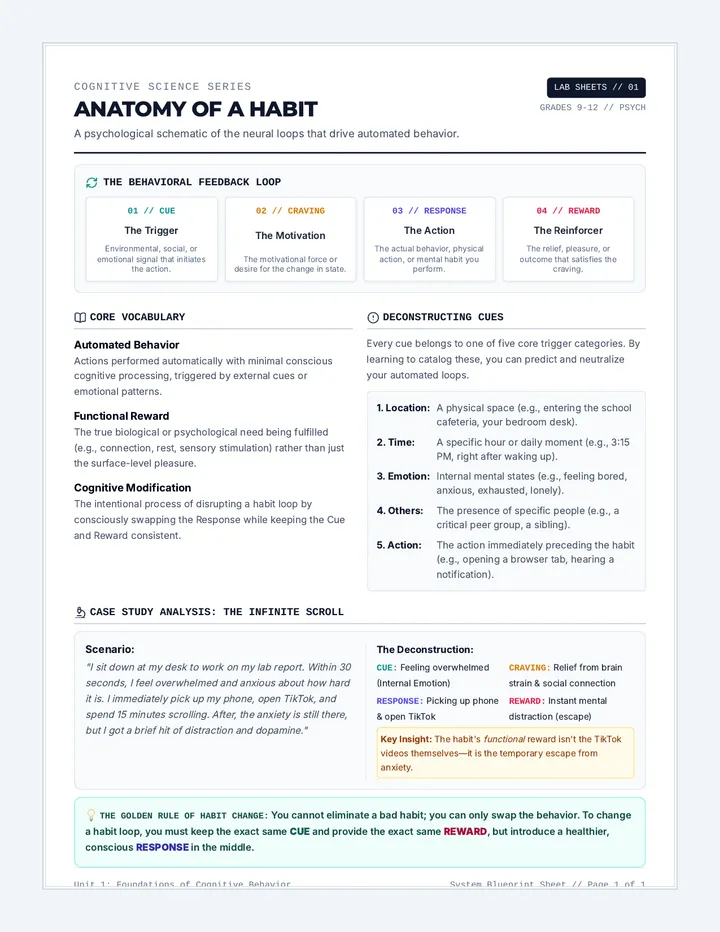
A three-part cognitive psychology series designed for Grades 9-12. Students learn the science of automation, explore how to isolate triggers and cravings, redesign unhelpful routines, and restructure their environments to make habit modification effortless.
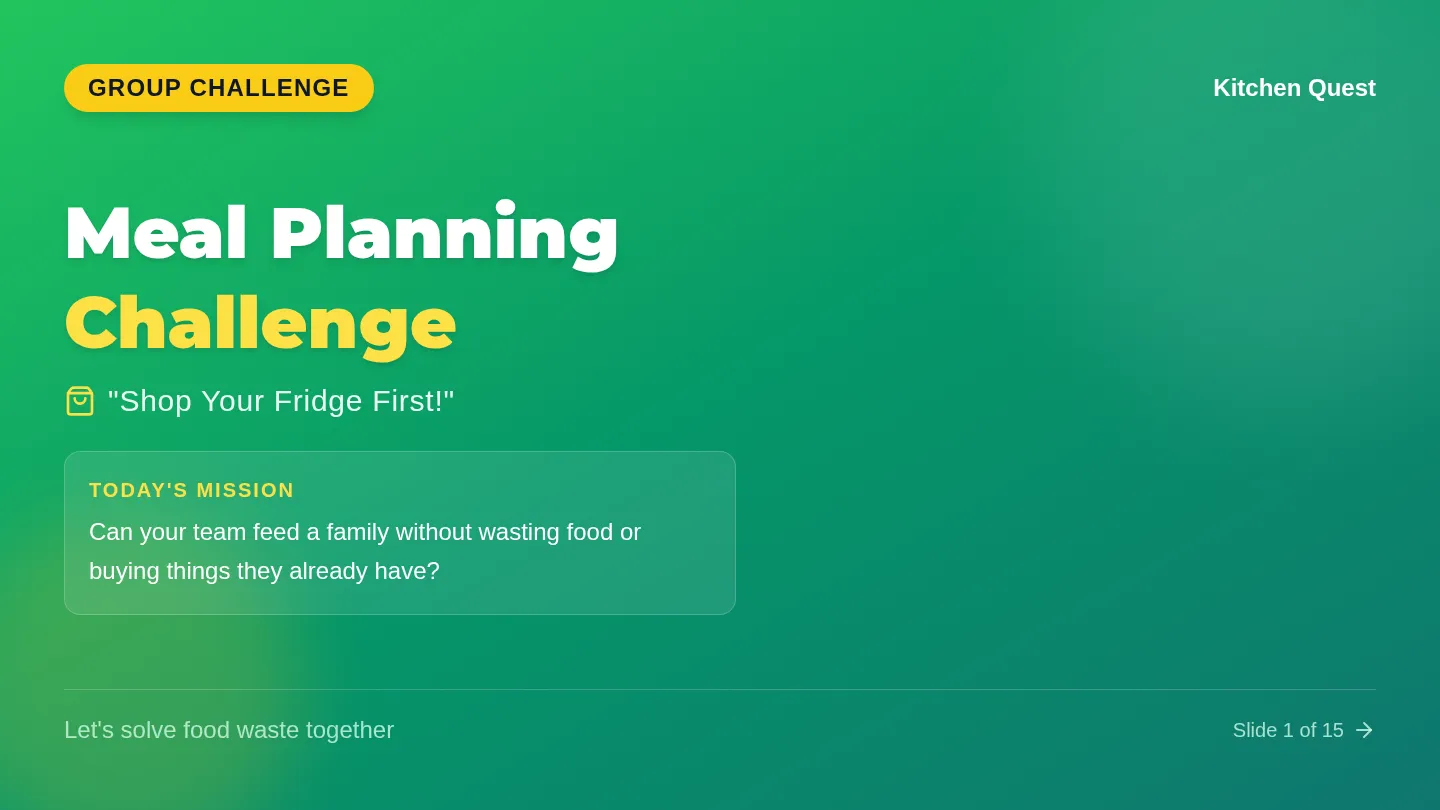
A highly interactive, gamified lesson where students work in teams to shop their fridges first. Students analyze different household inventories, plan 3 days of meals, and compile optimized grocery lists to minimize food waste and save money.
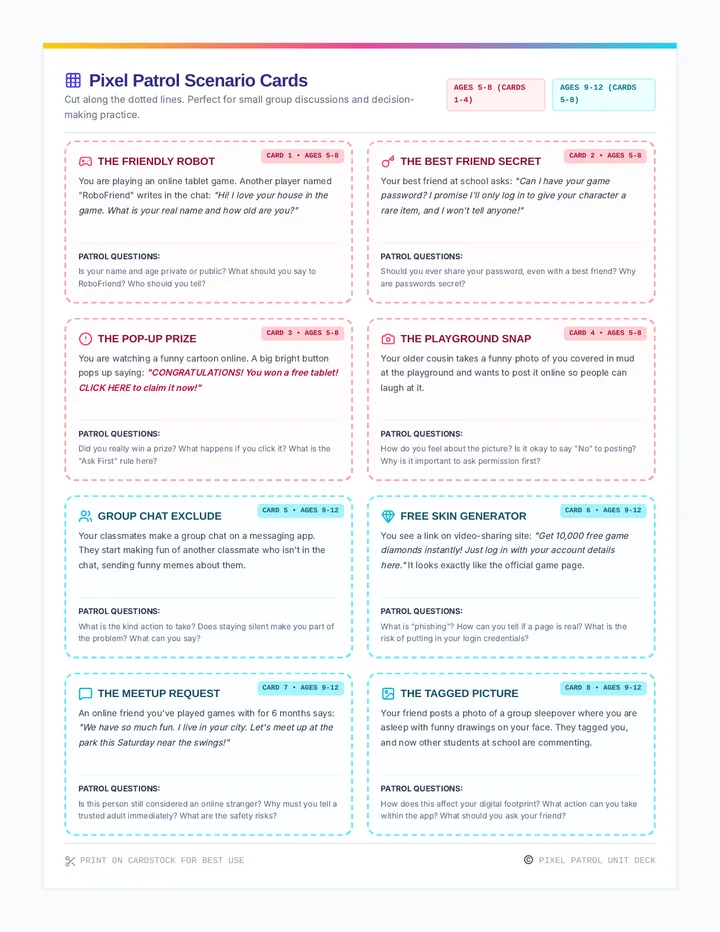
A sheet of 8 printable, cut-out Scenario Task Cards containing realistic digital safety challenges, split between younger (5-8) and older (9-12) age groups.