Calm Comebacks Lesson Plan Calm Comebacks
Tier 2 Group Lesson Plan • Grade 6
15 Minutes
Learning Objective
Students will learn and practice three respectful, assertive phrases (“calm comebacks”) to use when they disagree with adult instructions, and role-play real scenarios to build confidence in responding calmly.
Why This Matters
Middle schoolers often feel unheard when given abrupt commands. Teaching assertive, respectful responses empowers students to communicate needs clearly, reduce conflict, and build self-confidence in challenging situations.
Materials Needed
Assertive Language Handout
Role-Play Scenario Cards
Whiteboard & Markers
Circle of Chairs
Prep (5 mins)
Review handout phrases, shuffle scenario cards, set up chairs in a circle, and write the 3 calm comebacks on the board.
Instructional Sequence
2'
Introduction
Goal: Explain the purpose of calm comebacks.
Ask: “How do you feel when someone yells an order at you?”
Discuss the benefit of staying calm and communicating clearly.
3'
Teach Assertive Phrases
Goal: Review the three core "Calm Comeback" phrases.
Distribute handout and review the phrases (Understanding, Thoughts, Moment).
Refer to the whiteboard examples.
3'
Modeling
Goal: Demonstrate tone and body language.
Demo a scenario: barked order vs. calm comeback.
Teacher plays adult, assistant/volunteer plays student.
Pause to highlight tone and posture cues.
5'
Student Role-Play
Goal: Hands-on practice with peers.
Divide into pairs with scenario cards.
Alternate roles and practice using at least one calm comeback.
Circulate to coach tone and clarity.
2'
Debrief and Reflection
Goal: Consolidate learning and plan for real-life use.
Reconvene and share feelings/outcomes of the practice.
Discuss real-life apps (hallways, sports, home).
Encourage trying one strategy this week.
Calm Comebacks Slides 6th Grade • Tier 2
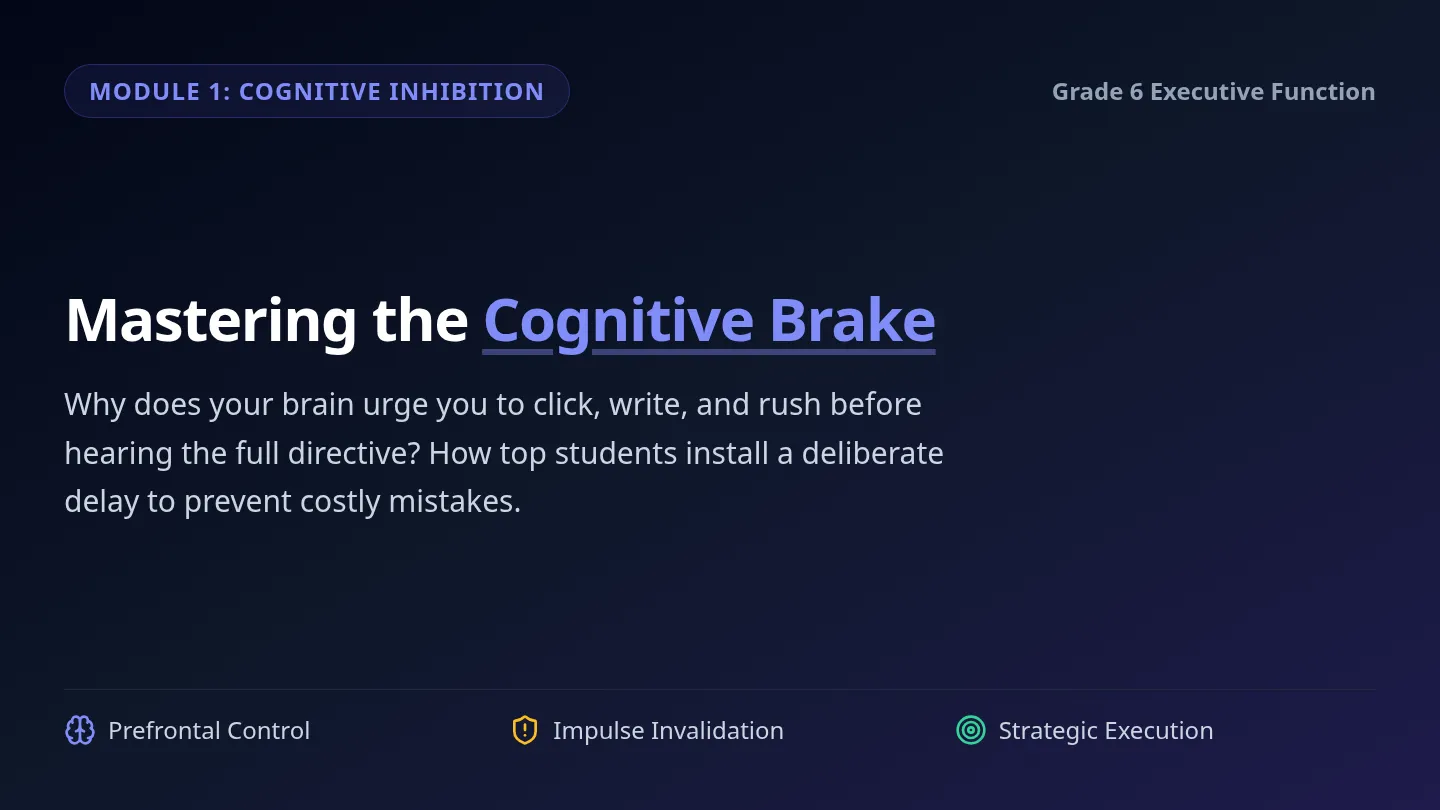
CALM
COMEBACKS
Respond Respectfully When You Disagree with Instructions
Teacher Notes:
Welcome the students and introduce the lesson. Explain that today we’ll learn how to respond respectfully when an adult gives a command you don’t agree with.
Lesson Objectives
Learn three respectful, assertive phrases to use when you disagree with adult instructions.
Practice responding calmly to abrupt or "barked" orders.
Build confidence through role-playing realistic scenarios.
Teacher Notes:
Read each objective aloud. Emphasize why these skills matter—less conflict and more confidence.
The Calm Comebacks
“I want to make sure I do this right—could you help me understand what to focus on first?”
“I’d like to share my thoughts before proceeding.”
“May I have a moment to finish what I’m doing?”
Teacher Notes:
Distribute the Handout. Review each phrase, modeling tone and eye contact.
Modeling the Skills
Watch & Learn
Adult Says:
“Stop talking and do your math worksheet NOW!”
Student Responds:
“I want to make sure I do this right—could you help me understand what to focus on first?”
Success Tips:
Calm, steady voice
Direct eye contact
Open body posture
Teacher Notes:
Model with a volunteer. Highlight respectful tone and posture. Pause to point out key cues.
Your Turn!
1. Pair Up
2. Grab a Card
3. Practice
Alternate roles (Adult vs. Student) and practice using at least one calm comeback.
Teacher Notes:
Divide into pairs. Hand out Scenario Cards. Circulate and coach on tone and clarity. After 4 minutes, bring the group back for a quick share.
Assertive Language Handout Assertive Language Tips
Calm Comebacks • Student Handout
Name:
Date:
What Is Assertive Communication?
Assertive communication means expressing your thoughts and needs in a clear, respectful way—without being aggressive (yelling or pushing) or passive (staying silent or ignoring).
In your own words, why is it helpful to use assertive language when someone gives you a sudden order?
Key Elements
Calm Tone
Steady and respectful voice.
Body Language
Eye contact and open posture.
Respectful Words
"I" statements and polite phrasing.
Describe one way you can use body language to show you’re being assertive:
Three Calm Comeback Phrases
Circle the phrase you feel most comfortable using first:
“I want to make sure I do this right—could you help me understand what to focus on first?”
“I’d like to share my thoughts before proceeding.”
“May I have a moment to finish what I’m doing?”
Practice Scenarios
Scenario A:
Your teacher says, “Put that away and start your science notes right now!”
Write an assertive response using a calm comeback:
Scenario B:
Your parent says, “Stop playing and clean your room this instant!”
Write a calm comeback to let them know you need more information or time:
Personal Reflection
Think of a recent time someone barked an order at you.
Describe the situation:
How could you respond assertively next time? Write your calm comeback:
Next Steps
Practice your chosen phrase with a partner or in front of a mirror. How did it feel?
Role-Play Scenario Cards Role-Play Scenario Cards
Calm Comebacks • Student Activity
Cut along the dotted lines
Scenario 1
The Teacher
“Put that away and start your science notes right now! No more distractions.”
Your Task:
Respond using a calm comeback phrase with a steady voice and eye contact.
Scenario 2
The Parent
“Stop playing that game and clean your room this instant! I’m tired of seeing this mess.”
Your Task:
Ask for a moment to finish what you are doing or share your thoughts before stopping.
Scenario 3
The Coach
“Run five laps around the field right now—no excuses! Move it!”
Your Task:
Use the comeback: “I want to make sure I do this right—could you help me understand what to focus on first?”
Scenario 4
The Principal
“Go back to your classroom immediately! You shouldn't be out in the hallway.”
Your Task:
Try to share your thoughts (e.g., you have a pass) before proceeding to the classroom.
Scenario 5
Cafeteria Monitor
“Pick up that tray and put it in the bin right now! No more talking!”
Your Task:
Use a calm voice and ask for a moment to finish what you're doing (like finishing your drink).
Scenario 6
A Librarian
“Quiet down and sit in your seat now! This is a library, not a playground.”
Your Task:
Respond assertively. Explain your thoughts (e.g., you were helping a friend find a book).
Scenario 7
A Substitute
“Sit down and start the work I gave you! I don’t want to hear another word.”
Your Task:
Use a calm comeback to understand the priorities or share that you need a moment to get settled.
Scenario 8
Music Teacher
“Stop playing your instrument and look at me! Right now!”
Your Task:
Combine calm body language with one of the comeback phrases to de-escalate the tension.
Calm Comebacks Reflection Calm Comebacks
Exit Ticket & Reflection
Name:
Date:
Reflect on what you’ve learned today about assertive communication. Use these questions to think about how you’ll use calm comebacks in your daily life.
1
Which calm comeback phrase are you most comfortable using? Why?
2
Think of a recent situation where someone barked an order at you. How would you respond now, using your chosen calm comeback?
3
What part of using calm comebacks feels most challenging to you? How will you practice to get better?
4
Weekly Commitment
One action I commit to this week to use calm comebacks is:
Great work today! Keep building respect and confidence.
Calm Comebacks Script Teacher Script
Calm Comebacks • 15-Minute Facilitation Guide
VER: 1.0.26
1
Slide 1: Title – Calm Comebacks
Teacher (Enthusiastic): “Good morning, everyone! Today we’re learning how to respond respectfully and calmly when an adult gives a sudden order you don’t agree with. We’ll practice three simple phrases—our calm comebacks—to help you speak up clearly and confidently.”
[Action: Show slide. Pause and smile. Make eye contact with each student in the circle.]
2
Slide 2: Lesson Objectives
Teacher: “By the end of today’s 15-minute lesson, you will: Learn three respectful, assertive phrases; practice responding calmly; and build confidence through role-play.”
Ask: “Why do you think these skills might help you in school or at home?”
[Action: Wait for 1–2 volunteers to share. Validate their answers by relating them back to 'less conflict' or 'feeling heard'.]
3
Slide 3: Calm Comeback Phrases
Teacher: “I’m passing out the Assertive Language Tips Handout. On the third section, you’ll see our three calm comebacks: 1. ‘I want to make sure I do this right—could you help me understand what to focus on first?’ 2. ‘I’d like to share my thoughts before proceeding.’ and 3. ‘May I have a moment to finish what I’m doing?’”
Instruction: “Read them quietly, then turn to your partner and share which phrase feels most natural to you.”
[Action: Allow 30 seconds for partner sharing. Walk around the circle briefly.]
4
Slide 4: Modeling a Calm Comeback
Teacher: “Now I’ll model a scenario. I’ll be the adult, and [Student Volunteer] will be the student.”
Adult (Teacher): “Stop talking and do your math worksheet NOW!”
Student (Volunteer): “I want to make sure I do this right—could you help me understand what to focus on first?”
[Action: Highlight the student's tone and posture. Swapping roles is optional but encouraged if time allows.]
5
Slide 5: Student Role-Play
Teacher: “Next, get into pairs and grab a Role-Play Scenario Card. The adult will read the order, and the student will respond with a calm comeback. Focus on your tone and eye contact.”
[Action: Start timer (4 mins total). Circulate and coach. Bring back for debrief at the 13-minute mark.]
🏁
Debrief and Reflection
Teacher: “Great job today. These phrases work with teachers, coaches, or parents. Please complete the reflection exit ticket and choose one phrase you’ll practice this week.”
Why Calm Communication Works Reading Calm
Communication
Why it works and how to master it.
What Is It?
Calm communication is when you express your thoughts and feelings in a steady, respectful way—even when you feel pressured or upset. Instead of reacting with anger or shutting down, you use a clear tone of voice, “I” statements (like “I feel…”), and open body language (like eye contact and relaxed posture). This style of speaking helps others understand your point of view without turning the conversation into an argument.
Tips for Staying Calm
Pause and take a slow breath before you speak.
Remind yourself that you’re aiming for understanding, not to “win.”
Keep your voice even and your posture open.
Use one of our three calm comebacks when you feel an order is too abrupt.
Why It Helps
Builds Respect
Adults are more likely to listen carefully to what you say.
Reduces Conflict
Prevents shouting matches and solves disagreements faster.
Boosts Confidence
You’ll feel proud of handling tough situations with maturity.
Strengthens Bonds
Maintains positive connections even when you disagree.
Real-Life Example
Imagine your teacher says, “Stop chatting and copy the notes NOW!” If you respond by shouting back, the situation escalates. But if you use a calm comeback—“I understand you need me to start now. Could you explain which part is most important?”—you show respect, get more information, and keep the conversation productive.
By practicing calm communication, you’ll navigate disagreements with confidence and respect—no yelling required!
Calm Comeback Quiz Calm Comeback Quiz
Check Your Understanding
Name:
Date:
1
Which of the following is a calm comeback phrase?
Stop yelling at me and listen!
I understand, but can you explain why you need this now?
I'll do it later maybe.
Whatever, it's fine.
2
Which calm comeback phrase asks for more time to finish your current task?
I understand, but can you explain why you need this now?
I’d like to share my thoughts before proceeding.
May I have a moment to finish what I’m doing?
Okay.
3
Your coach says, "Run five laps around the field right now—no excuses!"
How could you respond with a calm comeback? Write your response below.
4
Rate your confidence in using calm comebacks after today’s lesson.
Not Confident
Slightly
Moderately
Very
Extremely
5
Describe one real-life situation where you could use a calm comeback.
Write the phrase you would use and explain why it would help.
Calm Comebacks • Quiz Score: ________ / 5