Lenny.com
Explore
Create
ActivitiesNewMathEnglish Language ArtsScience & EngineeringSocial StudiesGlobal LanguagesHealth & Physical EducationSpecial EducationCounseling & Life SkillsArts & CreativityESL
Lenny.com
Lenny.com
Explore
Create
ActivitiesNewMathEnglish Language ArtsScience & EngineeringSocial StudiesGlobal LanguagesHealth & Physical EducationSpecial EducationCounseling & Life SkillsArts & CreativityESL
Lenny.com
Lenny.com

Solutions

Lenny for EducatorsLenny for SchoolsLenny for Districts

Product

ExploreSign inCreateSupportAbout

Resources

Getting startedMTSS Acceleration Program

Newsletters

School Funding Newsletter

© 2026 Lenny Learning Inc.

TermsPrivacyAccessibility
LinkedInInstagramX
Lenny
Counseling & Life SkillsSelf-AwarenessBasic Emotion RecognitionComplex Emotion IdentificationEmotional Nuance & Mixed FeelingsBuilding Positive Self-ImageRecognizing Strengths & Growth AreasAccurate Self-AssessmentPersonal Values IdentificationCultural & Individual Identity ExplorationValues-Based Decision MakingSelf-ManagementStop-and-Think StrategiesDelaying GratificationIndependent Impulse ManagementIdentifying Stress TriggersShort-Term Goal SettingSMART Goals DevelopmentGoal Monitoring & AdjustmentBuilding Perseverance & ResilienceInternal Motivation DevelopmentComprehensive Stress Reduction PlanningSocial AwarenessRecognizing Others' FeelingsDemonstrating EmpathyRespecting Individual DifferencesUnderstanding Cultural DiversityComplex Empathetic ResponsesMultiple Viewpoint ConsiderationMulti-Perspective AnalysisChallenging Stereotypes & BiasRelationship SkillsActive ListeningClear Verbal & Nonverbal CommunicationBuilding Positive FriendshipsWorking Cooperatively in GroupsCommunicating Personal BoundariesRespecting Others' BoundariesAssertive ExpressionPeaceful Problem-SolvingContributing to Team GoalsComplex Conflict NavigationMediation & NegotiationHealthy Romantic RelationshipsResponsible Decision-MakingDaily Problem IdentificationBrainstorming Multiple SolutionsEvaluating Pros & ConsRecognizing Risks & ConsequencesApplying Ethical FrameworksInformed Risk-Benefit DecisionsRoot Cause AnalysisMindfulnessMindful BreathingBody Scan MeditationDaily Mindfulness ApplicationDaily Self-Care RoutinesBalancing Life DemandsAdvocating for Wellness NeedsMental Health SupportUnderstanding Anxiety SymptomsWorry Management StrategiesProgressive Muscle RelaxationRecognizing Depression SignsBuilding Mood-Supporting RoutinesBehavioral Activation for MoodUnderstanding Grief StagesHealthy Grief CopingCreative Expression of LossBehavioral SupportDaily Check-In ProceduresDaily Goal Setting & ReviewRecognizing Escalation Warning SignsRequesting Breaks & SupportSelf-Calming During DistressUnderstanding Positive ReinforcementToken Economy ImplementationBehavior Chart TrackingAnalyzing Behavior PatternsIdentifying Antecedents & ConsequencesDetermining Behavior FunctionFunction-Based InterventionsIndividualized Behavior ContractsData-Driven Behavior AdjustmentTherapeutic ApproachesThoughts-Feelings-Behaviors ConnectionRecognizing Thinking PatternsChallenging Negative ThoughtsPositive Self-Talk PracticeThought Record TrackingAdvanced Cognitive RestructuringComprehensive CBT PlansBehavioral Activation TechniquesBuilding Positive ExperiencesExposure Hierarchies for AnxietyPresent-Moment AwarenessNon-Judgmental ObservationSelf-Soothing & DistractionComplex Emotion LabelingReducing Emotional Vulnerability (PLEASE)DEAR MAN CommunicationGIVE Skills for RelationshipsFAST Skills for Self-RespectRadical Acceptance PracticeCrisis Survival Skills (TIPP)Understanding Trauma EffectsTrauma Responses & TriggersIdentifying Trauma FeelingsGrounding TechniquesRegulation During Trauma DistressSafe Place VisualizationProcessing Through NarrativeDeveloping Trauma StoryPersonalized Safety PlanningGroup SupportTurn-Taking & SharingGroup Conversation SkillsSharing in Supportive EnvironmentLearning from Similar ChallengesBuilding Community & BelongingNavigating Peer RelationshipsGroup Skill PracticeGroup Mental Health EducationStress & Anxiety UnderstandingCrisis Support & SafetyKnowing When to Seek HelpIdentifying Mental Health CrisesGrounding During CrisisUsing Crisis HotlinesBuilding Support NetworksAccessing Mental Health ResourcesWarning Signs & Coping StrategiesDeveloping Personal Safety PlansUnderstanding Suicide Warning SignsGatekeeper Skills for PeersDigital LiteracySocial MediaTechnology BasicsProductivity ToolsInternet and Online ResearchWeb Design and PublishingDigital CitizenshipOnline Safety and PrivacyEmerging TechnologiesFinancial LiteracyMaking Financial DecisionsBanking and AccountsConsumer SkillsSaving and InvestingCredit and DebtEmployment and IncomeTaxesInsuranceMajor PurchasesEconomic ConceptsFinancial PlanningCollege & Post-Secondary PlanningCareer ExplorationUnderstanding Post-Secondary OptionsCollege Research & SelectionAdmission RequirementsCollege Application ProcessPersonal Statement WritingFAFSA CompletionScholarship Search & ApplicationsUnderstanding Student LoansContinuing Education PlanningInterview PreparationResearching EmployersCommon Interview QuestionsSTAR Method ResponsesProfessional Interview PresenceVirtual Interview SkillsInterview Follow-UpJob Search SkillsUnderstanding Job PostingsEffective Job Search StrategiesNetworking for OpportunitiesResume Writing BasicsAction Verbs & AchievementsTailoring Resumes to JobsCover Letter WritingProfessional ReferencesProfessional CommunicationBusiness Email EtiquettePhone & Voicemail ProfessionalismMeeting ParticipationPresentation SkillsProfessional Work EthicTime Management & ProductivityTeamwork & CollaborationAdaptability & FlexibilityProblem-Solving at WorkConstructive FeedbackWorkplace RightsUnderstanding Employment LawsPay & Benefits UnderstandingWorkplace SafetyAnti-Discrimination & Harassment

Budgeting for Independence

A comprehensive high school financial literacy lesson exploring the nuanced reality of needs versus wants. Students evaluate personal priorities, construct a balanced $900 discretionary budget, and solve an authentic career-entry case study on professional wardrobe budgeting.

Gym / Community Center Pass
$45.00
Preventative physical health and stress management during early career.
3Digital Streaming (Spotify + Hulu)$25.00Low-cost personal entertainment; readily canceled in a financial pinch.
2Gifts & Emergency Discretionary Buffer$160.00Holiday gifts, occasional rideshares in bad weather, and miscellaneous.
Total Discretionary Allocation:$900.00Fully balanced to $900 budget ceiling

Teacher Guide & Key • Needs vs. Wants Curriculum Page 1 of 2 • Turn Over for Exemplar Reflections & Case Study Key

Part II & Part III Exemplar Responses & Rubric Guide

Educator Reference Key

Exemplar Student Responses: Discretionary Spending Reflection

1. Easiest Items to Surrender & Zero-Cost Substitutions:

Model Answer: The streaming subscriptions ($25/mo) and dining out budget ($140/mo) are the easiest to give up immediately. Streaming media can be substituted at zero cost using free public library digital cards (Hoopla, Kanopy) or free ad-supported platforms. Dining out can be replaced by meal-prepping simple staples at home. Neither elimination causes lasting harm, physical danger, or professional impairment.

2. Hardest Item to Cut & Value Alignment:

Model Answer: Contributing to family income ($200/mo) would be the hardest to give up. While classical budgeting textbooks classify financial assistance to family as an optional discretionary luxury, within our family values it is a non-negotiable moral duty that directly supports parents' prescription co-pays and groceries. Cutting it would cause direct physical hardship to loved ones and intense emotional distress.

3. Values & Early Adult Independence:

Model Answer: This budget embodies the belief that money is a resource to build security, career mobility, and family solidarity—not instant gratification. Allocating over 55% of discretionary income toward family aid, reliable transit, and career credentials demonstrates that human connections and professional durability heavily outweigh temporary consumer status items like trendy clothes or ride-hailing apps.

3 Part III: Career Case Study — Complete Model Answers

Washington, D.C. HR Wardrobe Dilemma

A. Need vs. Want Evaluation:

Verdict: Conditional Professional Need. While one suit and a couple of shirts technically meet the basic legal requirement of being clothed, Human Resources personnel directly represent corporate policy, onboarding, and executive culture. Wearing the exact same suit daily causes rapid fabric breakdown, persistent odor/hygiene issues, and frequent dry-cleaning costs that damage garments quickly. Professional credibility and basic job retention make a wardrobe expansion a functional necessity.

B. Appropriate 5-Day Workplace Capsule Inventory:

Recommended Inventory: An efficient, mix-and-match business professional capsule should include: (1) Two versatile suits in neutral tones (charcoal navy or dark grey); (2) Five wrinkle-resistant dress shirts or tailored blouses (one for each workday between weekly laundering); (3) Two additional pairs of dress trousers or skirts that pair with both suit jackets; (4) Two pairs of high-quality dress shoes (alternating daily prevents moisture buildup and doubles shoe lifespan); (5) Two belts and conservative accessories.

C. Strategic Purchasing Plan (Avoiding Credit Card Debt):

• Phase Purchases Across 3 to 6 Months: Never finance an entire wardrobe on high-interest credit cards before receiving steady paychecks. Allocate $100–$150/month from discretionary income into a sinking fund.

• Prioritize by Daily Friction: Month 1: Buy 3 affordable dress shirts and a second pair of shoes so the sole pair isn't worn 5 consecutive days. Months 2–3: Add a versatile navy suit jacket and trousers.

• Shop Consignment, Outlets & Secondhand: In professional hubs like D.C., high-end consignment shops and platforms like Poshmark or eBay offer premium wool suits ($400 retail) for $50–$80.

• Invest in Tailoring over Brand Names: A $60 secondhand suit tailored for $35 fits significantly better and looks far more executive than an ill-fitting $500 off-the-rack designer suit.

Priority Paycheck • Financial Literacy Teacher Answer Key Page 2 of 2 • Classroom Discussion Prompts & Assessment Complete
You might also like

Safe Harbor Facilitator Guide

Steady Ground

A 6-session dialectical emotion-regulation and distress-tolerance group counseling curriculum designed for high school counselors supporting students struggling with self-harm urges. Each 30-minute session delivers targeted grounding practices, physiological resets, urge-surfing tools, and safety planning.

SL

Sofia Lopez

12
Sprint Thirty Slides

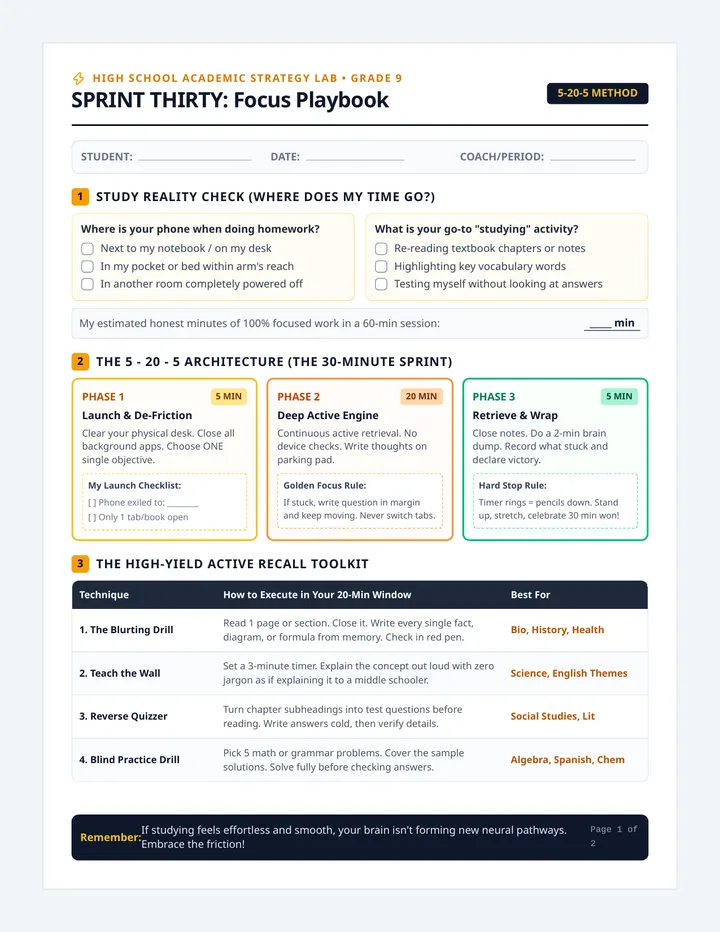
Sprint Thirty

A targeted small group intervention guiding 9th grade students to replace marathon cramming with structured 30-minute study sprints. Learners master the 5-20-5 sprint architecture, identify high-yield active recall techniques, and design an actionable study session for their current academic workload.

JB

Jerica Brown

3
Accountability Culture PD Guide

Accountability Culture PD Guide

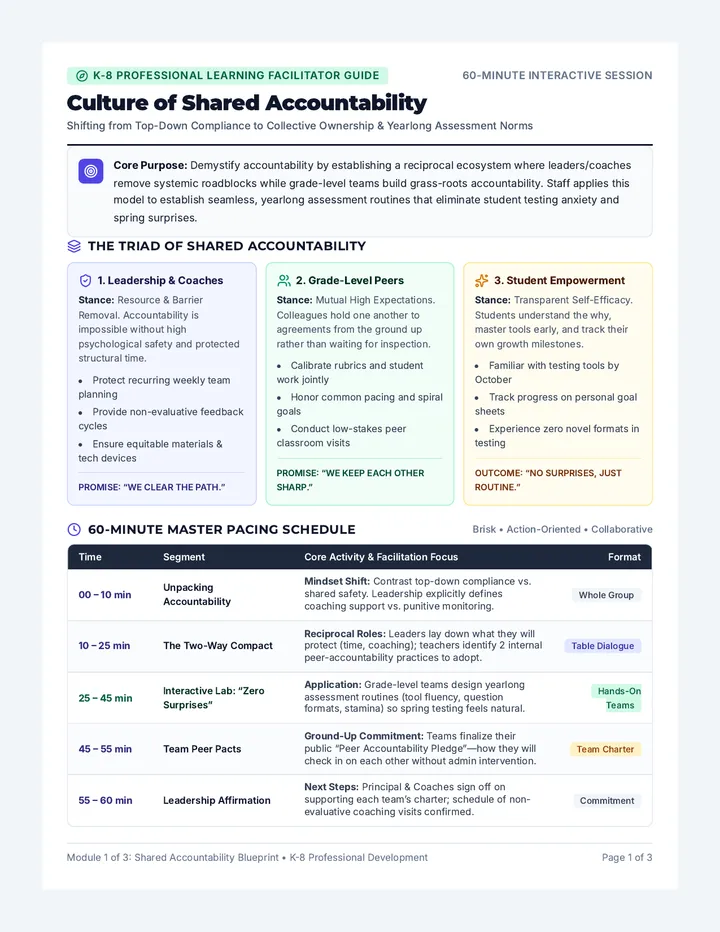
A comprehensive 60-minute professional development session outline and facilitator guide for K-8 schools centered on shared accountability. It equips school leaders, instructional coaches, and classroom teachers to transition from top-down compliance to collective ownership, featuring an interactive yearlong assessment routine planning lab.

A

awechsler

Impact Intent Teacher Guide

Science Lab Dialogue

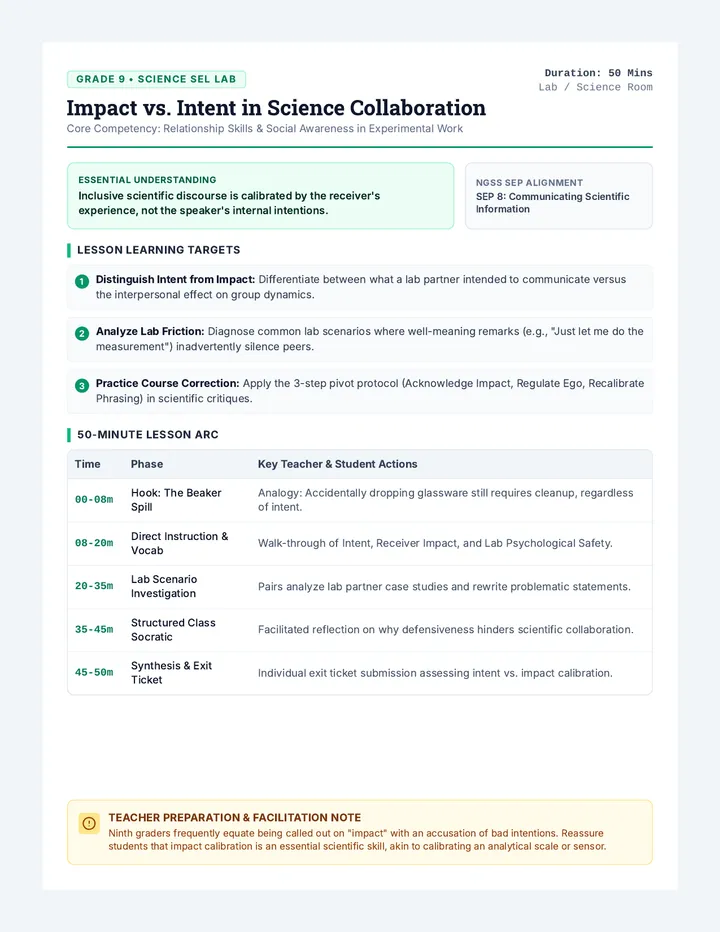
A high school science SEL sequence that fosters inclusive collaboration, empathetic communication, and barrier-free scientific discourse across grades 9 through 11.

YB

Yna Bersales

27
Staff Perception Survey

Steady School Culture

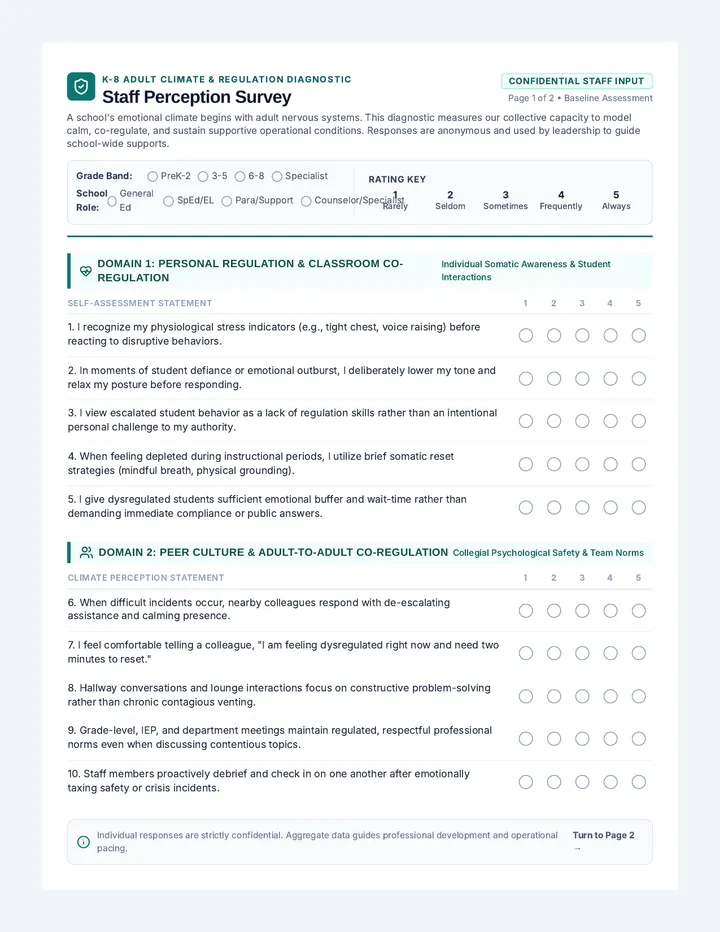
A comprehensive assessment and reflection system for K-8 schools to measure, compare, and cultivate a healthy culture of adult emotional regulation. It includes parallel staff perception and leadership self-assessment surveys alongside a cross-walk analysis protocol.

A

awechsler

3
Sprint Thirty Facilitator Guide

Sprint Thirty Facilitator Guide

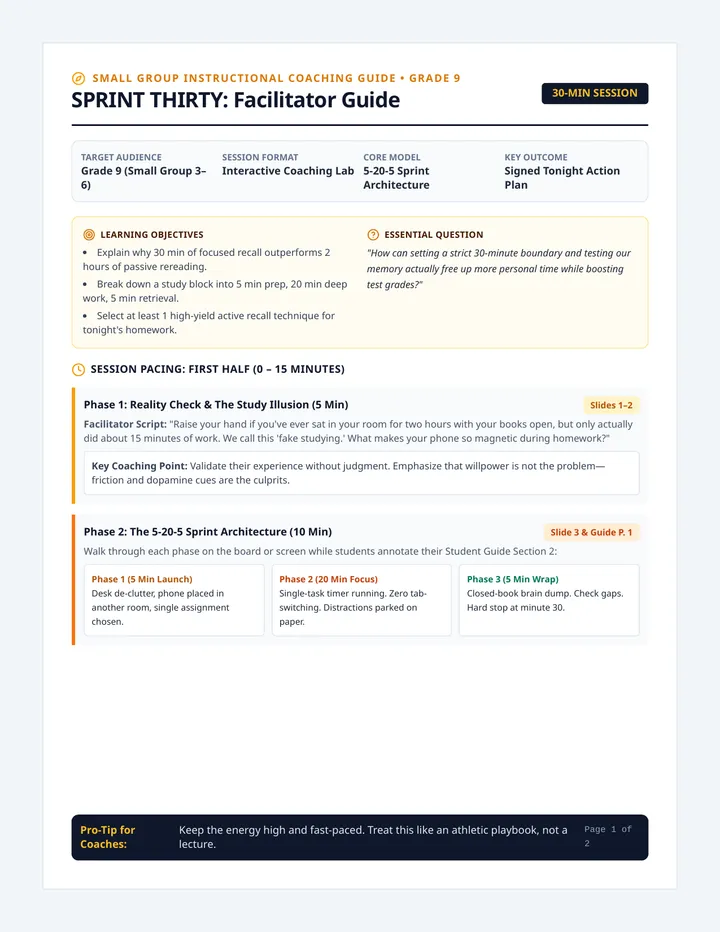
A comprehensive 2-page facilitation guide for teachers and academic coaches leading a 9th grade small group study skills intervention. It includes lesson pacing, coaching dialogue scripts, handling common student pushbacks, a live micro-drill protocol, and next-day check-in guidelines.

JB

Jerica Brown

Body Clues Slides

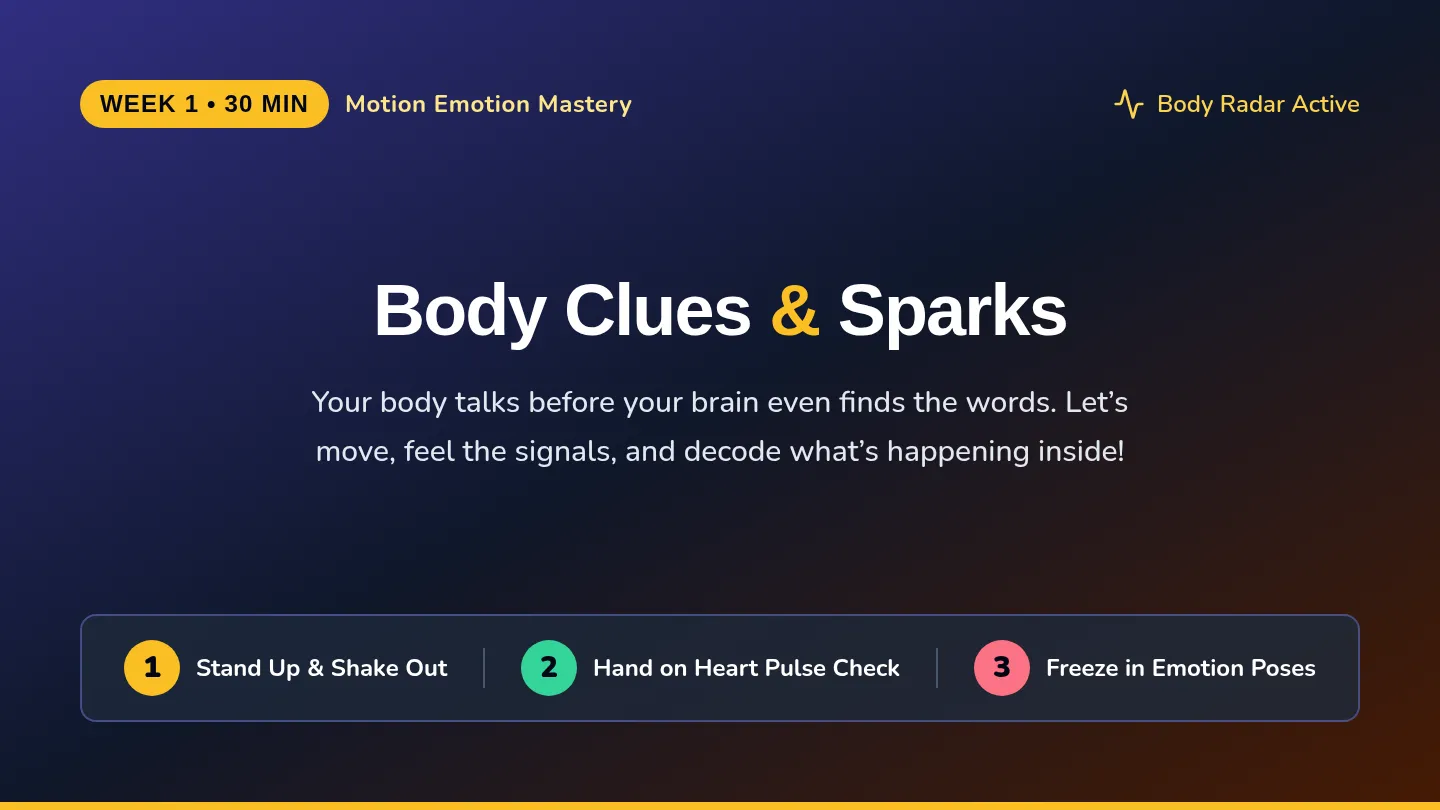
Motion Emotion Mastery

A four-week kinesthetic social-emotional learning sequence designed for students who benefit from movement. Across weekly 30-minute sessions, students discover somatic body signals, gauge emotional energy engines, track feeling shifts, and build an active regulation toolkit.

LS

Laura-Ashley Shury

9
Direction Decoder Slides

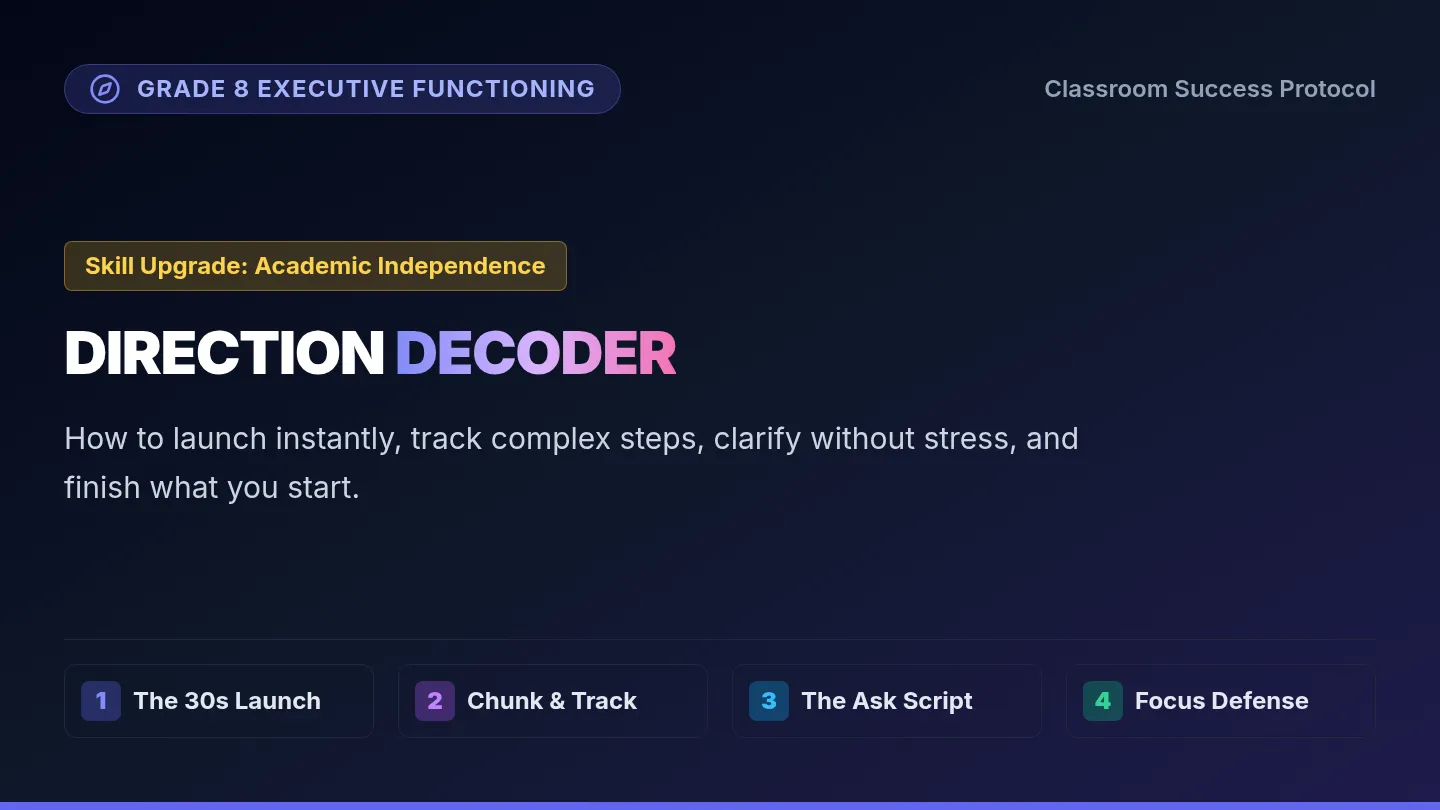
Direction Decoder

An executive functioning and academic success lesson designed for 8th graders to master following teacher instructions. Focuses on four vital skill pillars: starting promptly (the 30-second launch), breaking down multi-step tasks, asking respectful clarifying questions, and maintaining focus during independent work.

DP

David Patterson

3
Sprint Thirty Student Guide

Sprint Thirty Student Guide

A 2-page hands-on student workbook and action planner for 9th graders. It features a study habits self-audit, the 5-20-5 study sprint framework, an active recall strategy selector, and a tonight-sprint execution plan with a distraction parking lot and victory log.

JB

Jerica Brown

Feelings Detective Facilitator Guide

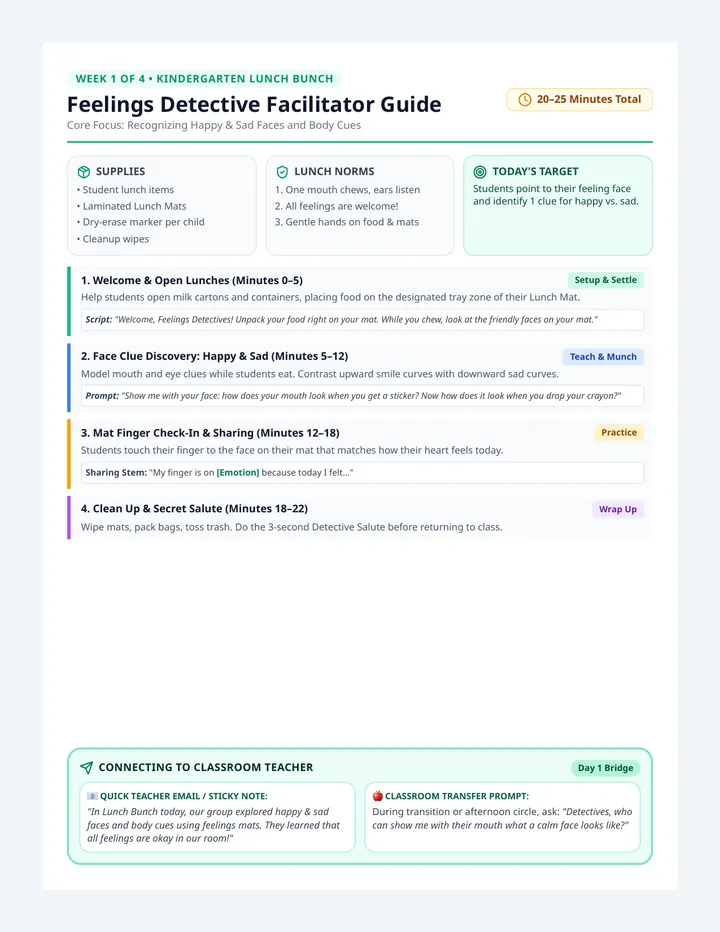
Feelings Crew

A four-week social-emotional lunch bunch sequence for Kindergarten students focusing on identifying core feelings and learning foundational calming strategies. Designed specifically for brief 20-30 minute lunchtime group sessions with high-engagement visuals and low-mess activities.

SS

Samantha Stagles

12
Consumer Defense Slides

Consumer Defense

A comprehensive 100-minute high school personal finance lesson condensing Chapter 5 Consumer Awareness into an engaging interactive experience with slides, guided notes, fraud defense practice, and a creative advertising design project.

KM

Kate Mann

5
Sprint Thirty Slides

Sprint Thirty Slides

A dynamic presentation deck designed for a 9th grade small group coaching workshop on effective studying. It introduces the 5-20-5 minute study sprint architecture, contrasts active recall with passive study traps, and outlines distraction management rules.

JB

Jerica Brown