A 45-minute lesson for 10th graders on mastering the STAR method to answer behavioral interview questions confidently and professionally.
A final reflection on the simulation where students analyze their performance, identify breaking points, and create a long-term strategy for real-world balance.
Students create a personal 'Emergency Protocol' for overwhelming situations, learning how to prioritize tasks to drop and identifying support systems for recovery.
Students analyze their personal energy cycles to match high-demand tasks with high-energy periods, moving beyond simple time management to strategic resource allocation.
Focuses on professional communication and the distinction between hard and soft deadlines. Students practice scripts to negotiate extensions and help before a crisis occurs.
Students design an ideal weekly schedule and are immediately introduced to the 'Chaos Factor'—unpredictable life events that disrupt plans. They identify the need for buffer time and flexible scheduling.
Students apply unit learning to a chosen career or post-secondary education path, identifying workplace accommodations and constructing a self-advocacy plan.
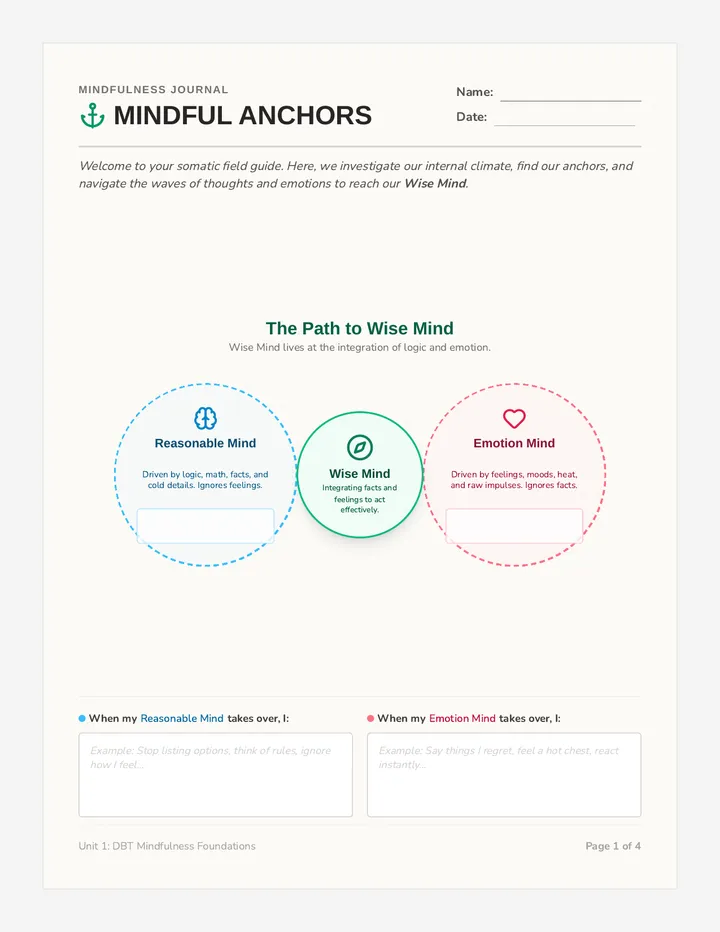
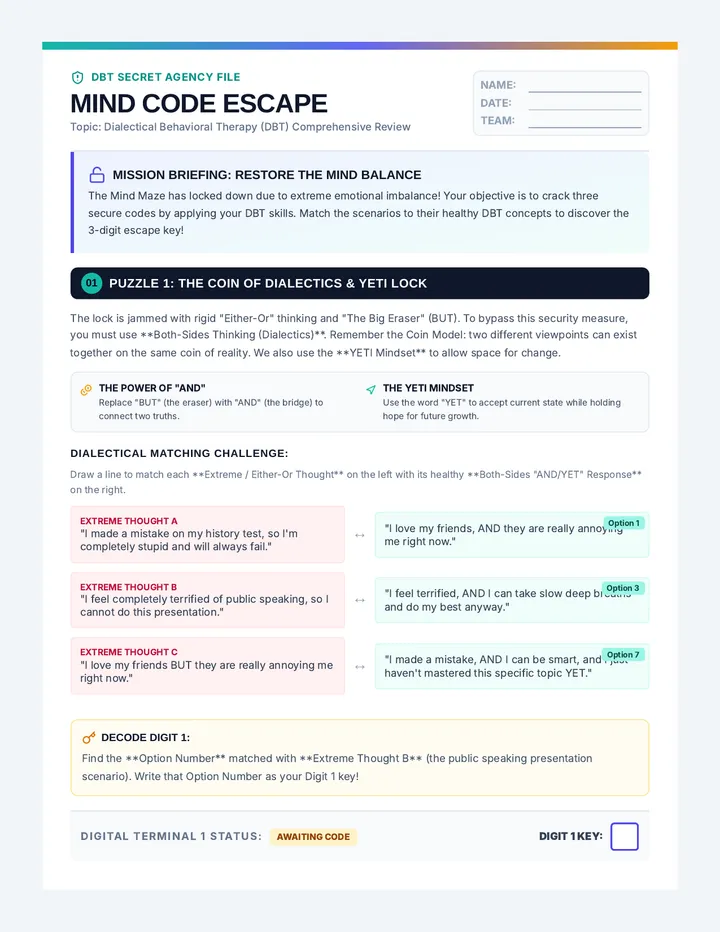
A comprehensive mental health lesson for high schoolers focusing on cognitive restructuring. Clients learn to identify cognitive distortions, challenge anxious thoughts, and reframe them into balanced perspectives through guided role-play and structured tracking.
A mindful technology lesson designed for high school students to analyze their digital habits and design a custom summer wellness contract that balances screen time with dopamine-boosting offline activities.
A social-emotional learning lesson that equips middle and high school students with a physical, tactile 'Self-Kindness Compass' to guide self-talk and practice self-compassion during unstructured times or moments of self-criticism.
A structured counseling lesson designed for a 16-year-old student to address anger-induced screen-seeking behavior and build self-directed limits on tech use. Combining CBT and Motivational Interviewing, this lesson equips the counselor and student with tools to de-escalate emotional reactivity and establish sustainable digital boundaries.
Under the Pre-ETS category of Counseling on Post-Secondary Opportunities, this lesson equips transitioning high school students with knowledge of workplace accommodations, visible/invisible disabilities, and self-advocacy. Students explore equity rights to prepare for post-secondary career and vocational opportunities.
The grand finale week of the curriculum. Students execute a massive live bracket tournament and showcase their esports career portfolios.
Covers mental stamina, character matchup analysis, and competitive coaching roles. Students learn how to analyze gameplay video (VOD review) and support team members mentally.
Team-based competitive Minecraft gameplay including Bedwars, Spleef, and build-offs. Teaches communication, tournament coordination, brackets, and conflict resolution.
Introduction to competitive Minecraft building and speed builds. Explores the career of game design, map making, and spatial visualization.
Advanced mechanical study of Smash Ultimate focusing on frame data, hitboxes, and stage control. Integrates shoutcasting, live commentary skills, and vocal health.
Introduction to competitive Super Smash Bros. Ultimate and basic movement options. Focuses on healthy physical habits (ergonomics, stretches) and team management careers.
Session 20 of the Student Success Academy counseling group. Focuses on discovering career paths, taking a career interest survey, and researching salaries, training, and job outlooks for chosen pathways.
Session 19 of the Student Success Academy counseling group. Introduces Topic 4 (Future Planning) by guiding students to write a detailed narrative projecting themselves into their 25-year-old lives, discussing jobs, housing, transport, and relationships.
Session 18 of the Student Success Academy counseling group. Focuses on identifying healthy vs. unhealthy relationship patterns, practicing boundary communication, and completing a personal checklist.
Session 17 of the Student Success Academy counseling group. Focuses on identifying personal emotional triggers, somatic warning signs, and building a personalized coping menu to manage big emotions in school.
A high school counseling and reflection lesson centered on Shirley Jackson's 'The Lottery'. Students analyze peer pressure, scapegoating, and the ethical courage required to challenge harmful traditions through a structured Socratic fishbowl discussion.
Session 16 of the Student Success Academy counseling group. Focuses on identifying peer pressure types (vaping, skipping, leaving campus) and practicing assertive, face-saving boundary responses through realistic role-plays.
Session 15 of the Student Success Academy counseling group. Focuses on the cognitive impacts of social media highlights, guiding students to dissect comparison loops and commit to practical digital boundaries.
Session 14 of the Student Success Academy counseling group. Focuses on peer influence and boundary-setting, guiding students to analyze the long-term academic and social consequences of helpful vs. unhelpful friend behaviors using a card-sorting activity.
Session 13 of the Student Success Academy counseling group. Introduces Topic 3 (Relationships & Decision Making) by helping students map their relational support networks across concentric circles of trust.
Session 12 of the Student Success Academy counseling group. Focuses on evaluating midpoint progress across grades, attendance, and goal achievements, making concrete plans for the remainder of the semester.
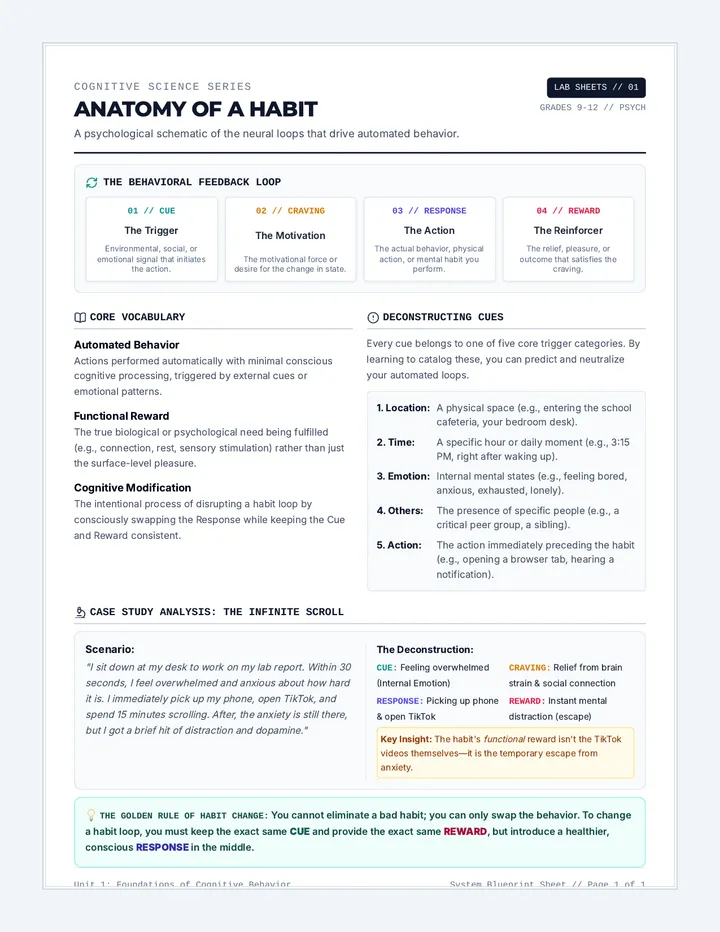
Session 11 of the Student Success Academy counseling group. Focuses on creating one small, sustainable daily success habit using a visual habit tracker and a custom reward system.
Session 10 of the Student Success Academy counseling group. Focuses on the cognitive behavioral concept that action precedes motivation, dismantling the myth of waiting to 'feel like it' before taking action.
A high-impact social-emotional learning lesson designed for high school students, particularly young men, to navigate peer conflict in the moment. The lesson focuses on recognizing triggers, maintaining control during verbal escalation, and executing rapid, face-saving exit strategies before a conflict becomes physical.
Session 9 of the Student Success Academy counseling group. Focuses on identifying individual attendance barriers (such as sleep, anxiety, or transit) and drafting highly specific, manageable micro-solutions.
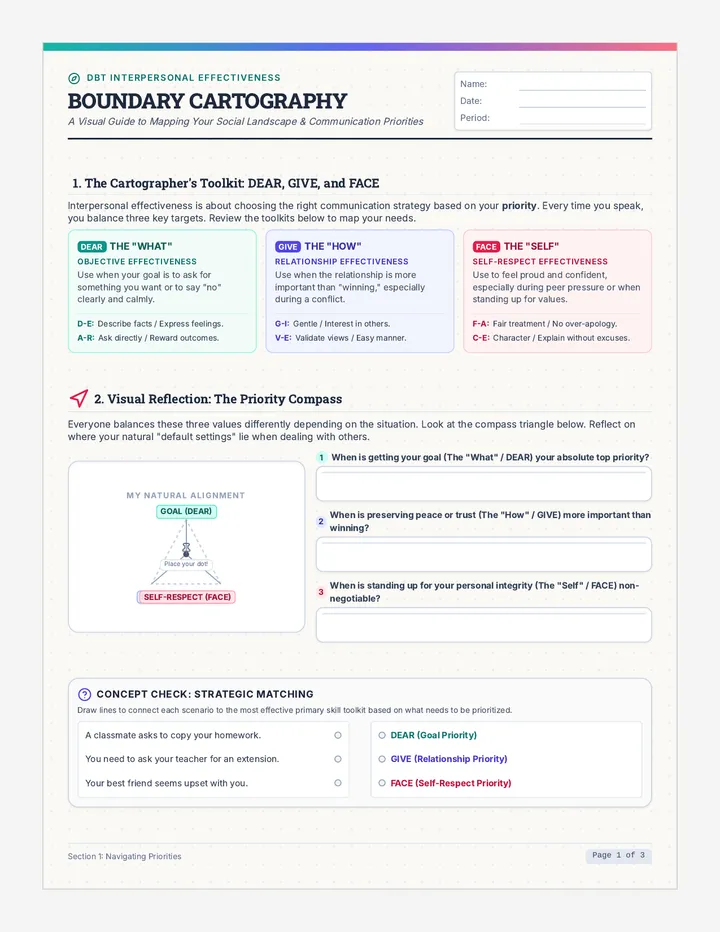
A high-performance mental playbook and toolkit for high school students to manage peer conflict in the moment. Grounded in somatic regulation, tactical boundary setting, and cognitive reframing, this lesson treats self-control as an elite mental skill.
Session 8 of the Student Success Academy counseling group. Focuses on the real academic, financial, and emotional costs of chronic absenteeism, using a visual calculator to contextualize lost time.
Session 7 of the Student Success Academy counseling group. Focuses on personal motivation, uncovering core values through the 'Five Whys' process, and creating a personalized foundation for school attendance.
Topic 4: Motivation & Outside Influences. This unit focuses on staying motivated in the face of setbacks, managing negative peer pressure, establishing clean boundaries, and creating an academic support network.