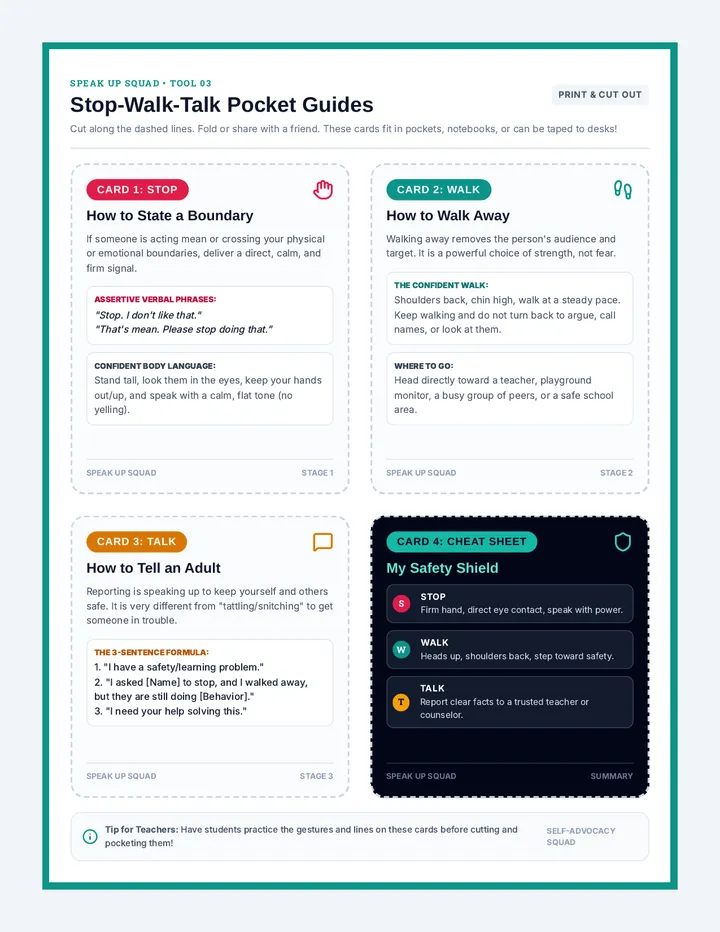
A comprehensive social self-advocacy unit for 5th graders to develop assertive communication, decode social intents, and confidently navigate peer conflicts and bullying.
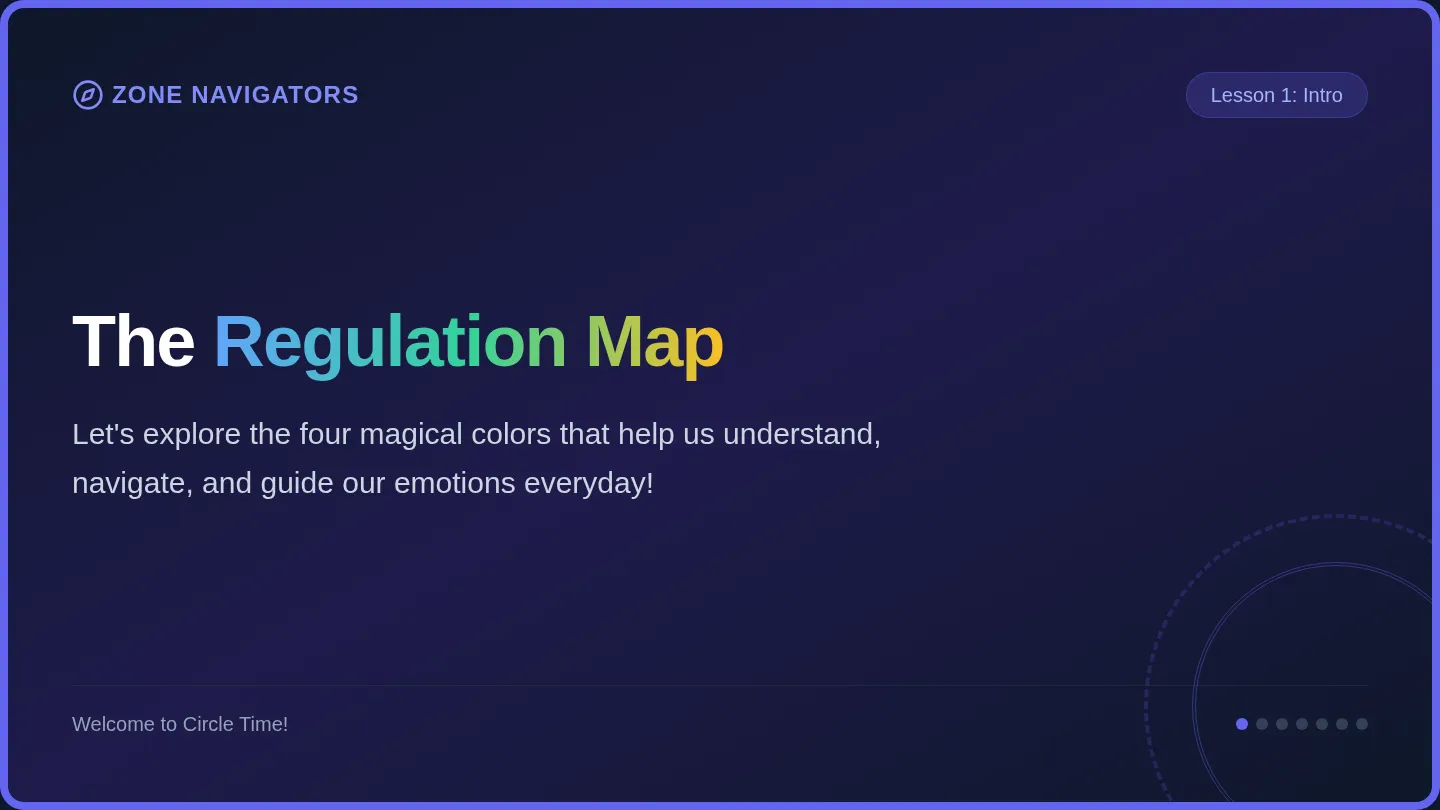
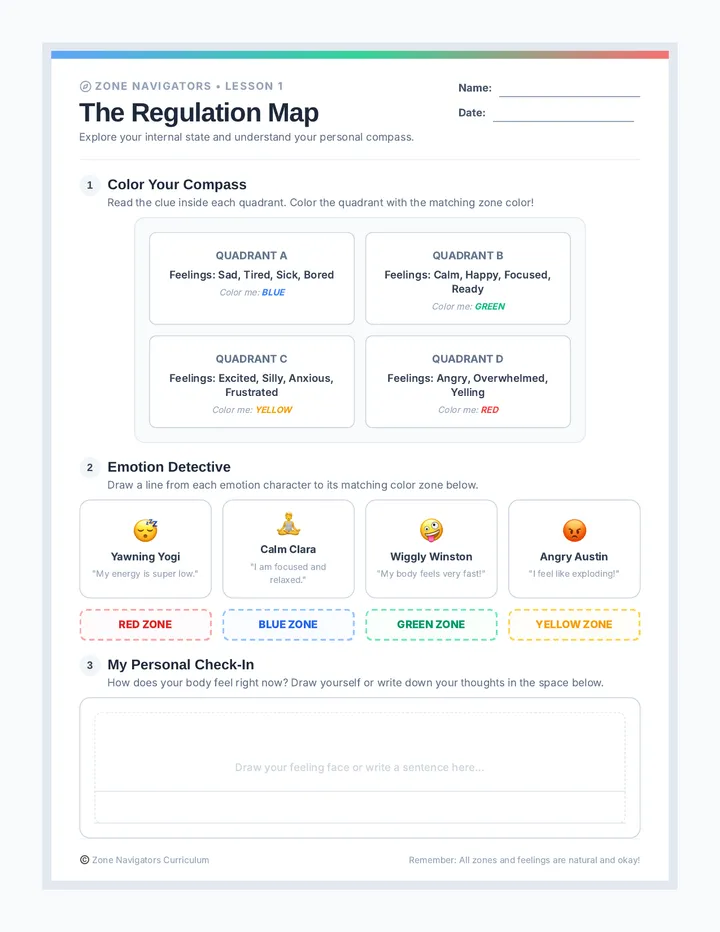
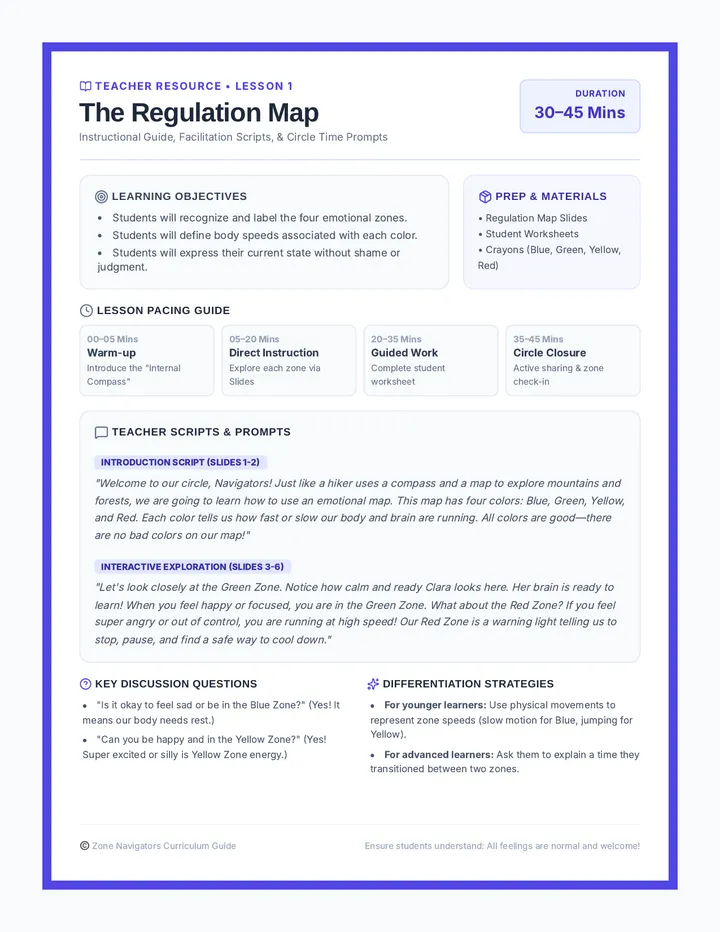
A comprehensive social-emotional learning curriculum designed to teach emotional regulation based on the four-zone framework. Students learn to recognize emotional states, identify body cues, and construct a personalized coping toolbox to transition between zones safely.
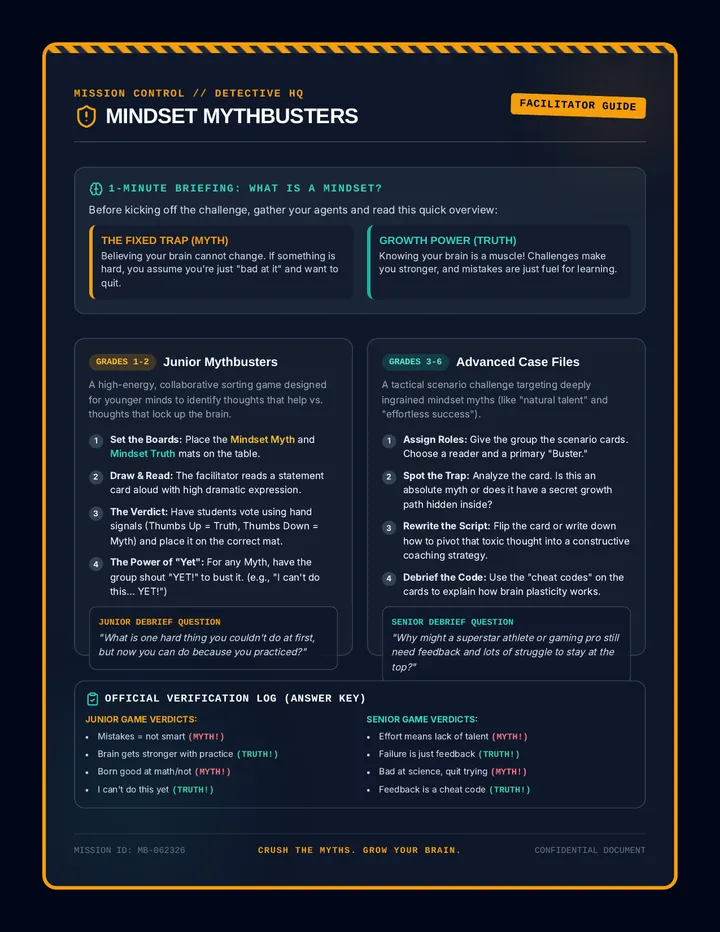
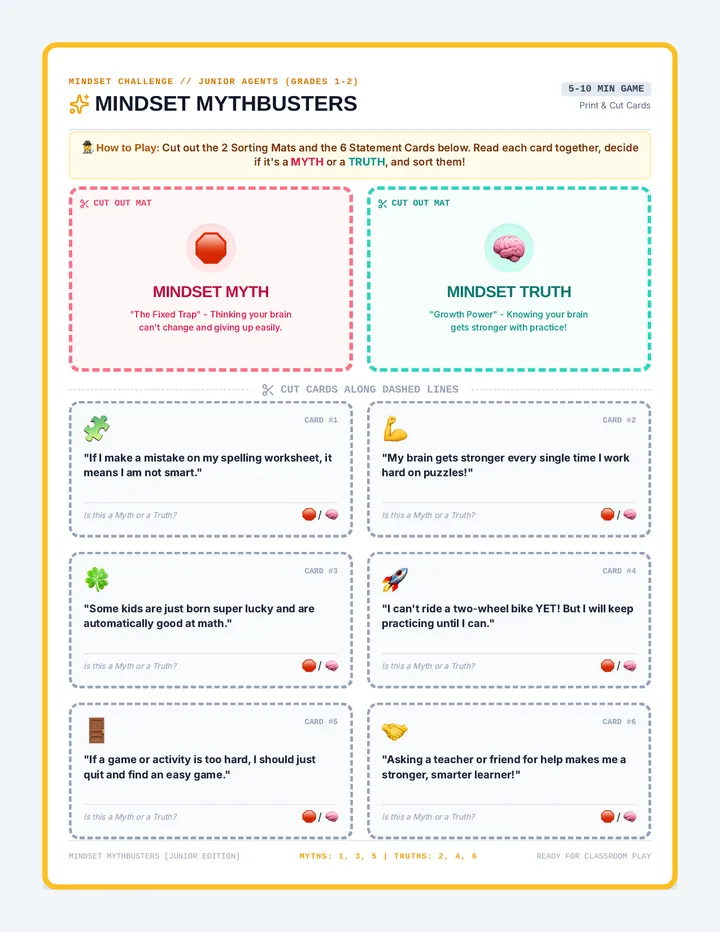
An engaging, fast-paced small group game where students bust common mindset myths and discover growth mindset truths.
Printable sorting cards and mats for 1st and 2nd graders to classify statements as Mindset Myths or Mindset Truths.
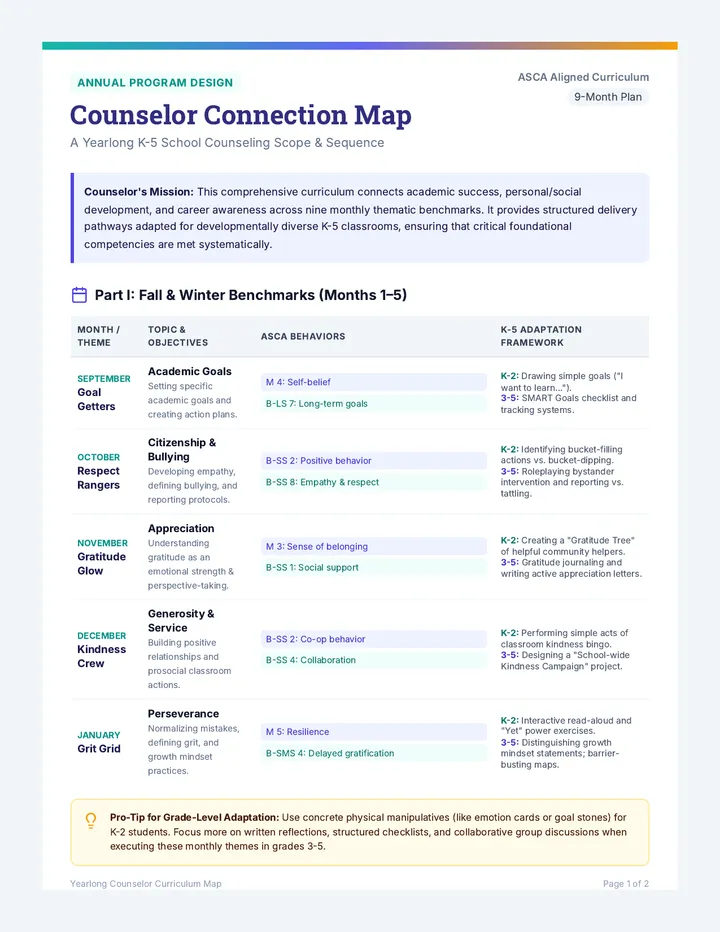
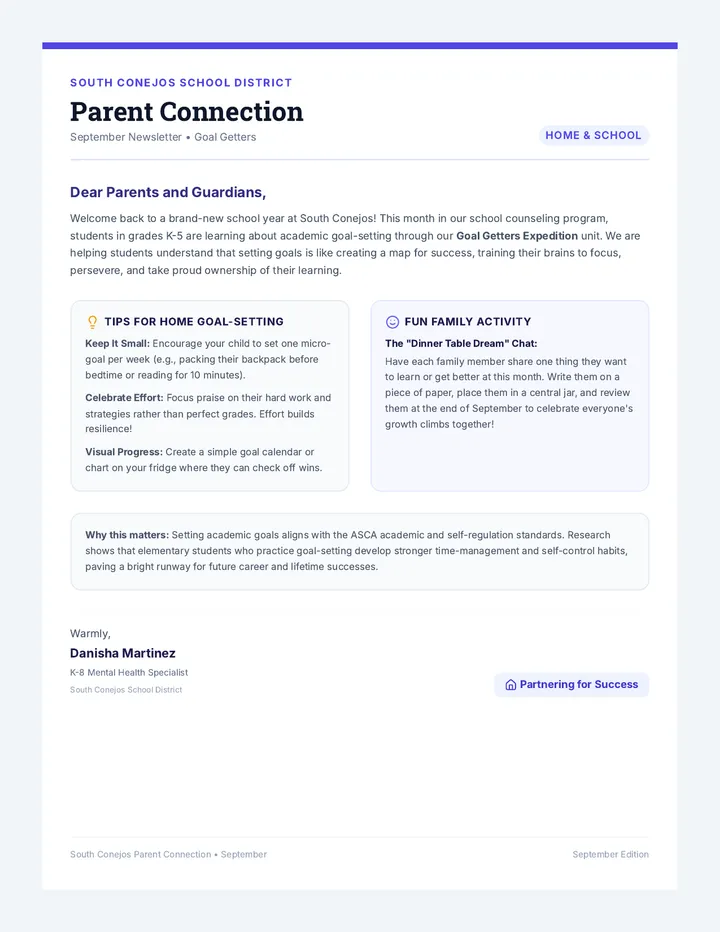
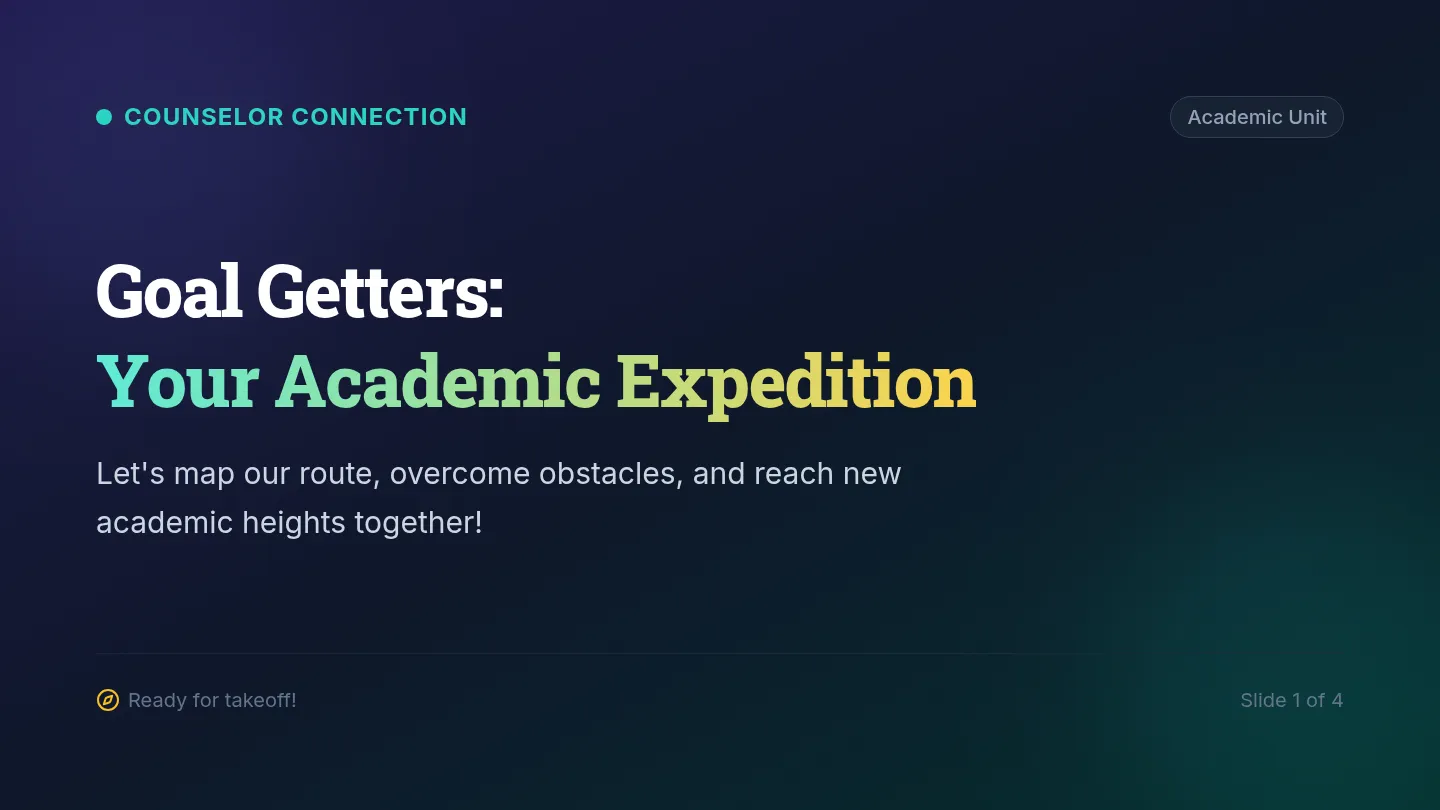
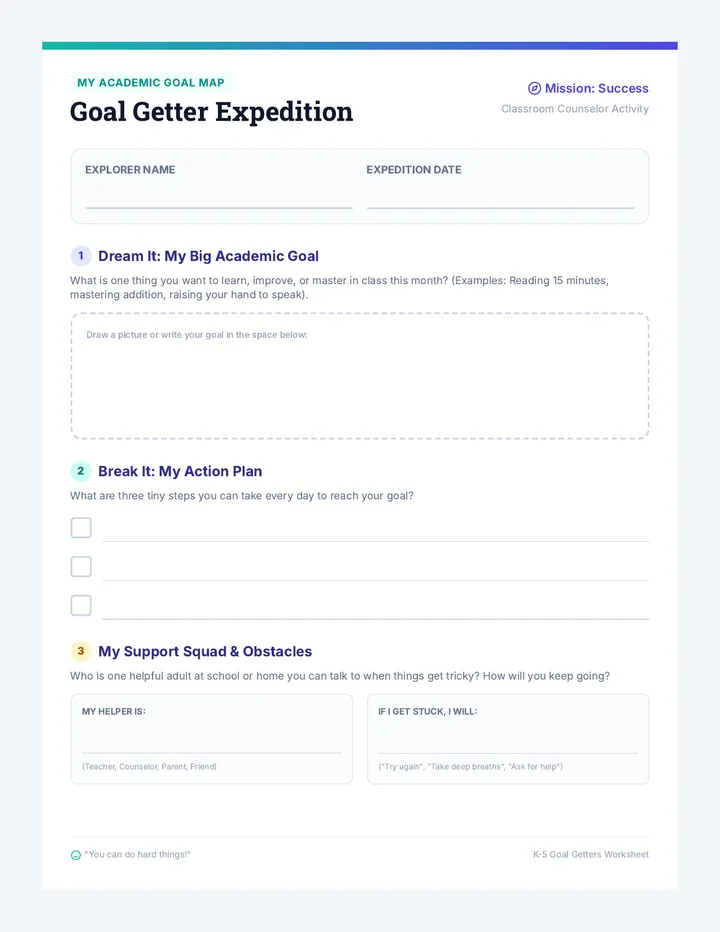
A comprehensive, yearlong K-5 school counseling curriculum bridging social-emotional learning, academic growth, and career exploration. Rooted in ASCA Student Standards, this curriculum provides counselors with structured lesson maps, slide presentations, and student worksheets to cultivate student success throughout the school year.
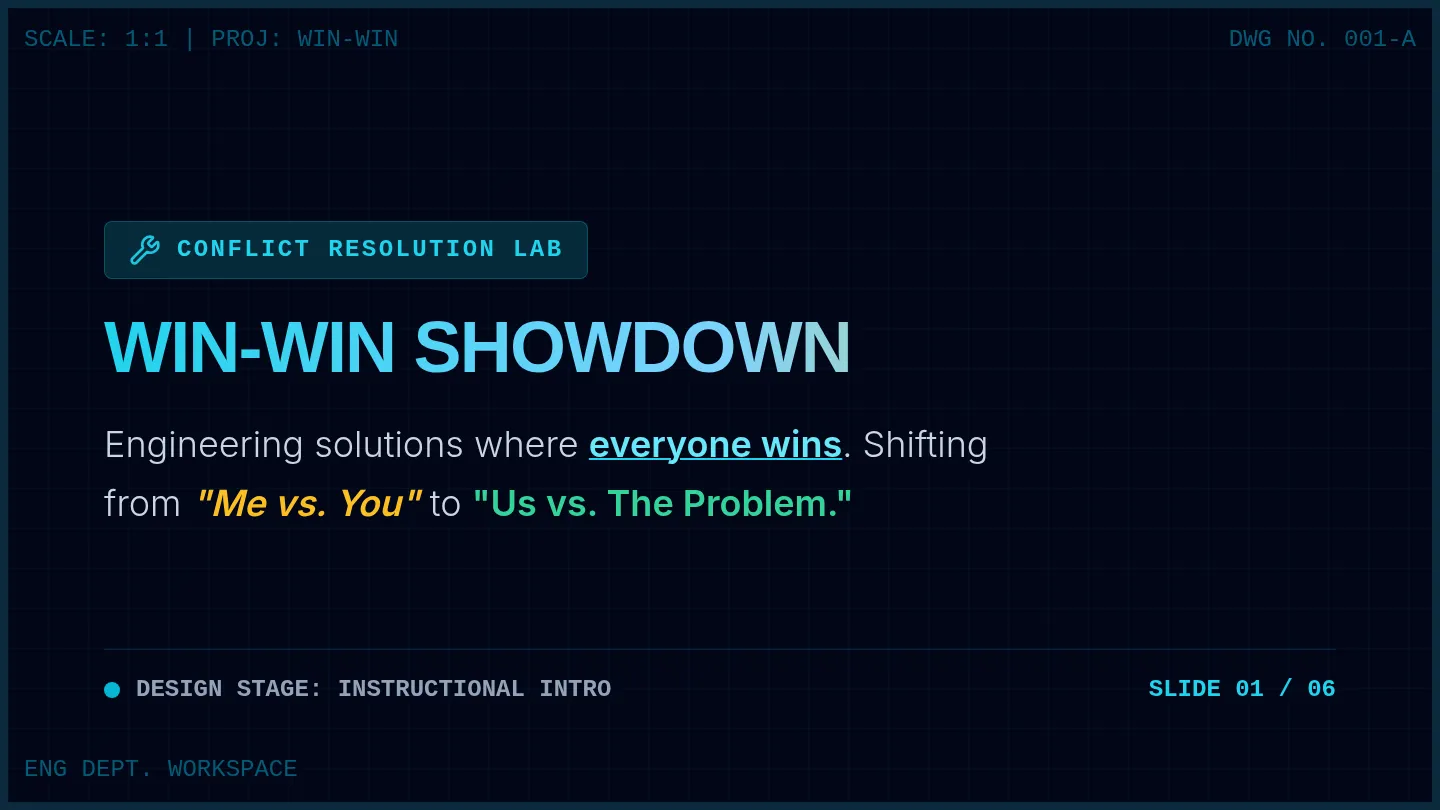
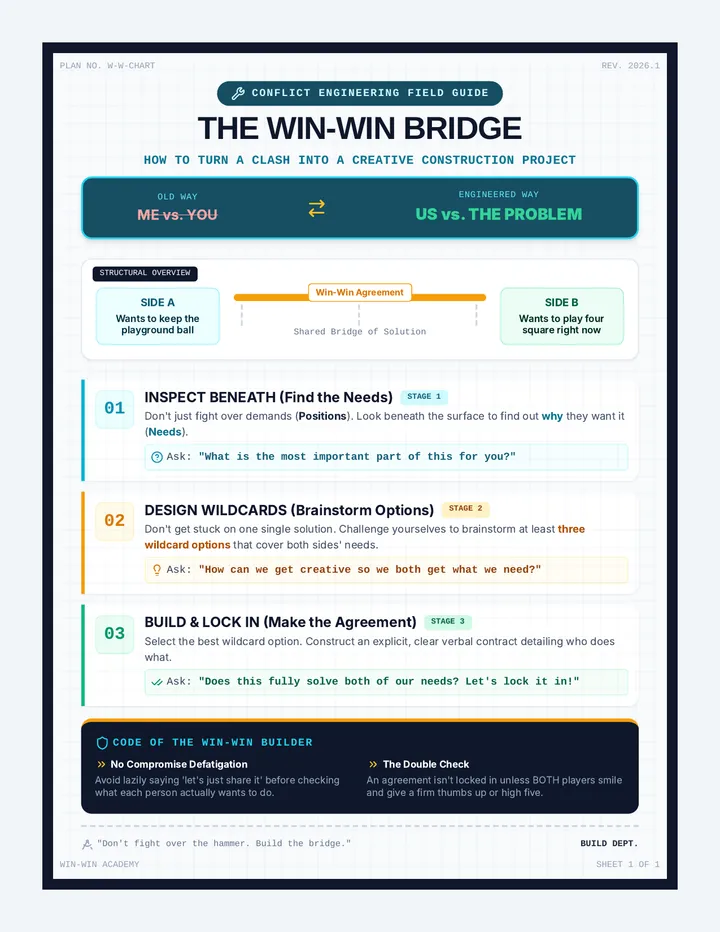
A dynamic conflict resolution lesson for 4th and 5th graders focusing on collaborative win-win negotiation. Students learn to move from 'Me vs. You' to 'Us vs. The Problem' by engineering solutions that satisfy everyone's underlying needs.
A step-by-step facilitation guide for running the 5-10 minute Mindset Mythbusters game in small groups for both grade bands.
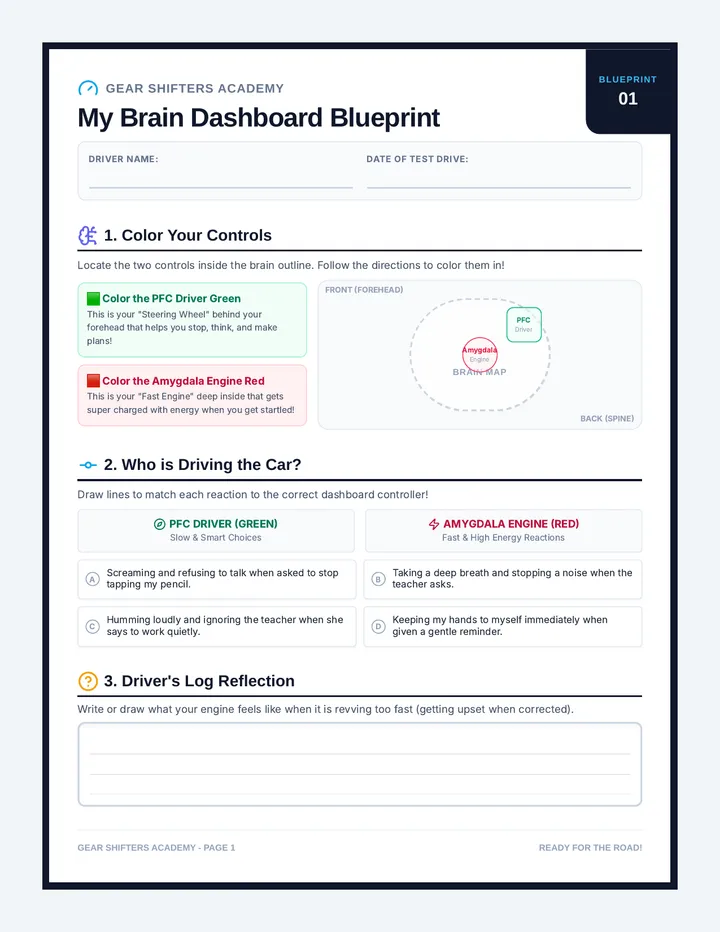
An automotive-themed emotional regulation curriculum designed for elementary students (specifically those with ADHD/Rejection Sensitivity) to reframe feedback triggers as engine RPM revs and coping strategies as downshifting gears.
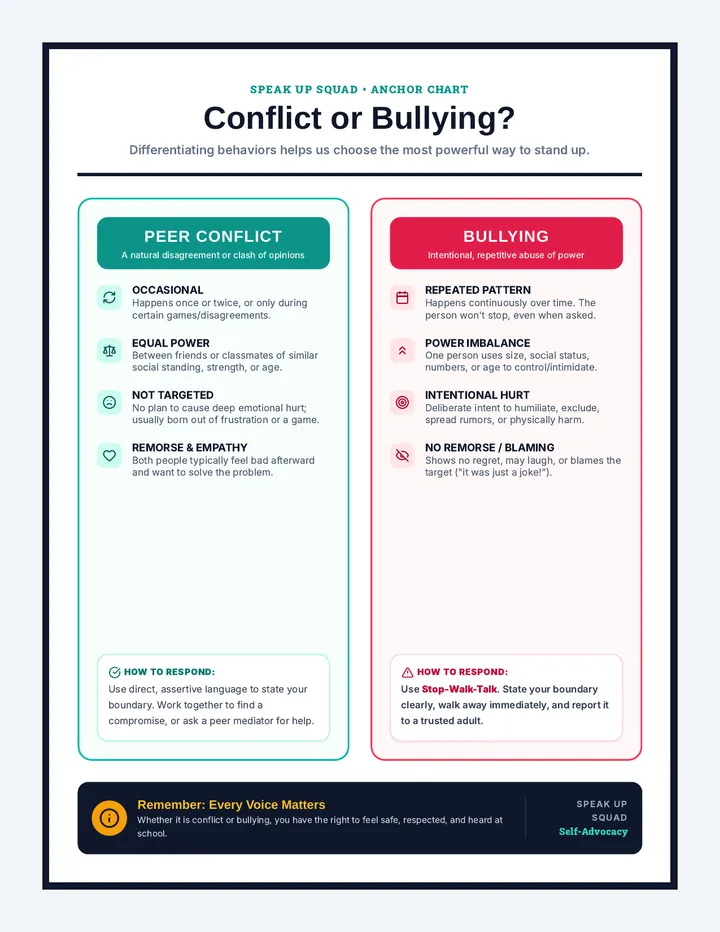
Students analyze the specific criteria of bullying—imbalance of power, repetition, and intent—contrasting it with normal peer conflict.
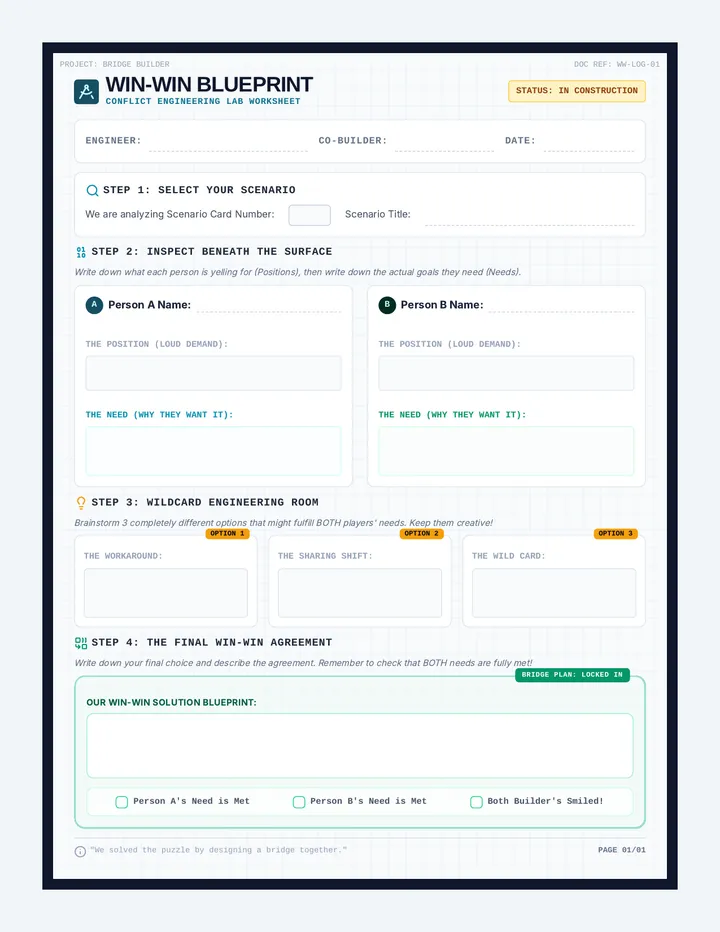
A printable student worksheet styled as an engineering blueprint log. Students map out a specific conflict scenario, isolate each player's underlying needs, brainstorm three wildcard ideas, and construct their final Win-Win Bridge agreement.
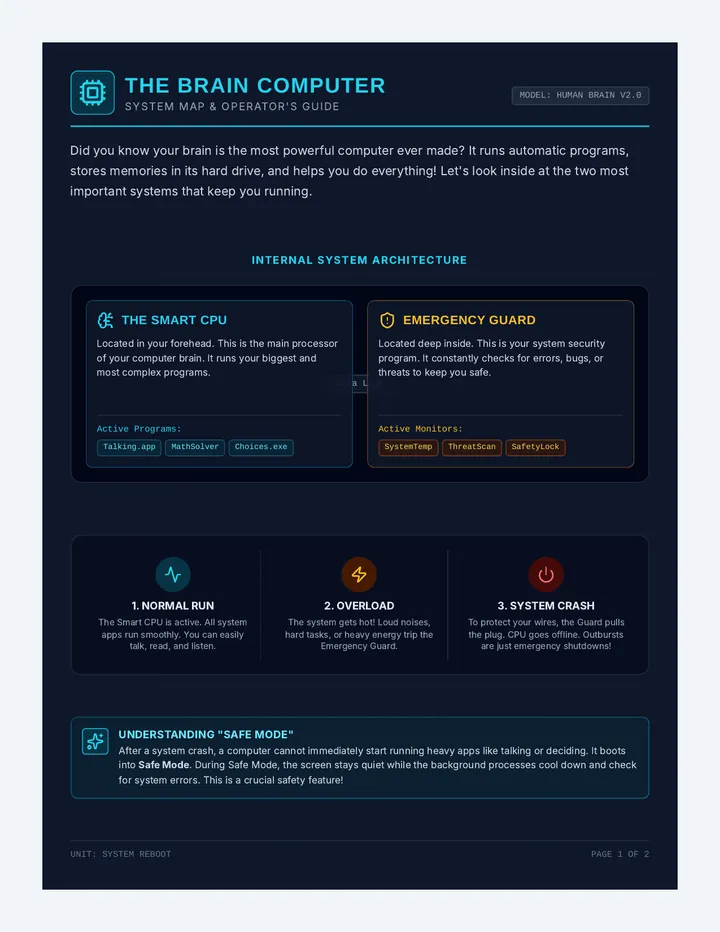
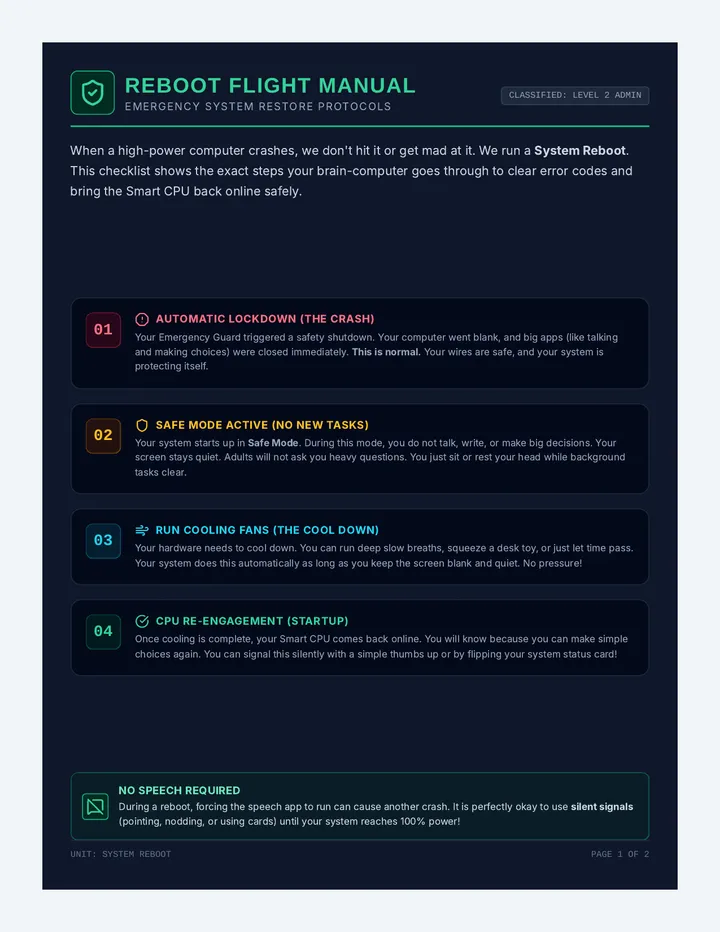
A collection of scientific psychoeducational lessons for young students, offering diverse non-emotional metaphors (computers and biology) to understand emotional regulation, sensory overload, and shutdowns.
Students learn clear criteria for when to assert boundaries, when to walk away from a situation, and when to seek support from a trusted adult.
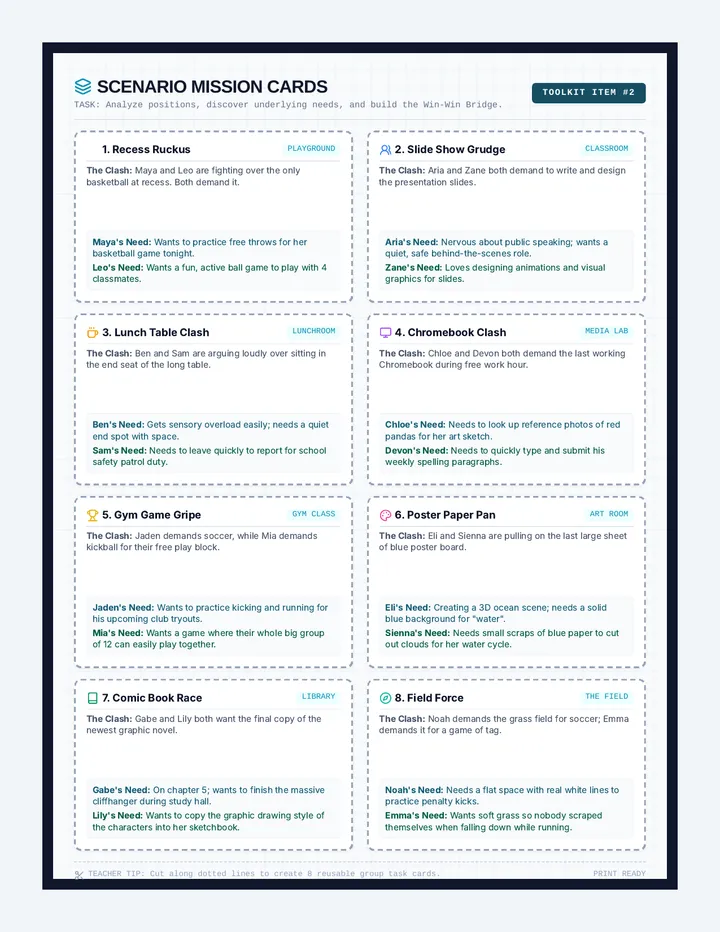
A set of 8 printable conflict scenario task cards for small groups. Each card frames a school-based conflict through "Positions" (loud demands) and "Underlying Needs" (feelings/goals), prompting students to engineer a Win-Win Bridge.