Spin and Swing Slides Spin and Swing
Exploring Our Balance Sense
Spinning
Jumping
Swinging
Rocking
Our Secret Sense
The Vestibular Sense
Inside your ear, there are tiny tubes filled with liquid!
When you move, the liquid moves too.
It tells your brain if you are upright, upside down, or moving fast!
πβ¨
Inner Ear Magic
The Movement Check
After we move, we pause and ask:
π΅βπ«
Dizzy / Fast
π
Ready / Calm
π₯±
Sleepy / Slow
Movement Lab Report Movement Lab Report
Vestibular Explorer Mission
NAME:
DATE:
Welcome, Scientist! We are testing how movements change our bodies. Try each movement, then circle how your body feels.
1
SPINNING (like a top)
π΅βπ«
Dizzy
π
Ready
π΄
Sleepy
2
JUMPING (up and down)
π΅βπ«
Dizzy
π
Ready
π΄
Sleepy
3
ROCKING (back and forth)
π΅βπ«
Dizzy
π
Ready
π΄
Sleepy
Draw your FAVORITE way to move:
Hidden Senses Lab β’ Lesson 1
Lab Facilitator Guide Lab Facilitator Guide
Lesson 1: Vestibular Inputs
Lesson Objective
Students will identify how different vestibular (movement) inputs affect their alertness and balance. The goal is to build self-awareness of whether movement "wakes up" or "overloads" their nervous system.
Hook: Slomo vs. Turbo
Set up a simple 10-foot walking path.
Round 1: Have students walk "in slow motion" (takes 30 seconds). Ask: "Is it hard to stay balanced?"
Round 2: Have students run the path quickly. Ask: "How did your body feel different?"
Introduce the concept: "Your inner ear helps you stay balanced no matter how fast you go!"
Station Setup
Station 1: The Dizzy Top (Spinning)
Use a swivel chair or have students spin on a spot. Safety: Max 3 spins, stay near a wall for support.
Station 2: The Kangaroo (Jumping)
Trampoline or jump rope. Focus on vertical movement. Ask: "Does your brain feel more awake or tired?"
Station 3: The Rowboat (Rocking)
Sit on the floor, hug knees, and rock back and forth. Often has a grounding/calming effect.
Key Questions
Q: "Which movement made your body feel 'just right' for learning?"
Q: "Why do you think spinning makes us feel dizzy?" (Refer to slide 2: the liquid in the ear!)
Q: "When you feel sleepy in class, which movement would help you wake up?"
Muscle Power Slides Muscle Power
Our Secret Proprioception Sense
Where is your body?
Proprioception is how your brain knows where your arms and legs are, even with your eyes closed!
Try this: Close your eyes and touch your nose!
πͺ
Heavy Work!
Pushing and Pulling makes us feel calm!
Wall Pushes
Carrying Books
Chair Dips
The Deep Pressure Hug
Sometimes our muscles need a "Big Hug."
Squeezing between mats
Weighted blankets
Firm hugs from grown-ups
π₯ͺ
Heavy Work Hunt Heavy Work Hunt
Muscle Power Mission
NAME:
Muscle Power (Proprioception) comes from pushing, pulling, and carrying heavy things. Look at the pictures below. Which ones are HEAVY WORK ?
πββοΈ
Running Fast
π§±
Pushing a heavy box
πͺ
Chair Dips
π
Catching a balloon
βπ§±
Wall Pushes
π
Carrying a stack of books
How does it feel?
After doing Heavy Work, my body feels (circle one):
π§
Calm
β‘
Strong
π€ͺ
Wild
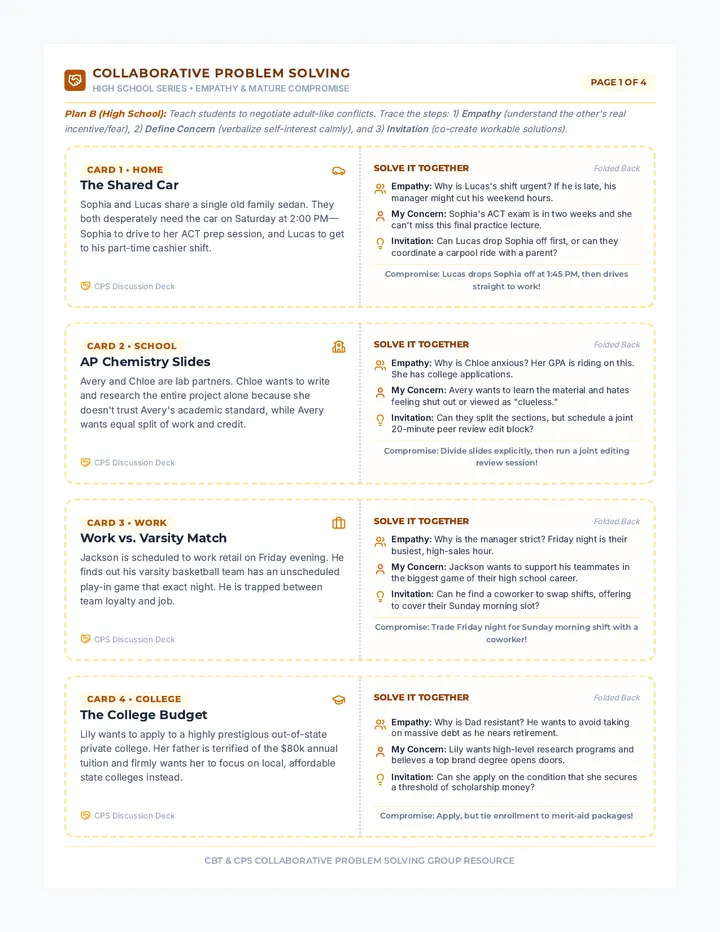
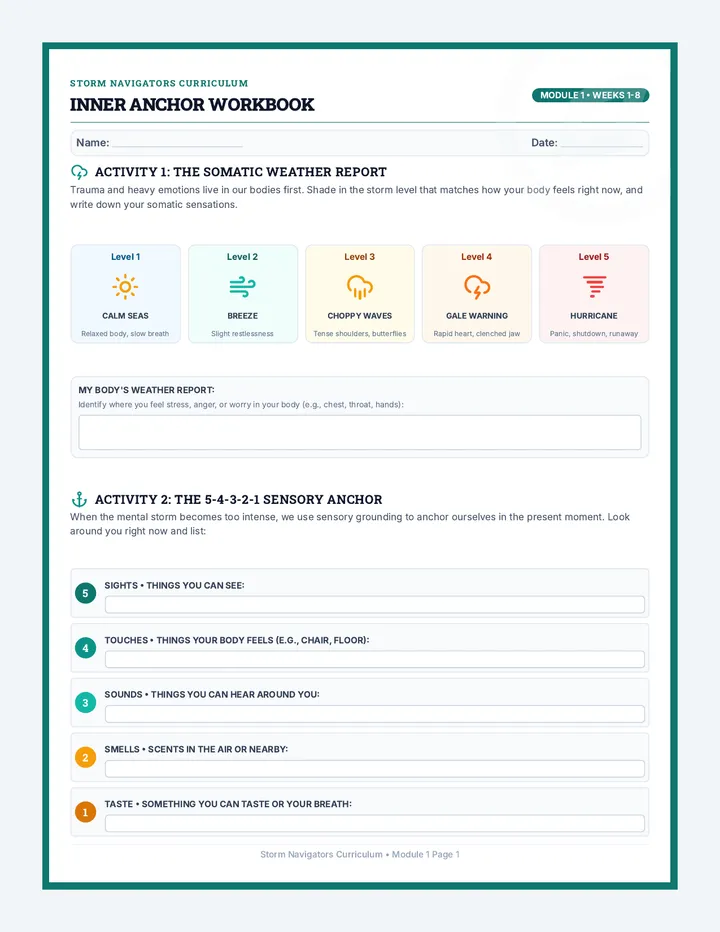
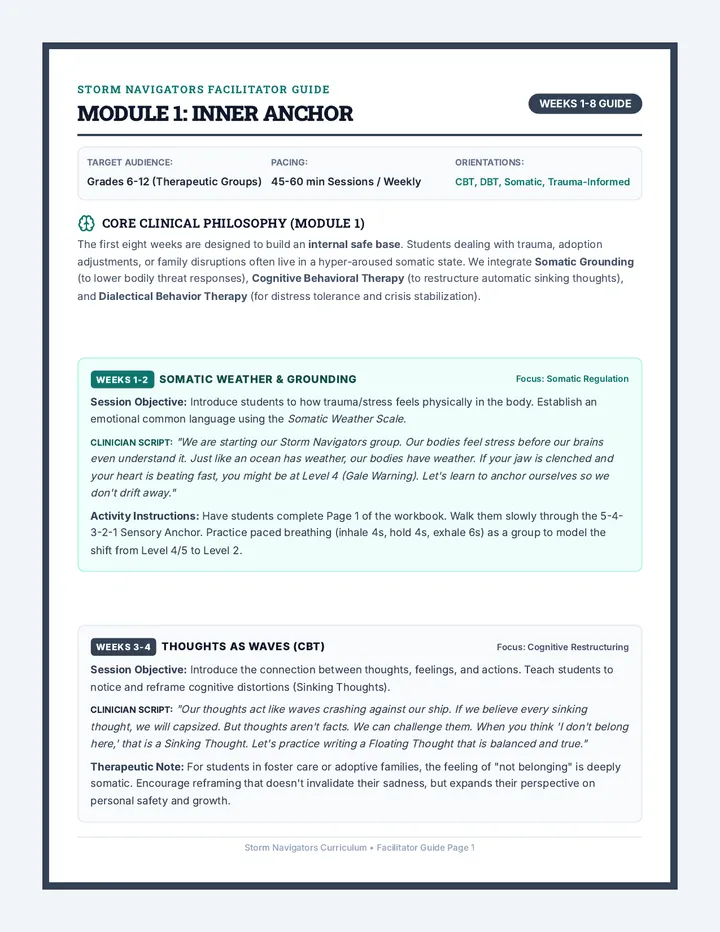
Safe Squeeze Guide Safe Squeeze Guide
Lesson 2: Proprioceptive Engagement
The Goal
Proprioceptive input (Heavy Work) is often the most effective tool for "grounding" students who are over-stimulated or under-aroused. These activities should be performed with clear boundaries to ensure safety and therapeutic benefit.
1. Wall Pushes
Technique: Place palms flat on the wall at shoulder height. Lean in and push out. Repeat 10 times.
SAFETY: Keep feet glued to floor. No jumping against the wall.
2. Chair Dips
Technique: While seated, place hands on the edge of the chair. Lift bottom off the seat using arm strength. Hold for 3 seconds.
SAFETY: Use heavy, stable chairs (not rolling chairs!).
3. The Human Sandwich
Technique: Student lies on a soft mat. Place another mat or soft cushion gently on top. Apply firm, steady pressure with hands.
SAFETY: Always keep the head and neck completely free. Establish a "stop" word.
Wait & Watch
Observe student reactions after 5-10 minutes of heavy work:
Look for:
Slower breathing, steady eye contact, decreased fidgeting.
Avoid:
Rough-housing, crashing, or excessive force that increases agitation.
Seeker or Hider Slides Seekers and Hiders
Which animal are you today?
πΏοΈ
Seeking Squirrel
"I need MORE movement! I can't stop wiggling!"
π’
Hiding Turtle
"It's too much! I need to hide and be still."
The Seeking Squirrel
πΏοΈ
When we "Seek," we are looking for:
Big jumps and spins
Chewing on sleeves or pencils
Fast running or crashing
"My body is hungry for sensory snacks!"
The Hiding Turtle
π’
"My body needs a quiet break!"
When we "Hide," we want:
Quiet corners
Dim lights or soft hoods
Hands over ears
Behavior Sort Cards Behavior Sort Cards
Seeker or Hider?
βοΈ Cut out the cards below. Put them on the Squirrel (Seeker) or the Turtle (Hider)!
π§
Wearing headphones in class
π
Spinning in circles at recess
π¦
Crawling into a small box
π€Έ
Doing cartwheels and flips
π§±
Pushing against the heavy door
π
Closing eyes during bright lights
πΏοΈ
SEEKER
π’
HIDER
Cut these cards and glue them into the correct box to show what you've learned!
Puppet Play Script Puppet Play Script
Lesson 3 Hook: Seeker vs. Avoider
Sammy the Squirrel
The Seeker: Fast-talking, twitchy, loves movement.
Toby the Turtle
The Hider: Slow-talking, quiet, prefers still spaces.
Scene: A playground with a large, bright yellow swing.
Sammy:
"WHOA! Toby, look! A giant swing! Iβm going to spin it around and around and then jump off while itβs moving! I NEED to go FAST! Do you want to try?"
Toby:
"Umm... no thank you, Sammy. That swing looks very loud and very dizzy. I think Iβll just stay here in the shade and watch the ants. My body likes it better when things are quiet."
Sammy:
"Watching ants? That sounds so boring! My legs feel like they have springs in them! I have to move, move, move!"
Toby:
"And my body feels like it needs a soft pillow. Maybe we can play together later when you're done spinning?"
Class Discussion
"How did Sammy feel about the big swing?"
"Why did Toby want to stay in the shade?"
"Can you think of a time when you felt like Sammy? Or like Toby?"
Rev Your Engine Slides Rev Your Engine
Checking Your Internal Speedometer
How is your engine running?
Low
Just Right
High
π₯± Sleepy Ready to Learn! β
Wild & Fast β‘
Wake Up Your Engine!
π₯± β‘οΈ π
When your engine is running SLOW:
Jumping Jacks
Quick stretches
Cool water on your face
πββοΈ
Slow Down Your Engine!
β‘ β‘οΈ π
π’
When your engine is too FAST:
Slow breathing (in 4, out 4)
Heavy wall pushes
The "Squeeze" hug
Engine Speed Meter Engine Speed Meter
Daily Self-Check
NAME:
π΄ Slow / Low
π Just Right
β‘ Fast / High
βοΈ CUT THIS ARROW
How do I shift?
πββοΈ
To speed up:
I can jump, spin, or stand up tall!
π§±
To slow down:
I can do wall pushes, deep breaths, or a big squeeze.
Right now, my engine is... (Draw a circle around your color!)
BLUE
GREEN
RED
Gear Shifter Guide Gear Shifter Guide
Lesson 4: Alertness Regulation
Level Up
Waking up from the Blue Zone
Rapid head shaking
Standing desk time
Cold water sips
Chair push-ups
Jumping on a spot
Level Down
Cooling down from the Red Zone
Slow wall pushes
Deep belly breathing
Weighted lap pad
Firm hand squeezes
Slow rocking
Teaching the Metaphor
1. Normalize All Speeds: Remind students that it's okay for their engine to be fast (at recess) or slow (before bed). The goal is to be in the "Green" for learning time.
2. Language Matters: Use phrases like "I notice your engine is revving high right now. Let's find a shifter move."
3. The "Brake" Rule: Proprioception (heavy work) almost always acts as a "brake" to slow down a fast engine. Vestibular (spinning/swinging) can speed up OR slow down depending on the student.
Observation Notes
Student Name / Success with move...
Movement Cafe Slides Movement Cafe
Ordering Your Sensory Snacks
What's on the menu?
Just like a restaurant has different foods, our classroom has different movements.
Today, you get to be the Chef! You choose what helps YOU stay in the "Just Right" zone.
π§βπ³π
Personal Picks
The Three Specials
π²
Appetizers
π€Έ
Waking Moves
Spinning, Jumping, Stretching
Main Course
π§±
Strong Moves
Wall Pushes, Heavy Carrying, Chair Dips
Desserts
π’
Quiet Moves
Deep Breathing, Calm Rocking, Dim Lights
You Are Ready!
πβ¨
Independent Regulator
From now on, when you feel your engine shifting, you don't have to wait. Check your menu and choose your move!
My Daily Menu My Daily Menu
Personal Movement Plan
NAME:
What movements make you feel "Just Right" for learning? Draw your 3 favorites in the boxes below!
1
The Waker-Upper
Draw your favorite movement to wake up your body!
2
The Grounder
Draw your favorite "Heavy Work" (pushing or pulling)!
3
The Calmer
Draw something quiet and slow that you love!
βοΈ CUT THIS OUT FOR YOUR DESK
MY MOVEMENT MENU
I can regulate myself!
Menu Maker Guide Menu Maker Guide
Lesson 5: Strategy Selection
Steps to Completion
1
The Brainstorm: Review all previous lessons. Use a whiteboard to list every movement move learned so far (Spins, Jumps, Wall Pushes, Breathing, etc.).
2
The Selection: Have students choose one from each category (Blue-Gear, Red-Gear, and Green-Maintenance) that they felt worked best for them during the labs.
3
The Creation: Students draw their choices on the "My Daily Menu" sheet. For the mini-card at the bottom, help students write the names of the moves.
How to use the Menus
The Desk Cue: Tape the small card to the student's desk. It serves as a visual prompt when they feel "off-track."
Transition Orders: During transitions, give a 1-minute "Cafe Break" where everyone does one move from their menu.
Prompting: "I see you're struggling to sit still. Would you like to check your menu for a Main Course (Heavy Work) snack?"
Mastery Check
Can identify 1 calming move.
Can identify 1 alerting move.
Uses menu with 1 prompt.
π