Affect Landscapes Slides Constructing Affect
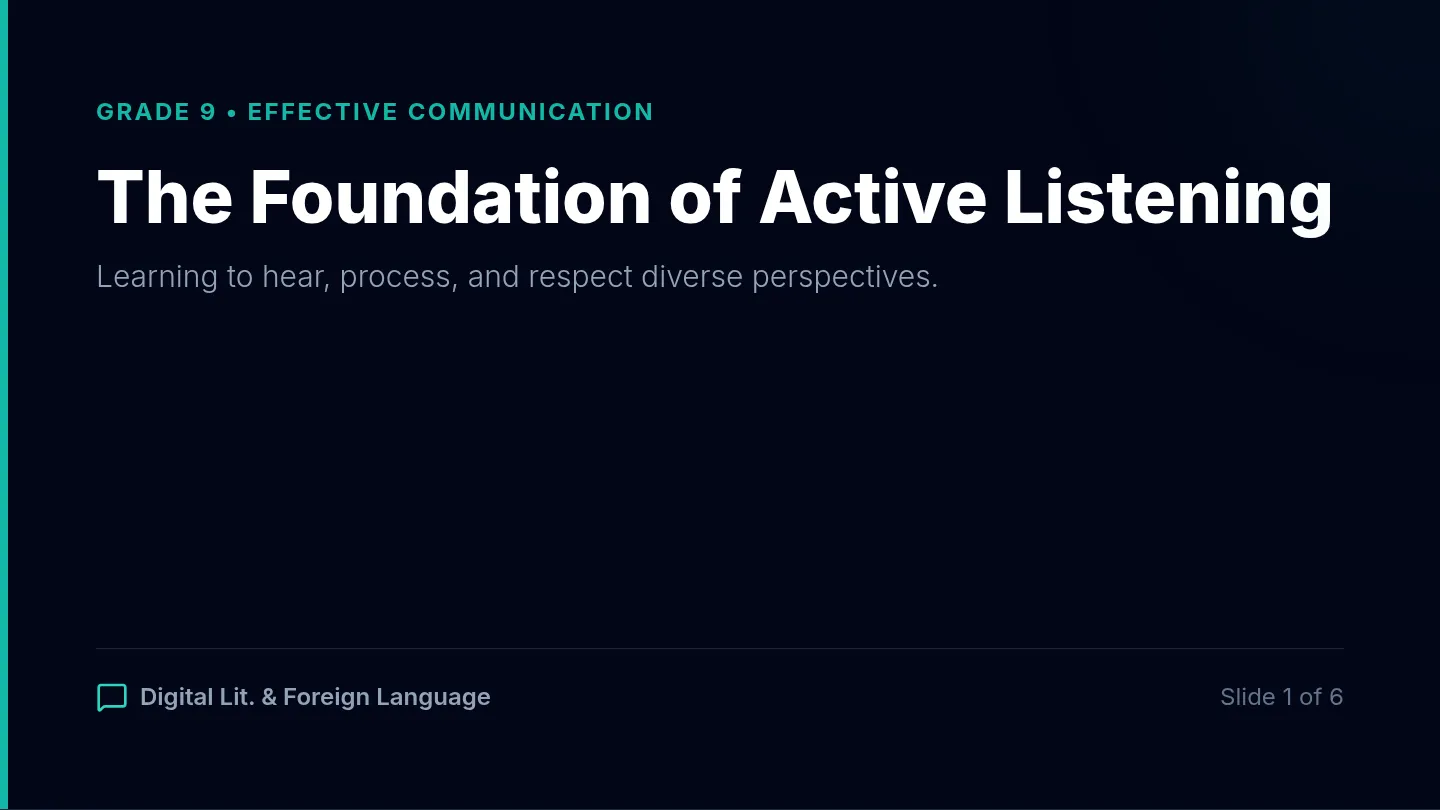
The Anthropology of Emotional Experience
Graduate Seminar: Complex Emotion Labeling
The Myth of Universality
Are emotions biological constants or cultural artifacts?
1
Naturalist View: Emotions are evolved, universal responses (Ekman).
2
Constructivist View: Affect is a raw signal; culture provides the label and the "logic" of the emotion.
Critical Inquiry
"If a culture lacks a word for 'depression,' do its members experience the cluster of symptoms we define as clinical depression, or something else entirely?"
Ideal Affect Theory
High Arousal Positive (HAP)
Excitement, Enthusiasm, Elation
Highly valued in North American/Individualistic cultures.
Low Arousal Positive (LAP)
Calm, Serenity, Peace
Highly valued in many East Asian/Collectivistic cultures.
Clinical Implications
Western therapists often equate "lack of excitement" with anhedonia .
In contrast, HAP can be viewed as imbalance or social disruption in other contexts.
Hook: Cross-Cultural Somatization
U.S. Context
Focus on Internal Affect: Sadness, hopelessness, worthlessness, guilt.
Iranian Context
Focus on Somatic Heart: "Sangini-e ghalib" (heaviness of the heart), "Kaftagi-e del" (tightness of the heart).
Chinese Context
Focus on Functional/Physical: Boredom, insomnia, headaches, fatigue, dizziness.
Same ICD/DSM criteria? Or different phenomena?
Pathologizing the Normal
Individualism
Western psychology centers the "self" as an autonomous emotional agent.
Bias: Viewing social withdrawal (to save face or protect the group) solely as an avoidant symptom of depression.
Verbalization
The "talking cure" assumes that health requires explicit verbal emotion labeling.
Bias: Labeling stoicism or somatic expression as "alexithymia" (the inability to identify emotions).
Clinical Humility
Our goal is not to "translate" a client's experience into DSM-friendly terms, but to understand the cultural logic that makes their emotional labeling valid.
Discussion: Are you pathologizing calmness?
Affective Mapping Exercise Affective Mapping Exercise
Lesson 1: The Cultural Construction of Affect
Student:
Date:
Part 1: Ideal Affect Audit
In North American clinical contexts, high-arousal positive states (excitement, enthusiasm) are often equated with psychological vitality. Reflect on your own clinical assumptions or your culture of origin.
HIGH AROUSAL POSITIVE (HAP)
Examples: Excitement, Elation, Pride
When a client displays low HAP, my initial clinical instinct is to consider:
In my culture, excessive HAP is viewed as:
LOW AROUSAL POSITIVE (LAP)
Examples: Serenity, Calm, Peace, Silence
When a client displays high LAP, my initial clinical instinct is to consider:
In my culture, high LAP is associated with:
Part 2: Critiquing the Diagnostic Lens
"Criteria A (1) for MDD: Depressed mood most of the day... as indicated by either subjective report (e.g., feels sad, empty, hopeless) or observation made by others (e.g., appears tearful)."
1. How might this requirement for "subjective report of internal affect" (sadness, hopelessness) alienate a client whose culture centers somatic distress (heaviness, heat, functional fatigue)?
2. Consider the term "Anhedonia" (markedly diminished interest or pleasure). If a culture values "equanimity" or "non-attachment" as a spiritual or emotional goal, how might a Western clinician misinterpret this state?
3. Propose one alternative question for a depression intake that allows for "Constructed Affect"—one that doesn't use the words "sad" or "unhappy."
Graduate Counseling Seminar Affective Landscapes Sequence Page 1 of 1
Constructing Affect Teacher Guide Teacher Resource
Discussion Facilitation Guide
Lesson 1: Constructing Affect
Graduate Seminar
Learning Objective
Students will deconstruct the Western clinical bias toward "High-Arousal Positive" (HAP) states and identify how standard diagnostic criteria for depression may pathologize culturally-specific affective presentations.
Time Allocation
Hook/Comparison: 15m
Lecture/Slides: 20m
Mapping Exercise: 25m
Socratic Seminar: 30m
I. The "Anhedonia" Trap
Instruction: Transition from the Mapping Exercise to the group discussion on Part 2, Question 2.
Guiding Question:
"If a client from a Zen Buddhist background describes their state as 'empty' or 'quiet,' why might a clinician's first instinct be to check the MDD box for 'feelings of emptiness'?"
Key Point to Elicit: The semantic difference between "Pathological Emptiness" (lack of self/hope) vs. "Spiritual Emptiness" (freedom from attachment).
Misconception Alert: Students may think they are being culturally sensitive by simply "asking about religion." Challenge them to see it as a linguistic construction of the emotion itself.
II. The Pathologization of Calm
Guiding Question:
"How does our obsession with 'enthusiasm' and 'engagement' in the U.S. school system and workplace influence our diagnostic expectations in the therapy room?"
Discussion Arc:
1. Connect to Ideal Affect Theory (Tsai, 2007).
2. Explore the "Low Arousal Positive" (LAP) states.
3. Discuss the "Flat Affect" descriptor: Is it flat, or is it composed ?
III. Somatic Scaffolding
Guiding Question:
"Why do we call it 'somatization' when a client reports a headache, but 'emotional awareness' when they report sadness? Isn't sadness also a physical sensation?"
Key Point to Elicit: The Cartesian dualism (mind/body split) inherent in Western medicine.
Clinical Pivot: Teach students to use "bottom-up" inquiry: "Where is the weight located in your body today?" rather than "Do you feel sad?"
Preparatory / Supplemental Reading
Tsai, J. L. (2007). Ideal affect: Cultural causes and behavioral consequences. Perspectives on Psychological Science , 2(3), 242-259.
Lutz, C., & Abu-Lughod, L. (Eds.). (1990). Language and the politics of emotion . Cambridge University Press.
Decoding Distress Slides Decoding Distress
Beyond the DSM: Idioms of Suffering & Somatic Vocabularies
Lesson 2: Global Mental Health Literacy
Defining "Idioms of Distress"
Ways that people communicate distress through culturally salient metaphors, rituals, and body states.
"They are not just words for symptoms; they are the lived experience of suffering."
Shared by members of a cultural group.
May not map directly onto a DSM diagnosis.
Reduces stigma by using "local" logic.
Kufungisisa (Zimbabwe)
"Thinking Too Much"
Common in Shona culture. Describes a state of ruminative distress often triggered by social and economic hardship.
Why it matters:
If labeled "Anxiety/MDD," the client may feel misunderstood—the social cause is ignored.
"Thinking" is a safer, more culturally acceptable label than "illness."
Clinicians must address the content of the thoughts, not just the "rumination" symptom.
Somatization: A Faulty Lens?
The Western View
"The client is manifesting psychological distress through physical symptoms because they lack the emotional vocabulary or insight to verbalize their feelings."
Implicit Bias: Alexithymia
The Cultural View
"The body and mind are inseparable. Physical sensations are primary emotional labels. Describing 'heat in the head' is as nuanced as saying 'overwhelmed'."
Clinical Goal: Decoding
A Global Lexicon of Suffering
Ataque de Nervios (Latin America)
"Attack of nerves"
Symptoms include trembling, crying, and aggression. Often follows a stressful life event (grief, family conflict). Clinical Trap: Mistaking it for Panic Disorder or Intermittent Explosive Disorder.
Shenjing Shuairuo (China)
"Neurasthenia"
Physical and mental fatigue, dizziness, headaches, and sleep disturbance. Clinical Trap: Overlooking the stigma of "mental illness" by refusing to use the term "depression."
The Investigative Stance
"You mentioned a 'heat in your stomach'—can you teach me about that heat? What is its shape? When does it arrive? What does it want you to know?"
Next: The Idiom Decoder Challenge
Idiom Decoder Matching Activity Idiom Decoder
Lesson 2: Global Mental Health Literacy
Matching Challenge
Instructions
In clinical settings, "idioms of distress" often mask or replace standard Western psychological labels. For each cultural idiom below, match it with its primary cultural origin and its clinical "decoded" meaning. Note: Decoded meanings are approximations; the true meaning is always contextual.
The Idiom Cultural Origin Decoded Meaning 1. Kufungisisa
"Thinking too much"
|
|
|
|
2. Ataque de Nervios
"Attack of nerves"
|
|
|
|
3. Hwa-Byung
"Fire illness"
|
|
|
|
4. Shenjing Shuairuo
"Weakness of nerves"
|
|
|
|
5. Brain Fag
"Mental exhaustion"
|
|
|
Origin Bank
A. Zimbabwe (Shona)
B. Latin America/Caribbean
C. Korea
D. China
E. West Africa (Students)
Clinical Decoding Bank
V. Suppression of anger; somatic heat/fullness.
W. Panic-like response to loss or family conflict.
X. Cognitive rumination due to social hardship.
Y. High-stress academic burnout with physical pain.
Z. Fatigue/headache; avoids stigma of "depression."
Reflective Practice:
"Why might a client choose 'Brain Fag' over 'Clinical Depression' to describe their state to a counselor? What power dynamics are involved in choosing a cultural idiom over a diagnostic label?"
Decoding Distress Affective Landscapes Sequence Lesson 2 Activity
Idiom Decoder Answer Key Teacher Resource
Answer Key: Idiom Decoder
Confidential
Idiom Origin Decoding 1. Kufungisisa A X 2. Ataque de Nervios B W 3. Hwa-Byung C V 4. Shenjing Shuairuo D Z 5. Brain Fag E Y
Discussion Pointers
Social vs. Internal
Highlight that Kufungisisa and Brain Fag explicitly point to external social stressors (economic hardship, academic pressure) as part of the "illness" itself, whereas DSM labels often de-contextualize the symptoms as internal brain dysfunctions.
Somatic Accuracy
Explain that Hwa-Byung (Fire Illness) involves physical sensations of heat rising from the chest. This is not a "metaphor" for anger—it is the physical experience of anger suppression in a culture where overt anger is taboo.
The "Why" of Choice
Regarding the reflection question: Clients often choose these idioms because they are instrumental . They allow the client to access community support, excuse themselves from social obligations, or explain their suffering without the "spoiled identity" (stigma) of being "crazy" or "unstable."
Clinical Decoding Case Studies Clinical Decoding Cases
Lesson 2: Identifying Idioms of Distress
Section:
1
The "Pressure" in the Head
"Mr. Chen, a 55-year-old immigrant from Southern China, presents for therapy at the urging of his daughter. He refuses to acknowledge any feelings of 'sadness' or 'depression.' Instead, he repeatedly describes a persistent 'pressure in my head' and 'weakness in my limbs.' He attributes this to a 'loss of vital energy' caused by overwork and family stress. He insists he only needs rest and perhaps a tonic, but his daughter notes he has stopped seeing friends and spends most of his time in a dark room."
A. Identify the likely cultural idiom of distress at play here. How does this idiom protect the client's social identity?
B. If you proceed with a standard Western intake and focus on "internal mood," how might the therapeutic alliance be damaged?
2
The "Heat" of the Heart
"Amara, a 30-year-old woman from Nigeria, describes her experience of grief after the loss of her mother. She tells the counselor, 'My heart is burning, and there is a weight in my stomach that makes me unable to stand.' The counselor immediately begins assessing for panic disorder and somatic symptom disorder, asking Amara if she has ever sought a medical evaluation for her 'physical complaints.'"
A. Critique the counselor's response. How is the counselor's Western bias (Cartesian dualism) preventing them from hearing Amara's emotional label?
B. Rewrite the counselor's next statement using a "decoding" approach that validates Amara's somatic vocabulary as primary emotional data.
Clinical Decoding Cases Affective Landscapes Sequence Lesson 2 Activity
Linguistic Landscapes Slides Linguistic Landscapes
Language, Emotion, and the Bilingual Brain
Lesson 3: Linguistic Relativity in Therapy
Linguistic Relativity
Does the language we speak determine what we can feel?
The "Untranslatable"
Certain emotions (e.g., Schadenfreude , L’appel du vide , Amae ) lack direct English equivalents.
When we lose the word, do we lose the nuance of the feeling?
Clinical Fact:
Bilingual clients often report that they feel like "different people" depending on which language they are speaking.
One language may be the language of "logic," while another is the language of "childhood/emotion."
Clinical Code-Switching
Emotional Distancing
Clients may switch to a second language (L2) to discuss trauma or shame. L2 often lacks the visceral emotional weight of a native tongue.
Cultural Bridging
Switching back to a native language (L1) can provide a sense of safety, belonging, and precision when describing familial dynamics.
Lexical Gaps
"The word just doesn't exist in English." This is a signal of a cultural value that needs ethnographic inquiry.
Working Across Barriers
Challenges
Loss of prosodic nuance in translation.
Over-simplification of complex labels.
Therapist's fear of "losing control" of the session.
Strategies
"Don't translate. Transliterate. Ask the client to explain the feeling-tone of the original word."
Invite the L1 into the room.
Language is the
Skin of Emotion
If we ask a client to speak only English, are we asking them to leave parts of their emotional self in the waiting room?
Next: Transcript Analysis Workshop
Transcript Analysis Workshop Transcript Analysis
Lesson 3: Code-Switching & Emotional Distancing
Workshop Exercise
Session Transcript: Client "Elena" (L1: Spanish, L2: English)
Therapist (T): You were telling me about your mother's visit last weekend. You said it felt "heavy."
Elena (E): Yes. It was... English doesn't quite have the word. It wasn't just sad. It was asfixiante. Like I couldn't breathe in the house with her.
T: "Asfixiante"—like suffocating?
E: [Switches to Spanish for a moment, then back to English] Something like that. But when she started talking about my father, I felt... I just felt very logical. I told her, "Mother, your expectations are unreasonable and your behavior is boundary-crossing."
T: You said that to her in English?
E: No, I said it in Spanish, but in my head, I am thinking in English. When I talk about my anger, I use my English voice. It's cleaner. It's... menos doloroso. If I use Spanish, I feel like a little girl again and I start to cry. English lets me be the adult.
1
Identify the function of Elena's code-switching in this moment.
Consider the concepts of "Emotional Distancing" and "The Logical Self" discussed in the slides.
2
Critique the therapist's first response ("Asfixiante—like suffocating?").
What is the potential risk of providing an immediate English synonym for a non-English emotion word?
3
Clinical Application:
Elena says English is "cleaner" and "less painful." If you want to help Elena process the visceral grief she is avoiding, should you encourage her to continue in English, or gently invite her to use Spanish? Why?
Linguistic Landscapes Affective Landscapes Sequence Lesson 3 Activity
Decolonizing Norms Slides Decolonizing Norms
Critiquing the "Emotional Intelligence" Industrial Complex
Lesson 4: Challenging Western Affective Standards
Is EI Universal?
Mainstream Emotional Intelligence (Goleman, et al.) assumes:
Self-awareness = Explicit verbal labeling.
Self-regulation = Individual autonomy and control.
Empathy = Identifying discrete emotions in others.
The Critique:
These norms prioritize Western Individualism . They often penalize cultural styles that value stoicism, communal harmony, or indirect communication.
Two Models of Health
Individualistic
Goal: Individual authenticity.
"Speak your truth."
"Put your oxygen mask on first."
Labels: Bold, Expressive, Assertive.
Collectivistic
Goal: Communal harmony (Guanxi, Ubuntu).
"Read the air."
"The self is a node in a network."
Labels: Composed, Restrained, Sensitive.
The Danger of "Alexithymia"
In Western clinical practice, a client who doesn't use "I feel..." statements is often labeled as alexithymic (emotionally illiterate).
Decolonial Lens:
Is it a lack of awareness, or is it a choice to prioritize social face or spiritual equanimity over individual emotional venting?
Clinical Audit:
Do you find yourself "pushing" clients to name emotions they would rather leave silent for the sake of their family or community?
Next Step: The EI Audit
We will now analyze common Emotional Intelligence metrics to find where they penalize non-Western emotional styles.
Open the Audit Worksheet
EI Bias Audit Worksheet EI Bias Audit
Lesson 4: Decolonizing Emotional Intelligence
Audit Worksheet
Standard Emotional Intelligence (EI) assessments often assume that "healthy" emotional behavior is individualistic and expressive. Below are common archetypes of EI test questions. For each, identify the underlying cultural bias and explain how a "high score" might actually indicate cultural assimilation rather than emotional health.
Sample Item A: Verbal Transparency
"I find it easy to tell my friends and family exactly how I am feeling at any given moment."
Response Scale: 1 (Strongly Disagree) --- 5 (Strongly Agree)
Cultural Critique:
Sample Item B: Individual Regulation
"When I am upset, I take time for myself to process my emotions before re-engaging with others."
Response Scale: 1 (Strongly Disagree) --- 5 (Strongly Agree)
Cultural Critique:
Sample Item C: Social Assertion
"I am comfortable standing up for my own emotional needs, even if it causes minor conflict in the group."
Response Scale: 1 (Strongly Disagree) --- 5 (Strongly Agree)
Cultural Critique:
Synthesis Discussion:
"If you use a standard EI assessment with a client from a collectivistic culture, how might you re-interpret a 'low score' in self-regulation? What might that score be hiding about the client's actual social and emotional competence?"
EI Bias Audit Affective Landscapes Sequence Lesson 4 Activity
Responsive Assessment Slides Responsive Assessment
The Clinician as Ethnographer
Lesson 5: Developing Responsive Protocols
The Ethnographic Stance
"I am not here to tell you what you are feeling. I am here to learn your language for what you are feeling."
Key Principles:
• Suspend diagnostic labels.
• Prioritize the client's metaphors.
• Explore the social and communal weight.
• Treat the client as the expert.
The Shift:
From Assessment (Measuring the client against a norm).
To Inquiry (Mapping the client's internal landscape).
The Art of No-Label Inquiry
Somatic Entry
"Where in your body does this 'weight' live? If it had a temperature, what would it be?"
Social Mapping
"If your family saw you right now, what word would they use for your state?"
Linguistic Depth
"Is there a word in your first language that catches this better than English?"
Avoid: "Are you feeling sad/anxious?"
Final Project: The Protocol
Requirements:
5-7 Culturally Humble Intake Questions.
Rationale for each question (theoretical tie-in).
A "Bilingual Bridge" strategy for L1/L2 clients.
"Goal: Create a guide that allows a client to define their own distress, rather than fitting into yours."
Cultural Humility is a
Clinical Skill
It is not enough to be 'nice' or 'open.' You must actively dismantle the Western assumptions built into the very questions you ask.
Final Workshop Begins Now
Responsive Assessment Template Responsive Intake Protocol
Lesson 5 Final Project: The Clinician as Ethnographer
Practitioner:
Project Objective
"Design an intake protocol that avoids imposing Western-centric emotion labels (e.g., sadness, anxiety) and instead uses ethnographic inquiry to uncover the client's unique cultural and linguistic emotional vocabulary."
1
Somatic & Metaphorical inquiry
Draft 2 questions that explore distress through physical sensation or imagery.
The Question
Rationale
2
Social & Communal Context
Draft 2 questions that explore the client's state in relation to their group or ancestors.
The Question
Rationale
3
The Bilingual Bridge
Draft a protocol for when a client uses a word from another language. How do you respond?
Responsive Assessment Affective Landscapes Sequence Final Project Template
Responsive Assessment Rubric Teacher Resource
Project Rubric: Responsive Protocol
Assessment Tool
Criteria Exemplary (4) Proficient (3) Emerging (2) Theoretical Alignment Questions clearly apply constructs from Ideal Affect Theory or Linguistic Relativity. Questions show awareness of cultural construction of affect. Minimal link between questions and course theory. Decolonial Language Successfully avoids all Western diagnostic labels; uses ethnographic "no-label" inquiry. Most questions avoid labels, but some Western biases remain in phrasing. Relies heavily on standard emotion words (sad, anxious, angry). Linguistic Sensitivity Protocol includes sophisticated strategies for exploring L1 meanings and code-switching. Protocol mentions first language but lack specific transliteration strategies. Linguistic background is ignored or treated as a barrier. Clinical Utility Protocol is immediately usable in a diverse intake; questions are open and welcoming. Protocol is usable but may feel slightly repetitive or academic to a client. Questions are awkward, leading, or culturally insensitive.
Facilitator's Note on "The Challenge"
This project is designed to be difficult. Students will naturally want to slip back into asking "Are you depressed?" or "Tell me about your sadness." Grade heavily on the intentionality of the language. A student who struggles to find the "perfect" question but shows a deep commitment to avoiding the DSM lens should be rewarded for the effort of unlearning.
Responsive Assessment Affective Landscapes Sequence Grading Rubric