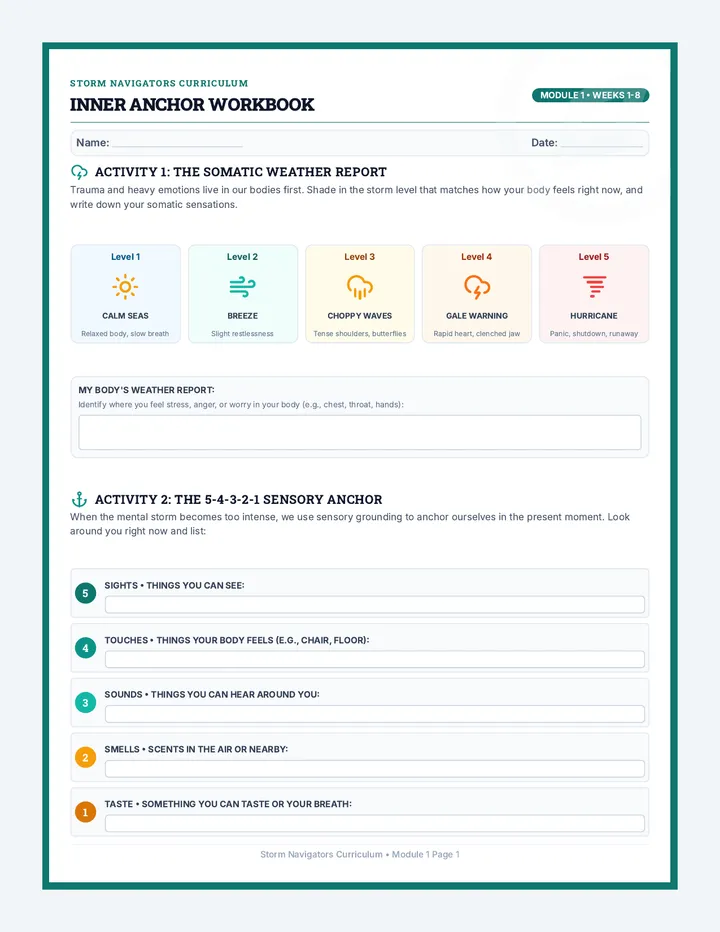
A mindfulness worksheet based on the 5-4-3-2-1 grounding technique, designed to help students manage anger by engaging their senses. Revised for maximum handwriting space and a single-page layout.
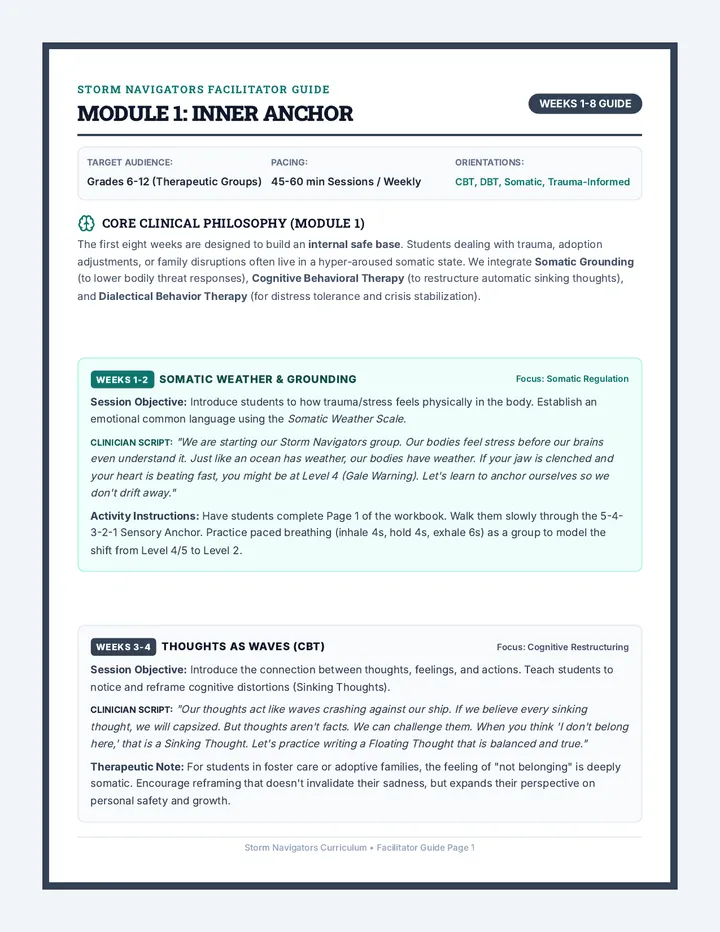
A three-part DBT and CBT curriculum designed to help middle school students build patience, reframe negative mindsets, and comfortably adapt to school and home routines.
A cozy, 20-25 minute wellbeing session run separately with each sister (Year 3 and Year 5) in a large, blended family. It focuses on celebrating her individual helper spark, acknowledging her support for Mum and her siblings, and establishing a healthy balance between helping out and protecting her own time to just be a kid.
An introductory transition sequence for early college high school students designed to build a supportive peer cohort and de-mystify the academic and social transitions of college life.
A social-emotional learning lesson for grades 6-8 building perspective-taking. It features visual check-ins, interactive scenario cards, scaffolded worksheets, and anchor charts tailored for neurodivergent students (ADHD, autism, anxiety, depression) in self-contained and inclusion classrooms.
A comprehensive social self-advocacy unit for 5th graders to develop assertive communication, decode social intents, and confidently navigate peer conflicts and bullying.
A celebratory lesson culminating a 9-week social and emotional wellbeing journey, reinforcing core concepts like mindfulness, coping with emotions, empathy, relationships, communication, body image, gratitude, and mental health, with a student certificate of achievement and personalized reflection.
A six-lesson social-emotional learning sequence designed for 20-minute junior high advisory periods, equipping students with practical skills in physiological regulation, cognitive reframing, help-seeking, and social boundary setting.
Focuses on adapting to rules, boundaries, and schedules by blending Wise Mind decision-making with practical self-regulation routines.
A 2-part unit sequence on workplace professionalism, reliability, and dependability. Students learn the foundational mindset of trust, daily accountability routines, and how to communicate effectively during crises.
Teaches cognitive restructuring to identify automatic negative thoughts (ANTs), challenge cognitive distortions, and actively reframe mindsets for a more positive and adaptive attitude.
A six-lesson junior high advisory curriculum designed to help middle schoolers navigate screen addiction, notification loops, multitasking myths, sleep loss, social comparison, and group chat drama. Each lesson contains a 20-minute teacher facilitation guide and a corresponding student reflection handout.
Focuses on building physical and mental patience under distress using the DBT STOP skill (Stop, Take a step back, Observe, Proceed mindfully).