Engaging slide deck for the 'Can You Plan Like a Pro?' lesson, featuring a blueprint theme, clear objectives, activity instructions, and discussion prompts.
A printable board game designed for students to practice the 'Brain Filter' concept by categorizing thoughts as 'Think It' or 'Say It' and brainstorming kind alternatives.
A vibrant and visual anchor chart illustrating the 'Brain Filter' process, clearly showing the three-step check (Kind, Helpful, True) and featuring 'in action' examples.
A student worksheet designed to help students categorize speech using the Kind, Helpful, and True filter, featuring scenario sorting and a creative writing prompt.
A set of twelve printable discussion cards featuring relatable scenarios for students to practice using their social filter and brainstorming kind alternatives.
A professional 20-minute teacher guide and lesson plan for teaching social filters, featuring clear definitions, the toothpaste analogy, and structured lesson pacing.
A set of printable drawing paths for the String Sync activity, ranging from easy (circular) to extreme (the Vortex spiral). Each path includes start/end markers and decreasing path widths to increase the teamwork challenge.
A comprehensive facilitator guide for the String Sync teamwork activity, including setup instructions, step-by-step procedures, and guided debrief questions focusing on communication and problem-solving.
A refined student worksheet for reflecting on daily experiences using two distinct buckets for 'good' and 'hard' events, now completely anonymous without name fields.
A visual presentation to launch the children's book project, featuring the 20 approved values menu, project requirements, and success criteria. Updated for individual work.
A structured planning worksheet for student groups to brainstorm characters, setting, conflict, and a storyboard arc for their children's book project. Updated for individual work.
A comprehensive project guide for creating a children's book, including an 'Approved Values Menu' of 20 core topics and the project's grading rubric. Updated for individual work.
A single display slide featuring a 6-step checklist of the performance lab procedures, including a reminders for classroom conduct and group participation. Fixed layout to prevent overlap.
Instructions for the Mystery Performance Lab, guiding students through solo reading, role assignment with tie-breakers, plot analysis, fluency practice, and final presentation.
A comprehensive 2-page follow-up worksheet for students to complete after performing or watching mystery plays. Focuses on fluency self-reflection, high-rigor character analysis, comprehension of plot devices like red herrings, and social-emotional debriefing. Optimized for print with writing lines instead of boxes. Updated terminology to "Character Change".
Six lengthened mystery/problem-solving plays featuring 4-5 characters each. Each play includes increased plot complexity, red herrings, and higher rigor dialogue focused on social-emotional conflicts. Includes a reusable analysis log template. Themes are strictly school-based with no space or weapon-related content. Every script and the analysis log are formatted to fit on a single page. Optimized with writing lines and no heavy boxes.
A student worksheet for analyzing the plot structure of a play, including sections for setting, characters, beginning, middle, end, problem, and solution. Optimized with writing lines and no heavy boxes. fits on one page.
A short model play script titled "The Missing Lunchbox" used to demonstrate play structure, characters, and dialogue. Features a friendship-based problem and solution. Dinosaur theme used for the lunchbox.
Instructional slides teaching the components of a play script (dialogue, stage directions), plot elements (beginning, middle, end, problem, solution), and fluency skills.
Visual presentation for the 'Time Travelers' mentoring session. It connects history with personal growth, encouraging students to identify their 'inner archive' of strengths and build a resilient mindset for the future.
A mentor guide and 'Hero Shield' worksheet for a mentoring session on resilience and personal growth. Students reflect on their 'inner heroes' (strengths) and build a visual shield of support to prepare for future challenges.
Instructional slides for the 'Bridge Builders' mentoring session. It uses the metaphor of bridges and walls to teach students about healthy communication, empathy, and how to repair relationships through 'planks' of dialogue.
A mentor guide and activity card set focused on social skills and conflict resolution. Using the metaphor of 'Bridge Builders,' students explore how to repair misunderstandings and strengthen community connections.
Visual presentation for the 'Soul Cartography' mentoring session. It introduces the concept of emotional mapping through geographical metaphors like mountains, woods, and safe havens to engage students in self-reflection.
A mentor guide and student worksheet for a 30-minute mentoring session focused on identifying and mapping emotions through the lens of geography. Includes a structured session flow and a creative 'Inner World' mapping activity.
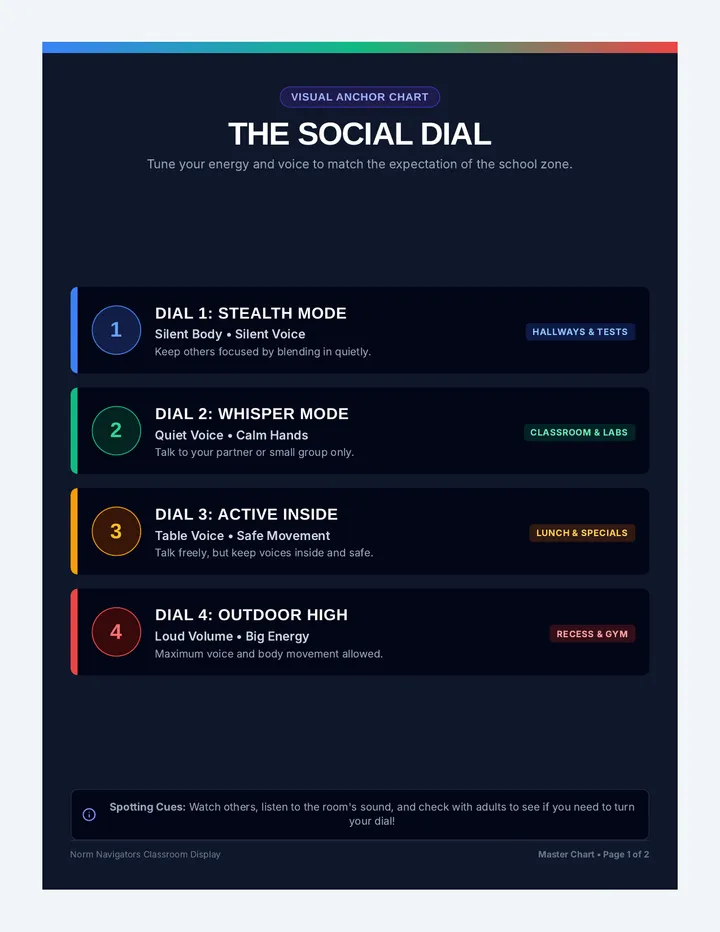
A vibrant, high-contrast visual aid poster featuring the three breath work techniques (Square, Belly, and Bee) with simple icons and instructions for classroom display.
A student worksheet for self-reflection before and after breath work, featuring an emoji mood check, a technique preference selector, and a creative drawing space.
An engaging presentation for 4th graders featuring emoji check-ins, explanations of why we breathe, and visual guides for Square Breathing, Belly Breathing, and Bee Breath.
A comprehensive teacher resource providing lesson objectives, a timed session flow, scripting for techniques, and discussion prompts for a 4th-grade breath work session.
A detailed facilitation guide for the final session of the Launchpad League attendance group. Updated to remove markdown artifacts and include the 2-Snap reset guidance. Improved label legibility.
The final student-facing reflection worksheet for the Launchpad League attendance group. Updated with more writing lines, improved reflection prompts, and a single-page layout. Updated for contrast and spacing.
The final celebration and transition session for the 'Launchpad League' attendance group. Updated with maintenance talking points, the 2-snap reset example, and improved header spacing.
A detailed facilitation guide for the fifth session of the Launchpad League attendance group. Focuses on support systems and self-advocacy language. Includes scripts for normalizing help-seeking behavior.
A student-facing worksheet for Session 5 of the attendance group. Updated for single-page fitting with stacked support crew labels for more writing space and a high-contrast writing area. ID field moved to header.
The fifth session for the 'Launchpad League' attendance group. Updated with fixed word spacing in headings, improved grid layouts to prevent overlap, and larger distress code examples. Added workspace to final slide.
A detailed facilitation guide for the fourth session of the Launchpad League attendance group. Focuses on the logistical 'how-to' of getting to school, emphasizing prep and time management. Includes routine-building scripts.
A student-facing worksheet for Session 4 of the attendance group. Updated for single-page fitting with improved writing lines and countdown layout.
The fourth session for the 'Launchpad League' attendance group. Updated with improved word spacing in headings and clearer action button text.
A detailed facilitation guide for the third session of the Launchpad League attendance group. Updated to remove markdown artifacts and improve header leading.
A student-facing worksheet for Session 3 of the attendance group. Students map out their 'satellites' (supportive friends and staff) on a diagram and plan a positive social interaction. Updated for single-page fitting and high contrast labels.
The third session for the 'Launchpad League' attendance group. Updated with improved word spacing in headings and better text contrast on Slide 3.
A detailed facilitation guide for the second session of the Launchpad League attendance group. Updated to remove markdown artifacts and improve header leading.
A student-facing worksheet for Session 2 of the attendance group. Students list their personal attendance barriers ('Gravity Factors'), scale them by size (Mouse vs. Mountain), and brainstorm a 'Thrust Strategy'. Updated for single-page fitting and larger writing areas.
The second session for the 'Launchpad League' attendance group. Updated with improved word spacing in headings, better icon consistency, and increased font sizes for legibility.
A comprehensive facilitation guide for the first session of the Launchpad League attendance group. Updated for improved spacing and removed markdown artifacts.
The student-facing deployment log for Session 1 of the Launchpad League. Includes a group contract, a checkbox list of common attendance barriers ('Gravity Factors'), and an expanded space to identify personal motivation. Updated for single-page fitting.
The opening presentation for the 'Launchpad League' attendance group. Establishes the space exploration theme, defines the group's mission to beat 'Gravity' (attendance barriers), and sets confidential group norms. Updated with improved word spacing and heading sizes.
A teacher's guide for scoring the Mission Report Screener and using the data to form effective social skills groups.
Introductory slides for the "Social Lab" screener, explaining the roles of a Social Detective and defining self-esteem, friendship, and impulse control for 4th and 5th graders.
A student self-reflection screener designed for 4th and 5th graders to assess self-esteem, friendship skills, and impulse control using a "Social Detective" theme.
A printable board game called 'Superpower Sprint' where students practice social skills like listening, sharing, and kindness to reach Hero HQ.