Lenny.com
Explore
Create
ActivitiesNewCurriculumNewMathEnglish Language ArtsScience & EngineeringSocial StudiesGlobal LanguagesHealth & Physical EducationSpecial EducationCounseling & Life SkillsArts & CreativityESL
Lenny.com
Lenny.com
Explore
Create
ActivitiesNewCurriculumNewMathEnglish Language ArtsScience & EngineeringSocial StudiesGlobal LanguagesHealth & Physical EducationSpecial EducationCounseling & Life SkillsArts & CreativityESL
Lenny.com
Lenny.com

Solutions

Lenny for EducatorsLenny for SchoolsLenny for Districts

Product

ExploreSign inCreateSupportAbout

Resources

Getting startedMTSS Acceleration Program

Newsletters

School Funding Newsletter

© 2026 Lenny Learning Inc.

TermsPrivacyAccessibility
LinkedInInstagramX
Lenny
Counseling & Life SkillsSelf-AwarenessBasic Emotion RecognitionComplex Emotion IdentificationEmotional Nuance & Mixed FeelingsBuilding Positive Self-ImageRecognizing Strengths & Growth AreasAccurate Self-AssessmentPersonal Values IdentificationCultural & Individual Identity ExplorationValues-Based Decision MakingSelf-ManagementStop-and-Think StrategiesDelaying GratificationIndependent Impulse ManagementIdentifying Stress TriggersShort-Term Goal SettingSMART Goals DevelopmentGoal Monitoring & AdjustmentBuilding Perseverance & ResilienceInternal Motivation DevelopmentComprehensive Stress Reduction PlanningSocial AwarenessRecognizing Others' FeelingsDemonstrating EmpathyRespecting Individual DifferencesUnderstanding Cultural DiversityComplex Empathetic ResponsesMultiple Viewpoint ConsiderationMulti-Perspective AnalysisChallenging Stereotypes & BiasRelationship SkillsActive ListeningClear Verbal & Nonverbal CommunicationBuilding Positive FriendshipsWorking Cooperatively in GroupsCommunicating Personal BoundariesRespecting Others' BoundariesAssertive ExpressionPeaceful Problem-SolvingContributing to Team GoalsComplex Conflict NavigationMediation & NegotiationHealthy Romantic RelationshipsResponsible Decision-MakingDaily Problem IdentificationBrainstorming Multiple SolutionsEvaluating Pros & ConsRecognizing Risks & ConsequencesApplying Ethical FrameworksInformed Risk-Benefit DecisionsRoot Cause AnalysisMindfulnessMindful BreathingBody Scan MeditationDaily Mindfulness ApplicationDaily Self-Care RoutinesBalancing Life DemandsAdvocating for Wellness NeedsMental Health SupportUnderstanding Anxiety SymptomsWorry Management StrategiesProgressive Muscle RelaxationRecognizing Depression SignsBuilding Mood-Supporting RoutinesBehavioral Activation for MoodUnderstanding Grief StagesHealthy Grief CopingCreative Expression of LossBehavioral SupportDaily Check-In ProceduresDaily Goal Setting & ReviewRecognizing Escalation Warning SignsRequesting Breaks & SupportSelf-Calming During DistressUnderstanding Positive ReinforcementToken Economy ImplementationBehavior Chart TrackingAnalyzing Behavior PatternsIdentifying Antecedents & ConsequencesDetermining Behavior FunctionFunction-Based InterventionsIndividualized Behavior ContractsData-Driven Behavior AdjustmentTherapeutic ApproachesThoughts-Feelings-Behaviors ConnectionRecognizing Thinking PatternsChallenging Negative ThoughtsPositive Self-Talk PracticeThought Record TrackingAdvanced Cognitive RestructuringComprehensive CBT PlansBehavioral Activation TechniquesBuilding Positive ExperiencesExposure Hierarchies for AnxietyPresent-Moment AwarenessNon-Judgmental ObservationSelf-Soothing & DistractionComplex Emotion LabelingReducing Emotional Vulnerability (PLEASE)DEAR MAN CommunicationGIVE Skills for RelationshipsFAST Skills for Self-RespectRadical Acceptance PracticeCrisis Survival Skills (TIPP)Understanding Trauma EffectsTrauma Responses & TriggersIdentifying Trauma FeelingsGrounding TechniquesRegulation During Trauma DistressSafe Place VisualizationProcessing Through NarrativeDeveloping Trauma StoryPersonalized Safety PlanningGroup SupportTurn-Taking & SharingGroup Conversation SkillsSharing in Supportive EnvironmentLearning from Similar ChallengesBuilding Community & BelongingNavigating Peer RelationshipsGroup Skill PracticeGroup Mental Health EducationStress & Anxiety UnderstandingCrisis Support & SafetyKnowing When to Seek HelpIdentifying Mental Health CrisesGrounding During CrisisUsing Crisis HotlinesBuilding Support NetworksAccessing Mental Health ResourcesWarning Signs & Coping StrategiesDeveloping Personal Safety PlansUnderstanding Suicide Warning SignsGatekeeper Skills for PeersDigital LiteracySocial MediaTechnology BasicsProductivity ToolsInternet and Online ResearchWeb Design and PublishingDigital CitizenshipOnline Safety and PrivacyEmerging TechnologiesFinancial LiteracyMaking Financial DecisionsBanking and AccountsConsumer SkillsSaving and InvestingCredit and DebtEmployment and IncomeTaxesInsuranceMajor PurchasesEconomic ConceptsFinancial PlanningCollege & Post-Secondary PlanningCareer ExplorationUnderstanding Post-Secondary OptionsCollege Research & SelectionAdmission RequirementsCollege Application ProcessPersonal Statement WritingFAFSA CompletionScholarship Search & ApplicationsUnderstanding Student LoansContinuing Education PlanningInterview PreparationResearching EmployersCommon Interview QuestionsSTAR Method ResponsesProfessional Interview PresenceVirtual Interview SkillsInterview Follow-UpJob Search SkillsUnderstanding Job PostingsEffective Job Search StrategiesNetworking for OpportunitiesResume Writing BasicsAction Verbs & AchievementsTailoring Resumes to JobsCover Letter WritingProfessional ReferencesProfessional CommunicationBusiness Email EtiquettePhone & Voicemail ProfessionalismMeeting ParticipationPresentation SkillsProfessional Work EthicTime Management & ProductivityTeamwork & CollaborationAdaptability & FlexibilityProblem-Solving at WorkConstructive FeedbackWorkplace RightsUnderstanding Employment LawsPay & Benefits UnderstandingWorkplace SafetyAnti-Discrimination & Harassment

Peer Pressure Check Worksheet

A 6th-grade reading level written response worksheet exploring positive and negative peer pressure in high school and why noticing social influence matters. Includes a concise, student-friendly reading overview followed by six open-ended reflection questions with generous handwriting space.

ARAlexander Rhea

You might also like

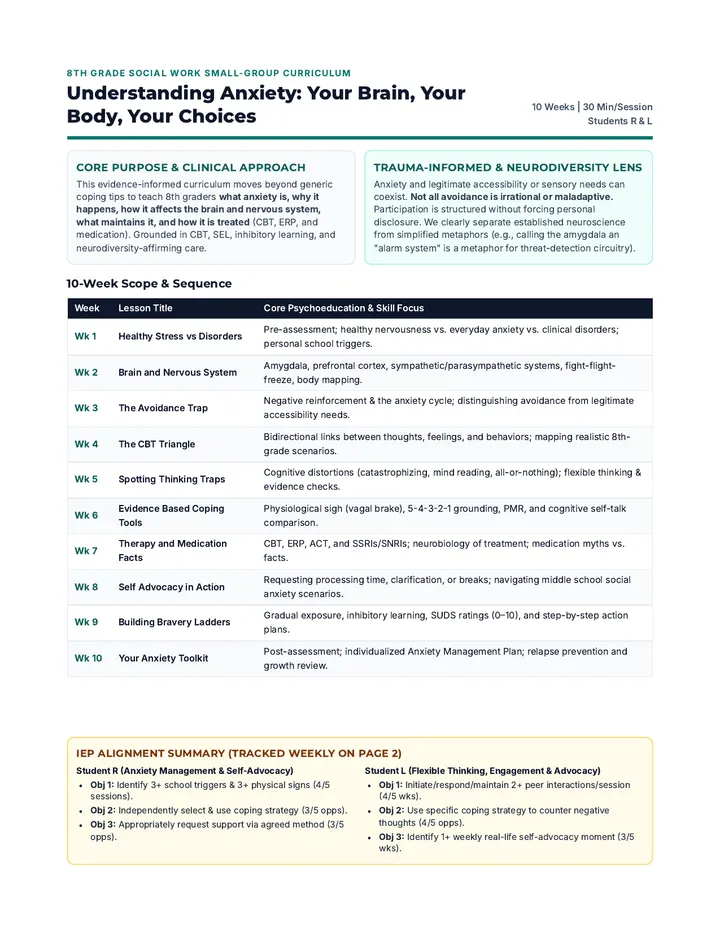
Curriculum Overview and IEP Tracker

Brain Body Choices

**Understanding Anxiety: Your Brain, Your Body, Your Choices** is a 10-week, evidence-informed psychoeducation curriculum for 8th-grade small-group social work intervention. Grounded in CBT, nervous system science, neurodiversity-affirming self-advocacy, and gradual exposure, it equips students to understand anxiety, evaluate treatment options, and build practical regulation and advocacy skills while tracking IEP progress for Student R and Student L.

RS

R Silva

34
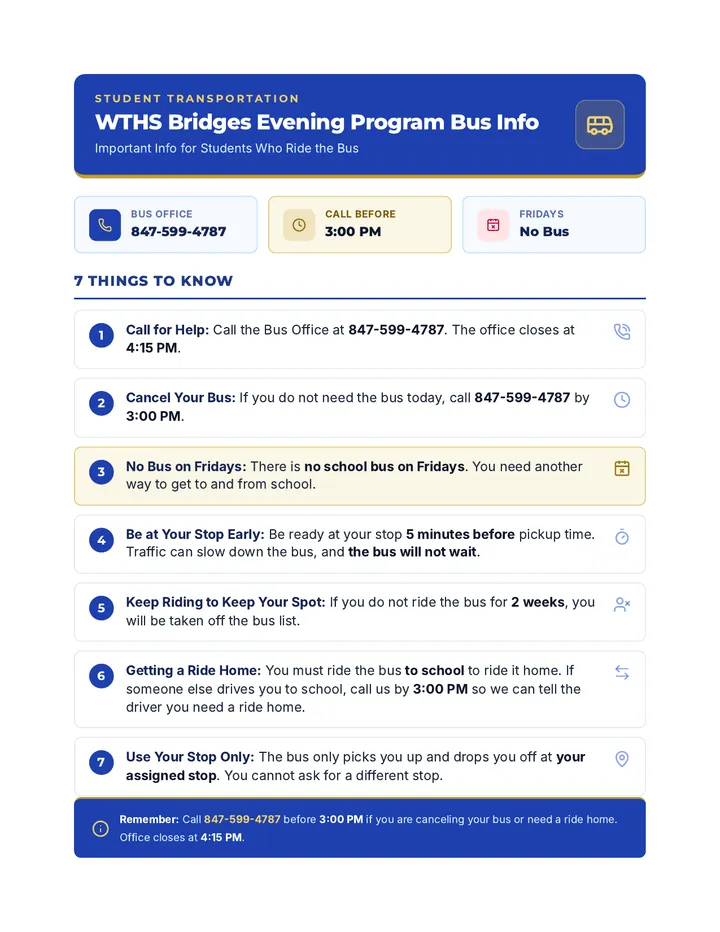
Simplified Bus Rules Handout

Bridges Bus Rules

Official student transportation guidelines for the Bridges Evening Program, including standard and simplified-language handouts.

MZ

Matthew Zarnstorff

2
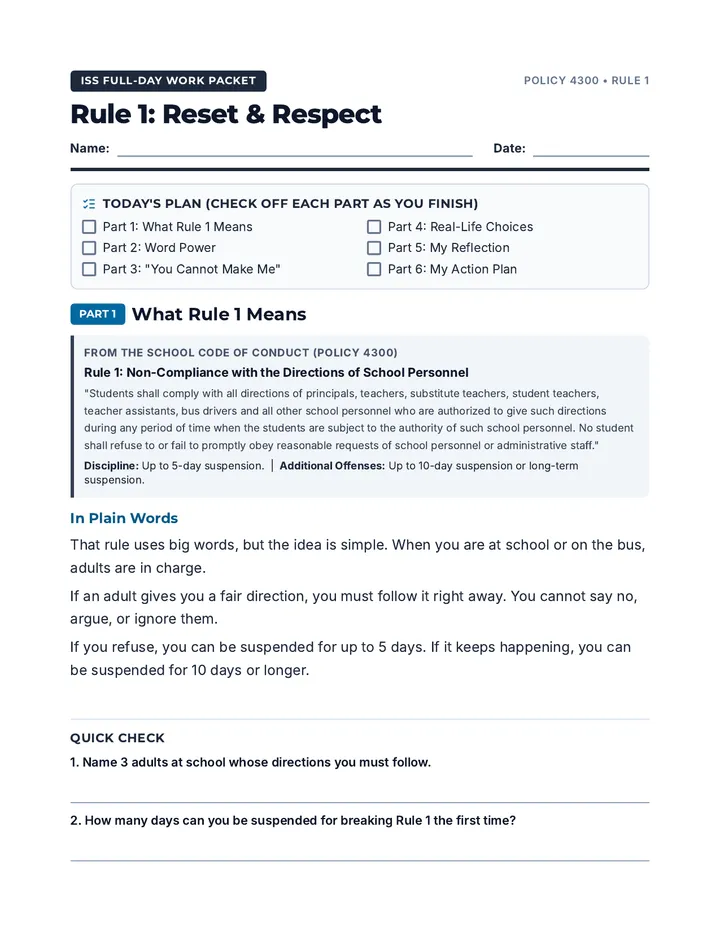
Rule 1 Reset Packet

Rule 1 Reset Packet

A 6-page printable full-day In-School Suspension (ISS) work packet for an 8th-grade student reading at a 2nd-grade level, focused on Rule 1 (Compliance with the Directions of School Personnel). Includes simplified readings, key vocabulary practice, real-life middle school scenarios, self-reflection prompts, and a final action plan.

AP

Aimee Petrarca

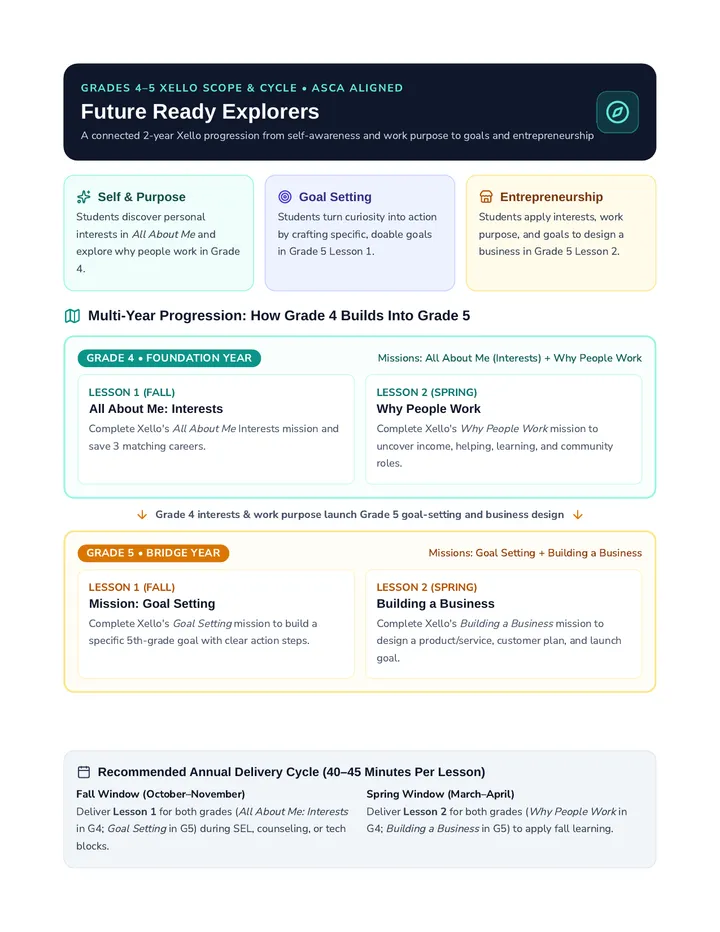
Scope and Cycle Guide

Future Ready Explorers

A cohesive multi-year Xello scope and cycle for Grades 4, 5, and 6 that builds self-awareness, career exploration, learning habits, and goal-setting from elementary discovery into middle school.

H

Heather.Koke

13
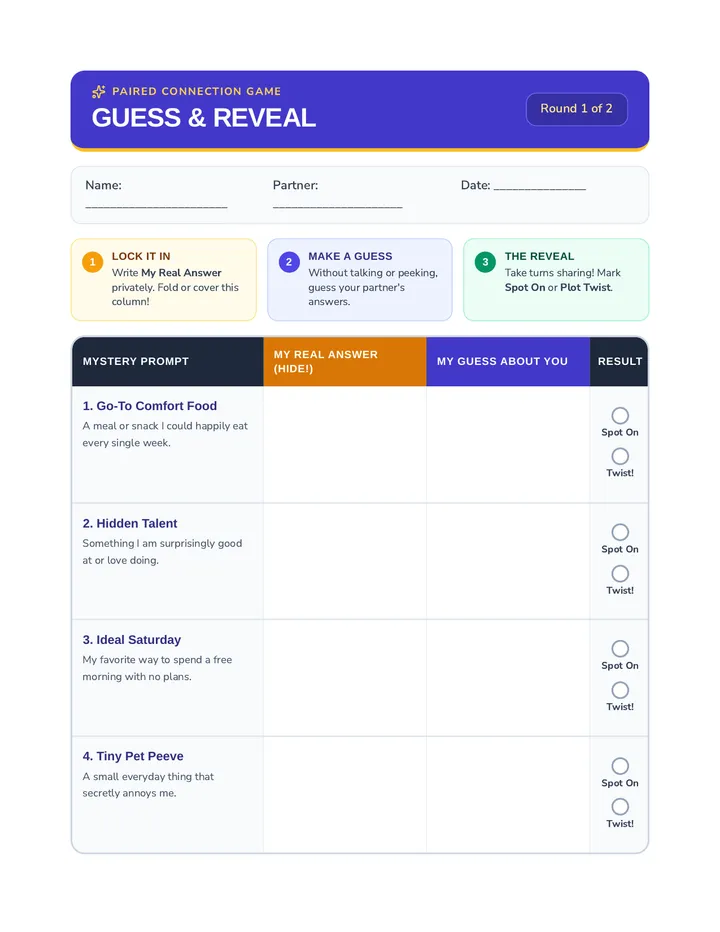
Guess Reveal Worksheet

Classmate Connection Game

A lighthearted paired guessing game and reflection activity where students predict each other's preferences, reveal surprising truths, and gently surface everyday assumptions to build classroom connection.

B

beasleyc

2
Simplified Bus Rules Handout

Simplified Bus Rules Handout

A simplified-language, single-page version of the Bridges Evening Program transportation rules handout titled "WTHS Bridges Evening Program Bus Info", styled in royal blue and old gold, using plain, easy-to-read sentences while preserving all seven bussing policies and key deadlines.

MZ

Matthew Zarnstorff

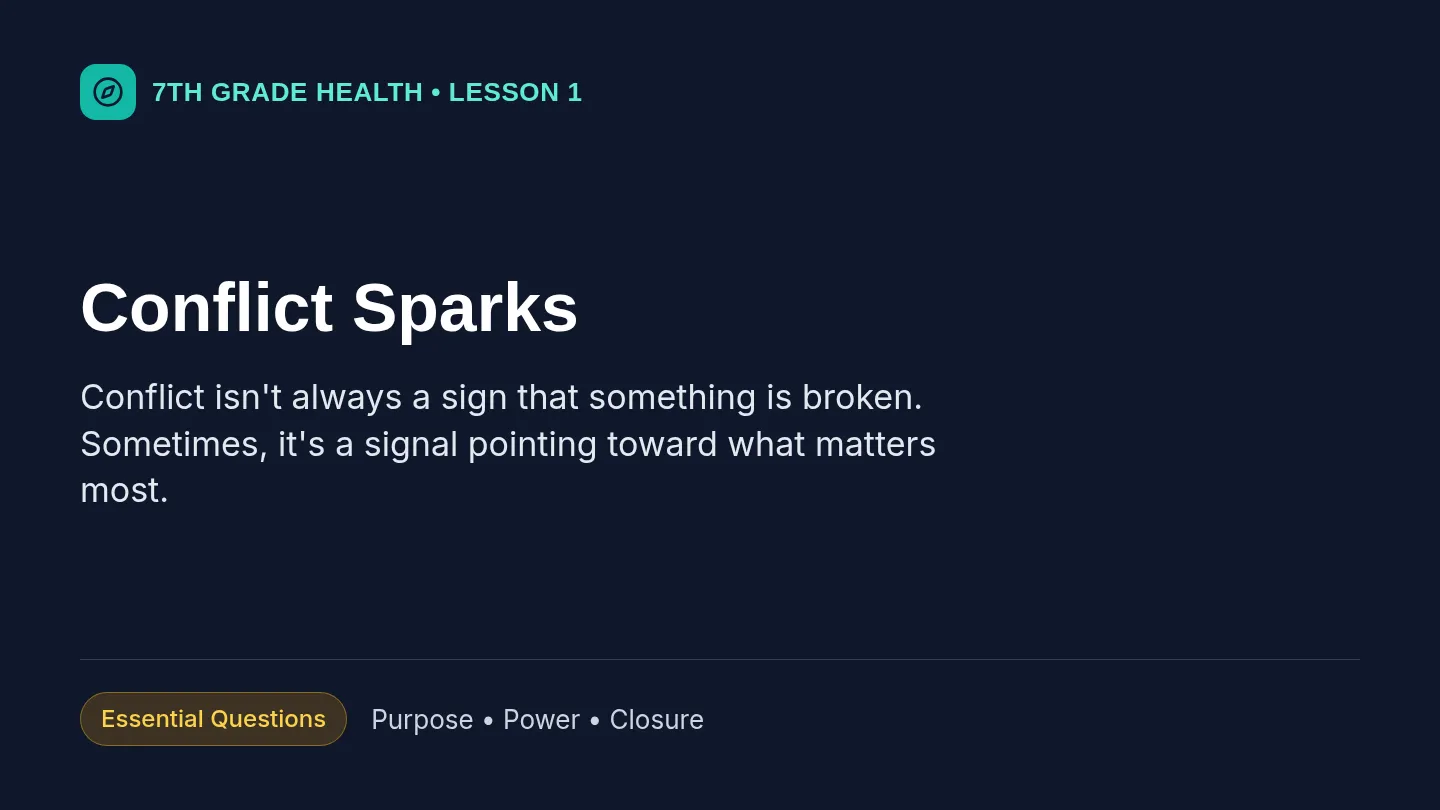
Conflict Sparks Slides

Conflict Compass

A 3-lesson 7th grade health unit on conflict resolution centered on three essential questions: what good conflict can do, what power it holds, and how to know when it is truly over. Students move from exploring conflict dynamics to practicing communication strategies and reflecting on closure.

JM

Joshua Macera

9
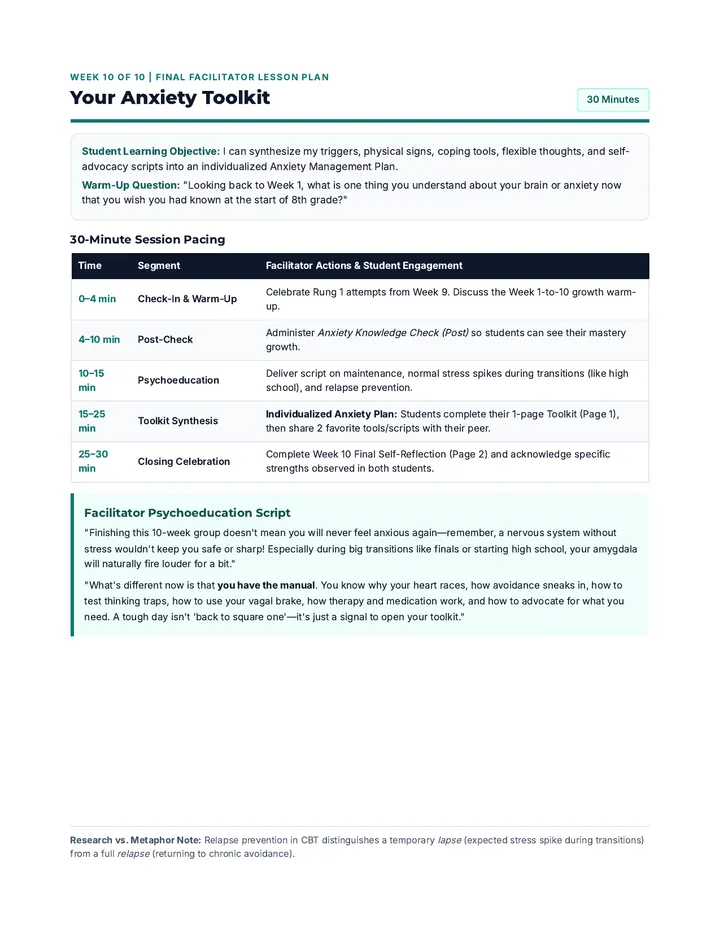
Week 10 Facilitator Guide

Your Anxiety Toolkit

Week 10 synthesizes all curriculum concepts into an individualized Anxiety Management Plan and Student Toolkit. Students complete the post-curriculum knowledge assessment and celebrate growth in regulation, flexible thinking, and advocacy.

RS

R Silva

3
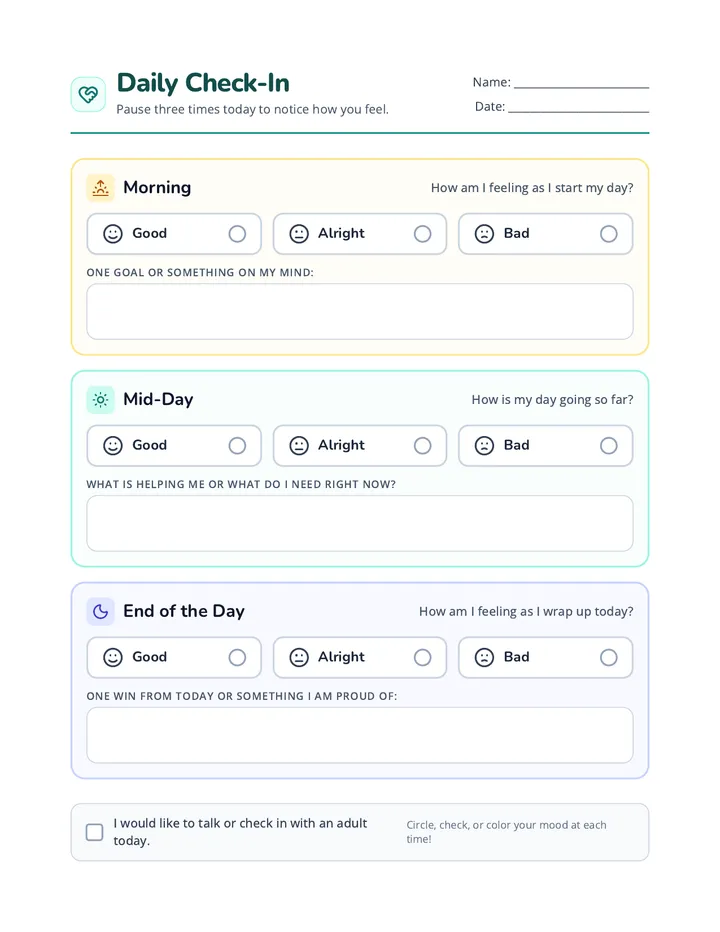
Daily Mood Check In Sheet

Daily Mood Check In Sheet

A printable one-page daily emotional check-in sheet where students rate their mood as Good, Alright, or Bad during the morning, mid-day, and end of the day, with space for brief reflections.

AR

Anthony Rossok

Baseline Facilitator Guide

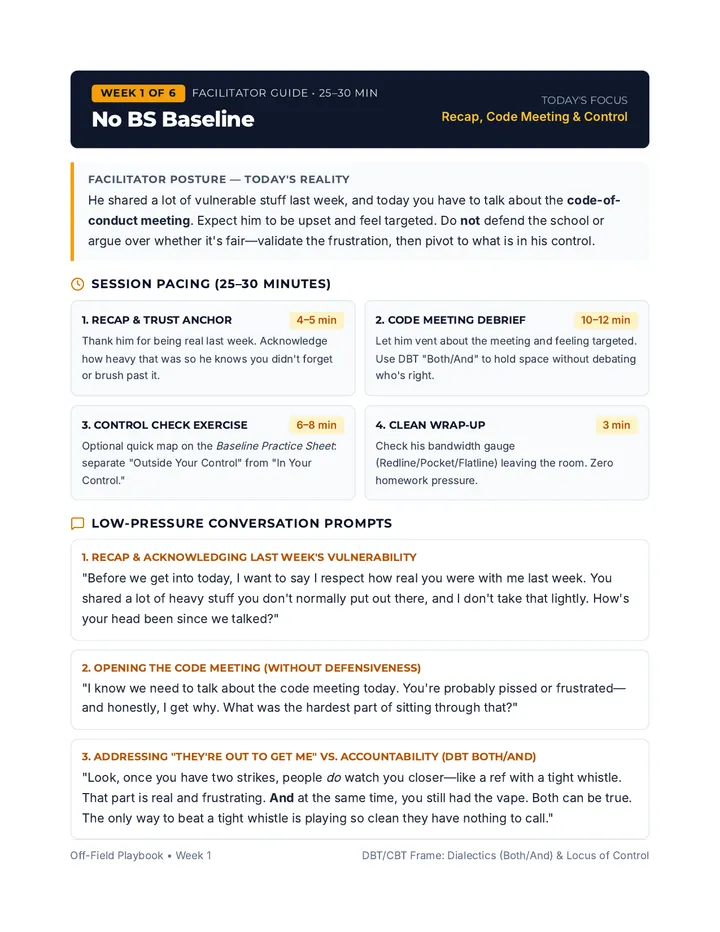
Off-Field Playbook

A 6-week, 25–30 minute individual intervention curriculum for a high-potential student-athlete navigating grief, impulse control, and code-of-conduct accountability using practical CBT and DBT strategies.

JZ

Janice Zimmerman

13
Week 9 Facilitator Guide

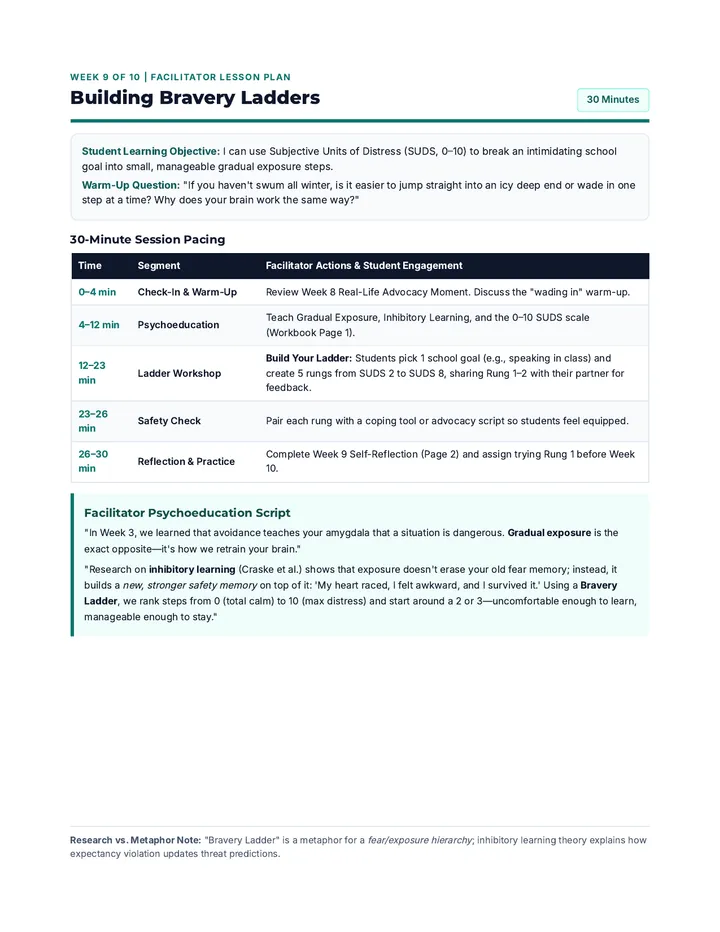
Building Bravery Ladders

Week 9 introduces gradual exposure and inhibitory learning theory. Students construct personalized bravery ladders using Subjective Units of Distress (SUDS) ratings to break intimidating school tasks into manageable steps.

RS

R Silva

3
Study Toolkit Worksheet

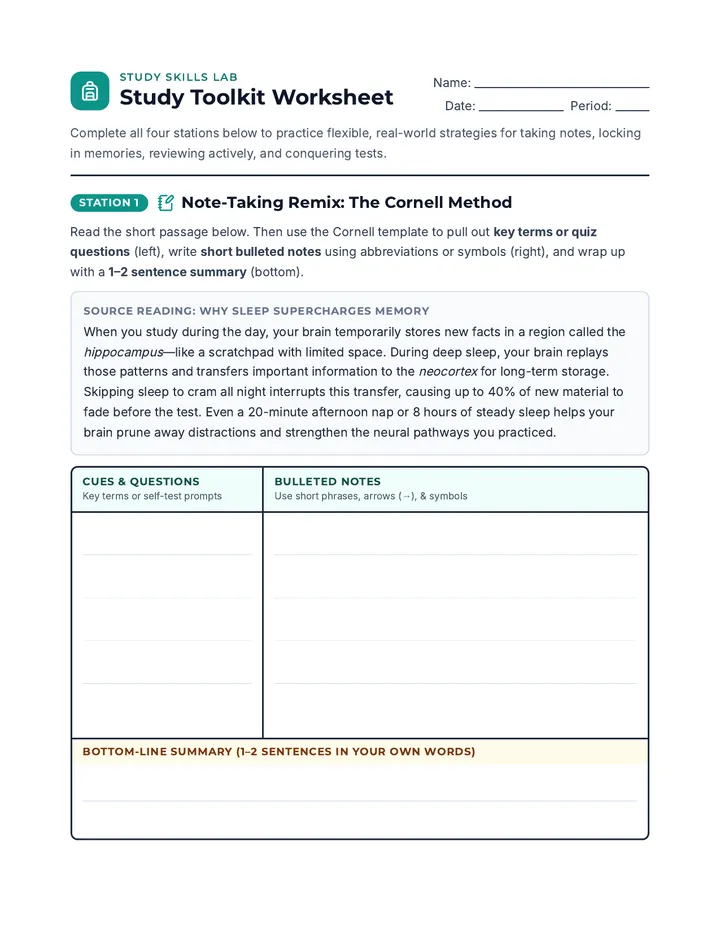
Study Toolkit Worksheet

A 3-page printable study skills worksheet featuring practical, hands-on activities across four stations: Cornell-style note-taking, memory techniques (mnemonics and chunking), upgrading passive review habits into active recall, and building a 5-day test prep plan with test-day troubleshooting.

CM

Cody Meacham