Competency Growth Rubric
Targeted Progress Monitoring & Skill Transfer Assessment
Student:
Date:
Observer:
Setting:
1 Emerging: Rarely (0-25%)
2 Developing: Sometimes (26-75%)
3 Consistent: Regularly (76-100%)
Transfer Focus
| Observable Behavior Indicator | 1 | 2 | 3 | N/A |
|---|
| | | | |
| Self-Awareness: Recognizing one’s emotions and thoughts | | | | |
|
| Labels current emotional state using specific "feeling" words. |
|
|
|
|
| Identifies a personal strength and an area for growth in context. |
|
|
|
|
| Expresses personal interests or needs clearly without prompting. |
|
|
|
|
| Attempts challenging tasks without immediate withdrawal. |
|
|
|
|
| Identifies specific external triggers for their strong emotions. |
|
|
|
|
|
Self-Management: Regulating emotions and behaviors
|
| Independently initiates a coping strategy when frustrated. |
|
|
|
|
| Begins work tasks within 30 seconds of an instruction. |
|
|
|
|
| Sustains focus on a task for 10+ minutes with no redirection. |
|
|
|
|
| Keeps body in own space and waits turn during discussion. |
|
|
|
|
| Organizes and transitions materials efficiently. |
|
|
|
|
|
Social Awareness: Empathizing and understanding perspectives
|
| Accurately identifies feelings of peers from body language. |
|
|
|
|
| Offers support or encouragement to a peer in distress. |
|
|
|
|
| Adjusts voice volume and tone to match the setting. |
|
|
|
|
| Listens to a peer's differing opinion without interrupting. |
|
|
|
|
| Explains how their actions might make someone else feel. |
|
|
|
|
|
Relationship Skills: Building and maintaining connections
|
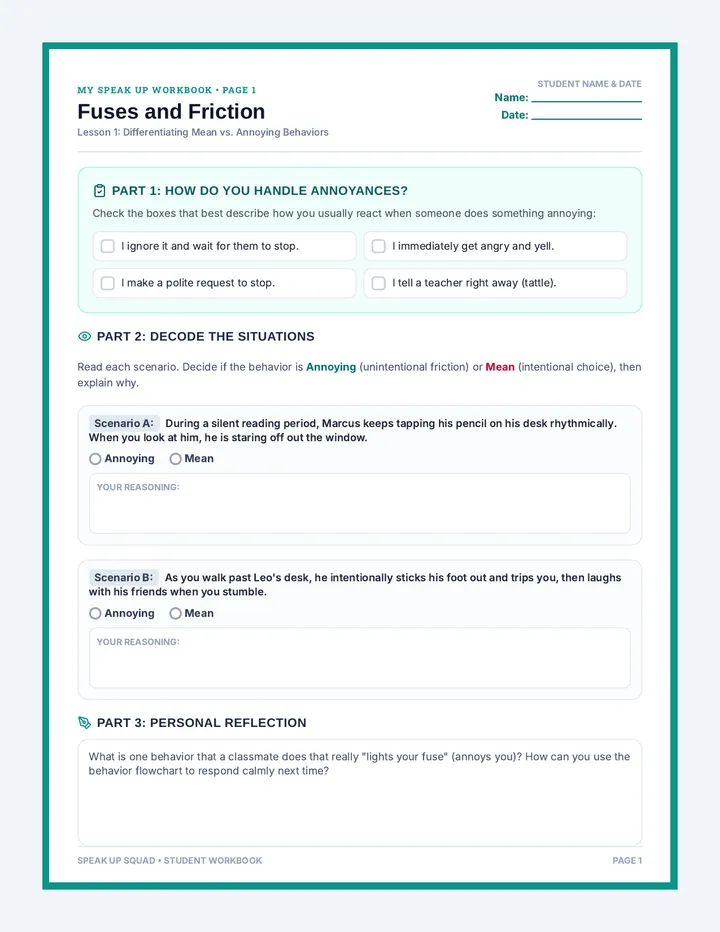
| Uses "I" statements to resolve a minor peer conflict. |
|
|
|
|
| Maintains eye contact or body orientation during dialogue. |
|
|
|
|
| Shares materials or responsibilities during group work. |
|
|
|
|
| Declines participation in off-task behavior from peers. |
|
|
|
|
| Seeks help appropriately after attempting a self-solution. |
|
|
|
|
|
Responsible Decision-Making: Making ethical, safe choices
|
| Names a likely consequence before making a choice. |
|
|
|
|
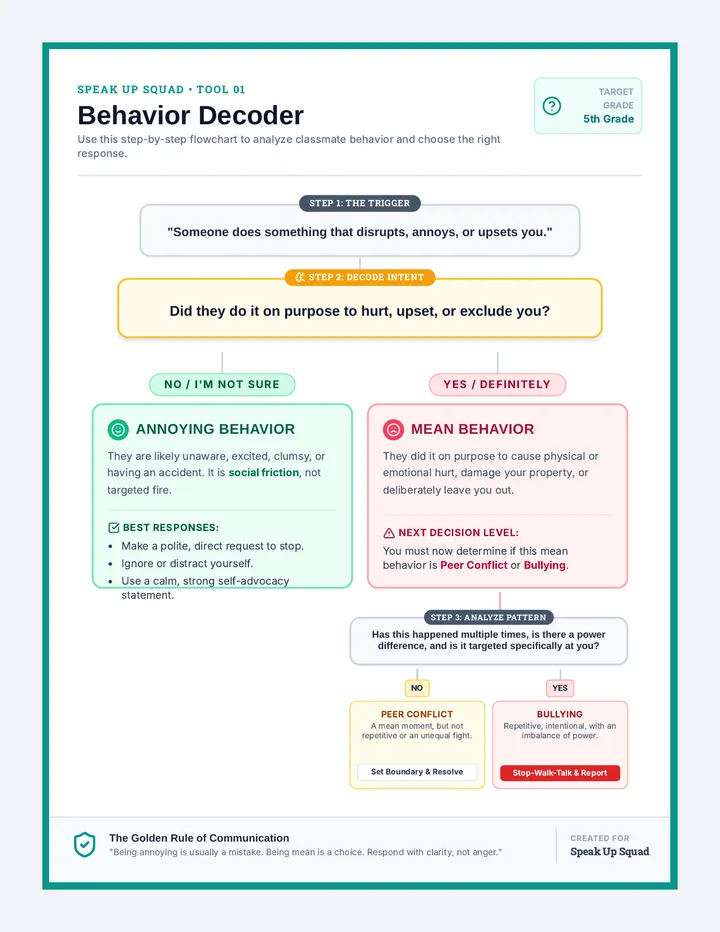
| Identifies the "size" of a problem correctly (big vs. small). |
|
|
|
|
| Proposes two different solutions to a social hurdle. |
|
|
|
|
| Reflects on a past choice and identifies a better alternative. |
|
|
|
|
| Follows safety rules without adult monitoring. |
|
|
|
|
Observation Notes & Performance Trends:
Skill Transfer Goal: