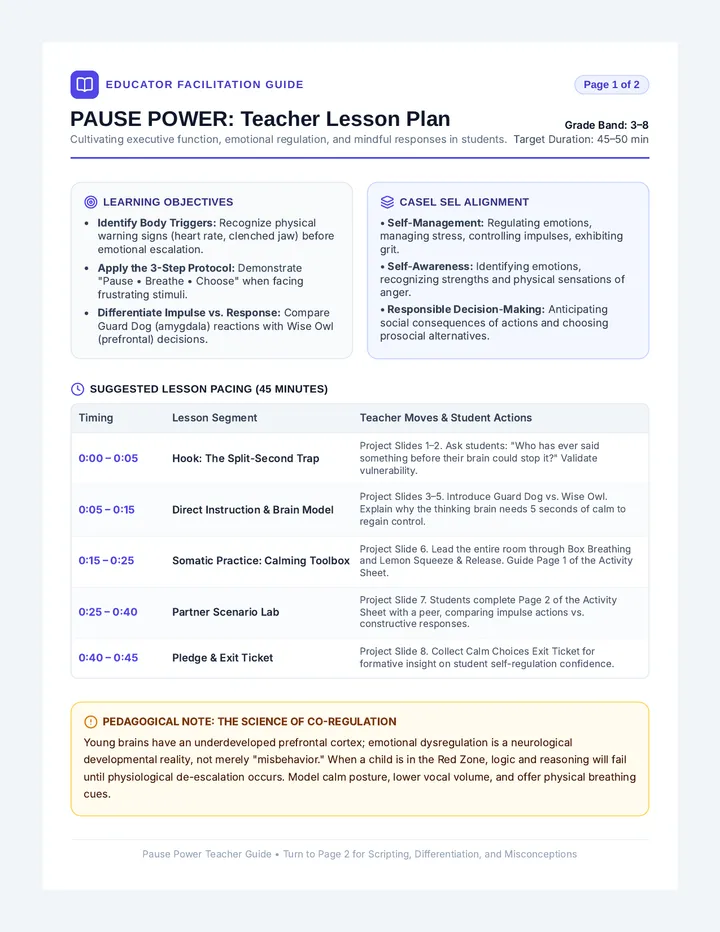
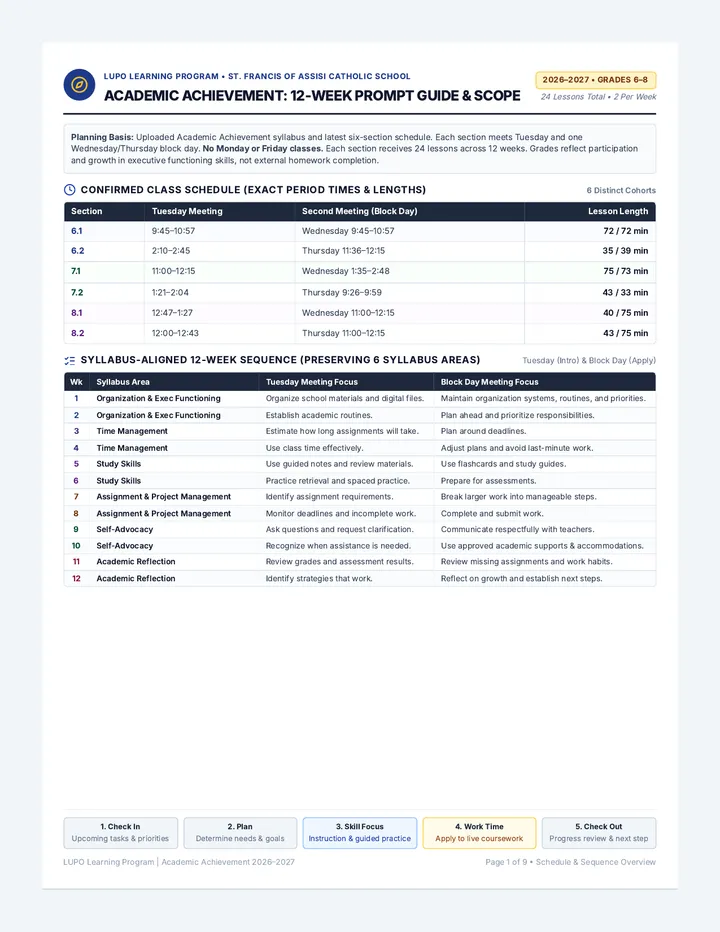
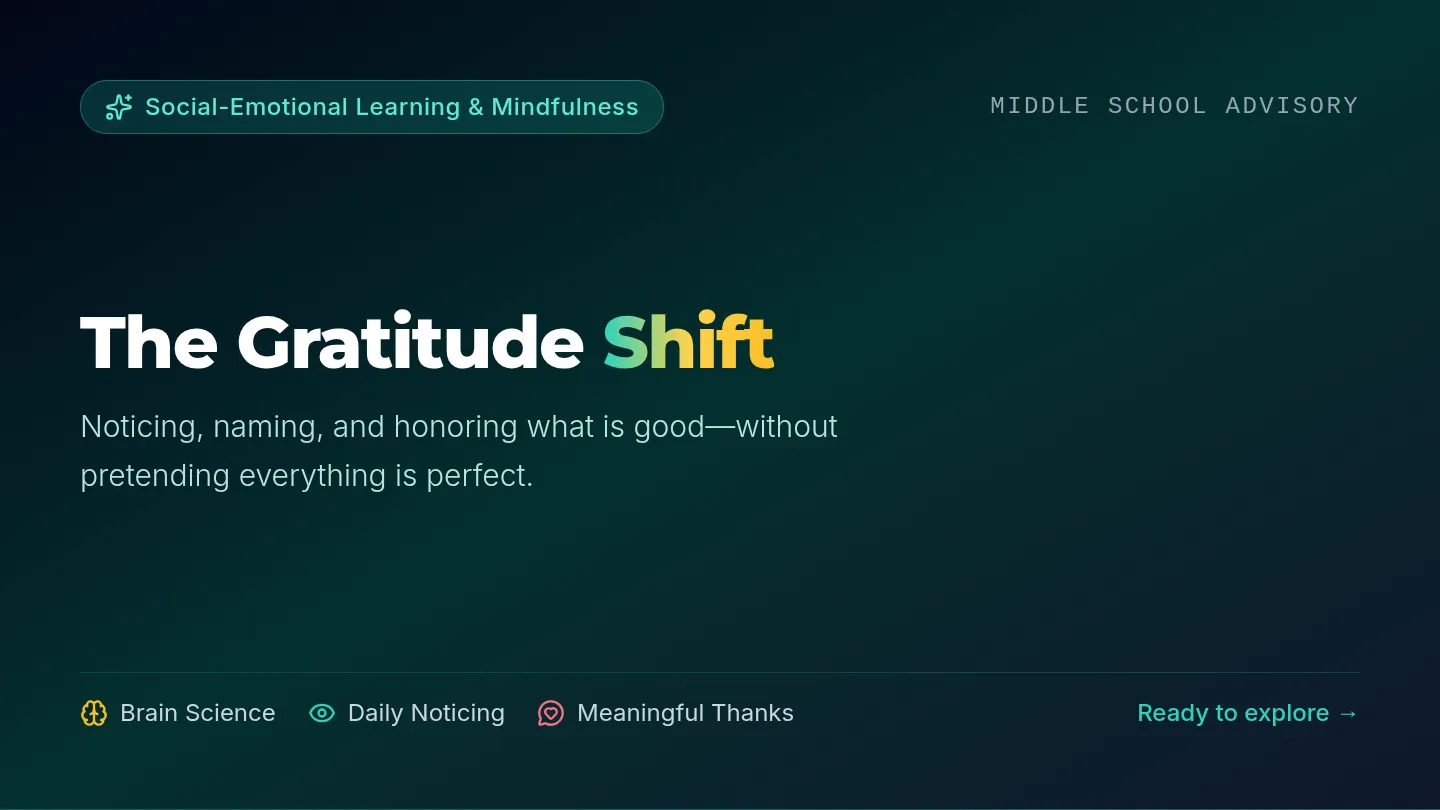
Mood Mapping Lesson Plan The Mood Map
Lesson Plan • Tier 3 Individual Support
Target Audience
7th Grade Student
Objective
Students will track daily mood swings, identify emotional patterns, and reflect on personal triggers to develop proactive strategies for self-regulation and mental health management.
Rationale
Understanding personal mood patterns helps students develop coping mechanisms and proactive planning for emotional well-being, fostering greater self-awareness and internal control.
At a Glance
Total Time: 30 Minutes
Format: Individual Session
Prep Time: 10 Minutes
Required Materials
Slide Deck
Tracking Your Mood Slides
Worksheet
Daily Mood Map Chart
Journal
Reflection Prompts
Preparation Steps
Review the Mood Mapping Lesson Plan and all generated materials.
Print the Daily Mood Map Chart for the student.
Ensure access to the Tracking Your Mood Slides for presentation.
Have the Reflection Prompts ready for distribution.
Instructional Sequence
5 min
Introduction to Mood Mapping
Begin by explaining the purpose of mood mapping: understanding how daily events and thoughts influence emotions.
Briefly introduce the concept of emotional self-regulation.
Show the first few slides of Tracking Your Mood Slides to set the context and engage the student.
10 min
Introducing the Daily Mood Map Chart
Distribute the Daily Mood Map Chart to the student.
Explain how to use the chart, emphasizing that there are no right or wrong feelings .
Guide the student through an example entry on the chart, demonstrating how to rate mood (1-5) and note potential influencing factors/triggers.
Encourage honest and consistent tracking over a designated period (e.g., one week).
10 min
Reflection and Discussion
(Note: This part is typically done in a follow-up session after tracking is complete.)
Revisit the mood chart with the student.
Facilitate a discussion using the Reflection Prompts , focusing on patterns, triggers, and coping strategies.
Encourage the student to identify both positive patterns and challenging moments.
Brainstorm strategies for managing challenging moods and enhancing positive ones.
5 min
Goal Setting and Next Steps
Guide the student in setting a small, achievable goal related to mood regulation or planning (e.g., "I will take 3 deep breaths when I feel my mood drop below a 2").
Discuss how to continue using mood mapping as a personal tool for self-discovery.
Reiterate the importance of self-awareness for long-term emotional health.
Tracking Your Mood Slides Mood Navigator
The Mood Map
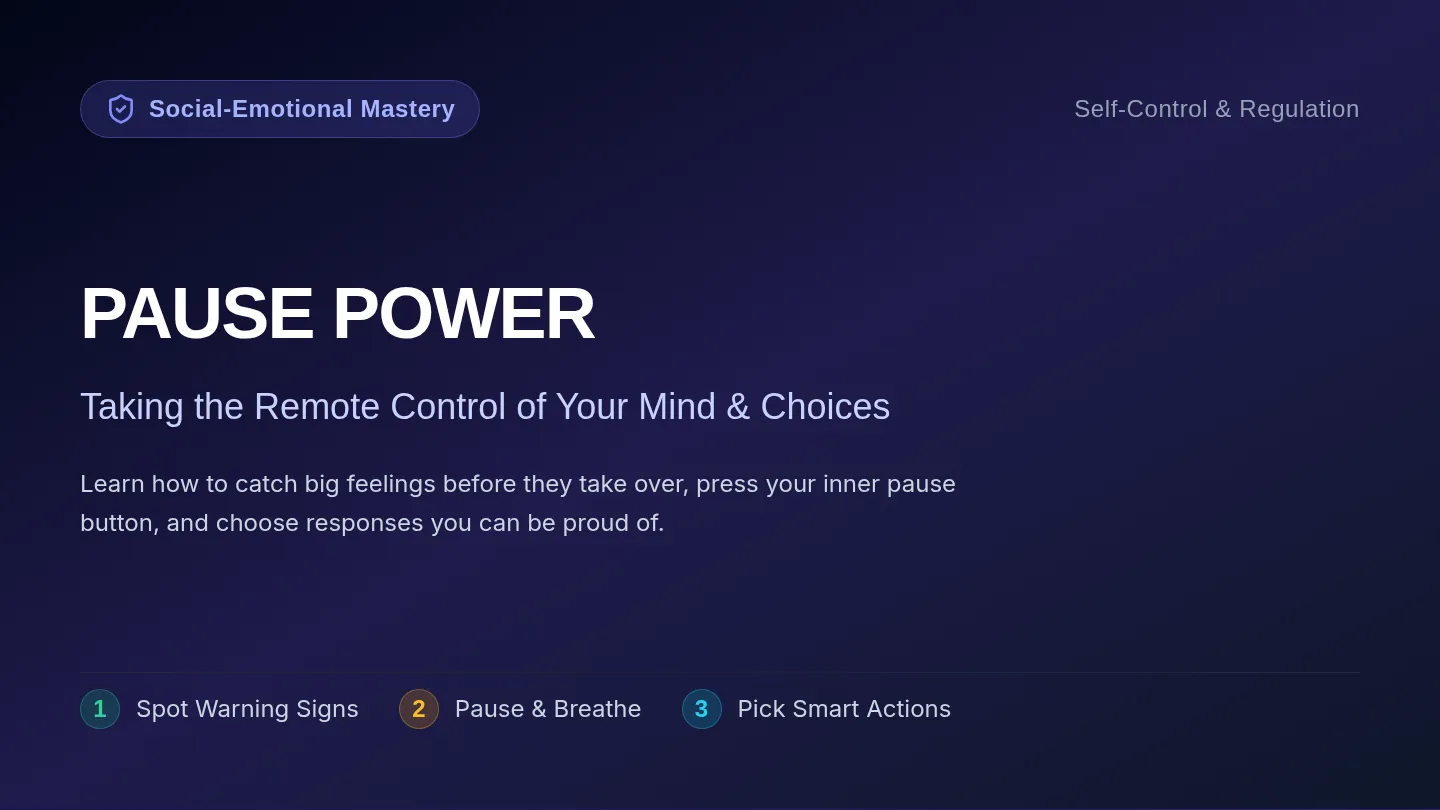
Charting your inner landscape to master your emotions.
Navigating Your Day
What's Your Vibe?
Ever feel different emotions throughout the day?
Happy in the morning, tired by afternoon?
Excited by evening or calm at night?
Today, we become Mood Detectives!
Detecting patterns helps us stay in control.
Slide 01
Why Map Your Mood?
Spot Patterns
Notice when certain feelings pop up and how long they last.
Identify Triggers
Figure out what people, places, or events spark your emotions.
Self-Regulation
Learn to manage your big emotions before they manage you.
Plan Ahead
Prepare for tough moments and maximize the good ones.
Your Mood, Your Map
"Ready to become an emotion explorer?"
We'll use a special chart to track our feelings.
It's a personal tool, just for you!
No right or wrong answers—only honest observations.
Daily Mood Map Chart Worksheet Daily Mood Map
Weekly Tracker & Pattern Finder
Name:
Week Of:
How to Navigate:
Fill out this chart daily or whenever you notice your mood shift. Be honest—there are no "bad" feelings on this map! Use a scale of 1 (Low/Negative) to 5 (High/Positive) .
| Date & Time | Rating
The more you track, the better you'll navigate.
Reflection Prompts Journal Mood Reflections
Inner Landscape Survey
"Now that you've tracked your moods, let's look at the map you've created. Patterns tell a story about how you interact with the world around you."
1
Observing Your Patterns
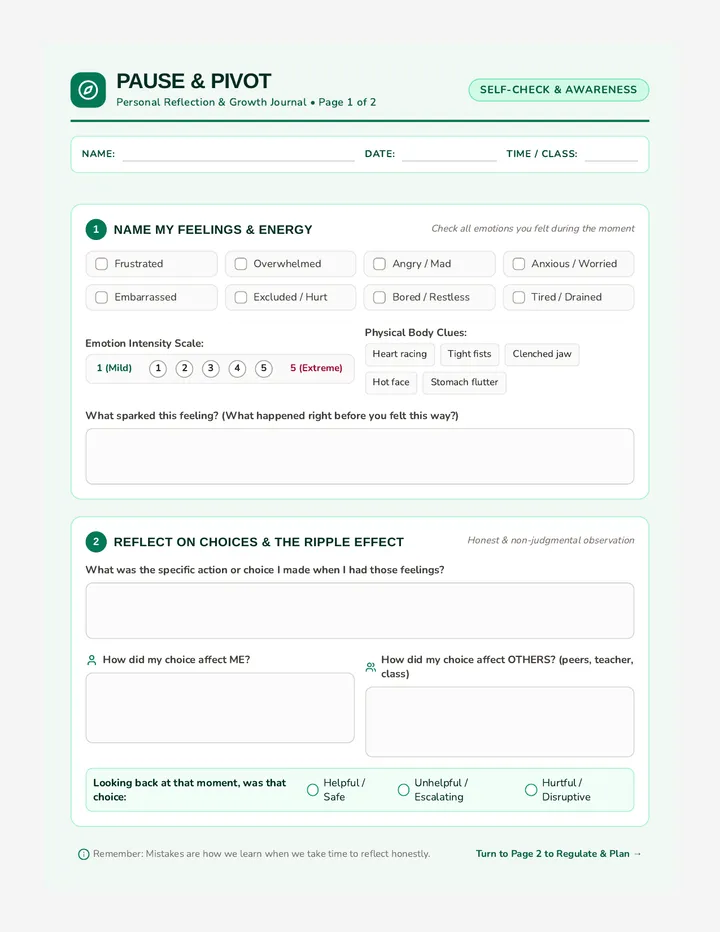
1. Looking at your Daily Mood Map Chart, what were some common moods you experienced? Were there any surprises?
2. Did you notice any patterns in your moods? (e.g., more energetic in mornings, tired after school, different on weekends?)
3. Were there specific activities, people, or thoughts that consistently led to certain moods? These are your "Triggers." List them here:
2
Strategies & Self-Regulation
4. When you had challenging moods (frustration, sadness, anxiety), what strategies did you use? Were they effective?
5. What helped you maintain or boost positive moods? What were you doing when you felt your best?
6. Based on your map, what is one NEW strategy you could try to better manage your emotions next week?
3
Looking Forward
7. How can being aware of these patterns help you in your daily life, both inside and outside of school?