Lenny.com
Explore
Create
ActivitiesNewMathEnglish Language ArtsScience & EngineeringSocial StudiesGlobal LanguagesHealth & Physical EducationSpecial EducationCounseling & Life SkillsArts & CreativityESL
Lenny.com
Lenny.com
Explore
Create
ActivitiesNewMathEnglish Language ArtsScience & EngineeringSocial StudiesGlobal LanguagesHealth & Physical EducationSpecial EducationCounseling & Life SkillsArts & CreativityESL
Lenny.com
Lenny.com

Solutions

Lenny for EducatorsLenny for SchoolsLenny for Districts

Product

ExploreSign inCreateSupportAbout

Resources

Getting startedMTSS Acceleration Program

© 2026 Lenny Learning Inc.

TermsPrivacyAccessibility
LinkedInInstagramX
Lenny
Counseling & Life SkillsSelf-AwarenessBasic Emotion RecognitionComplex Emotion IdentificationEmotional Nuance & Mixed FeelingsBuilding Positive Self-ImageRecognizing Strengths & Growth AreasAccurate Self-AssessmentPersonal Values IdentificationCultural & Individual Identity ExplorationValues-Based Decision MakingSelf-ManagementStop-and-Think StrategiesDelaying GratificationIndependent Impulse ManagementIdentifying Stress TriggersShort-Term Goal SettingSMART Goals DevelopmentGoal Monitoring & AdjustmentBuilding Perseverance & ResilienceInternal Motivation DevelopmentComprehensive Stress Reduction PlanningSocial AwarenessRecognizing Others' FeelingsDemonstrating EmpathyRespecting Individual DifferencesUnderstanding Cultural DiversityComplex Empathetic ResponsesMultiple Viewpoint ConsiderationMulti-Perspective AnalysisChallenging Stereotypes & BiasRelationship SkillsActive ListeningClear Verbal & Nonverbal CommunicationBuilding Positive FriendshipsWorking Cooperatively in GroupsCommunicating Personal BoundariesRespecting Others' BoundariesAssertive ExpressionPeaceful Problem-SolvingContributing to Team GoalsComplex Conflict NavigationMediation & NegotiationHealthy Romantic RelationshipsResponsible Decision-MakingDaily Problem IdentificationBrainstorming Multiple SolutionsEvaluating Pros & ConsRecognizing Risks & ConsequencesApplying Ethical FrameworksInformed Risk-Benefit DecisionsRoot Cause AnalysisMindfulnessMindful BreathingBody Scan MeditationDaily Mindfulness ApplicationDaily Self-Care RoutinesBalancing Life DemandsAdvocating for Wellness NeedsMental Health SupportUnderstanding Anxiety SymptomsWorry Management StrategiesProgressive Muscle RelaxationRecognizing Depression SignsBuilding Mood-Supporting RoutinesBehavioral Activation for MoodUnderstanding Grief StagesHealthy Grief CopingCreative Expression of LossBehavioral SupportDaily Check-In ProceduresDaily Goal Setting & ReviewRecognizing Escalation Warning SignsRequesting Breaks & SupportSelf-Calming During DistressUnderstanding Positive ReinforcementToken Economy ImplementationBehavior Chart TrackingAnalyzing Behavior PatternsIdentifying Antecedents & ConsequencesDetermining Behavior FunctionFunction-Based InterventionsIndividualized Behavior ContractsData-Driven Behavior AdjustmentTherapeutic ApproachesThoughts-Feelings-Behaviors ConnectionRecognizing Thinking PatternsChallenging Negative ThoughtsPositive Self-Talk PracticeThought Record TrackingAdvanced Cognitive RestructuringComprehensive CBT PlansBehavioral Activation TechniquesBuilding Positive ExperiencesExposure Hierarchies for AnxietyPresent-Moment AwarenessNon-Judgmental ObservationSelf-Soothing & DistractionComplex Emotion LabelingReducing Emotional Vulnerability (PLEASE)DEAR MAN CommunicationGIVE Skills for RelationshipsFAST Skills for Self-RespectRadical Acceptance PracticeCrisis Survival Skills (TIPP)Understanding Trauma EffectsTrauma Responses & TriggersIdentifying Trauma FeelingsGrounding TechniquesRegulation During Trauma DistressSafe Place VisualizationProcessing Through NarrativeDeveloping Trauma StoryPersonalized Safety PlanningGroup SupportTurn-Taking & SharingGroup Conversation SkillsSharing in Supportive EnvironmentLearning from Similar ChallengesBuilding Community & BelongingNavigating Peer RelationshipsGroup Skill PracticeGroup Mental Health EducationStress & Anxiety UnderstandingCrisis Support & SafetyKnowing When to Seek HelpIdentifying Mental Health CrisesGrounding During CrisisUsing Crisis HotlinesBuilding Support NetworksAccessing Mental Health ResourcesWarning Signs & Coping StrategiesDeveloping Personal Safety PlansUnderstanding Suicide Warning SignsGatekeeper Skills for PeersDigital LiteracySocial MediaTechnology BasicsProductivity ToolsInternet and Online ResearchWeb Design and PublishingDigital CitizenshipOnline Safety and PrivacyEmerging TechnologiesFinancial LiteracyMaking Financial DecisionsBanking and AccountsConsumer SkillsSaving and InvestingCredit and DebtEmployment and IncomeTaxesInsuranceMajor PurchasesEconomic ConceptsFinancial PlanningCollege & Post-Secondary PlanningCareer ExplorationUnderstanding Post-Secondary OptionsCollege Research & SelectionAdmission RequirementsCollege Application ProcessPersonal Statement WritingFAFSA CompletionScholarship Search & ApplicationsUnderstanding Student LoansContinuing Education PlanningInterview PreparationResearching EmployersCommon Interview QuestionsSTAR Method ResponsesProfessional Interview PresenceVirtual Interview SkillsInterview Follow-UpJob Search SkillsUnderstanding Job PostingsEffective Job Search StrategiesNetworking for OpportunitiesResume Writing BasicsAction Verbs & AchievementsTailoring Resumes to JobsCover Letter WritingProfessional ReferencesProfessional CommunicationBusiness Email EtiquettePhone & Voicemail ProfessionalismMeeting ParticipationPresentation SkillsProfessional Work EthicTime Management & ProductivityTeamwork & CollaborationAdaptability & FlexibilityProblem-Solving at WorkConstructive FeedbackWorkplace RightsUnderstanding Employment LawsPay & Benefits UnderstandingWorkplace SafetyAnti-Discrimination & Harassment

Restorative Pause

A comprehensive social-emotional learning and restorative practices lesson for middle school students (grades 6-8). Students investigate how the nervous system reacts to interpersonal conflict, decode the hidden emotional needs beneath anger, and master a four-step restorative dialogue protocol to de-escalate tension in real time.

JRJessica Roberson

Two sharp inhales through nose, slow long sigh out mouth.

Triggers vagus nerve, slowing pulse.

3

State Need

Replace blame with your true vulnerability and need.

"I felt excluded from the plan."

4

Offer Bridge

Ask a collaborative question to build a fair path forward.

"Can we split tasks equally now?"

Power move: A pause is not surrender. It is self-control in action.


Script Comparison

Scenario: "You stole my turn on the court!"

Trap Reaction (Escalation)

"You're a selfish jerk! You never pass!"

• Shouting escalates physical tension in both people.

• Brain enters defense mode; listening shuts down.

• Result: Disciplinary referral, broken trust.

Restorative Pause (De-Escalation)

"Hold on—I need a breath. I'm feeling ignored."

• Pauses the escalation loop immediately.

• Names the unmet need: Fairness and inclusion.

• Proposes next play: "Can we rotate shooting order next round?"

Notice how the Restorative Pause keeps dignity intact while solving the actual issue.


Simulation Protocol

Next Step

Your Turn: Partner Fishbowl & Scripting

Role A

Presents the conflict trigger with moderate intensity.

Role B

Applies the 4-step Restorative Pause and decodes the need.

Observer

Times the pause and tracks body language on the rubric.

Grab your Conflict Decoder Worksheet and prepare for Round 1! Dignity First • Always

Step 1: Your exact "Signal & Stop" verbal phrase:

Step 2: Somatic Reset Action (What will you physically do for 5 seconds?):

Step 3: State your feeling and underlying need (No insults allowed!):

Step 4: Your restorative bridge question or proposal:

My De-Escalation Commitment Contract

Complete your personal pause protocol to use in the hallway, cafeteria, or online:

1. The physical signal I will pay attention to first is:

2. When I feel that signal, my default pause phrase will be:

3. A core need I value most during disagreements is (e.g. respect, clarity, privacy):

Conflict Decoder Worksheet • Grade 6–8 SEL Page 2 of 2

Setup: Sam bumps hard into Maya outside the gym and snarls: "Watch where you're walking, or do you need glasses on your phone too?" Maya hears students behind them snicker.

Maya's Restorative Prompt: Notice the ear-burn and fist clench. Signal the stop: "Whoa, hold up—let's pause before this goes sideways." Take the breath.

Unmet Need to Articulate: Respect & Physical Safety ("I feel startled and embarrassed. I need us to speak without insults.")

Bridge Proposal: "We both have 3 minutes to get to class. Can we just walk in peace?"

3 Scenario 3: The Group Chat Screenshot Leak Roles: Alex & Chris

Setup: Alex finds out Chris screenshotted a private vent from their direct message and sent it to a larger group chat without permission.

Alex's Restorative Prompt: Instead of sending 20 angry ALL-CAPS rage texts, Alex calls for an in-person pause at lockers: "Hey Chris, I need 60 seconds with you one-on-one."

Unmet Need to Articulate: Trust & Privacy ("I feel betrayed because I trusted you with private thoughts.")

Bridge Proposal: "I need you to delete that screenshot and confirm you won't forward private messages again. Can we agree to that?"

Peer Observer Checklist (Observer Role in Triad)

Rate your peers on each criterion

Skill ObservedMastered (2)Developing (1)Missing (0)
Verbal Signal & Freeze: Called a clear pause without mockery or storming off.
Physiological Sigh / Reset: Visibly took deep reset breaths, unclenched body.
Named Unmet Need: Said "I feel __ because I need __" without blaming insults.
Dignity-Saving Bridge: Offered a realistic, mutual compromise proposal.

Observer Feedback & Compliment to Partner:

De-Escalation Dialogue Roleplay Script Page 2 of 2
You might also like

Initiation Hurdles Slides

Execution Lab

An executive functioning and work completion curriculum designed specifically for gifted middle schoolers. Students learn cognitive strategies to dismantle perfectionism paralysis, accurately pace multi-phase projects, and conquer the final submission hurdle.

MB

Michele Berning

6
Finish Line Slides

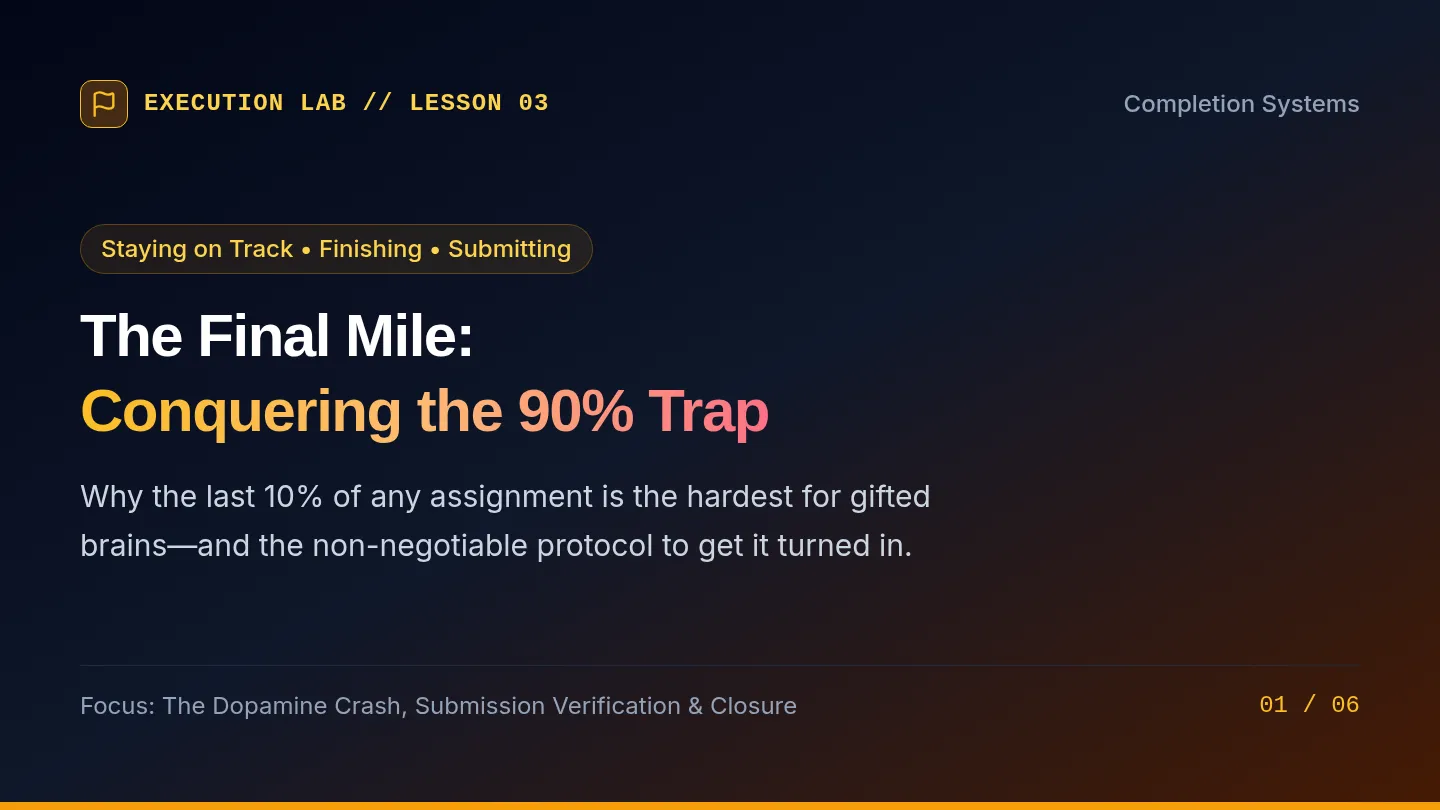
The Final Mile

Students analyze the psychological drop-off that occurs once a concept is understood, overcoming the 90% trap. Students implement verification checklists, anti-distraction intervals, and a definitive submission protocol to reliably turn in completed work.

MB

Michele Berning

2
Friendship Recipe Worksheet

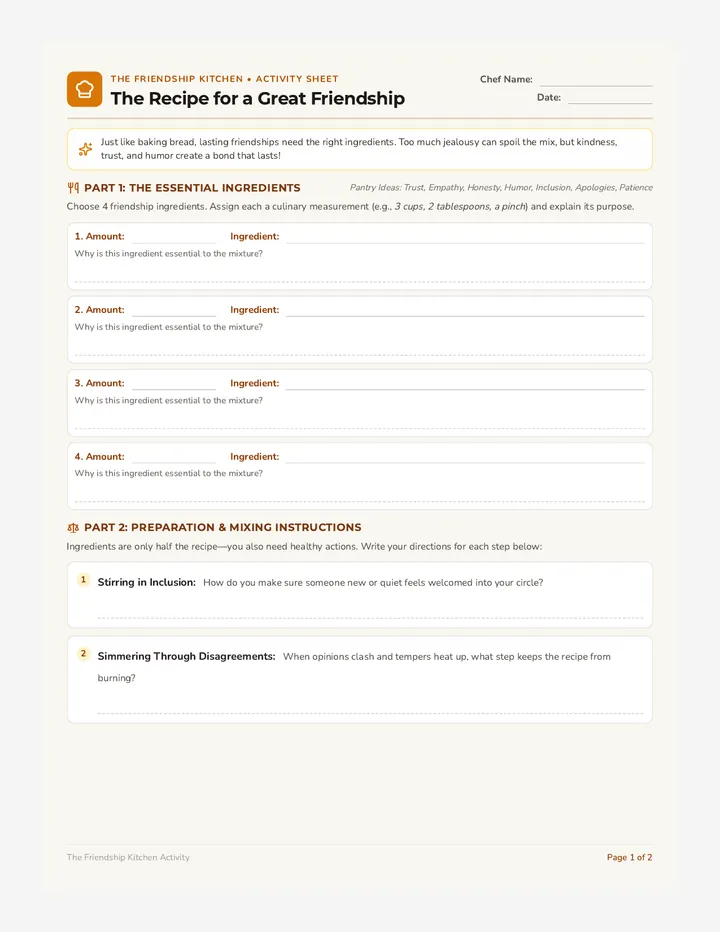
Friendship Recipe Worksheet

An upper-elementary recipe-themed friendship worksheet guiding students through identifying core friendship ingredients, writing mixing steps for resolving conflicts and including peers, and troubleshooting realistic friendship dilemmas.

SM

Shifra Maazari

Launch Ignition Slides

Spark to Finish

A structured multi-day sequence designed to build executive function routines, overcome task initiation friction, sustain momentum through completion, and cultivate self-confidence.

MB

Michele Berning

9
Project Deconstruction Slides

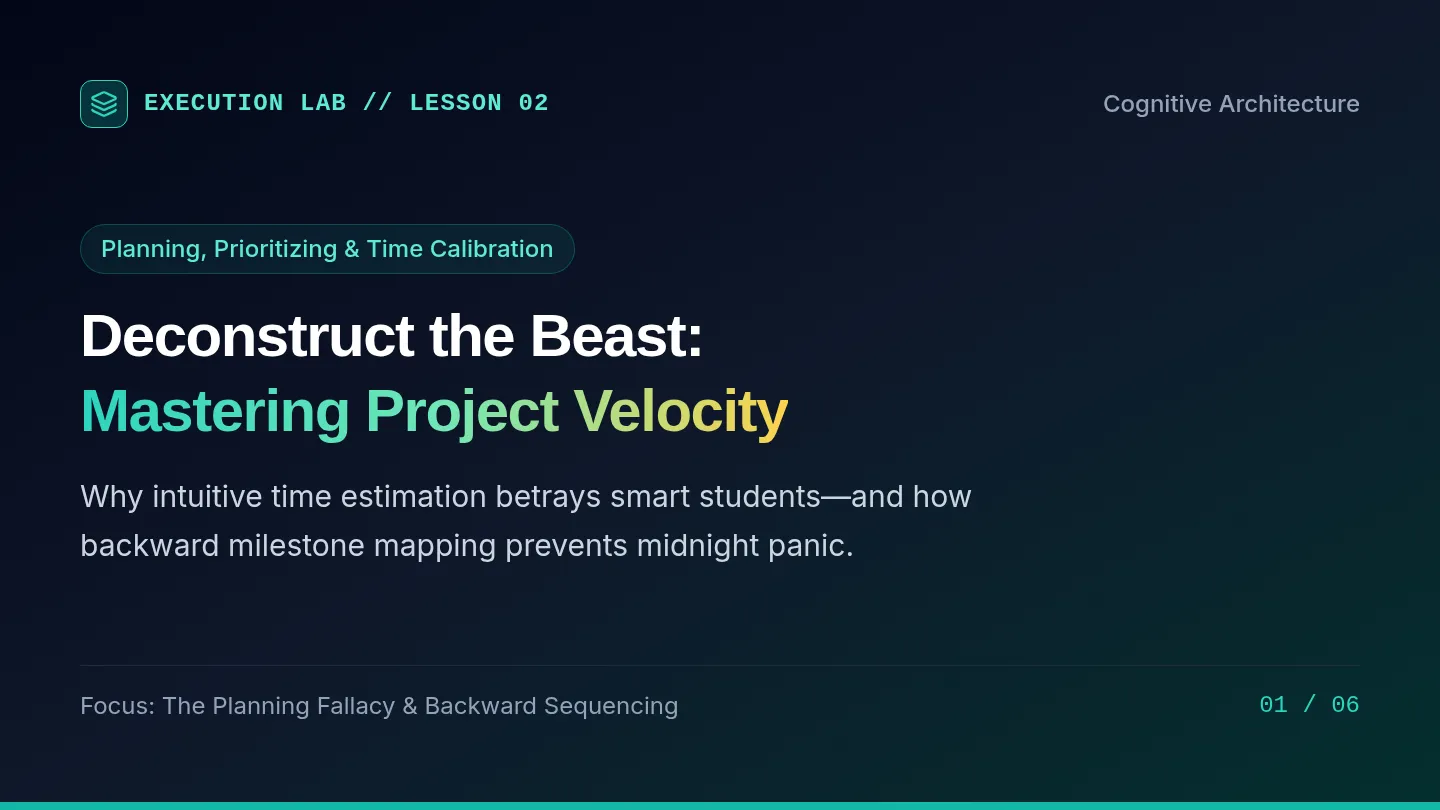
Deconstruct the Beast

Students investigate the planning fallacy and learn why intuitive estimations often fail during complex projects. Through project deconstruction, time buffers, and dependency mapping, students turn nebulous assignments into structured micro-targets.

MB

Michele Berning

2
B Day Blast Poster

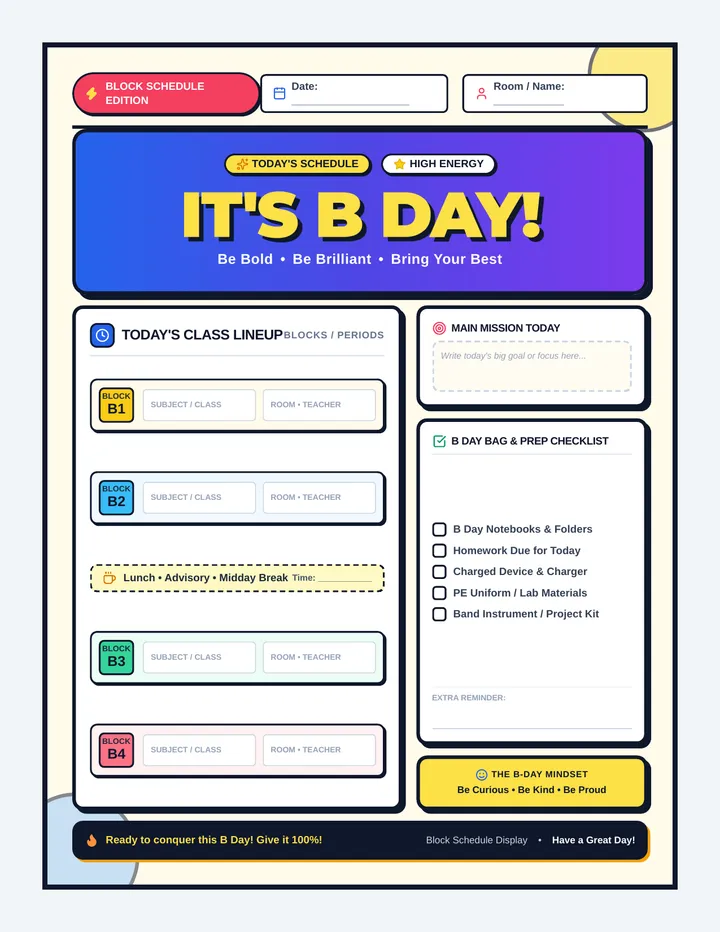
B Day Blast Poster

An energetic and vibrant classroom poster and daily planner announcing B Day, featuring block schedule slots, daily focus areas, and checklists.

EH

Emily Hendrickson

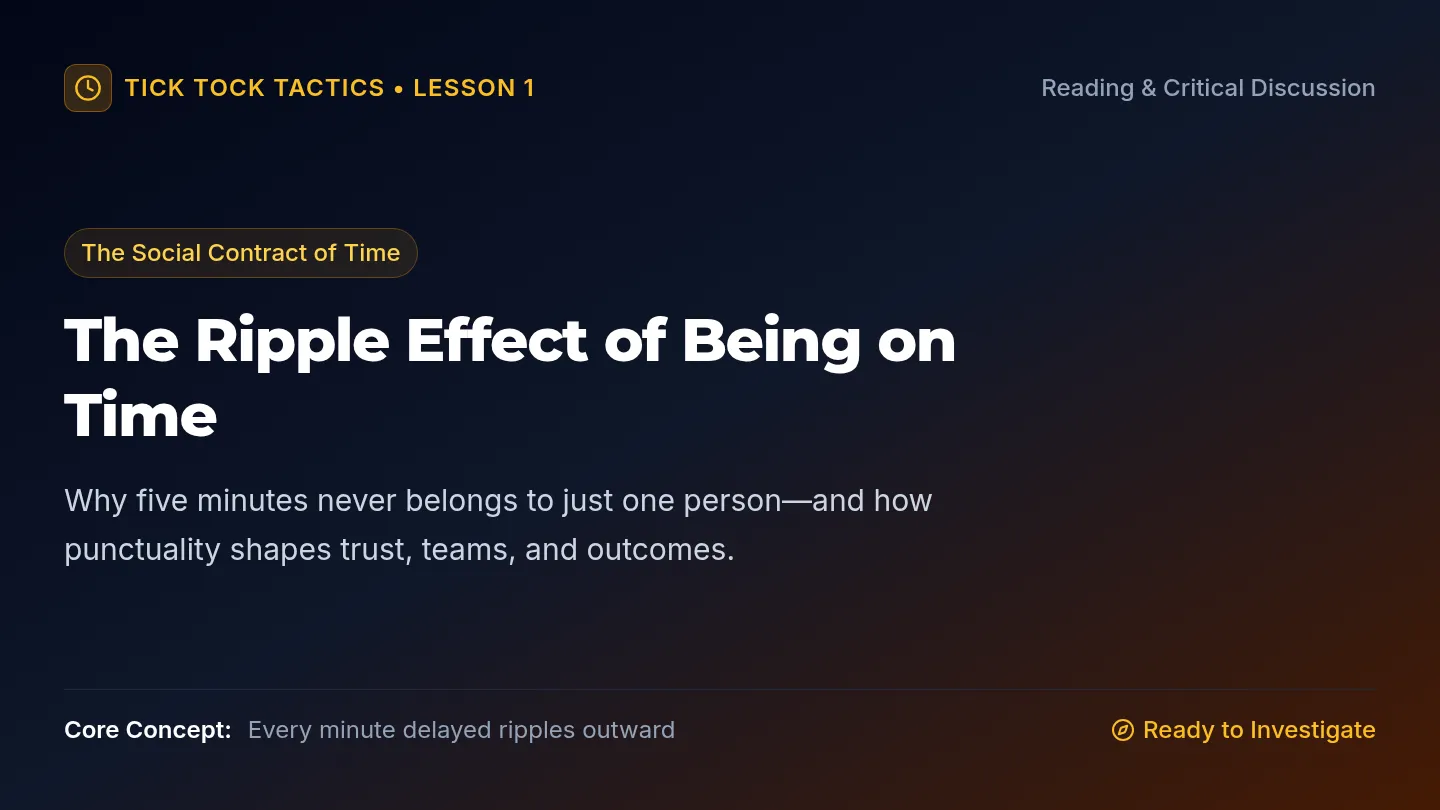
Ripple Effect Slides

Tick Tock Tactics

A three-part instructional sequence exploring punctuality, executive functioning, time perception, and the social ripples of being on time through engaging readings, structured reflections, and practical toolkits.

S

scorona

9
Initiation Hurdles Slides

Spark the Start

Students unpack the neuroscience of task initiation, analyze how perfectionism and cognitive boredom cause avoidance, and master the 5-Minute Launchpad method. Hands-on exercises guide students to lower starting barriers and activate immediate momentum.

MB

Michele Berning

2
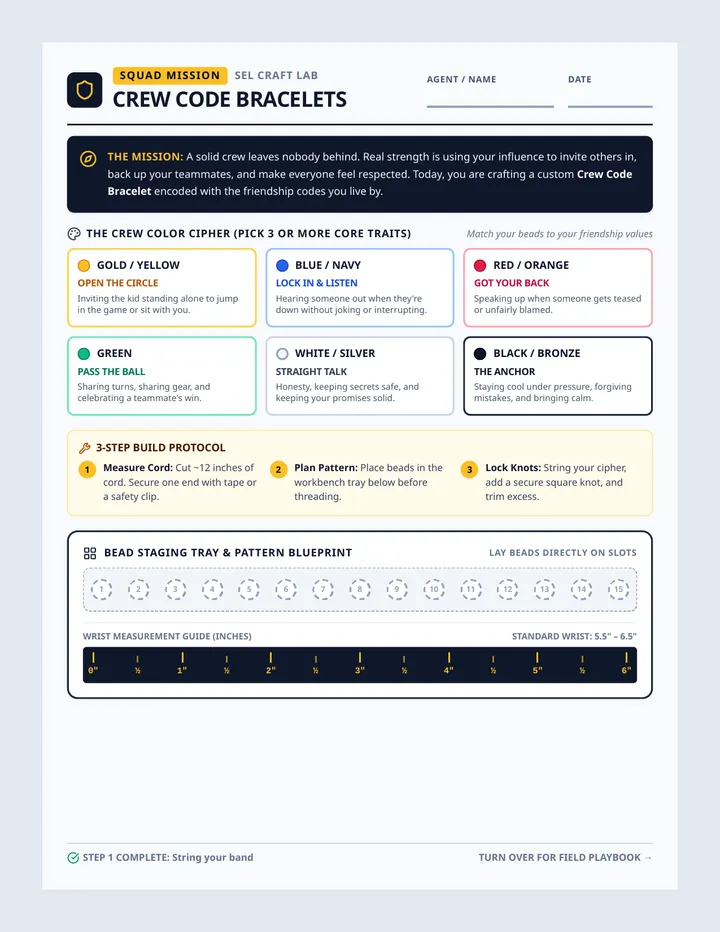
Crew Code Activity Mat

Crew Code Activity Mat

A hands-on friendship and inclusion bracelet crafting activity designed for boys' small groups. Features a friendship code color cipher, bead planning workbench, real-world inclusion scenarios, and a squad exchange pledge tag.

MF

Melissa Fitzgerald

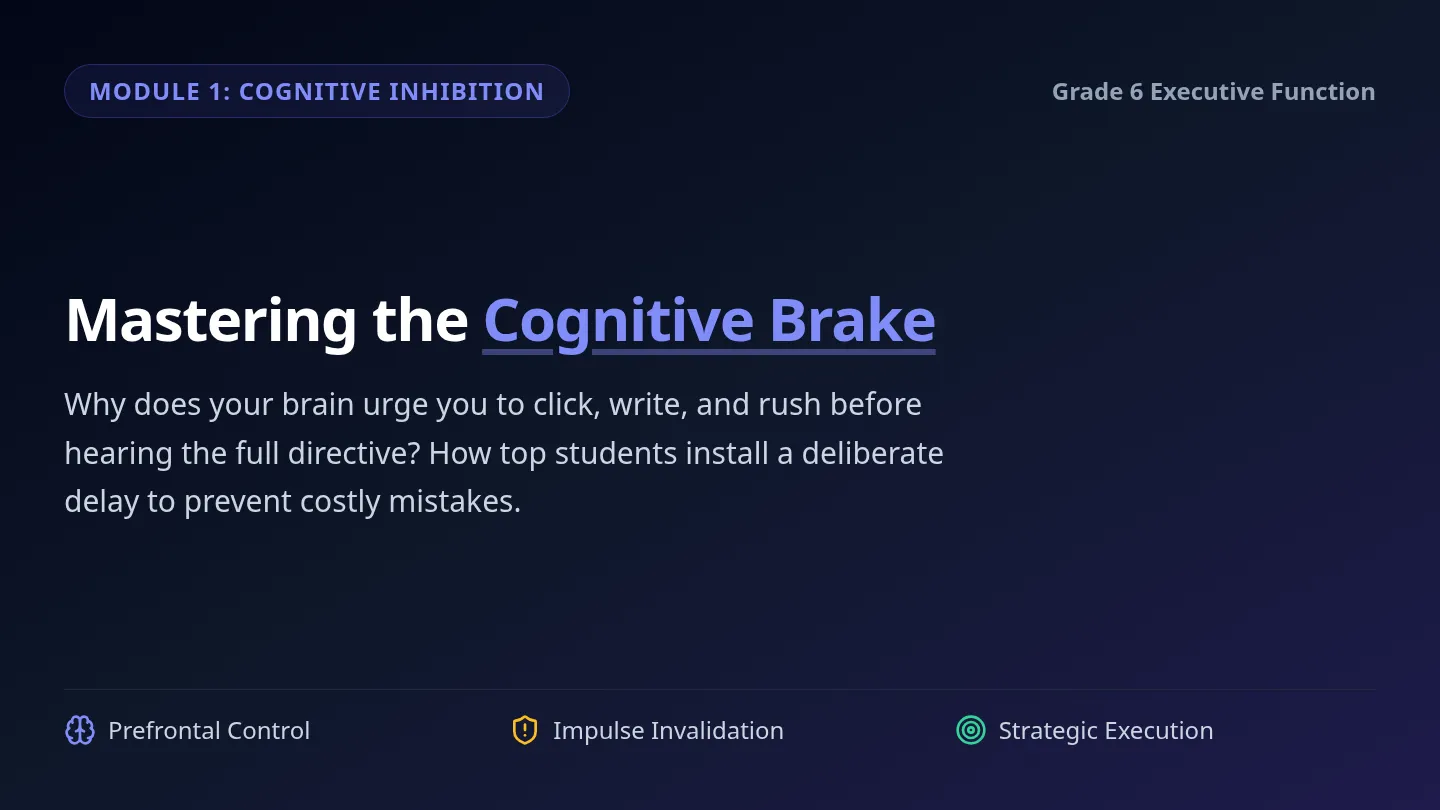
Hit the Brakes Slides

Pause and Power Up

A targeted 5-part executive functioning sequence designed for 6th graders navigating the cognitive demands of middle school. Students master cognitive inhibition, auditory attention, multi-step task decomposition, and working memory strategies to achieve autonomous classroom execution.

K

kiana.james

10
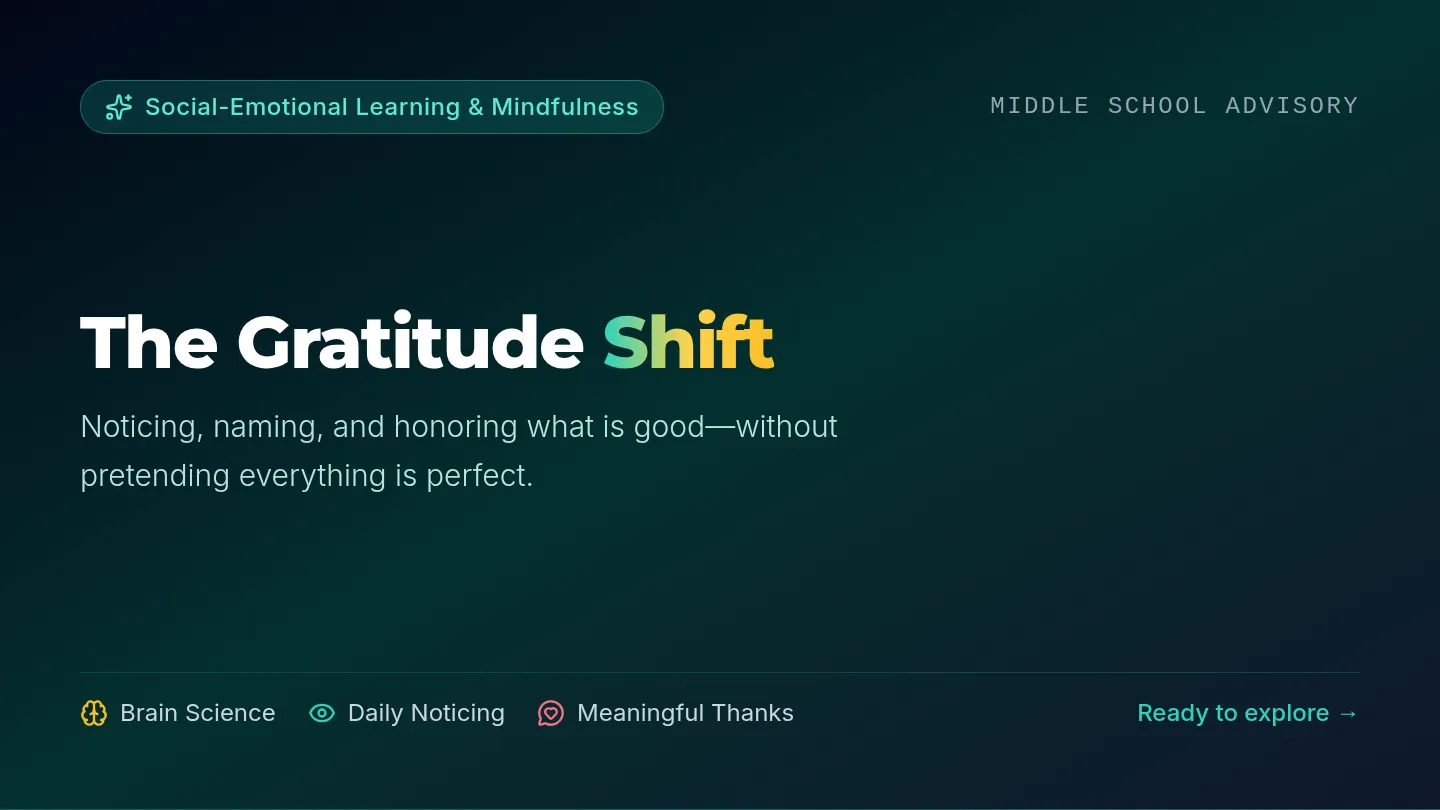
Gratitude Shift Slides

The Gratitude Shift

An engaging middle school lesson exploring authentic gratitude, mental well-being, everyday appreciation, and sincere communication without toxic positivity.

SW

Sarah Whiteside

2
Launch Checklist Handout

Launch Checklist Handout

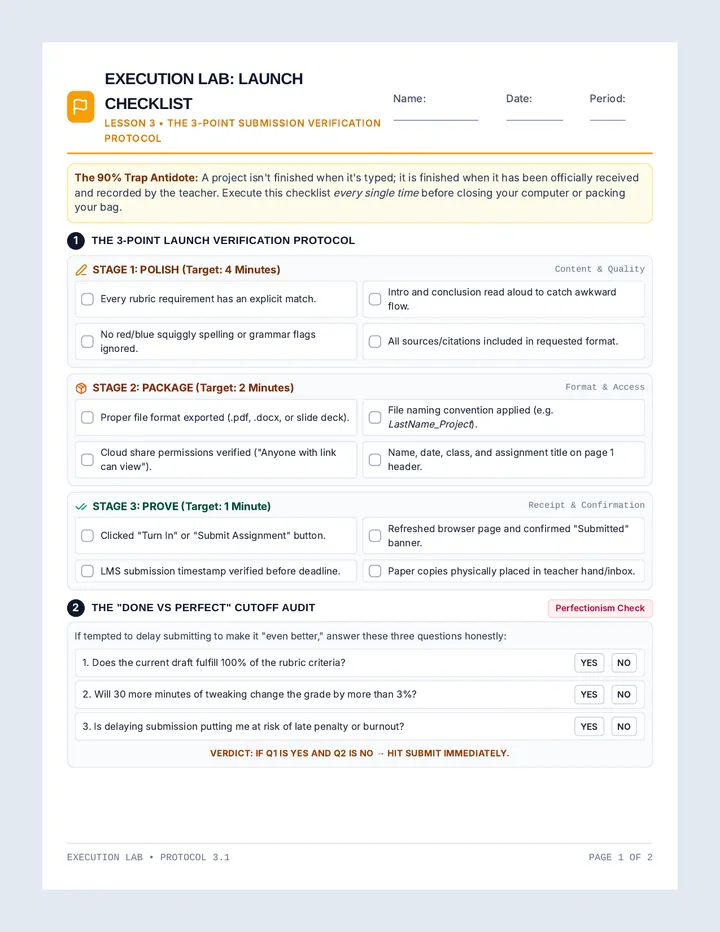
A two-page student verification checklist and submission log that defeats the 90% trap with the 3-point launch protocol, ghost assignment prevention, and a submission confirmation log.

MB

Michele Berning