Problem Solving Circle Lesson Plan
Circle of Friends
Lesson Plan: Problem-Solving Circle
Kindergarten
Time
30 Minutes
Objective
Develop empathy & collaborative skills
Approach
Peer Support Circle
Why This Lesson?
In this lesson, kindergarten students will participate in a 'Problem-Solving Circle' where they will take turns sharing problems and offering advice. This activity helps young students develop empathy, communication, and collaborative problem-solving skills essential for their social and emotional development.
What You'll Need
- Circle Talk Discussion Guide
- Soft Ball or "Talking Stick"
- Circle Support Slides (Optional)
- Comfortable Rug or Circle Space
Step-by-Step Instructions
1
Introduction (5 mins)
- Gather students in a circle on the floor, ensuring everyone can see each other's faces.
- Explain the purpose: "Today, we are going to be helpers! We will share problems and help each other find solutions."
- Introduce the "talking stick" or soft ball. Explain that only the person holding it may speak while everyone else uses their "listening ears."
2
Problem-Solving Circle (20 mins)
- Teacher Lead: Model the behavior by holding the stick first. Share a simple, relatable problem (e.g., "I sometimes feel sad when it's rainy outside because we can't go to the park.").
- Pass the stick to the next student. If they don't have a problem to share, they can pass it or you can prompt them (e.g., "Have you ever had a hard time sharing a toy?").
- Peer Support: After a student shares, invite the group: "Who has a kind idea to help our friend?"
- Continue around the circle, ensuring each student has a chance to speak or offer a "thumbs up" of support.
3
Closure (5 mins)
- Conclude by thanking everyone for being brave and kind.
- Ask: "How did it feel when your friends tried to help you?" or "How did it feel to help someone else?"
- Reinforce: We are a team, and we always support one another.
Pro Tips for Success
If a student shares a very serious problem, thank them for sharing and let them know you will talk more with them privately after the circle. Keep the group focus on everyday challenges like sharing, making friends, or missing home.
Circle Talk Discussion Guide
Facilitator Resource
Circle Talk Guide
Use these prompts to guide your students through a kind and helpful Problem-Solving Circle.
Note: Give students "wait time" to think. Kindergarteners often need 5-10 seconds to find the words to describe their feelings or ideas.
1
What is a problem you have faced recently?
Encourage students to think about simple, everyday problems they might encounter. Use the examples below to prompt them if they are stuck.
"I wanted to play with the blocks, but someone else had them all."
"I felt lonely at recess because I didn't know who to play with."
Observations & Notes
2
How did it feel to share your problem?
Discuss the emotions involved in sharing personal experiences. Helping students name their feelings is a key part of SEL.
Brave A little nervous Relieved Happy to be heard
Student Responses
3
What advice or solutions were helpful?
Highlight the importance of listening and considering different perspectives. Help them recognize the value of peer support.
Encourage Helpful Phrases:
"Maybe you could try...", "What if you said...", "Next time, you could..."
Effective Solutions Found
Circle Support Slides
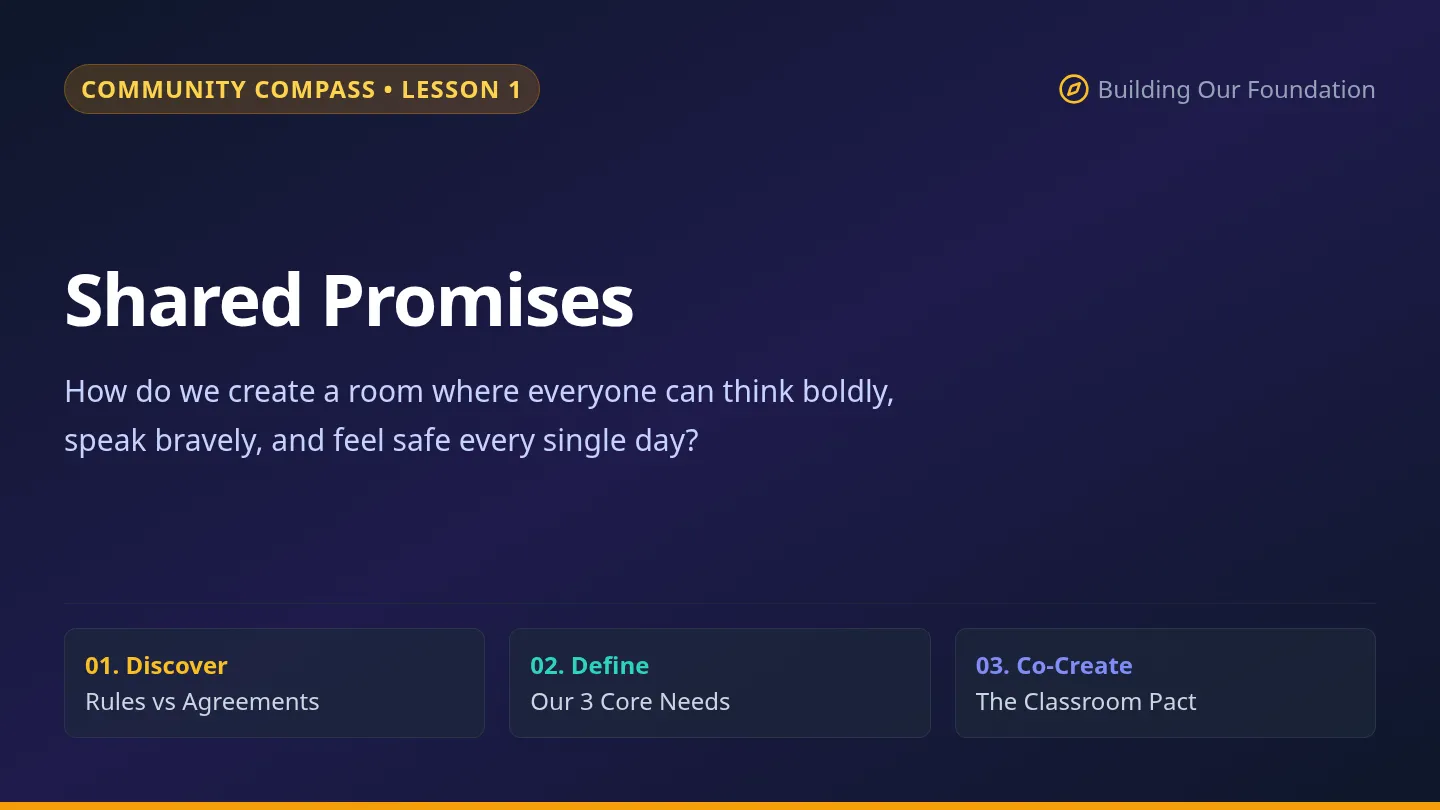
Problem Solving Circle
Helping our friends, one solution at a time!
Our Circle Rules
Listening Ears
We listen with our whole bodies when a friend is speaking.
Kind Hearts
We use kind words and helpful ideas for our friends.
The Talking Stick
-
1
Holding the stick? It's your turn to talk!
-
2
Not holding it? It's your turn to listen.
-
3
Pass it gently when you are finished.
What is a problem?
A problem is something that makes us feel sad, worried, or stuck.
"I'm feeling sad today because..."
How can we help?
Listen to your friend's problem and think: "What is one kind thing they could try?"
"Try sharing..."
"Ask for a turn..."
"Take a deep breath..."
Great Job, Problem-Solvers!
How does it feel to help each other?