Facilitate peer-led support circles, where students in grades 7-12 have the chance to discuss personal challenges in a structured and supportive environment. This lesson enhances communication skills and builds supportive student networks.
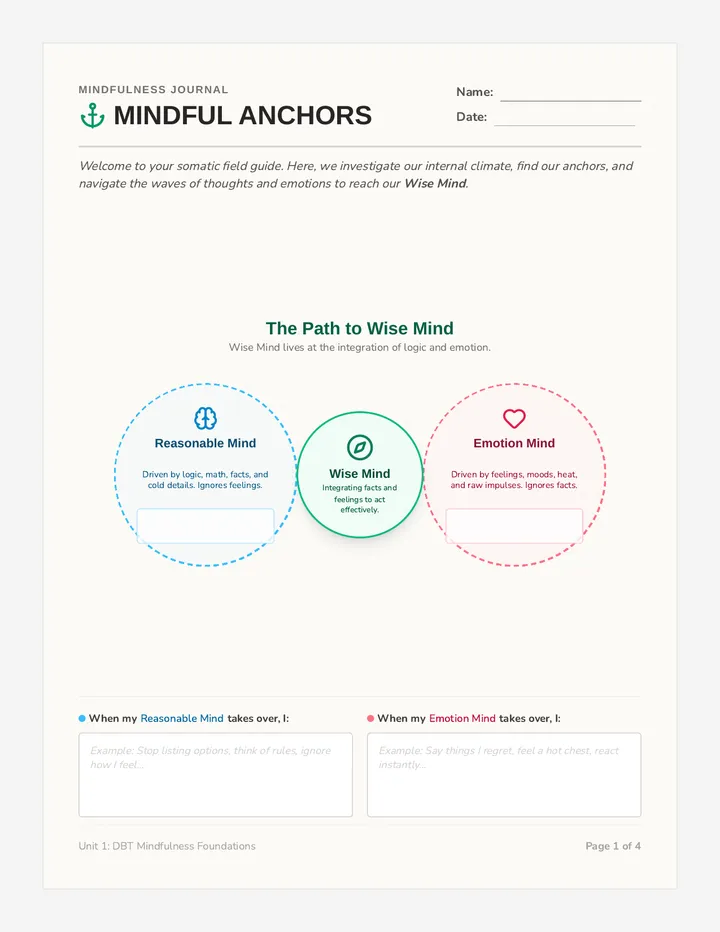
A comprehensive unit on Dialectical Behavior Therapy (DBT) mindfulness skills, taking students from somatic anchoring and cognitive understanding to collaborative, station-based performances that demonstrate 'What' and 'How' skills.
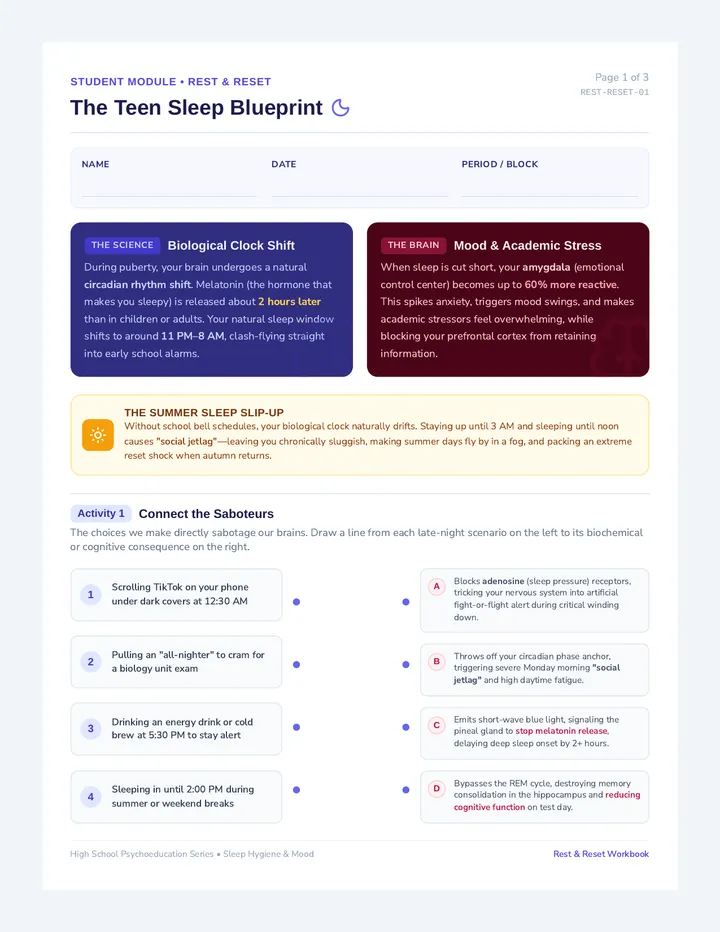
A high school psychoeducation lesson exploring the neuroscience of sleep, the impact of sleep deprivation on mood and academic stress, and practical strategies to build a personalized wind-down and sleep hygiene routine, including managing summer sleep disruptions.
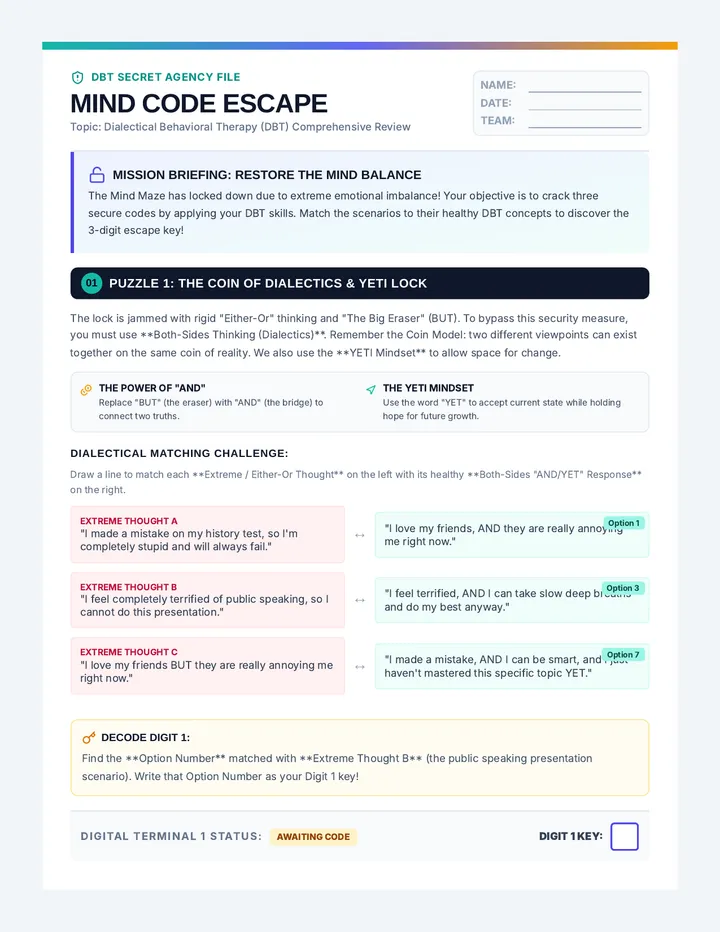
A hands-on sequence designed to empower teens with Dialectical Behavioral Therapy (DBT) concepts. Through engaging escape rooms, creative drama challenges, and real-life scenarios, students master dialectics and emotional regulation.
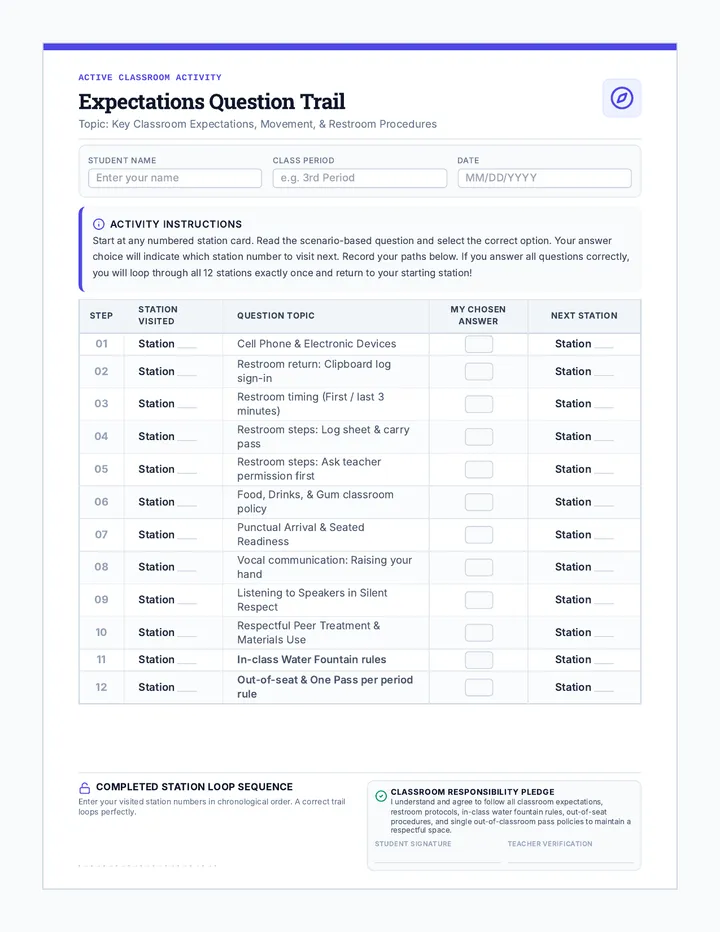
A standard classroom movement activity designed to teach students classroom expectations and restroom procedures through an interactive question trail. Students navigate numbered stations around the room, solving scenario-based multiple-choice questions to complete the trail.
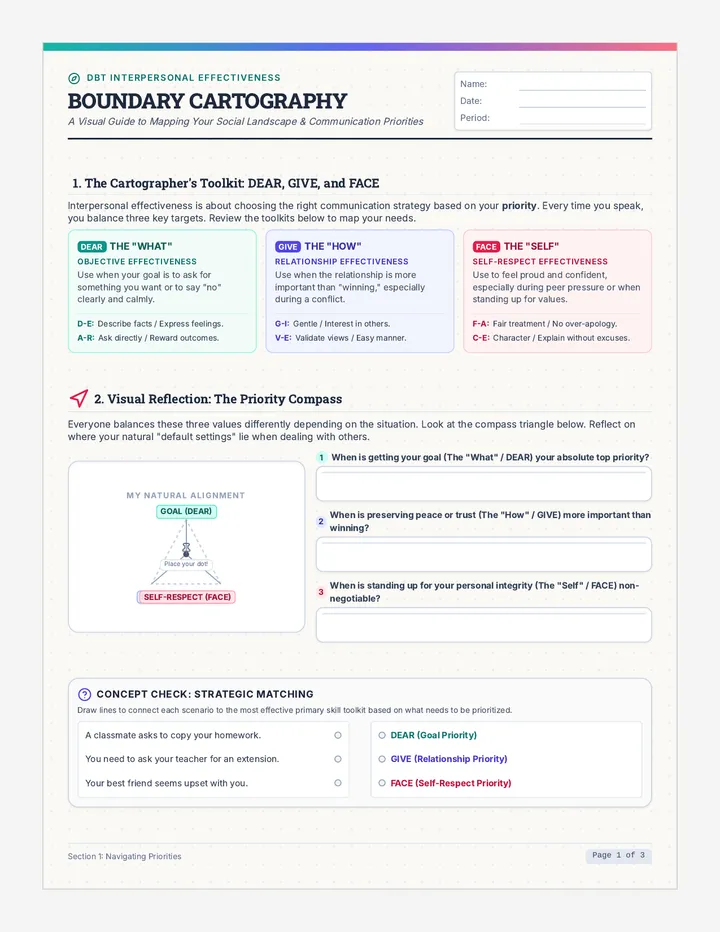
A DBT Interpersonal Effectiveness unit where students map relational boundaries, master communication skills, and engage in interactive, station-based roleplays to navigate teenage social dynamics.
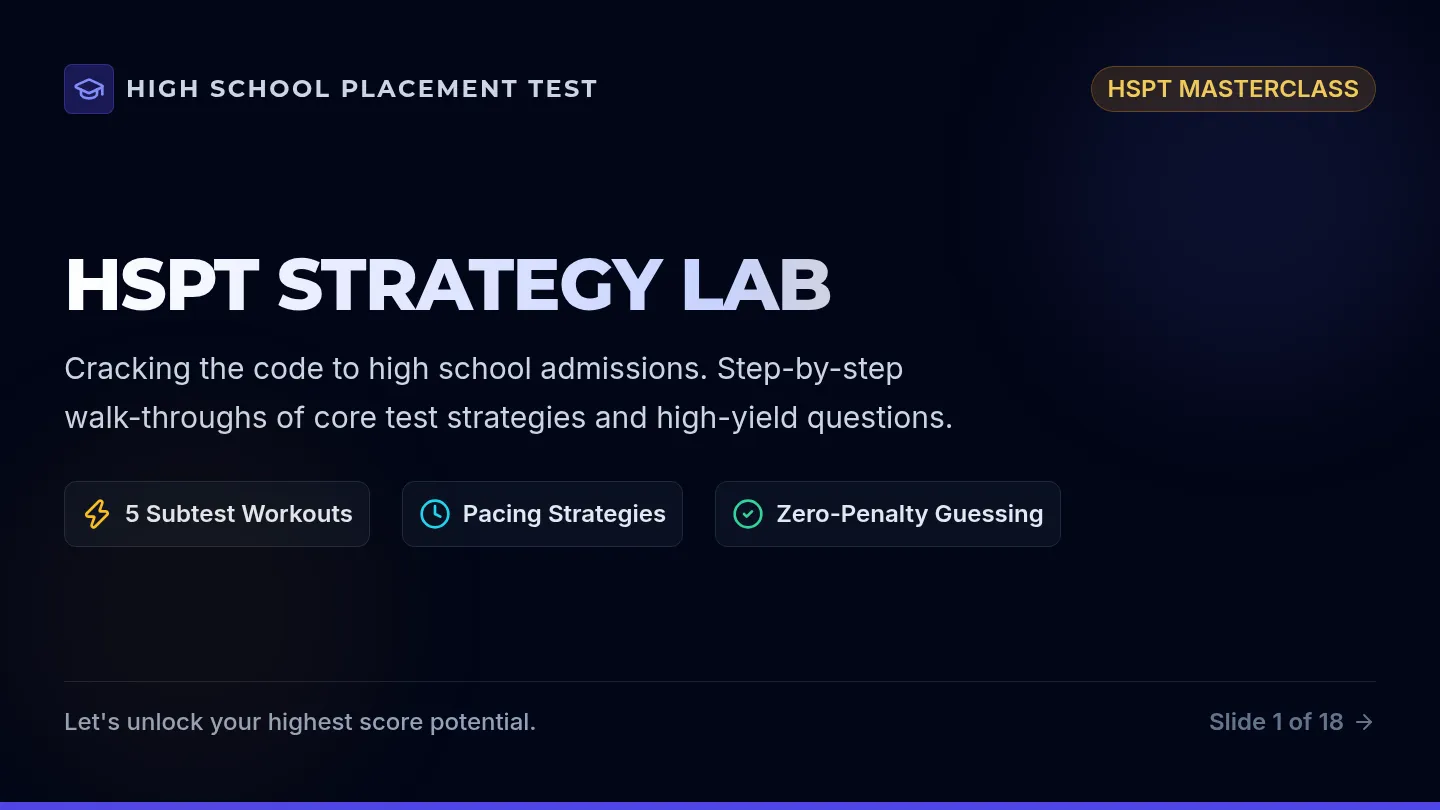
A comprehensive prep lab for the High School Placement Test (HSPT). Includes a high-impact, strategy-focused guided slideshow designed to walk students through each core subtest with practical practice challenges and breakdowns.
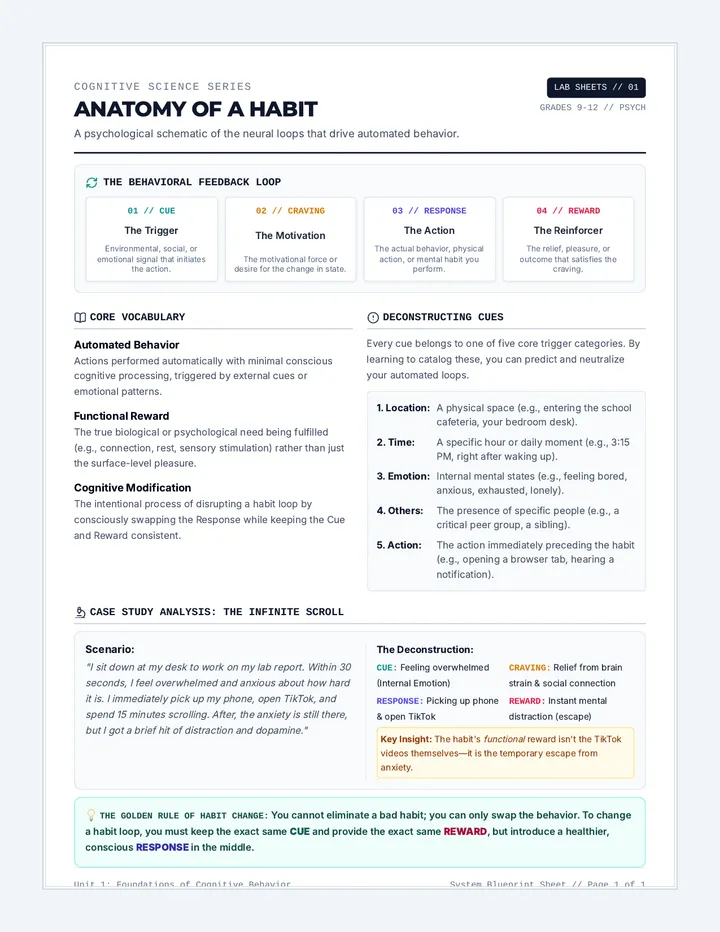
A three-part cognitive psychology series designed for Grades 9-12. Students learn the science of automation, explore how to isolate triggers and cravings, redesign unhelpful routines, and restructure their environments to make habit modification effortless.
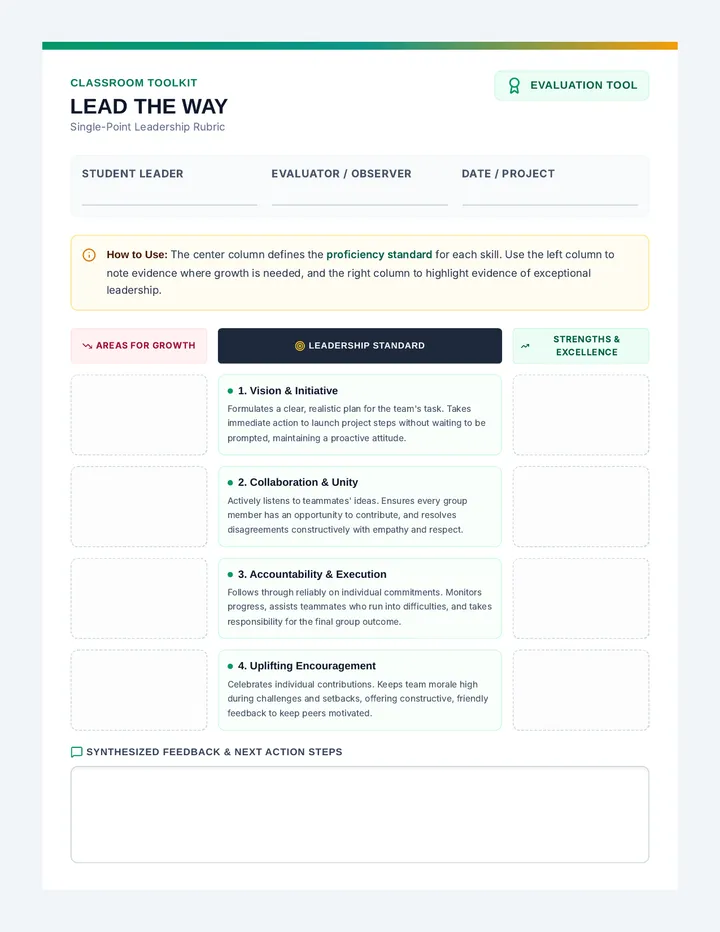
A classroom toolkit designed to cultivate, evaluate, and reflect on student leadership during group projects, extracurricular activities, and daily classroom routines. Features a professional single-point evaluation rubric and a student-centered self-assessment.
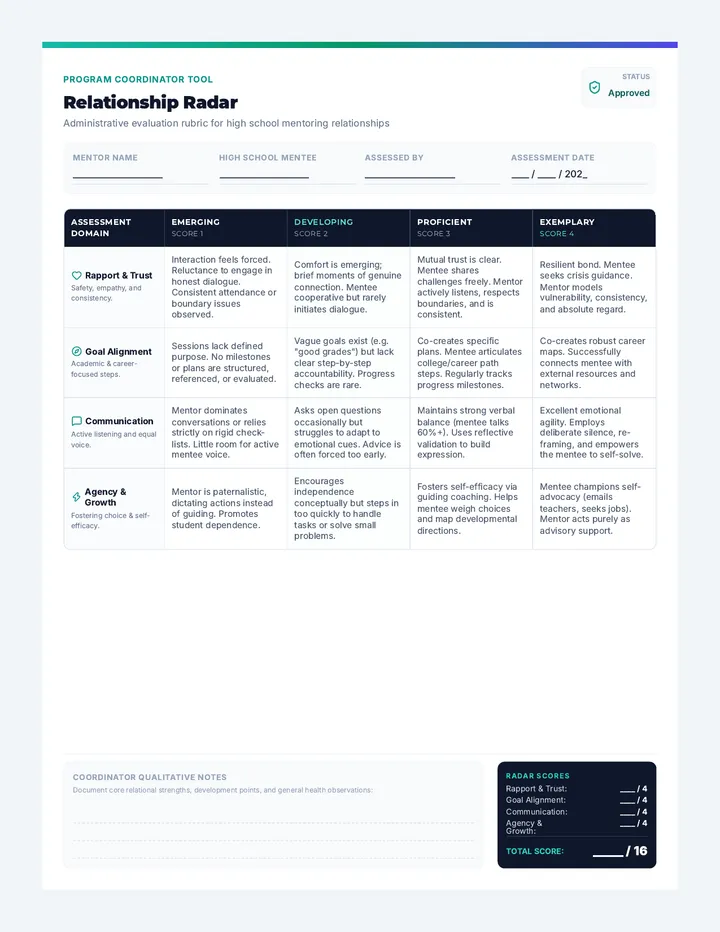
An evaluation and growth framework designed for high school mentoring programs. This lesson bundle equips Program Coordinators and mentors with actionable rubrics, reflective tools, and forward-looking goal templates to maximize mentoring efficacy and relationship quality.