Lenny.com
Explore
Create
ActivitiesNewMathEnglish Language ArtsScience & EngineeringSocial StudiesGlobal LanguagesHealth & Physical EducationSpecial EducationCounseling & Life SkillsArts & CreativityESL
Lenny.com
Lenny.com
Explore
Create
ActivitiesNewMathEnglish Language ArtsScience & EngineeringSocial StudiesGlobal LanguagesHealth & Physical EducationSpecial EducationCounseling & Life SkillsArts & CreativityESL
Lenny.com
Lenny.com

Solutions

Lenny for EducatorsLenny for SchoolsLenny for Districts

Product

ExploreSign inCreateSupportAbout

Resources

Getting startedMTSS Acceleration Program

Newsletters

School Funding Newsletter

© 2026 Lenny Learning Inc.

TermsPrivacyAccessibility
LinkedInInstagramX
Lenny
Counseling & Life SkillsSelf-AwarenessBasic Emotion RecognitionComplex Emotion IdentificationEmotional Nuance & Mixed FeelingsBuilding Positive Self-ImageRecognizing Strengths & Growth AreasAccurate Self-AssessmentPersonal Values IdentificationCultural & Individual Identity ExplorationValues-Based Decision MakingSelf-ManagementStop-and-Think StrategiesDelaying GratificationIndependent Impulse ManagementIdentifying Stress TriggersShort-Term Goal SettingSMART Goals DevelopmentGoal Monitoring & AdjustmentBuilding Perseverance & ResilienceInternal Motivation DevelopmentComprehensive Stress Reduction PlanningSocial AwarenessRecognizing Others' FeelingsDemonstrating EmpathyRespecting Individual DifferencesUnderstanding Cultural DiversityComplex Empathetic ResponsesMultiple Viewpoint ConsiderationMulti-Perspective AnalysisChallenging Stereotypes & BiasRelationship SkillsActive ListeningClear Verbal & Nonverbal CommunicationBuilding Positive FriendshipsWorking Cooperatively in GroupsCommunicating Personal BoundariesRespecting Others' BoundariesAssertive ExpressionPeaceful Problem-SolvingContributing to Team GoalsComplex Conflict NavigationMediation & NegotiationHealthy Romantic RelationshipsResponsible Decision-MakingDaily Problem IdentificationBrainstorming Multiple SolutionsEvaluating Pros & ConsRecognizing Risks & ConsequencesApplying Ethical FrameworksInformed Risk-Benefit DecisionsRoot Cause AnalysisMindfulnessMindful BreathingBody Scan MeditationDaily Mindfulness ApplicationDaily Self-Care RoutinesBalancing Life DemandsAdvocating for Wellness NeedsMental Health SupportUnderstanding Anxiety SymptomsWorry Management StrategiesProgressive Muscle RelaxationRecognizing Depression SignsBuilding Mood-Supporting RoutinesBehavioral Activation for MoodUnderstanding Grief StagesHealthy Grief CopingCreative Expression of LossBehavioral SupportDaily Check-In ProceduresDaily Goal Setting & ReviewRecognizing Escalation Warning SignsRequesting Breaks & SupportSelf-Calming During DistressUnderstanding Positive ReinforcementToken Economy ImplementationBehavior Chart TrackingAnalyzing Behavior PatternsIdentifying Antecedents & ConsequencesDetermining Behavior FunctionFunction-Based InterventionsIndividualized Behavior ContractsData-Driven Behavior AdjustmentTherapeutic ApproachesThoughts-Feelings-Behaviors ConnectionRecognizing Thinking PatternsChallenging Negative ThoughtsPositive Self-Talk PracticeThought Record TrackingAdvanced Cognitive RestructuringComprehensive CBT PlansBehavioral Activation TechniquesBuilding Positive ExperiencesExposure Hierarchies for AnxietyPresent-Moment AwarenessNon-Judgmental ObservationSelf-Soothing & DistractionComplex Emotion LabelingReducing Emotional Vulnerability (PLEASE)DEAR MAN CommunicationGIVE Skills for RelationshipsFAST Skills for Self-RespectRadical Acceptance PracticeCrisis Survival Skills (TIPP)Understanding Trauma EffectsTrauma Responses & TriggersIdentifying Trauma FeelingsGrounding TechniquesRegulation During Trauma DistressSafe Place VisualizationProcessing Through NarrativeDeveloping Trauma StoryPersonalized Safety PlanningGroup SupportTurn-Taking & SharingGroup Conversation SkillsSharing in Supportive EnvironmentLearning from Similar ChallengesBuilding Community & BelongingNavigating Peer RelationshipsGroup Skill PracticeGroup Mental Health EducationStress & Anxiety UnderstandingCrisis Support & SafetyKnowing When to Seek HelpIdentifying Mental Health CrisesGrounding During CrisisUsing Crisis HotlinesBuilding Support NetworksAccessing Mental Health ResourcesWarning Signs & Coping StrategiesDeveloping Personal Safety PlansUnderstanding Suicide Warning SignsGatekeeper Skills for PeersDigital LiteracySocial MediaTechnology BasicsProductivity ToolsInternet and Online ResearchWeb Design and PublishingDigital CitizenshipOnline Safety and PrivacyEmerging TechnologiesFinancial LiteracyMaking Financial DecisionsBanking and AccountsConsumer SkillsSaving and InvestingCredit and DebtEmployment and IncomeTaxesInsuranceMajor PurchasesEconomic ConceptsFinancial PlanningCollege & Post-Secondary PlanningCareer ExplorationUnderstanding Post-Secondary OptionsCollege Research & SelectionAdmission RequirementsCollege Application ProcessPersonal Statement WritingFAFSA CompletionScholarship Search & ApplicationsUnderstanding Student LoansContinuing Education PlanningInterview PreparationResearching EmployersCommon Interview QuestionsSTAR Method ResponsesProfessional Interview PresenceVirtual Interview SkillsInterview Follow-UpJob Search SkillsUnderstanding Job PostingsEffective Job Search StrategiesNetworking for OpportunitiesResume Writing BasicsAction Verbs & AchievementsTailoring Resumes to JobsCover Letter WritingProfessional ReferencesProfessional CommunicationBusiness Email EtiquettePhone & Voicemail ProfessionalismMeeting ParticipationPresentation SkillsProfessional Work EthicTime Management & ProductivityTeamwork & CollaborationAdaptability & FlexibilityProblem-Solving at WorkConstructive FeedbackWorkplace RightsUnderstanding Employment LawsPay & Benefits UnderstandingWorkplace SafetyAnti-Discrimination & Harassment

Pause Power

A preschool social-emotional learning lesson introducing self-control through the three-step routine: Stop, Breathe, and Choose. Children practice sensory breathing techniques, body awareness, and peaceful decision-making during group time and play.

CRCassidy Rostock

Pause Power

A preschool social-emotional learning lesson introducing self-control through the three-step routine: Stop, Breathe, and Choose. Children practice sensory breathing techniques, body awareness, and peaceful decision-making during group time and play.

CRCassidy Rostock

3

Movement Game: "Traffic Light Freeze & Breathe" (8 min)

GREEN LIGHT Walk, march, or tip-toe slowly in circle space.

YELLOW LIGHT Slow motion! Deep breath in, slow breath out.

RED LIGHT FREEZE like a statue! Hand on belly, eyes soft.

Debrief Prompt: "How did it feel when the light turned red? Did your body want to keep moving? That warm feeling inside when you stopped yourself is your self-control muscle growing stronger!"

4

Small Group & Center Practice (10 min)

Center 1: Finger-Trace Breathing

Children use the Freeze Breathe Activity Sheet to trace the rainbow and flower trails with their index finger, synchronizing breath with touch.

Center 2: Sharing Scenarios

Puppet play / mini-roleplay: Bear wants Rabbit's block. Rabbit presses the Pause Button, takes a deep breath, and says: "You can have it in 2 minutes!"

Differentiation & Accessibility Strategies

High Energy / Sensory

Provide a tactile squeeze ball or sensory fidget during the freeze phase. Allow standing pause instead of sitting.

Dual Language Learners

Pair words with clear universal gestures (stop palm, smelling flower motion, thumbs up for choose). Repeat in home language.

Struggling Regulators

Co-regulate: Place teacher's hand gently over child's hand on their belly so they feel the rhythmic rise and fall of breath.

Observational Assessment Checkpoints

SkillEmerging (With Prompt)Mastered (Independent)
Inhibition (Stop)Stops movement after 1-2 teacher reminders.Freezes body promptly upon hearing/seeing cue.
Calming (Breathe)Imitates nose/mouth breathing with adult model.Takes 3 intentional slow breaths self-directed.
Problem SolvingNames a choice when given two options.Verbally suggests or uses safe, gentle words in play.

Family Connection Prompt for Newsletter

Send home the "Pause Power Badge": Encourage families to ask: "Can you show me how you smell the flower and blow out the candle when feelings get big at bedtime or clean-up?"

Pause Power Lesson Plan • Games, Accommodations & Assessment Page 2 of 2
You might also like

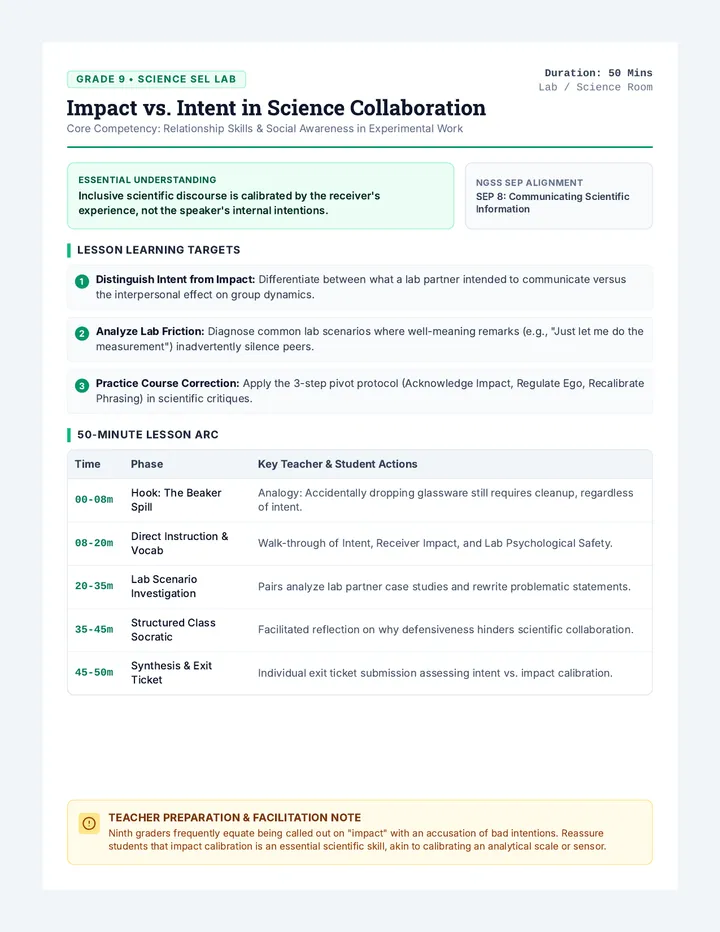
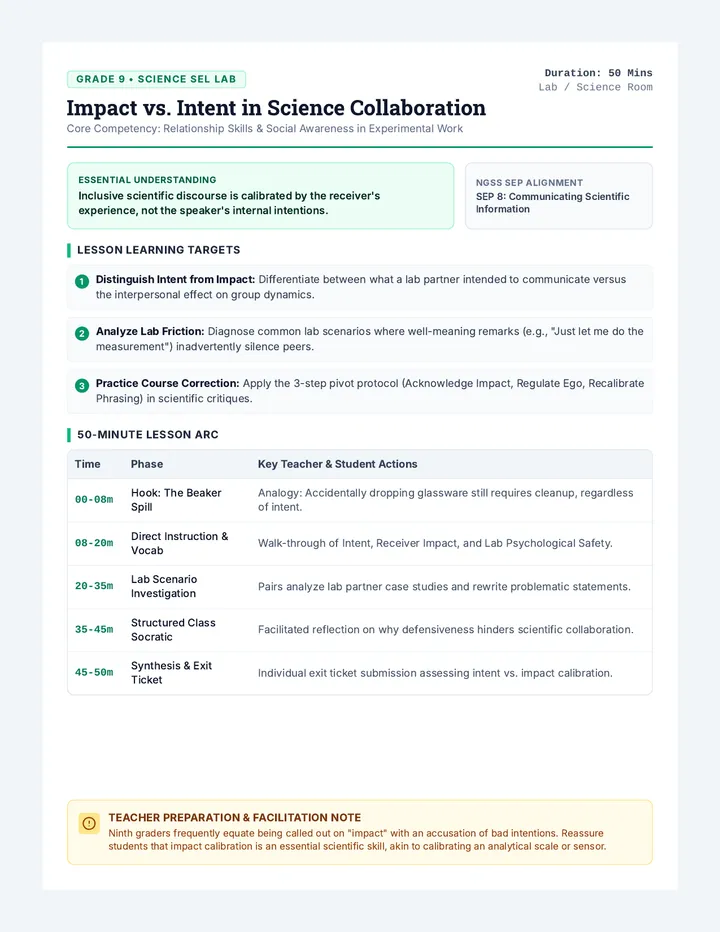
Impact Intent Teacher Guide

Science Lab Dialogue

A high school science SEL sequence that fosters inclusive collaboration, empathetic communication, and barrier-free scientific discourse across grades 9 through 11.

YB

Yna Bersales

27
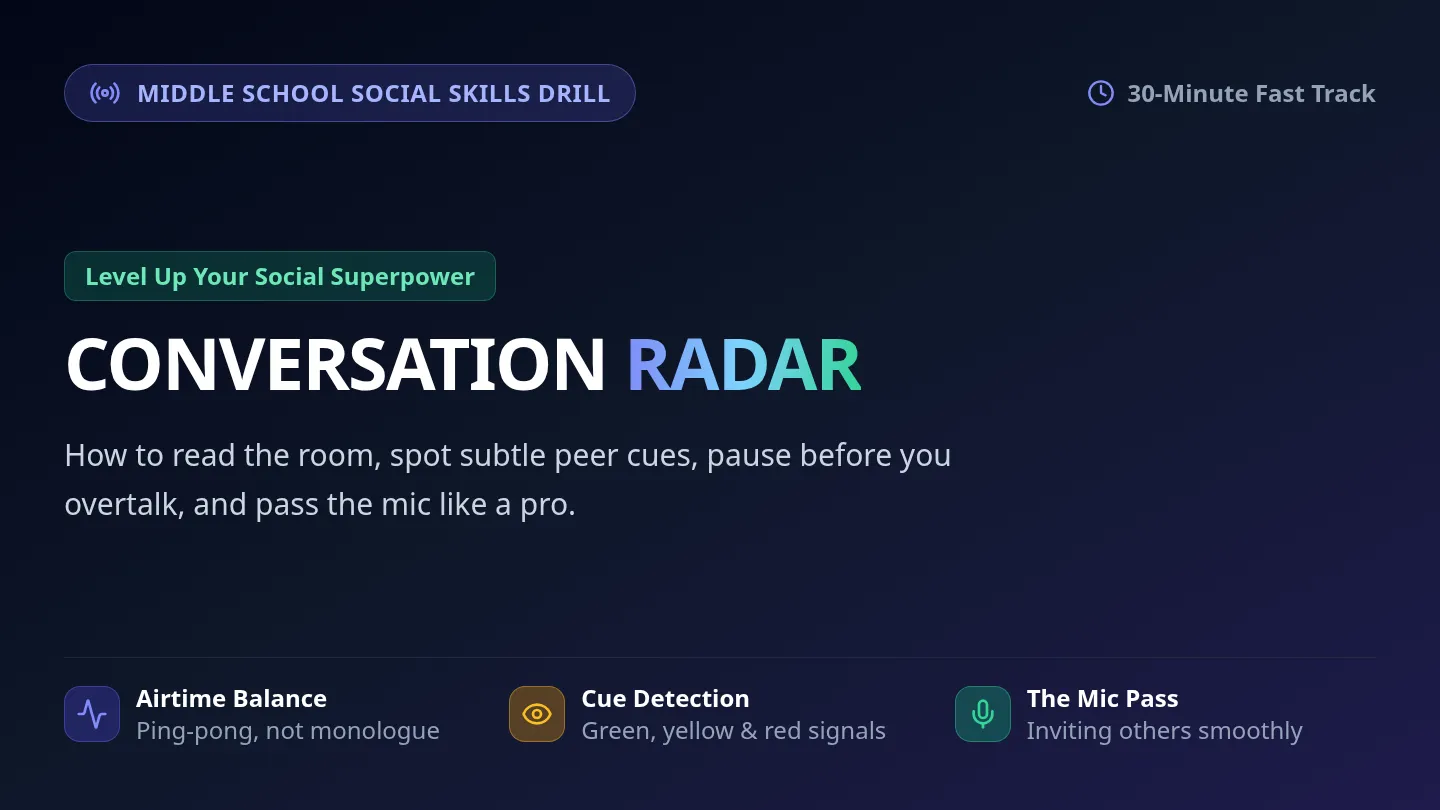
Conversation Radar Slides

Conversation Radar

A compact 30-minute practical social skills lesson for middle schoolers to identify conversational cues, monitor speaking airtime, and practice pausing and inviting peers into the dialogue.

Lenny Avatar
Lenny
3
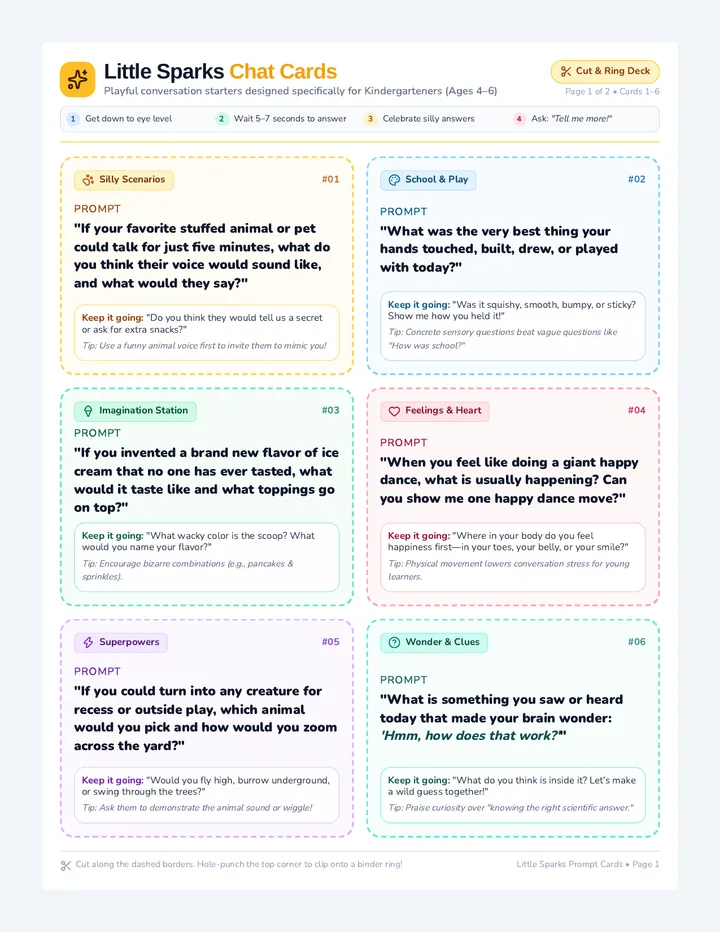
Little Sparks Prompt Cards

Little Sparks Prompt Cards

A printable 2-page set of 12 illustrated conversation prompt cards designed specifically for kindergarteners (ages 4-6), featuring engaging open-ended questions, follow-up stems, and educator/parent tips.

Lenny Avatar
Lenny
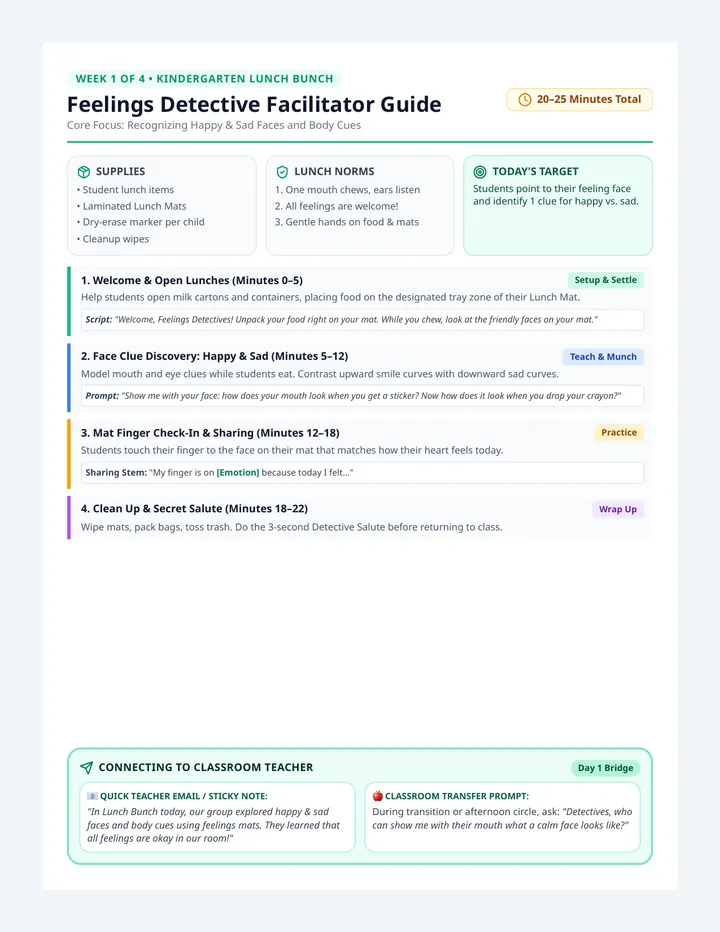
Feelings Detective Facilitator Guide

Feelings Crew

A four-week social-emotional lunch bunch sequence for Kindergarten students focusing on identifying core feelings and learning foundational calming strategies. Designed specifically for brief 20-30 minute lunchtime group sessions with high-engagement visuals and low-mess activities.

SS

Samantha Stagles

12
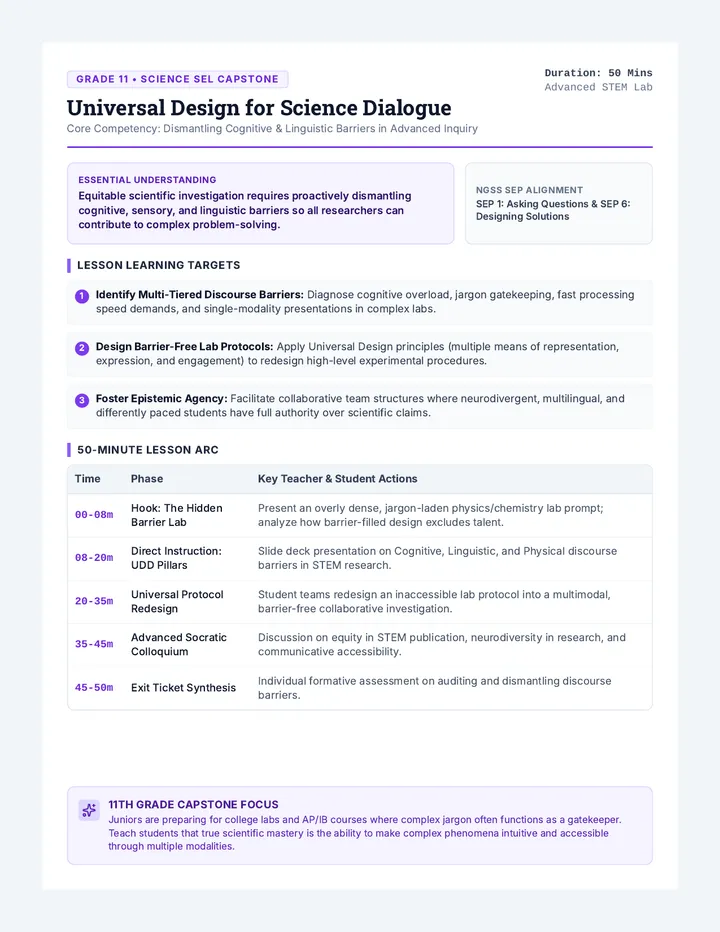
Barrier Free Teacher Guide

Universal Science Dialogue

Eleventh grade science students implement Universal Design for Dialogue to identify and dismantle cognitive and linguistic barriers during complex scientific inquiry.

YB

Yna Bersales

9
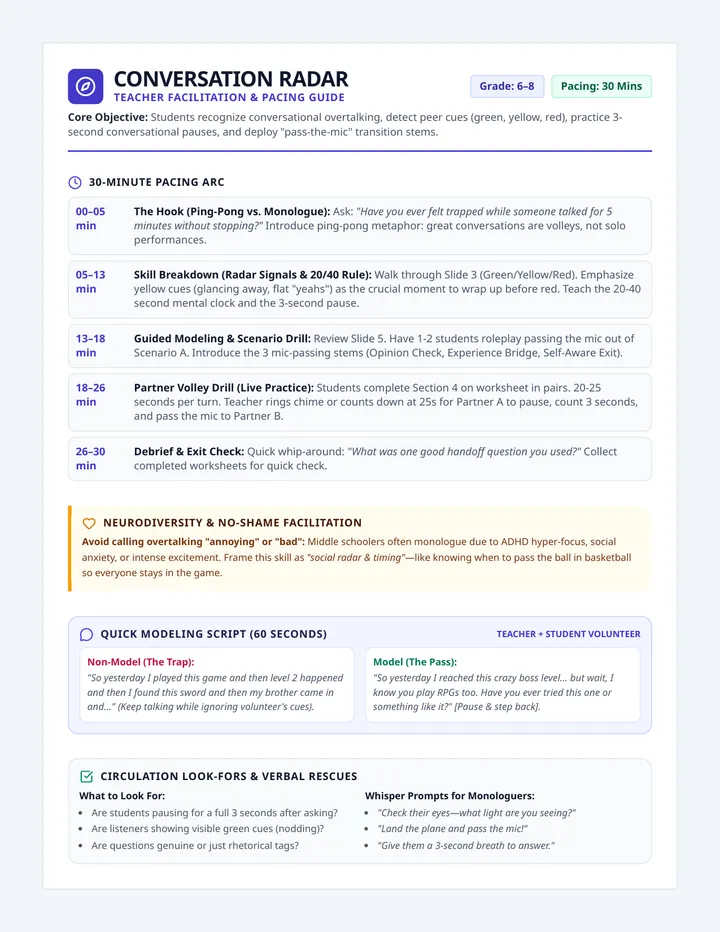
Conversation Radar Teacher Guide

Conversation Radar Teacher Guide

A concise 30-minute lesson facilitation guide for teachers featuring minute-by-minute pacing, non-shaming coaching strategies for neurodivergent learners, a live roleplay script, and formative drill prompts.

Lenny Avatar
Lenny
Impact Intent Teacher Guide

Science Class Dialogue

A high school science SEL sequence that builds positive teamwork, clear communication, and barrier-free collaboration between project partners in science class across grades 9 through 11.

J

jtoomey

27
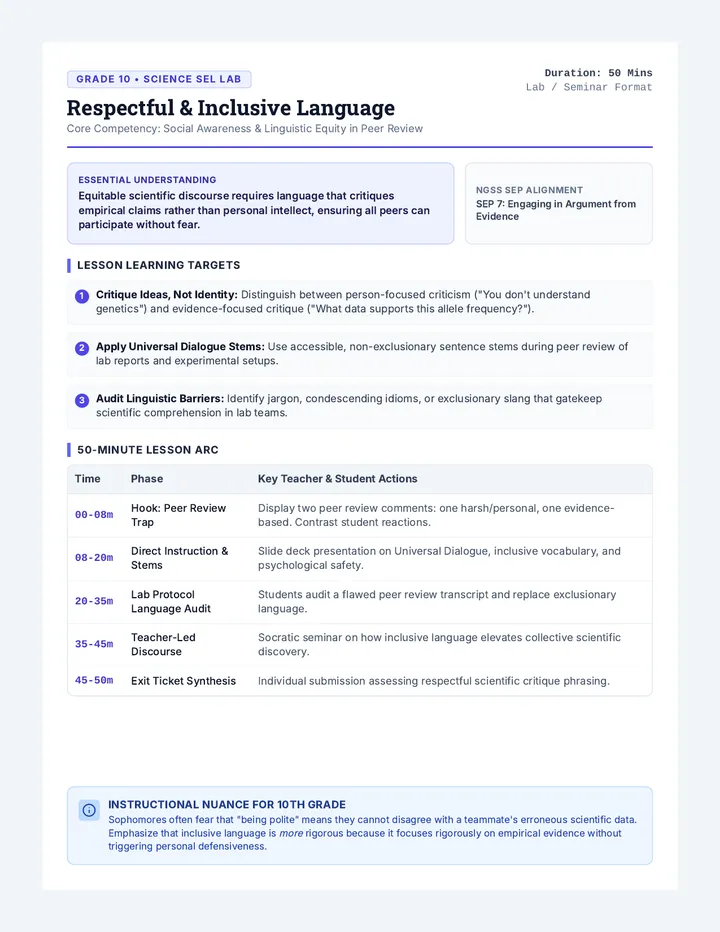
Inclusive Language Teacher Guide

Inclusive Science Language

Tenth grade science students examine respectful terminology and linguistic choices to foster psychological safety during experimental peer review.

YB

Yna Bersales

9
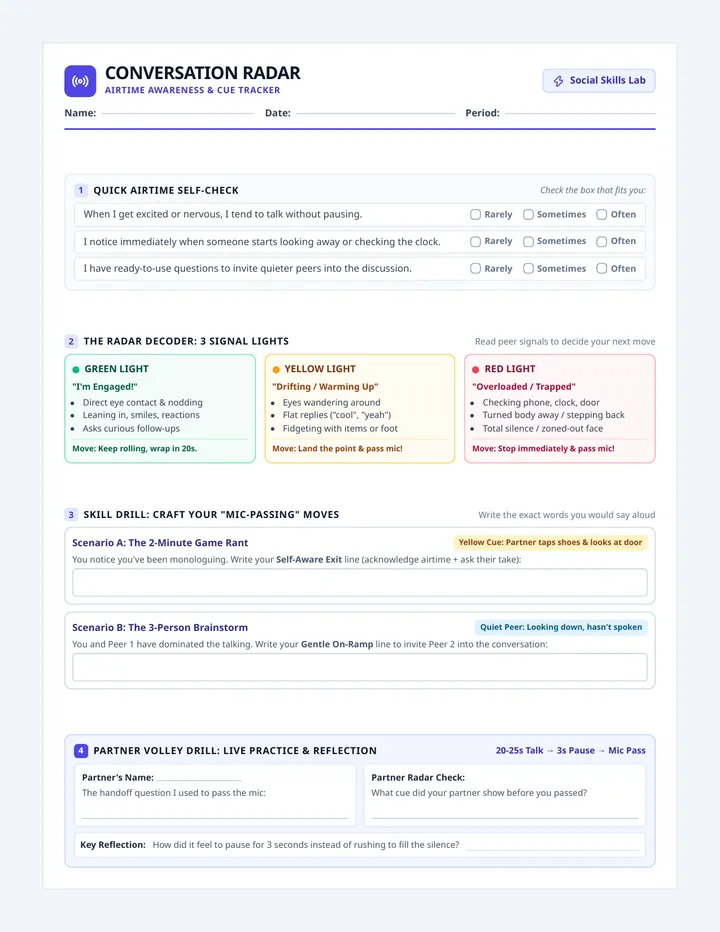
Conversation Radar Worksheet

Conversation Radar Worksheet

A print-ready student worksheet featuring a self-assessment on speaking airtime, a visual cue decoder (green, yellow, and red signals), scenario-based mic-passing writing prompts, and a partner practice drill tracker.

Lenny Avatar
Lenny
Initiation Hurdles Slides

Execution Lab

An executive functioning and work completion curriculum designed specifically for gifted middle schoolers. Students learn cognitive strategies to dismantle perfectionism paralysis, accurately pace multi-phase projects, and conquer the final submission hurdle.

MB

Michele Berning

6
Impact Intent Teacher Guide

Impact Over Intent

Ninth grade science students analyze communication gaps in lab partnerships, understanding that interpersonal impact is defined by the receiver rather than sender intentions.

YB

Yna Bersales

9
Conversation Radar Slides

Conversation Radar Slides

Interactive visual slides for middle schoolers that break down conversation airtime, three social cue signals (green, yellow, and red), and practical mic-passing stems.

Lenny Avatar
Lenny