Mastering Stress Lesson Plan Mastering Stress
Coping Skills Lesson Plan
Duration: 30 Minutes
Audience: 7th Grade
Why This Lesson?
Developing coping skills at an early age empowers students to handle daily stress, supporting both their mental health and academic performance. This lesson provides immediate, actionable strategies for emotional resilience.
Teacher Preparation
Review the lesson plan and familiarise yourself with the activities.
Prepare examples of common stress triggers (tests, social media, friendship changes).
Ensure the Slide Deck and Discussion Handouts are ready.
Time: 10 minutes preparation.
Learning Objectives
Identify common stress triggers for middle schoolers.
Explore practical self-help and support-based coping strategies.
Practice a simple mindfulness/breathing technique.
Included Materials
Mastering Stress Slide Deck
Coping Strategies Activity Guide
Discussion Handout (Student)
Breathing Exercise Guide
Lesson Sequence
1
Introduction & Brainstorming
5 Minutes
Welcome students and set a safe, non-judgmental tone. Define stress as the body's natural response to challenges.
Teacher Prompt: "We all experience stress. Can anyone share a situation—keep it general—where you felt a bit overwhelmed? Maybe before a test or when plans changed?"
2
Interactive Coping Skills
15 Minutes
Transition to the Coping Strategies Activity Guide .
Divide students into groups of 3-4 and distribute the Discussion Handouts .
Walk around and facilitate discussions using the provided prompts.
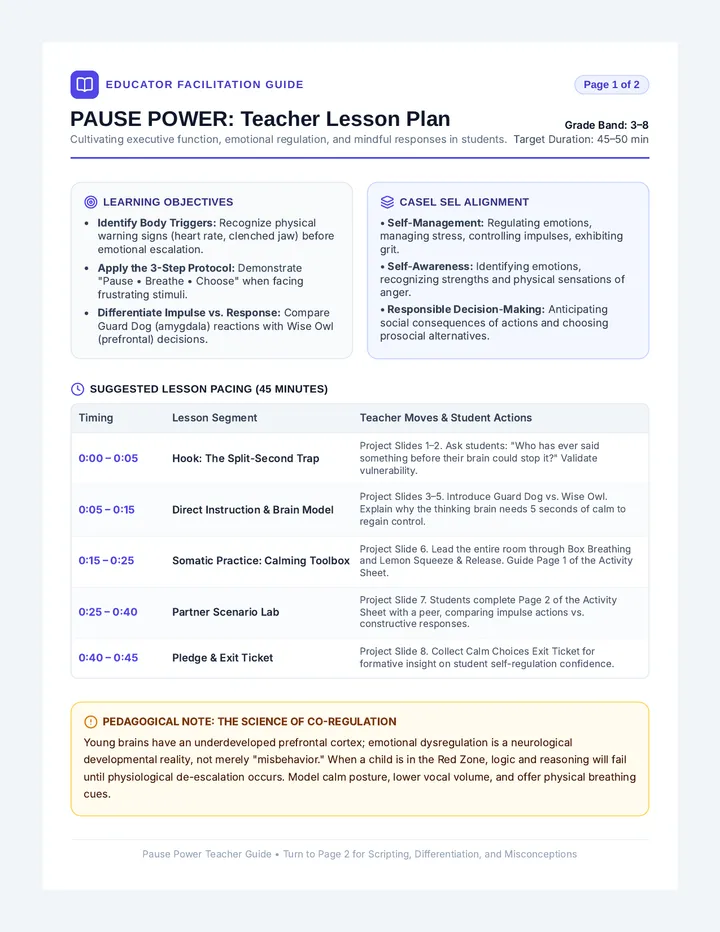
Demonstration: Lead the class through a 2-minute box breathing exercise (Inhale 4, Hold 4, Exhale 4, Hold 4).
Ensure students focus on how the strategy helps their body feel different.
3
Reflection & Closing
10 Minutes
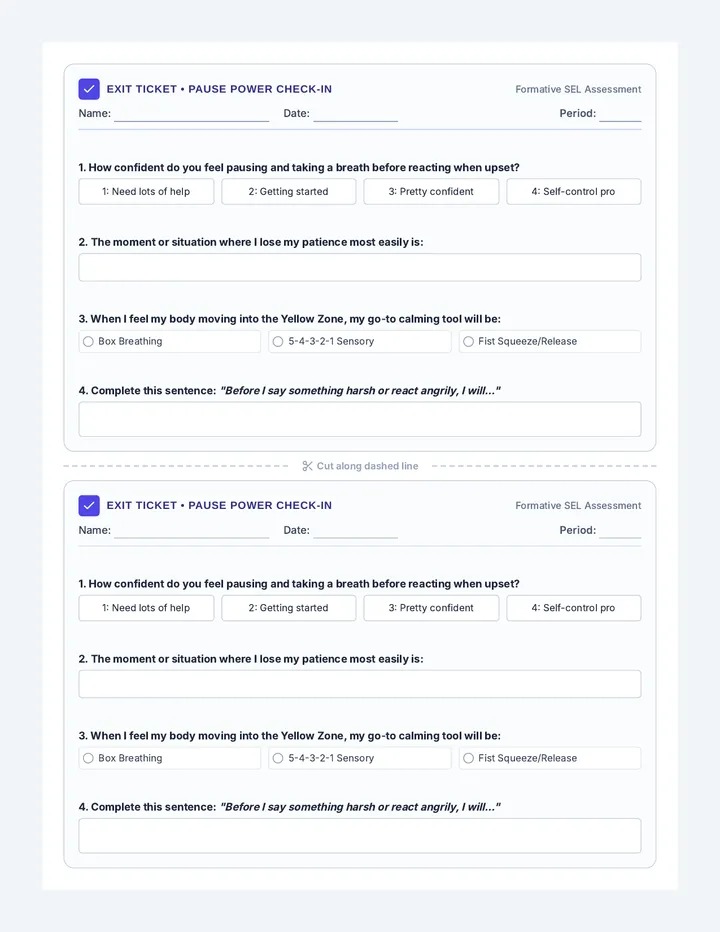
Recap the strategies discussed (deep breathing, physical activity, talking to a trusted adult). Have students identify one strategy to try this week.
Final Group Exercise:
"Let's end by taking three slow breaths together. Focus on the air moving in and out of your lungs. This is a tool you always have with you."
Mastering Stress Slides Mastering Stress
Essential Coping Skills for Life
7th Grade Wellness
Introduce the topic by welcoming students and briefly explaining that today we're learning about coping skills to manage stress.
Understanding Stress
Stress is your body's natural response to challenges or demands.
It can affect how you think, feel, and behave in different situations.
Common examples: School tests, friendships, or changes in routine.
Explain what stress is in simple terms and share a few common examples without naming personal experiences. Use this slide to foster understanding.
When Do You Feel Stressed?
"Think about times when you felt worried or overwhelmed. What were the triggers ?"
School
Friends
Home
Teacher: Encourage voluntary sharing and list triggers on the board.
Kick off the brainstorming activity. Ask students to share moments when they felt stressed. Remind them to keep details general.
Interactive Strategies
Time to work together! In your small groups:
Discuss ways to cope with stress.
Think about mindfulness & deep breathing.
Use your prompt guides to help.
Try This Now!
The teacher will demonstrate a simple deep breathing technique for everyone to try.
Introduce the interactive coping skills activity. Explain that the next activity will involve small-group discussions using the provided prompts. Additionally, demonstrate a simple strategy (deep breathing or mindfulness).
Which strategy will you try?
"Thinking about everything we've discussed, what's one coping method you'd like to use the next time you feel stressed?"
Teacher: Invite students to share their strategy.
Guide students into reflecting on the coping strategies discussed. Ask them to choose one they think might work best for them.
Breathe In... Breathe Out
Practice
Let's take 3 deep breaths together as a class.
Remember
These skills help make stress more manageable.
Goal
Use these tools whenever you need them!
Thank you for participating!
End the session with a calming group deep breathing exercise. Remind students that these skills can help them manage stress in daily life.
Stress Coping Strategies Activity Guide Stress Coping Strategies
Teacher Activity Guide
Small Group Activity
Activity Overview
This activity encourages 7th-grade students to explore and share different ways of coping with stress. By building on the "Mastering Stress" lesson, students identify strategies they can apply in their daily lives within a supportive environment.
Objectives
Understand varied ways to cope with stress.
Explore self-help vs. support-based strategies.
Share ideas in a non-judgmental group.
Implementation Tips
Groups: 3-4 students per group.
Duration: 10-12 minutes for work time.
Tone: Emphasize respect and privacy.
Steps for Success
01
The Kick-Off
Introduce the activity by reminding students of the strategies discussed. Explain that sharing may inspire others.
02
Group Work
Hand out the Discussion Prompt sheets. Encourage each group to appoint a spokesperson to summarize their top ideas.
03
Share Back
Invite groups to share 1-2 coping strategies. This connects small groups to the class-wide conversation.
04
Personal Reflection
Ask students to jot down one strategy they'll actually try. This step is key for long-term retention.
Discussion Facilitation
Key Discussion Areas
Identifying Stressors
What are some situations that make you feel stressed? (Homework, tests, conflicts, social media pressures).
Exploring Reactions
How does your body or mind respond? (Tight chest, racing thoughts, stomach aches, irritability).
Sharing Strategies
What have you tried before? What worked well? What didn't work at all?
Brainstorming New Ideas
New techniques: Box breathing, "grounding" (5-4-3-2-1), movement, or journaling.
Post-Activity Follow-Up
What did you learn about different ways to deal with stress today?
Did you find that some strategies work better for certain types of stress (e.g., physical vs. mental stress)?
How can you remind yourself to use these techniques when you're actually in a stressful moment?
Creating a Safe Space
Remind students that feeling stressed is normal and human. This activity is not about being "perfect" at handling stress, but about building a toolkit of options so they feel more in control when life gets busy.
Discussion Prompts Handout Mastering Stress
Discussion Prompts & Reflection
Name:
Date:
Use these prompts to guide your small-group discussion. Be honest, be respectful, and listen to your classmates. You can use the spaces below to jot down your own thoughts or interesting ideas from your group.
1. Identifying Stressors
What are some situations that make you feel stressed? (Examples: homework, tests, conflicts with friends, social media, busy schedules).
2. Exploring Reactions
How does your body or mind respond when you’re stressed? Do you notice any physical changes or specific types of thoughts?
3. Sharing Coping Strategies
Have you tried any ways to manage stress before? What worked well for you? What didn’t work as well?
4. Brainstorming New Techniques
What new coping strategies could you try in the future? (Ideas: deep breathing, mindfulness, physical activity, talking to someone you trust).
My Personal Choice
Of everything we talked about, what is one specific strategy you want to try next time you feel stressed?