Exploring the link between external events and internal emotional responses to identify personal triggers.
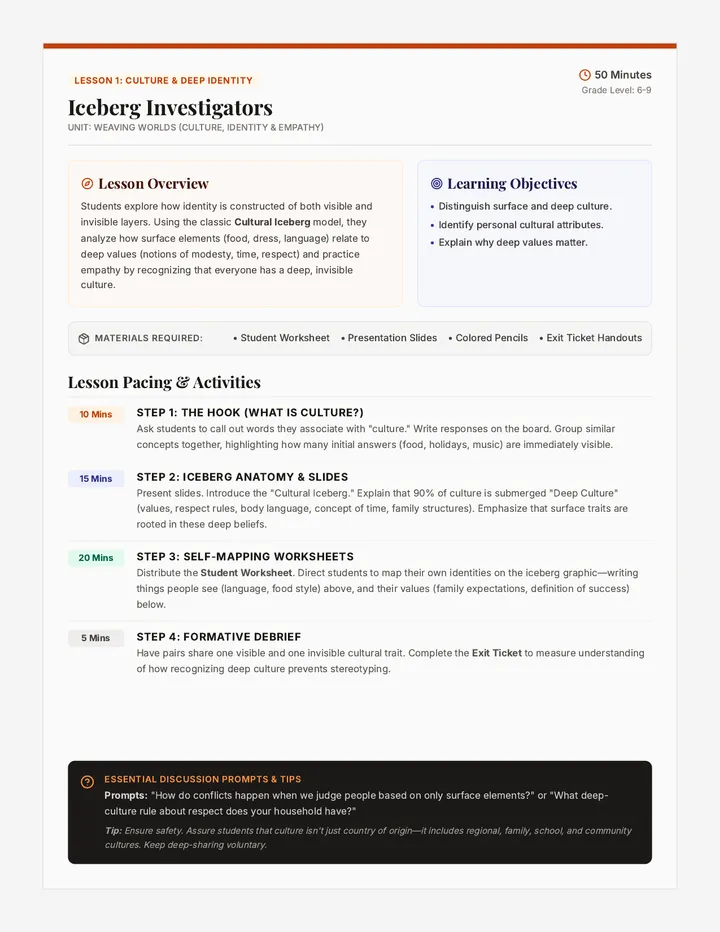
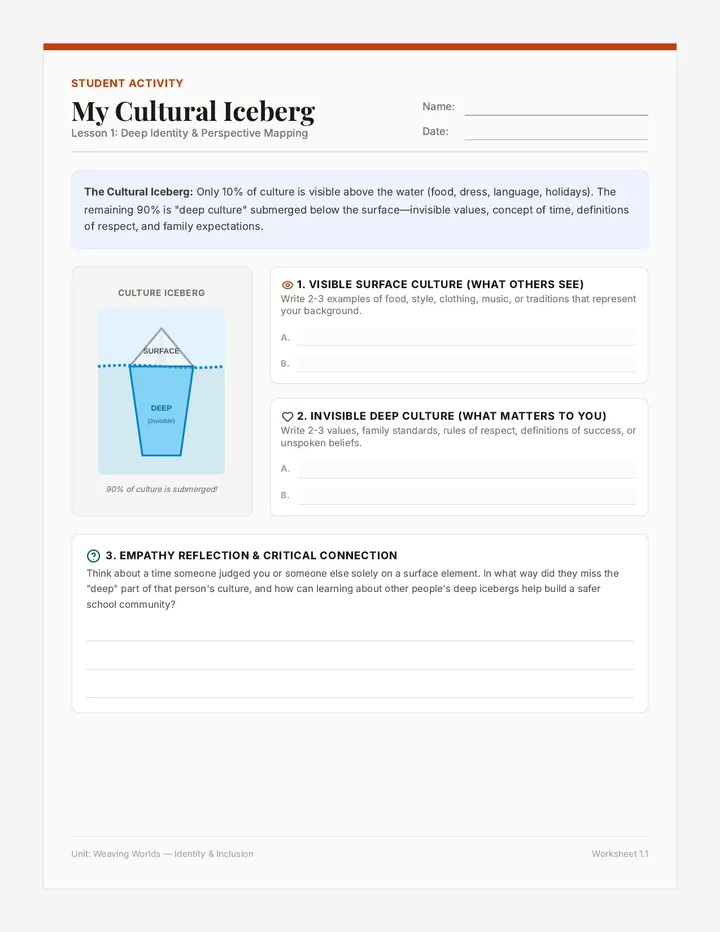
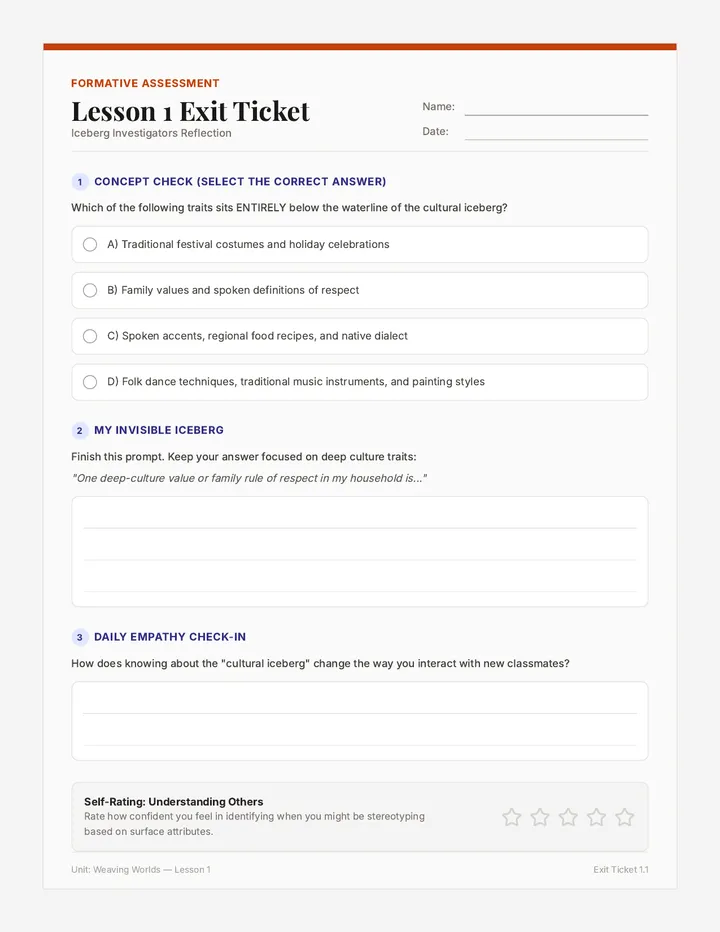
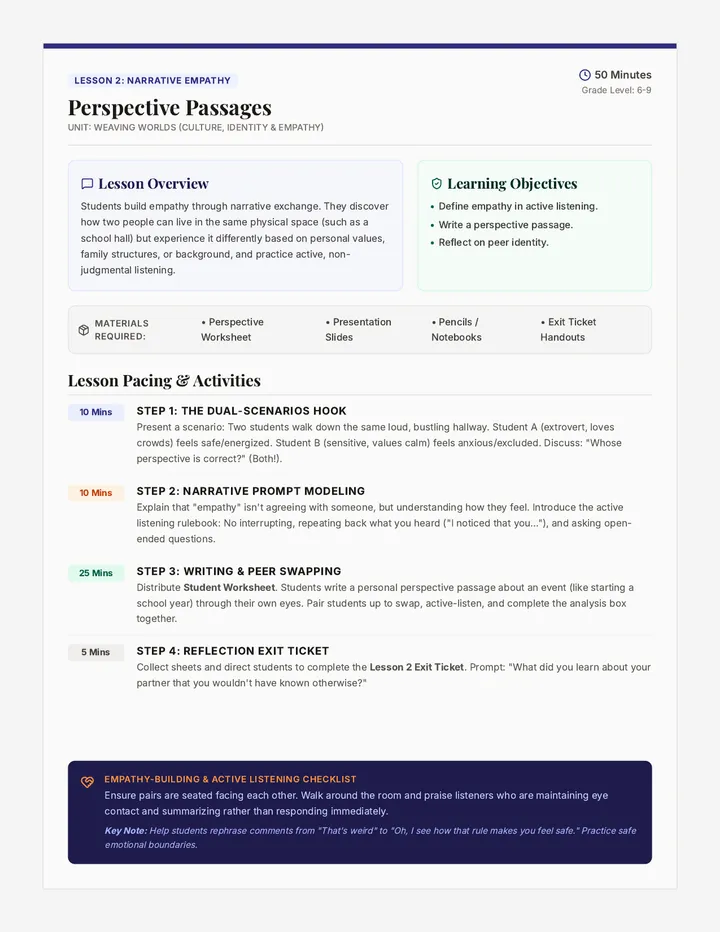
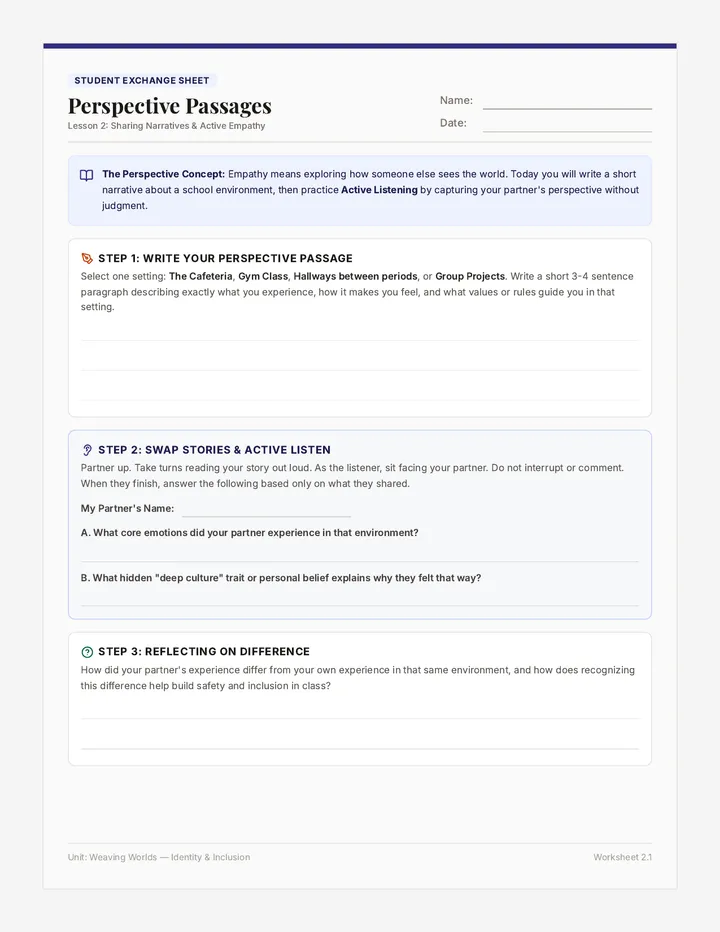
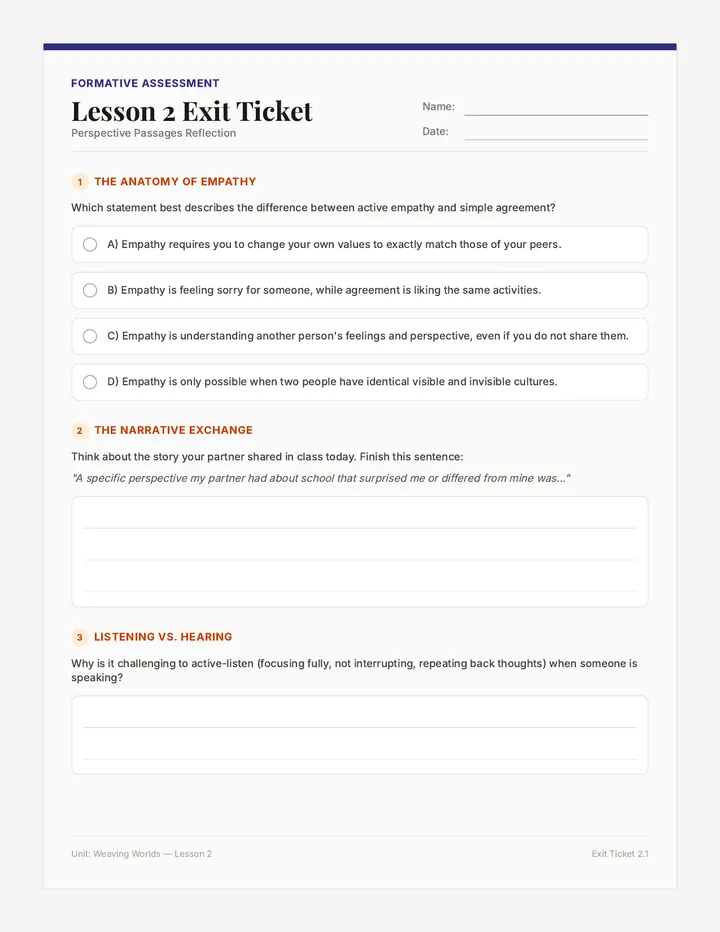
A 3-lesson unit on culture, identity, empathy, and building an inclusive school community. Students explore the cultural iceberg, share personal perspective narratives, and collaborate on actionable school-wide inclusion plans.
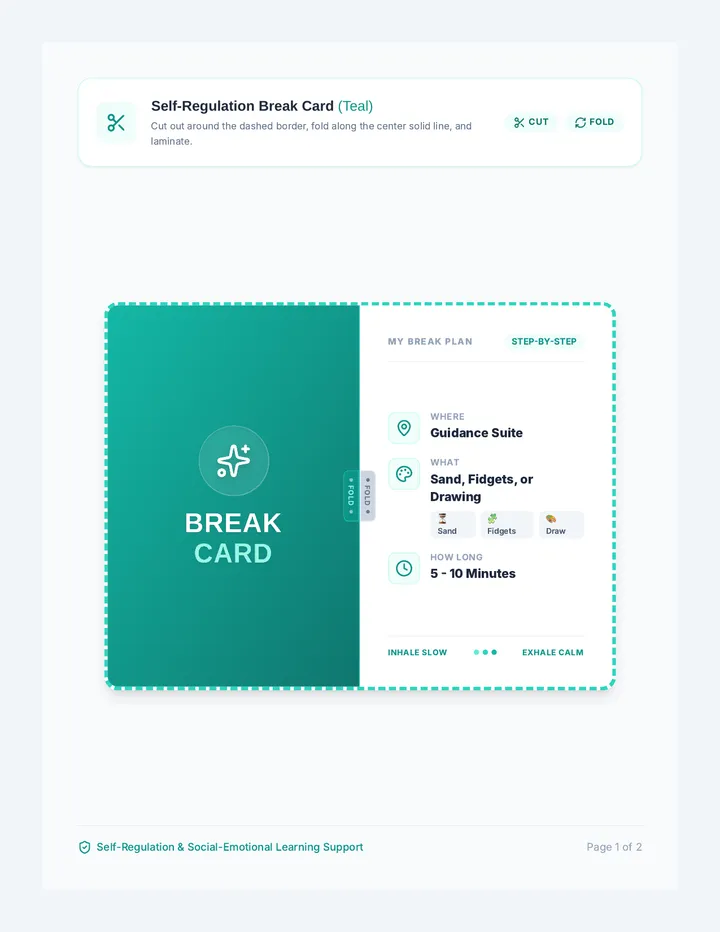
A collection of visual prompts and break cards designed to support students in self-regulation and managing emotions within the school environment.
Two versions (Teal and Lilac) of a double-sided printable break card for student self-regulation. Each card template features a front face and a details back face, featuring the Guidance Suite location, eligible sensory/mindfulness activities, and duration limits.
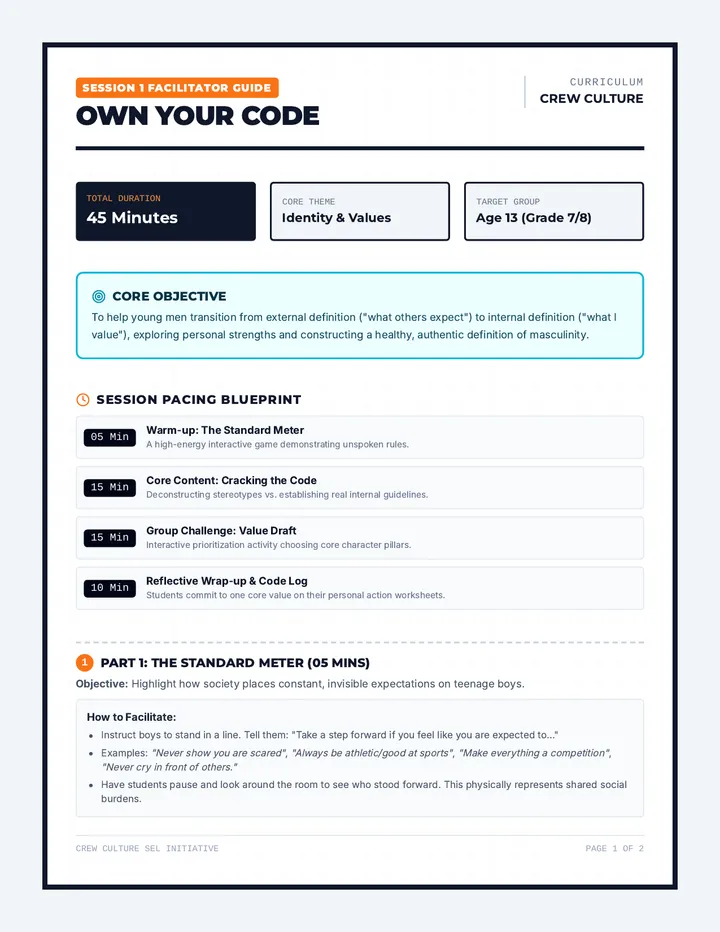
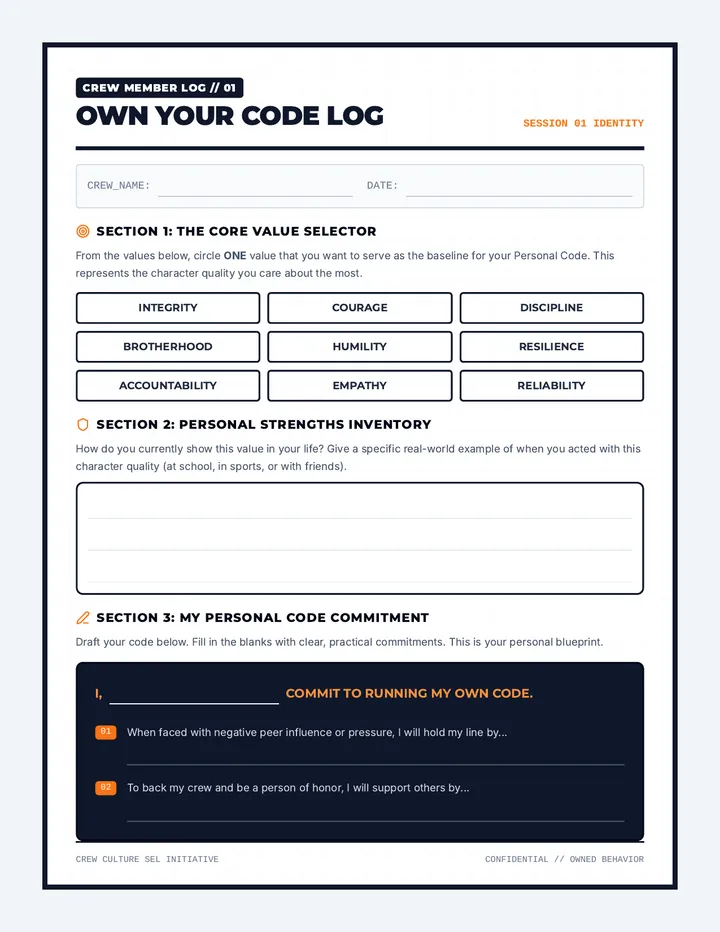
A three-part social-emotional learning curriculum designed specifically for middle school boys to develop self-esteem, manage digital pressure, and build authentic peer relationships.
A middle school counseling lesson on healthy relationships and personal safety. Students learn to decode relationship signals, identify red and yellow flags, map their personal boundaries, and practice navigating peer pressure through interactive discussions and guided reflections.
An optimized 11-page school handbook that combines Page 9 (Athletics Requirements) and Page 10 (Athletic Conduct & Spectators) into a single, content-dense Athletics Master Guide. It preserves all policy wording, checklists, seasons, and penalty ladders in a symmetrical 2x2 grid layout. It also elevates all font sizes on Page 9 to a highly legible 12px-14px standard, tightens vertical grid row gap, and prevents awkward line breaks on Girls' Volleyball and Girls' Soccer using CSS nowrap boundaries.
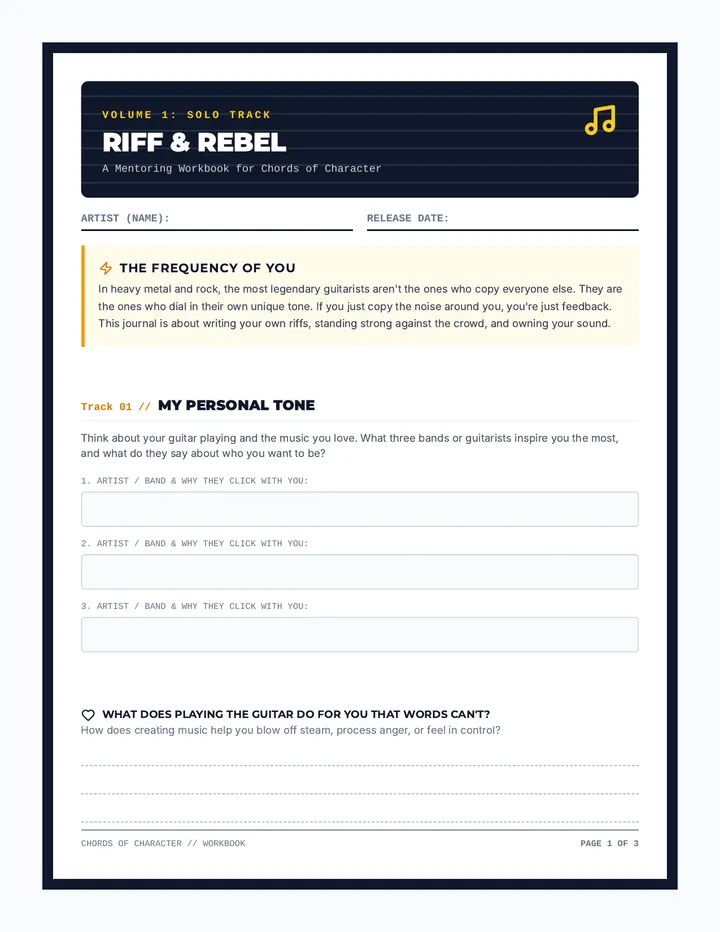
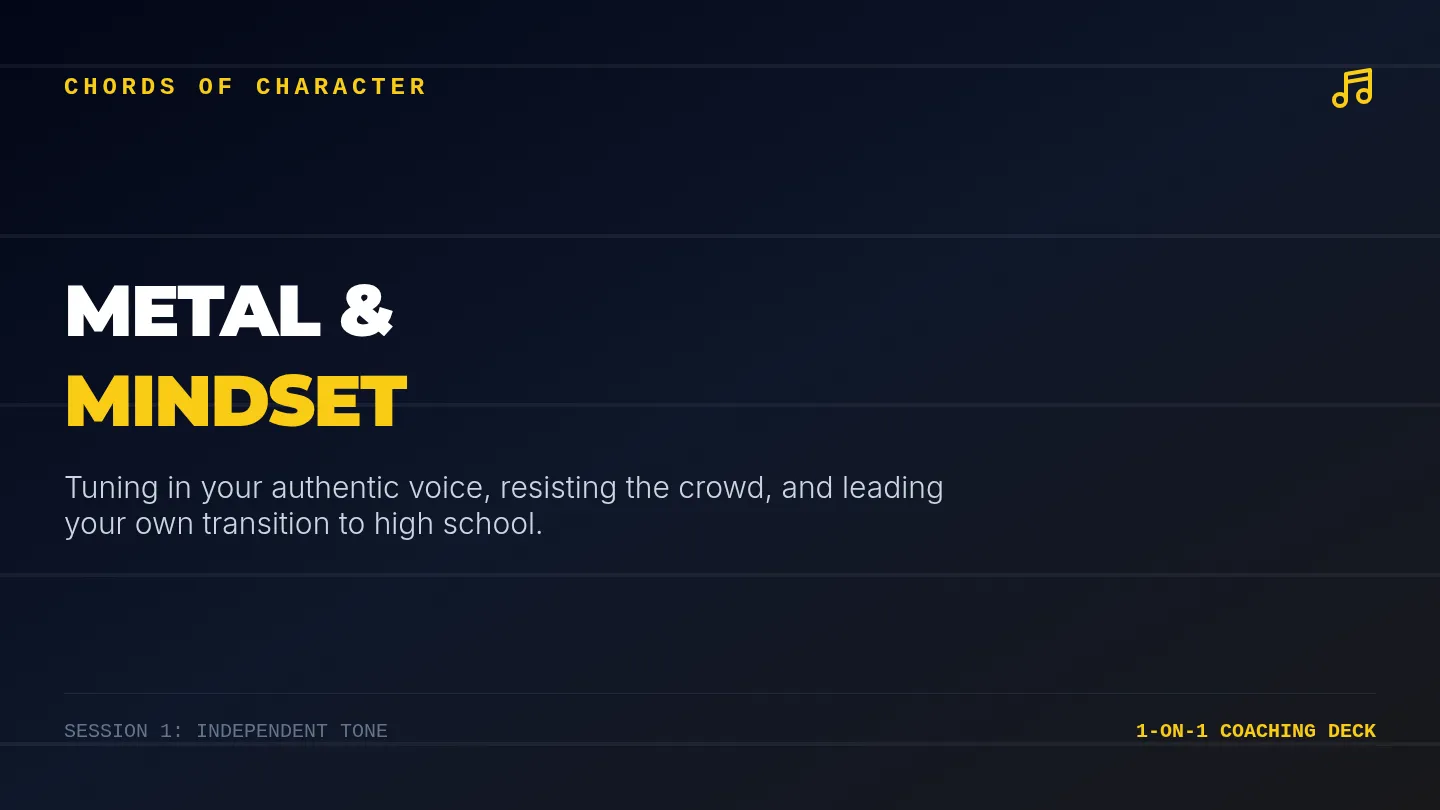
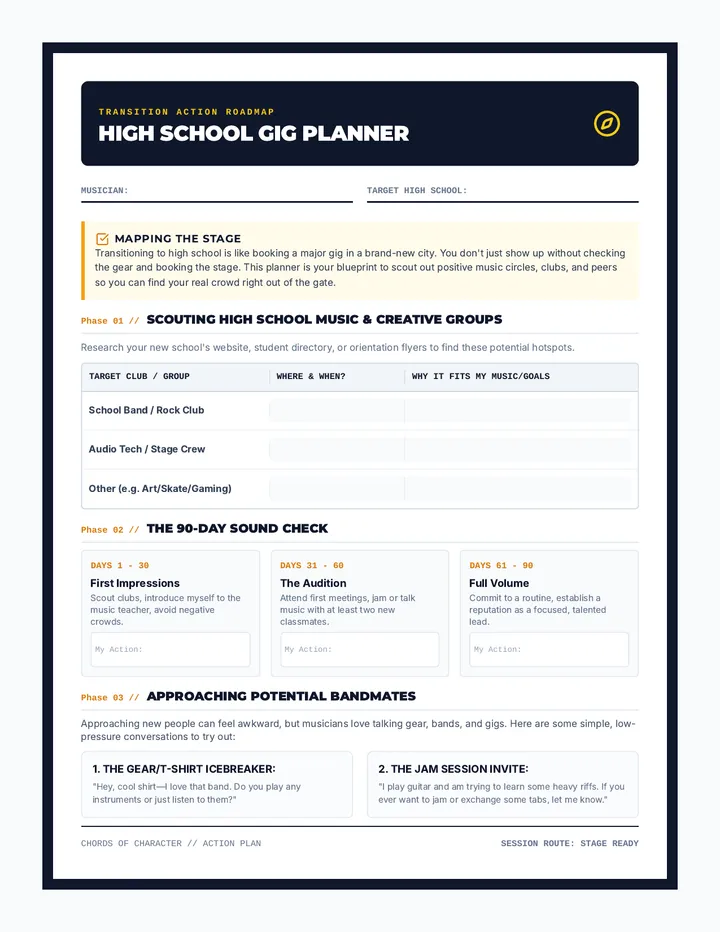
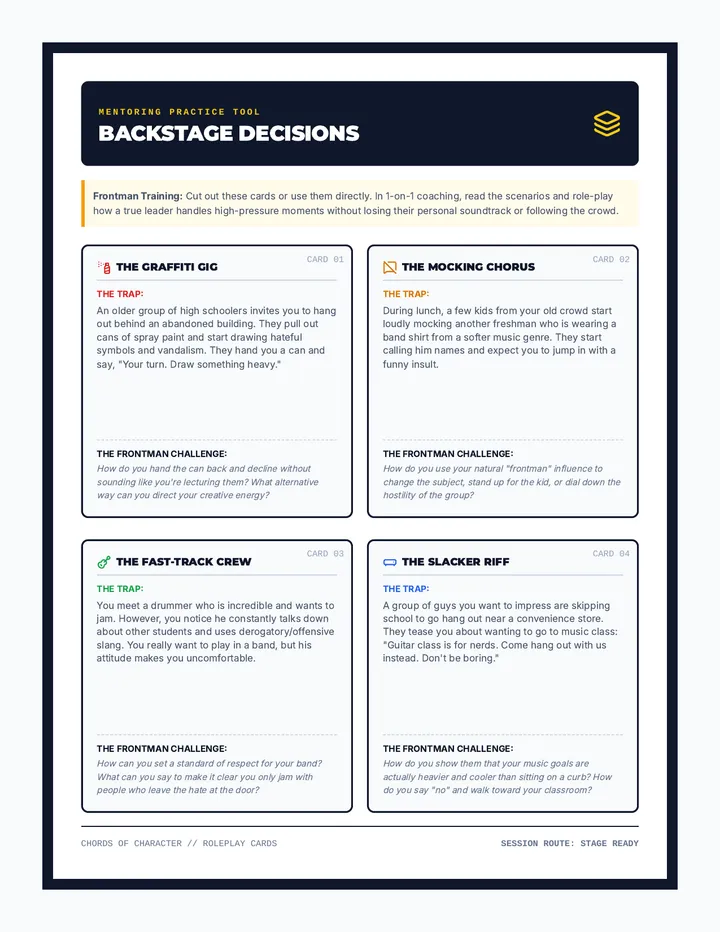
A transition curriculum linking heavy metal passion with character, true rebellion, and leadership. Features an in-school coaching workshop and a parallel at-home action journal for tonight.
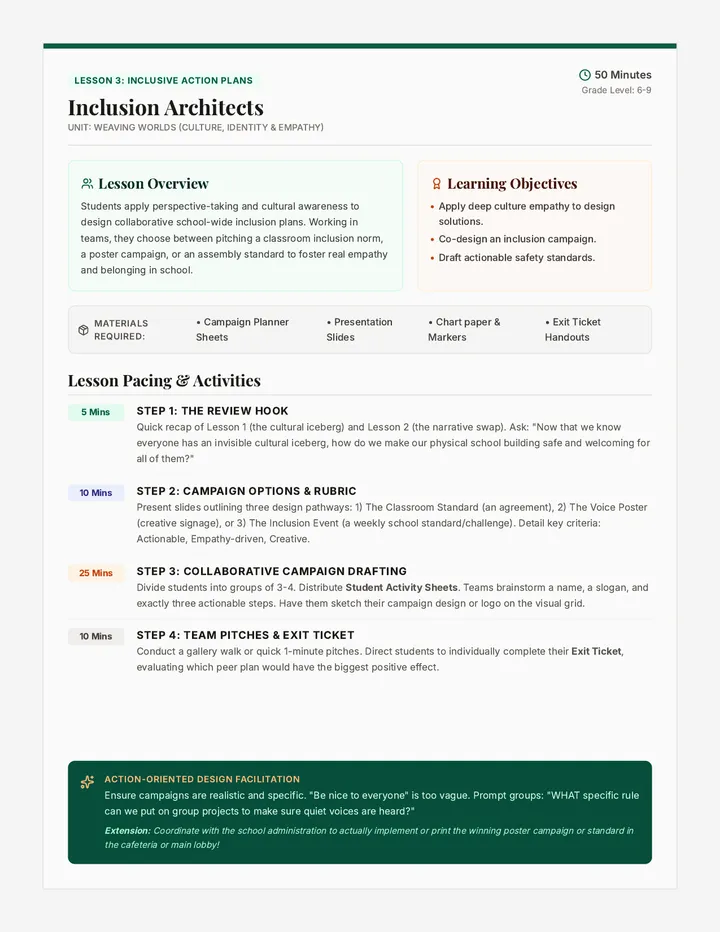
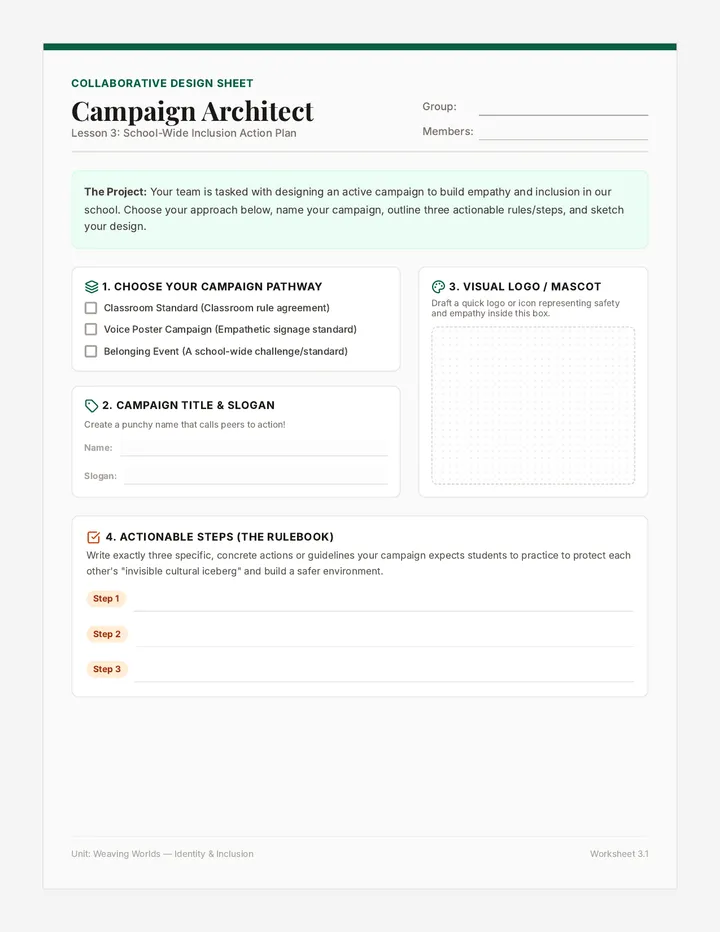
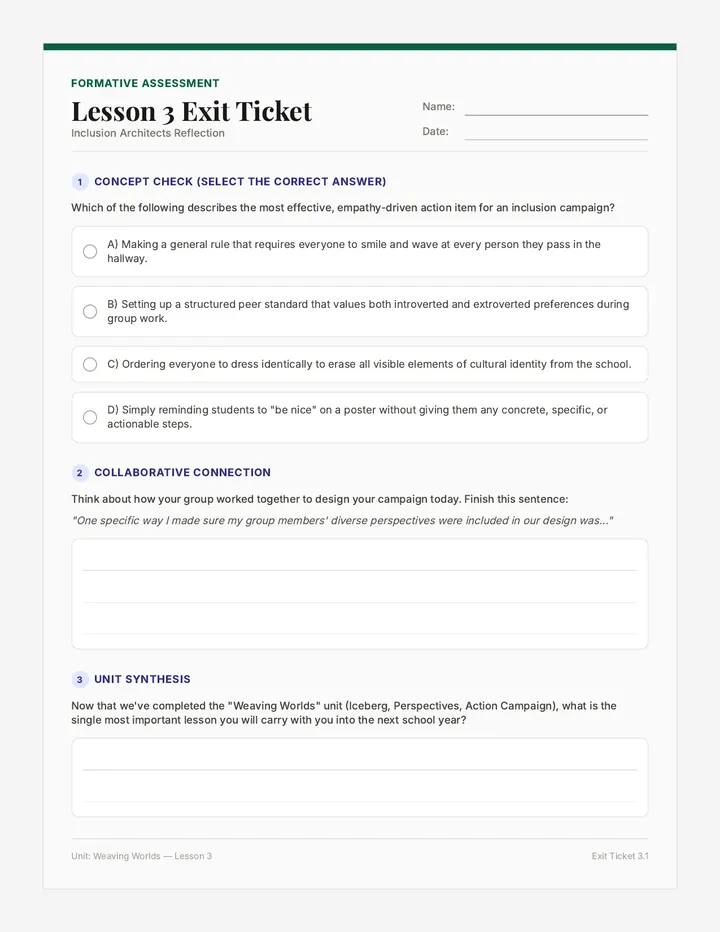
Students apply their deep listening and empathy skills to design a school-wide inclusion campaign or classroom standard, designing collaborative action items.
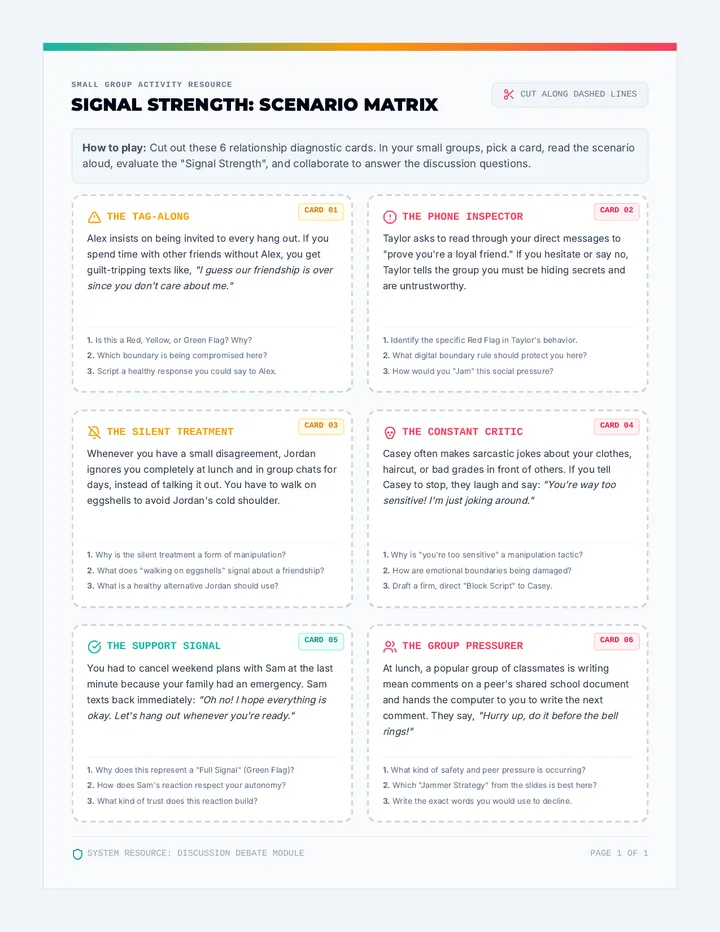
Print-ready small group scenario debate cards. Features 6 detailed scenarios designed to guide middle schoolers through peer pressure, boundary calibration, and red/yellow flag diagnostics.
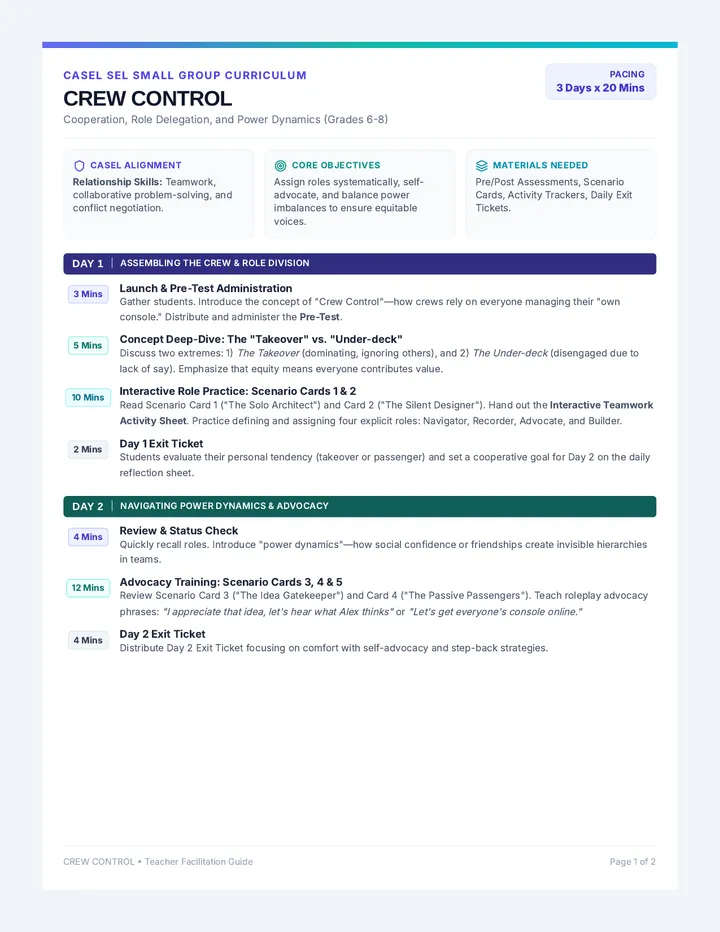
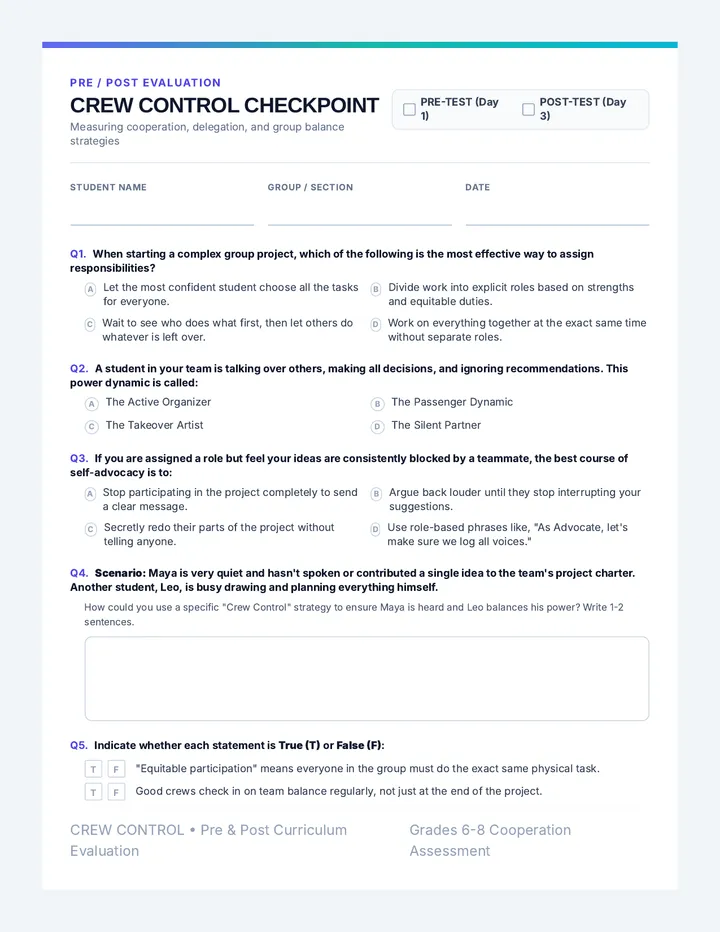
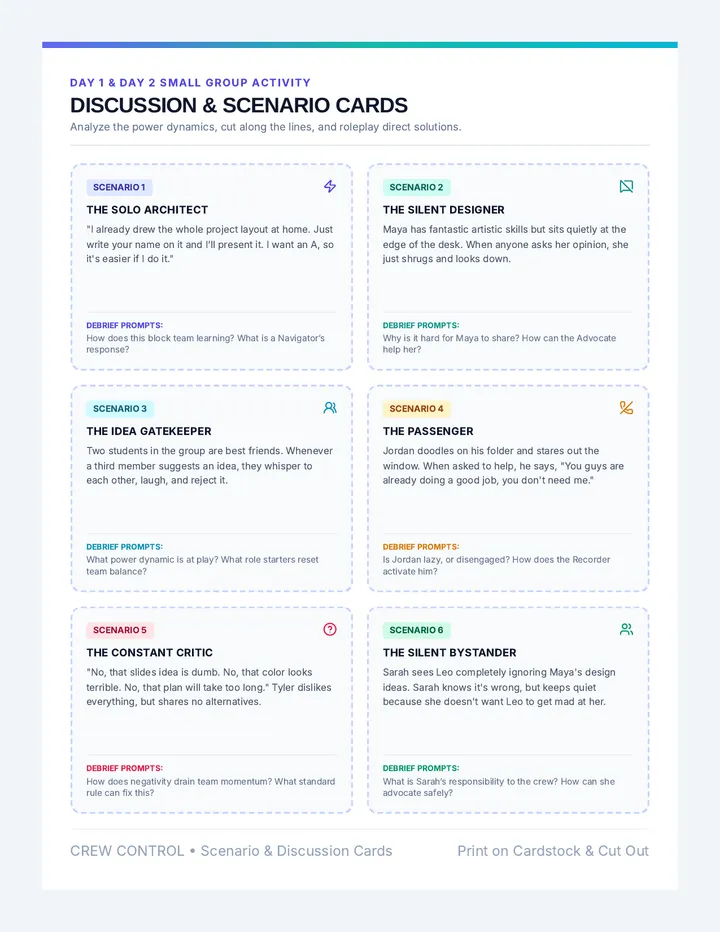
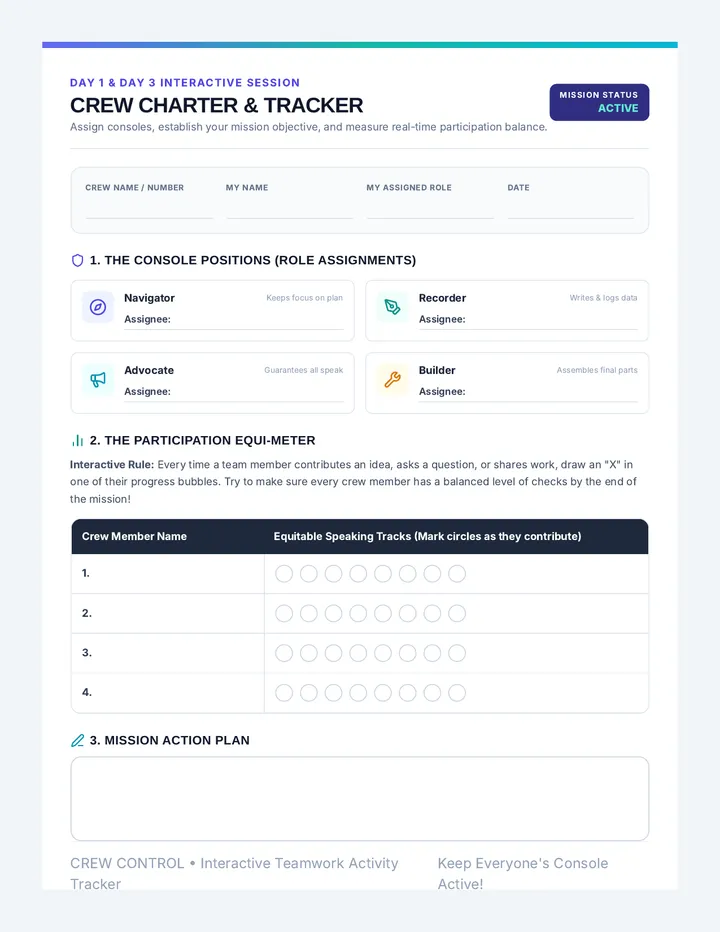
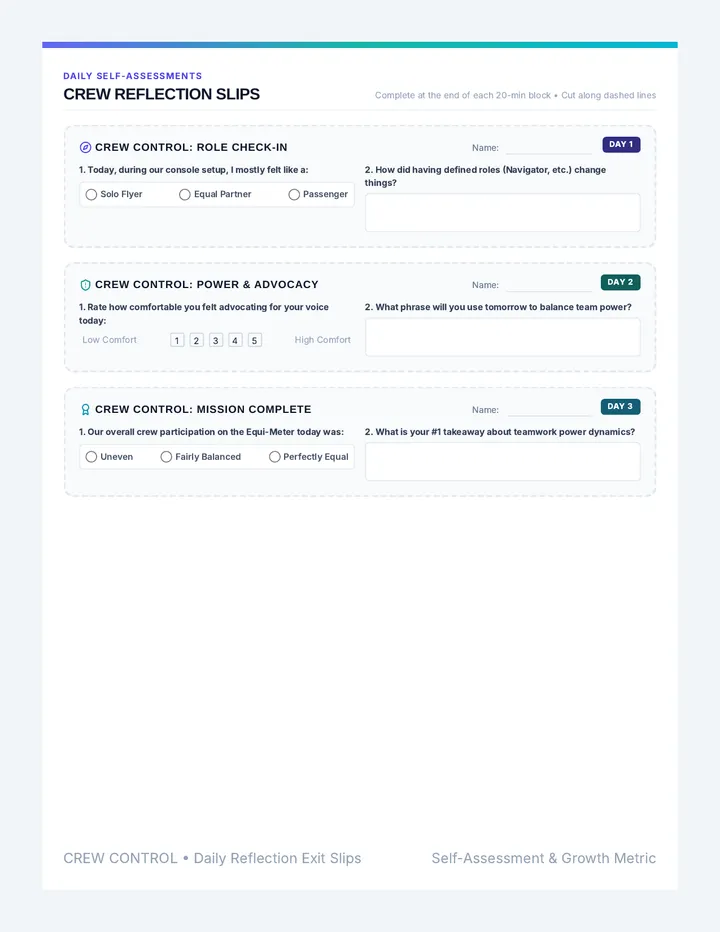
A 3-day small group curriculum for middle schoolers (grades 6-8) focused on cooperation, role delegation, navigating power dynamics, and ensuring equitable team participation. Aligns with CASEL's Relationship Skills and Responsible Decision-Making core competencies.
Students engage in active empathy and narrative exchange, analyzing how personal experiences and cultural backgrounds shape our perspectives of shared environments.
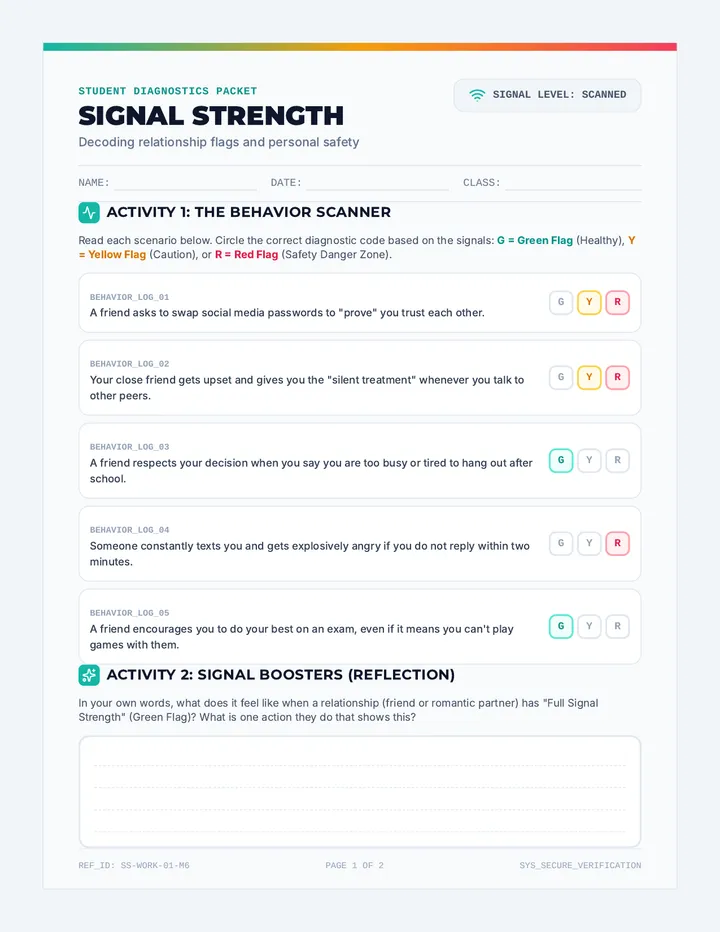
A 2-page print-ready interactive student worksheet packet for self-assessment, boundary mapping, and scripting refusal skills. Uses the cohesive digital/tech theme.