Lenny.com
Explore
Create
ActivitiesNewMathEnglish Language ArtsScience & EngineeringSocial StudiesGlobal LanguagesHealth & Physical EducationSpecial EducationCounseling & Life SkillsArts & CreativityESL
Lenny.com
Lenny.com
Explore
Create
ActivitiesNewMathEnglish Language ArtsScience & EngineeringSocial StudiesGlobal LanguagesHealth & Physical EducationSpecial EducationCounseling & Life SkillsArts & CreativityESL
Lenny.com
Lenny.com

Solutions

Lenny for EducatorsLenny for SchoolsLenny for Districts

Product

ExploreSign inCreateSupportAbout

Resources

Getting startedMTSS Acceleration Program

© 2026 Lenny Learning Inc.

TermsPrivacyAccessibility
LinkedInInstagramX
Lenny
Counseling & Life SkillsSelf-AwarenessBasic Emotion RecognitionComplex Emotion IdentificationEmotional Nuance & Mixed FeelingsBuilding Positive Self-ImageRecognizing Strengths & Growth AreasAccurate Self-AssessmentPersonal Values IdentificationCultural & Individual Identity ExplorationValues-Based Decision MakingSelf-ManagementStop-and-Think StrategiesDelaying GratificationIndependent Impulse ManagementIdentifying Stress TriggersShort-Term Goal SettingSMART Goals DevelopmentGoal Monitoring & AdjustmentBuilding Perseverance & ResilienceInternal Motivation DevelopmentComprehensive Stress Reduction PlanningSocial AwarenessRecognizing Others' FeelingsDemonstrating EmpathyRespecting Individual DifferencesUnderstanding Cultural DiversityComplex Empathetic ResponsesMultiple Viewpoint ConsiderationMulti-Perspective AnalysisChallenging Stereotypes & BiasRelationship SkillsActive ListeningClear Verbal & Nonverbal CommunicationBuilding Positive FriendshipsWorking Cooperatively in GroupsCommunicating Personal BoundariesRespecting Others' BoundariesAssertive ExpressionPeaceful Problem-SolvingContributing to Team GoalsComplex Conflict NavigationMediation & NegotiationHealthy Romantic RelationshipsResponsible Decision-MakingDaily Problem IdentificationBrainstorming Multiple SolutionsEvaluating Pros & ConsRecognizing Risks & ConsequencesApplying Ethical FrameworksInformed Risk-Benefit DecisionsRoot Cause AnalysisMindfulnessMindful BreathingBody Scan MeditationDaily Mindfulness ApplicationDaily Self-Care RoutinesBalancing Life DemandsAdvocating for Wellness NeedsMental Health SupportUnderstanding Anxiety SymptomsWorry Management StrategiesProgressive Muscle RelaxationRecognizing Depression SignsBuilding Mood-Supporting RoutinesBehavioral Activation for MoodUnderstanding Grief StagesHealthy Grief CopingCreative Expression of LossBehavioral SupportDaily Check-In ProceduresDaily Goal Setting & ReviewRecognizing Escalation Warning SignsRequesting Breaks & SupportSelf-Calming During DistressUnderstanding Positive ReinforcementToken Economy ImplementationBehavior Chart TrackingAnalyzing Behavior PatternsIdentifying Antecedents & ConsequencesDetermining Behavior FunctionFunction-Based InterventionsIndividualized Behavior ContractsData-Driven Behavior AdjustmentTherapeutic ApproachesThoughts-Feelings-Behaviors ConnectionRecognizing Thinking PatternsChallenging Negative ThoughtsPositive Self-Talk PracticeThought Record TrackingAdvanced Cognitive RestructuringComprehensive CBT PlansBehavioral Activation TechniquesBuilding Positive ExperiencesExposure Hierarchies for AnxietyPresent-Moment AwarenessNon-Judgmental ObservationSelf-Soothing & DistractionComplex Emotion LabelingReducing Emotional Vulnerability (PLEASE)DEAR MAN CommunicationGIVE Skills for RelationshipsFAST Skills for Self-RespectRadical Acceptance PracticeCrisis Survival Skills (TIPP)Understanding Trauma EffectsTrauma Responses & TriggersIdentifying Trauma FeelingsGrounding TechniquesRegulation During Trauma DistressSafe Place VisualizationProcessing Through NarrativeDeveloping Trauma StoryPersonalized Safety PlanningGroup SupportTurn-Taking & SharingGroup Conversation SkillsSharing in Supportive EnvironmentLearning from Similar ChallengesBuilding Community & BelongingNavigating Peer RelationshipsGroup Skill PracticeGroup Mental Health EducationStress & Anxiety UnderstandingCrisis Support & SafetyKnowing When to Seek HelpIdentifying Mental Health CrisesGrounding During CrisisUsing Crisis HotlinesBuilding Support NetworksAccessing Mental Health ResourcesWarning Signs & Coping StrategiesDeveloping Personal Safety PlansUnderstanding Suicide Warning SignsGatekeeper Skills for PeersDigital LiteracySocial MediaTechnology BasicsProductivity ToolsInternet and Online ResearchWeb Design and PublishingDigital CitizenshipOnline Safety and PrivacyEmerging TechnologiesFinancial LiteracyMaking Financial DecisionsBanking and AccountsConsumer SkillsSaving and InvestingCredit and DebtEmployment and IncomeTaxesInsuranceMajor PurchasesEconomic ConceptsFinancial PlanningCollege & Post-Secondary PlanningCareer ExplorationUnderstanding Post-Secondary OptionsCollege Research & SelectionAdmission RequirementsCollege Application ProcessPersonal Statement WritingFAFSA CompletionScholarship Search & ApplicationsUnderstanding Student LoansContinuing Education PlanningInterview PreparationResearching EmployersCommon Interview QuestionsSTAR Method ResponsesProfessional Interview PresenceVirtual Interview SkillsInterview Follow-UpJob Search SkillsUnderstanding Job PostingsEffective Job Search StrategiesNetworking for OpportunitiesResume Writing BasicsAction Verbs & AchievementsTailoring Resumes to JobsCover Letter WritingProfessional ReferencesProfessional CommunicationBusiness Email EtiquettePhone & Voicemail ProfessionalismMeeting ParticipationPresentation SkillsProfessional Work EthicTime Management & ProductivityTeamwork & CollaborationAdaptability & FlexibilityProblem-Solving at WorkConstructive FeedbackWorkplace RightsUnderstanding Employment LawsPay & Benefits UnderstandingWorkplace SafetyAnti-Discrimination & Harassment

Hero Code

A high school service-learning training lesson that equips Junior Achievement High School Heroes with professional standards, positive nonverbal communication, and active mentorship skills for elementary classrooms.

Hero Code

A high school service-learning training lesson that equips Junior Achievement High School Heroes with professional standards, positive nonverbal communication, and active mentorship skills for elementary classrooms.

"Based on Jordan’s performance, I would rate their professional conduct as [Rating] because [Evidence]. Jordan demonstrates an area for growth in [Skill]. This behavior negatively impacts the elementary students by [Classroom Impact]. To help Jordan transition toward professional role modeling, I would recommend [Specific Action] because [Rationale]."

Your Response (Write your complete, evidence-based evaluation below):

Part 5: Accountable Talk Peer Exchange

Read your evaluation to a partner. Your partner must respond using an Accountable Talk stem.

Partner Reviewer Name:  

Partner's Professionalism Rating:

Training Proficient Exemplar

Partner Feedback Note:

My JA High School Hero Commitment:

When I enter my elementary classroom on field trip day, one non-negotiable professional behavior I promise to model is:

Hero Code Student Worksheet • Page 2 of 2 Junior Achievement High School Heroes Program

Descriptor
Student Evidence Characteristics
Level 1EmergentVague subjective opinion ("Jordan is rude"); ignores sentence frames; provides no concrete kindergarten impact or actionable remedy.
Level 2DevelopingIdentifies phone use but omits body language; uses sentence frames partially; offers generic advice ("Pay more attention").
Level 3Proficient (Target)Accurately rates as Training Level; identifies nonverbal (arms crossed) and device distraction; articulates kindergarten impact (distraction, feeling unsupported); provides specific actionable guidance.
Level 4ExemplarAll of Level 3 plus notes partner co-teaching responsibility, explains kindergarten developmental literacy barrier, and connects conduct to future workplace career readiness.

The "90-Second Kindergarten Reset" Rehearsal Protocol

Before taking high schoolers to their elementary site, run this high-energy simulation in pairs:

Round 1: The Bad Model Partner A roleplays Jordan (looking away, closed arms). Partner B roleplays asking for help and reflects on how it feels to be ignored.

Round 2: The Coaching Step Partner B delivers the Level 3+ actionable feedback using Accountable Talk stems ("I noticed you crossed your arms; try kneeling down...").

Round 3: The Exemplar Reset Partner A re-does the interaction: kneels down to eye level, offers a warm smile, and points kindly to the picture book.

Live Elementary Field Trip Observation Checklist

Keep this checklist on your facilitator clipboard during the elementary site visit:

Device Free: Phones stowed away in backpacks throughout lesson.

Eye-Level Engagement: Mentors kneel, crouch, or sit at student tables.

Co-Teaching Harmony: Active listening while partner facilitates.

Warm Verbal Scaffolding: Explains concepts with patience & encouragement.

Hero Code Teacher Guide • Section 2 of 2 Junior Achievement Service-Learning Facilitator Resource

Training Level
Jordan uses a personal phone during instruction and displays closed body language
active engagement and professional communication
creating a distraction and making learners feel unsupported
storing cell phones away and maintaining active listening body language
High School Heroes must model professional workplace standards

Accurate Rating: Training Evidence: Phone + Arms Crossed Actionable Workplace Step

Level 4 Exemplar Response (Advanced Distinction)

Exceeds Standard

“Based on Jordan’s performance, I would rate their conduct as Training Level because their physical disengagement at the door directly undermines the co-teaching partnership and abandons student safety. Jordan’s closed body language and command to ‘follow what’s on the page’ demonstrates a critical lack of empathy for early childhood literacy, as kindergarteners cannot independently read written text. To transition toward exemplar role modeling, Jordan must silence all devices in their locker, kneel to eye level with open palms, and guide younger learners through pictorial scaffolding because professional mentors must create an emotionally safe learning environment.”

Accountable Talk Partner Exchange: Exemplar Dialogue

Partner A (Sharing):

"I rated Jordan at Training Level because standing near the doorway checking texts makes it seem like Jordan is bored and doesn't want to be in the classroom."

Partner B (Accountable Talk Response):

"I agree with your rating of Jordan because phone use is completely unprofessional in front of young students, and I would add that leaning over with arms crossed is physically intimidating to a 5-year-old child."

Common Student Misconceptions to Address During Grading:

Incorrect Rating (Proficient): If a student rates Jordan as "Proficient" because "at least they answered the kid," remind them that tone, body language, and developmental awareness are essential requirements.

Vague Advice: If a student writes "be nicer" or "do better," require revision to name specific physical actions (e.g., "put phone in bag," "kneel down to eye level").

Hero Code Answer Sheet • Page 2 of 2 Junior Achievement Professional Development Series

You might also like

Initiation Hurdles Slides

Execution Lab

An executive functioning and work completion curriculum designed specifically for gifted middle schoolers. Students learn cognitive strategies to dismantle perfectionism paralysis, accurately pace multi-phase projects, and conquer the final submission hurdle.

MB

Michele Berning

6
Steady Crew Slides

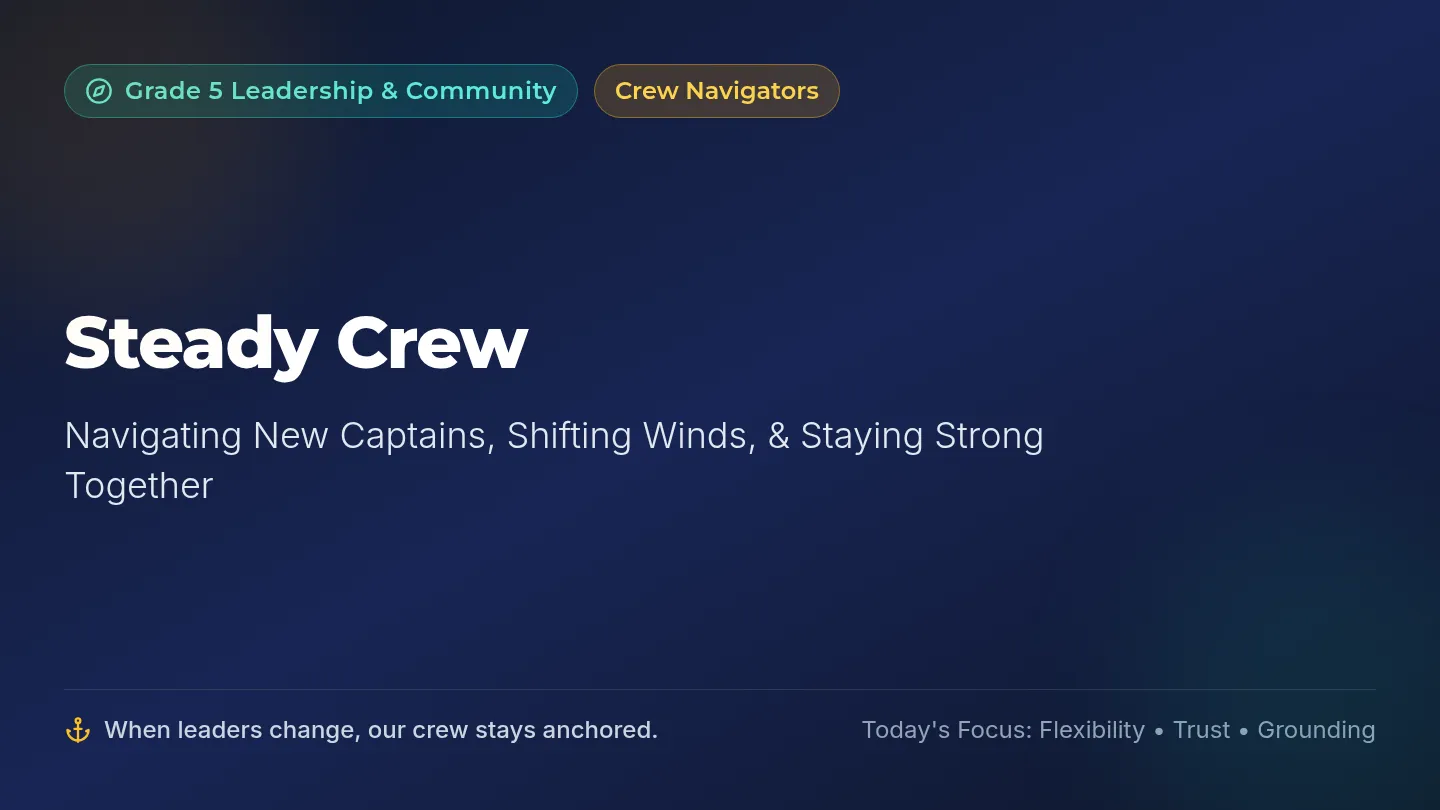
Steady Crew

A social-emotional and leadership lesson for 5th graders navigating frequent changes in leadership, focusing on peer resilience, building two-way trust, and grounding tools for uncertainty.

L

lakeisha.wike

3
Steady Crew Teacher Guide

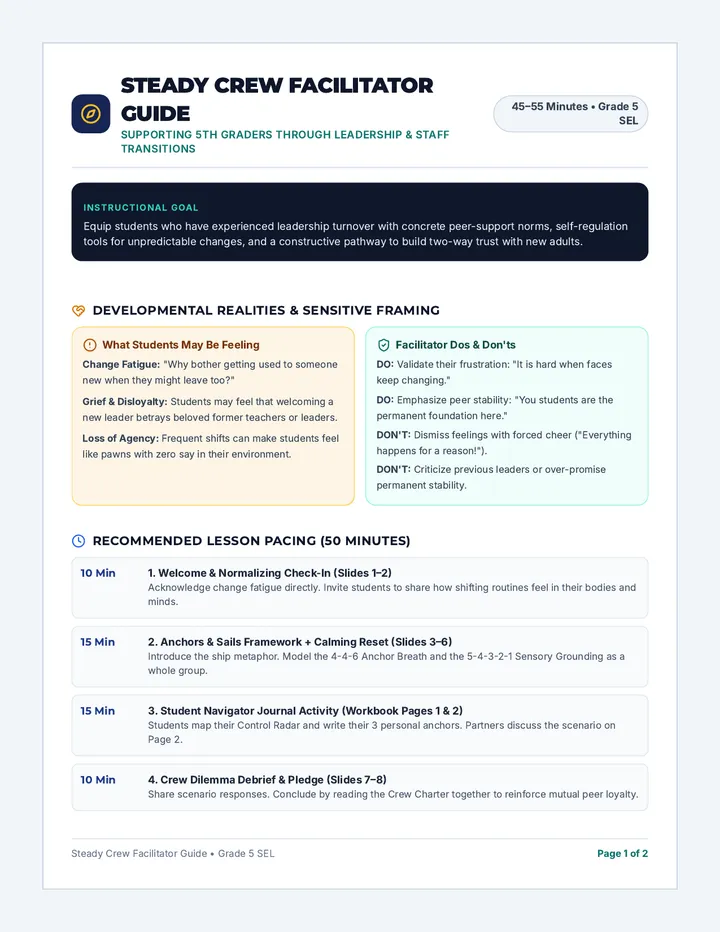
Steady Crew Teacher Guide

A 2-page comprehensive teacher facilitation guide containing trauma-informed framing, verbatim discussion scripts, pacing, and ongoing anchor routines for leadership transitions.

L

lakeisha.wike

Leadership Playbook Curriculum Guide

Leadership Skills Program

An adaptable 8-week high school leadership and self-regulation curriculum program. Each weekly unit provides targeted facilitation, interactive labs, and student application materials for social intelligence and composure.

MP

Madison Paz

13
Gig Economy Activity Packet

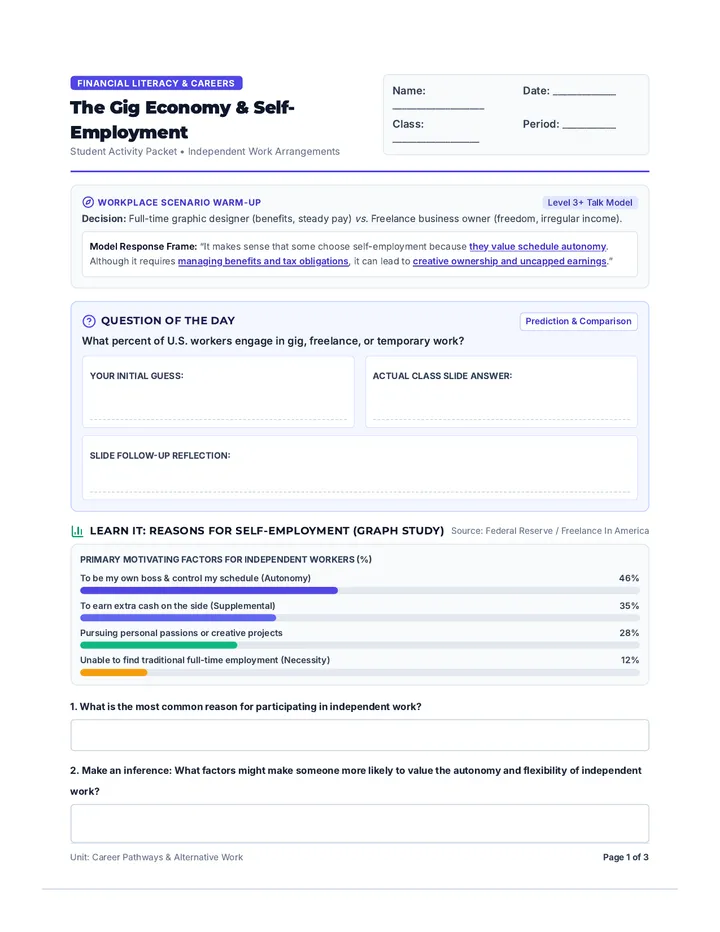
Gig Economy Pathways

A comprehensive personal finance and careers lesson examining independent contracting, app-based gig work, tax obligations, and the trade-offs of self-employment.

Lenny Avatar
Lenny
2
Steady Crew Student Journal

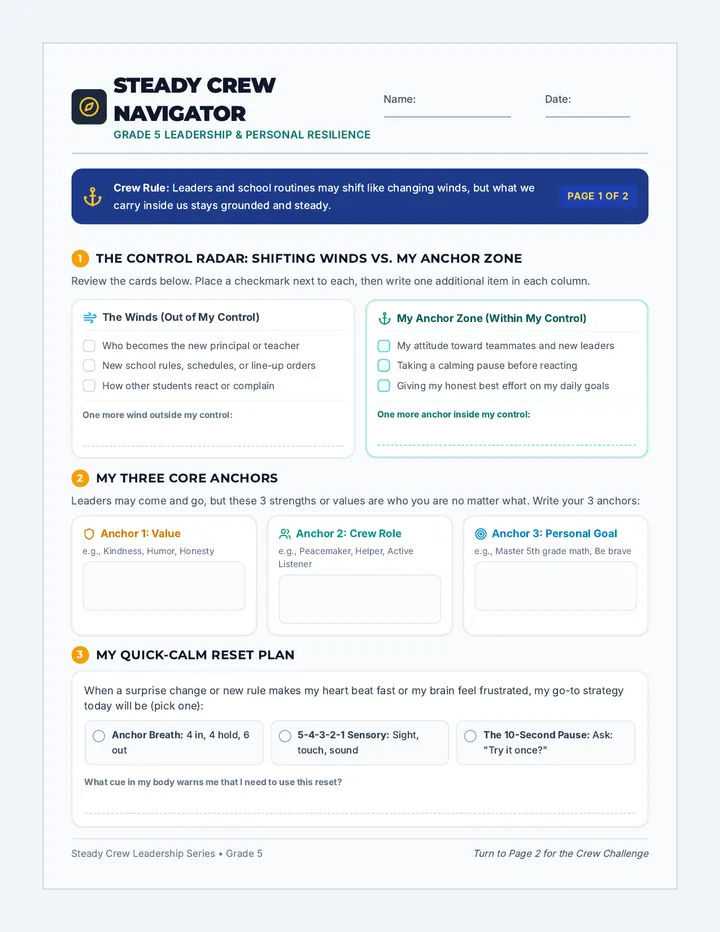
Steady Crew Student Journal

A 2-page printable student journal and reflection workbook where 5th graders map their personal anchors, practice grounding resets, and analyze trust-building during leadership changes.

L

lakeisha.wike

Launch Ignition Slides

Spark to Finish

A structured multi-day sequence designed to build executive function routines, overcome task initiation friction, sustain momentum through completion, and cultivate self-confidence.

MB

Michele Berning

9
Finish Line Slides

The Final Mile

Students analyze the psychological drop-off that occurs once a concept is understood, overcoming the 90% trap. Students implement verification checklists, anti-distraction intervals, and a definitive submission protocol to reliably turn in completed work.

MB

Michele Berning

2
Steady Crew Slides

Steady Crew Slides

An interactive 8-slide presentation exploring resilience, team flexibility, building trust with new leaders, and emotional grounding tools for 5th graders.

L

lakeisha.wike

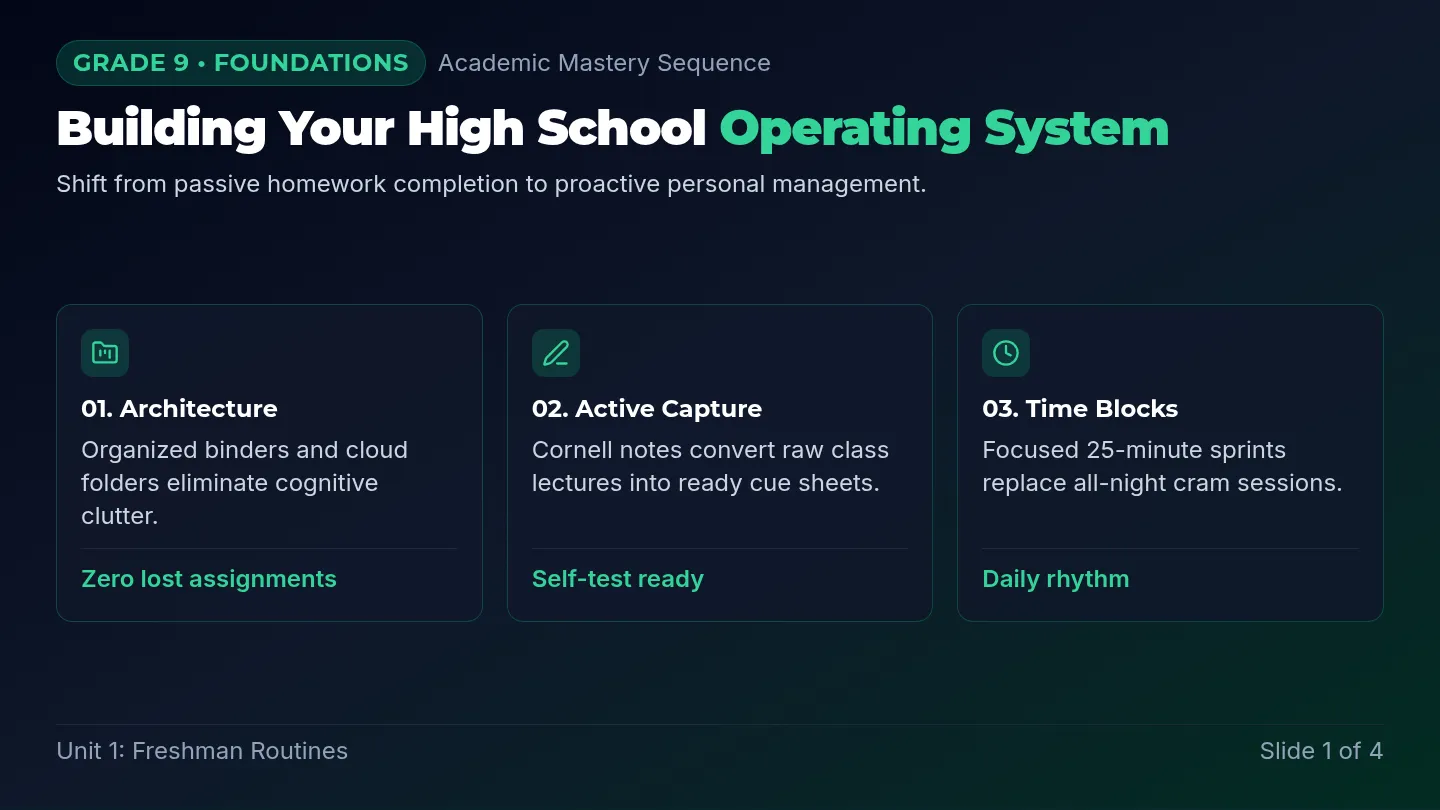
Freshman Launch Slides

Mindset to Mastery

A four-year developmental progression of academic study skills designed for high school educators. Guides students through foundational habits, active memory encoding, sustained project management, and college-ready metacognition.

S

smikamo

8
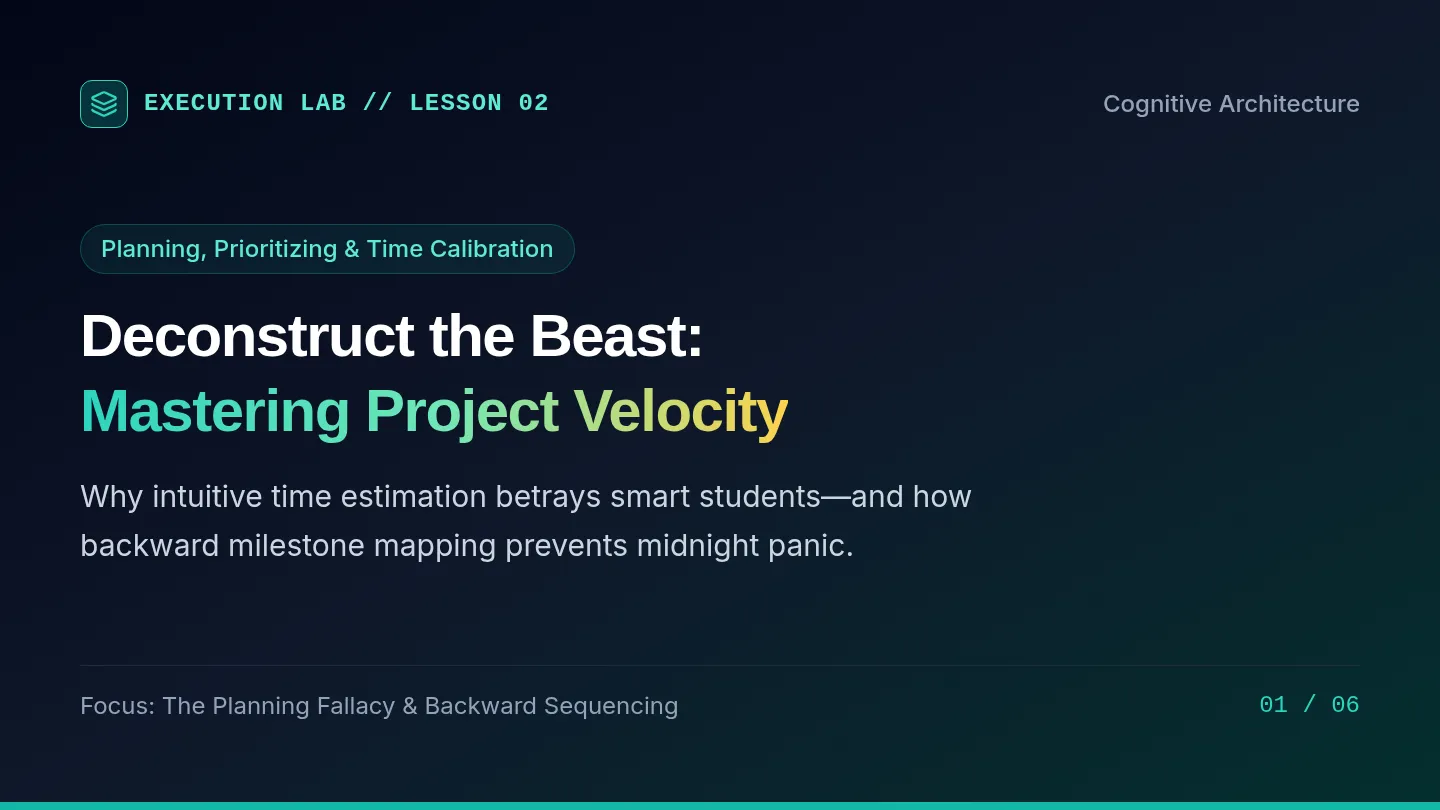
Project Deconstruction Slides

Deconstruct the Beast

Students investigate the planning fallacy and learn why intuitive estimations often fail during complex projects. Through project deconstruction, time buffers, and dependency mapping, students turn nebulous assignments into structured micro-targets.

MB

Michele Berning

2
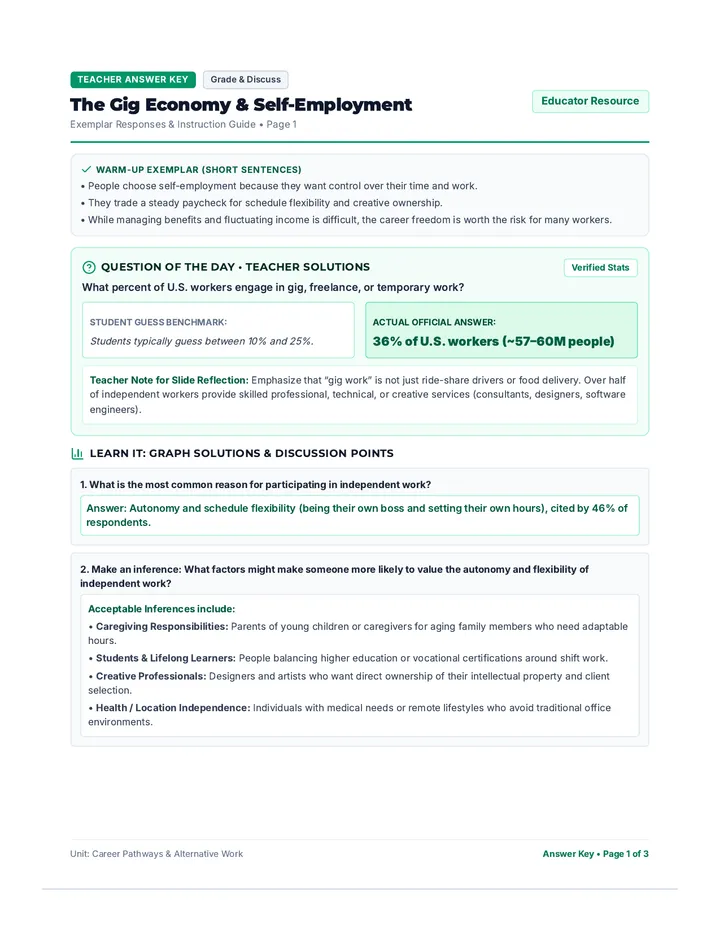
Gig Economy Answer Key

Gig Economy Answer Key

A comprehensive 3-page teacher answer key and scoring guide providing exact data, exemplar student answers, and discussion prompts for the Gig Economy Activity Packet.

Lenny Avatar
Lenny