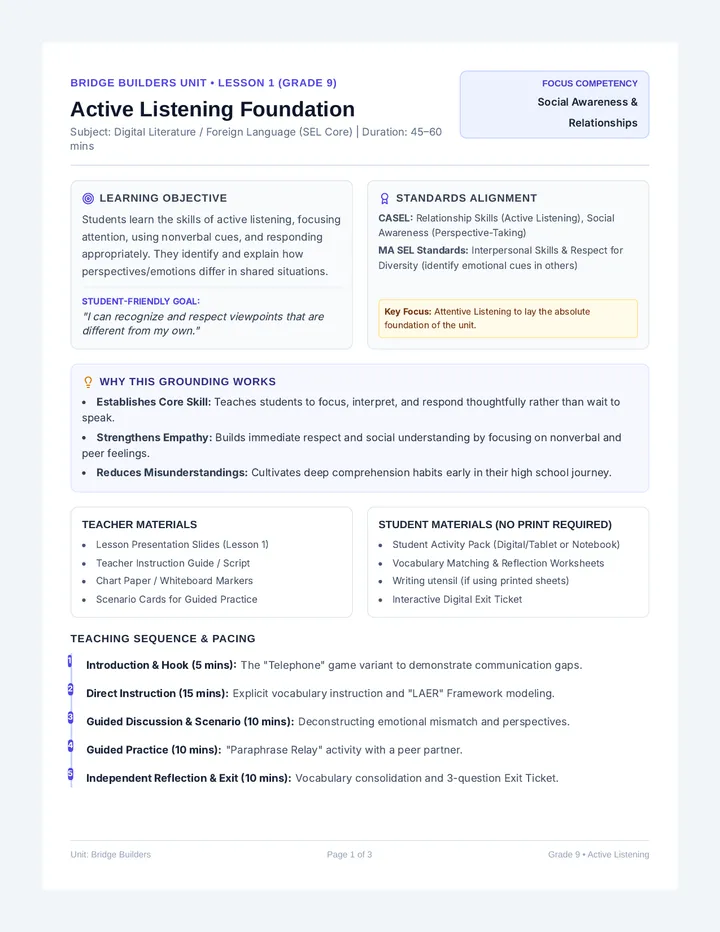
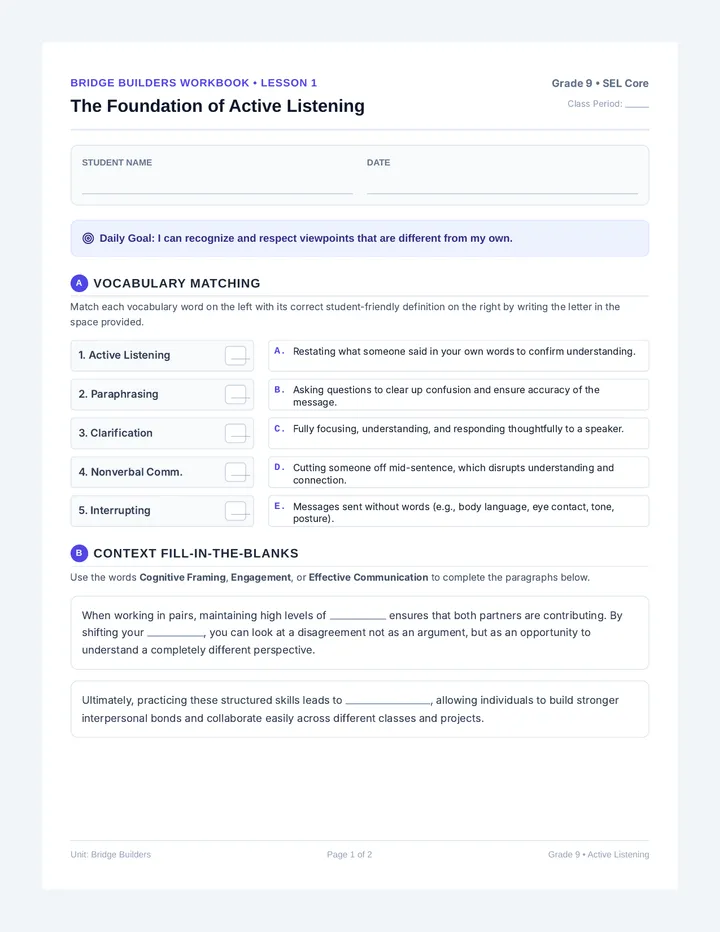
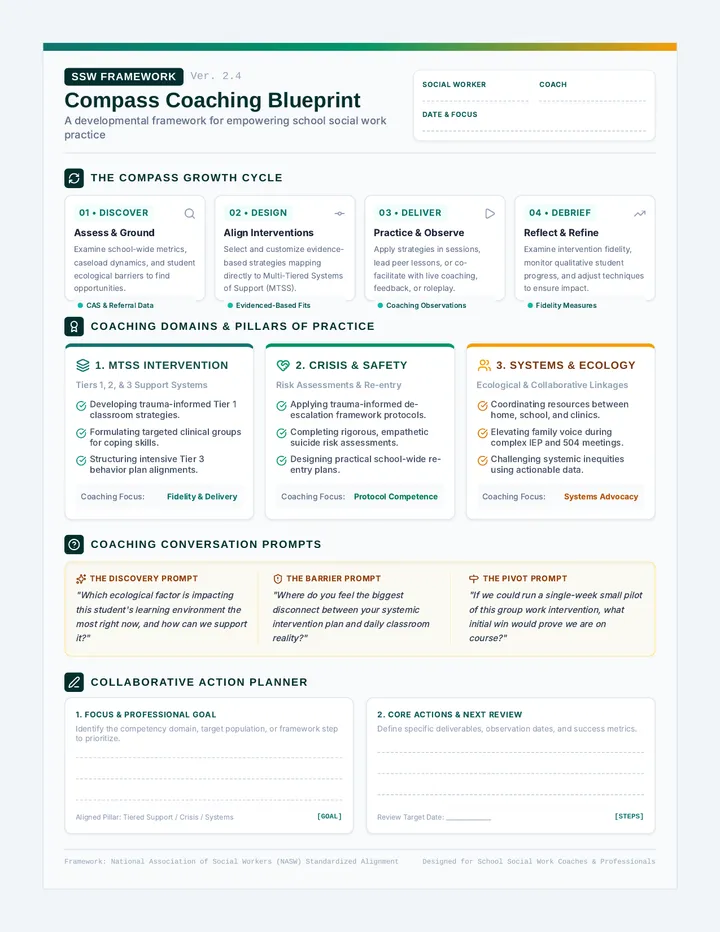
Playbook Lesson Plan Study Playbook
Mastering Techniques Through Play
Lesson Plan
Overview
Audience
Middle School (11+)
Duration
60 Minutes
Approach
Interactive, Game-Based
Objective
Students will learn effective study techniques by connecting them with familiar game strategies, improving both their academic and social skills.
Materials
Study Playbook Lesson Plan
Study Skill Power Cards
Arena Setup Guide
Game Log Activity Sheet
Phase 0: Preparation
Time: 10 Minutes
Review all generated materials and ensure understanding of the study techniques.
Set up designated game tables (ping pong, pool, basketball, foosball) in the classroom or adapt with available resources.
Prepare Study Skill Power Cards to illustrate key concepts.
Confirm technological setup (if needed) for any digital presentation or scoring tools.
The Game Clock
1
Warm-Up Drill (10 min)
Begin with a discussion linking games to learning. Ask students to share favorite games and skills used (strategy, focus, teamwork). Introduce the concept that game skills are study skills.
2
Main Event: Station Challenges (35 min)
Divide class into groups at station (Ping Pong, Pool, Basketball, Foosball). At each station, present a mini-challenge correlating strategy to study techniques (e.g., precision in pool = focusing on small goals).
Rotate groups every 8-9 minutes.
Use Study Skill Power Cards as prompts.
Students record resonating techniques in their Game Log.
3
Post-Game Analysis (5 min)
Gather for reflection on parallels between games and habits. Students share one key insight. Reinforce connections and provide application steps for daily work.
Coach's Tip
If you don't have full-sized tables, use tabletop versions, "trash-ketball," or paper-clip football. The strategy connection is what matters most!
Game Strategy Warm Up Worksheet Pre-Game Warm-Up
Bridging the Gap: Games vs. Grades
Class Opener
Get Your Head in the Game
This warm-up is designed to quickly engage you by connecting the skills you use in your favorite games to effective study habits. Think about the strategies you use when you're playing for the win—those same moves can help you crush your schoolwork.
01
Discussion Kick-Off
What game do you love to play and why?
02
Skill Identification
List the key skills you rely on to win (e.g., focus, strategy, teamwork, speed):
03
Link to Learning
How does teamwork in foosball or basketball relate to group study sessions?
Final Pre-Game Check
Can you think of one way to apply a game strategy to your study habits today?
Record your thought here...
FOCUS
TEAMWORK
STRATEGY
Study Skill Power Cards Study Skill Power Cards
Print & Cut for Game Stations
Station 01
Ping Pong
Game Strategy
Quick Reaction & Shot Placement
Anticipating your opponent’s move and reacting with precision in the moment.
Study Technique
Setting Micro-Goals
Break your study block into 10-minute "sprints" with a specific goal for each (e.g., "Define 5 terms").
"How does focusing on one serve at a time relate to focusing on one math problem at a time?"
Station 02
Pool / Billiards
Game Strategy
Precision & Calculated Planning
Calculating angles and planning 2-3 shots ahead to clear the table.
Study Technique
Task Deconstruction
Breaking a giant project (the whole table) into individual, manageable steps (single shots).
"How can carefully planning each shot help in organizing your study material?"
Station 03
Basketball
Game Strategy
Teamwork & Rapid Adaptation
Communicating with teammates and reacting to a fast-moving defense.
Study Technique
Collaborative Learning
Using group study sessions to explain concepts to others, which reinforces your own knowledge.
"How does working as a team in a drill translate to an effective group study project?"
Station 04
Foosball
Game Strategy
Coordination & Strategic Pivot
Adjusting your rod positions quickly when the ball changes direction.
Study Technique
Pivoting Study Methods
Recognizing when a method (like rereading) isn't working and switching to something else (like flashcards).
"How is adapting your defense in foosball like changing your study plan mid-week?"
Cut along the outer borders • Laminate for durability • Place at game stations
Game Log Activity Sheet Official Game Log
Station Rotation & Strategy Scouting
Player Name:
Team / Date:
Station 1: Ping Pong
The Goal:
Quick Decision-Making
Observation / Reflection:
How does setting small goals improve focus?
Station 2: Pool
The Goal:
Precision & Planning
Observation / Reflection:
Why break a "shot" into small parts?
Station 3: Basketball
The Goal:
Teamwork & Communication
Observation / Reflection:
How can group study feel like a team drill?
Station 4: Foosball
The Goal:
Coordination & Pivoting
Observation / Reflection:
When should you change your study plan?
Post-Game Analysis
1. Which game station did you find the most engaging and why?
2. Describe a study technique you learned today that you actually plan to use.
3. How can you apply a strategy from the games to your homework tonight?
Official Scouting Report
STUDY PLAYBOOK SERIES • 2026
Arena Setup Guide Arena Setup Guide
Transforming the Classroom into a Study Lab
Teacher Resource
Station Configuration
1
Ping Pong Station
Requires: Table, paddles, ball. Use "Trash-ketball" or tabletop versions if space is tight.
2
Pool Station
Requires: Mini pool table or "Penny Pool" (flicking coins to hit targets).
3
Basketball Station
Requires: Small hoop or wastebasket + crumpled paper. Focus on "drills."
4
Foosball Station
Requires: Foosball table or "Clothespin Soccer" using a shoebox and sticks.
Adaptation Hack
No tables? No problem! Use **"The Desk Arena"** method:
• **Ping Pong:** Bounce a ping pong ball into cups on desks.
• **Pool:** Use paper clips and a "cue" (pencil) to hit "balls" (pennies).
• **Basketball:** The classic "trash-ketball" setup.
• **Foosball:** Finger football or pencil-soccer.
Setup Checklist
Clear Perimeter: Ensure there is a 3-foot "buffer zone" around each station for safe movement.
Card Placement: Tape the Study Skill Power Cards directly onto the edge of the game table.
The Scoring Zone: Set up a central timer (projected) to manage the 8-minute rotations.
Activity Logs: Place a stack of Game Logs at each station or distribute to students before starting.
Coach's Setup Tip:
"Group students by mixed ability. The 'gamers' in the class will naturally take a leadership role, helping you connect the strategies to the gameplay."