A 30-minute social-emotional learning lesson for elementary students focused on building, maintaining, and repairing friendships through interactive brainstorming and creative activities.
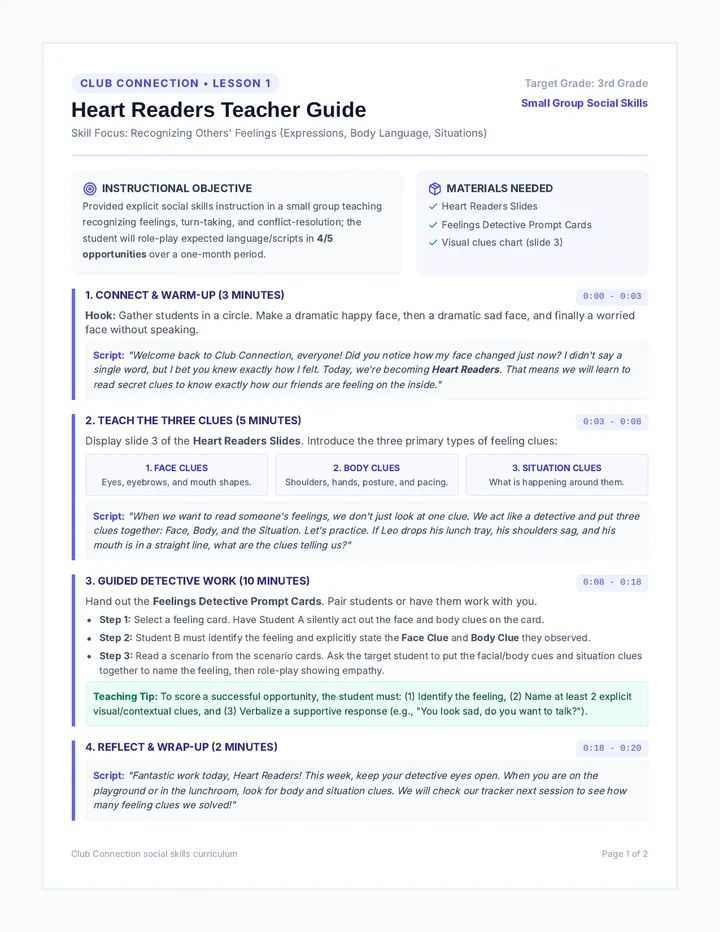
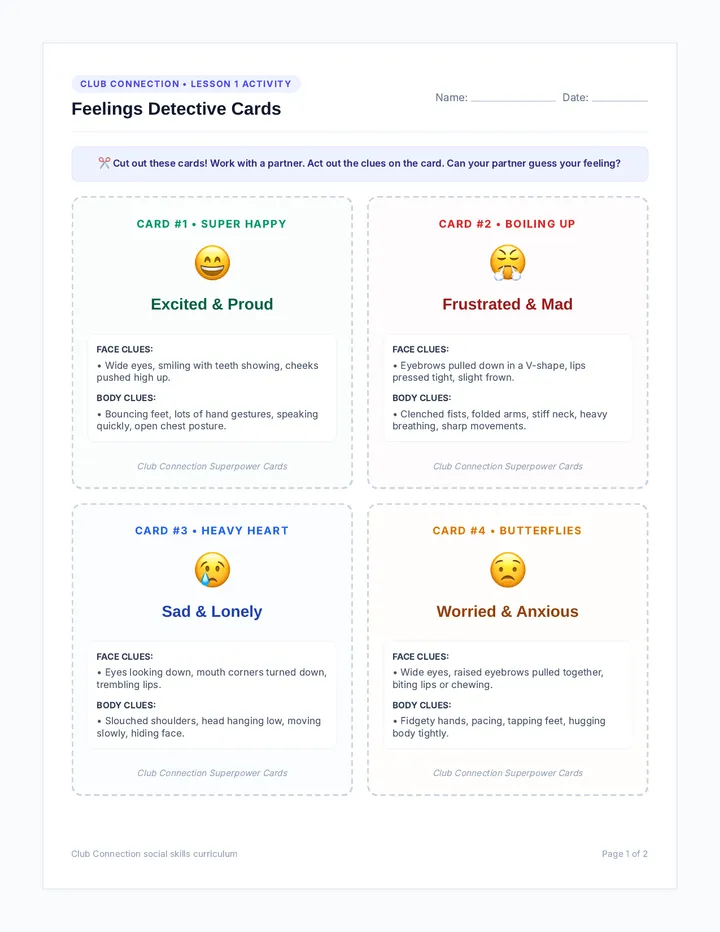
A comprehensive social skills curriculum sequence designed for small groups (specifically 3rd graders) to master recognizing feelings, conversational turn-taking, and conflict resolution over three structured lessons, including visual prompts, role-play scripts, and teacher guides with tracking tools.
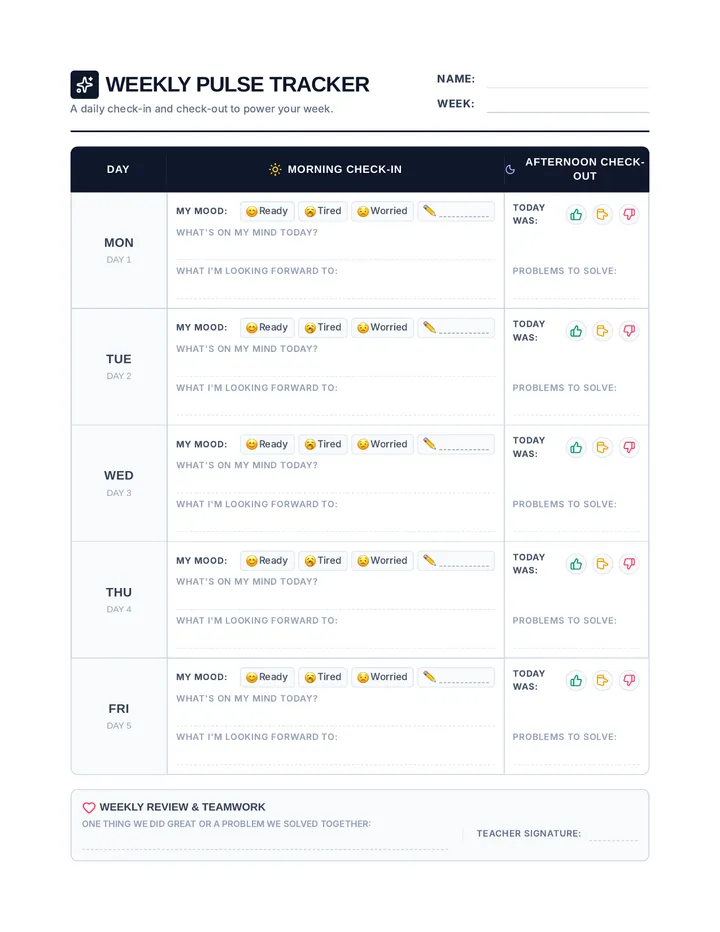
A daily reflection routine for elementary students to check in on their emotional state, anticipate challenges, and review their day with their teacher or peers.
A printable weekly check-in and check-out tracker for fourth-grade students, featuring a minimalist five-day layout with a custom write-in mood option and a dedicated teacher signature section.
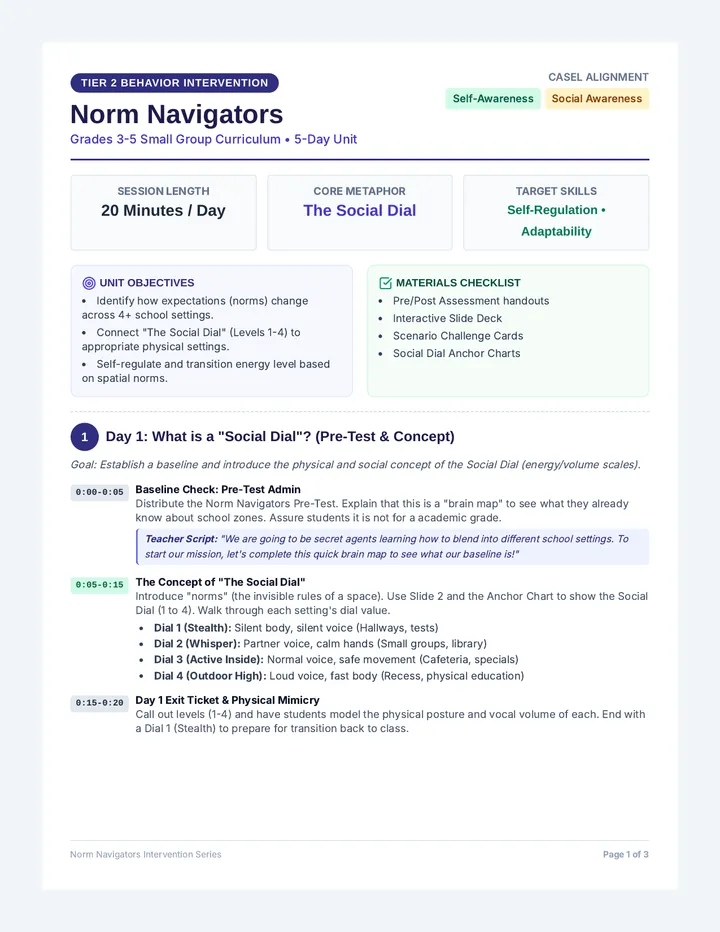
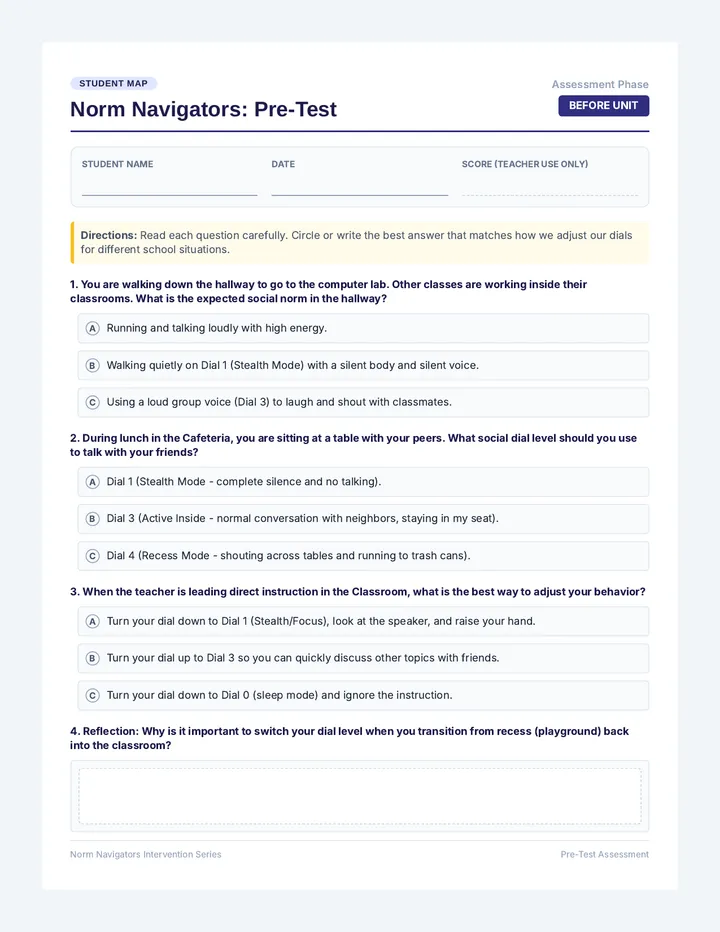
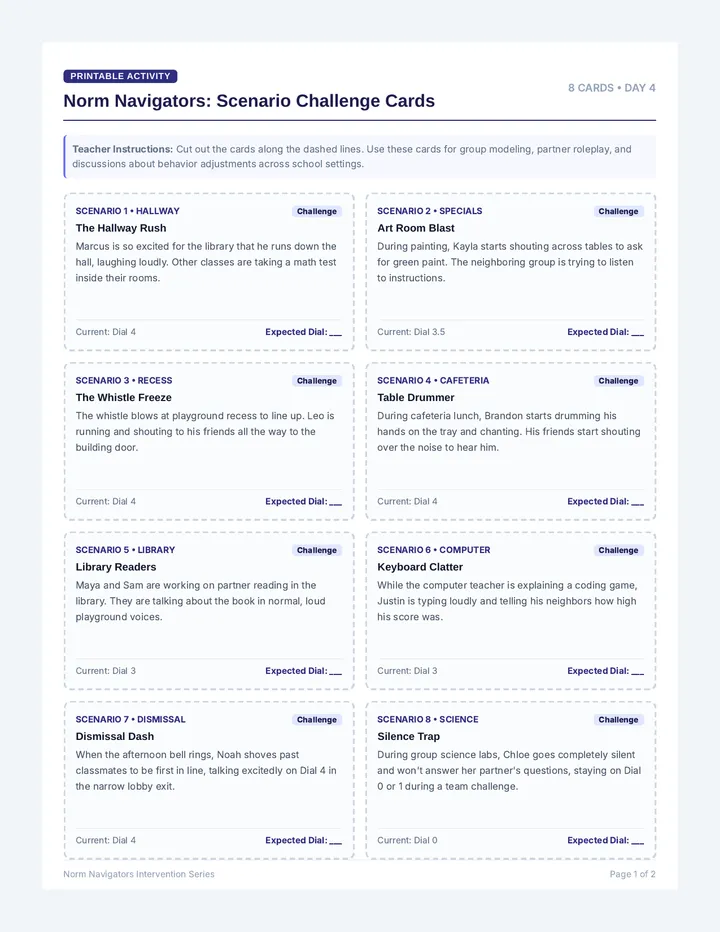
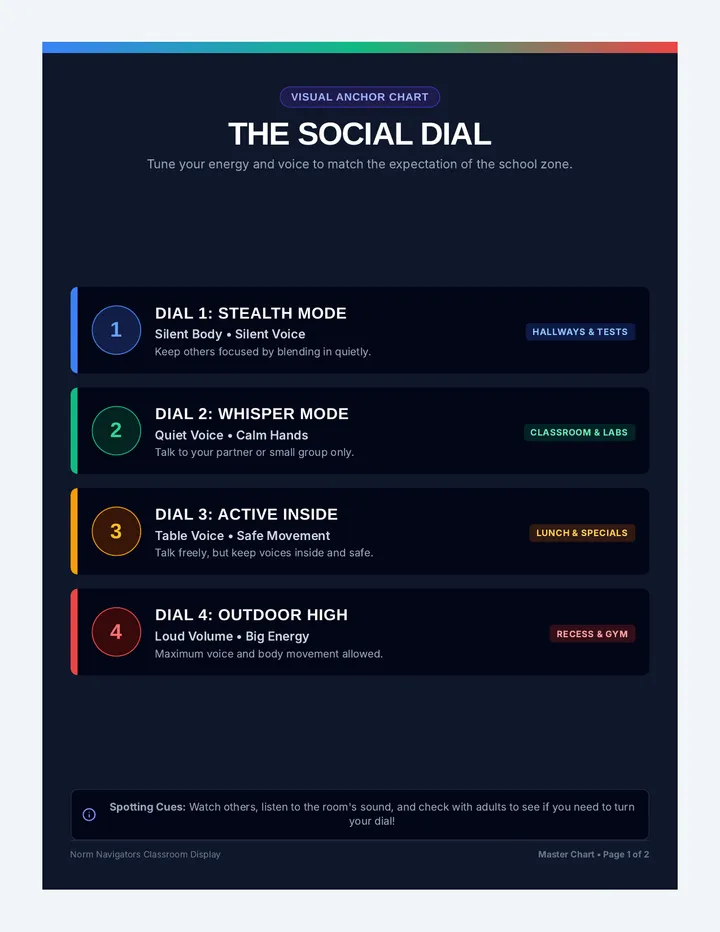
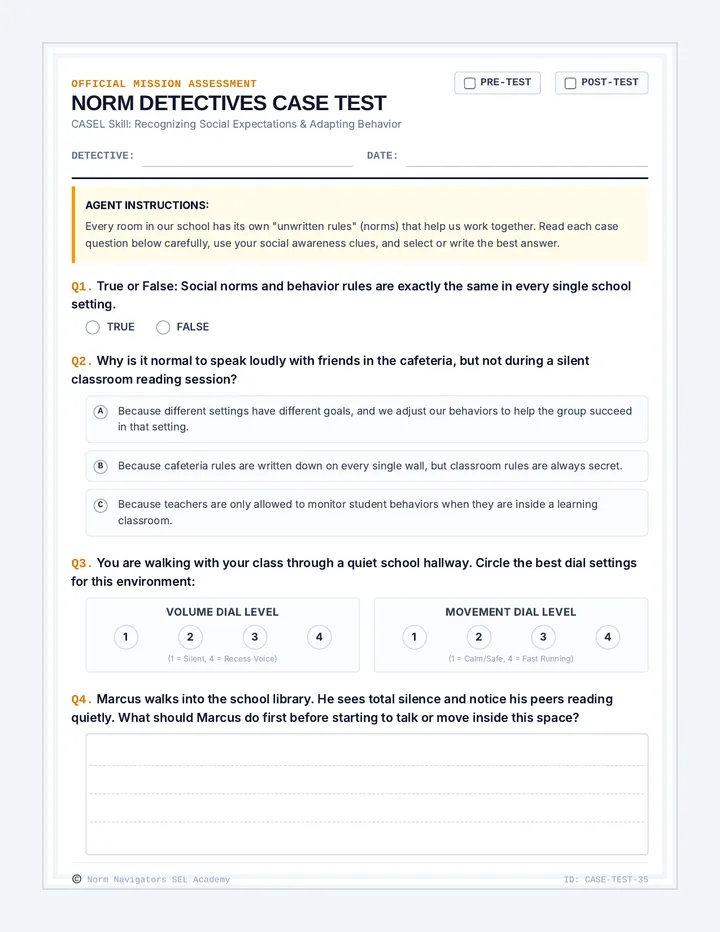
A 5-day Tier 2 behavior intervention sequence for grades 3-5 focused on recognizing and adapting to social norms across different school settings. Aligned with CASEL Self-Awareness and Social Awareness competencies, the sequence uses the concept of the 'Social Dial' to help students regulate their energy and volume.
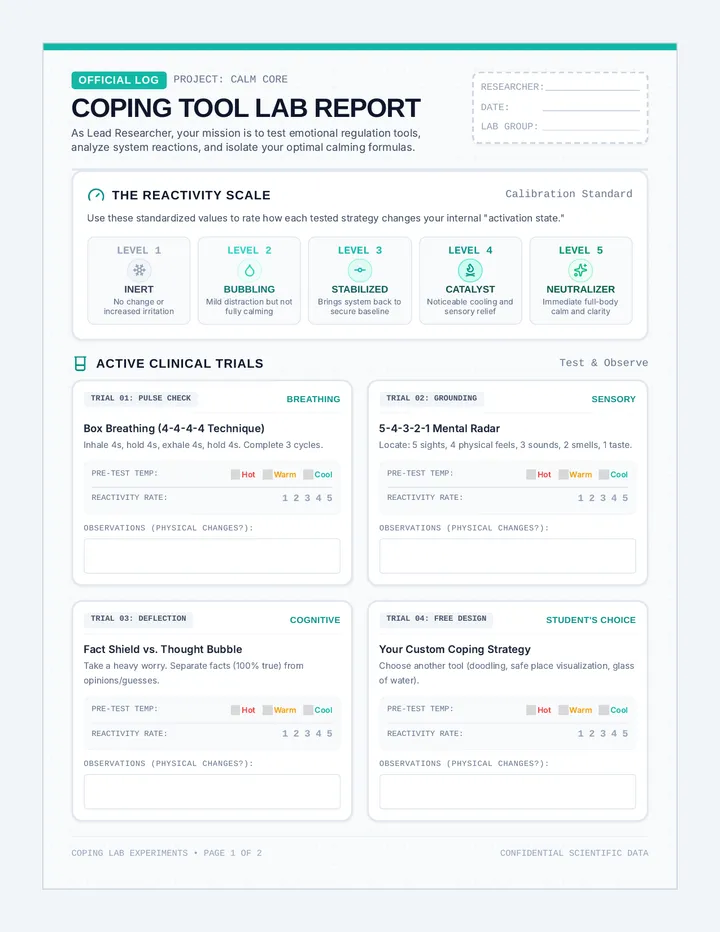
An engaging, science-themed counseling lesson where students become 'researchers' to test, rate, and formulate their own personalized mental health coping tools. Students track their emotional 'reactions' and compile a custom recipe for self-care and emotional regulation.
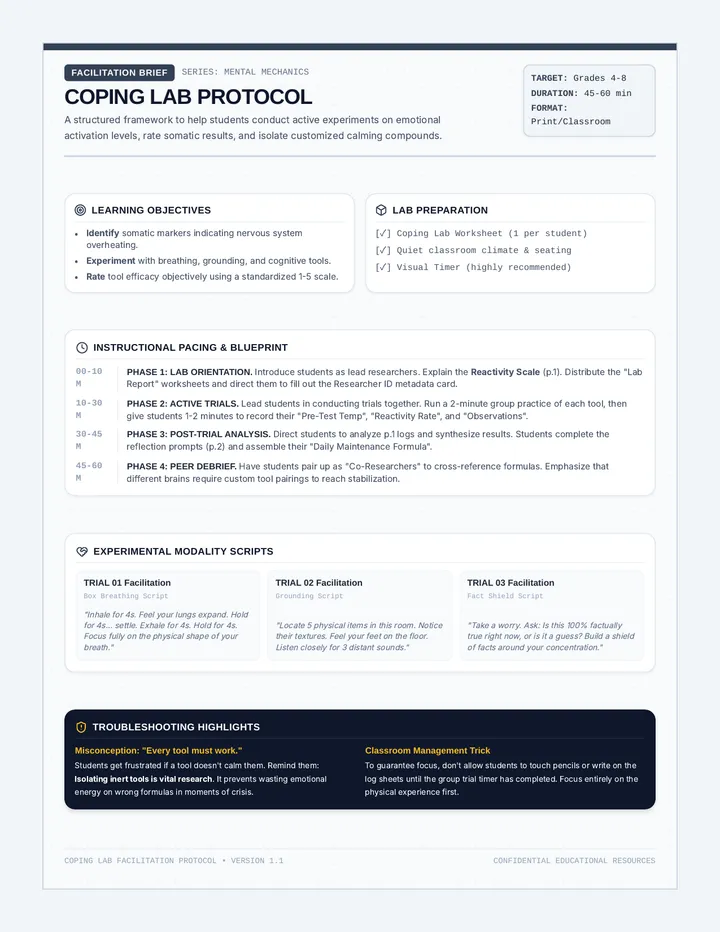
A professional 1-page teacher facilitator guide for running the Coping Lab lesson. It provides instructional pacing, precise prompts for conducting the experiments, student-facing scripts, troubleshooting advice, and common misconceptions.
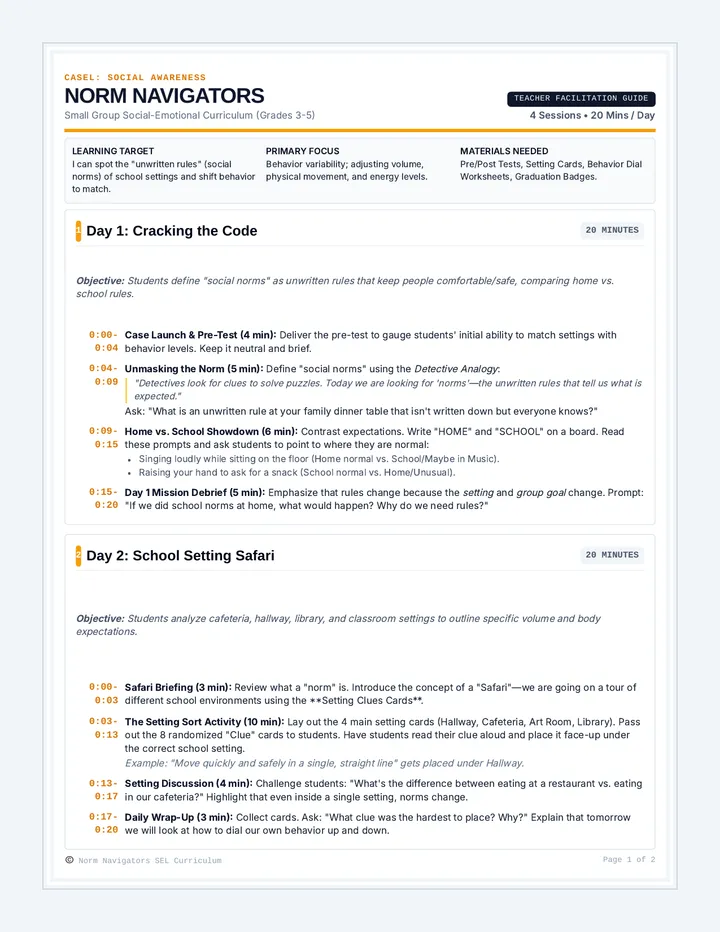
A comprehensive 4-day small-group social-emotional learning sequence for grades 3-5. Aligned with the CASEL Social Awareness framework, this unit teaches students to identify how expectations and social norms change across different school environments and how to adapt their behaviors successfully.
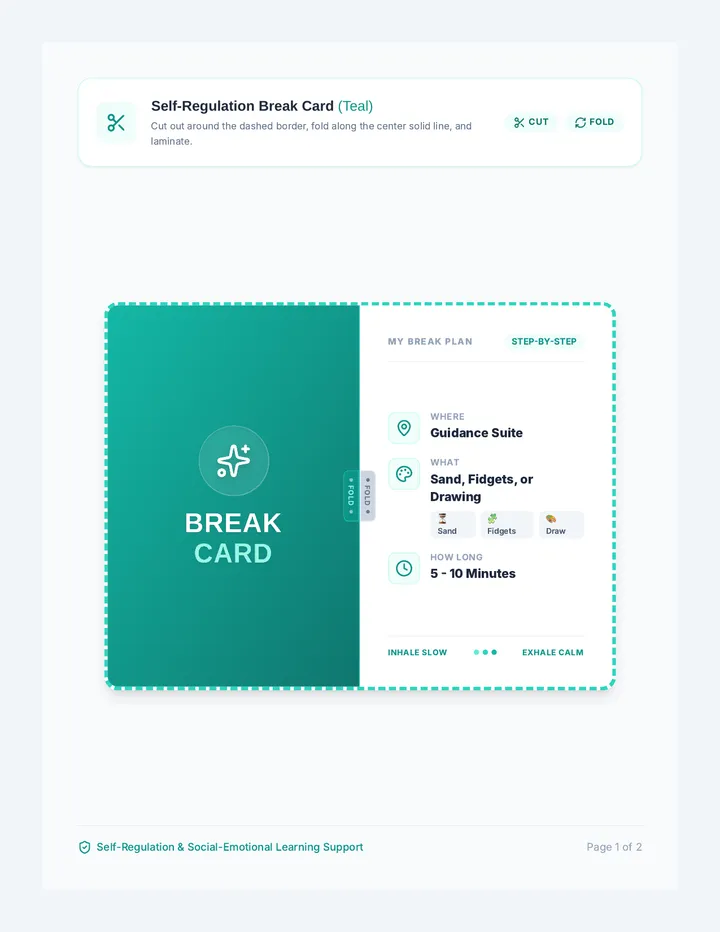
A collection of visual prompts and break cards designed to support students in self-regulation and managing emotions within the school environment.
A highly visual, science-themed 2-page worksheet where students act as lead researchers. Page 1 contains a custom 1-5 'Reactivity Scale' and a 2x2 grid to test and observe 4 active coping experiments. Page 2 includes post-experiment reflection prompts and a 'Daily Maintenance Formula' coping plan styled as a custom chemical recipe.
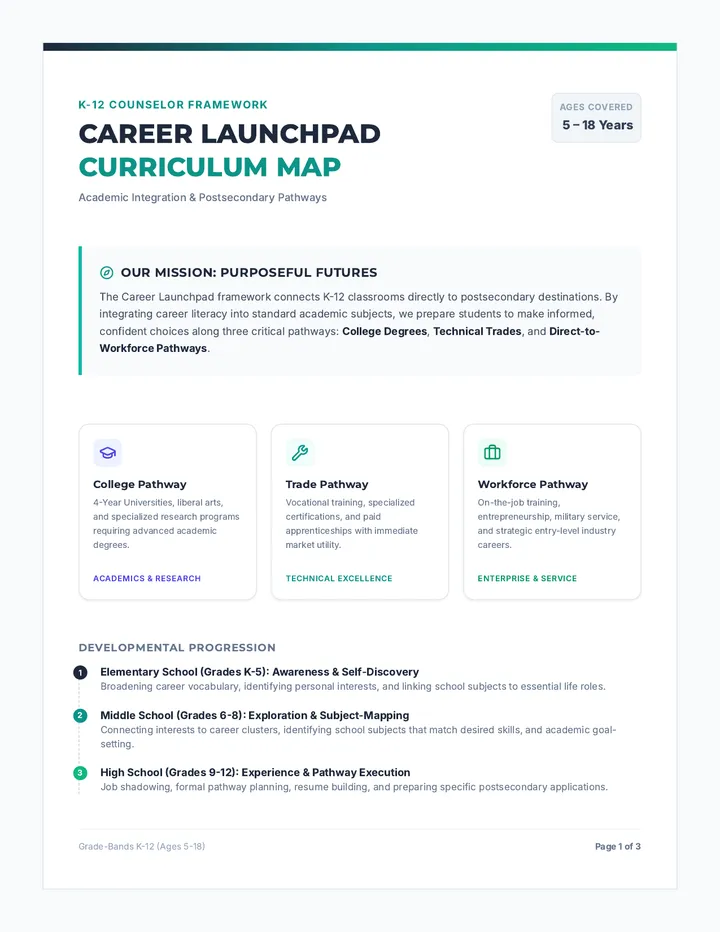
A comprehensive career exploration framework and counselor planning toolkit for grades K-12. This curriculum maps academic subjects to real-world career paths (college, trade school, and workforce) and provides counselors with implementation templates, annual pacing calendars, and a school-wide Career Day blueprint.
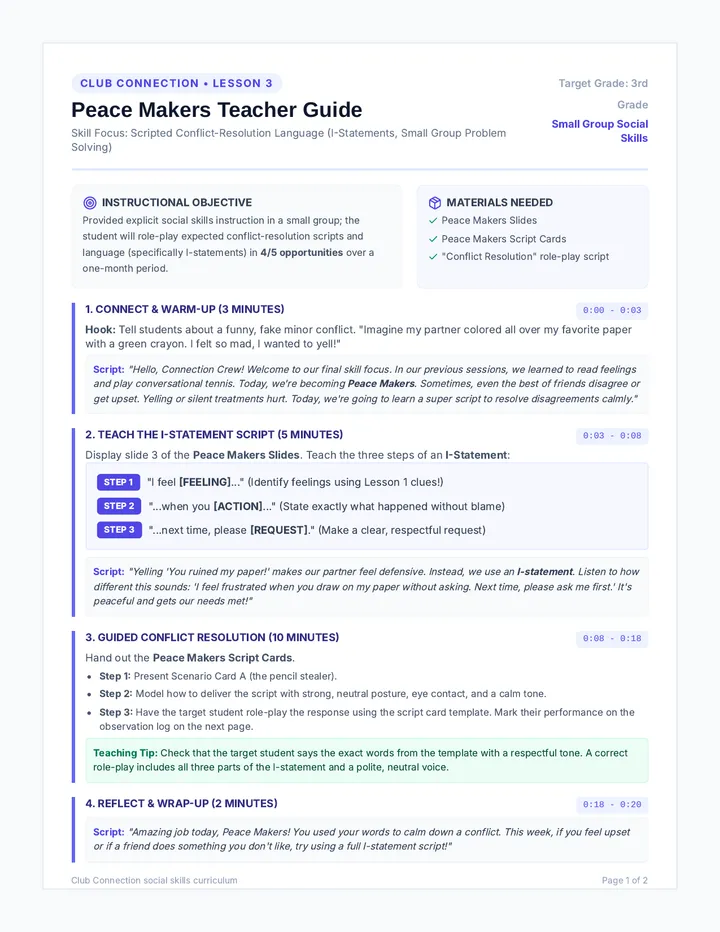
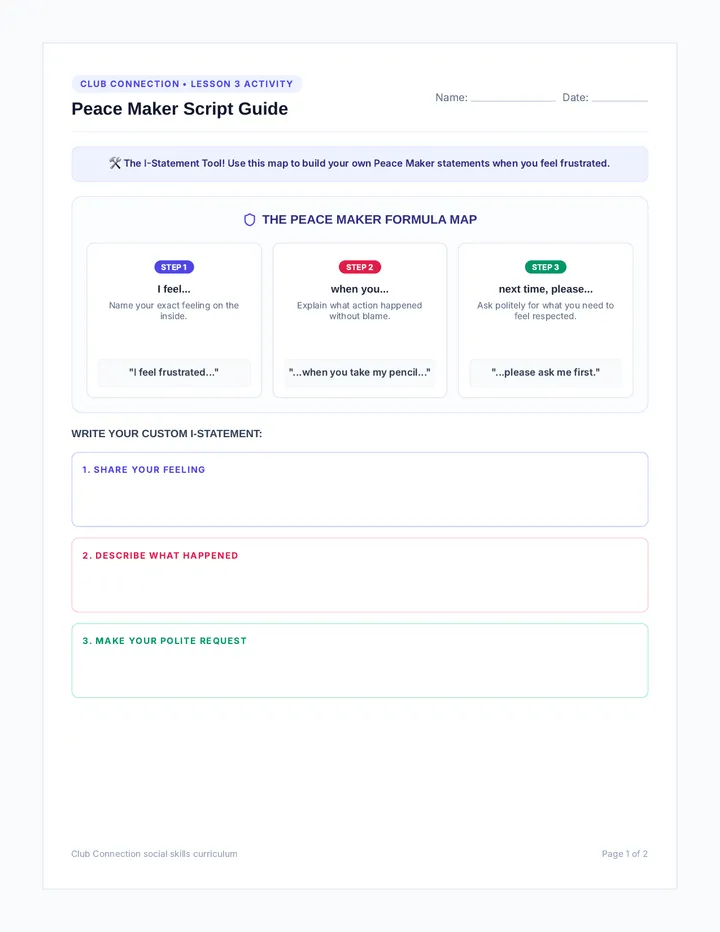
Students learn to use constructive 'I-statements' and collaborative problem-solving scripts to de-escalate and resolve minor conflicts with peers.
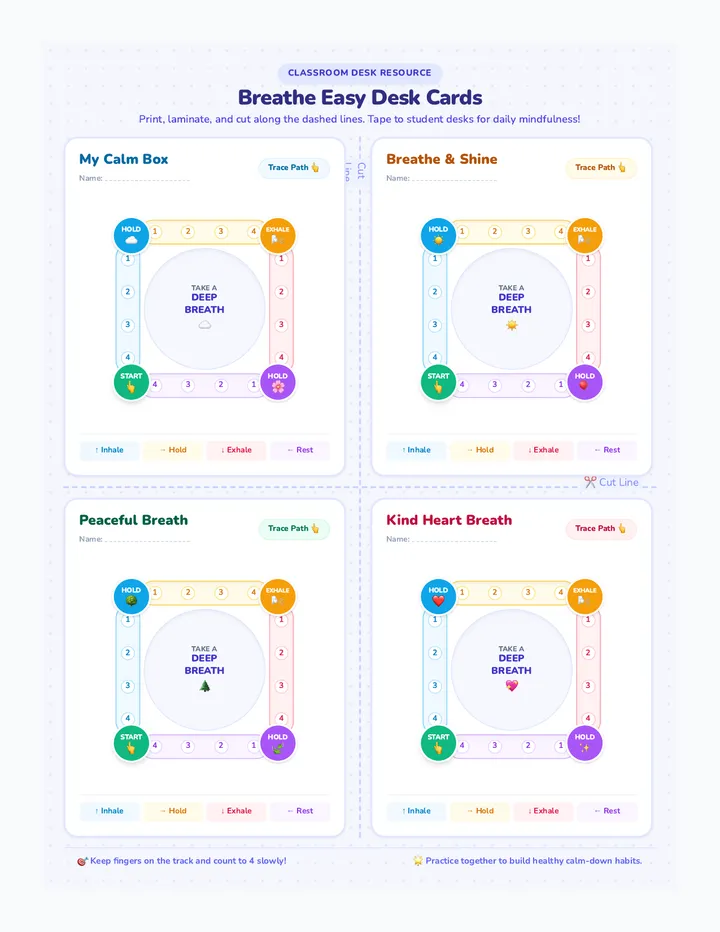
A set of four interactive, color-coded box breathing tracing cards designed to be cut out and taped to first-grade desks. Each card features distinct tactile paths for inhaling, holding, exhaling, and resting, complete with count-to-four tracking dots and child-friendly calming illustrations.