Emotion Motion Slides
Feelings
In Motion
Expressing Emotions Through Dance
Our Goal Today
Movement as a language
-
Connect our inner feelings to our outer movements.
-
Use our bodies to tell stories without using any words.
-
Discover how moving helps us feel better and more aware.
Body Warm-Up
1. Head to Toes
Gently roll your neck, roll your shoulders, and shake out your wrists and ankles.
2. Stretch Big
Reach for the ceiling like you're trying to touch a cloud, then melt down to your toes.
3. Balance
Stand on one leg like a flamingo. Switch! Feel your core getting strong.
4. Gentle Bounce
Lightly bounce on your heels to get your energy flowing for the dance!
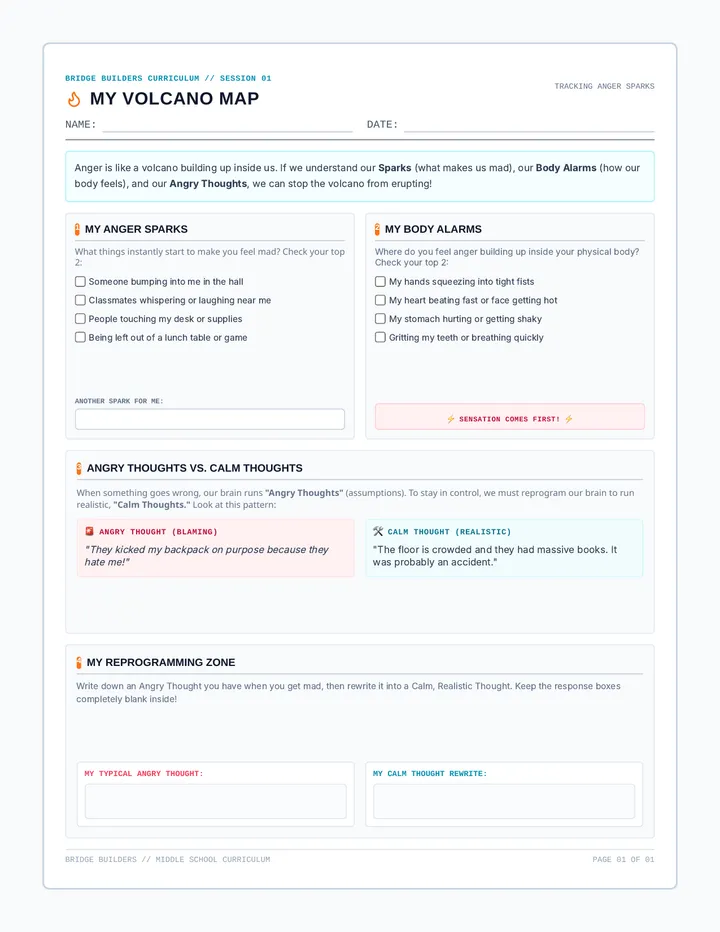
Movement Mode: ON
Happiness
"How does your body move when it's full of light and sunshine?"
Big Jumps
Wide Arms
Fast Spins
Movement Mode: ON
Sadness
"How do your limbs feel when they are heavy like rain clouds?"
Slow Motion
Low Levels
Curled Shapes
Movement Mode: ON
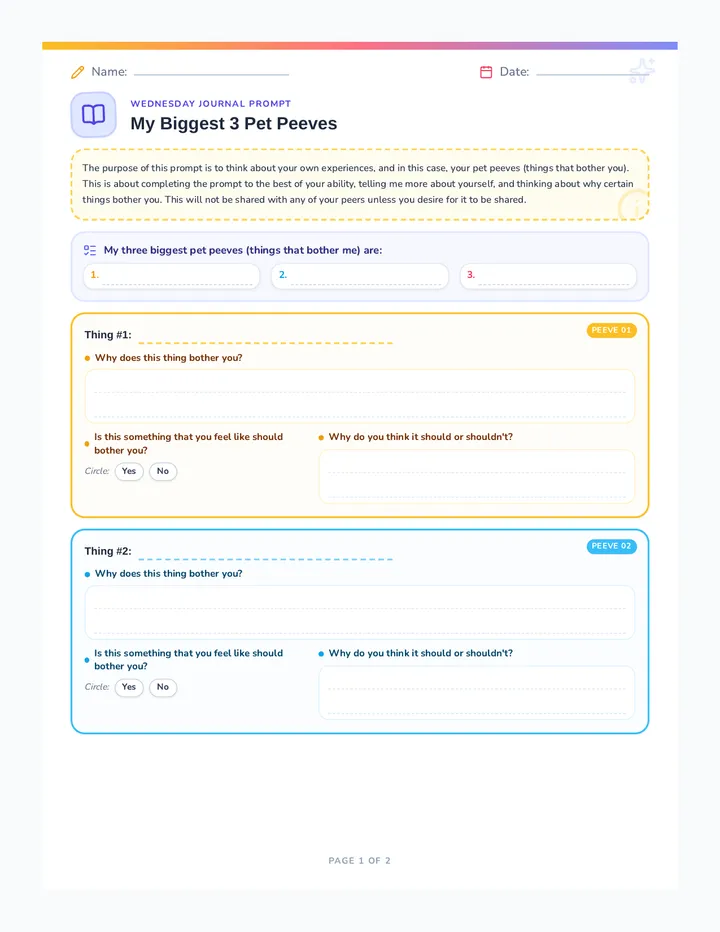
Anger
"What does it look like when your energy is sharp and exploding?"
Strong Stomps
Sharp Jabs
Fast Shakes
Movement Mode: ON
Calmness
"How does your body flow like a slow, peaceful river?"
Smooth Swaying
Deep Breaths
Gentle Flow
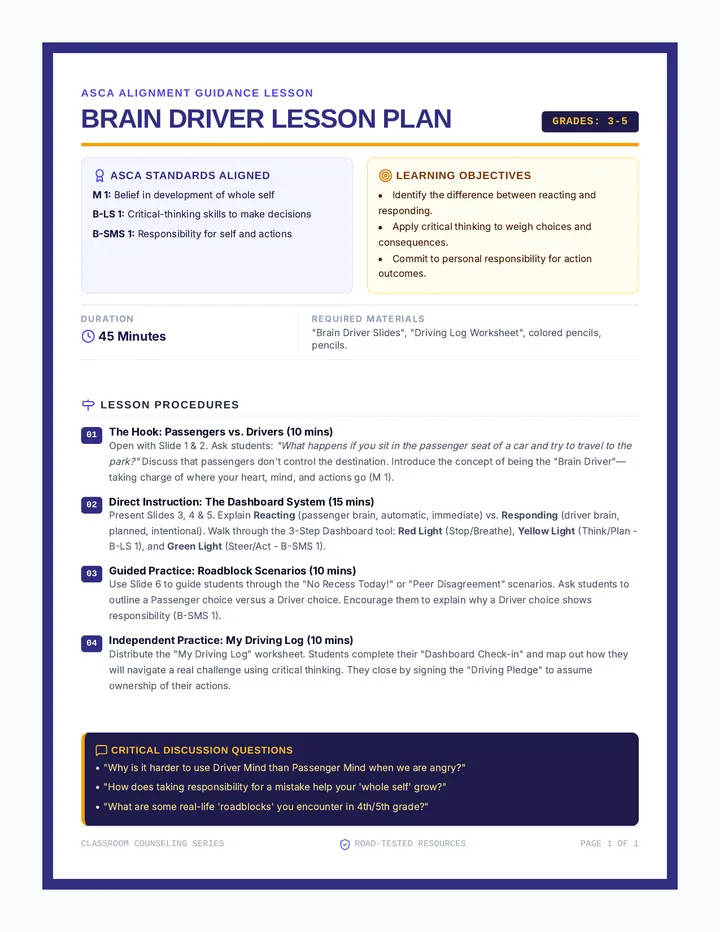
Cool Down & Talk
How did it feel to express emotions without words?
Which emotion was the easiest to move to? Which was hardest?
How can we use movement at home when we have big feelings?
Feelings in Motion Facilitator Guide
Feelings in Motion
Facilitator Guide • Grades 3-5
Lesson Plan
Time
30 Minutes
Audience
Tier 1 Class
Focus
SEL / Movement
Objective
Express via Dance
Why This Lesson?
Students explore the connection between physical movement and emotional expression. This enhances emotional literacy and self-awareness by connecting physical sensations with feelings. It provides a healthy, creative outlet for processing emotions.
Prep & Materials
- Open space for movement
- Music player (variety of tempos/moods)
- Discussion Guide & Reflection Sheets
- Slide Deck (Emotion Motion Slides)
Instructional Sequence
| Phase | Time | Activity Summary |
|---|
| 1. Introduction | 5 min | Gathering and goal setting. |
| 2. Warm-Up | 5 min | Preparing the body for movement. |
| 3. Guided Dance | 10 min | Core activity: Expressive motion. |
| 4. Reflection | 5 min | Group circle discussion. |
| 5. Closure | 5 min | Reflection worksheet & wrap-up. |
1
Introduction
Gather students in a circle in an open space. Briefly explain that today we aren't just moving; we're speaking with our bodies. Discuss how a shrug, a stomp, or a spin can tell someone exactly how we feel without saying a word.
2
Warm-Up
Lead simple body prep. Start with small movements (rolling wrists) and grow to large movements (big stretches). Play light, neutral background music. Remind students to respect personal space (their "movement bubble").
3
Guided Dance Activity
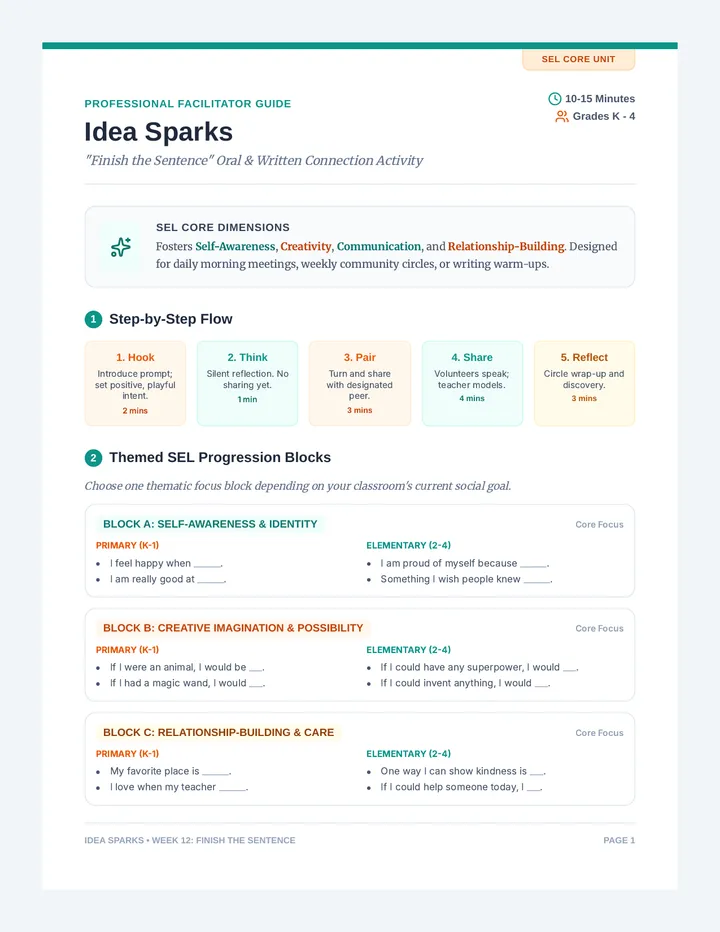
Use the Emotion Motion Slides to guide this phase. For each emotion, play a short 1-2 minute music track that matches the mood:
Happiness
Upbeat, bouncy, high-tempo.
Sadness
Slow, melodic, minor keys.
Anger
Strong beats, sharp sounds, loud.
Calmness
Ambient, smooth, consistent flow.
4
Group Reflection
Gather back in a circle. Use the Discussion Guide to prompt sharing. Focus on the physical sensations (e.g., "Where did you feel the anger in your body while moving?").
5
Closure
Distribute the Reflection Sheets. Encourage students to think about how they can use a "calm dance" or a "happy jump" in their daily lives to help manage their feelings.
Feelings in Motion Discussion Guide
Circle Talk Guide
Post-Movement Reflection • Feelings in Motion
"Gather students in a seated circle. These questions are designed to help students bridge the gap between their physical experience and emotional awareness."
1
How did it feel to express emotions through movement?
Teacher Prompts:
- "Was it different than talking about your feelings?"
- "Did your body feel light, heavy, fast, or slow?"
2
Which emotion was easiest to express? Why?
Teacher Prompts:
- "Did anyone find 'Anger' easier because it has a strong beat?"
- "Which movement felt the most natural for your body?"
3
How can movement help us understand our emotions better?
Teacher Prompts:
- "Does moving your body help clear your head?"
- "Can you tell how someone else is feeling just by looking at how they move?"