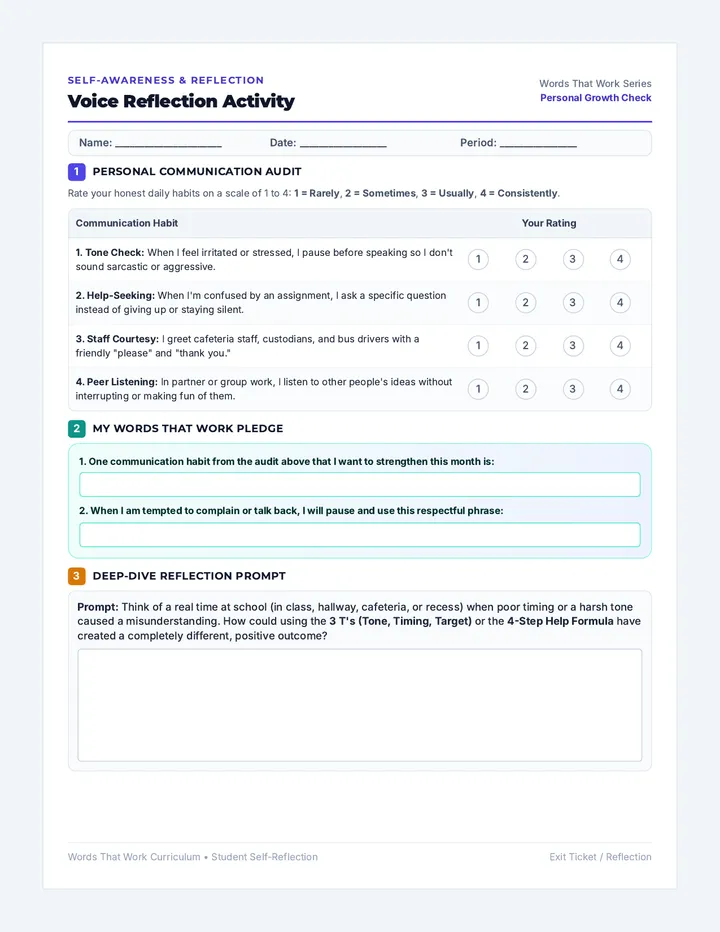
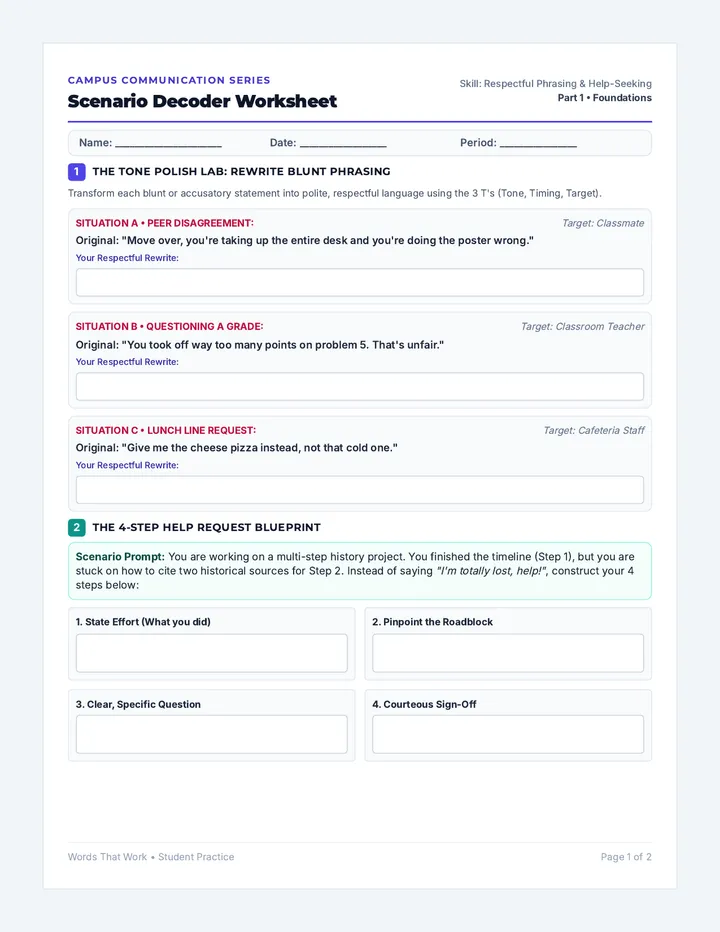
An empowering social-emotional learning lesson for eighth graders focused on steering clear of peer conflict. Students master practical de-escalation strategies, rumor interruption techniques, and clear boundary-setting scripts for real-world and digital spaces.
Scenario 1: The Locker Confrontation (Coach Ramirez claim) De-escalation
Typical 8th Grade Instinct: Yell back: "I didn't say anything, you're crazy, get out of my face!" (guarantees a physical or screaming match).
Teacher Coaching Script:
"Notice their body language. They want you to get loud so everyone gathers around. The power move is dropping your voice down to almost a whisper: 'I never said that to Coach. Let's go ask Coach together right now if you want.' Look how fast that deflates their performance."
Typical 8th Grade Instinct: Lean in, say "Wait let me see!" and then text another friend about what they saw.
Teacher Coaching Script:
"Looking at the screen makes you an accomplice. If that rumor blows up later, your name is attached. Use the direct pivot: 'That sounds messy, I'm staying out of it. Did anyone finish the history homework?' Change the channel immediately."
Scenario 3: The "Pick My Side" Friendship Ultimatum Boundary Setting
Typical 8th Grade Instinct: Lie to Chloe to appease her, then sneak around sitting with Mia, causing double betrayal later.
Teacher Coaching Script:
"Real friends do not hold friendships hostage. Use the 3-step formula: 'I love hanging out with you, but I'm not cutting other people off. I'm here for you, but I won't be forced into your fight.'"
Answering Real Student Pushback
"If I don't defend myself, won't people think I'm weak?"
Teacher Response: Anyone can lose their temper; that's easy. It takes intense strength and self-control to stay cool while someone else is embarrassing themselves. Confidence is quiet; insecurity is loud.
"What if they keep talking trash about me even when I ignore them?"
Teacher Response: Trash talk dies when you refuse to give them a reaction. If it persists or becomes bullying, that is the exact moment to involve a counselor or administrator to document it cleanly.
Differentiation Supports:
Reluctant Speakers: Allow them to write text-style responses on note cards rather than verbal role-play.
High-Friction Cohorts: Focus heavily on the Digital Group Chat and screenshot rules.
Advisory Follow-Up (Day 2):
During morning check-in later in the week, conduct a 5-minute "Drama Detox Audit": Ask students if anyone successfully used a rumor brake or the 10-second pause.
Drama Detox • Teacher Facilitation Guide Page 2 of 2 (Complete Instructional Resource)