Lenny.com
Explore
Create
ActivitiesNewMathEnglish Language ArtsScience & EngineeringSocial StudiesGlobal LanguagesHealth & Physical EducationSpecial EducationCounseling & Life SkillsArts & CreativityESL
Lenny.com
Lenny.com
Explore
Create
ActivitiesNewMathEnglish Language ArtsScience & EngineeringSocial StudiesGlobal LanguagesHealth & Physical EducationSpecial EducationCounseling & Life SkillsArts & CreativityESL
Lenny.com
Lenny.com

Solutions

Lenny for EducatorsLenny for SchoolsLenny for Districts

Product

ExploreSign inCreateSupportAbout

Resources

Getting startedMTSS Acceleration Program

© 2026 Lenny Learning Inc.

TermsPrivacyAccessibility
LinkedInInstagramX
Lenny
Counseling & Life SkillsSelf-AwarenessBasic Emotion RecognitionComplex Emotion IdentificationEmotional Nuance & Mixed FeelingsBuilding Positive Self-ImageRecognizing Strengths & Growth AreasAccurate Self-AssessmentPersonal Values IdentificationCultural & Individual Identity ExplorationValues-Based Decision MakingSelf-ManagementStop-and-Think StrategiesDelaying GratificationIndependent Impulse ManagementIdentifying Stress TriggersShort-Term Goal SettingSMART Goals DevelopmentGoal Monitoring & AdjustmentBuilding Perseverance & ResilienceInternal Motivation DevelopmentComprehensive Stress Reduction PlanningSocial AwarenessRecognizing Others' FeelingsDemonstrating EmpathyRespecting Individual DifferencesUnderstanding Cultural DiversityComplex Empathetic ResponsesMultiple Viewpoint ConsiderationMulti-Perspective AnalysisChallenging Stereotypes & BiasRelationship SkillsActive ListeningClear Verbal & Nonverbal CommunicationBuilding Positive FriendshipsWorking Cooperatively in GroupsCommunicating Personal BoundariesRespecting Others' BoundariesAssertive ExpressionPeaceful Problem-SolvingContributing to Team GoalsComplex Conflict NavigationMediation & NegotiationHealthy Romantic RelationshipsResponsible Decision-MakingDaily Problem IdentificationBrainstorming Multiple SolutionsEvaluating Pros & ConsRecognizing Risks & ConsequencesApplying Ethical FrameworksInformed Risk-Benefit DecisionsRoot Cause AnalysisMindfulnessMindful BreathingBody Scan MeditationDaily Mindfulness ApplicationDaily Self-Care RoutinesBalancing Life DemandsAdvocating for Wellness NeedsMental Health SupportUnderstanding Anxiety SymptomsWorry Management StrategiesProgressive Muscle RelaxationRecognizing Depression SignsBuilding Mood-Supporting RoutinesBehavioral Activation for MoodUnderstanding Grief StagesHealthy Grief CopingCreative Expression of LossBehavioral SupportDaily Check-In ProceduresDaily Goal Setting & ReviewRecognizing Escalation Warning SignsRequesting Breaks & SupportSelf-Calming During DistressUnderstanding Positive ReinforcementToken Economy ImplementationBehavior Chart TrackingAnalyzing Behavior PatternsIdentifying Antecedents & ConsequencesDetermining Behavior FunctionFunction-Based InterventionsIndividualized Behavior ContractsData-Driven Behavior AdjustmentTherapeutic ApproachesThoughts-Feelings-Behaviors ConnectionRecognizing Thinking PatternsChallenging Negative ThoughtsPositive Self-Talk PracticeThought Record TrackingAdvanced Cognitive RestructuringComprehensive CBT PlansBehavioral Activation TechniquesBuilding Positive ExperiencesExposure Hierarchies for AnxietyPresent-Moment AwarenessNon-Judgmental ObservationSelf-Soothing & DistractionComplex Emotion LabelingReducing Emotional Vulnerability (PLEASE)DEAR MAN CommunicationGIVE Skills for RelationshipsFAST Skills for Self-RespectRadical Acceptance PracticeCrisis Survival Skills (TIPP)Understanding Trauma EffectsTrauma Responses & TriggersIdentifying Trauma FeelingsGrounding TechniquesRegulation During Trauma DistressSafe Place VisualizationProcessing Through NarrativeDeveloping Trauma StoryPersonalized Safety PlanningGroup SupportTurn-Taking & SharingGroup Conversation SkillsSharing in Supportive EnvironmentLearning from Similar ChallengesBuilding Community & BelongingNavigating Peer RelationshipsGroup Skill PracticeGroup Mental Health EducationStress & Anxiety UnderstandingCrisis Support & SafetyKnowing When to Seek HelpIdentifying Mental Health CrisesGrounding During CrisisUsing Crisis HotlinesBuilding Support NetworksAccessing Mental Health ResourcesWarning Signs & Coping StrategiesDeveloping Personal Safety PlansUnderstanding Suicide Warning SignsGatekeeper Skills for PeersDigital LiteracySocial MediaTechnology BasicsProductivity ToolsInternet and Online ResearchWeb Design and PublishingDigital CitizenshipOnline Safety and PrivacyEmerging TechnologiesFinancial LiteracyMaking Financial DecisionsBanking and AccountsConsumer SkillsSaving and InvestingCredit and DebtEmployment and IncomeTaxesInsuranceMajor PurchasesEconomic ConceptsFinancial PlanningCollege & Post-Secondary PlanningCareer ExplorationUnderstanding Post-Secondary OptionsCollege Research & SelectionAdmission RequirementsCollege Application ProcessPersonal Statement WritingFAFSA CompletionScholarship Search & ApplicationsUnderstanding Student LoansContinuing Education PlanningInterview PreparationResearching EmployersCommon Interview QuestionsSTAR Method ResponsesProfessional Interview PresenceVirtual Interview SkillsInterview Follow-UpJob Search SkillsUnderstanding Job PostingsEffective Job Search StrategiesNetworking for OpportunitiesResume Writing BasicsAction Verbs & AchievementsTailoring Resumes to JobsCover Letter WritingProfessional ReferencesProfessional CommunicationBusiness Email EtiquettePhone & Voicemail ProfessionalismMeeting ParticipationPresentation SkillsProfessional Work EthicTime Management & ProductivityTeamwork & CollaborationAdaptability & FlexibilityProblem-Solving at WorkConstructive FeedbackWorkplace RightsUnderstanding Employment LawsPay & Benefits UnderstandingWorkplace SafetyAnti-Discrimination & Harassment

Voice Control Quest

A comprehensive social-emotional communication sequence designed to help students master vocal volume awareness, impulse control, whole-body listening, and active participation. Through guided video analysis, self-regulation drills, and classroom scenario practice, students learn practical strategies to eliminate blurting out, listen attentively, and match their voice to the setting.

AYAubrey Ybarra
Volume Radar

Focuses on voice level awareness and matching vocal volume to different school environments. Students explore a 5-level voice meter and practice identifying appropriate volume zones through video observation and situational challenges.

Brake The Blurt

Teaches students how to recognize the blurt impulse and apply the Think-Pause-Raise strategy before speaking. Students analyze why blurting happens, differentiate between thought bubbles and spoken words, and solve impulse-control dilemmas.

Classroom Chat Champ

Synthesizes vocal volume control and conversational turn-taking in small groups, partner activities, and whole-class discussions. Students practice real-world communication etiquette and solidify self-monitoring habits.

Listening Hero

Focuses on whole-body listening, active attention, and tuning in before speaking. Students analyze video modeling, explore the components of focused listening, and solve multiple-choice dilemmas to replace blurting with engaged listening.

Voice Control Quest

A comprehensive social-emotional communication sequence designed to help students master vocal volume awareness, impulse control, whole-body listening, and active participation. Through guided video analysis, self-regulation drills, and classroom scenario practice, students learn practical strategies to eliminate blurting out, listen attentively, and match their voice to the setting.

AYAubrey Ybarra

Wave both arms and grunt

Stand up out of your seat and make loud breathing sounds to demand attention.

D

Forget the answer completely

Decide never to participate in class discussions ever again.

Think about which choice respects everyone's learning time. Slide 4 of 6


Step 4: The Filter Test

Question 2: Thought Bubble vs. Spoken Words

Social Filter

While the teacher is explaining an assignment, you notice a student wearing sneakers that look just like yours. Which statement belongs in your Thought Bubble (keep inside your head)?

A

"Hey Marcus, cool shoes!"

Interrupting the teacher's instructions to compliment their shoes right away.

B

"Those shoes match mine; I'll mention it at recess."

Saving the thought for free time and keeping your focus on the directions right now.

C

"Teacher, look at his shoes!"

Pointing across the room to redirect the entire class's attention to footwear.

D

"Why did you copy my shoe style?"

Accusing the student out loud while the teacher is in the middle of talking.

Thoughts are natural—choosing the right time to speak is wisdom. Slide 5 of 6


Day 2 Mission Complete!

Brake Mastered

The 3-Second Count

Counting to 3 gives your brain time to check: "Is it my turn? Is this related to the lesson?"

Bubble Storage

Not every great thought needs to be spoken right away. Save off-topic thoughts for break times.

Tomorrow: Day 3

We combine Voice Volume and The Blurt Brake to become a true Classroom Chat Champ!

Head to your Day 2 Brake Blurt Worksheet to practice sorting thoughts and blurts!

Slide 6 of 6

Cross your arms, refuse to participate, and roll your eyes at the group.

D

Yell for the teacher to punish them

Use a Level 4 outside voice so everyone in the hallway hears that you disagree.

Champions respect other people's turns to speak. Slide 4 of 6


Step 4: Silent Cue Reaction

Question 2: Catching The Silent Signal

Signal Check

You are speaking with your friend at your desk, and your teacher catches your eye from across the room and gently lowers their palm toward the floor. What should you do?

A

Argue out loud

Say loudly: "I wasn't even talking loud, why are you looking at me?"

B

Nod and dial your volume down

Give a quick nod, bring your voice down to Level 1 or 2, and continue your work calmly.

C

Ignore the signal

Keep speaking at the same volume because the teacher didn't say your name out loud.

D

Point at someone else

Blame your partner and tell the teacher that they were the noisy one.

Silent cues save everyone time and keep the classroom peaceful. Slide 5 of 6


Quest Complete: Chat Champion!

Certified Champion

I Know My Volume

I match Level 0 for tests, Level 1 for whispers, Level 2 for tables, Level 3 for speeches, and Level 4 outside.

I Own My Brake

I spot the spark, take a 3-second breath, raise my hand, and let my classmates finish their thoughts.

I Respect The Room

I respond smoothly to silent cues from my teacher and make our classroom an awesome place to learn!

Sign your Day 3 Chat Champ Contract to seal your commitment with your teacher!

Slide 6 of 6

Compare each option before choosing the smartest answer. Slide 4 of 6


Step 4: Scenario Challenge

Question 2: Multi-Step Instructions

Action Check

The teacher is explaining three steps for a science experiment. On step two, you think of a funny joke about beakers. What does a Listening Hero do?

A

Blurt the joke loudly

Shout out the joke so everyone can laugh before step three is explained.

B

Bubble the joke & keep listening

Put the joke in a thought bubble for recess, track the teacher, and listen to step three.

C

Whisper it across the room

Use a Level 1 whisper to distract two other tables while materials are handed out.

D

Complain about the experiment

Say out loud that the instructions are too complicated before they are even finished.

Catching all 3 steps saves you time and keeps you on track. Slide 5 of 6


Super Listener Checklist

Fully Powered Up

Eyes On Speaker

Tracking the speaker signals to your brain that whatever is happening right now is worth your attention.

Wait for The Period

Don't cut someone off at a comma. Wait until their sentence completely ends before raising your hand.

Complete The Mission

Practice your Whole-Body Listening skills on your Day 4 Listening Hero Tracker document!

Great listeners earn great respect from teachers and friends alike!

Slide 6 of 6

You might also like

Initiation Hurdles Slides

Execution Lab

An executive functioning and work completion curriculum designed specifically for gifted middle schoolers. Students learn cognitive strategies to dismantle perfectionism paralysis, accurately pace multi-phase projects, and conquer the final submission hurdle.

MB

Michele Berning

6
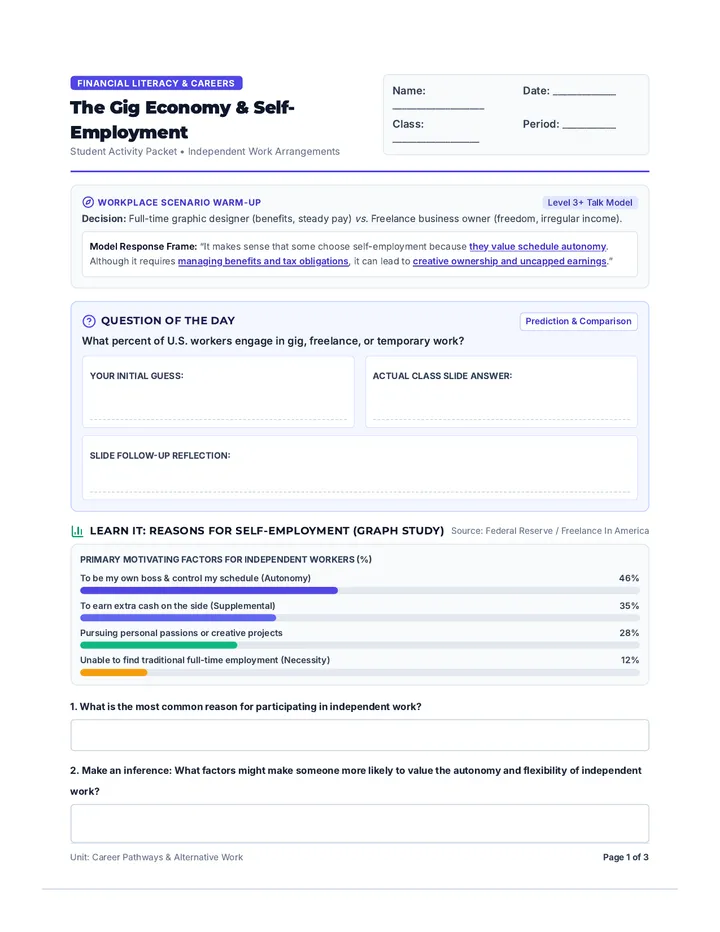
Gig Economy Activity Packet

Gig Economy Pathways

A comprehensive personal finance and careers lesson examining independent contracting, app-based gig work, tax obligations, and the trade-offs of self-employment.

Lenny Avatar
Lenny
2
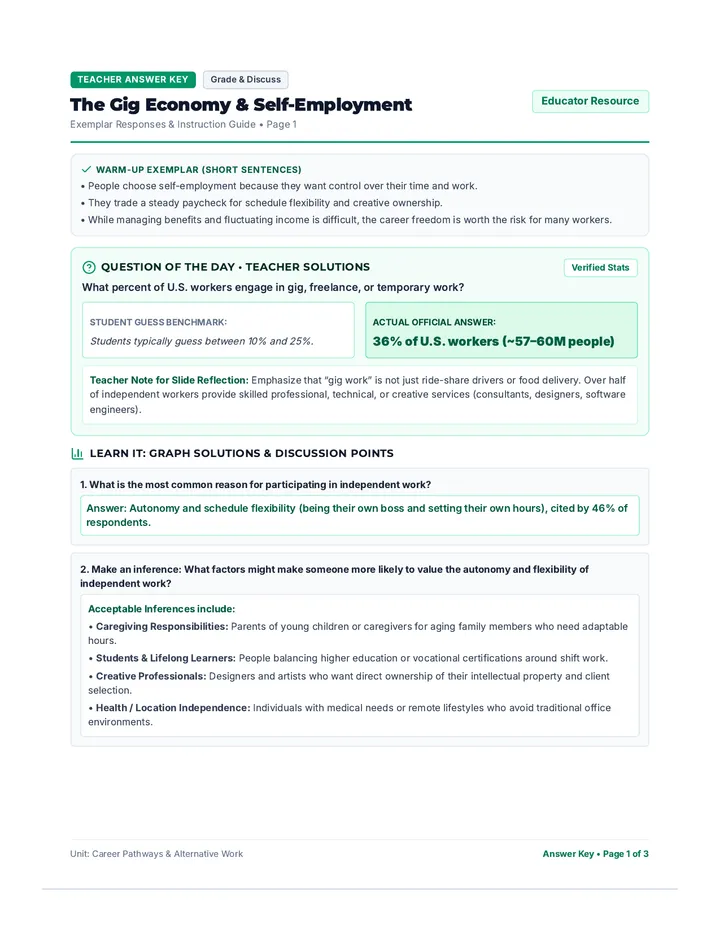
Gig Economy Answer Key

Gig Economy Answer Key

A comprehensive 3-page teacher answer key and scoring guide providing exact data, exemplar student answers, and discussion prompts for the Gig Economy Activity Packet.

Lenny Avatar
Lenny
Leadership Playbook Curriculum Guide

Leadership Skills Program

An adaptable 8-week high school leadership and self-regulation curriculum program. Each weekly unit provides targeted facilitation, interactive labs, and student application materials for social intelligence and composure.

MP

Madison Paz

13
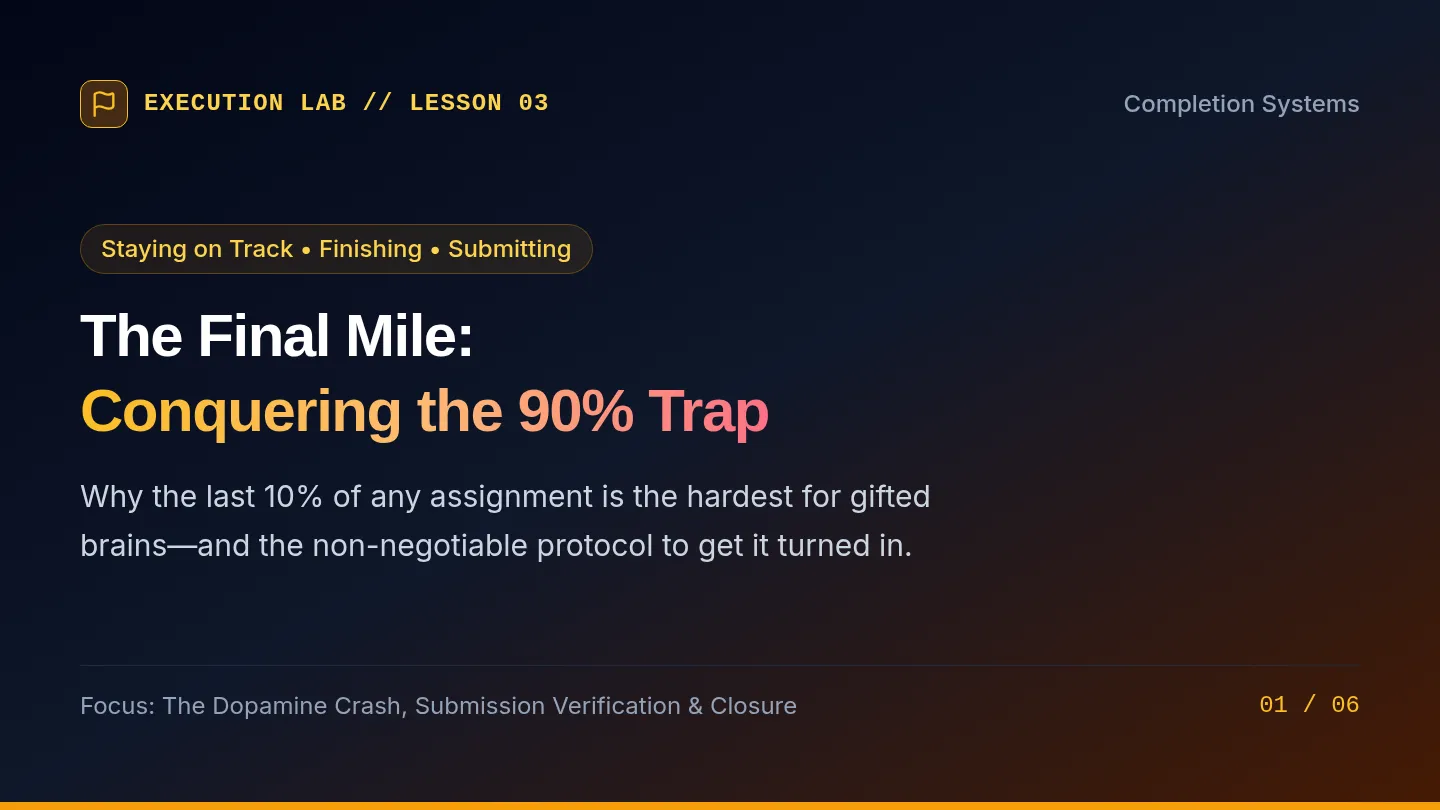
Finish Line Slides

The Final Mile

Students analyze the psychological drop-off that occurs once a concept is understood, overcoming the 90% trap. Students implement verification checklists, anti-distraction intervals, and a definitive submission protocol to reliably turn in completed work.

MB

Michele Berning

2
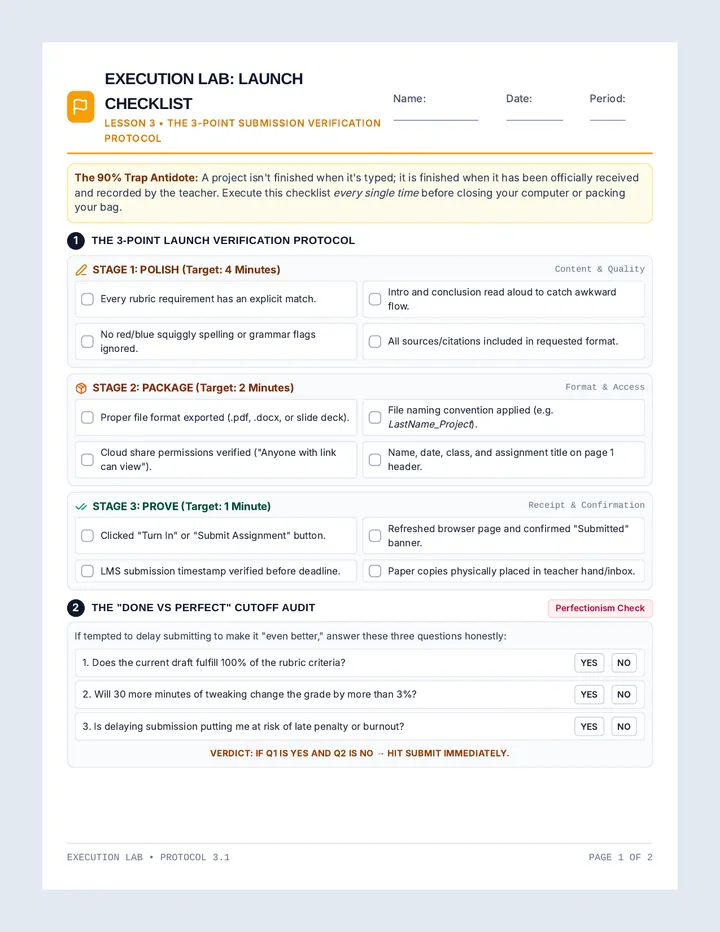
Launch Checklist Handout

Launch Checklist Handout

A two-page student verification checklist and submission log that defeats the 90% trap with the 3-point launch protocol, ghost assignment prevention, and a submission confirmation log.

MB

Michele Berning

Project Deconstruction Slides

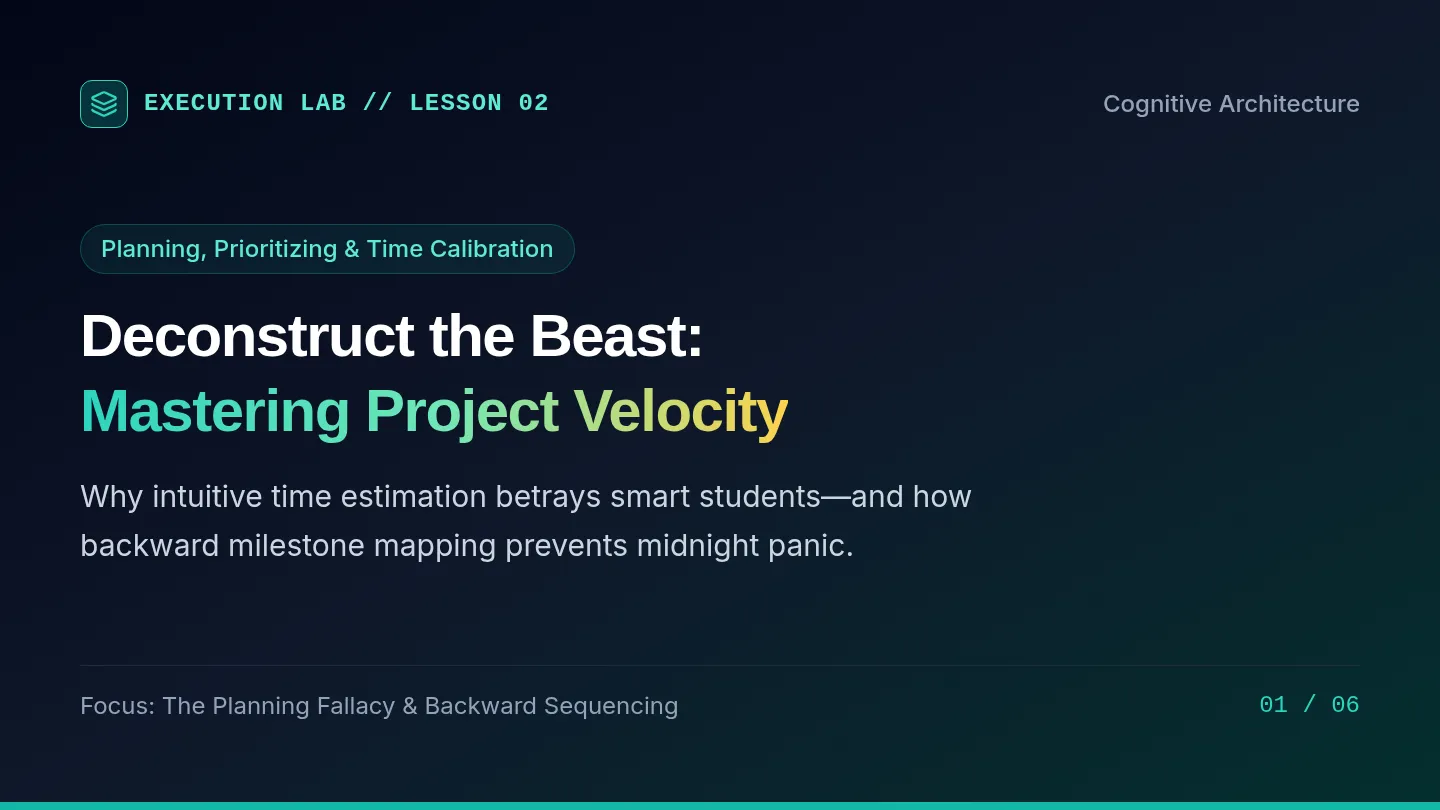
Deconstruct the Beast

Students investigate the planning fallacy and learn why intuitive estimations often fail during complex projects. Through project deconstruction, time buffers, and dependency mapping, students turn nebulous assignments into structured micro-targets.

MB

Michele Berning

2
Finish Line Slides

Finish Line Slides

A 6-slide presentation addressing the 90% trap, unsubmitted ghost assignments, and the 3-point launch protocol to guarantee completed work is polished, packaged, and turned in.

MB

Michele Berning

Initiation Hurdles Slides

Spark the Start

Students unpack the neuroscience of task initiation, analyze how perfectionism and cognitive boredom cause avoidance, and master the 5-Minute Launchpad method. Hands-on exercises guide students to lower starting barriers and activate immediate momentum.

MB

Michele Berning

2
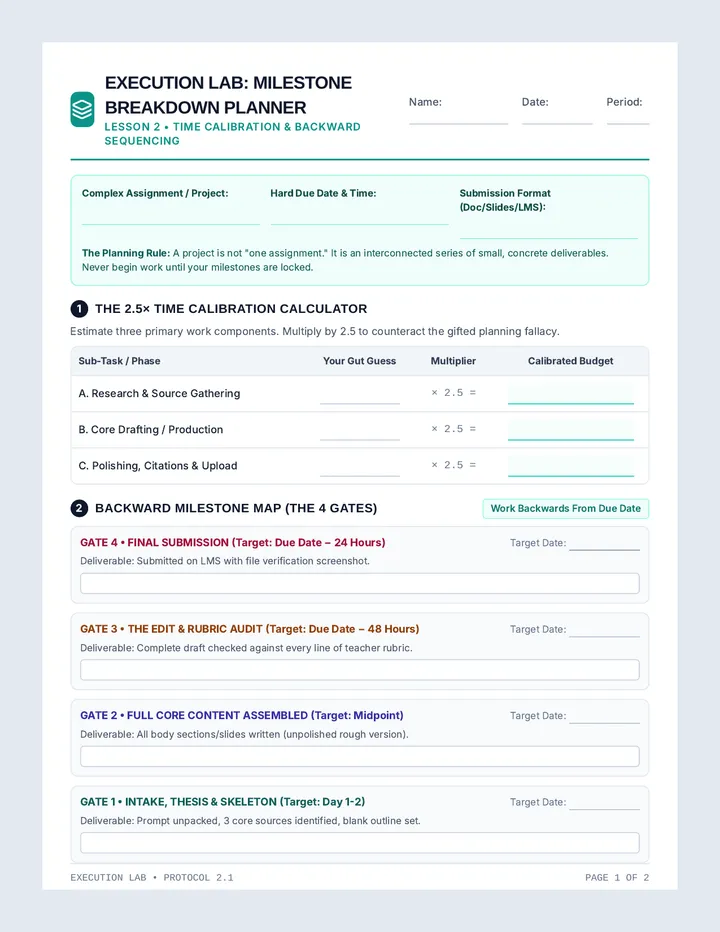
Milestone Breakdown Planner

Milestone Breakdown Planner

A two-page tactical project planning document helping gifted students calculate realistic 2.5x time budgets, backward-map critical milestones, and track 25-minute focus sprints.

MB

Michele Berning

Gratitude Shift Slides

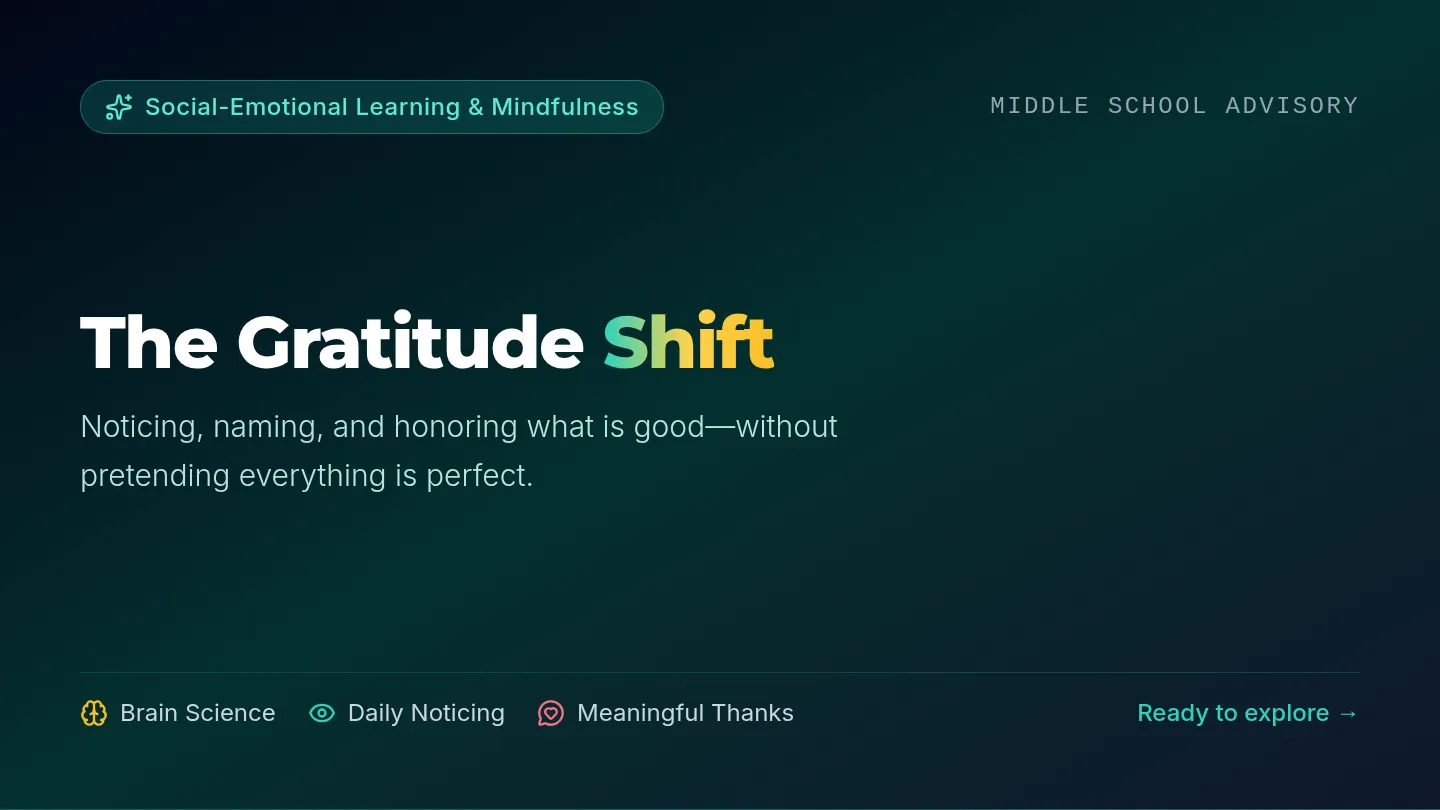
The Gratitude Shift

An engaging middle school lesson exploring authentic gratitude, mental well-being, everyday appreciation, and sincere communication without toxic positivity.

SW

Sarah Whiteside

2
Project Deconstruction Slides

Project Deconstruction Slides

A 6-slide presentation for gifted middle schoolers on overcoming the planning fallacy, using the 2.5x time buffer, backward milestone mapping, and pacing projects with sprint cycles.

MB

Michele Berning