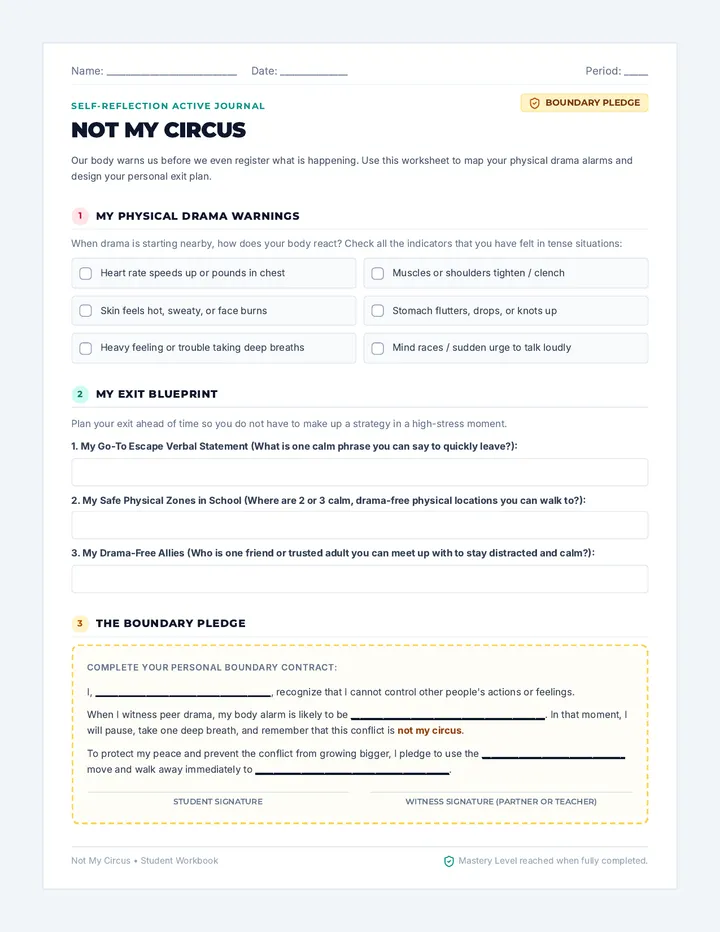
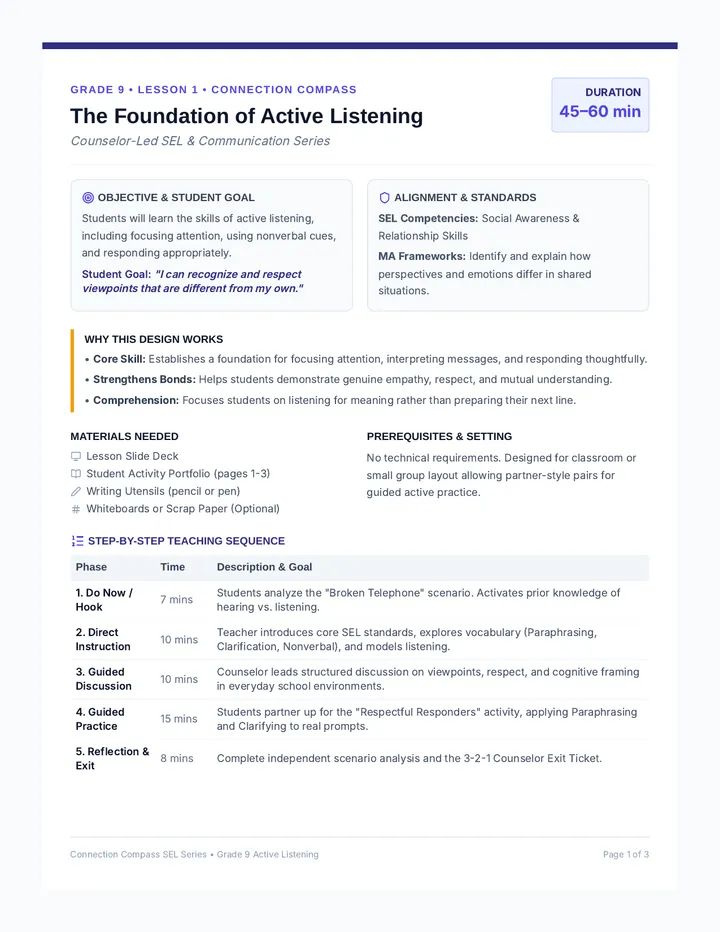
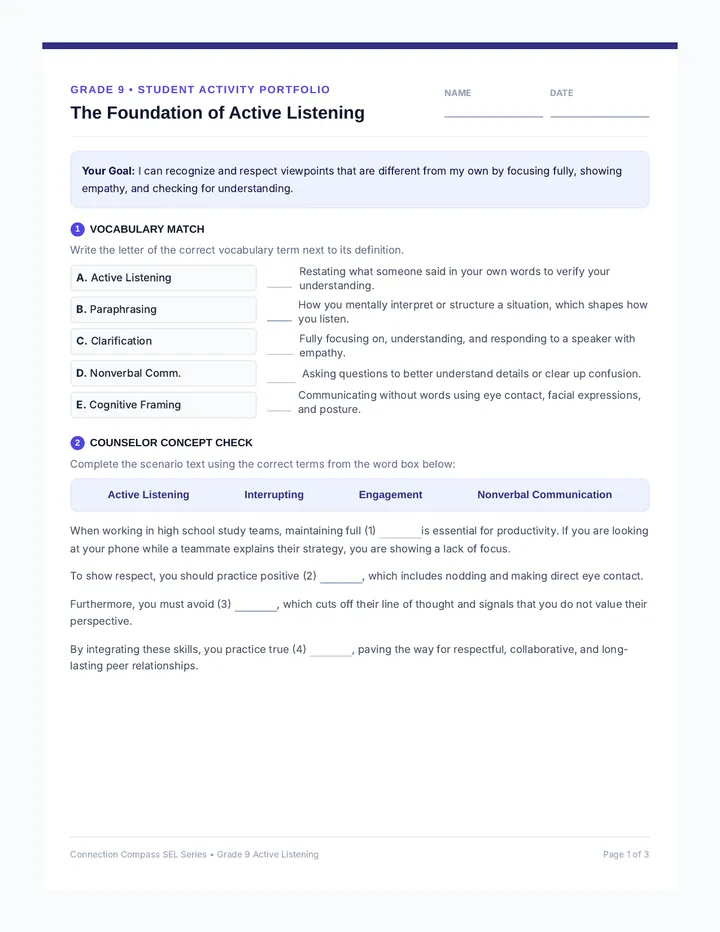
Mind Over Metal Worksheet Mind Over Metal
Behavioral Analysis & Risk Perception Worksheet
Name: ________________________________
Date: ________________________________
Part 1: Inattentional Blindness Analysis
After viewing the selective attention test, reflect on its application to a high-hazard workplace (e.g., a construction site or chemical plant).
Identify a "Gorilla" in a typical industrial setting—a hazard that is obvious but often missed due to task-saturation:
How does "Confirmation Bias" lead a seasoned operator to ignore early warning signs of equipment failure?
Part 2: The ABC Model of Safety
Analyze a common unsafe behavior: Failure to wear fall protection while working at a height of 10 feet.
Antecedent
(What triggers the behavior?)
Behavior
Not using harness
Consequence
(Why do they keep doing it?)
Part 3: The Availability Heuristic
Explain how a company that has gone "1,000 Days Without a Lost Time Injury" might actually be at higher risk of a catastrophic event due to cognitive shortcuts.
Safety Culture Sequence // Module 01
Ref: BBS-PRP-2026
Risk Reality Slides Risk Reality
The Psychology of Safety
Module 01: Perception & Behavior
The Selective Attention Test
How much of our surroundings do we actually process?
"We don't see things as they are, we see them as we are."
— Anaïs Nin
Video Hook Placeholder
The Invisible Gorilla Experiment
The Safety Biases
Optimism Bias
"It won't happen to me." The belief that we are at lower risk than others performing the same task.
Normalization of Deviance
When unsafe shortcuts become the "standard" way of working because they haven't led to an accident... yet.
Confirmation Bias
Seeking information that proves a machine is "fine" while ignoring the subtle rattling that suggests failure.
Behavioral Based Safety
01
Observation
Identifying critical behaviors in the workflow.
02
Feedback
Immediate, positive reinforcement for safe acts.
03
Data Trend
Using observation trends to predict risks.
BBS Shift: Focus on Safe Behaviors rather than just counting Unsafe Injuries.
The ABC Analysis
A
Antecedents
Events that precede behavior (Signs, training, weather, deadlines).
B
Behavior
The observable action (Wearing gloves, skipping a step, speeding).
C
Consequences
Events that follow behavior (Injury, praise, getting done early).
Why do people take risks?
"The consequences for unsafe behavior are often Soon, Certain, and Positive (saved time), while the consequences for safe behavior are often Late, Uncertain, and Negative (lost time, discomfort)."
Risk Psychology Teacher Guide Psychology of Risk
Teacher Facilitation Guide // Lesson 01
Time: 90 Minutes
Instructional Intent
Students will move beyond "human error" as a root cause and explore the systemic cognitive failures that lead to incidents. This lesson establishes the psychological foundation for the entire sequence, focusing on why intelligent, well-trained employees still take risks.
Learning Objectives
01 Identify 3 key cognitive biases that influence workplace risk perception.
02 Apply the ABC (Antecedent-Behavior-Consequence) model to analyze unsafe acts.
03 Describe the core components of a Behavioral Based Safety (BBS) program.
Materials Needed
Risk Reality Slides
Mind Over Metal Worksheet
Selective Attention Video
Chart paper & markers
Instructional Pacing
15m
The Hook: Selective Attention
Show the "Invisible Gorilla" or "Selective Attention Test" video. Do not tell students what to look for—just ask them to count the passes.
Discussion Prompt: "If we can miss a person in a gorilla suit walking across a basketball court, what hazards are we missing in a high-voltage substation when we are focused on a deadline?"
25m
Cognitive Bias Deep Dive
Present Slides 3. Facilitate a 'bias search'—have students work in pairs to identify times they have witnessed Normalization of Deviance in their own work history.
Key Insight: Normalization of deviance isn't laziness; it's a rational response to an environment where unsafe shortcuts are rewarded with efficiency and lack of immediate consequence.
30m
ABC Analysis Workshop
Use the Mind Over Metal Worksheet . Walk through the "Failure to wear fall protection" example as a group before having students complete Part 2 independently.
Misconception Alert: Students often think "Injury" is a strong consequence. Remind them that injuries are uncertain . "Getting the job done 10 mins early" is certain . Certainty wins in the brain's risk calculation.
Pro-Tip: Encourage students to think about Antecedents as "Triggers" and Consequences as "Payoffs."
20m
Wrap Up: BBS Foundations
Summarize with Slide 4. Explain that BBS is about building a system that provides Immediate, Certain, and Positive consequences for safe behavior.
Voice of Safety Slides The Voice of Safety
Whistleblower Rights & Anti-Retaliation
Module 02: Legal Safeguards
Section 11(c) of the OSH Act
"No person shall discharge or in any manner discriminate against any employee because such employee has filed any complaint..."
The bedrock of workplace safety culture is the legal right to speak up without fear.
Protected Activities
Reporting a work-related injury
Raising a safety concern with management
Participating in an OSHA inspection
Refusing to perform dangerous work
What is Retaliation?
Direct Action
• Termination
• Demotion
• Reduction in pay
• Suspension
Subtle Action
• Schedule changes
• Denial of overtime
• Blacklisting
• Reassignment to dirty jobs
Psychological
• "Cold shoulder" treatment
• Verbal abuse
• Mockery from peers
• Ostracization
The Burden of Proof
Protected Activity
Employer Knowledge
Adverse Action
Causal Link
The employee must prove that the protected activity was the motivating factor for the adverse action.
The Cost of Retaliation
Beyond the Fine
Back Pay: Wages lost during the period of dismissal.
Reinstatement: Forced return of the employee to their role.
Damages: Emotional distress and punitive fines.
Brand Damage: Lasting impact on recruitment and public trust.
In 2023, OSHA recovered over $30,000,000 for whistleblowers across the United States.
Policy Shield Workshop Policy Shield
Retaliation Prevention Workshop
Organization: ________________________
Team: ________________________________
Workshop Objective
Organizations often have "No-Retaliation" policies in their handbooks, but they are frequently generic and lack teeth. Your task is to draft a robust, enforceable Anti-Retaliation Framework that addresses the nuances of industrial safety reporting.
1
Defining "Protected Disclosure"
List 3 specific safety-related actions that your policy will explicitly protect from any adverse action.
1. ________________________________________________________________
2. ________________________________________________________________
3. ________________________________________________________________
2
The "Safe Channel" Architecture
How will employees report retaliation? Design a process that bypasses the immediate supervisor (who may be the source of retaliation).
3
Investigation & Remediation
What immediate steps will the company take once a retaliation claim is filed to protect the employee while the investigation is pending?
4
Accountability Standards
What are the specific consequences for a manager or peer found to have engaged in retaliatory behavior?
First Offense
Second Offense
Safety Culture Sequence // Module 02
Ref: WBR-ANTI-2026
Legal Safeguards Teacher Guide Legal Safeguards
Teacher Facilitation Guide // Lesson 02
Time: 90 Minutes
Instructional Intent
To transition from psychological concepts to the legal framework of safety. This lesson empowers students with the knowledge of Section 11(c) and challenges them to design organizational systems that not only comply with the law but actively foster an environment where reporting is protected.
Learning Objectives
01 Identify protected activities under Section 11(c) of the OSH Act.
02 Distinguish between direct and subtle forms of employer retaliation.
03 Design a multi-layered organizational anti-retaliation policy.
Materials Needed
Voice of Safety Slides
Policy Shield Workshop Doc
OSHA Whistleblower Fact Sheet
Instructional Pacing
15m
The Hook: The Cost of a Call
Discuss a high-profile whistleblower settlement (e.g., the 2023 Monroe Operations case or similar). Focus on the timeline: how long it took for justice and the total financial impact on the company.
Key Question: "Why would a company risk millions in fines to silence a $25/hour mechanic reporting a brake failure?" (Connect back to Lesson 1: Short-term vs Long-term thinking).
25m
Legal Landscape (Slides 1-4)
Present the slides. Pay special attention to Slide 3: Subtle Retaliation . Graduate students should analyze how "cold shoulder" treatment or "unfavorable scheduling" can be just as effective as firing in silencing a workforce.
40m
Workshop: Policy Shield
Group students (3-4 per team). Assign each group a different industry (e.g., Aviation, Chemical Processing, Retail Distribution). They must complete the Policy Shield Workshop document.
Teacher Tip: Encourage students to think about "psychological safety" during the Reporting Mechanism design. Is a phone line enough? Or is an external ombudsman necessary?
10m
Wrap Up: The Cultural Mirror
Conclude with Slide 5. Remind students that legal compliance is the floor , not the ceiling . A policy only works if people trust it.
Safety Culture Sequence // Building a Legal Safeguard // Module 02
Reporting Roadblocks Slides Reporting Roadblocks
The Under-Reporting Epidemic
Module 03: Barriers to Transparency
The Incident Iceberg
For every 1 major injury reported, there are hundreds of near-misses and unsafe conditions that go undocumented.
"A zero-injury goal can lead to zero-incident reporting."
1 Reported Fatality
Hidden Risks:
30 Minor Injuries • 300 Near Misses • 3,000 At-Risk Behaviors
Incentive Misalignment
The Common Program:
"If the team goes 30 days without an injury, everyone gets a $50 gift card."
The Reality Result:
Peer pressure to hide minor cuts.
Stigma against the person who "breaks the streak."
False sense of security for management.
The Social Barrier
When rewards are tied to lagging indicators (outcomes), the workforce views reporting as a "betrayal" of their coworkers' bonuses.
Systemic Friction
Paperwork Burden
"It takes 2 hours of forms to report a near-miss that took 2 seconds to happen."
Lack of Closure
"I reported this three times last year, and the broken railing still hasn't been fixed."
Punitive Inquiry
"Whenever I report a near-miss, I'm the one who has to take a drug test and go to retraining."
Flipping the Script
Old Way: Lagging
• Rewards for 0 accidents
• Punishments for reporting
• Focus on the outcome
New Way: Leading
• Rewards for Near-Miss reports
• Prizes for Safety Suggestions
• Focus on the process
"We measure what we value. If we value safety, we should reward the activities that prevent injuries, not just the lack of them."
Incentive Audit Worksheet The Incentive Audit
Diagnosing Cultural Barriers to Reporting
Name: ________________________________
Date: ________________________________
Part 1: The "Safe Streak" Dilemma
"A manufacturing plant offers a steak dinner for the entire shift (200 people) if they reach 100 days without a recordable injury. On day 98, a worker slips and suffers a deep gash on their leg that clearly requires stitches."
Analyze the peer pressure dynamic in this scenario. What are the 'unspoken' consequences for the injured worker if they report?
How does this incentive program create a 'Lagging Indicator Trap' for management?
Part 2: Structural Barrier Audit
Rate the following 'Friction Points' based on their impact on reporting (1 = Low Barrier, 5 = High Barrier)
1. Complexity/Length of reporting forms
1 2 3 4 5
2. Fear of mandatory post-incident drug testing
1 2 3 4 5
3. Managerial 'blame-seeking' during investigation
1 2 3 4 5
4. Lack of feedback/action on past reports
1 2 3 4 5
Part 3: The Incentive Flip
Propose two 'Leading Indicator' incentives that reward the act of reporting rather than the absence of injuries .
Proposal A:
Proposal B:
Safety Culture Sequence // Module 03
Ref: AUDIT-INC-2026
Barriers to Transparency Teacher Guide Barriers to Transparency
Teacher Facilitation Guide // Lesson 03
Time: 90 Minutes
Instructional Intent
To investigate the phenomenon of under-reporting. Students will critique traditional safety incentive programs (like 'Safety Bingo') and understand how social pressure and structural friction (paperwork, drug tests) suppress the very data organizations need to stay safe.
Learning Objectives
01 Explain the "Iceberg of Ignorance" in the context of safety incident reporting.
02 Analyze the negative cultural impact of lagging-indicator incentive programs.
03 Propose 2 alternative "Leading Indicator" reward systems.
Materials Needed
Reporting Roadblocks Slides
Incentive Audit Worksheet
Chart Paper (for Incentive Redesign)
Instructional Pacing
15m
The Hook: Safety Bingo Debate
Start by asking: "Who has worked in a place with a sign that says 'X Days Without an Accident'?" Ask if they ever saw someone get a small injury and hide it to keep the number going.
Key Insight: These programs turn coworkers into "Safety Police" who suppress reporting rather than "Safety Champions" who prevent risk.
25m
The Iceberg & Barriers (Slides 1-4)
Present the slides. Focus on Structural Barriers . Ask students to brainstorm ways to "grease the wheels" of reporting (e.g., mobile apps, voice-to-text reporting, removing mandatory drug tests for non-mechanized near-misses).
40m
Incentive Audit Workshop
Students complete the Incentive Audit Worksheet . For Part 3, have them present their "Incentive Flip" to the class.
Teacher Tip: If students struggle with leading indicators, suggest rewarding: reporting of hazards, conducting peer observations, or submitting safety improvement suggestions.
10m
Wrap Up: transparency as a Value
Conclude with Slide 5. Emphasize that a "Zero Injury" goal is a goal for the outcome, but "100% Transparency" is a goal for the culture.
Safety Culture Sequence // Barriers to Transparency // Module 03
Safety Leadership Slides Lead From The Front
Leadership’s Impact on Safety Culture
Module 04: The Role of Management
Priorities vs. Values
Priorities Change
"When production is behind, safety drops to #2."
Values Are Constant
"Safety is how we do work, regardless of the deadline."
Employees watch what leaders do, not what they say.
The Safety Walk
Goal: Visibility & Engagement
Observation: Seeing the work as it is actually done.
Inquiry: Asking "What's the hardest part of this job?"
Recognition: Praising specific safe behaviors.
The "Gotcha" Trap
If a safety walk is used primarily for discipline, employees will hide hazards the moment they see a white hat approaching. Safety walks must be about solving barriers , not fixing people .
Building Trust
Open-Ended Questions
"If you could change one thing about this process to make it safer, what would it be?"
Rapid Response
Report back on suggestions within 48 hours, even if the answer is "we are still investigating."
Vulnerability
Leaders should share their own mistakes and what they learned to model reporting behavior.
Responding to Failure
"The reaction to failure is the single most important signal a leader sends about the organization's culture."
Weak Culture asks:
"Who did it?"
Strong Culture asks:
"How did it make sense to them?"
Safety Walk Checklist The Invisible Bridge
Management Safety Walk Observation Tool
Observer: ________________________
Location: ________________________
Instruction: This is not a compliance audit. The goal of this walk is to understand "Work-as-Done" vs "Work-as-Imagined." Focus on barriers to safe work and building trust with frontline employees.
Step 1: Intentionality
What specific operation or task are you focusing on today?
What is one "open-ended question" you plan to ask workers?
Step 2: Engaging the Frontline
Inquiry Focus Notes / Employee Response System Friction
"What is the most frustrating part of this job?"
| |
|
Work-as-Done
"Do you ever feel like you have to bypass a safety step to meet production?"
| |
|
Positive Reinforcement
Identify and praise one specific safe behavior observed.
| |
Step 3: Closing the Loop
Immediate safety concern resolved on-site:
Systemic issue to be reported back within 48h:
Leadership Field Tool // Module 04
Ref: WALK-LEAD-2026
Safety Leadership Teacher Guide Safety Leadership Role
Teacher Facilitation Guide // Lesson 04
Time: 90 Minutes
Instructional Intent
To bridge the gap between "Safety as a Priority" and "Safety as a Value." Students will practice the specific leadership behaviors—visibility, active listening, and responding to failure—that build trust and psychological safety in a high-hazard environment.
Learning Objectives
01 Demonstrate effective engagement during a management safety walk.
02 Differentiate between "Fixing People" and "Fixing Systems."
03 Role-play post-incident communication that restores trust.
Materials Needed
Safety Leadership Slides
Safety Walk Checklist
Role-Play Scenario Cards
Instructional Pacing
20m
Priority vs. Value Simulation
Use Slide 2. Present a dilemma: "A critical piece of equipment has a minor safety sensor fault. Fixing it takes 4 hours. If you fix it, the company misses a $1M shipping deadline. As the CEO, what do you do?"
Key Insight: If you ship the product, you have just told everyone that safety is a priority (which can be re-prioritized), not a value .
30m
Skill-Building: The Safety Walk
Introduce the Safety Walk Checklist . Model a poor safety walk (criticizing, pointing out minor PPE violations without context) versus a good one (asking open-ended questions about system friction).
Students pair up and role-play a 5-minute walk using the checklist.
30m
Responding to Failure (Slide 5)
Discuss the "Who did it?" vs. "How did it make sense to them?" shift. Facilitate a role-play where a "CEO" addresses the workforce after a major non-fatal accident.
Check for: Empathy, ownership of the system failure, and a clear path forward that doesn't just promise "more training."
Challenge: Can the leader speak for 2 minutes without using the word "Careless"?
10m
Wrap Up: Management Signals
Remind students that trust is built in drops and lost in buckets. A single retaliatory comment from a manager can undo a year of safety walks.
Safety Culture Sequence // Leadership & Engagement // Module 04
Just Culture Roadmap Slides Designing Just Culture
Synthesizing Safety & Trust
Module 05: The Roadmap to Psychological Safety
Defining Just Culture
A Just Culture is one where people are not punished for actions, omissions or decisions taken by them which are commensurate with their experience and training...
...but where gross negligence, willful violations and destructive acts are not tolerated.
The Aviation Standard
Commercial aviation achieved its safety record by treating pilots who report errors as sources of data, not targets for discipline.
ASRS: Aviation Safety Reporting System
Categorizing Behavior
Human Error
"I slipped up. I misread the dial. I forgot to check the box."
Response:
Console & Coach
At-Risk
"I knew it was safer to use the ladder, but I climbed the boxes to save 5 minutes."
Response:
Counsel & Fix System
Reckless
"I disabled the safety sensor because I wanted to see how fast the machine could go."
Response:
Discipline & Remove
Psychological Safety
"A shared belief that the team is safe for interpersonal risk-taking."
Safe to admit a mistake.
Safe to ask for help.
Safe to challenge a senior's decision.
Safe to suggest an alternative.
NO FEAR
reporting = learning
Your Final Roadmap
How will you transform a "Blame Culture" into a "Just Culture"?
Policy Design
Leader Training
Incentive Audit
Sustainable Safety
"Culture is the result of the behaviors we tolerate and the decisions we celebrate."
Just Culture Project Guide The Just Culture Roadmap
Summative Capstone Project
Course: Industrial Psychology & Safety
Module: 05 Final Assessment
The Challenge
You are the newly appointed Director of Organizational Culture for "Apex Industrial," a firm plagued by under-reporting and a history of retaliatory management. Your task is to design a 3-phase roadmap to transform Apex from a "Blame-Focused Compliance" culture to a "Just Culture" centered on transparency and learning.
1
Phase 1: Legal & Structural Cleanup
Identify the immediate anti-retaliation policies and reporting channels you will implement to stop the "bleeding" of trust.
2
Phase 2: Leadership Alignment
Describe the training and intervention strategy for the management team. How will you move them from "Who did it?" to "How did it make sense?"
3
Phase 3: The Incentive Flip
Propose a new system of rewards and recognition that celebrates transparency over "zero injury" streaks.
Final Deliverables
A 3-Page Strategic Roadmap
Updated Anti-Retaliation Policy Draft
Proposed "Leading Indicator" Dashboard
Management Coaching Script
Safety Culture Sequence // Final Project
Designing Just Culture Teacher Guide Designing Just Culture
Teacher Facilitation Guide // Lesson 05
Time: 90 Minutes
Instructional Intent
To synthesize the entire sequence into an actionable organizational strategy. Students will define the boundaries of "Just Culture"—where accountability meets compassion—and design a roadmap that integrates legal rights, leadership behavior, and incentive redesign.
Learning Objectives
01 Differentiate between Human Error, At-Risk Behavior, and Reckless Behavior.
02 Define "Psychological Safety" and its impact on physical workplace safety.
03 Develop a 3-phase strategic roadmap for culture transformation.
Materials Needed
Just Culture Roadmap Slides
Just Culture Project Guide
Post-it notes & markers
Instructional Pacing
15m
The Hook: Aviation Safety
Use Slide 2. Briefly discuss why you are safer on a commercial jet than in your own shower. Explain the Aviation Safety Reporting System (ASRS) and how it treats errors as "treasure" rather than "targets."
25m
The Behavioral Spectrum (Slide 3)
Present the three categories. Use a "Card Sort" activity: provide scenarios (e.g., "Forgot to lock-out a machine," "Intentionally disabled a sensor," "Skipped a step because the manual was 50 pages long") and have students categorize them.
Key Insight: Punishment for Human Error destroys trust; lack of punishment for Reckless Behavior destroys safety. A Just Culture requires both .
40m
Synthesis: The Final Roadmap
Introduce the Just Culture Project Guide . This is the summative assessment. Students work in their "Apex Industrial" leadership teams to draft the 3-phase strategy.
Teacher Tip: Focus on Phase 3. Most students will easily solve the policy and training issues, but the Incentive Flip is the hardest to get right. Look for leading indicators that are hard to "game."
10m
Wrap Up: Sustainable Safety
"If you want people to tell you the truth, you have to make the truth safe."
Safety Culture Sequence // Final Synthesis // Module 05