Needs vs Wants Slides Lesson 01: Professional Communication
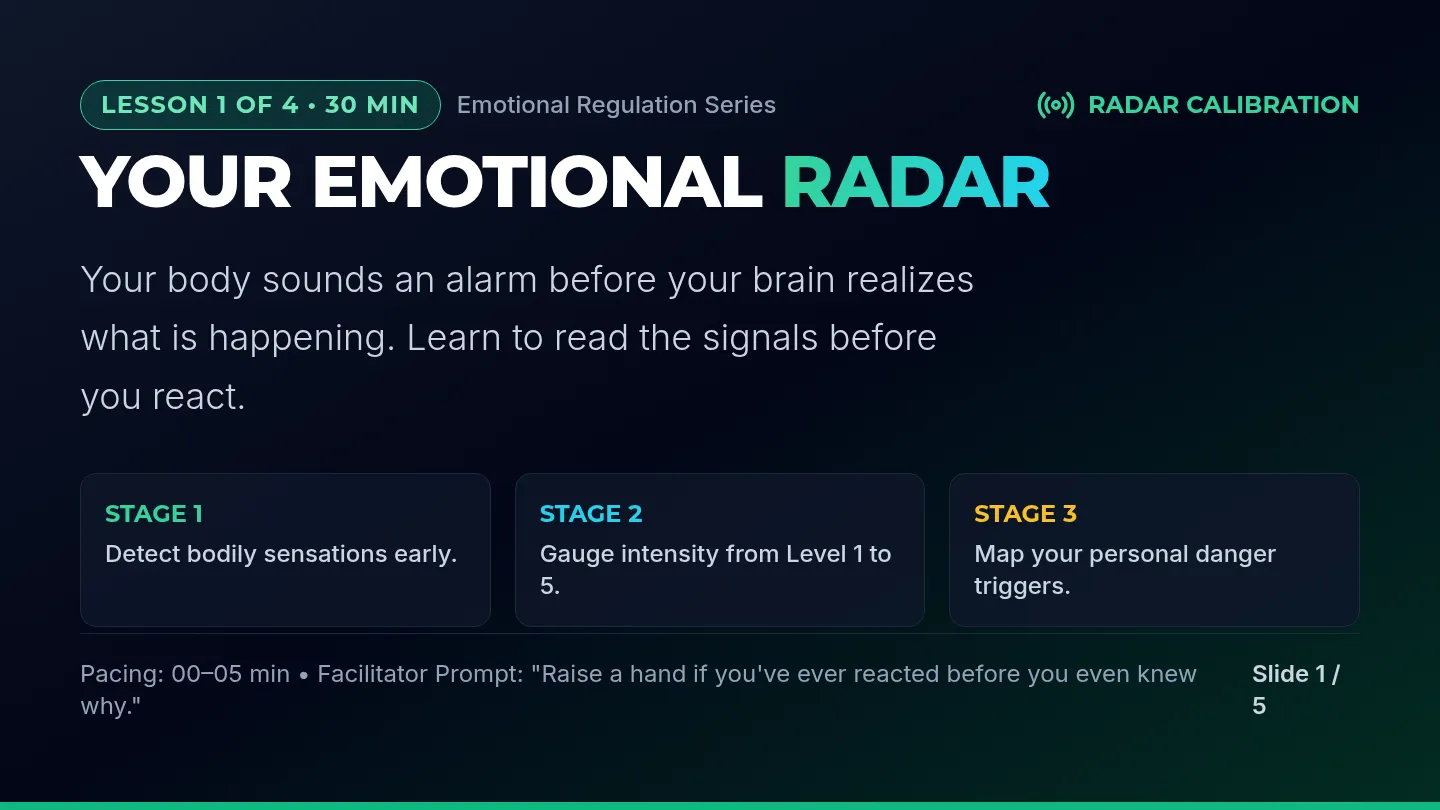
Needs vs Wants
Defining the essentials for success in the classroom and beyond.
Self-Advocacy Series
The Survival Kit
Imagine you are entering a high-stakes classroom environment. You have a list of 20 requests, but you can only choose 5 to be guaranteed for the entire semester.
The Mission:
Separate the "nice-to-haves" from the "must-haves" to ensure your success.
"I want to sit by my friend."
"I need a quiet space to focus."
"I want to listen to music."
"I need the instructions written down."
"I want to use my own pen."
"I need a 5-minute break if I'm overwhelmed."
What is a Want?
A Want is a preference or a desire that makes a situation more comfortable but is not essential for basic functioning or meeting a goal.
Examples
Specific seating (near friends)
Working with a specific partner
Listening to a specific playlist
Key Question
"If I don't get this, can I still complete the task correctly and safely?"
What is a Need?
A Need is a requirement for safety, emotional stability, or the ability to access learning and perform essential tasks.
Examples
Extra time for processing information
Sensory accommodations (low noise)
Clear, written instructions
The Standard
"Without this, my ability to function or succeed is significantly compromised."
Perception & Framing
How you present your request changes how an authority figure (teacher/boss) hears it.
"The Want Frame"
"I want to go to the bathroom right now because this work is boring."
Perception: Avoidance, lack of focus, disrespectful.
"The Need Frame"
"I need a 2-minute reset outside because I'm feeling overstimulated and want to stay productive."
Perception: Self-aware, goal-oriented, responsible.
Checking In
"Why is it harder to advocate for a need if we treat everything as a want ?"
"How does identifying your needs help you during a daily check-in?"
Next Activity: The Survival Kit Sort
Survival Kit Sort Worksheet The Survival Kit
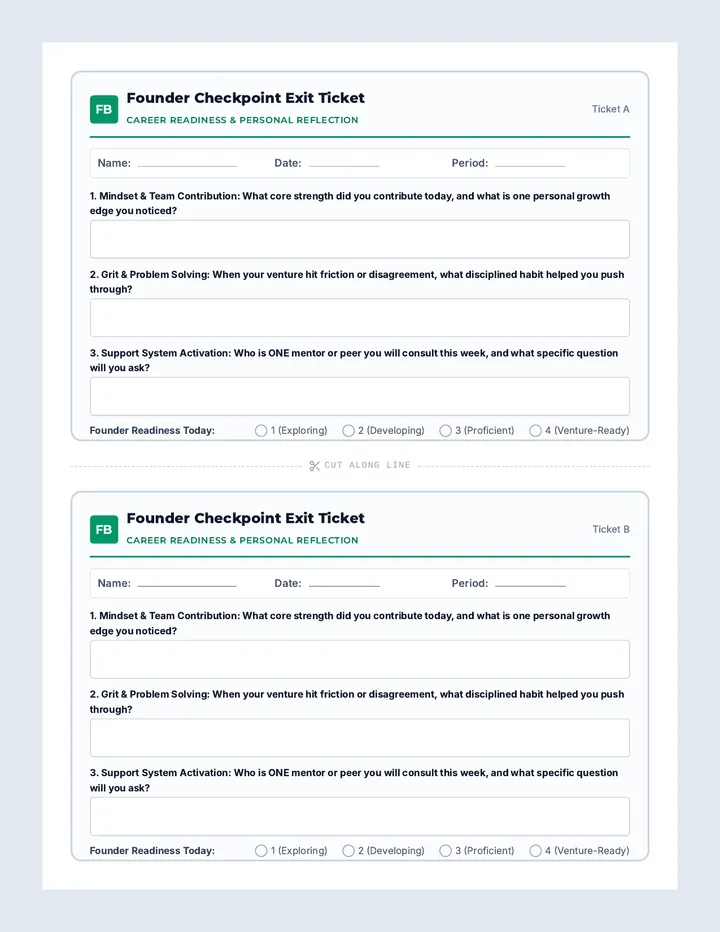
Lesson 01: Differentiating Needs vs. Wants
NAME:
DATE:
Mission Briefing
You are entering a high-stakes semester. You have a list of 20 potential requests for support, but you can only pack 5 items into your "Survival Kit." These 5 items are the only supports guaranteed to be available to you. Everything else is a luxury you can live without. Choose wisely to ensure you can perform at your best.
The Inventory (20 Items)
Sitting next to my best friend
Using a weighted lap pad during tests
Listening to my own music while working
Written instructions provided on paper
Access to a fidget tool during lectures
Preferential seating (close to the teacher)
Picking my own group members
5-minute "cool down" break when frustrated
Choosing the topic for my research project
Graphic organizers for all writing assignments
Turning in late work without a penalty
Extended time (1.5x) on major exams
Using my phone for a quick mental break
Testing in a small-group, quiet setting
Having a specific color of pen for notes
Daily check-in with the teacher at the start
No cold-calling during class discussions
A snack available if I get hungry
Visual schedule of the day on the board
Working on the floor instead of a desk
My Survival Kit (Top 5 Needs)
Debriefing Analysis
1. How did you decide what was a "Want" vs. a "Need"? What was your main rule for deciding?
2. Look at your Survival Kit. If you asked a teacher for one of these, how could you frame it as a productivity tool rather than a personal preference?
3. Scenario: A teacher says "No" to your #1 Need. Why might they say no, and what is one way you could respond professionally?
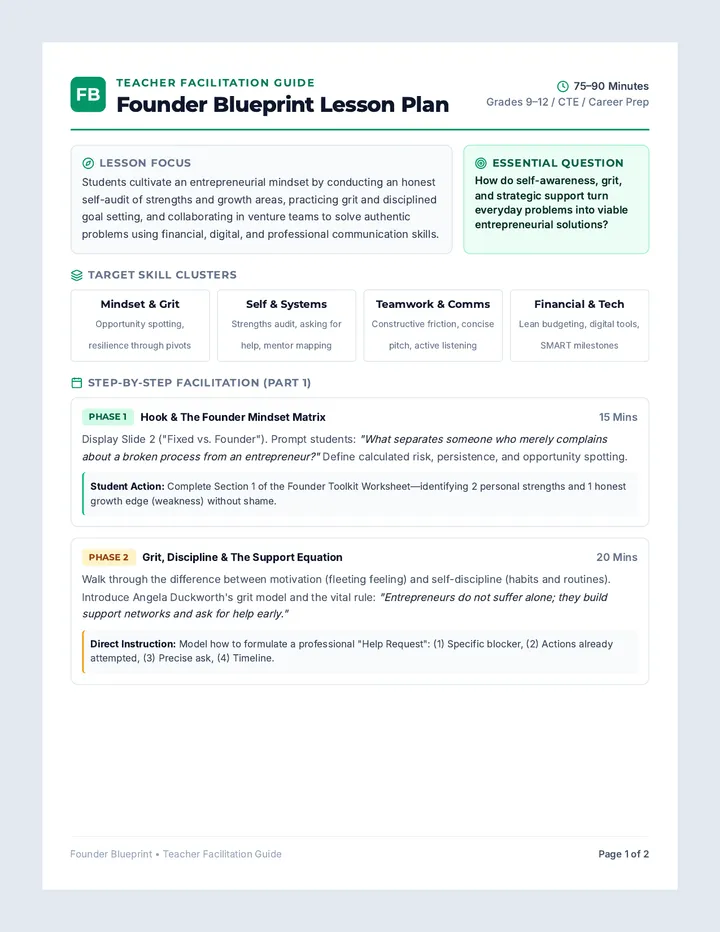
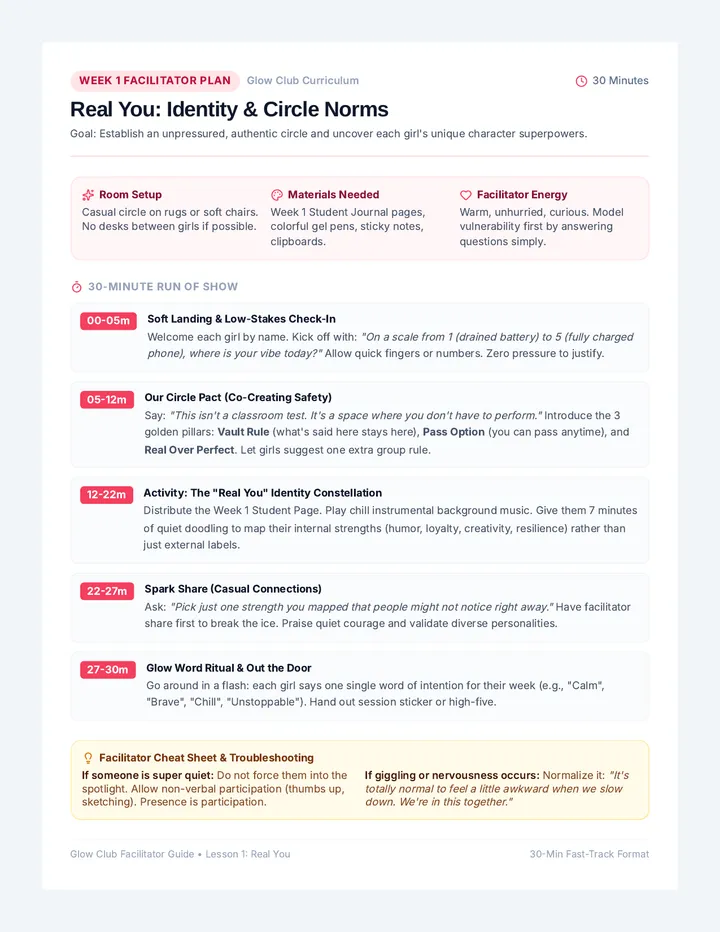
Self-Advocacy Facilitation Guide Facilitation Guide
Professional Communication and Self-Advocacy
Resource Type: Teacher Resource
Sequence Overview
This 5-lesson sequence equips 10th-grade students with the interpersonal skills needed to advocate for themselves during daily check-ins. It bridges the gap between emotional awareness and professional communication.
Duration 5 x 45-60 mins
Target Skills Advocacy, Negotiation
Grade Level 10th Grade
Lesson 1: Needs vs Wants
Focus: Prioritization and Perception
Guide students through the "Survival Kit" activity. The goal is to move beyond "preferences" (wants) to "productivity tools" (needs).
Lesson 2: Structuring the Ask
Focus: The Formula (Context + Need + Solution)
Transition students from complaining to problem-solving. Use the Blueprint to practice scripted requests.
Lesson 3: The Check-In Pitch
Focus: Verbal Delivery and Non-Verbal Cues
Role-play the "Elevator Pitch." Watch for eye contact, volume, and the declarative tone.
Lesson 4: Negotiation Navigation
Focus: Compromise and Resiliency
How to handle a "No." Use the Pivot Script to propose alternatives that respect teacher boundaries.
Lesson 5: Professional Stand-Ups
Focus: Workplace Transferable Skills
Connect classroom check-ins to corporate "Blockers" and stand-up meetings. Emphasize capacity management.
Structuring the Ask Slides System Module 02
Structuring the Ask
The technical formula for professional self-advocacy.
Communication Blueprint v1.0
Why "The Ask" Fails
Version A: The Whine
"This assignment is way too long. I'm never gonna finish. It's not fair that we have to do all this work in one night. Can I just have an extension?"
Teacher Perception:
Complaining, not solving
Unprofessional tone
Low accountability
Version B: The Advocacy
"I'm managing a heavy workload this week [Context]. I need a bit more time to ensure the quality of my essay [Need]. Could I submit it by Friday instead of Wednesday? [Solution]"
Teacher Perception:
Proactive and planned
Goal-oriented (quality)
Professional solution
The Formula
Part 01
Context
The "Why" behind your request.
Part 02
Need
The specific support required.
Part 03
Solution
A realistic plan for success.
Result = Professional Self-Advocacy
Context
Don't assume they know why you're struggling. Give them the "Frame."
Professional Starters:
"I've noticed that I'm getting overwhelmed with..."
"I want to make sure I do a good job on this, but..."
"Since I was absent yesterday, I'm finding that..."
"To help me focus better during this lesson..."
Need
Be direct and specific. General pleas for "help" are hard to answer.
Specific Language:
"I need a quiet space to work for the next 20 minutes."
"I need the instructions in writing so I don't miss a step."
"I need to use my noise-canceling headphones for this task."
"I need an extension to complete the final section."
Solution
This is the "Closer." Show that you've thought about how to fix it.
The Proposed Plan:
"Could I work in the library and check back in at 2:00?"
"Can I record this lecture to review later tonight?"
"If I start now, I can have it finished by tomorrow morning."
"I'll use the graphic organizer to make sure I'm on track."
The Finished Product
The Ask Blueprint Worksheet The Ask Blueprint
Lesson 02: Context + Need + Solution
NAME:
DATE:
Part 1
CONTEXT
The "Why"
Part 2
NEED
The "What"
Part 3
SOLUTION
The "How"
Blueprint Practice
Scenario 1: Testing Anxiety
Difficulty: Easy
"You are about to start a math test. You feel your heart racing and you're having trouble focusing because of the noise from the hallway."
Context (Frame the feeling)
Need (Specific tool/support)
Solution (Proposed fix)
Scenario 2: The Group Project
Difficulty: Medium
"Your group isn't doing their share of the work. You've tried talking to them, but you're getting frustrated and worried your grade will drop."
Context (Frame the situation)
Need (Specific intervention)
Solution (Realistic plan)
Scenario 3: Sensory Overload
Difficulty: Hard
"The lights are buzzing and the classroom is very bright today. You have a headache starting and feel like you might shut down if you stay at your desk."
Context
Need
Solution
Your Turn
Choose a real need you have in your current schedule. Write out a full "Ask" using the blueprint.
The Check-In Pitch Slides Lesson 03: Interpersonal Skills
The Check-In Pitch
Mastering the art of the verbal update: tone, timing, and body language.
Communication Performance
The 30-Second Elevator Pitch
In the business world, an "elevator pitch" is a quick summary of an idea. In the classroom, it's how you summarize your "status" to a busy teacher.
The Challenge:
"You have 30 seconds between classes. Your teacher is setting up a lab. How do you explain you're having a 'Red' day and need support without taking up their whole morning?"
It’s Not Just What You Say...
Eye Contact
Wait for a break in their work. Make brief, respectful contact to show you are engaged and serious.
Posture
Avoid slouching or folding your arms (defensive). Lean slightly toward the teacher to show openness.
Distance
Respect "personal bubble" space. Don't crowd the teacher's desk, but stand close enough to keep it private.
The "Music" of Speech
Volume
A "stage whisper" or a low, steady voice. Keep the check-in private to avoid classmates eavesdropping.
Pace
Slow down. When we are anxious or frustrated, we talk fast. Deep breath, then speak clearly.
Avoid the "Ask Trap"
Up-talking: Ending every sentence like a question (e.g., "I'm having a bad day?") sounds like you're unsure of your own needs.
Declarative Tone: Speak your needs as facts. "I am struggling with focus today" instead of "Maybe I'm struggling with focus?"
Timing is Everything
Even the best pitch will fail if the timing is wrong.
Ideal Times:
Arrival (first 2 minutes of class)
During independent work time
End of class (last 2 minutes)
Avoidance Times:
Middle of whole-group lecture
During a high-stakes transition/emergency
When the teacher is actively helping another student
The Pitch Lab
Get ready to role-play. Focus on eye contact, your declarative tone, and the 30-second limit.
Step 1
Pick a scenario card
Step 2
Plan your 3-part blueprint
Step 3
Perform the "Pitch"
Step 4
Get peer feedback on "Vibes"
The Pitch Performance Worksheet Pitch Lab Performance
Lesson 03: Verbal Check-In Simulation
NAME:
PARTNER:
1. Plan Your Pitch
Your Scenario: Choose one or create your own based on a current class challenge.
THE CONTEXT (3-5 words)
THE NEED (Be direct)
THE SOLUTION (The "Closer")
2. Peer Feedback (The "Vibe" Check)
Partners: Observe the pitch and rate the following non-verbal elements. Be honest but professional.
Skill Area Developing Professional Expert Timing Wait for a break?
|
|
| Eye Contact Steady & respectful? |
|
|
|
| Volume & Tone Low, private, declarative? |
|
|
|
| Conciseness Under 30 seconds? |
|
|
|
3. Self-Reflection
What was the hardest part of speaking your needs out loud?
How did your partner's feedback change how you might do it for real?
Practice Scenario Cards (Cut Along Dotted Lines)
Scenario A
You missed 3 days of school. You are back today but totally lost during the new lecture.
Scenario B
The room is extremely hot and bright. You feel a migraine coming on and can't focus.
Scenario C
You are currently at a "Yellow" on your daily check-in and need to take a 2-minute reset.
Scenario D
You have a personal emergency happening at home and are worried you might be reactive today.
Negotiation Navigation Slides Lesson 04: Conflict Resolution
Negotiation Navigation
Handling the "No" and finding the middle ground through professional compromise.
Self-Advocacy Skills
When "The Ask" Fails
Even if you use the perfect formula (Context + Need + Solution), a teacher or boss might still say "No."
The Wall:
"I understand you're overwhelmed, but everyone needs to stay in the classroom for this activity. I can't let you work in the hallway right now."
Now what?
The Pivot Mentality
1
Resist the Reaction
When denied, our brains often go to "Flight" (walking out) or "Fight" (arguing). Negotiation requires a third option: "Think."
2
Understand the "Why"
Teachers usually say no because of safety, supervision, or classroom rules. Respecting their reason is the first step to a counter-offer.
The Goal:
"Getting what you need to function, while respecting the boundaries of the environment."
Negotiation Tools
Tool 1: The Alternative
If the location is the problem, change the activity. If the activity is the problem, change the location.
"If I can't go to the hallway, could I move to the back corner desk with my headphones on?"
Tool 2: The Trial Run
Ask for a small window of time to prove the solution works before committing to the whole period.
"Could I try working on just the first five problems independently, and then check back in with you?"
Tool 3: Seeking Clarity
If you don't understand the 'No', ask for the specific boundary so you can work around it.
"Is it the noise in the hall you're worried about, or that I'll miss the next set of instructions?"
Tool 4: The Trade
Offer to complete a high-priority task in exchange for a lower-priority accommodation.
"If I finish the vocabulary check now, could I do the reading part in the library for the last 15 minutes?"
The "Pivot" Script
"I hear you saying [Teacher's Concern].
This shows you are listening, you still have a need, and you are ready to compromise.
Negotiation Challenge
The Case:
"You are in Art class. You need to work alone because the group talk is triggering your sensory issues. You ask to go to the empty media center. The teacher says NO because they are doing a safety drill in 20 minutes."
Negotiation Navigation Worksheet Negotiation Navigation
Lesson 04: The Art of the Counter-Offer
NAME:
DATE:
The Pivot Script Formula
"I hear you saying [Teacher's Concern]. Since [My Need] is still making it hard to work, could we try [Alternative Solution] instead?"
Scenario 01
The Setup:
"You are in English class. You're feeling very socially anxious and want to work on your essay in the library. Your teacher says 'No' because they are doing a peer-review session today and everyone needs to be present to help their partners."
Analyze: What is the teacher's boundary?
Write your Counter-Offer:
Use the Pivot Script...
Scenario 02
The Setup:
"You're in Math. You need to use noise-canceling headphones to block out the clicking of a nearby radiator. The teacher says 'No' because they have a rule about 'No Tech' and they think you're just trying to listen to music."
Analyze: What is the teacher's boundary?
Write your Counter-Offer:
Use the Pivot Script...
Negotiation Toolkit Selection
Which negotiation tool (Alternative, Trial Run, Seeking Clarity, or The Trade) would you use for these situations? Explain why.
"A teacher says you can't have an extension on a project because it will 'mess up the grading timeline'."
Tool Selection
Your Reason Why
"A teacher won't let you use a fidget spinner because they find it 'distracting to other students'."
Tool Selection
Your Reason Why
Professional Stand-Ups Slides Module 05: Career Readiness
Professional Stand-Ups
Bridging the gap between school check-ins and the professional workplace.
Transferable Skills v1.0
What is a "Stand-Up"?
In modern tech and business, teams meet for 10-15 minutes every morning to "check-in." They literally stand up to keep it quick.
The 3 Questions:
1. What did I do yesterday?
2. What am I doing today?
3. What are my "Blockers"?
"Blocker" is the adult word for a "Need."
A blocker is anything stopping you from being productive—tech issues, mental health, lack of info, or burnout.
The Professional Translation
School Language (Informal)
Workplace Language (Professional)
"I'm having a really bad mental health day."
"I am currently at capacity and need to prioritize my focus tasks."
"This work is too hard, I don't get it."
"I've hit a blocker regarding the technical requirements of this project."
"I'm super stressed and need to leave."
"I need to step away to reset so I can maintain my quality of work."
Measuring Capacity
In a job, you are hired for your skills. If you burn out, you can't provide those skills. Self-advocacy is job security.
"Checking in at work isn't about complaining; it's about resource management."
Identifying Workplace Needs:
Clear expectations and deadlines
Quiet workspace for deep focus
Flexibility during personal emergencies
Constructive, timely feedback
Applying the Formula to a Boss
"Hi [Manager], I'm noticing that my current project load is starting to impact my turnaround time [Context]. I need to delegate the admin tasks this week [Need] so I can finish the client proposal by Friday [Solution]. Is there someone on the team who can assist?"
Context
The Problem
Need
The Tool
Solution
The Result
Full Circle
"A daily check-in in 10th grade is practice for a stand-up meeting at a Fortune 500 company."
Your needs don't disappear when you graduate; you just get better at communicating them.
Next: Workplace Simulation Workshop
Workplace Stand-Up Worksheet Workplace Stand-Up Guide
Lesson 05: Professional Translation & Career Readiness
NAME:
DATE:
1. The Professional Translation
Translate these common school-based "needs" into professional "workplace blockers." Focus on productivity and resource management.
Informal (School Context)
Professional (Workplace Context)
"I'm feeling really anxious and I can't think."
"The lights and the noise are giving me a headache."
"I'm totally burnt out on this project."
"I need someone to show me how to do this again."
2. The 3-Question Stand-Up
The Scenario: You are a graphic designer. Yesterday, you finished the logo drafts. Today, you are supposed to start the website layout. Your Blocker: You are experiencing severe eye strain and need a 1-hour break from screens to remain productive.
Yesterday: (What did you complete?)
Today: (What is your goal?)
Blockers: (Use the Context + Need + Solution formula)
3. Career Connection
1. Why do employers prefer the word "Blocker" over "Complaint" or "Excuse"?
2. How does being able to negotiate for your needs make you a more valuable employee?
3. What is one specific skill from this series (Needs vs Wants, Blueprinting, Pitching, or Negotiation) that you feel most confident using in a future job?
Capacity: The amount of work you can handle effectively.
Blocker: A professional term for a barrier to productivity.
Stand-Up: A daily progress meeting.
Self-Advocacy Answer Key Resource Scenario Answer Key
Professional Communication and Self-Advocacy
Resource Type: Teacher Resource
Lesson 02: The Ask Blueprint
Scenario 1 (Testing Anxiety)
"Since I'm distracted by the hallway noise [Context], I need a quiet space to focus [Need]. Could I move to the back table with my headphones? [Solution]"
Scenario 2 (Group Project)
"I'm worried about the workload balance in my group [Context]. I need help dividing tasks [Need]. Could we review our timeline together for 5 minutes? [Solution]"
Lesson 04: Negotiation
Scenario 1 (Peer Review)
"I hear that my partner needs help. Since I'm struggling with the social setting, could I help them for 15 minutes, then finish my own work in the hall?"
Scenario 2 (Headphones)
"I understand the 'no tech' rule. Could I use my noise-canceling headphones without them being plugged into a device to block the radiator noise?"
Lesson 05: Translations
Informal
Professional
"Mental health day"
"Managing personal capacity"
"Too hard / I don't get it"
"Encountered a technical blocker"
"Stressed / Need to leave"
"Step away to maintain productivity"