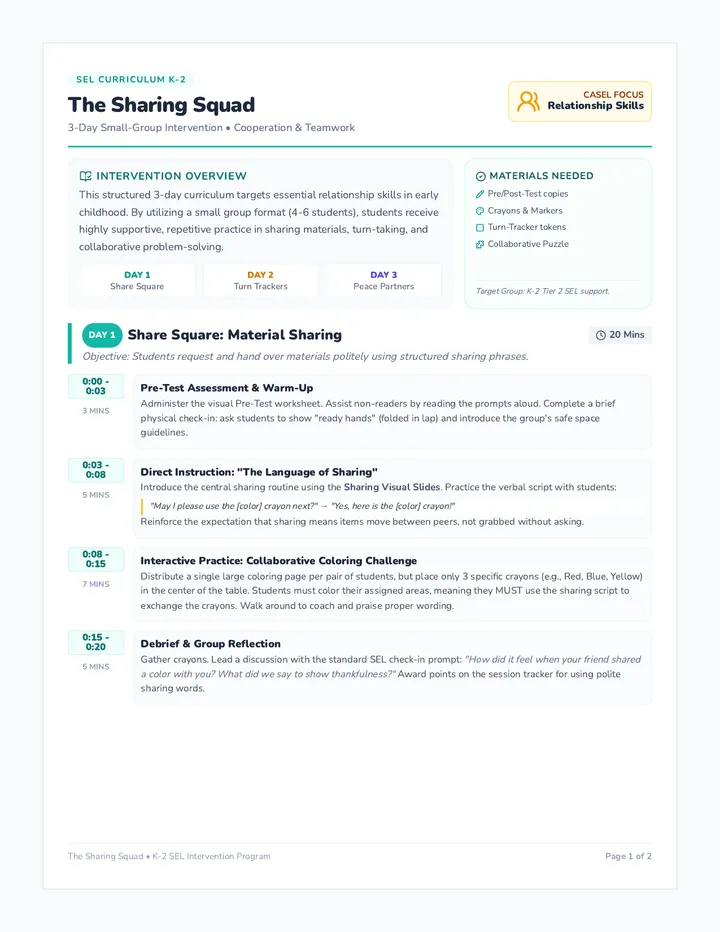
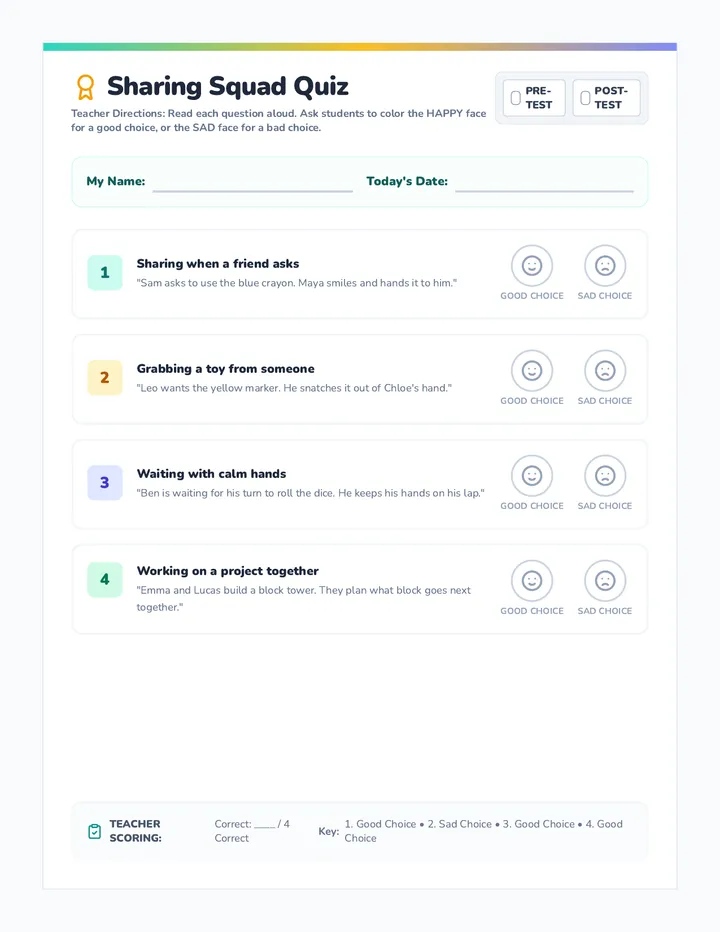
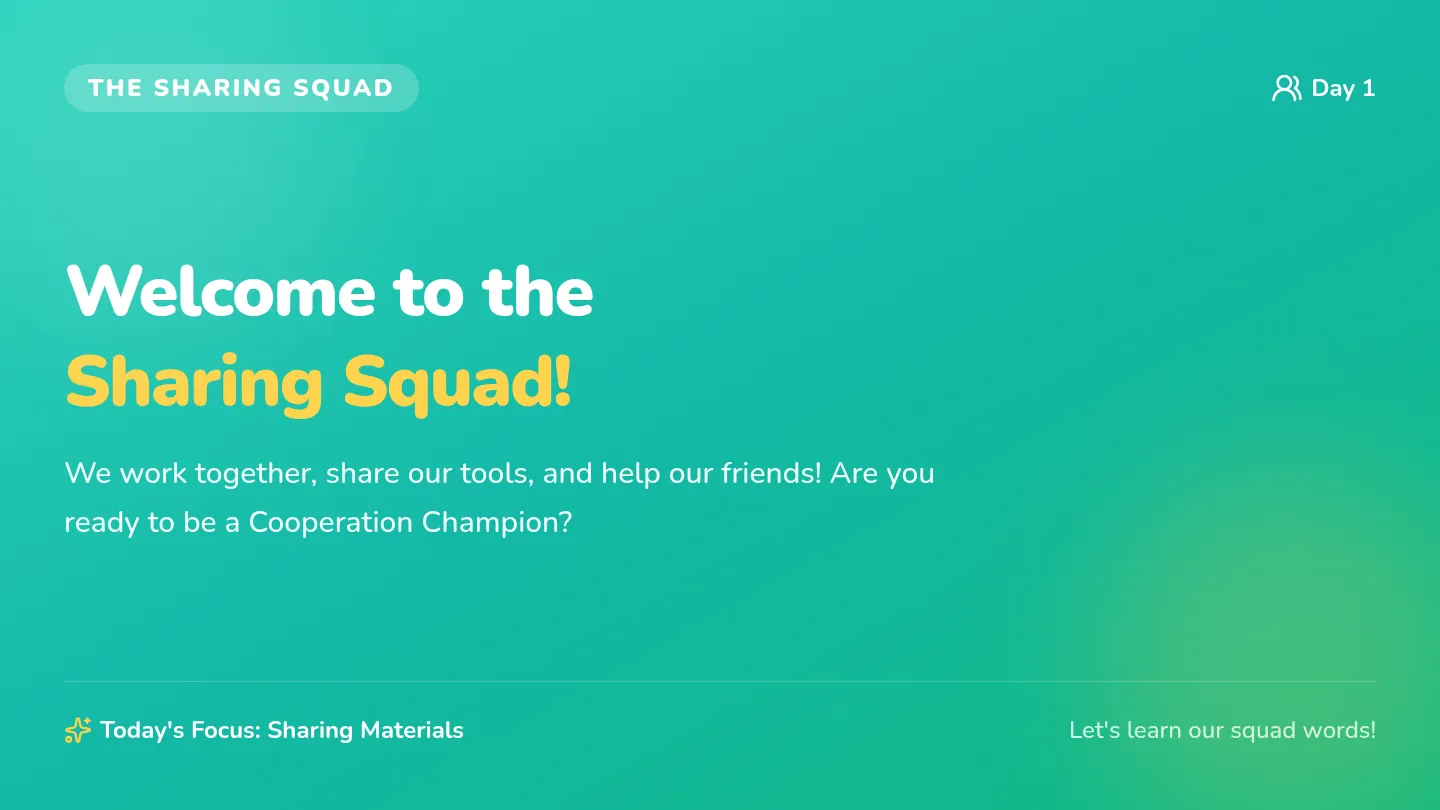
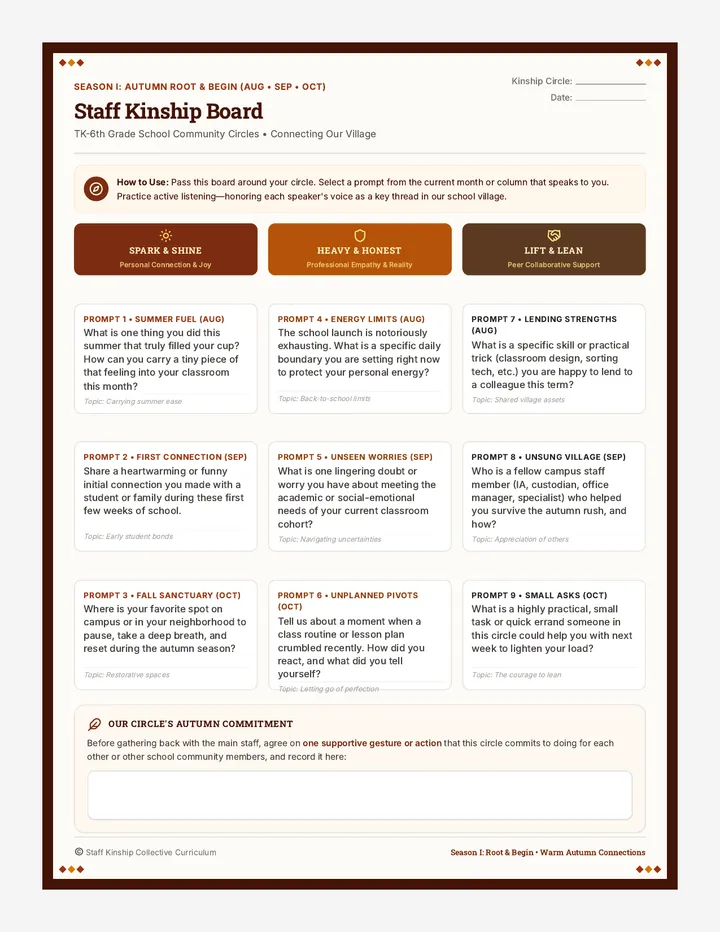
Feelings Power Lesson Plan Your Feelings, Your Power!
Lesson Plan: Emotional Empowerment
Audience: Middle School
Time: 45 Minutes
The Why
Understanding and managing emotions is a fundamental life skill that helps students navigate challenges, build stronger relationships, and develop resilience. This lesson provides them with the tools to begin this essential journey.
Objective
Students will be able to identify and categorize different emotions, understand the impact of emotions on behavior, and learn initial strategies for managing their feelings in a healthy way.
Materials
Our Feelings, Our Power! Slide Deck
Emotion Scenario Cards
My Emotion Toolkit Worksheet
Cool Down Ticket
Preparation
• Review the Slide Deck to familiarize yourself with content.
• Print and cut Emotion Scenario Cards (one set per group).
• Copy Emotion Toolkit Worksheets (one per student).
• Set up projector/interactive whiteboard.
Instructional Flow
5 MIN
Warm-Up: How Are You REALLY Feeling?
1. Start with a check-in: "On a scale of 1-5, how are you feeling? One word to describe it?"
2. Share out, emphasizing all feelings are okay.
3. Introduce today's exploration of emotional understanding (Slide 1).
10 MIN
The Feeling Wheel
1. Present the Feeling Wheel concept (Slide 2).
2. Explain complexity and underlying feelings (e.g., mad vs. frustrated).
3. Discuss somatic sensations and behavior influence.
15 MIN
Activity: Emotion Scenarios
1. Divide students into small groups (3-4).
2. Distribute Emotion Scenario Cards.
3. Discussion: Identify specific emotions and healthy responses.
4. Whole class debrief: Sharing insights from scenarios.
10 MIN
Building Our Emotion Toolkit
1. Introduce "Emotion Toolkit" concept (Slide 3).
2. Brainstorm strategies: deep breathing, music, talking, etc.
3. Students complete personal Worksheet (at least 3 strategies).
5 MIN
Cool-Down: One New Tool
1. Reflection: Share one new strategy learned today (Slide 4).
2. Distribute and collect Cool Down Exit Tickets.
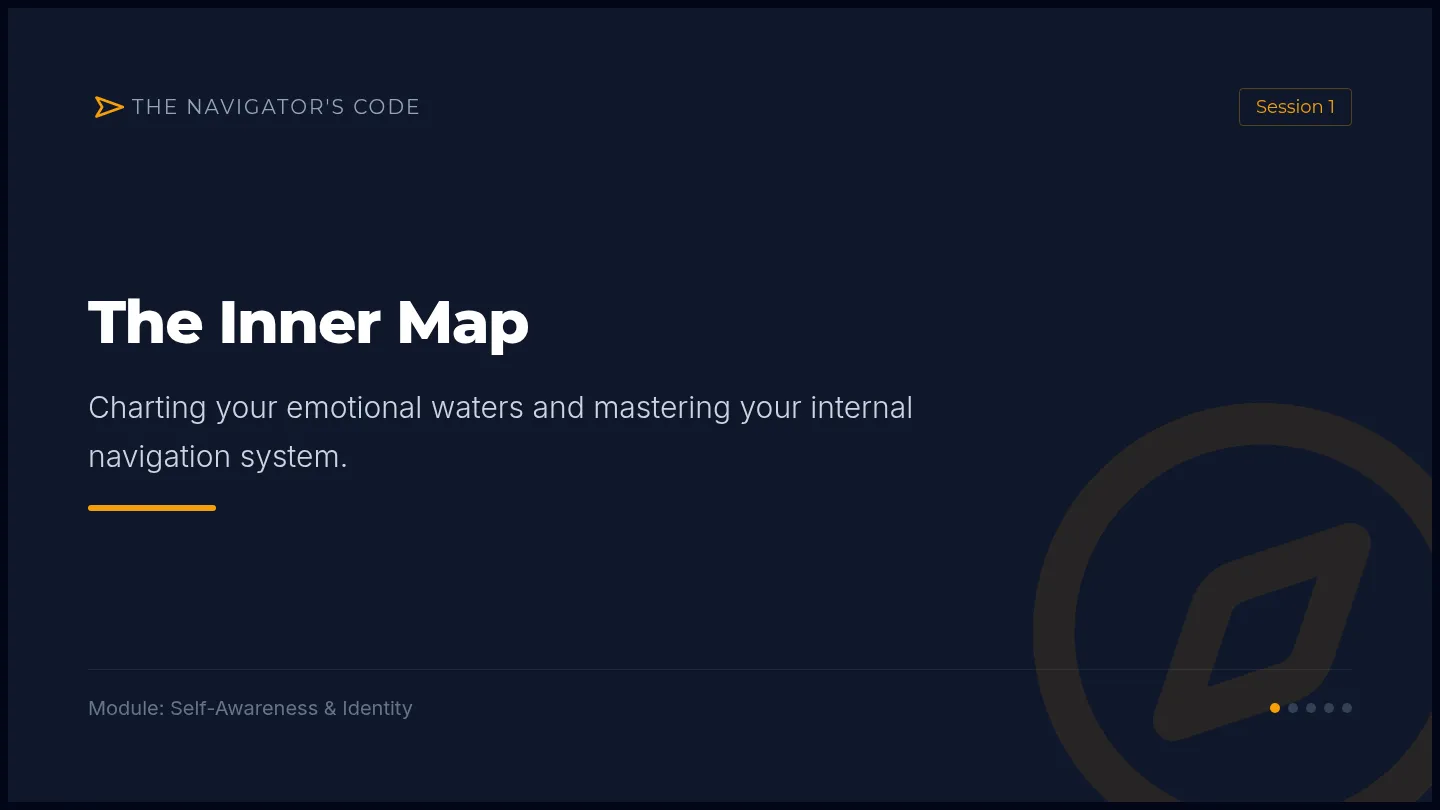
Feelings Power Presentation Slides Your Feelings,
Your Power!
Understanding and Managing Our Emotions
Self-Awareness • Resilience • Control
The Feeling Wheel
Emotions are like colors – many shades and mixes!
What are some basic emotions?
How do different emotions feel in your body?
How can understanding these help us?
Anger
Joy
Sadness
Fear
YOU
Scenario: What Would You Do?
Work in small groups to discuss the scenarios on your cards.
Identify
What specific emotions are at play here?
Respond
What are healthy ways to respond to these feelings?
Build Your Toolkit
What helps you when you're feeling...
Frustrated?
Sad?
Anxious?
Happy?
Let's create a personal collection of strategies that work for YOU.
Deep Breathing Listen to Music Talk it Out Take a Break
One New Tool
for Your Toolkit
Share one new strategy or idea you learned today that you can use to manage your feelings.
You've got this!
Feelings Power Facilitator Script Facilitator Script
Your Feelings,
Your Power!
Use this script to guide students through the 45-minute emotional empowerment session. Actions are in [brackets].
SLIDE 1
Part 1: Warm-Up
"Good morning/afternoon, everyone! To kick us off today, I want you to take a moment to check in with yourselves. On a scale of 1 to 5, where 1 is feeling really low and 5 is feeling fantastic, how are you feeling right now? And what's one word you would use to describe that feeling?"
[Allow a few students to share their words. Affirm all responses, emphasizing that all feelings are valid.]
"That's great. It's important to acknowledge how we're feeling. Today, we're going to dive into something super important: understanding our feelings and learning how to manage them. This isn't just about 'good' or 'bad' feelings, but all the complex emotions we experience every day."
SLIDE 2
Part 2: The Feeling Wheel
"Take a look at this image. This is called an Emotion or Feeling Wheel. Sometimes we say we're 'mad' or 'sad,' but if we dig a little deeper, we can find more specific words to describe what's really going on. For example, if you're 'mad,' maybe you're actually feeling frustrated, annoyed, or even jealous. Why do you think it's helpful to have more specific words for our feelings?"
[Listen to student responses. Guide them to understand that precision helps with understanding and communication.]
"Exactly! The more specific we are, the better we can understand ourselves and explain our feelings to others. Now, let's think about how emotions feel in our bodies. When you feel happy, what does that feel like physically? What about when you feel anxious or angry?"
[Encourage a few students to share without judgment. Connect feelings to physical sensations.]
SLIDE 3
Part 3: Activity Scenarios
"Alright, let's put our new understanding to the test. I'm going to divide you into small groups. Each group will receive some Emotion Scenario Cards. Your task is to read each scenario and discuss two things: 1) What emotions might the person be feeling? 2) What are some healthy ways they could respond?"
[Distribute cards. Circulate and listen to discussions. After 10 mins, bring everyone back.]
"Who would like to share one scenario and your group's discussion? What emotions did you identify, and what healthy responses did you come up with?"
SLIDE 4
Part 4: Building the Toolkit
"That was fantastic work! Now, just like a carpenter has a toolkit, we can build our own 'Emotion Toolkit' with strategies to help us manage our feelings. We all have different ways of coping. What are some things you already do, or have heard of, that help people manage strong emotions?"
Emotion Scenario Cards Activity Emotion Scenario Cards
Print and cut these cards for group discussions.
1
Your best friend just told you they got the lead role in the school play, which is something you really wanted. You feel a pang in your chest and a knot in your stomach, but you also want to be happy for them.
Discussion Card • Power Explorers
2
You've been studying really hard for a big math test all week. You walk into class on test day, and as soon as you see the first question, your mind goes blank. Your heart starts pounding.
Discussion Card • Power Explorers
3
Someone in your class has been spreading rumors about you, and you hear a group of people laughing as you walk by. You feel hot all over and want to shout at them.
Discussion Card • Power Explorers
4
It's been a tough week at school, with lots of homework and projects due. You finally get home on Friday, finish everything, and realize you have the whole weekend free to do what you love. You feel light and excited!
Discussion Card • Power Explorers
5
You've been practicing a new skill (like playing a song on an instrument or trying a new skateboard trick) for days, and you keep messing up. You feel like giving up and throwing your instrument/skateboard across the room.
Discussion Card • Power Explorers
6
You accidentally broke a family heirloom while playing inside, and you know your parents will be very upset. You feel a sinking feeling in your stomach and are afraid to tell them.
Discussion Card • Power Explorers
Discussion Instructions:
1. What emotions might the person in the scenario be feeling? (Use specific words!)
2. What are some healthy ways they could respond to those feelings?
My Emotion Toolkit Worksheet My Emotion Toolkit
Strategies for a Powerful You
Name:
Date:
Just like a carpenter has a toolkit, you can build your own special Emotion Toolkit to help you manage your feelings in healthy ways! Think about what helps you feel better, calm down, or express yourself.
01
When I feel:
I can try:
02
When I feel:
I can try:
03
When I feel:
I can try:
04
When I feel:
I can try:
05
When I feel:
I can try:
Reflection
Why is it important to have an Emotion Toolkit?
Plot Twists Exit Ticket Cool Down
Ticket
Name:
What is one new strategy or idea you learned today that you can use to better understand or manage your feelings?
One New Tool • Power Explorers
Cool Down
Ticket
Name:
What is one new strategy or idea you learned today that you can use to better understand or manage your feelings?
One New Tool • Power Explorers
Cool Down
Ticket
Name:
What is one new strategy or idea you learned today that you can use to better understand or manage your feelings?
One New Tool • Power Explorers
Cool Down
Ticket
Name:
What is one new strategy or idea you learned today that you can use to better understand or manage your feelings?
One New Tool • Power Explorers
Body Rules Lesson Plan My Body, My Rules!
Lesson Plan: Bodily Autonomy
Age Group
Pre-Primary
The Purpose
Learning about healthy boundaries helps pre-primary students understand their personal rights, develop self-respect, and build confidence in communicating their needs. This foundational knowledge promotes safety and healthy relationships from an early age.
Goal
Students will be able to identify personal space, understand the importance of saying "no" to uncomfortable touches, and recognize different feelings related to boundaries.
Prep
Review Slide Deck and Story.
Gather art supplies (crayons, paper).
Print "My Safe Circle" Worksheet.
Prepare "Boundary Says" commands.
Step-by-Step Adventure (60 Mins)
5 MIN
Personal Bubble Check
Physical introduction to personal space using arm stretches.
10 MIN
My Body, My Rules! Intro
Read Lily's Story. Pause to discuss that each child's body belongs to them.
15 MIN
Feeling Faces Art
Draw happy, sad, and uncomfortable faces to represent different feelings about personal space.
10 MIN
What Do We Do?
Discuss "Stop!" and "No!" and identifying trusted adults.
10 MIN
Boundary Says! Game
Active play reinforcing personal space (similar to Simon Says).
5 MIN
My Safe Circle
Draw yourself and safe things inside your personal space bubble.
5 MIN
Reflection & Wrap-Up
Share one new thing learned and reiterate telling a trusted adult.
Body Rules Presentation Slides My Body,
My Rules!
Today, we're going to talk about something super important: YOUR BODY AND YOUR RULES!
Personal Space
Imagine you have a bubble all around you. This is your personal space!
No one can pop your bubble without asking first.
Your Body
Belongs to YOU!
You get to decide who touches you and how they touch you.
NO!
If something feels uncomfortable or you don't like a touch, you can say "NO!"
It's okay to say "NO!" even to people you know.
How do you feel?
Happy?
Like a hug from a parent.
Sad?
When someone pushes you.
Uncomfy?
When a touch feels yucky or wrong.
Who Can Help?
If you ever feel unsafe or uncomfortable,
tell a trusted adult!
Mom / Dad Teacher Grandma / Grandpa Aunt / Uncle
Remember...
Your body, your rules!
Your space is important.
You can say "NO!"
Tell a trusted adult!
Body Rules Facilitator Script Teacher Facilitation Script
My Body,
My Rules!
A playful guide for teaching bodily autonomy. Actions are in [brackets].
Warm-Up
Personal Bubble Check
"Good morning, everyone! Let's get our bodies ready for some learning. Everyone stand up! Now, I want you to gently stretch your arms out to your sides, like you're giving a big hug to the air."
[Wait for students to stretch. Demonstrate the motion yourself.]
"See that space around you? That's your personal bubble! It's a special space that belongs only to you. No one can come into your bubble without your permission, right? Let's take a deep breath in, and out. Great job!"
Intro
Introduction & Reading
[Display Slide 1 and then Slide 2.]
"Your body belongs to YOU! It's your amazing body, and you get to decide who touches you and how they touch you. Just like you decide what toy to play with, you get to decide about your body."
[Read the Lily's Story Reading material aloud, pausing for questions.]
Activity
Feeling Faces
"Alright artists, it's time for our Activity! I'm going to give each of you a piece of paper and some crayons. On your paper, I want you to draw three faces: one happy face, one sad face, and one uncomfortable face."
[Distribute materials. Walk around and talk about situations that make them feel these ways.]
Game
Boundary Says!
"Time for a fun game called Boundary Says! It's a bit like 'Simon Says.' I'll give you instructions. If I say 'Boundary Says,' you do it! If I don't say it, don't do it!"
[Follow the Game Commands on the Boundary Game material. Emphasize safe touch and choice.]
Cool Down
Reflection & Home Fun
"Remember, your body, your rules! Your personal space is important. And the most important thing is to always tell a grown-up you trust if you ever feel uncomfortable or unsafe. Take your at-home projects with you to share with your family!"
Body Rules Warm Up Activity Sheet Warm-Up Activity
Personal Bubble Check
1
Ask all students to stand up and find a spot where they have a little room around them.
2
Say, "Everyone, stretch your arms out wide like you're giving a giant hug to the air!"
3
As students stretch, explain:
"See that space all around you? That's your personal bubble! It's a special invisible bubble that belongs only to you."
4
Ask, "Can anyone pop your bubble without asking?" (Guide them to say "No!")
"Your personal bubble is your special space. Let's learn more about it today!"
Body Rules Story Reading My Body, My Rules:
A Story About Me!
Hi friends! My name is Lily , and I want to tell you something super important about me, and about you !
My body is a very special place. It has my wobbly toes, my giggly tummy, my strong arms, and my happy smile. All of these parts, and all of me, belong to ME!
Just like I have my own special toys that only I can decide to share, I also have my own special space around my body. It's like an invisible bubble! No one can come into my bubble without asking me first.
Sometimes, my mommy gives me a big, gentle hug, and that feels happy! I say, "Yes, Mommy, a hug feels good!" Other times, my friend might get too close when we are playing, and it makes my tummy feel a little squishy. That's my body telling me, "This feels uncomfortable!"
When something feels uncomfortable, or if I don't like a touch, I can use my strong voice and say, "STOP!" or "NO!" It's okay to say "NO!" even to someone I know.
And guess what? If I ever feel confused, or sad, or uncomfortable about a touch, I know I can always tell a grown-up I trust . Like my teacher, my daddy, or my grandma. They will listen to me and help me.
Your body is amazing, and it belongs to you!
Your Body, Your Rules! Yay!
Feeling Faces Activity Worksheet Feeling Faces
Body Rules Art Activity
Name:
In each circle below, draw the feeling face! Talk with your teacher about what makes you feel these ways.
Happy Face
Sad Face
Uncomfortable Face
My Body, My Rules! • Power Explorers
Body Rules Discussion Prompts Guide Let's Talk About it!
Discussion Prompts
Sharing Our Feelings
1. Who would like to share one of their feeling faces?
Tell us about a time you felt that way when someone was in your space or touched you.
2. What did your body feel like?
• Happy? (warm, calm, giggly)
• Sad/Angry? (tight, hot, want to push away)
• Uncomfortable? (squishy tummy, wobbly legs, want to hide)
What Can We Do?
1. If someone gets too close and you don't like it...
"What can you say with your strong voice?" (Prompt for "Stop" or "No")
2. If you say "NO!" and they don't listen...
"What should you do next?" (Prompt for "Find a grown-up")
3. Who are the trusted adults you can talk to?
Encourage naming specific people (Mom, Dad, Teacher, Grandma).
Teacher Tip
Ensure every child feels safe and heard. Affirm that it is always okay to say "no" even to people they like.
Body Rules Boundary Game Guide Boundary Says!
Active Learning Game
How to Play
This game is played like "Simon Says." Students only follow commands if you start with "Boundary Says." This helps them practice listening for cues and making choices about their body and space.
COMMAND 1
"Boundary Says, put your hands on your own shoulders!"
(Focus on their own body)
COMMAND 2
"Boundary Says, take two tiny steps back from your friend!"
(Giving others space)
COMMAND 3
"Boundary Says, shake your head 'no' slowly."
(Non-verbal boundaries)
TRICK COMMAND
"Give your friend a high five!"
(Wait! Boundary didn't say. Did your friend say okay?)
COMMAND 4
"Boundary Says, pretend to push away gently with your hands!"
(Simulating a boundary)
COMMAND 5
"Boundary Says, put your hands up high to show your bubble!"
(Visualizing personal space)
Wrap-Up Talk
"Did you listen for Boundary? What if I asked you to touch a friend without asking first? Is that okay? No! We only touch if our friend says it's okay and we feel okay too!"
My Safe Circle Worksheet My Safe Circle
Your Personal Space Bubble
Name:
Draw YOU in the middle! Then draw things that make you feel happy and safe inside your bubble. Draw things you want to keep out outside the circle!
Draw You!
Safe Inside
Keep Out
My Body, My Rules! • Power Explorers
Body Rules Cool Down Reflection Guide End of Lesson
Cool Down & Reflection
Gathering our thoughts and staying safe.
The Big Question
"Can anyone share one new thing they learned today about their body or their rules?"
Important Reminders
Your body, your rules!
Your personal space bubble is special.
You can always say "NO!" to uncomfortable touches.
Safety Tip
"Always tell a grown-up you trust if you ever feel uncomfortable or unsafe. They are here to help you!"
Great job today, Power Explorers!
Body Rules Quiz Worksheet Body Rules Quiz
Fun Challenge!
Name:
Listen to the questions! Circle the Yes or No face for each one.
1. Does your body belong to YOU?
YES
NO
2. Can you say "NO!" if a touch feels yucky?
YES
NO
3. Is your personal space bubble a real place?
YES
NO
4. Should you tell a trusted adult if you feel unsafe?
YES
NO
My Body, My Rules! • Power Explorers
Body Rules Quiz Answer Key Teacher Answer Key
Body Rules Quiz
1. Does your body belong to YOU?
YES
2. Can you say "NO!" if a touch feels yucky?
YES
3. Is your personal space bubble a real place?
YES
4. Should you tell a trusted adult if you feel unsafe?
YES
Instructional Note
The goal of this quiz is reinforcement, not rigorous testing. If a student answers "No" to any of these, take a moment to gently re-explain the concept using the "Lily's Story" references.
Body Rules Project Guide At-Home Activity
Body Rules Project
A family guide to personal space.
For Families
"Your child learned about bodily autonomy and personal space today! This project helps reinforce those important rules at home in a fun, positive way."
Project Steps
1
The Bubble Talk
Ask your child to show you their "Personal Bubble." Have them stretch their arms out and explain who gets to decide who enters that bubble.
2
Family Safety Circle
Draw a family poster together! List 3 trusted adults your child can always talk to if they feel uncomfortable or unsafe.
3
Practice Saying "NO!"
Play a game where you ask to enter their bubble, and they practice saying "No, thank you" or "Stop" with their strong voice.
Parent Checklist
Talked about Bubbles
Named Trusted Adults
Practiced Saying "No"
Had fun together!
Body Rules Project Rubric Assessment Rubric
Body Rules Project
Teacher Guidance
This rubric is for observing the student's ability to communicate boundaries and identify safety resources. Use it for the at-home project return or in-class performance.
Goal Excellent 🌟 On Target ✅ Need Help 💬 Personal Space Clearly identifies and respects "personal bubble" for self and others. Identifies their own bubble; sometimes needs reminders for others. Difficulty identifying their own space or bubble concept. Communication Uses a clear, strong voice to say "No" or "Stop" appropriately. Can say "No" or "Stop" when prompted by a teacher. Struggles to verbalize a boundary or feels very shy. Safety Help Can name 3+ trusted adults they can talk to for help. Can name 1 or 2 trusted adults they can talk to. Unsure of who to ask for help or name a trusted adult. Project Return Project completed with family; shares learnings with class. Project returned and completed with family participation. Project not returned or incomplete.
Observation Notes