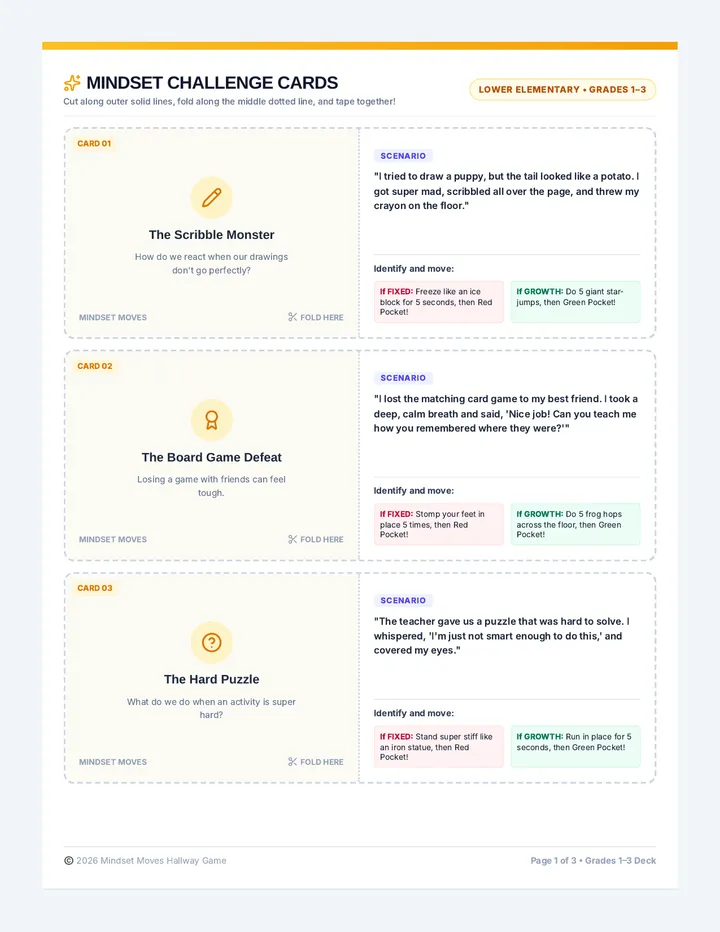
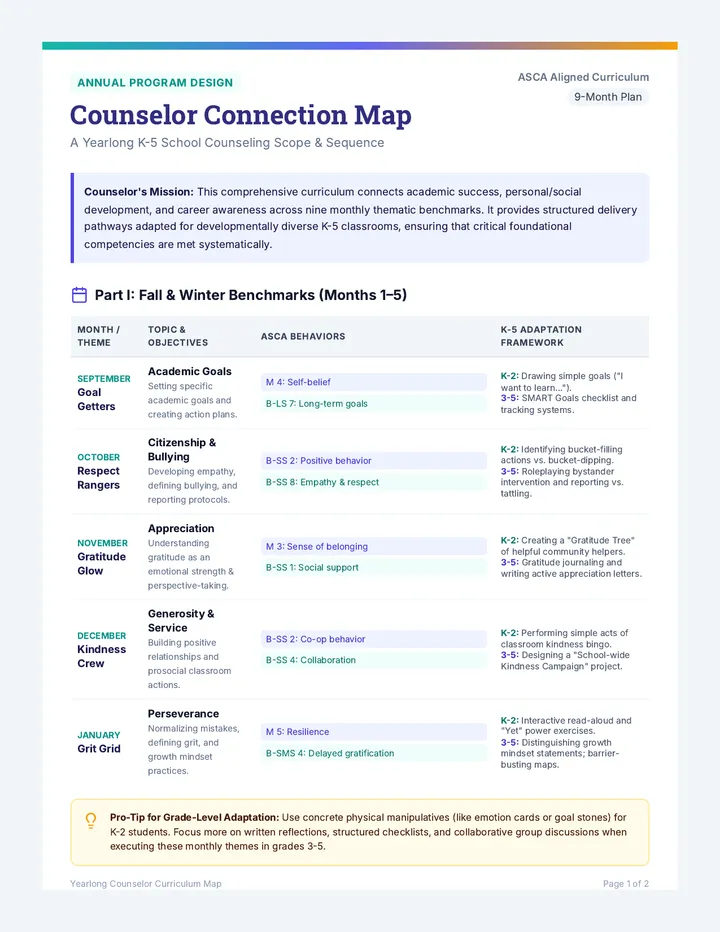
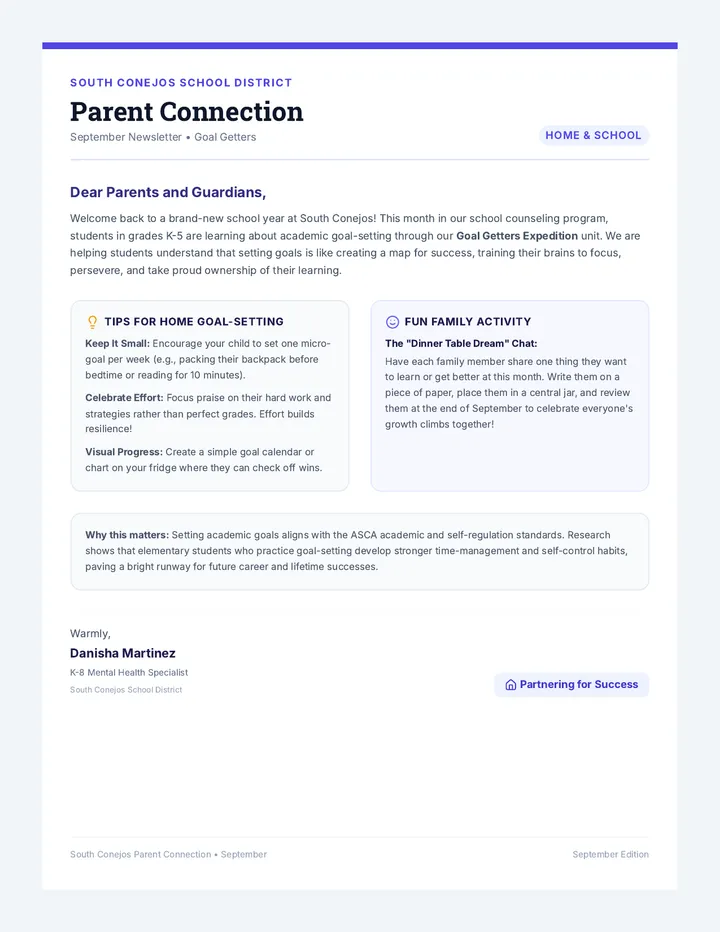
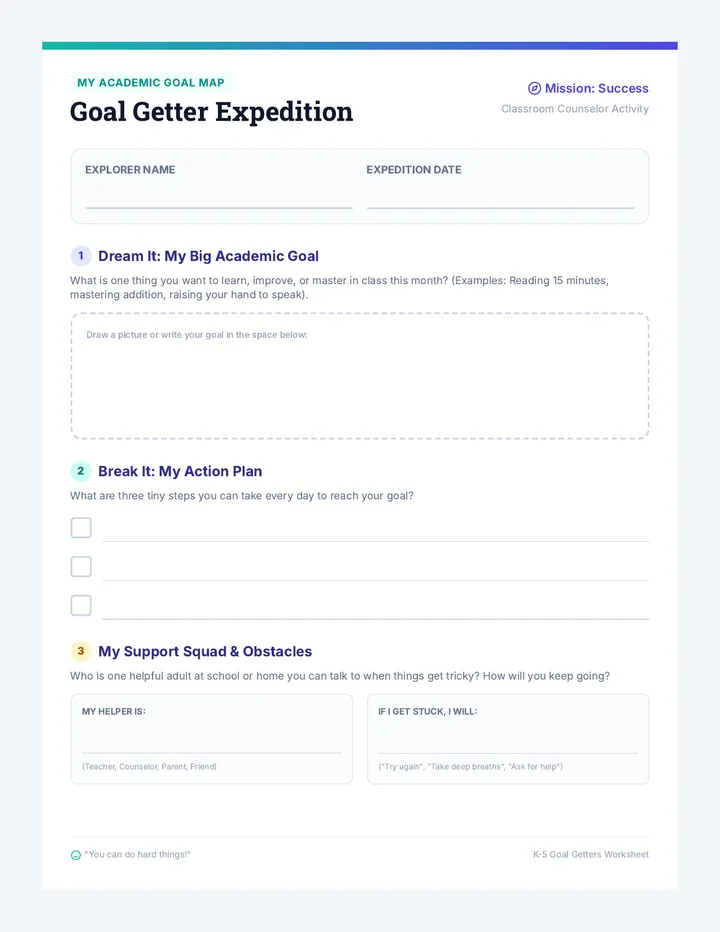
Body Listening Slides The Friendship Lab
Body Listening
Basics
How do we use our whole body to show we are ready to listen and solve problems?
Mission: Active Listening
The Telephone Test
"The blue bunny baked big bananas."
How did the message change?
When we don't listen with our whole body, messages get garbled.
Eyes Looking
In the lab, we keep our Eyes on the person talking.
"I see you are talking to me."
"I am paying attention to your face."
Ears Hearing
Both Ears are ready to catch every word.
"I catch your words like a net."
"I don't miss any clues."
Mouth Quiet
A quiet Mouth lets the other person's ideas fill the room. We wait for our turn.
Body Still
A Still Body shows that my brain is focused on you.
Feet on Floor
Hands to Self
Strong & Steady
Lab Equipment Check!
Eyes
Ears
Mouth
Body
Are you ready to solve the friendship mystery?
Body Listening Worksheet Lab Report
Subject: Body Listening
Scientist:
Date:
1
Draw a picture of yourself as a "Whole Body Listener"
Draw your lab gear (eyes, ears, hands) in action!
2
Match the body part to the lab rule
Eyes
Ears
Mouth
Body
Hear every word
Stay still and calm
Wait for your turn
Look at the speaker
The Scientist's Pledge
"I promise to use my eyes, ears, and heart to listen so I can be a great friend and solve problems."
X
Sign your name to join the squad!
Body Listening Teacher Guide Friendship Lab Protocol
Lesson 1: Whole Body Listening Guide
Learning Objective
Students will be able to identify and demonstrate the four components of active listening: eyes looking, ears hearing, mouth quiet, and body still.
Lab Materials
Body Listening Slides
Lab Report Worksheets
"Telephone" game phrase (prepared)
Lab Procedures
1
The Hook: The Telephone Game (10 mins)
Gather students in a circle. Whisper a complex phrase to the first student (e.g., "The blue bunny baked big bananas on the bus"). Let it travel. When the last student speaks it aloud, discuss why it changed.
"Scientists, our message got garbled! In our Friendship Lab, we need the right gear to make sure we hear the truth."
2
Lab Equipment Intro (15 mins)
Use the Body Listening Slides . Introduce each "piece of equipment" (Eyes, Ears, Mouth, Body). For each one, have students practice:
Eyes: Look at the teacher's hand.
Ears: Cup ears to "catch" a sound.
Mouth: Finger to lips "shhh".
Body: Glue feet to the floor.
3
The Lab Report (15 mins)
Distribute the Lab Report Worksheet . Students draw themselves using their equipment and complete the matching activity. Circulate and ask: "Show me your listening eyes!"
Lab Debrief
"Why is it hard to listen if our feet are dancing?"
"How does your friend feel when you look at them while they talk?"
Pro-Tip
Use a chime or bell during the lesson to practice "Ear Catching." When they hear the sound, they must freeze their body and look at you.
Turn Taking Slides The Friendship Lab
The Golden Rule
of Turn-Taking
How do we keep the "Friendship Flow" going without interrupting?
Friendship Flow
Talking is like a current. It needs to flow from one person to another.
What happens when we stop the current?
The Crash
Interrupting is like a Stop Sign. It makes the other person feel like their ideas don't matter.
The Key
Talking Object
1
Holding the object? It's your turn to talk.
2
Not holding it? Use your Whole Body Listening.
3
Finished? Pass it gently to the next scientist.
The Waiting Muscle
Impulse control is like a Muscle. The more we practice waiting, the stronger it gets!
Reactor Challenge!
Can we pass the Talking Object without anyone interrupting?
Wait
Listen
Pass
Turn Taking Poster Lab Safety Protocol
The Golden Rule
of Turn-Taking
1
Wait for the Object
If you aren't holding the Talking Object, keep your mouth quiet and your ears open.
2
Listen with your Heart
When someone else is talking, their ideas are the most important thing in the room.
3
Pass it Gently
When you finish, pass the Talking Object to a friend so they can share their discovery.
A Friendship Lab Official Resource
Turn Taking Teacher Guide Turn-Taking Reactor
Lesson 2: Impulse Control & Flow
Learning Objective
Students will practice turn-taking using a "talking object" and explain how interrupting stops the "flow" of a friendship.
Lab Materials
Turn-Taking Slides & Poster
A special "Talking Object" (beaded stick, stone, or stuffed animal)
Lab Procedures
1
The Hook: The "Favorite Animal" Circle (10 mins)
Sit in a circle. Hold the Talking Object. Tell everyone they can only speak when holding the object. Share your favorite animal, then pass it.
"Scientists, our 'Friendship Flow' is working! We are waiting for the key to unlock our voices."
2
Friendship Flow vs. Stop Signs (10 mins)
Show the Turn-Taking Slides . Explain that interrupting is like a stop sign or a crash. It stops the current of ideas.
Key Question: "How do you feel when you are halfway through a story and someone else starts talking over you?"
3
The Waiting Muscle (15 mins)
Practice the "Waiting Muscle." Give a prompt (e.g., "What did you eat for breakfast?"). Students must wait 5 seconds after receiving the object before speaking. This builds impulse control.
Flow Debrief
"Why is it important to wait until someone is COMPLETELY finished?"
"What can we do with our bodies if we have an idea but it's not our turn?" (Try hand on heart).
Differentiation
For students who struggle with impulse control, give them a "Waiting Token" to hold. They trade the token for the Talking Object when it's their turn.
Reflecting Slides The Friendship Lab
The Echo
Chamber
How do we repeat back what we heard to show we understand?
What is an Echo?
An Echo repeats a sound back.
When we echo our friends, it shows them we were Whole Body Listening.
Input > Output
The Echo Words
Try these "Scientist Sentence Starters":
"You said..."
"I heard you say..."
Double Check
Sometimes we MISUNDERSTAND.
Echoing lets your friend say, "Yes! That's it!" or "No, I meant this..."
It avoids accidents and fights!
Echo Experiment
Partner 1: "I love playing soccer at recess."
Partner 2: "I heard you say you love playing soccer at recess!"
Echo Mission Cards Echo Mission Cards
Cut these out for partner practice!
Mission 1
"I went to the park and saw a giant squirrel eating a nut."
Your Echo:
"You said you saw a giant squirrel at the park!"
Mission 2
"I'm wearing my lucky red shoes because it's gym day."
Your Echo:
"I heard you say you have red shoes for gym!"
Mission 3
"My favorite snack is a crunchy apple with peanut butter."
Your Echo:
"You said you like apples with peanut butter!"
Mission 4
"I got a new library book about space and cool rockets."
Your Echo:
"I heard you say you have a space book!"
Scientist Tip
An echo doesn't have to be perfect! Just catch the Main Idea to show you were listening.
Reflecting Teacher Guide Echo Chamber Guide
Lesson 3: Reflecting & Paraphrasing
Learning Objective
Students will be able to repeat back a peer's main idea using sentence starters to check for understanding.
Lab Materials
Echo Chamber Slides
Echo Mission Cards
Silly instruction list (see below)
Lab Procedures
1
The Hook: Silly Echoes (10 mins)
Explain that you will give a silly instruction, and they must "Echo" it back before they are allowed to do it.
"Pat your head like a monkey eating a banana."
"Spin in a circle like a dizzy robot."
"Hop three times like a tiny frog."
Discuss: "Why did repeating it help you do it right?"
2
The Scientist's Echo (10 mins)
Use the Echo Chamber Slides . Teach the sentence starters: "You said..." and "I heard you say...". Explain that echoing shows the other person they are important.
3
Echo Missions (20 mins)
Pair students up. Give each pair a set of Echo Mission Cards . Student A reads the bold story; Student B gives the "Echo." Swap roles.
The Follow-Up
"Scientists, sometimes we hear things wrong. What happens if your Echo is wrong?"
Prompt them to see that it's okay to be wrong! It gives the speaker a chance to clarify, which stops conflicts before they start.
Empathy Slides The Friendship Lab
The Empathy
Microscope
How do we zoom in to see how our friends are feeling?
What is Empathy?
Empathy is trying to understand how someone else feels.
"It's like looking through their eyes."
Lab Test #1
Spilled Cone!
Scenario:
"Sam worked hard to save money for ice cream. As soon as he got it, the scoop fell on the hot sidewalk."
How does Sam feel?
Sad
Mad
Okay
Lab Test #2
Can two scientists feel differently about the same thing?
Scientist A
"I LOVE the rain! I get to jump in puddles and wear my yellow boots!"
FEELING: HAPPY
Scientist B
"I HATE the rain. We can't go to the park and my socks always get wet."
FEELING: SAD/MAD
Zoom In!
Before we solve a problem, we must ask:
"How are you feeling right now?"
Empathy Filter Worksheet Lab Findings
Subject: Empathy Filter
Scientist:
Look at the situations. How is the scientist feeling? Circle the best feeling face!
The Birthday Party
"Your friend was invited to a party with a bouncy castle and pizza!"
Happy
Sad
Mad
The Block Tower
"A friend accidentally knocked over a tower you spent all morning building."
Happy
Sad
Mad
The Scraped Knee
"A friend fell on the playground and has a big scrape on their knee."
Happy
Sad/Hurt
Okay
Scientist Bonus:
Does everyone feel the same way about these things? YES / NO
Empathy Teacher Guide Empathy Microscope
Lesson 4: Perspective-Taking
Learning Objective
Students will practice "guessing feelings" based on context clues and understand that others may feel differently than they do.
Lab Materials
Empathy Microscope Slides
Empathy Filter Worksheets
Lab Procedures
1
The Hook: The Mystery Feeling (10 mins)
Show a picture of a spilled ice cream cone. Ask: "How does the person feel?" Discuss why. Then ask: "What if the person hated that flavor? Would they feel the same?"
2
Zooming In (15 mins)
Use the Empathy Slides . Focus on the idea of different reactions to the same event (e.g., the rain example).
"Scientists, we can't just guess based on OUR feelings. we have to look at THEIR face and listen to THEIR words."
3
Lab Findings Worksheet (15 mins)
Distribute the Empathy Filter Worksheet . Students analyze the three scenarios. Encourage them to explain WHY they chose a feeling.
The Empathy Challenge
"Next time you see a friend looking sad or mad, don't just walk away. Use your Microscope! Look at their face and ask, 'Are you okay? I'm listening.'"
Detective Mission Slides Classified Mission
The Listening
Detective
Subject: The Case of the Missing Ball
The Mystery
The red kickball is MISSING from the playground.
Two friends, Leo and Maya, are arguing about what happened.
Your Tools
Body Listening
Turn-Taking
Echoing
Empathy
Don't pick a side yet! Listen to the WHOLE story first.
The Witnesses
L
Leo
"Maya kicked it into the bushes and didn't even look for it!"
M
Maya
"Leo wouldn't let me have a turn, so I just kicked it away!"
Case Closed?
Fill out your Evidence Log.
Can you summarize what happened WITHOUT being mean to Leo or Maya?
Detective Evidence Log Evidence Log
Case #101: The Missing Ball
Detective:
Badge #:
L
Leo's Side of the Story
"I heard Leo say..."
How is Leo feeling? Circle one:
SAD MAD SCARED
M
Maya's Side of the Story
"I heard Maya say..."
How is Maya feeling? Circle one:
SAD MAD FRUSTRATED
Detective's Final Report
What really happened? Retell the story fairly using both sides.
Classified - Friendship Lab Intelligence Agency
Detective Teacher Guide The Listening Detective
Final Mission: The Case of the Missing Ball
Mission Objective
Students will apply all learned skills to listen to two conflicting statements, identify feelings, and retell the event neutrally.
Briefing Materials
Detective Mission Slides
Evidence Log Worksheets
Magnifying glass prop (optional)
Detective Briefing Script
"Scientists, we have a problem on the playground. The red kickball is gone. Leo and Maya are very upset with each other. We need you to listen to both sides. Remember: don't decide who is right yet! Just gather the evidence."
Witness 1: Leo (The Teacher speaks as Leo)
"I was playing with the ball first! I was just practicing my kicks when Maya came over and started shouting at me. Then, she just kicked it as hard as she could into the giant thorny bushes. Now we can't get it and it's all her fault!"
Witness 2: Maya (The Teacher speaks as Maya)
"Leo has had the ball since the very start of recess! I asked him five times if I could play, but he just ignored me. I got so frustrated that I just kicked the ball away so he couldn't play with it either. I didn't mean to lose it, but I was just so mad!"
The Solution
Guide students to see that Leo was ignoring Maya (not listening) and Maya was frustrated (lost control).
The "Fair Retelling" should mention both: "Leo was playing and didn't share, and Maya got mad and kicked it away."
Graduation
Hand out "Master Listener" stickers or certificates at the end of the lesson to celebrate their hard work in the Friendship Lab!