Style Synergy Reference Guide
Business Communication & Leadership Series
Style Synergy Reference Guide
Executive Analysis
Cross-Functional Team Collaboration
Understanding distinct communicator styles enables teams to transform friction into collaborative synergy—optimizing problem-solving, accelerating decision-making, and defusing interpersonal tension.
How Style Awareness Transforms Collaboration
Problem-Solving
Personalities frame problems differently. Analyticals isolate root metrics, while Socializers generate divergent concepts. Style fluency prevents groups from locking prematurely into narrow fixes.
Merges creative ideation with verifiable facts.
Decision-Making
Pacing clashes often stall groups: Directors demand swift verdicts to preserve velocity, while Personals ensure consensus. Recognizing styles harmonizes execution speed with team buy-in.
Prevents analysis paralysis & reckless rushing.
Conflict Resolution
Friction is rarely personal—it stems from unmet communication preferences. Identifying style differences shifts emotionally charged debates into constructive, objective problem-solving.
Depersonalizes disputes & safeguards trust.
The Four Workplace Communicator Archetypes
Behavioral Drivers & Collaboration Best Practices
Director Communicator
Action-Focused
Traits: Assertive, goal-oriented, decisive, and impatient with delays. Values brevity and bottom-line outcomes.
Friction Trigger: Over-explaining, indecisiveness, and unproductive meetings.
Collaboration Key: Open with key conclusions, quantify milestones, and clarify immediate ownership.
Analytical Communicator
Logic-Focused
Traits: Methodical, systematic, fact-driven, and objective. Minimizes emotional bias in favor of verified proof.
Friction Trigger: Unverified claims, rushed deadlines, and lack of clear structure.
Collaboration Key: Provide advance agendas, cite accurate data benchmarks, and explain logical rationale.
Socializer Communicator
Energy-Focused
Traits: Expressive, high-energy, visionary, and motivated by team enthusiasm, shared ideas, and personal rapport.
Friction Trigger: Cold criticism, tedious repetitive tasks, and feeling isolated.
Collaboration Key: Encourage collaborative brainstorms, praise initiative publicly, and link tasks to the vision.
Personal Communicator
Harmony-Focused
Traits: Empathetic, relationship-oriented, cooperative, and deeply attentive to emotional wellness and group cohesion.
Friction Trigger: Impersonal aggression, harsh conflict, and disregarded feelings.
Collaboration Key: Conduct 1-on-1 check-ins, practice active listening, and build psychological safety.
Core Synergy Principle
High-performing teams do not demand conformity. They deliberately balance the Director’s speed, the Analytical’s logic, the Socializer’s energy, and the Personal’s empathy to achieve sustainable results.
Applied Case Analysis & Vocabulary Matrix
Synthesis, Execution & Vocabulary Bank
Model Response & Key
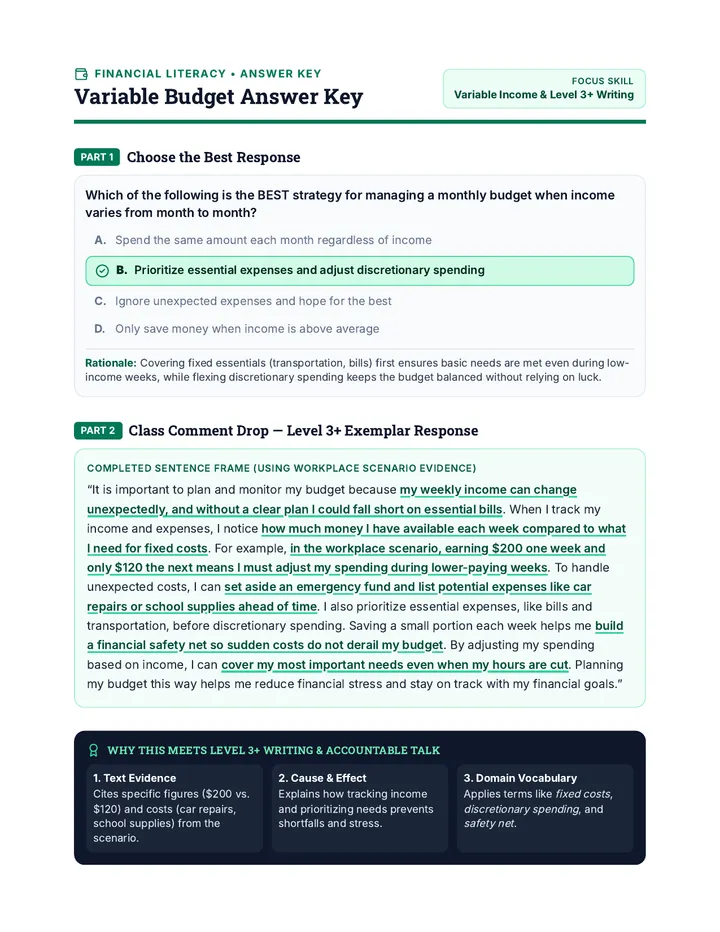
Completed Fill-in-the-Blank Response
De-escalation Model
"To reduce tension, I would first initiate active listening and facilitate immediate clarification on project bottlenecks. This helps because it balances the Director's need for speed, decisive action, and fast progress with the Personal communicator's need for mutual empathy, psychological safety, and supportive teamwork.
To stay on track, I would use strategies like transparent milestone schedules with documented rationale and structured weekly feedback check-ins. For example, I could distribute clear bullet-point status dashboards to satisfy analytical and director priorities while holding brief, high-energy syncs to foster socializer and personal alignment.
In my opinion, addressing task delays early ensures interpersonal tension is eliminated before it harms team morale, accountability stays high, and strategic deliverables arrive on schedule."
Why It Works for Director & Personal: Directors receive immediate resolution paths, while Personal communicators are protected from blame and feel genuinely heard.
Why It Works for Analytical & Socializer: Documented rationale provides the empirical evidence Analyticals need, while energetic check-ins maintain Socializer enthusiasm.
Required Vocabulary Matrix (11 Essential Terms)
Definitions & Real-World Workplace Examples
1. Communication Process
Def: Sharing information, thoughts, or ideas clearly between people or teams.
Ex: Sending your team a clear email with everyone's task assignments.
2. Communicator Style Behavior
Def: The unique way a person talks, listens, and interacts through words, tone, and body language.
Ex: Noticing a teammate prefers bullet points over long verbal stories.
3. Director Communicator Style
Def: Assertive, direct, and focused on fast results; comfortable arguing ideas openly.
Ex: Asking for a quick, one-minute summary of progress instead of a long explanation.
4. Analytical Communicator Style
Def: Focuses on facts, data, and clear logic, usually avoiding emotional conversations.
Ex: Asking to see exact statistics before agreeing to a project plan.
5. Socializer Communicator Style
Def: Values high energy, strong relationships, and fun group teamwork.
Ex: Running an energetic group brainstorming session to get everyone excited.
6. Personal Communicator Style
Def: Cares deeply about feelings, teamwork, and building strong relationships.
Ex: Checking in privately with a stressed teammate to see how they are doing.
7. Active Listening Skill
Def: Giving full attention to a speaker, understanding their message, and replying thoughtfully.
Ex: "So what you mean is we need more time because the data came in late, right?"
8. Clarification Skill
Def: Asking questions or repeating info to make sure everyone understands correctly.
Ex: "Just to clarify, is the final draft due at 3:00 PM today or tomorrow?"
9. Feedback Input
Def: Helpful advice or notes given to someone about their work so they can improve.
Ex: "Your slides look great, but adding two main facts will make your section stronger."
10. Rationale Logic
Def: The reasoning or logic behind a decision or choice.
Ex: Explaining why you decided to extend a task deadline to fix errors in a project.
11. Tension: Stress, frustration, or conflict that happens when people have different styles or face tight deadlines. Ex: Feeling frustrated when group members turn in work late right before a presentation.
Four-Step Team Alignment Protocol
How to mitigate delays and defuse tension
1. Direct the Focus Establish immediate milestones to satisfy the Director's drive for speed.
2. Share Rationale Clarify facts and technical logic to satisfy the Analytical's need for proof.
3. Support Members Conduct active listening check-ins to satisfy the Personal's need for care.
4. Energize Vision Celebrate wins and re-engage momentum to satisfy the Socializer's spirit.