Condensed 1-page reference handout illustrating five emotion regulation strategies for 5th-grade students using a two-column grid layout for efficiency.
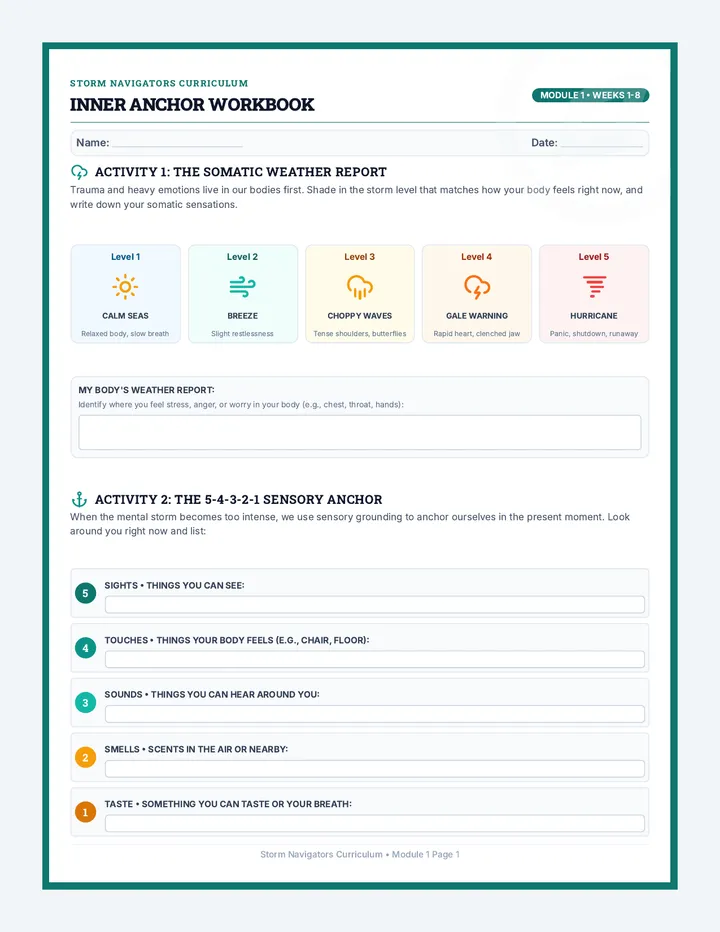
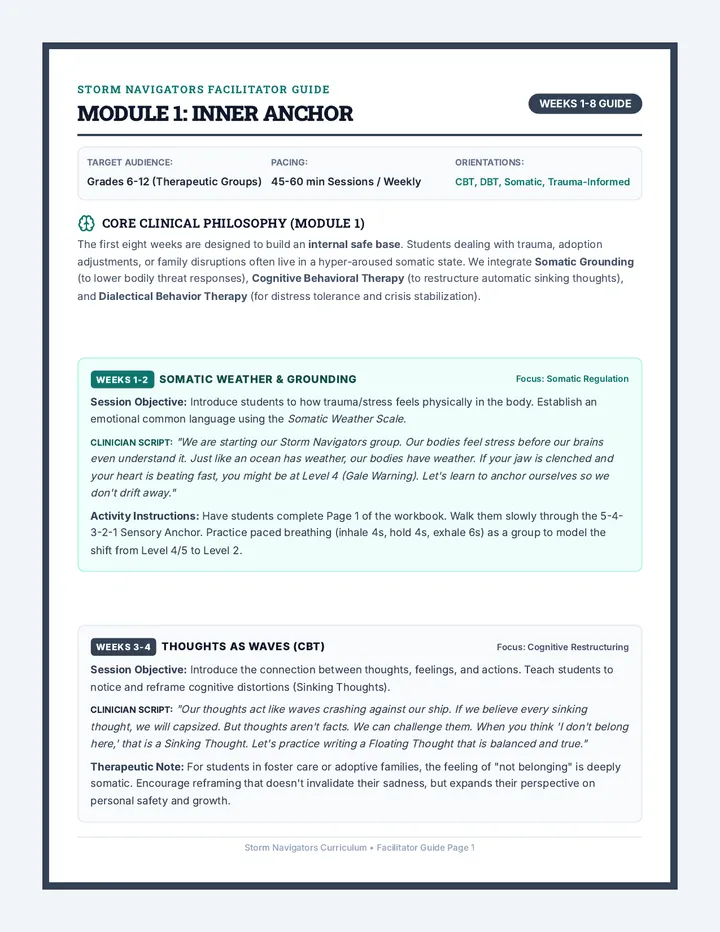
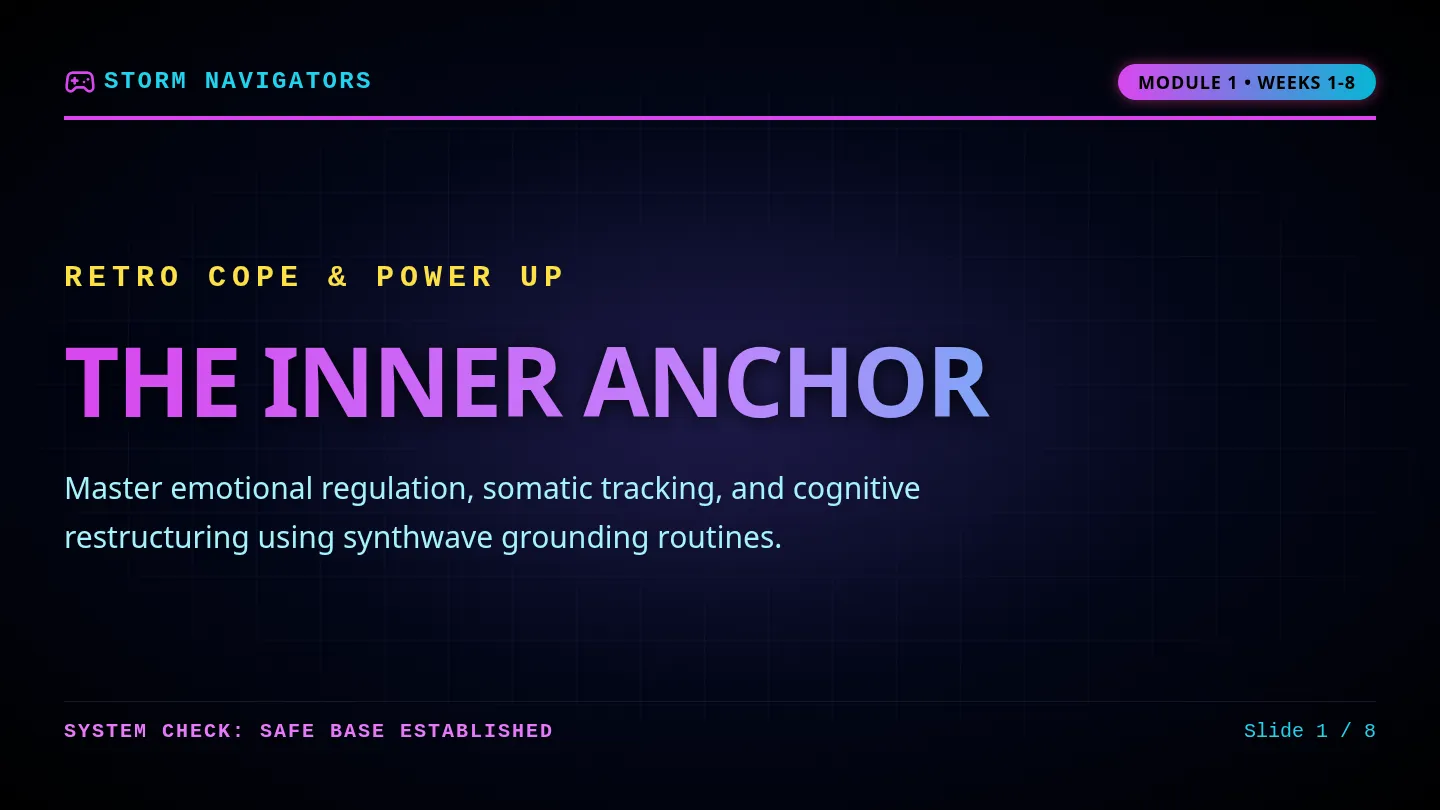
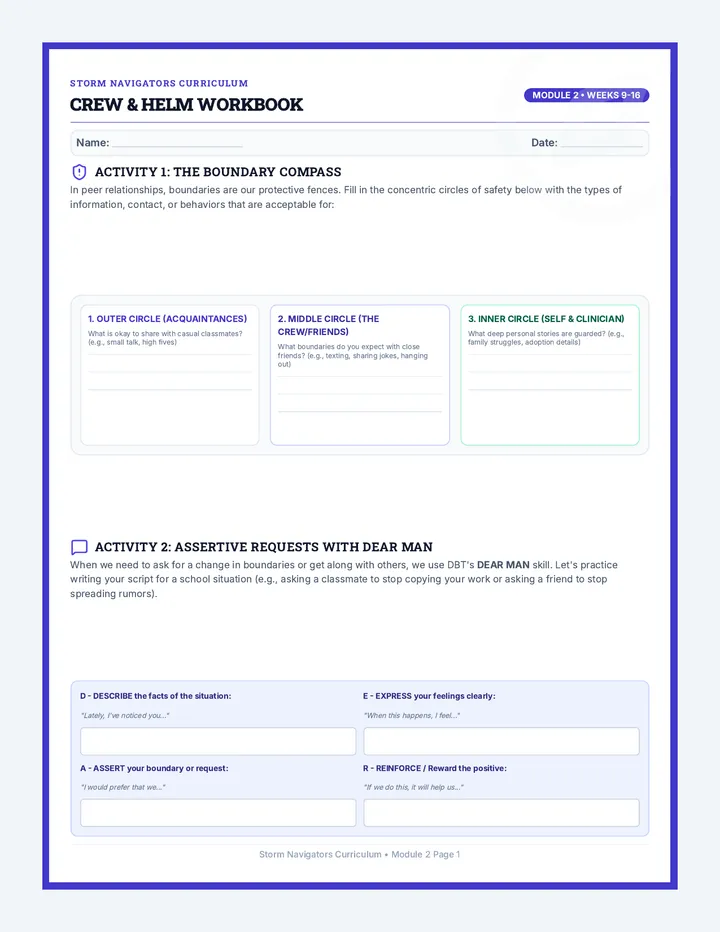
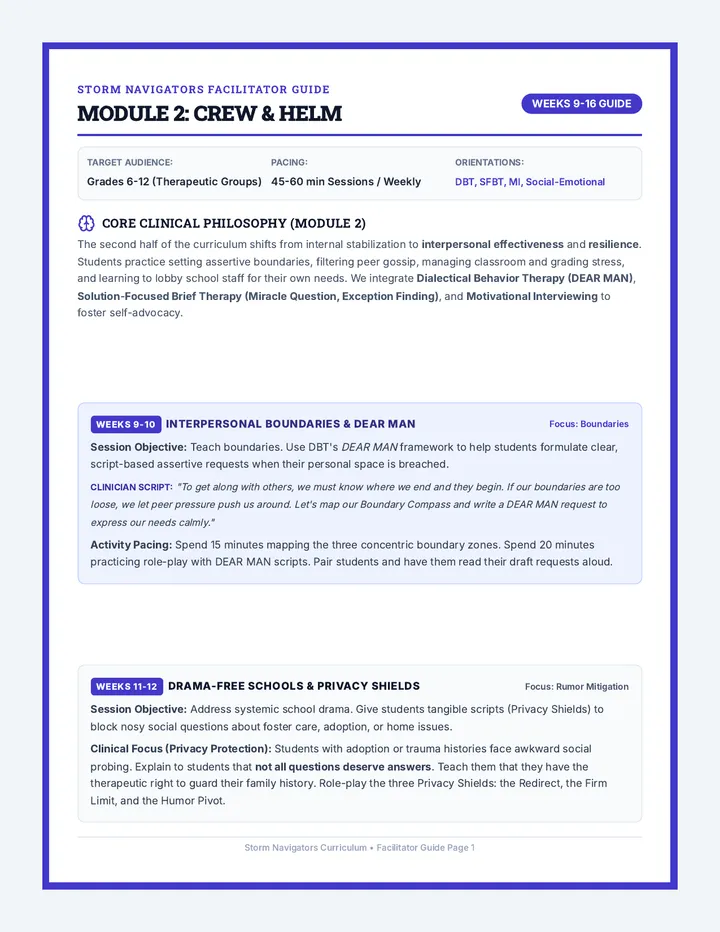
A comprehensive 16-week school-based therapeutic curriculum designed to equip students with emotional regulation, healthy relationship skills, trauma-informed coping mechanisms, and self-advocacy strategies.
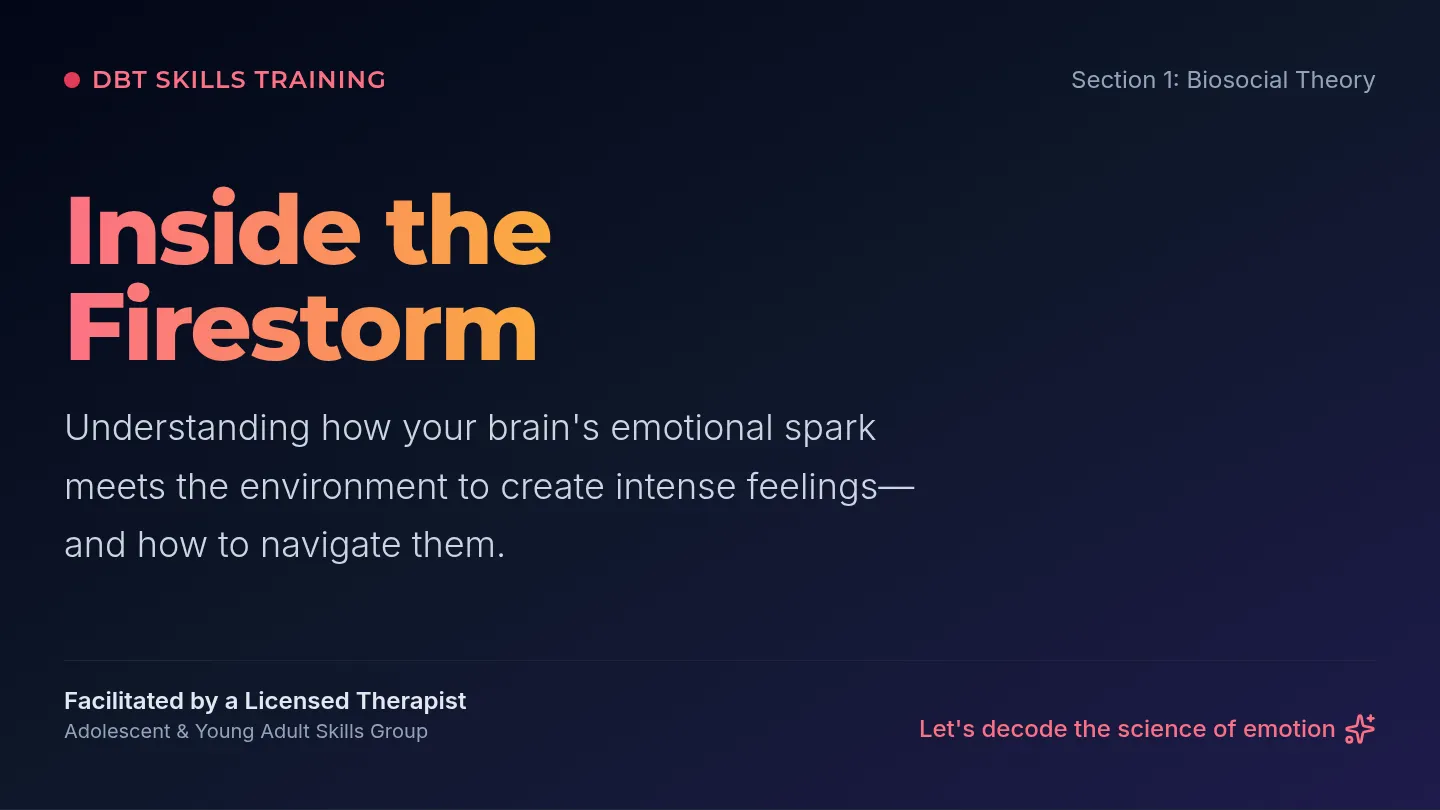
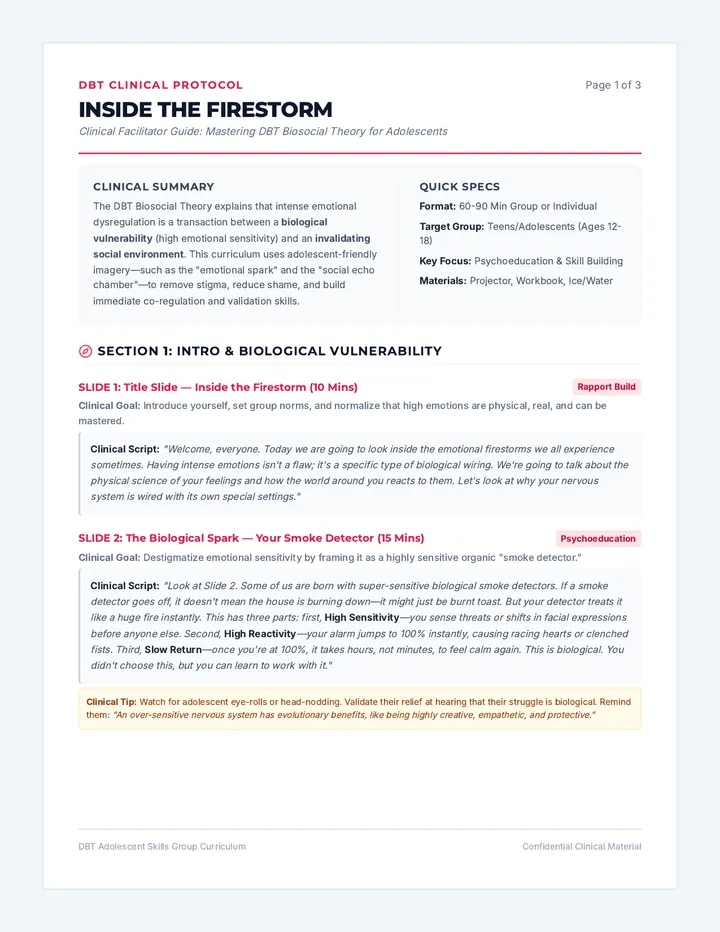
A comprehensive skills training lesson on DBT Biosocial Theory designed for adolescents, explaining the transaction between biological sensitivity and invalidating environments. It includes interactive slides and a step-by-step facilitator guide for clinicians.
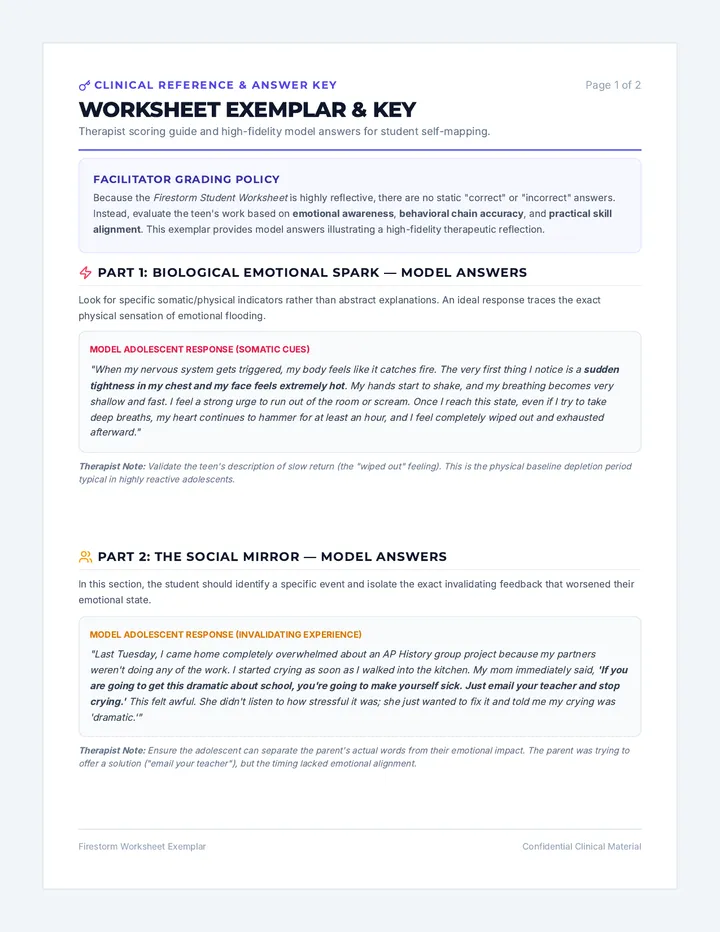
A clinical-grade, 2-page reference exemplar and answer key for therapists to assess student responses on the Firestorm Student Worksheet. It contains high-fidelity peer examples, fully mapped transaction loops, and actionable model answers for DBT-aligned crisis blueprints.
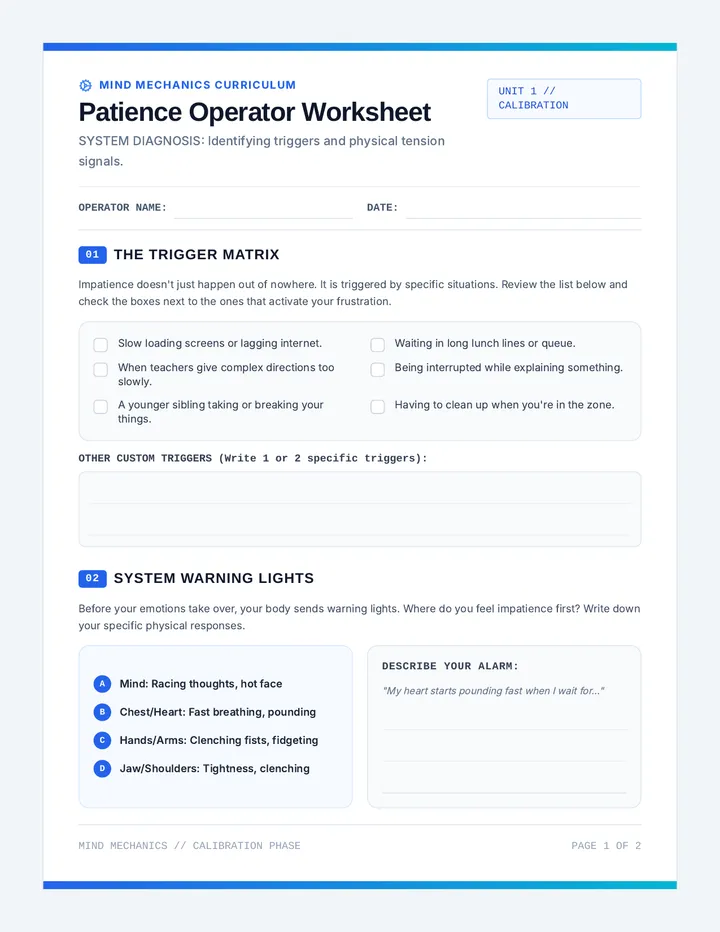
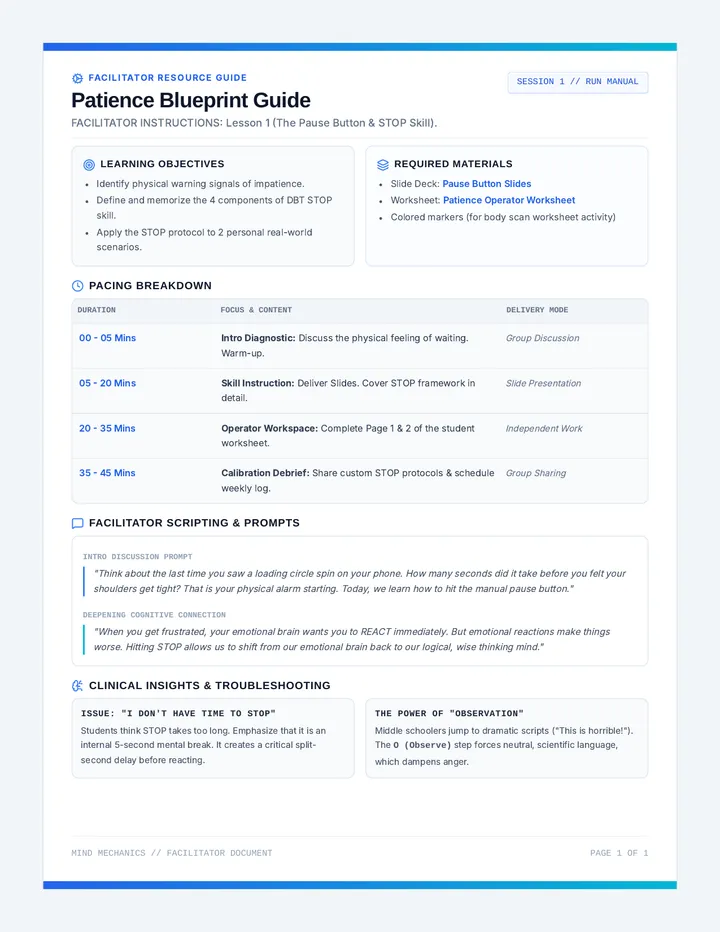
A three-part DBT and CBT curriculum designed to help middle school students build patience, reframe negative mindsets, and comfortably adapt to school and home routines.
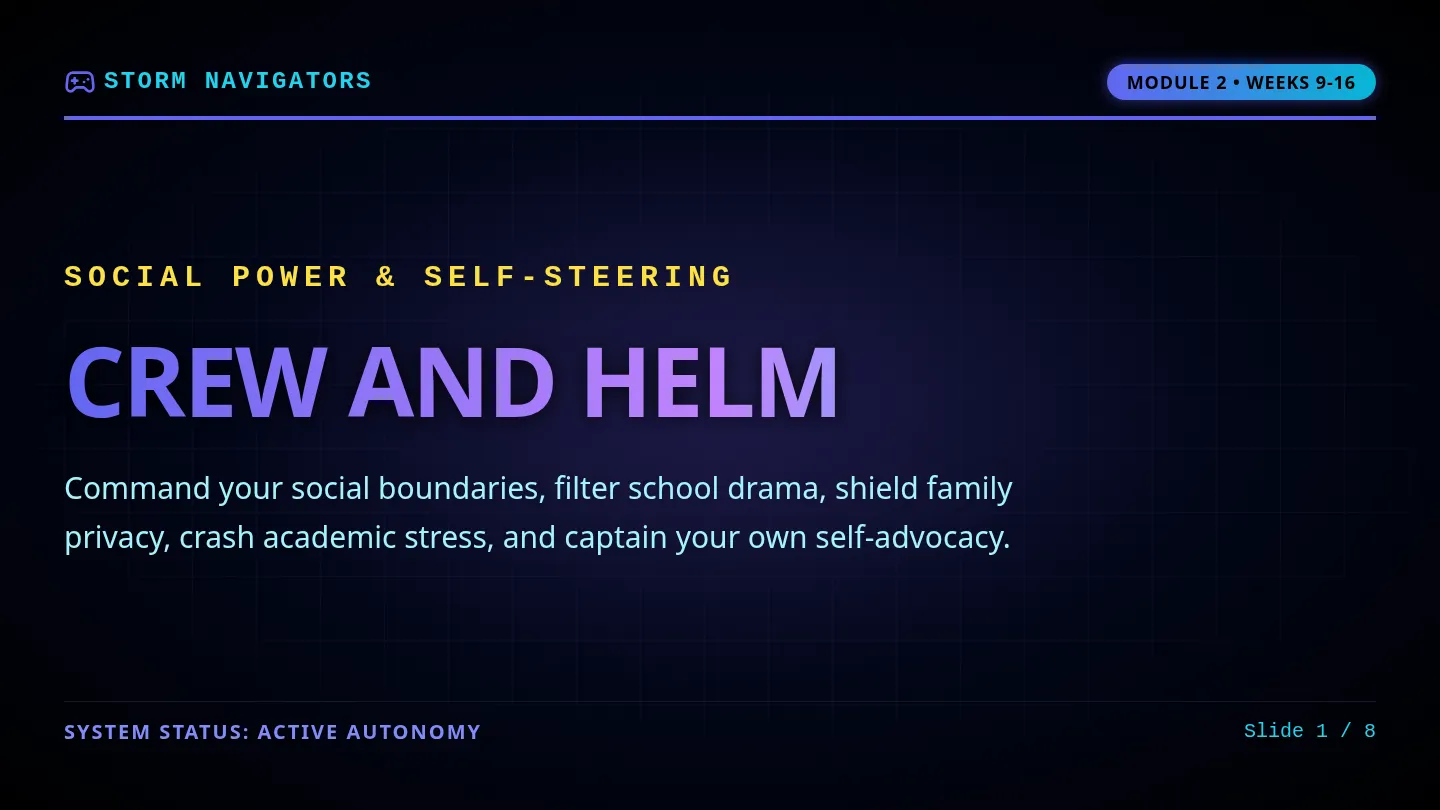
Weeks 9-16 focus on interpersonal effectiveness, peer relations, creating a drama-free school, navigating family/adoption questions socially, academic resilience, and self-advocacy.
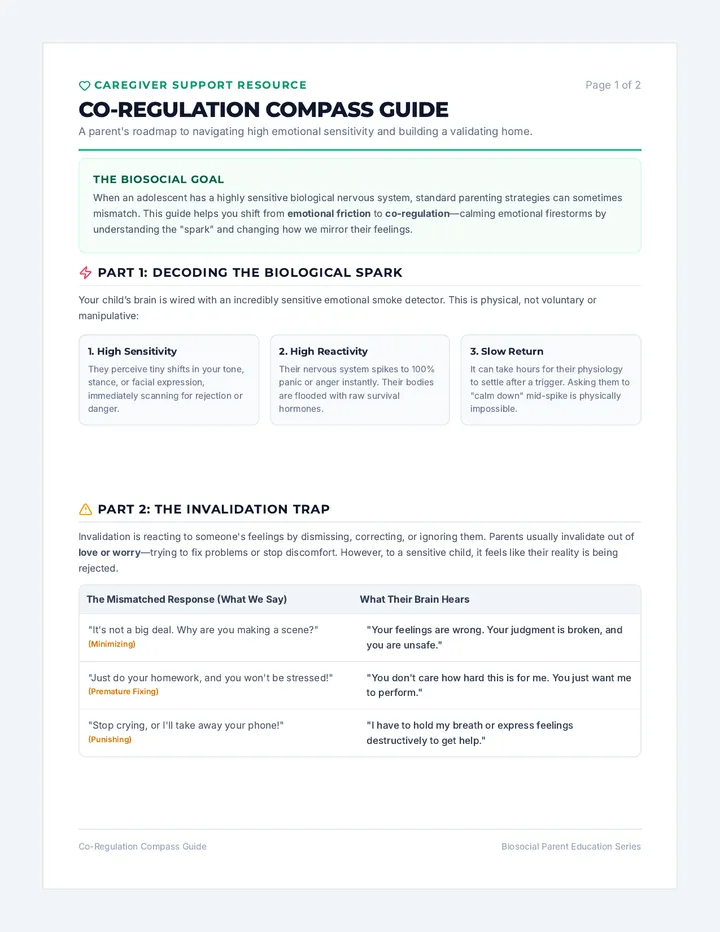
A comforting, highly practical 2-page guide for parents and caregivers to understand their adolescent's biological sensitivity, spot common invalidation traps, learn the six simplified levels of validation, and master co-regulation during active emotional crises at home.
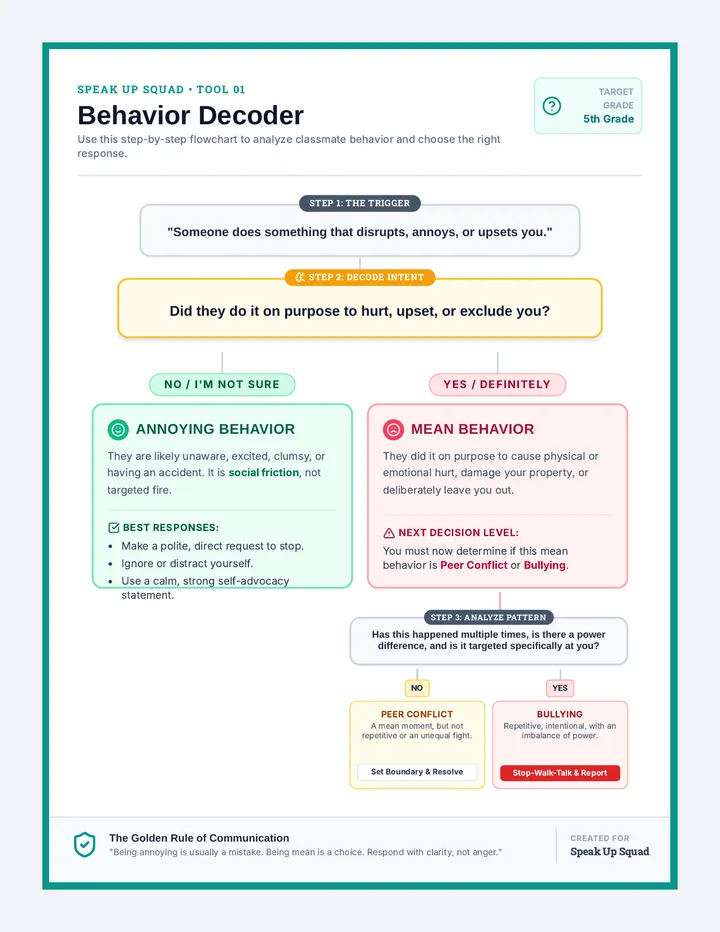
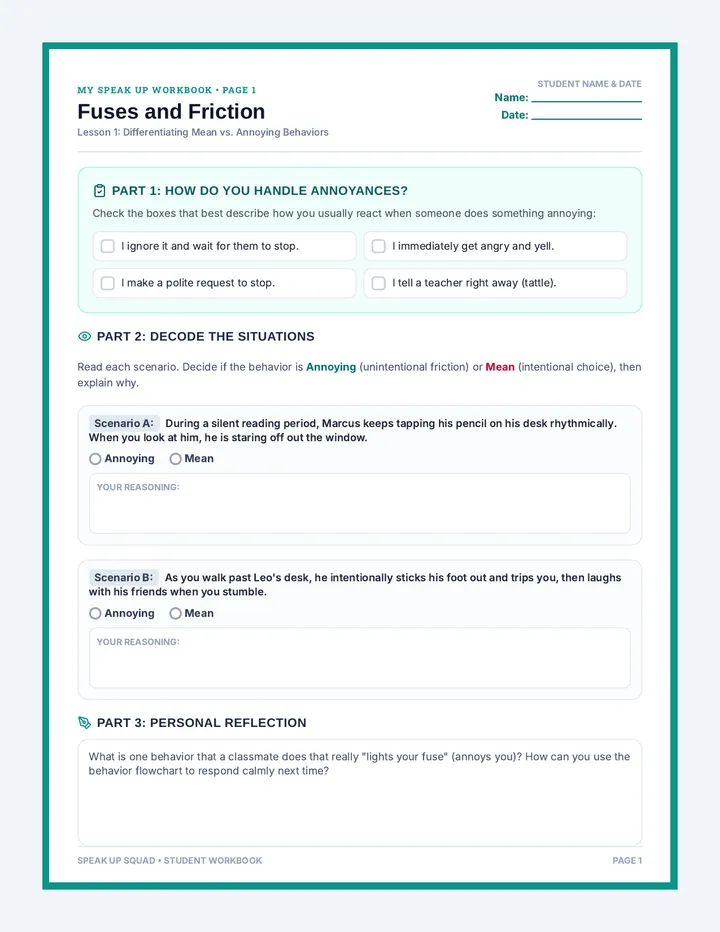
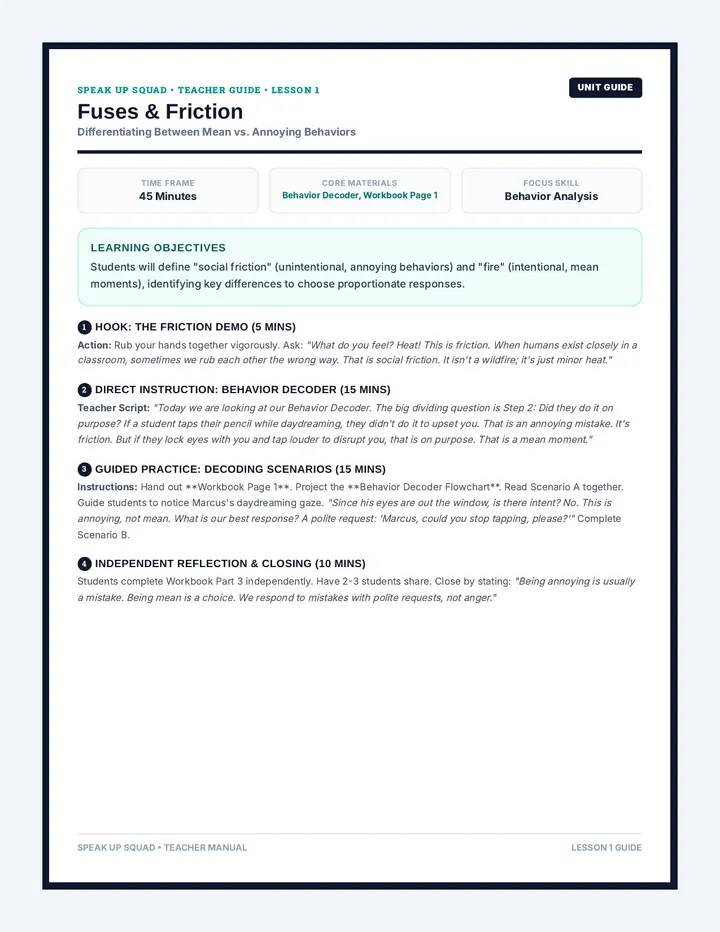
A comprehensive social self-advocacy unit for 5th graders to develop assertive communication, decode social intents, and confidently navigate peer conflicts and bullying.
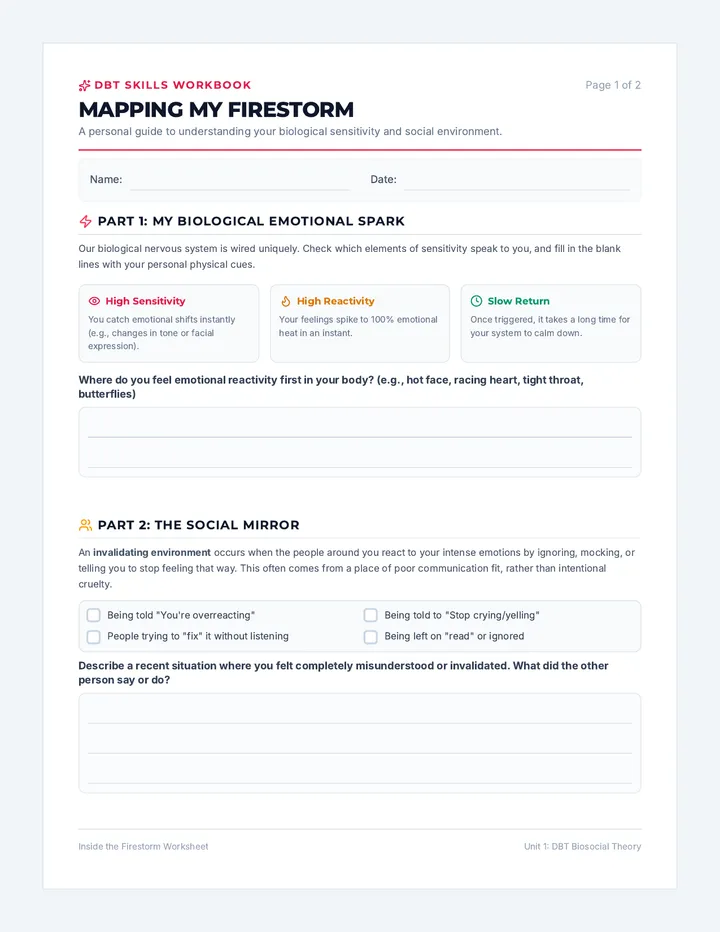
A hands-on, 2-page reflective student worksheet for adolescents to map their biological emotional sensitivity, identify environmental triggers, analyze their personal transaction loops, and build a custom de-escalation blueprint.
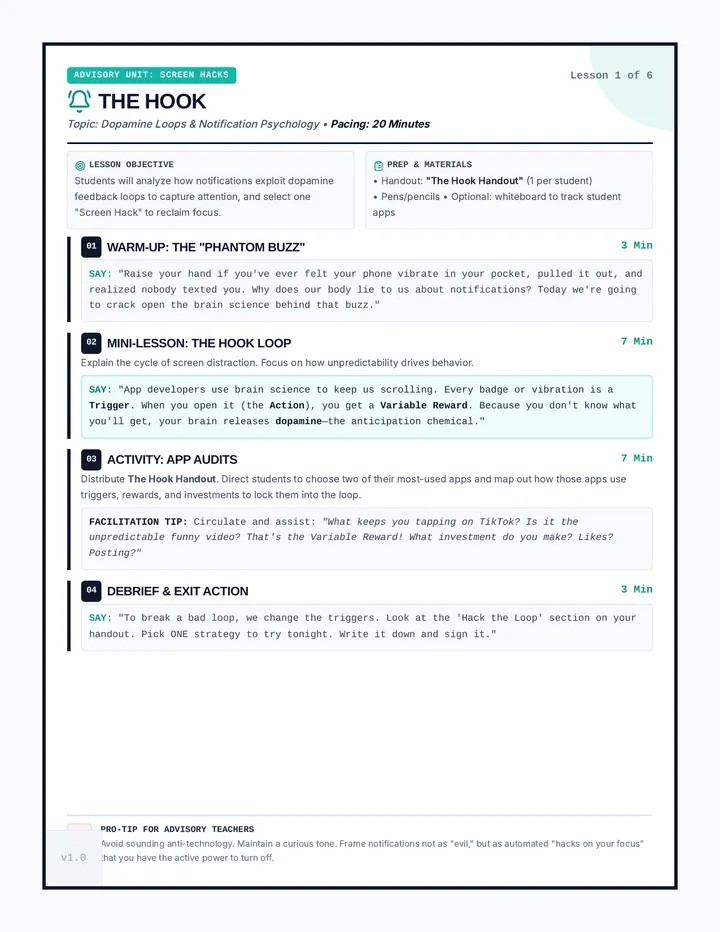
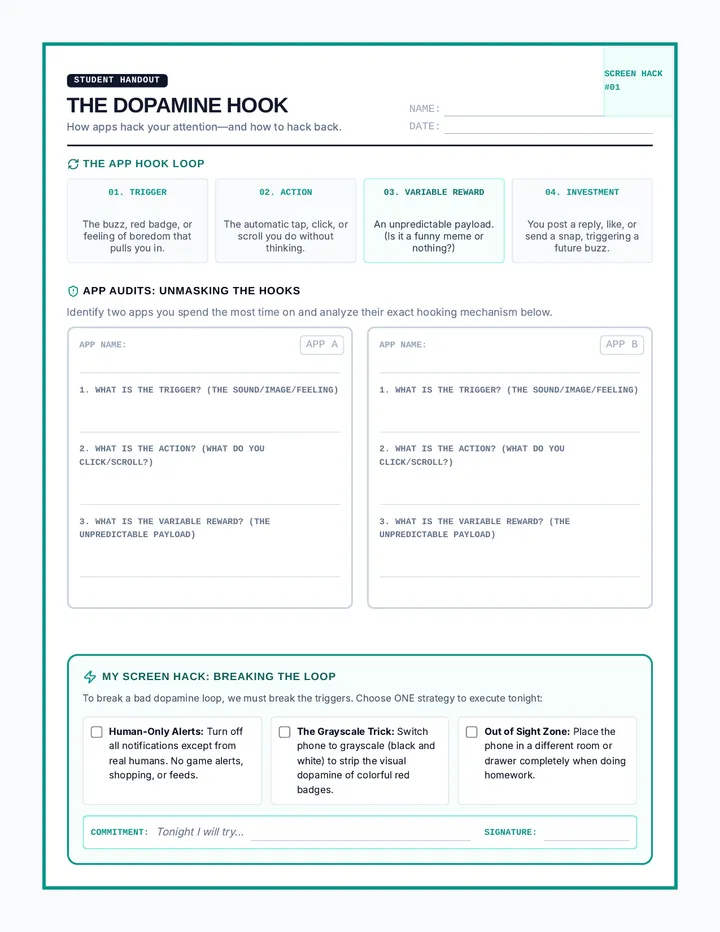
A six-lesson junior high advisory curriculum designed to help middle schoolers navigate screen addiction, notification loops, multitasking myths, sleep loss, social comparison, and group chat drama. Each lesson contains a 20-minute teacher facilitation guide and a corresponding student reflection handout.