A student activity sheet for Lesson 4 focusing on identifying phishing red flags and auditing personal digital vulnerabilities.
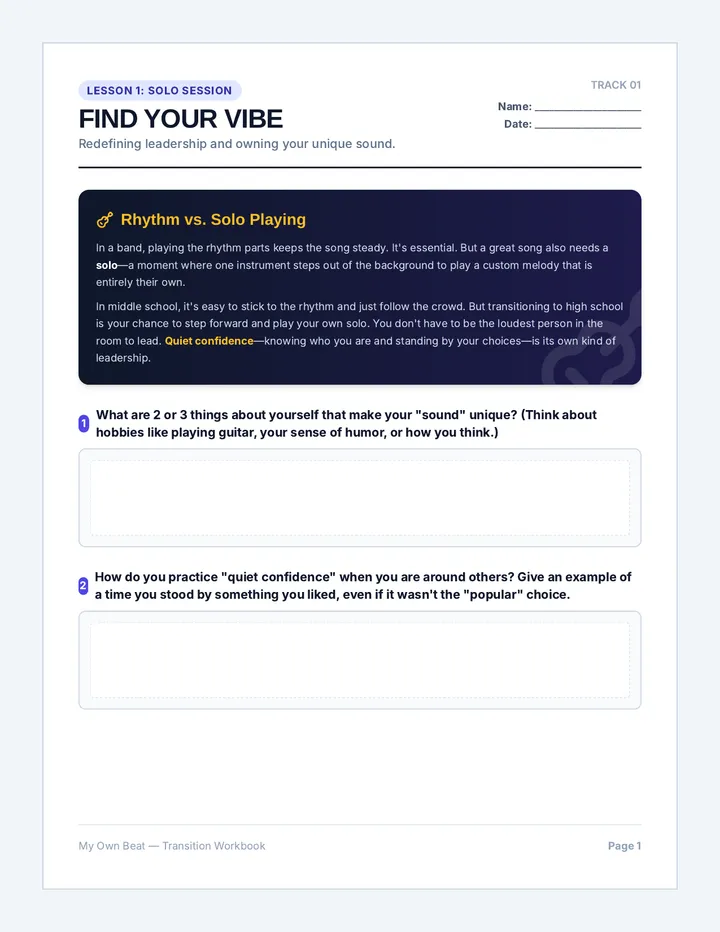
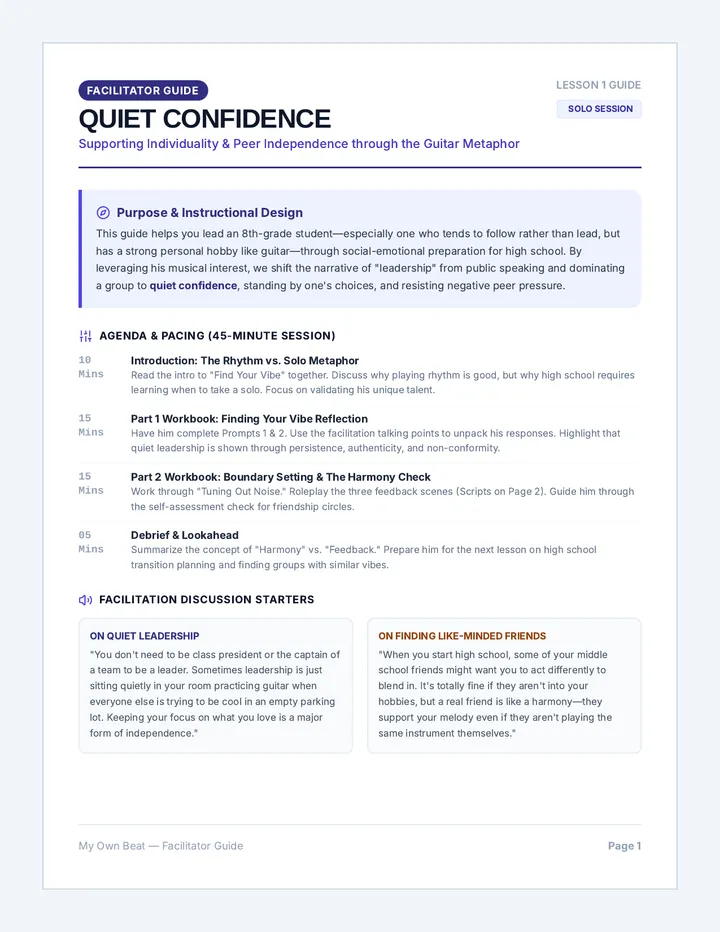
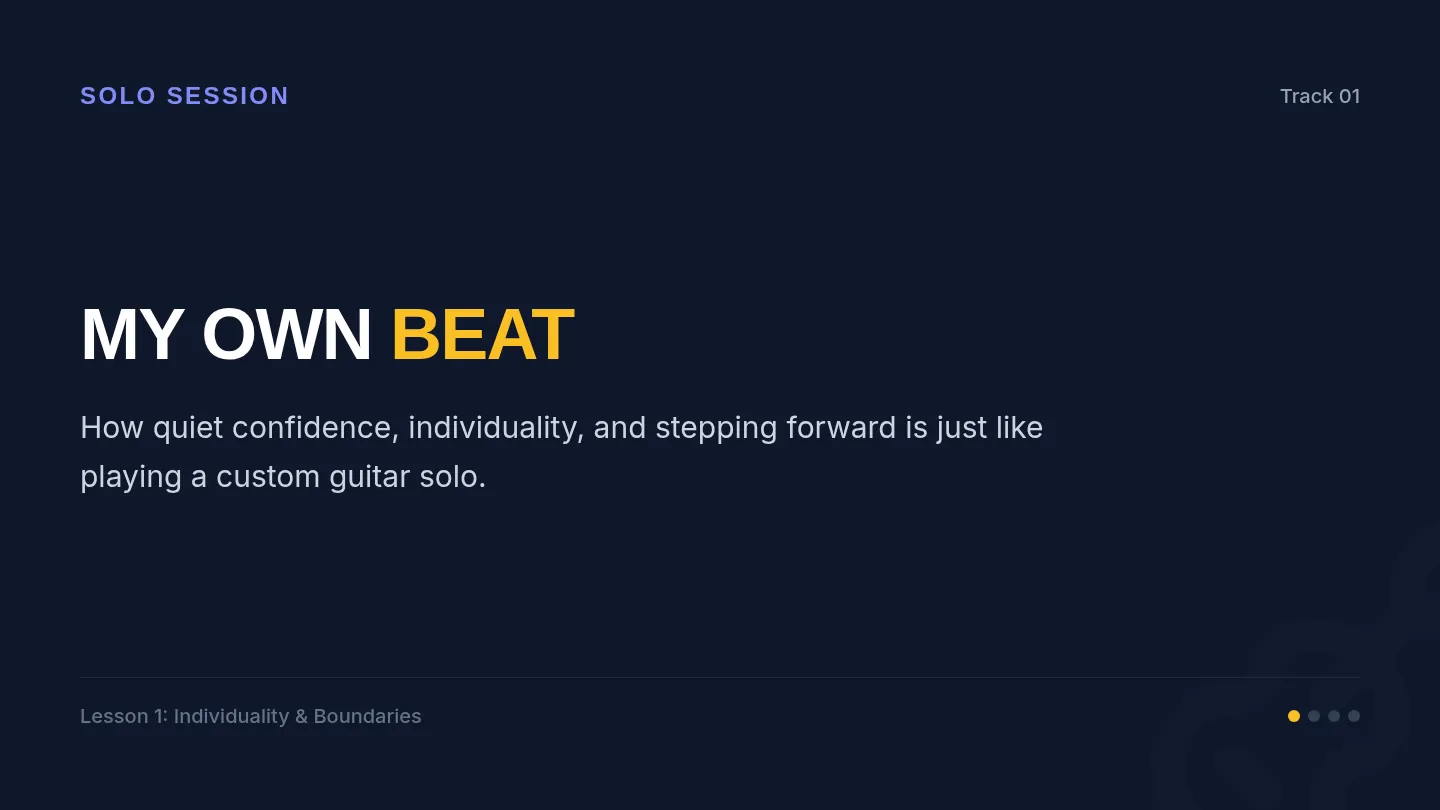
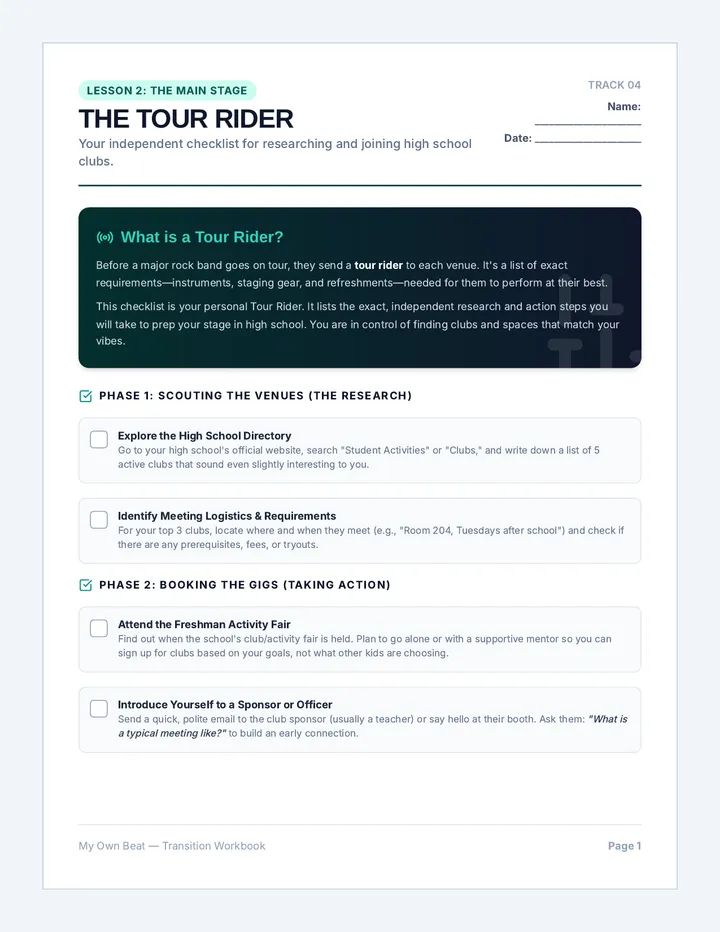
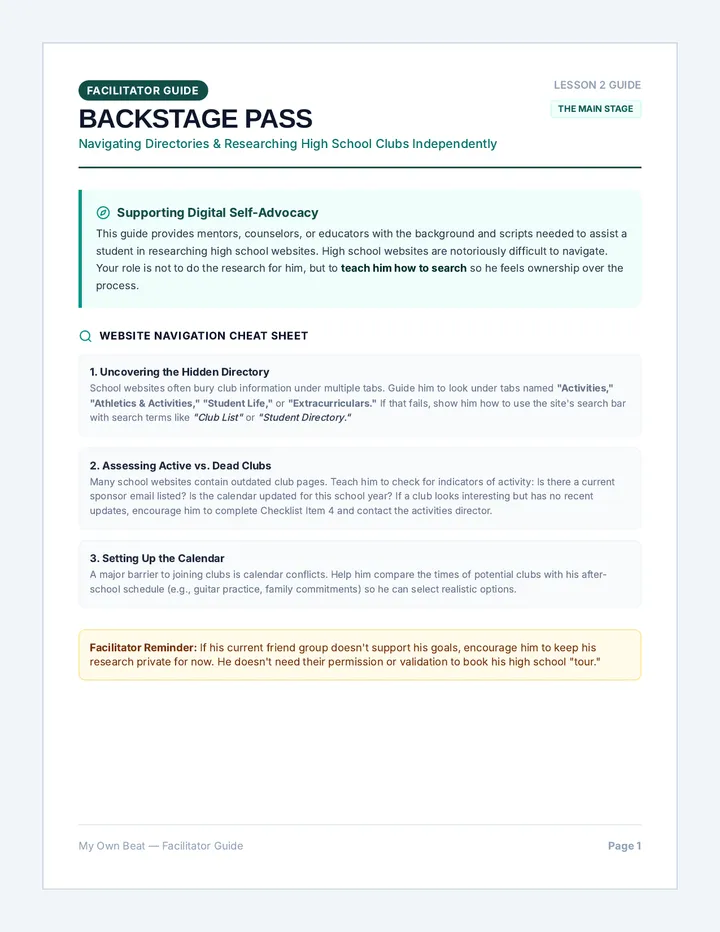
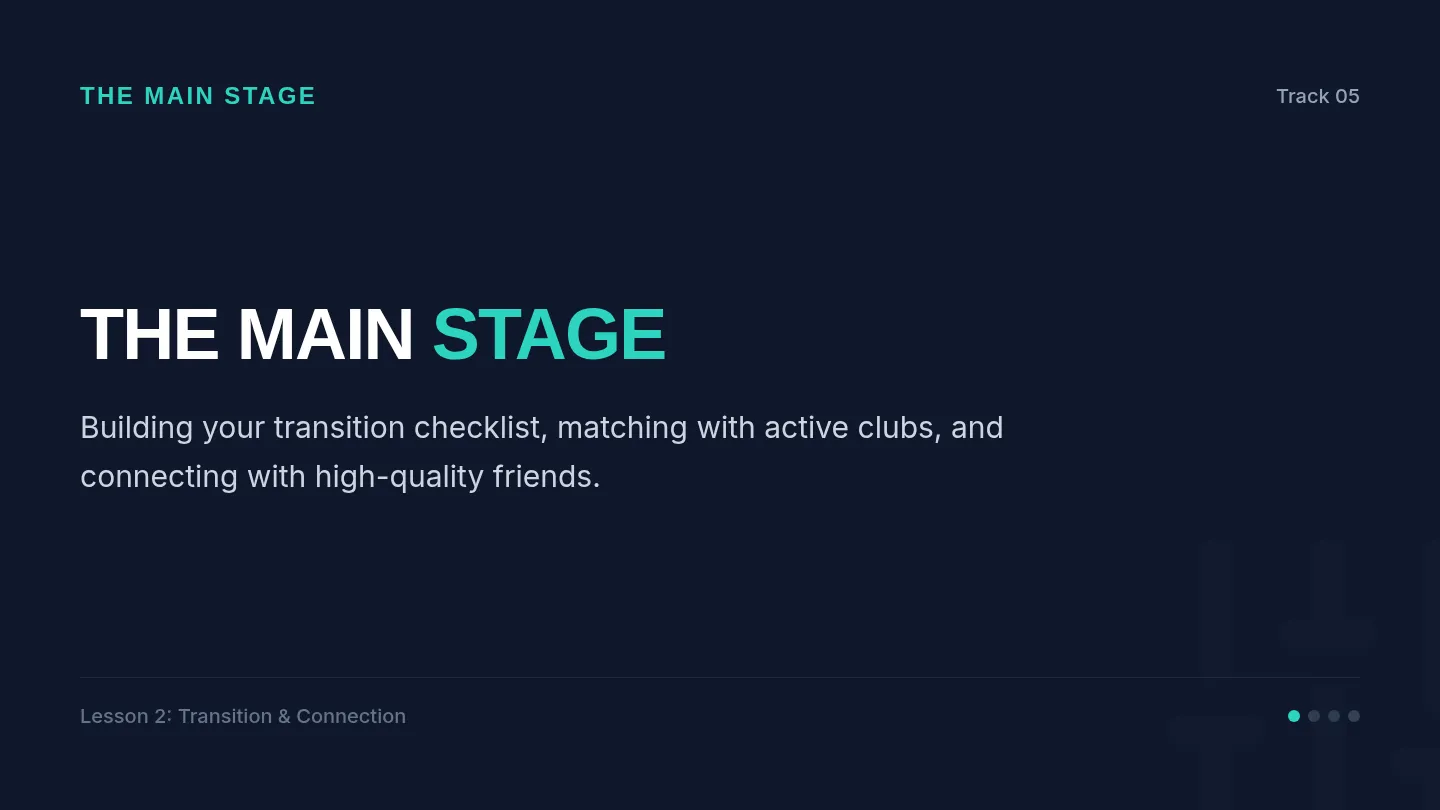
A transition curriculum for an 8th-grade student moving to high school, using music and guitar metaphors to cultivate individuality, self-confidence, independent decision-making, and positive peer connection. This 2-lesson unit empowers him to choose his own path, join clubs aligned with his interests, and build supportive friendships.
A modern, high-accountability framework for active listening and structured peer discussion in middle and high school classrooms. Includes an anchor chart, introductory slides, and a teacher facilitation guide.
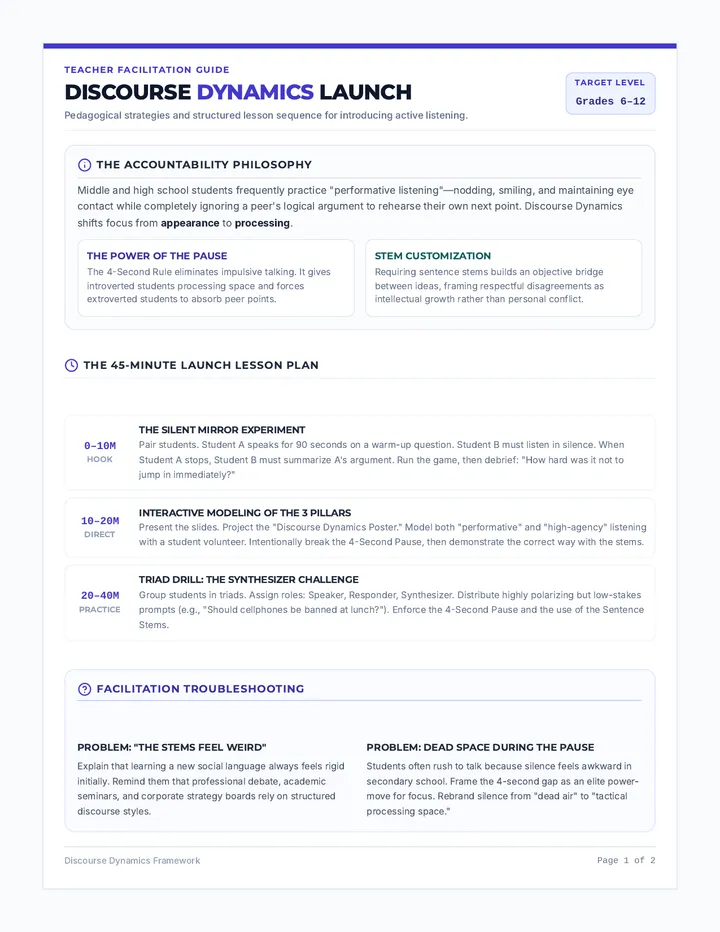
A comprehensive, 2-page professional facilitator guide detailing how to launch the Discourse Dynamics framework, run active listening drills, and assess student discussion accountability.
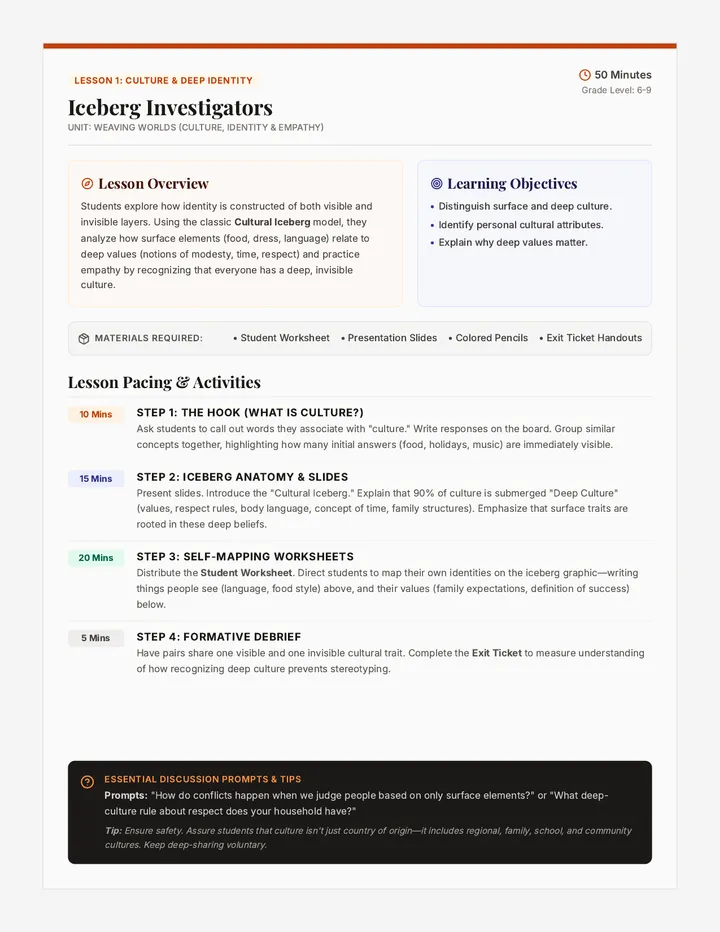
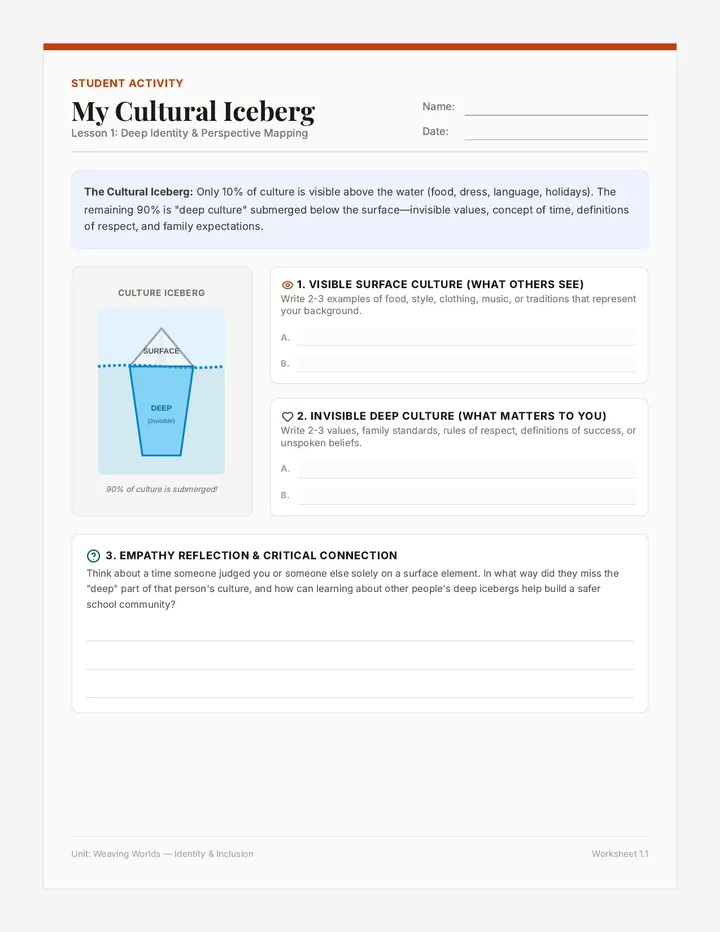
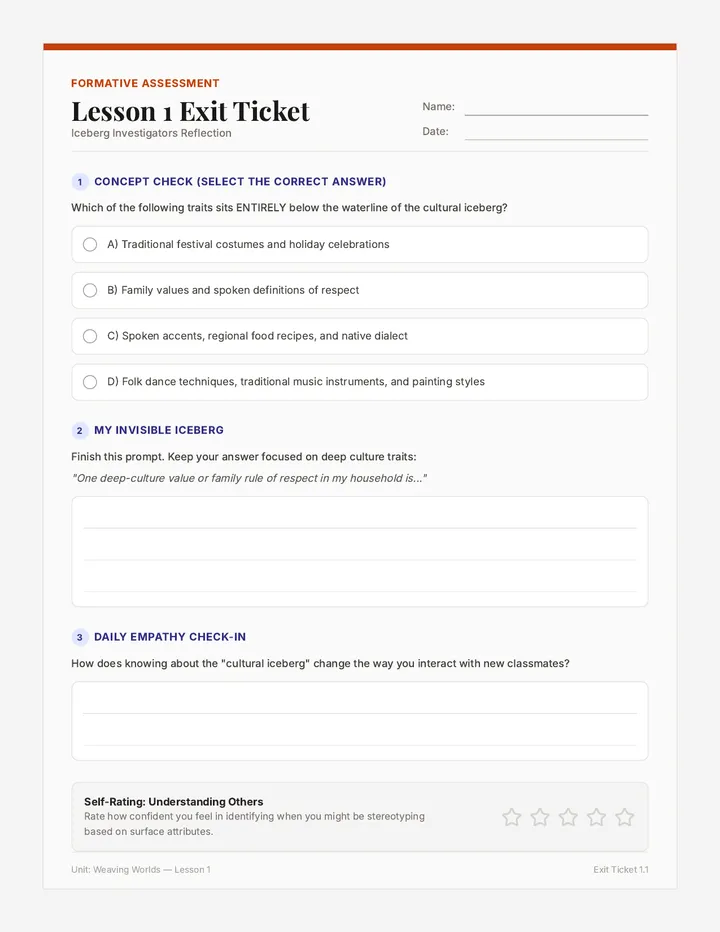
A 3-lesson unit on culture, identity, empathy, and building an inclusive school community. Students explore the cultural iceberg, share personal perspective narratives, and collaborate on actionable school-wide inclusion plans.
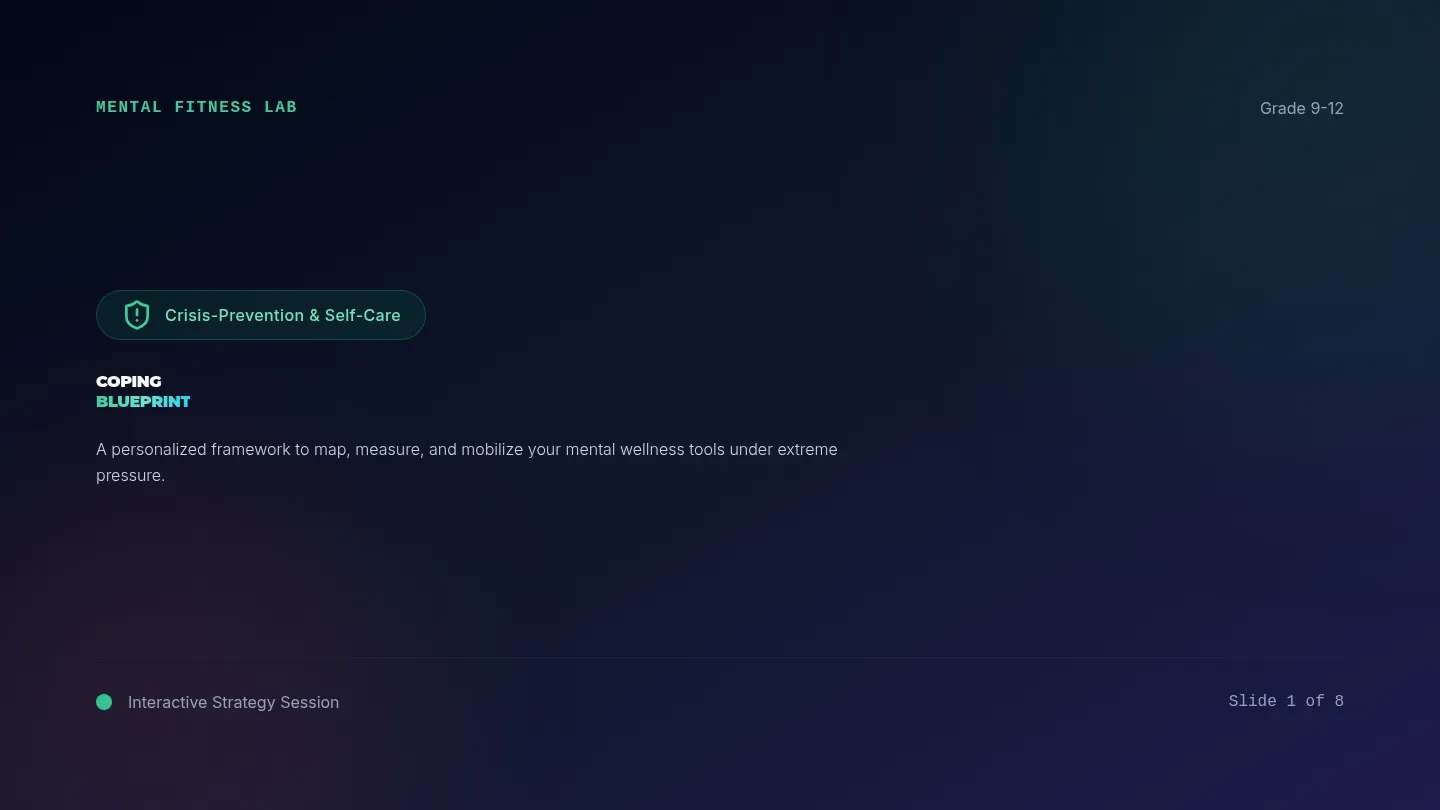
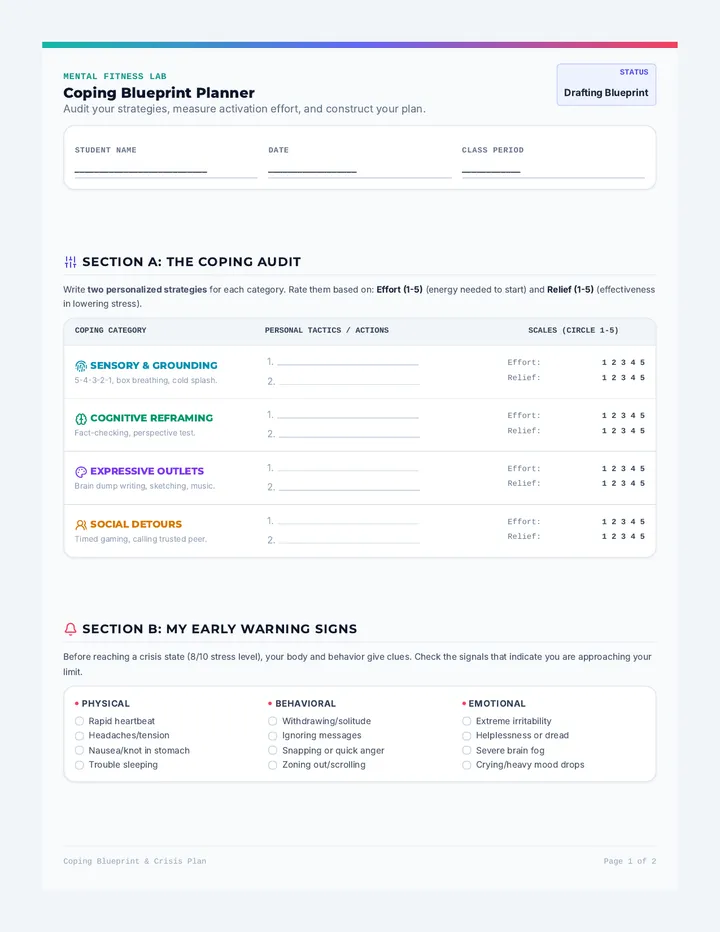
A modern, evidence-based lesson helping high schoolers identify, categorize, and rate coping strategies to build a personalized self-care and crisis-prevention plan. It includes an instructional slide deck to introduce coping science and categories, paired with a structured, print-ready coping planner.
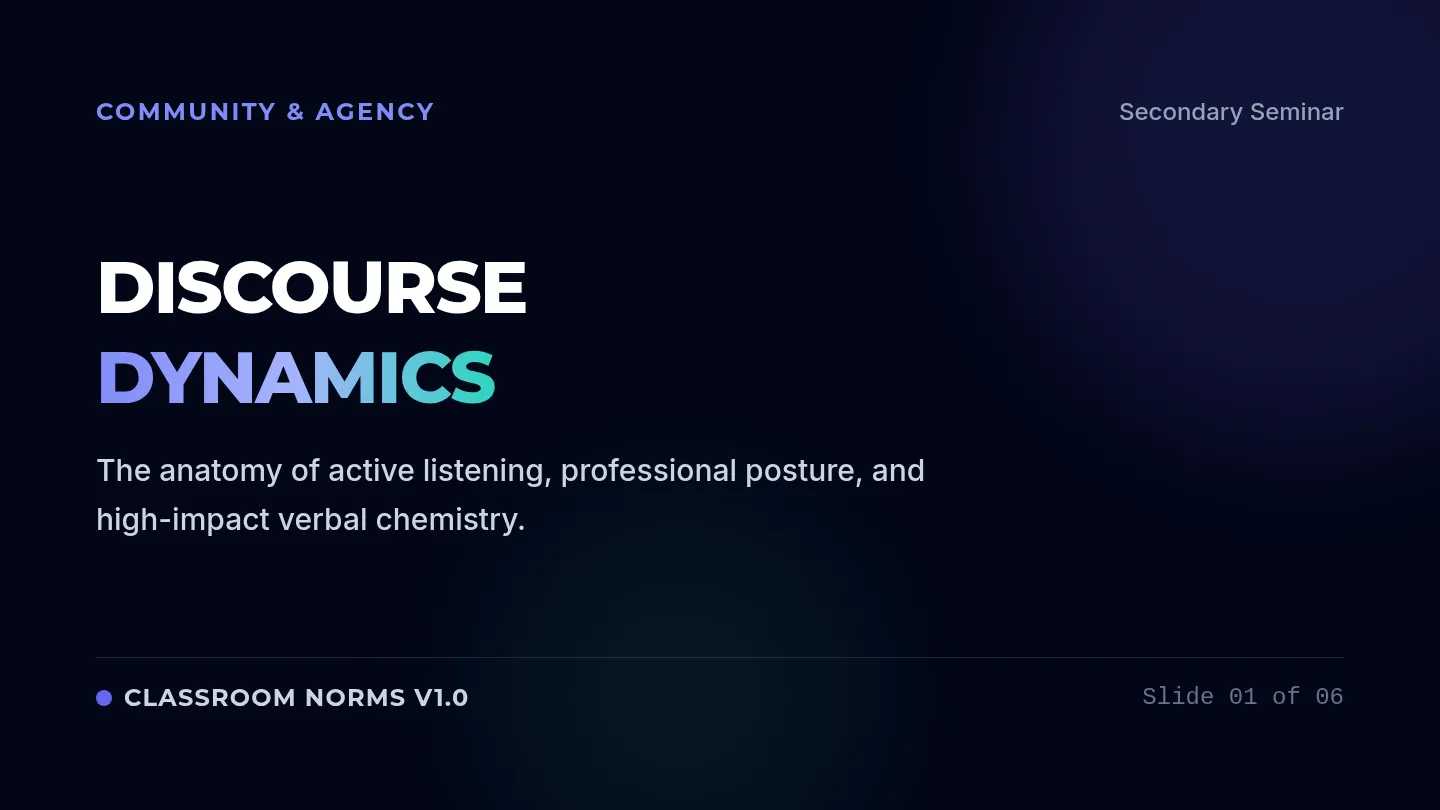
An engaging, modern 6-slide presentation deck to introduce active listening pillars, sentence stems, and the 4-second rule to middle and high school students.
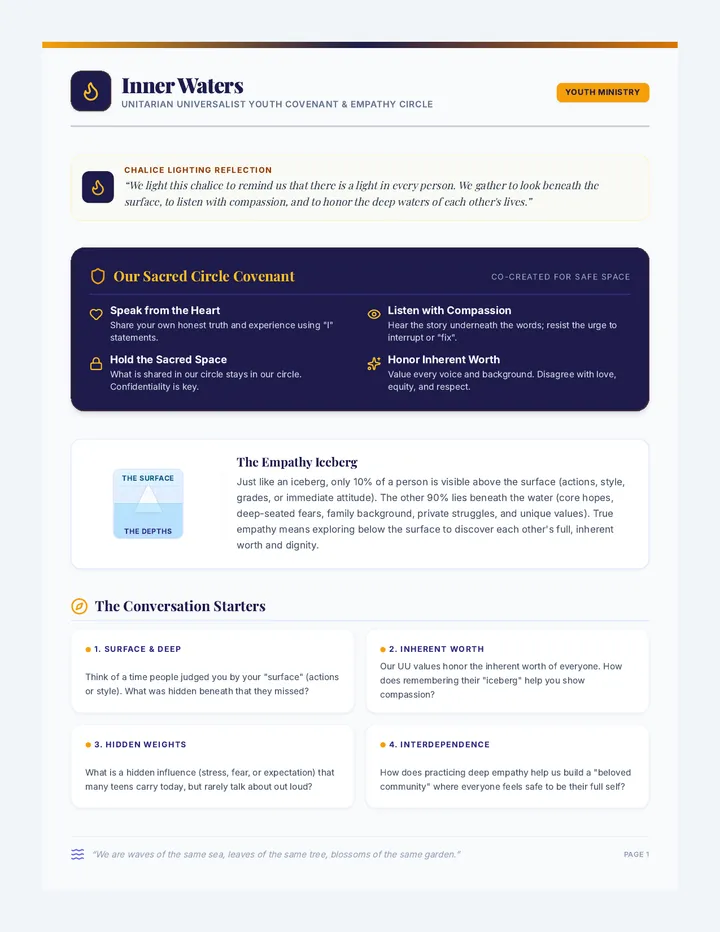
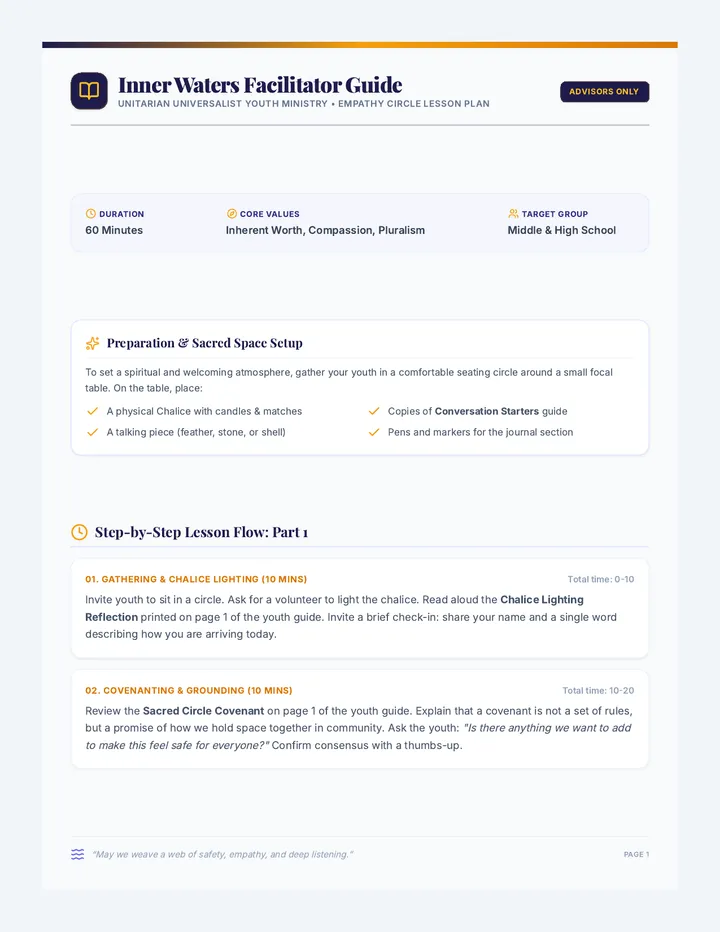
A Unitarian Universalist youth group session designed to foster empathy, respect, and deep connection using the Empathy Iceberg model, small-group covenants, and a sacred chalice ritual.
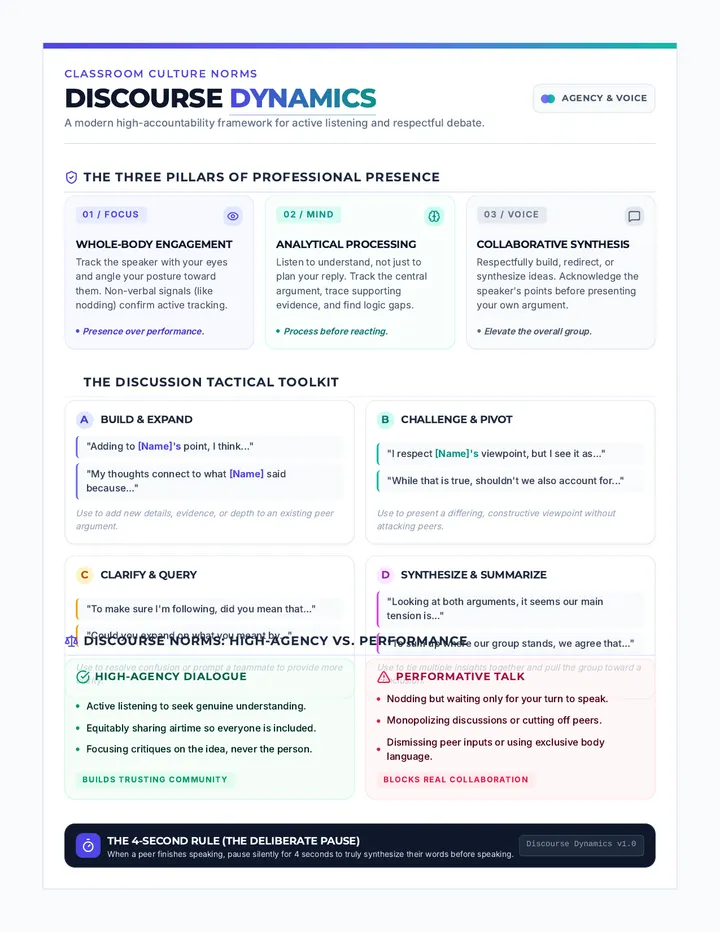
A professional, modern 8.5x11 printable anchor chart outlining active listening, whole-body presence, civil dialogue norms, and tactical sentence stems for high-school and middle-school classroom discussion.
Provides concrete transition planning, club matchmaking, independent research techniques, and actionable steps to find, join, and thrive in high school extracurricular activities where like-minded peers gather.
A clean, highly structured student workbook to guide high schoolers in identifying, auditing, and rating personalized coping strategies, documenting early warning stress signals, and detailing an action-oriented emergency protocol with personal and national lifelines.
An interactive slide deck introducing the physiology of stress and the four coping categories (Sensory, Cognitive, Expressive, Distraction). It features large, readable typography and visual frameworks to guide high schoolers in rating their strategies based on activation effort and effectiveness.
A 2-page session guide for Unitarian Universalist youth advisors. It outlines a 60-minute empathy curriculum, including chalice readings, small-group covenanting, active listening exercises, and guidelines for managing sensitive discussions.