Two engaging social stories—"The Math Mountain" and "The Switching Secret"—designed to help students process the emotions of transitions and practice self-regulation techniques.
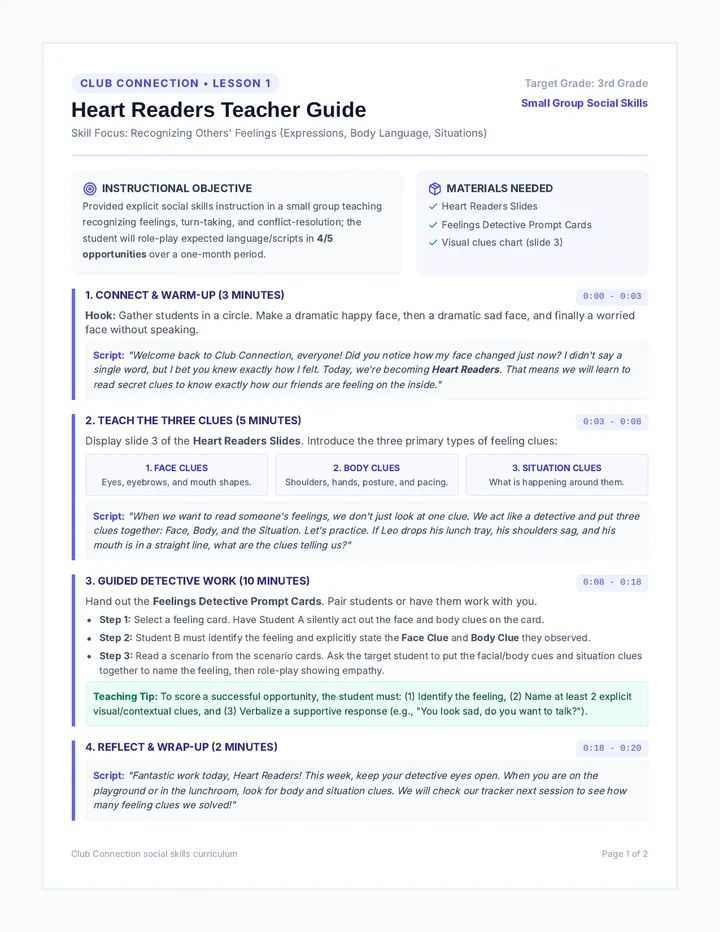
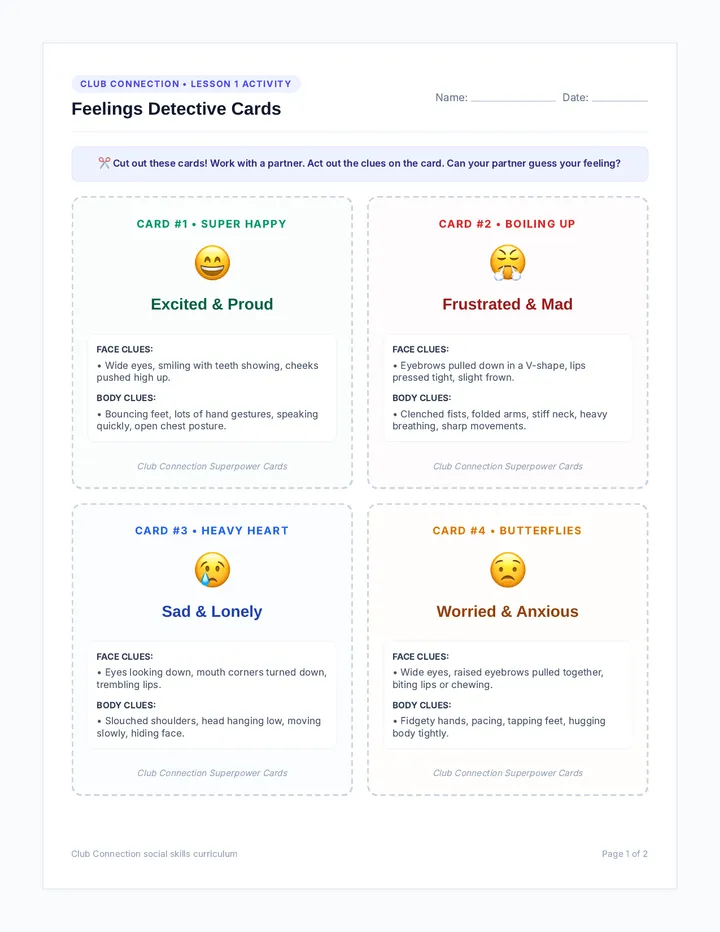
A comprehensive social skills curriculum sequence designed for small groups (specifically 3rd graders) to master recognizing feelings, conversational turn-taking, and conflict resolution over three structured lessons, including visual prompts, role-play scripts, and teacher guides with tracking tools.
A warm, engaging Tier 1 kindergarten lesson focusing on recognizing kind actions like sharing and helping, and exploring how kindness makes both the giver and receiver feel happy through discussion and a hands-on coloring activity.
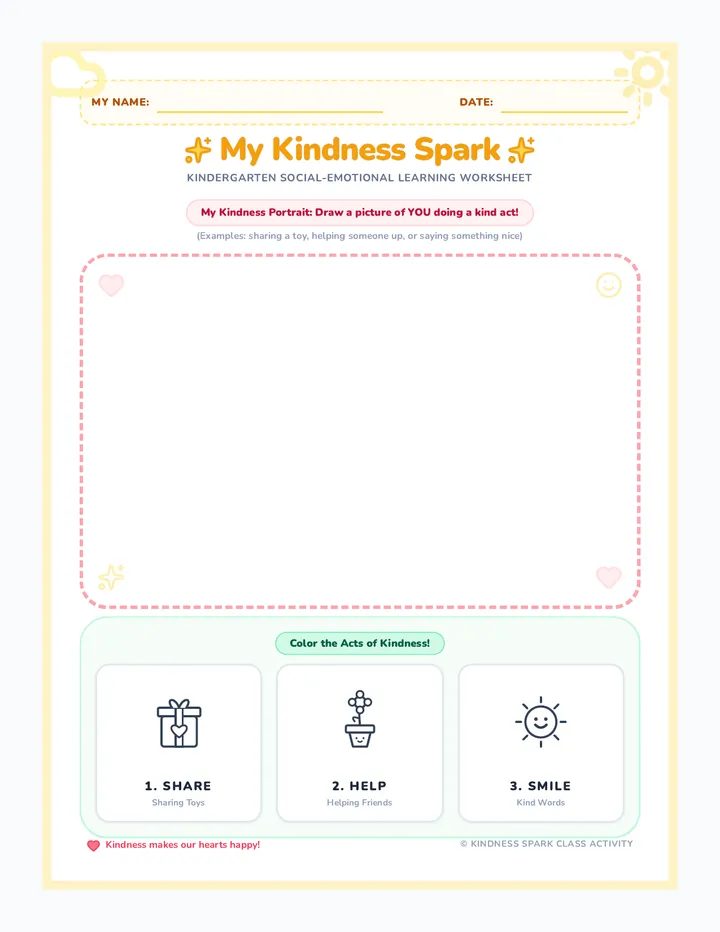
A beautifully themed, print-ready 1-page student coloring worksheet for kindergarteners. Features high-contrast black-and-white custom outline drawings (sharing, helping, speaking kindly) for students to color, and a large, dedicated, framed blank work area where they draw a picture of themselves performing a kind act.
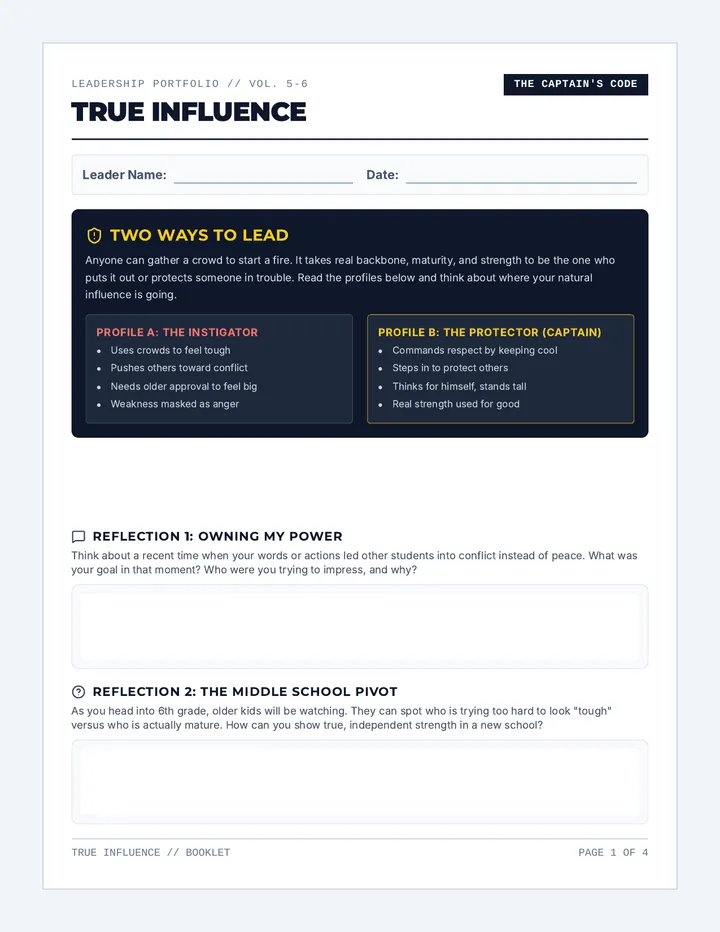
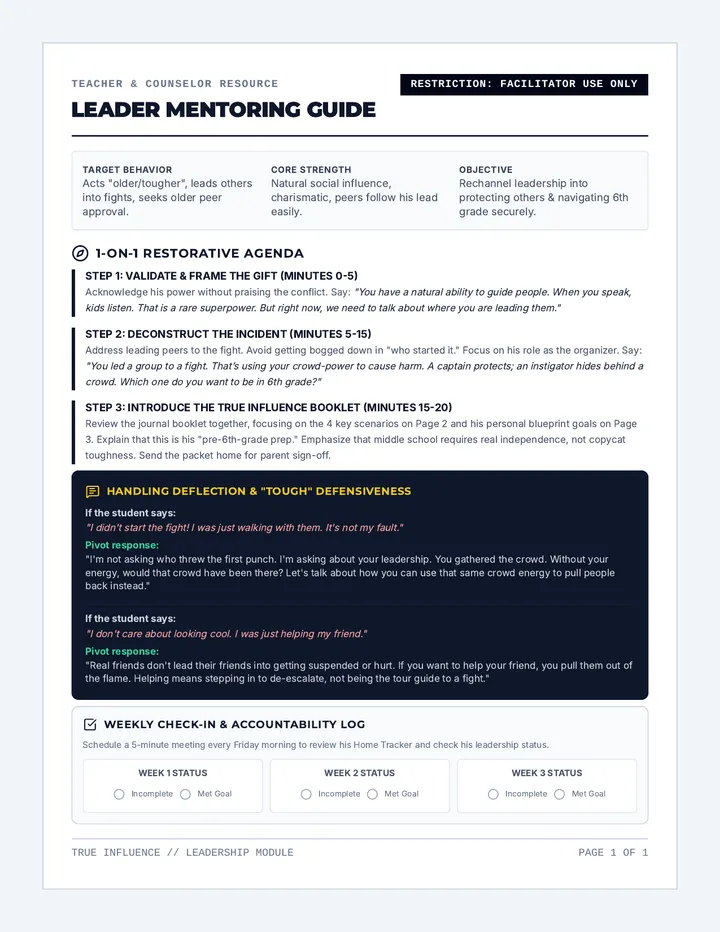
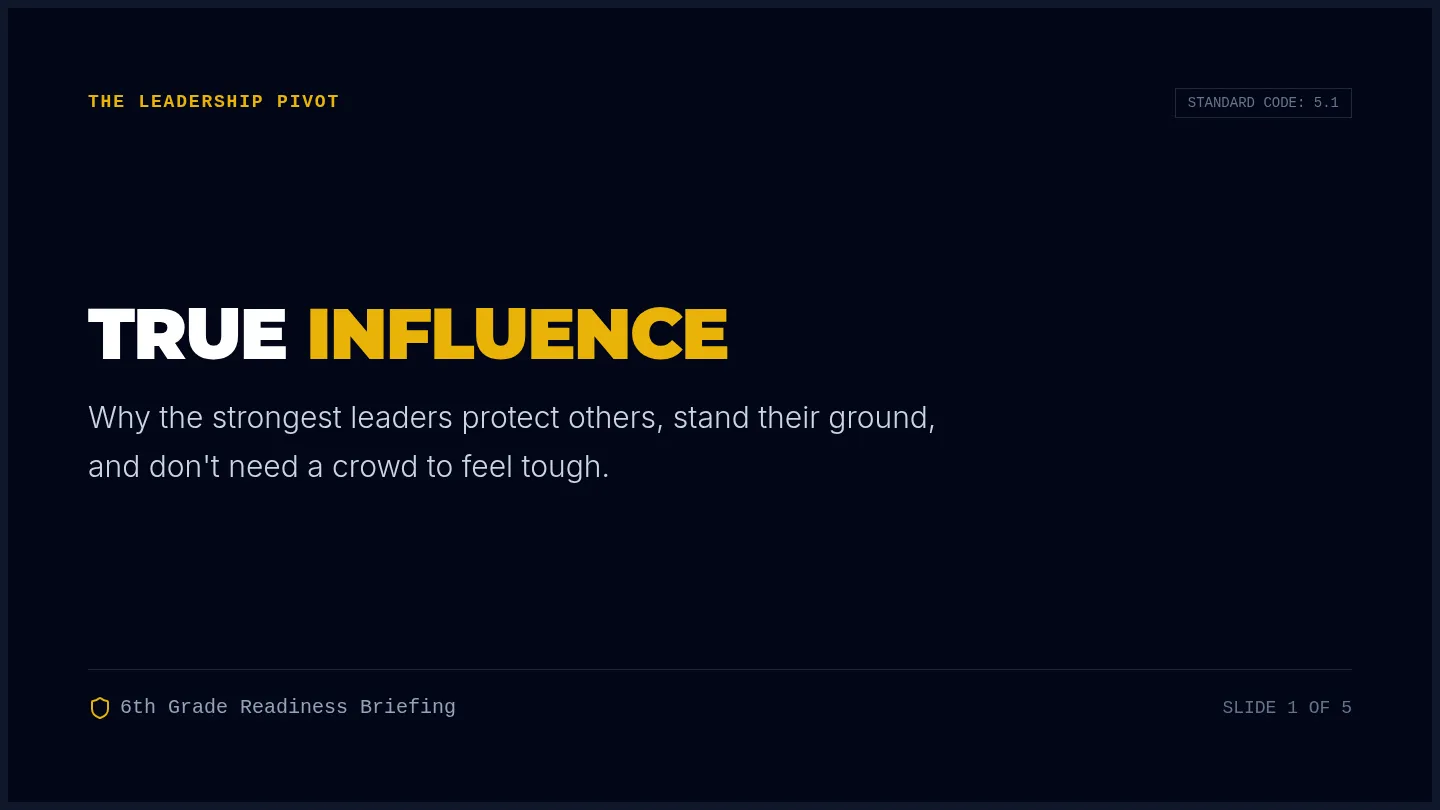
A comprehensive restorative leadership and peer advocacy sequence designed for students transitioning to middle school. It guides students from understanding their social influence to actively protecting peers and spreading positive school culture.
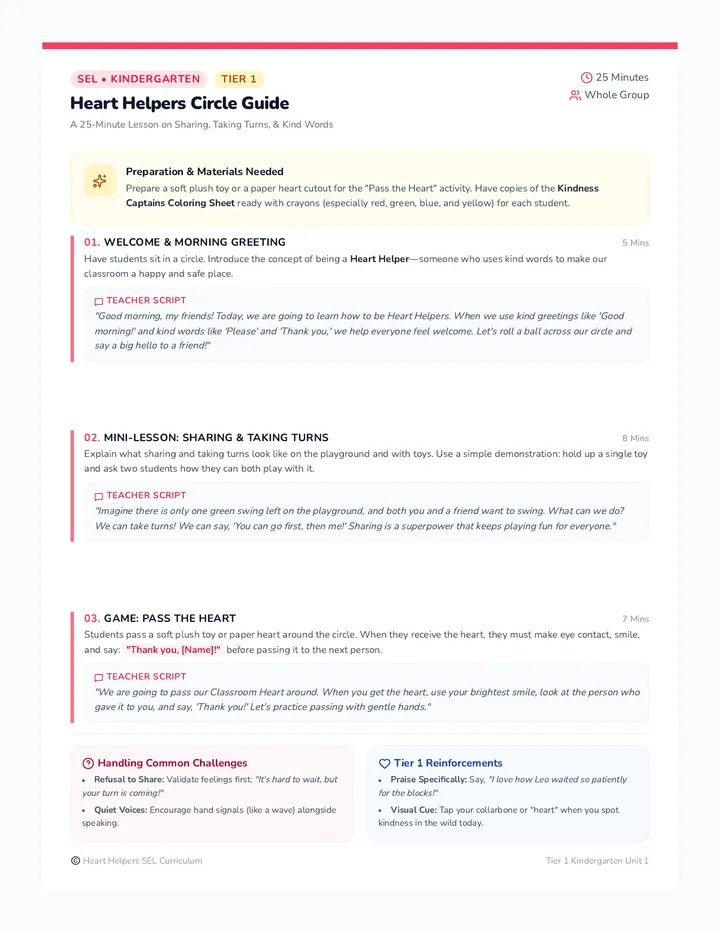
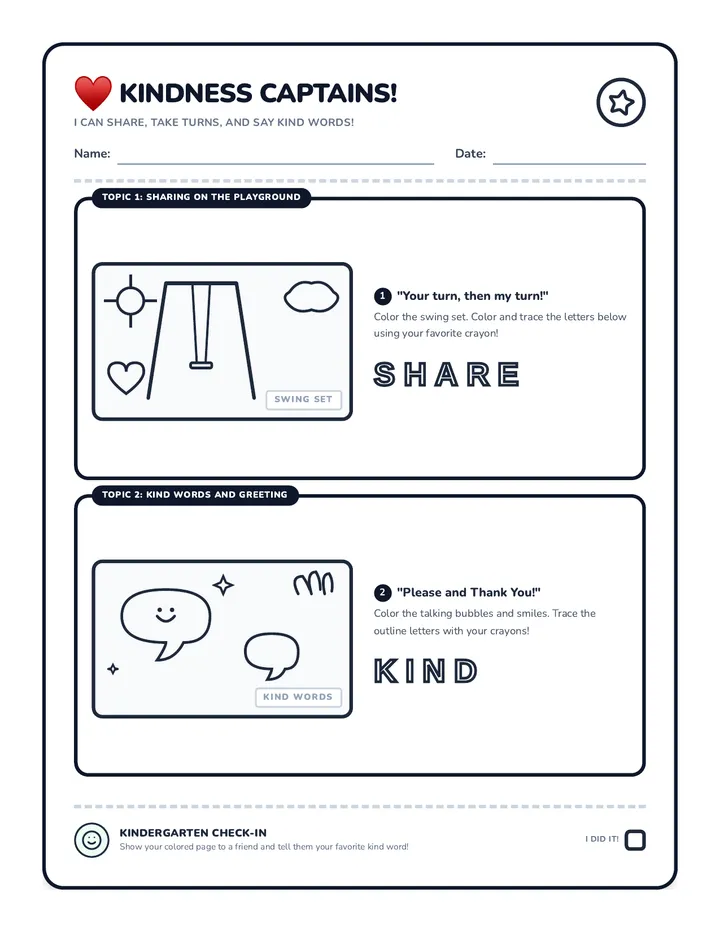
A kindergarten SEL lesson focused on sharing, taking turns, and using kind words. Includes a circle time facilitator guide and a hands-on coloring and word-tracing activity.
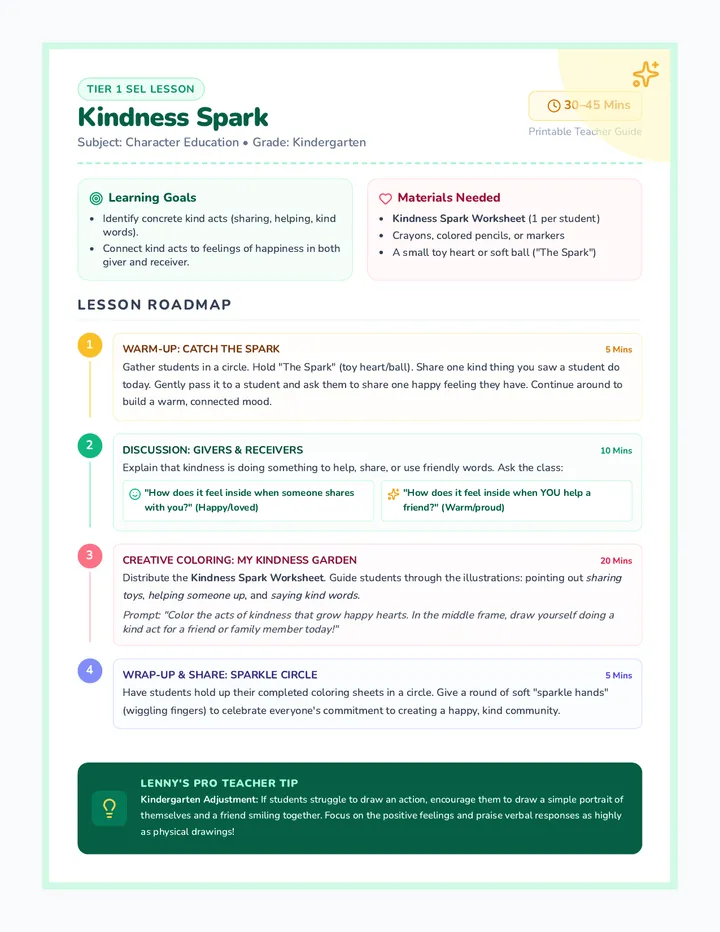
A 1-page teacher-facing lesson plan outlining the step-by-step guide for delivering the Kindness Spark lesson, complete with clear SEL learning objectives, materials checklist, step-by-step instructions, and discussion prompts.
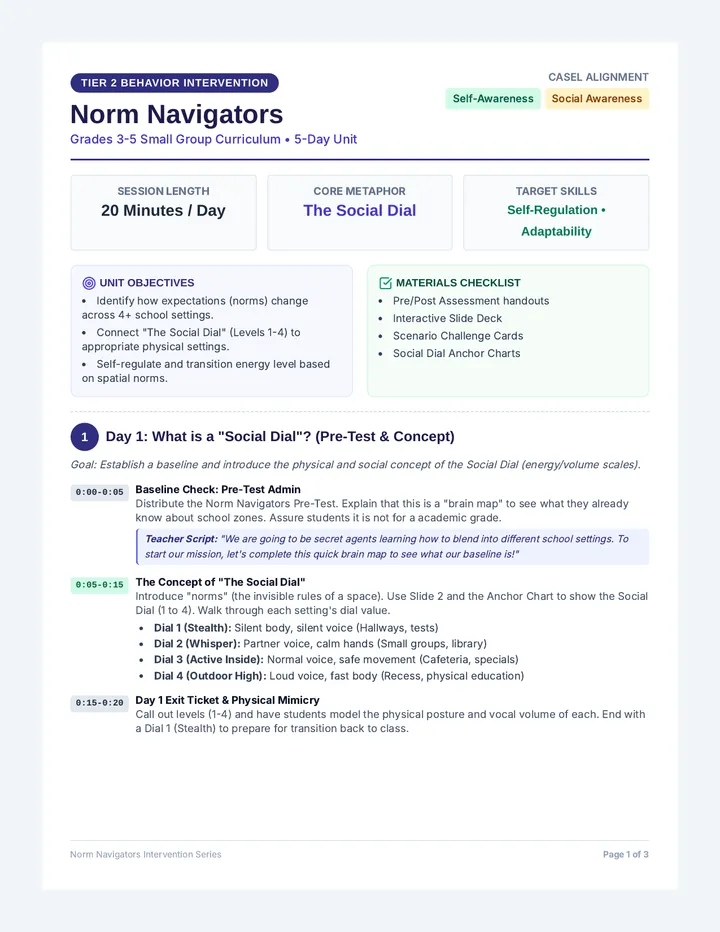
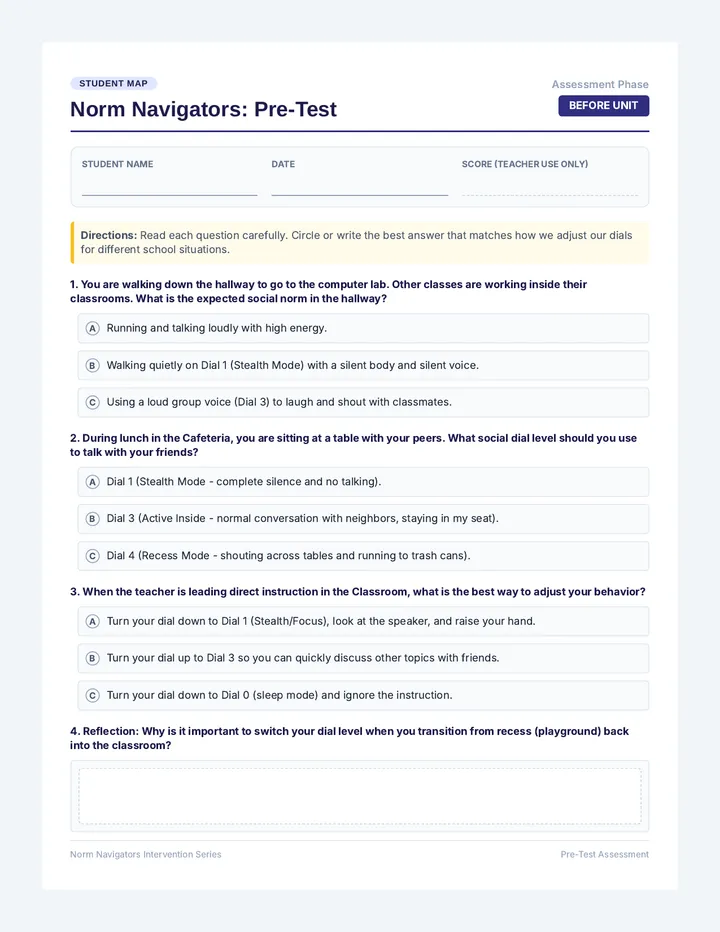
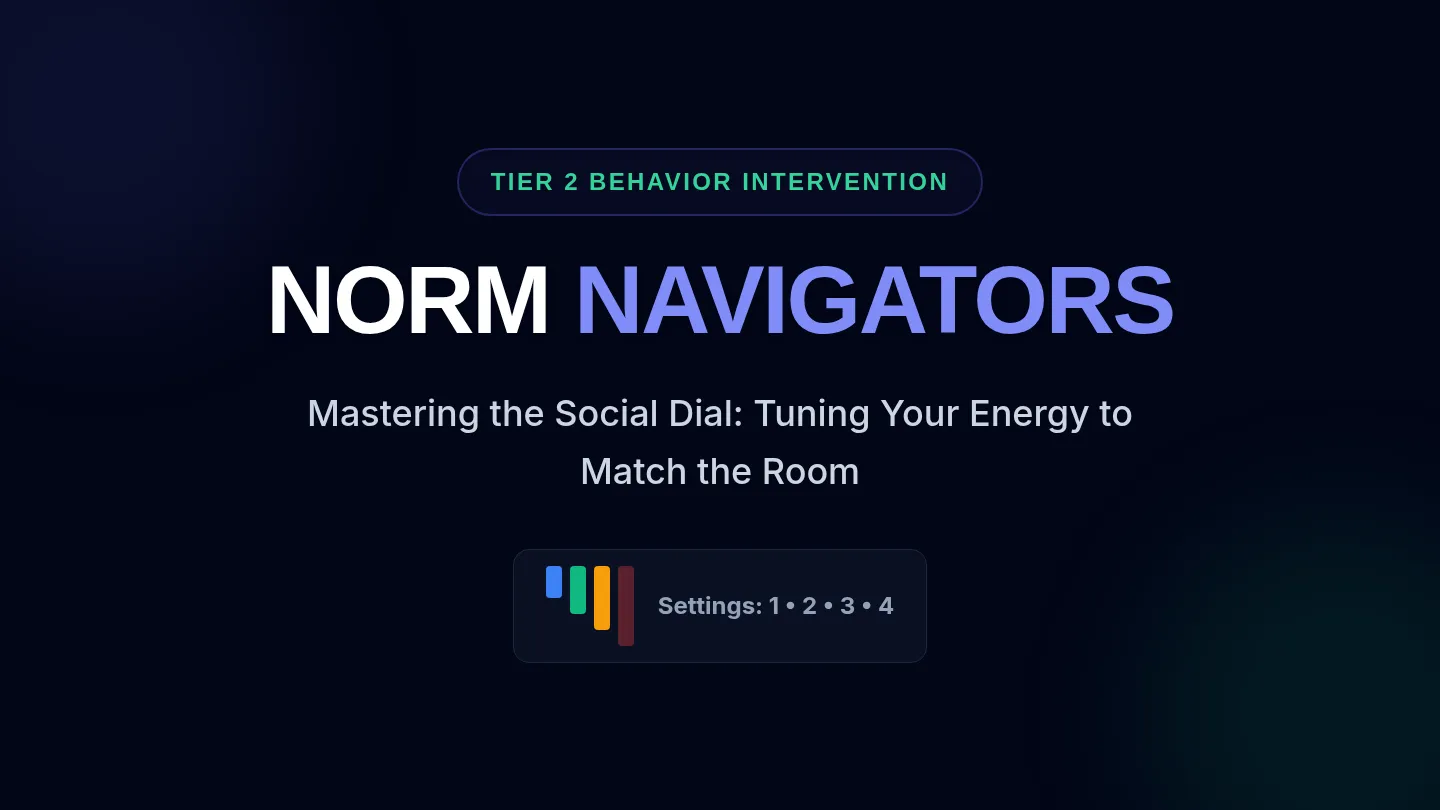
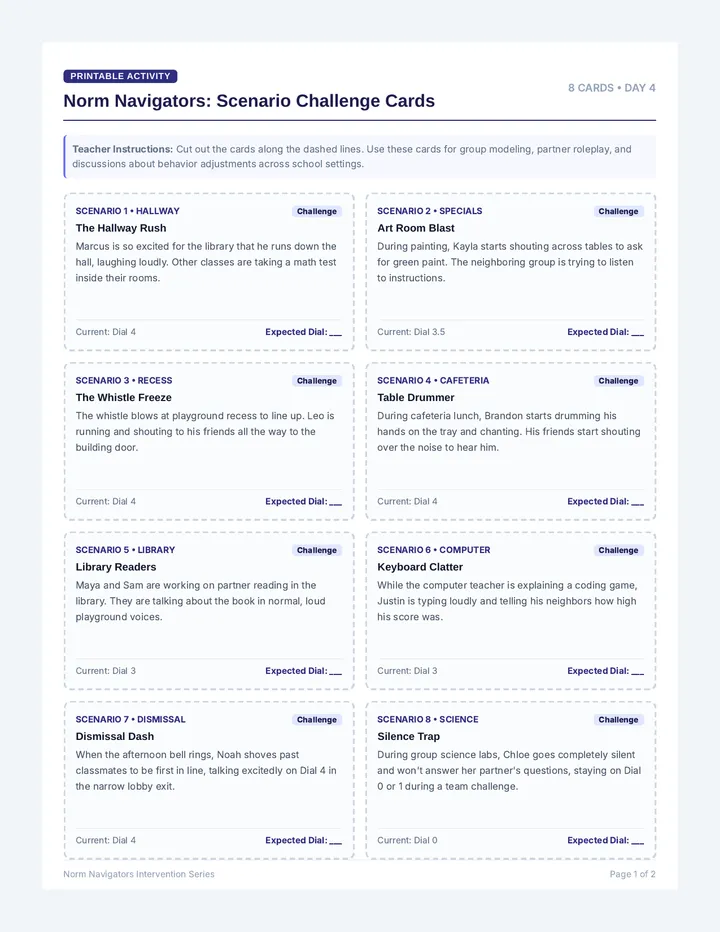
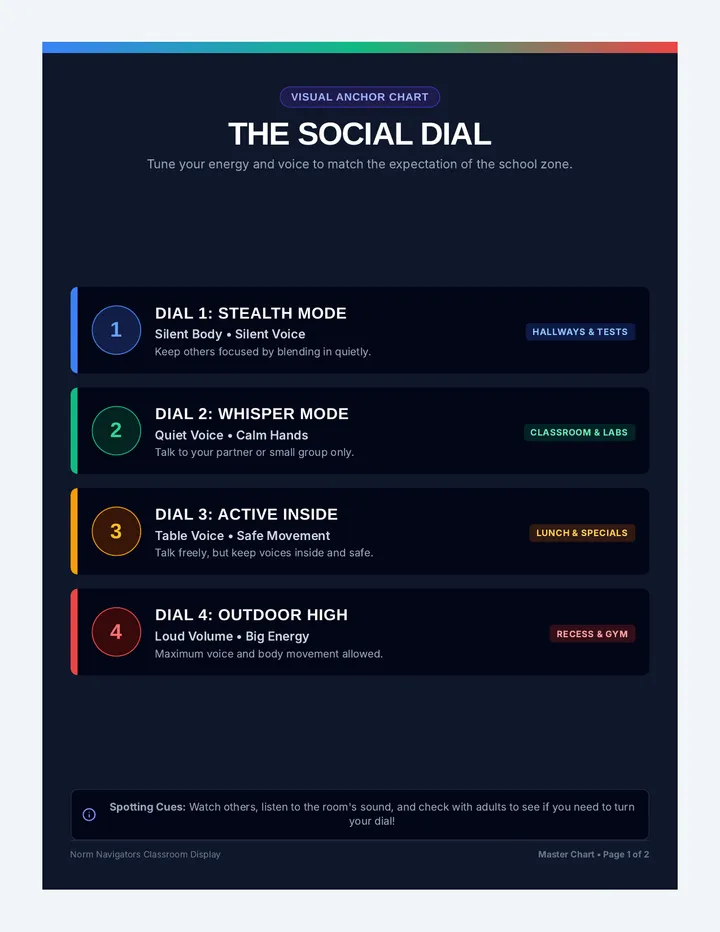
A 5-day Tier 2 behavior intervention sequence for grades 3-5 focused on recognizing and adapting to social norms across different school settings. Aligned with CASEL Self-Awareness and Social Awareness competencies, the sequence uses the concept of the 'Social Dial' to help students regulate their energy and volume.
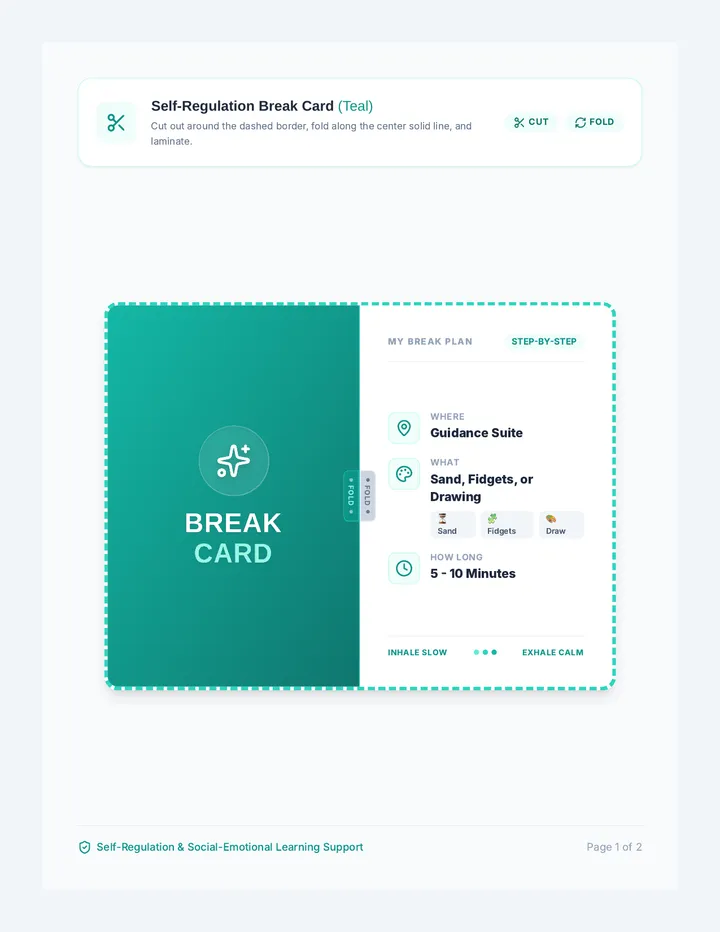
A collection of visual prompts and break cards designed to support students in self-regulation and managing emotions within the school environment.
A printable coloring and word-tracing worksheet for kindergarteners. Features two high-contrast coloring panels on sharing on the playground and using kind words, with thick-outline text for coloring and tracing.
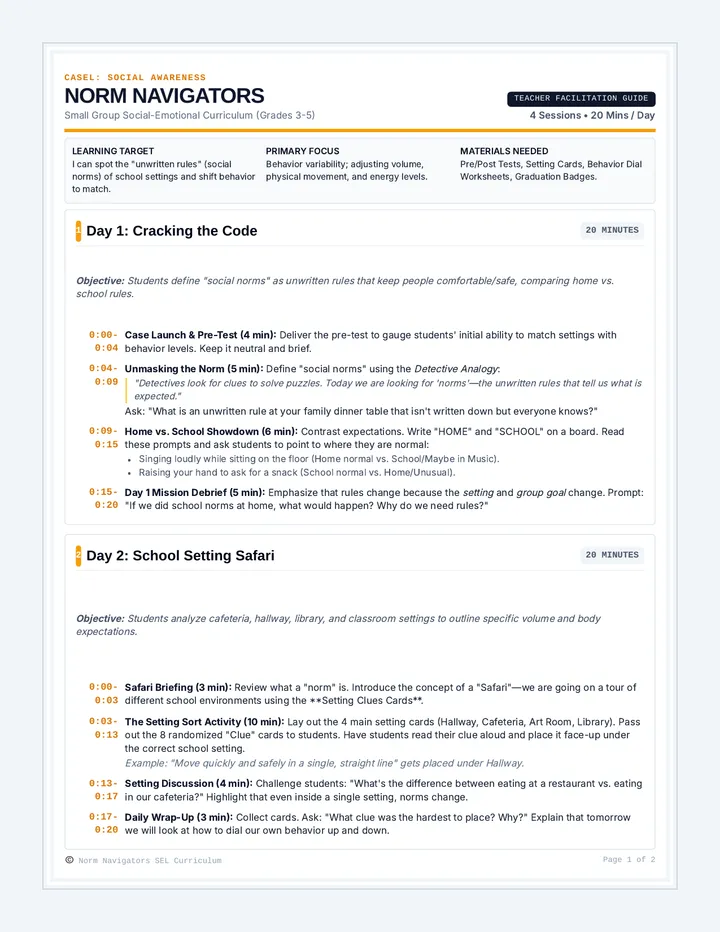
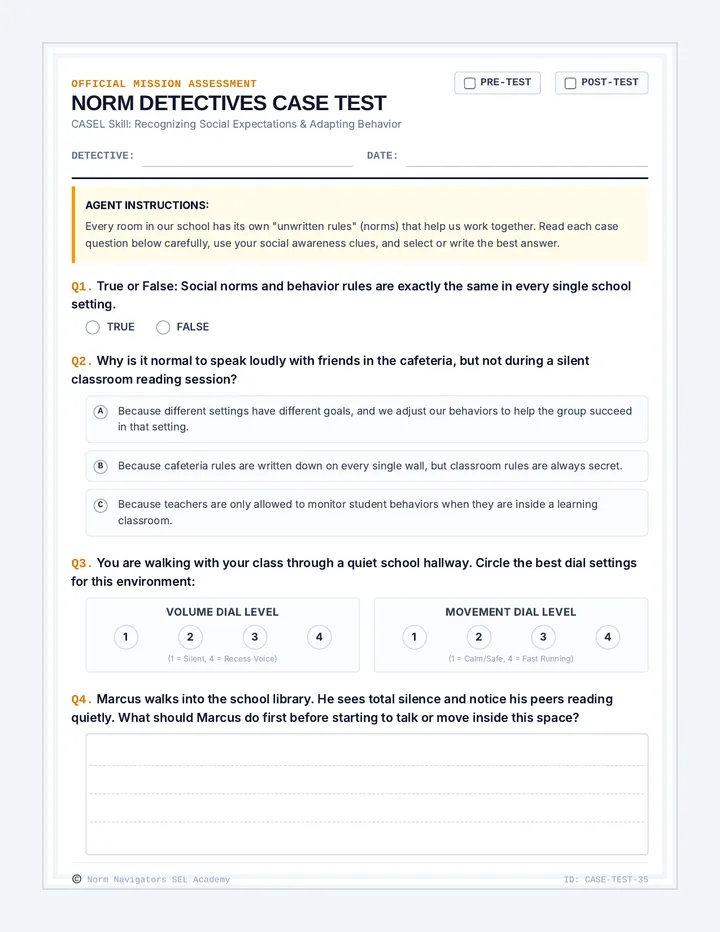
A comprehensive 4-day small-group social-emotional learning sequence for grades 3-5. Aligned with the CASEL Social Awareness framework, this unit teaches students to identify how expectations and social norms change across different school environments and how to adapt their behaviors successfully.
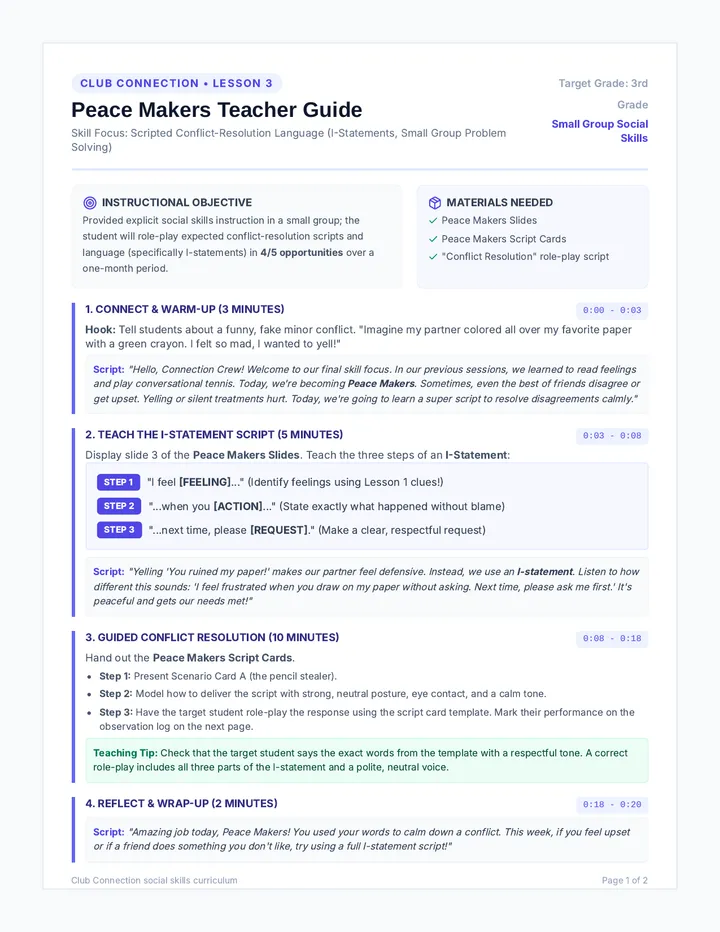
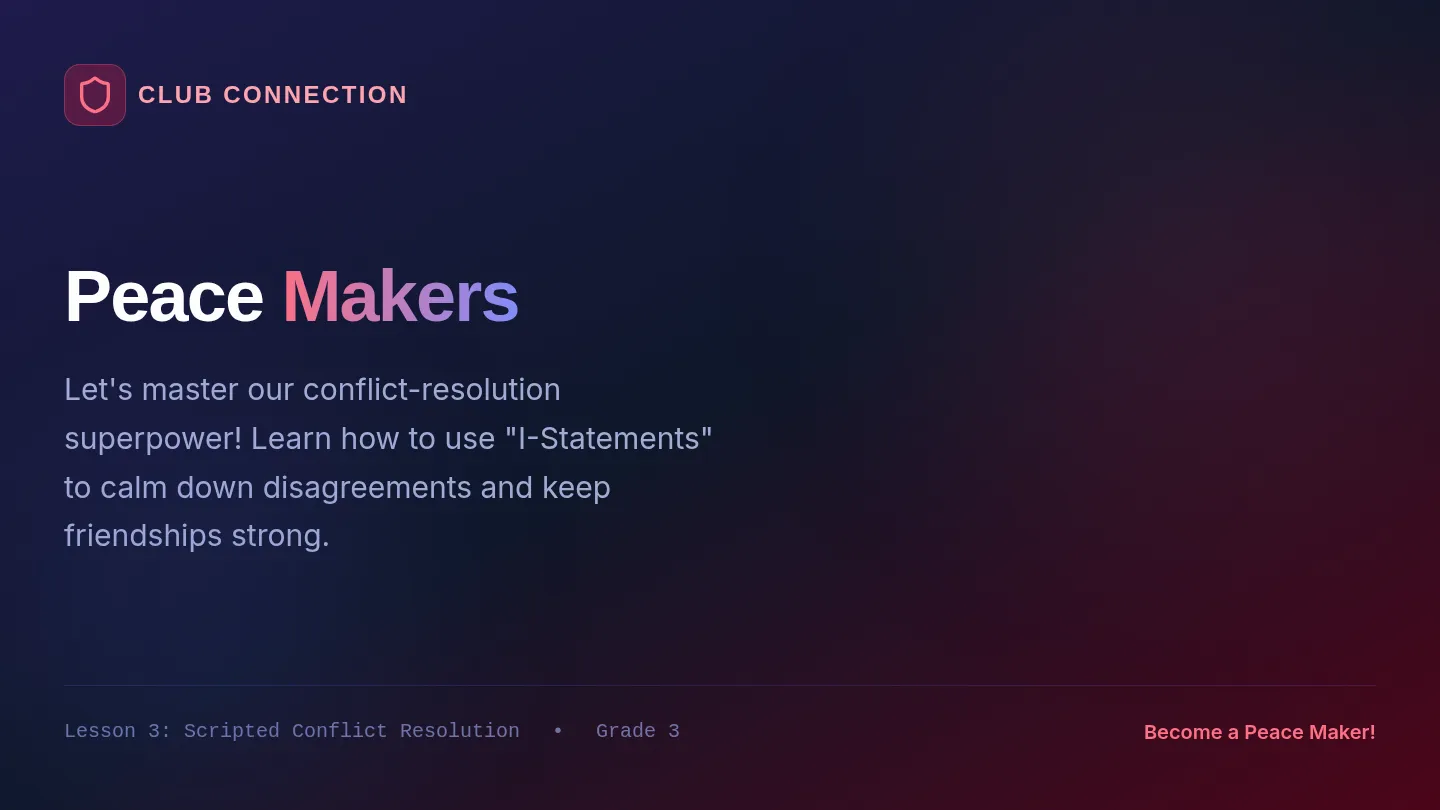
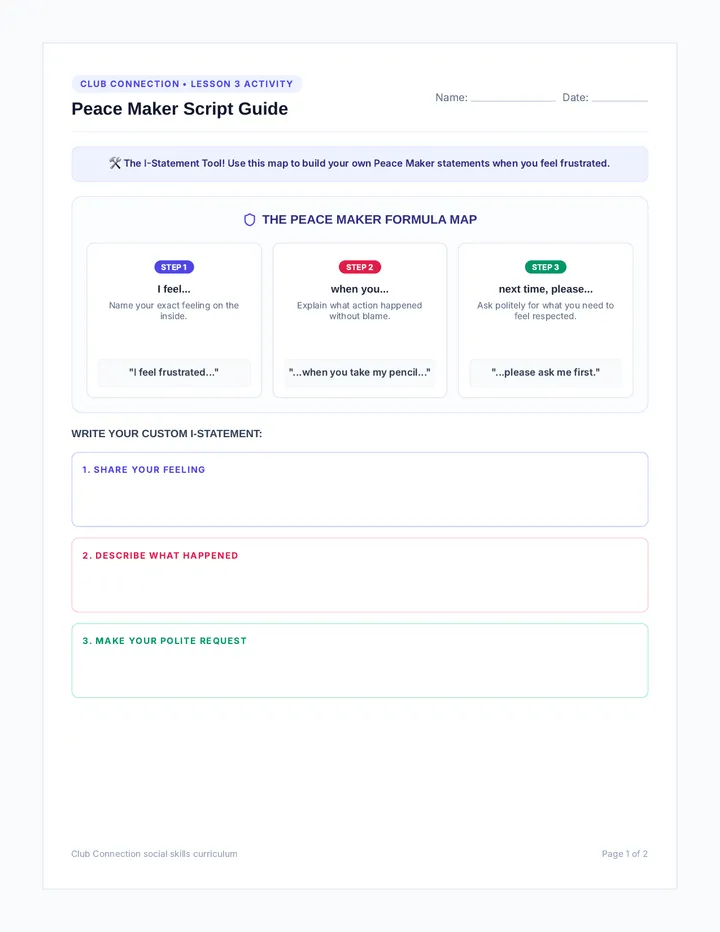
Students learn to use constructive 'I-statements' and collaborative problem-solving scripts to de-escalate and resolve minor conflicts with peers.
A one-page facilitator guide for kindergarten teachers to conduct a circle time lesson on sharing, taking turns, and kind words. It includes script prompts, a warm-up activity, and instructional tips.