A visual anchor chart to help students identify and name their emotions during high-stress situations, specifically designed for a middle school male audience.
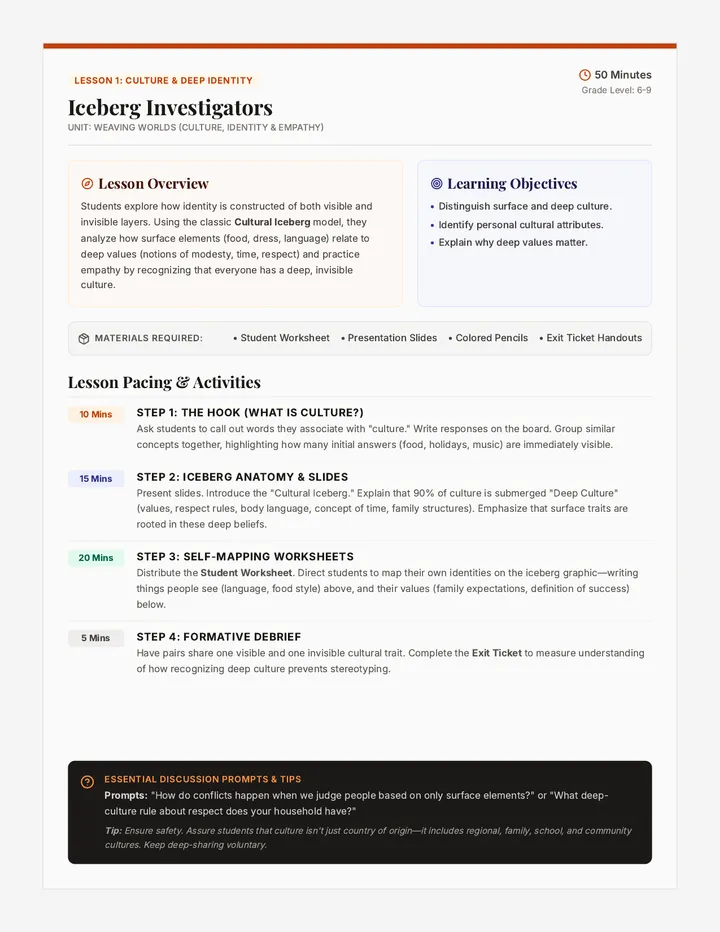
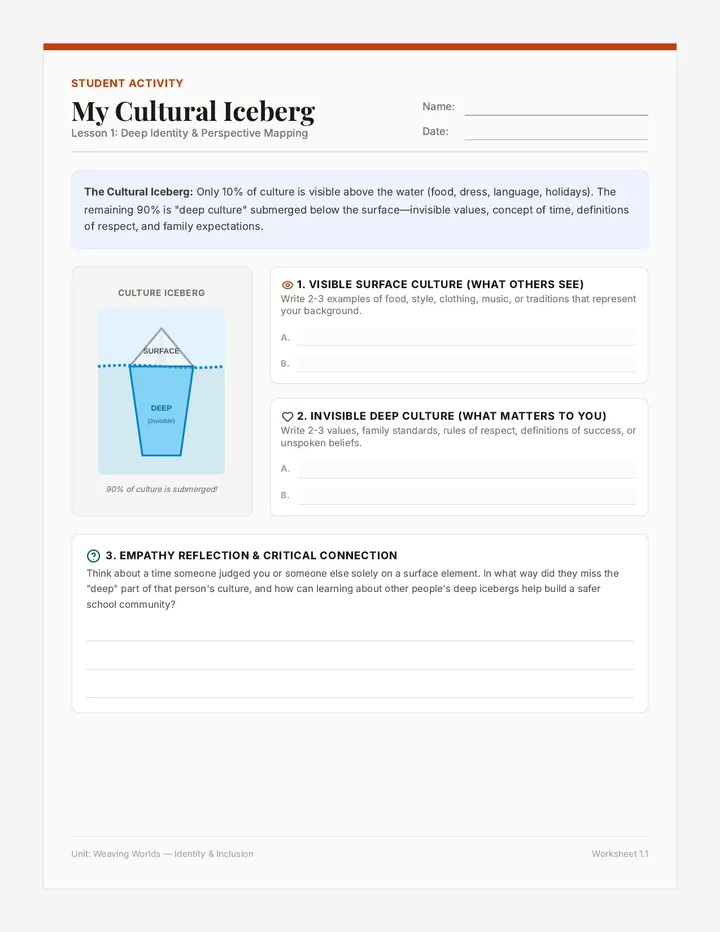
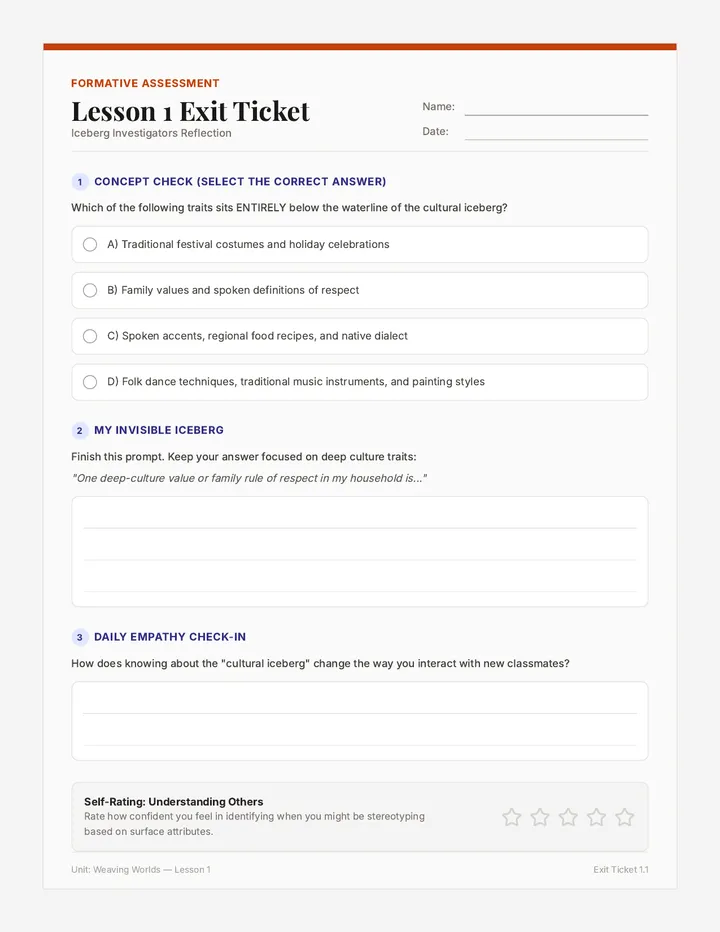
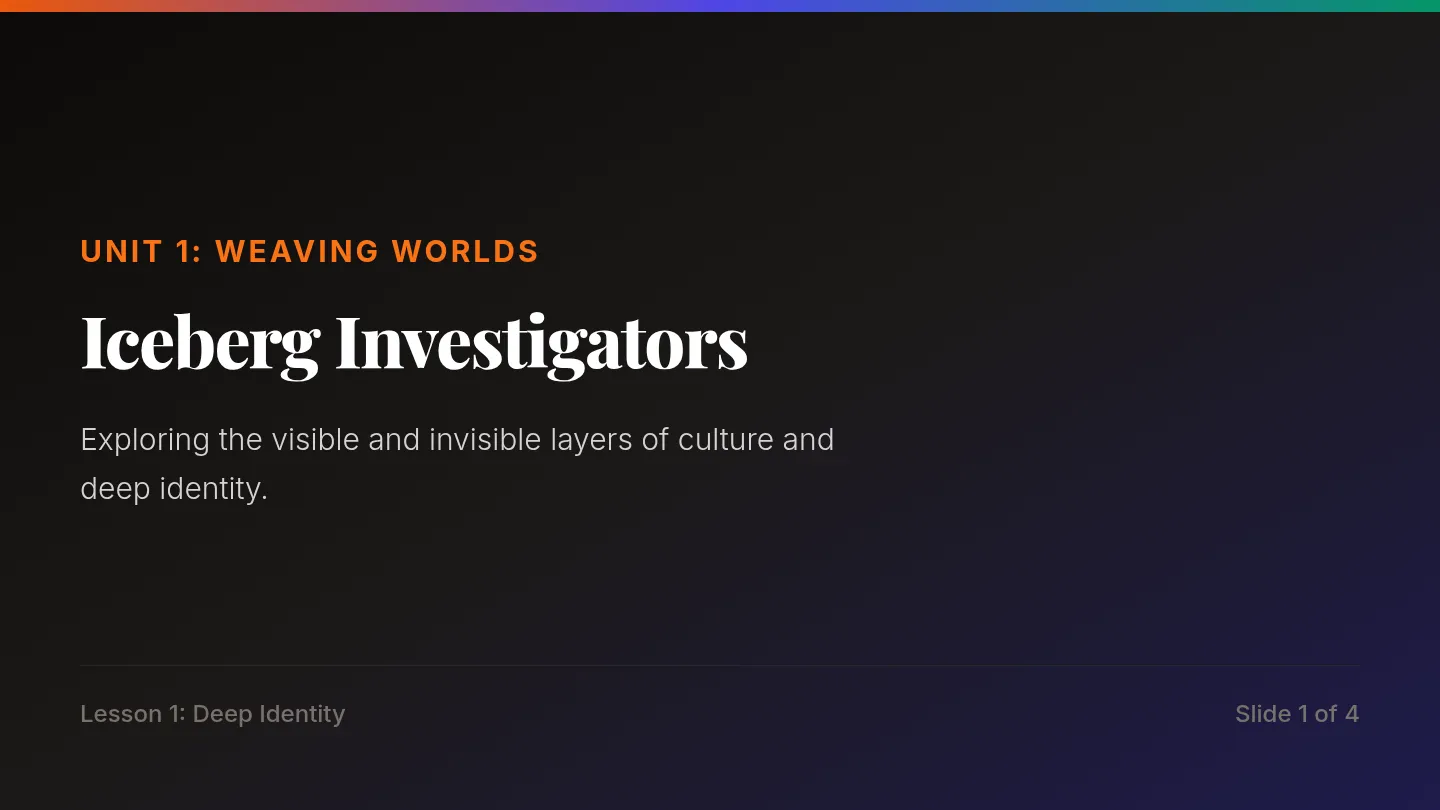
A 3-lesson unit on culture, identity, empathy, and building an inclusive school community. Students explore the cultural iceberg, share personal perspective narratives, and collaborate on actionable school-wide inclusion plans.
A high-energy, lunch-friendly social-emotional learning lesson designed to help students recognize everyday small wins, express genuine appreciation for peers, and celebrate the growth and resilience involved in overcoming daily challenges.
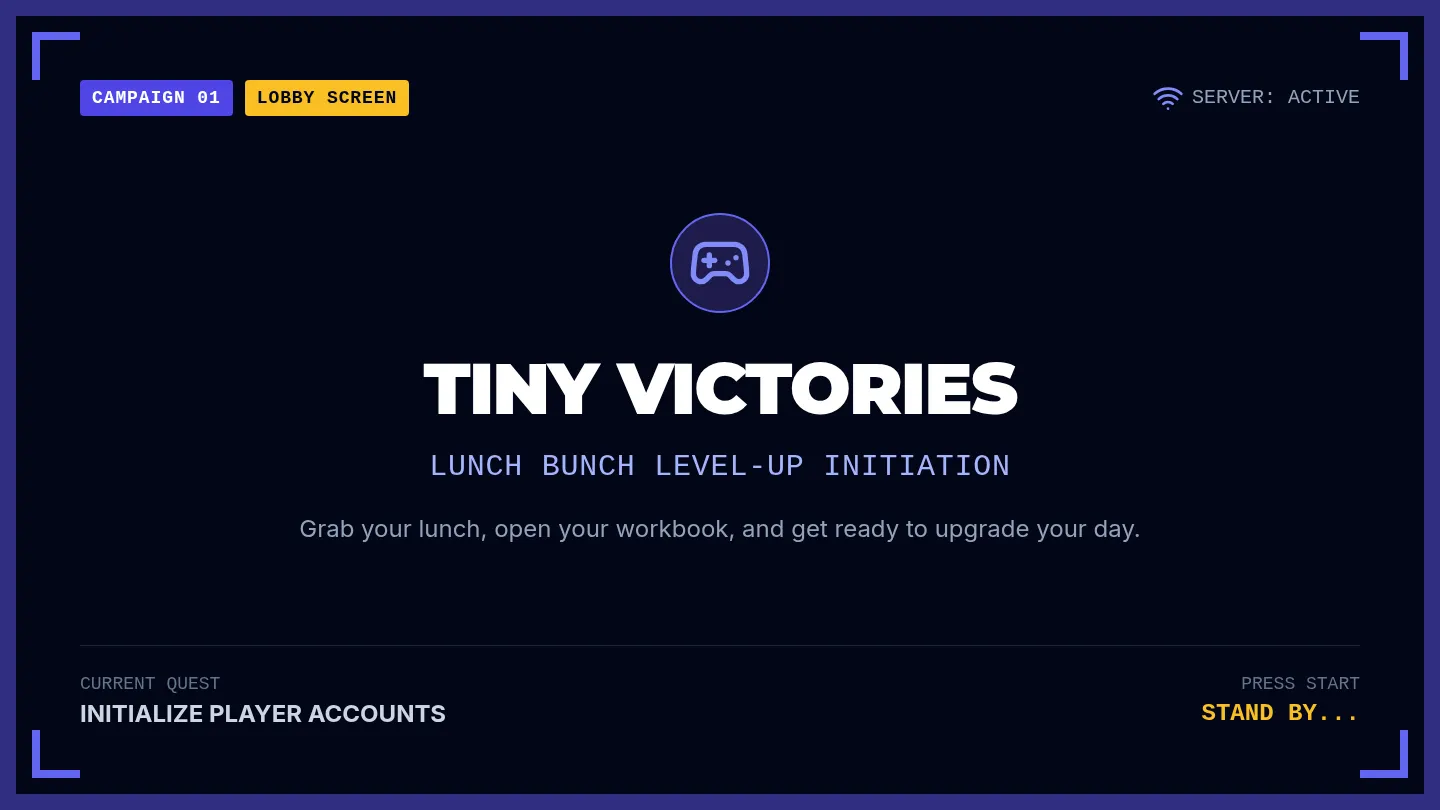
An engaging 5-slide presentation using a retro-arcade visual style. It serves as a visual anchor during the lunch session, guiding students through defining mini-wins, executing peer appreciation cards, and planning resilience strategies.
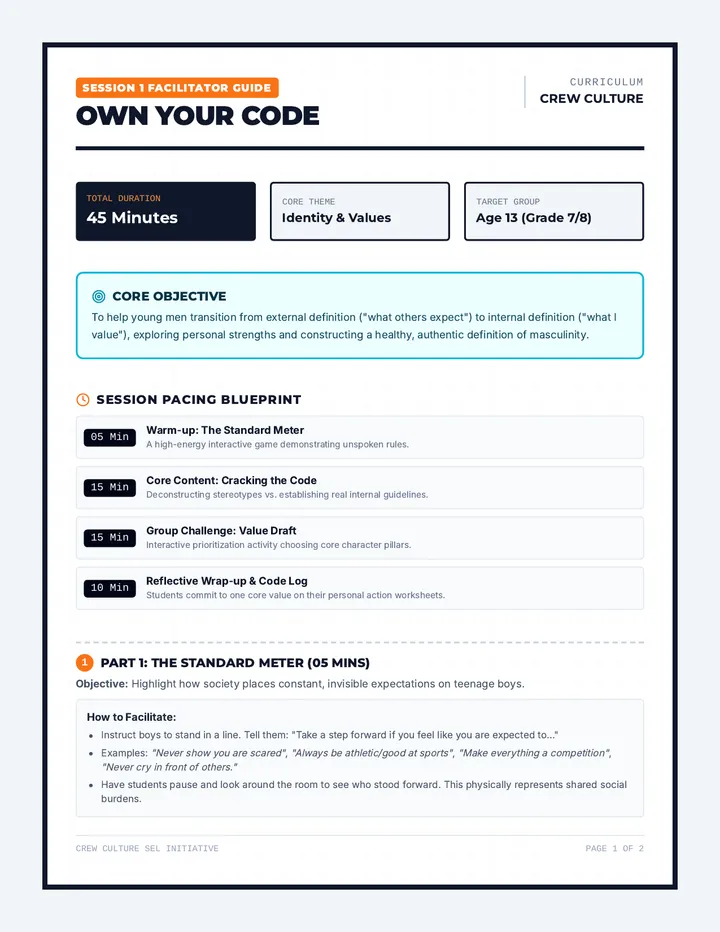
A three-part social-emotional learning curriculum designed specifically for middle school boys to develop self-esteem, manage digital pressure, and build authentic peer relationships.
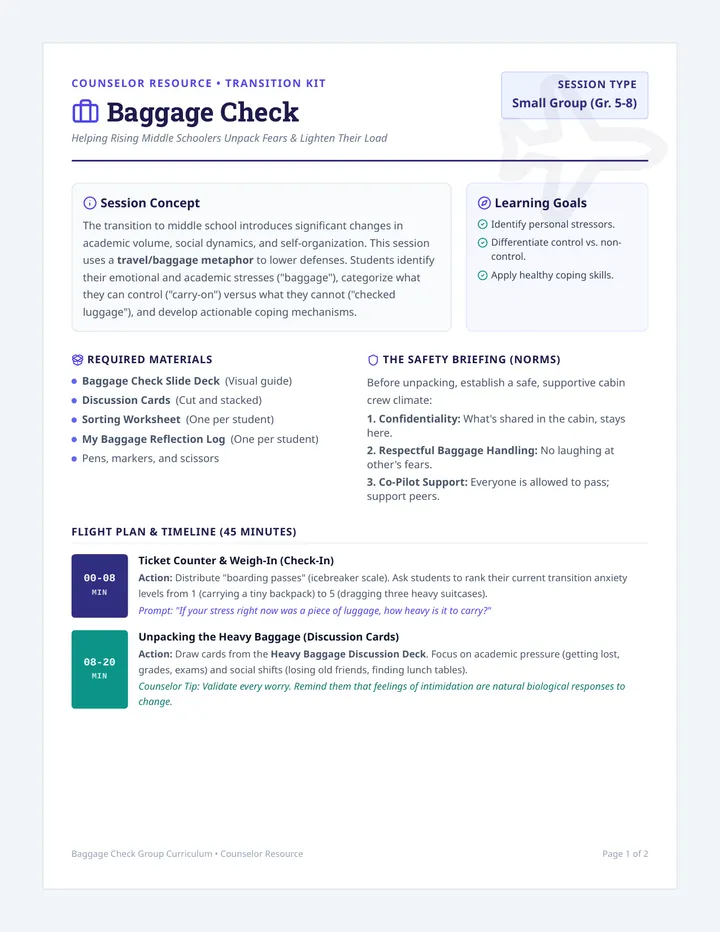
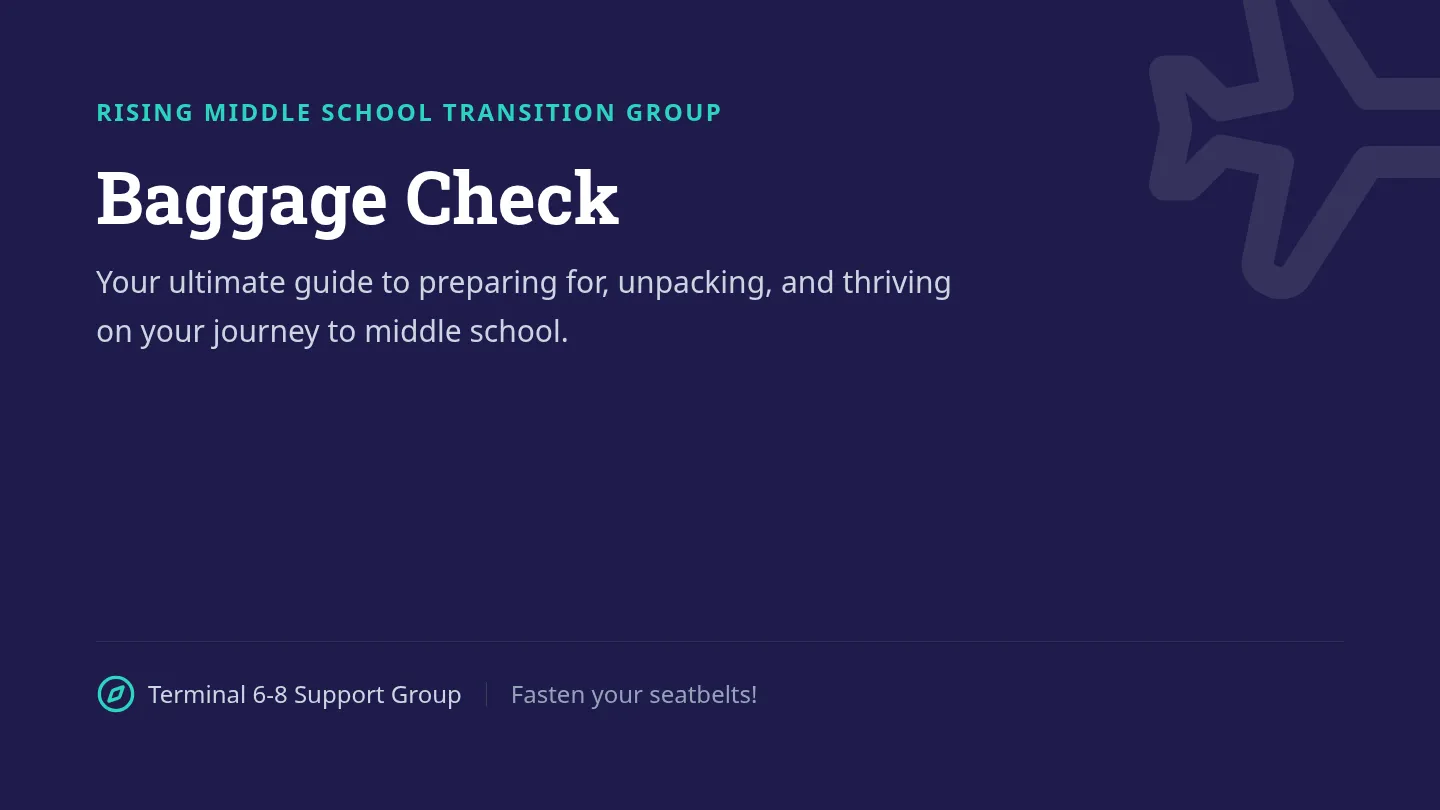
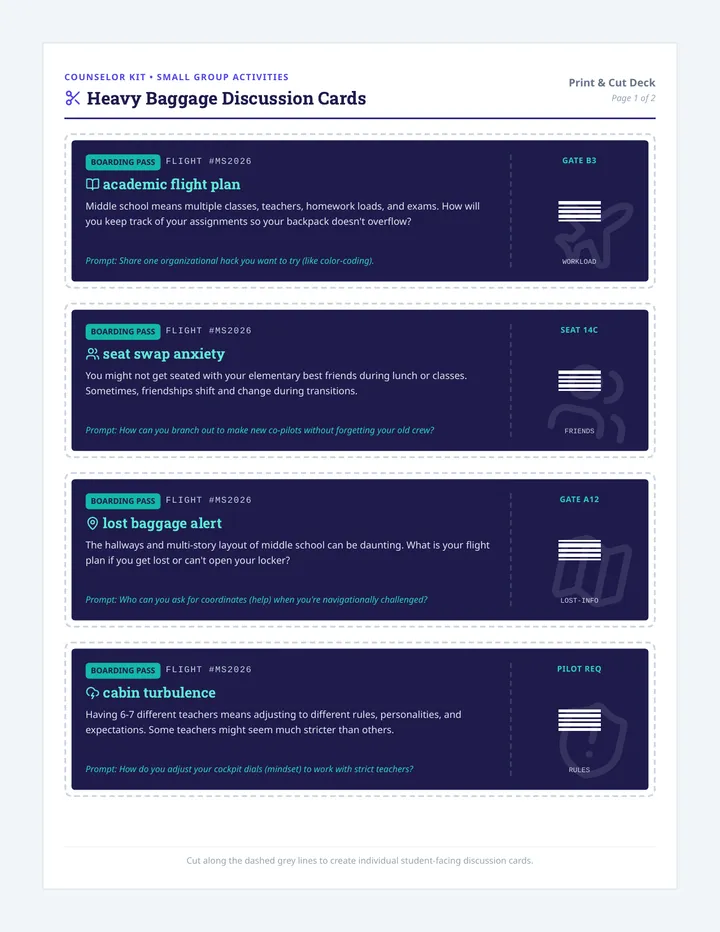
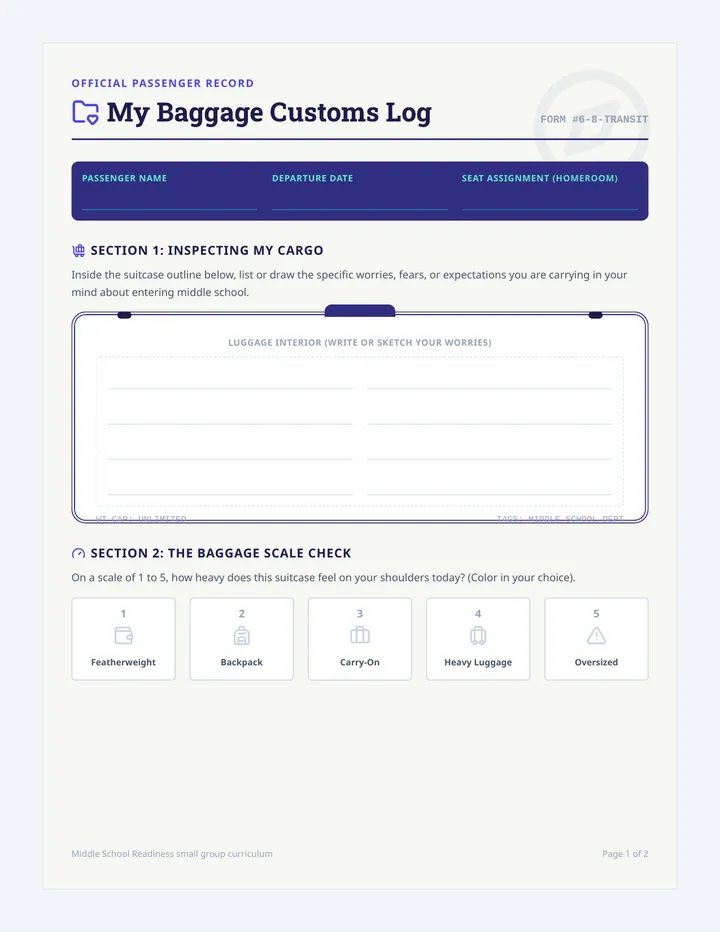
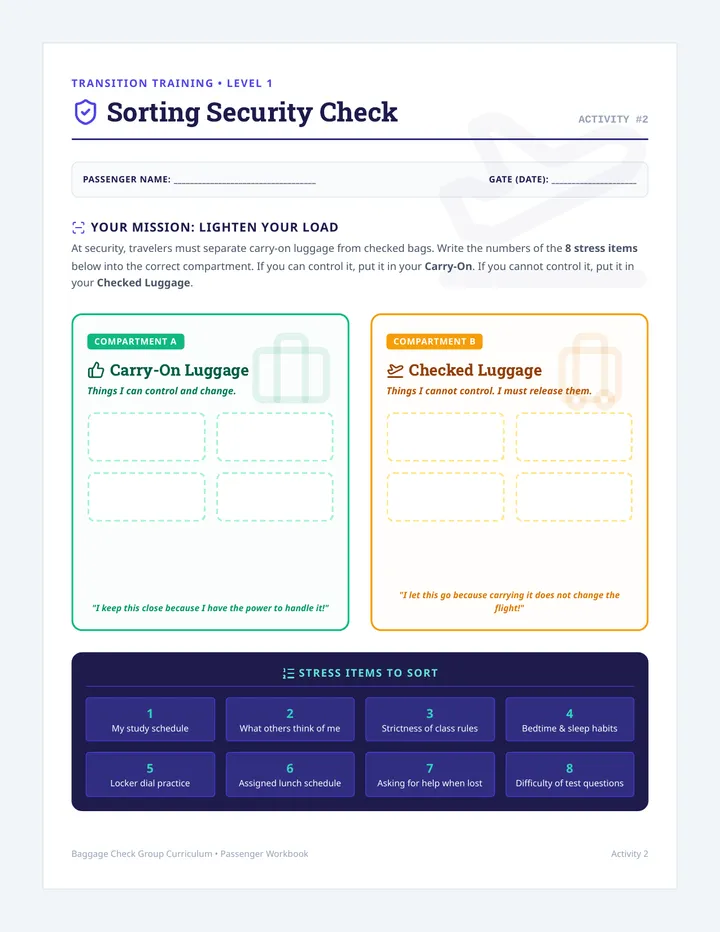
A small-group counseling kit designed to help rising middle schoolers identify, discuss, and unpack the emotional baggage and academic pressures associated with school transitions.
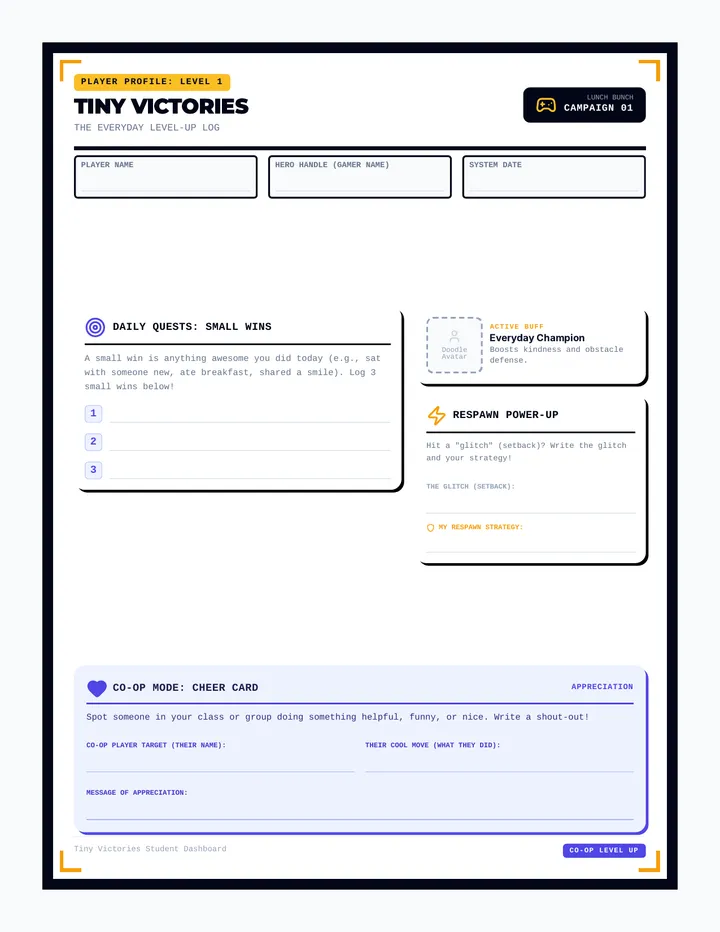
A printable, highly visual student worksheet themed as an arcade player dashboard. It features customizable avatar spaces, sections to record daily micro-wins, peer appreciation shout-outs, and a reflection zone for reframing setbacks.
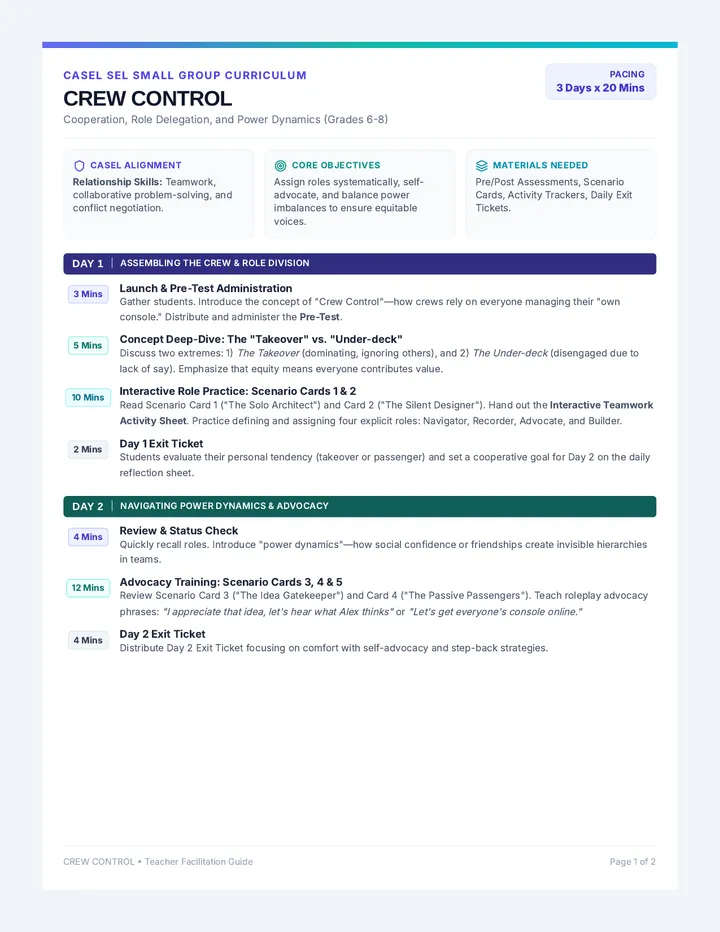
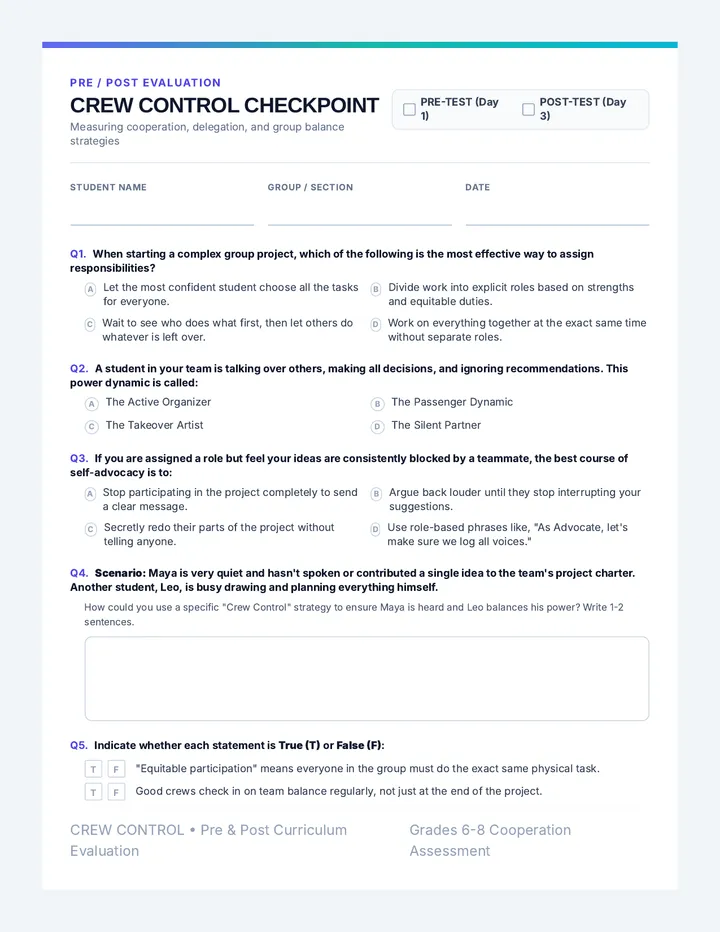
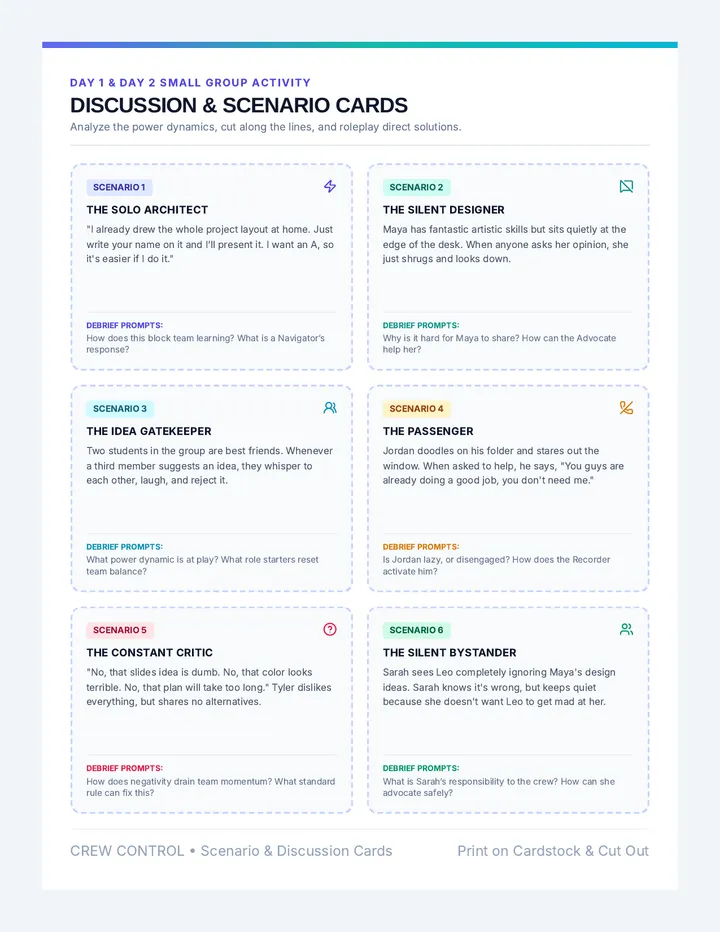
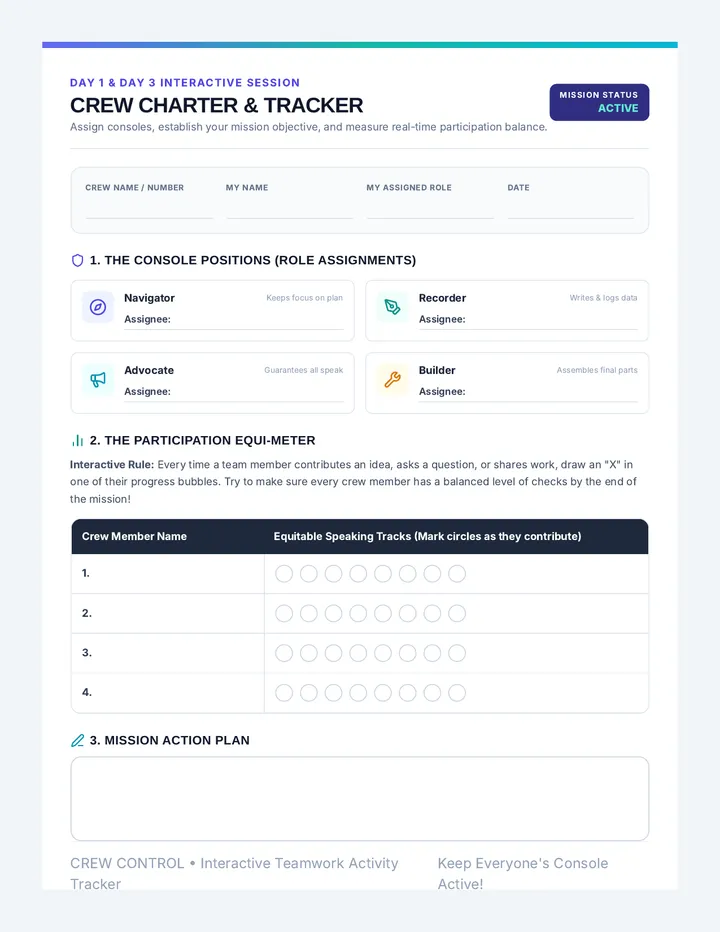
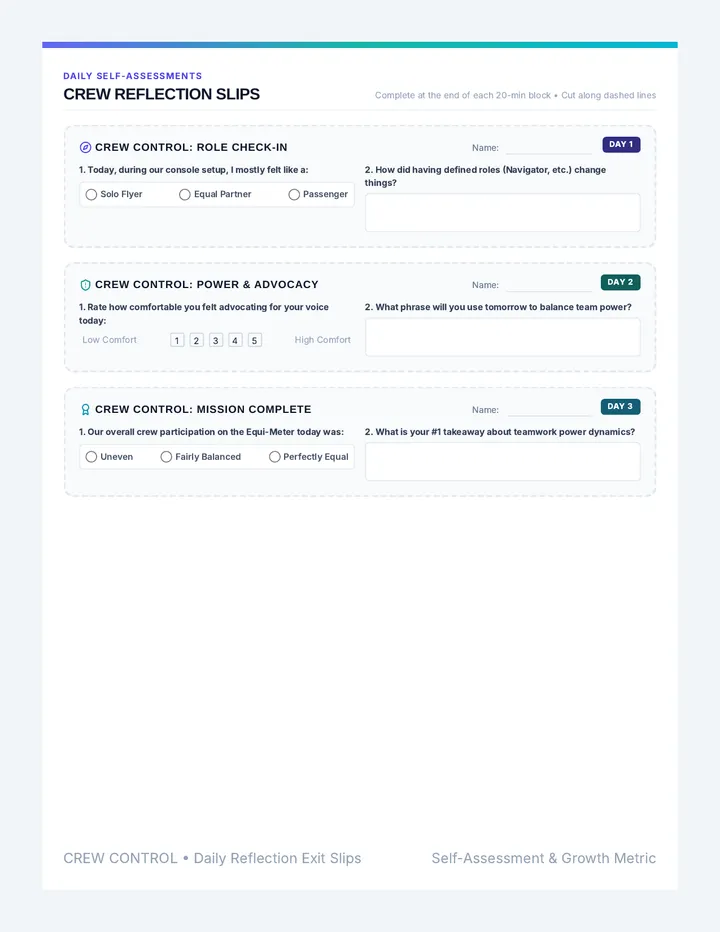
A 3-day small group curriculum for middle schoolers (grades 6-8) focused on cooperation, role delegation, navigating power dynamics, and ensuring equitable team participation. Aligns with CASEL's Relationship Skills and Responsible Decision-Making core competencies.
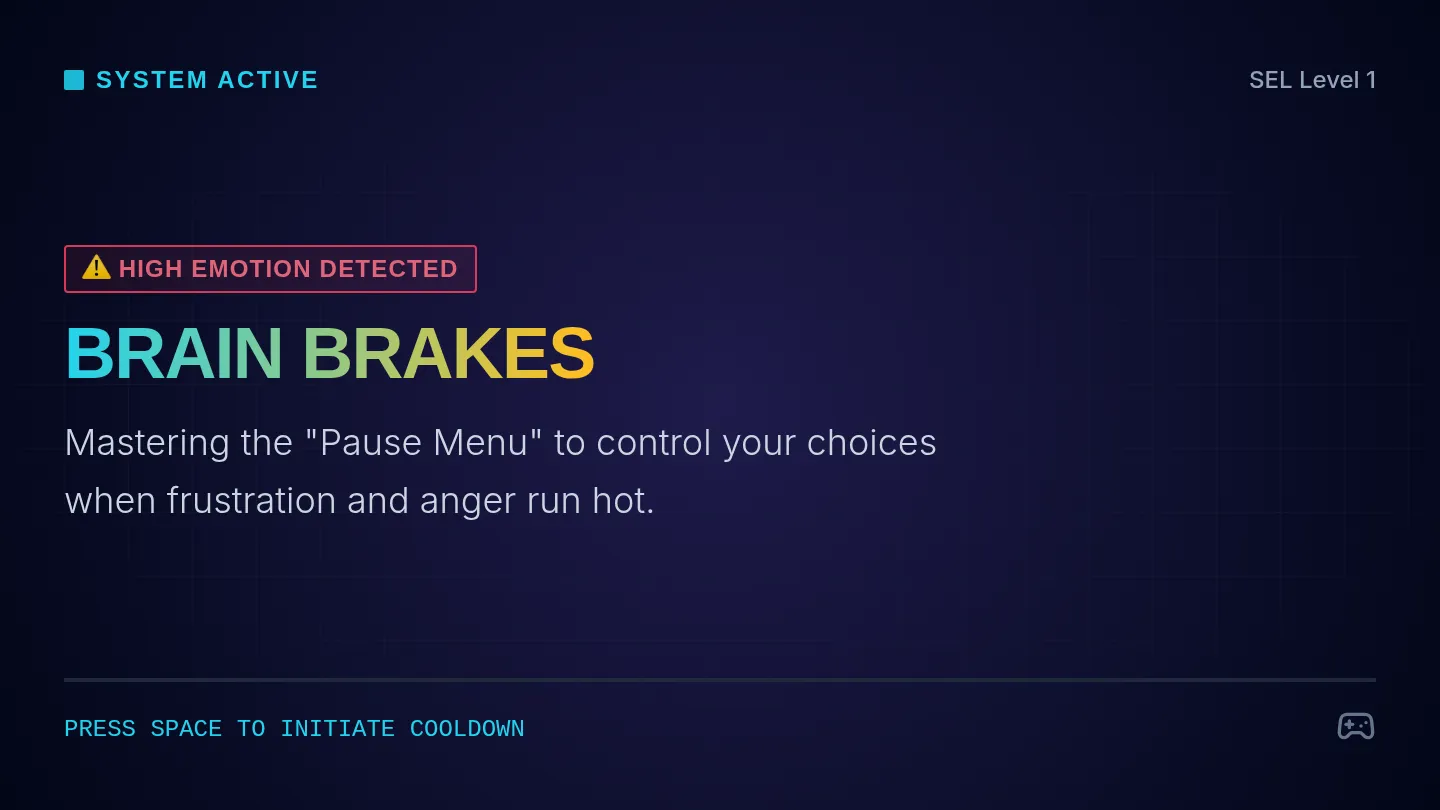
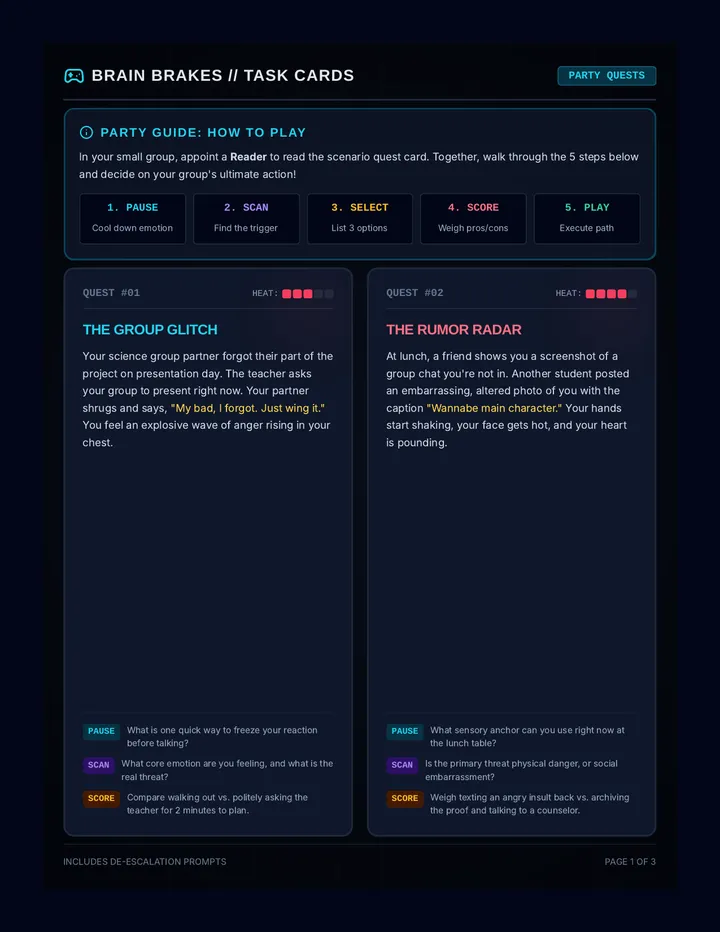
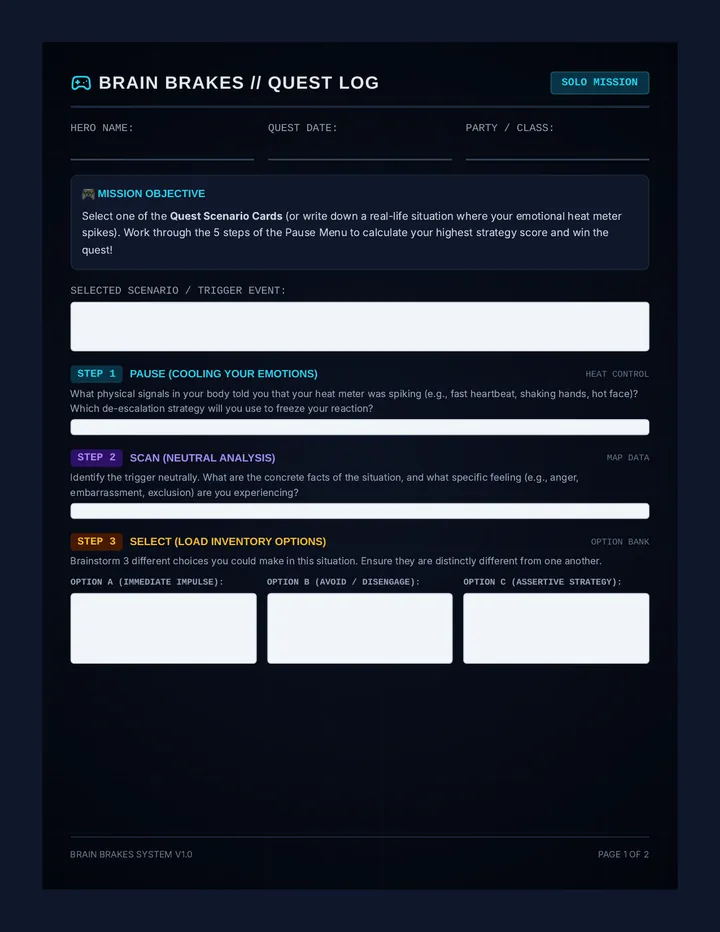
A lesson introducing a retro-game-themed problem-solving and self-regulation model called 'Brain Brakes' for middle schoolers. Students learn to 'Pause' when emotions run high, 'Scan' the situation, 'Select' options, 'Score' pros and cons, and 'Play' their best choice.
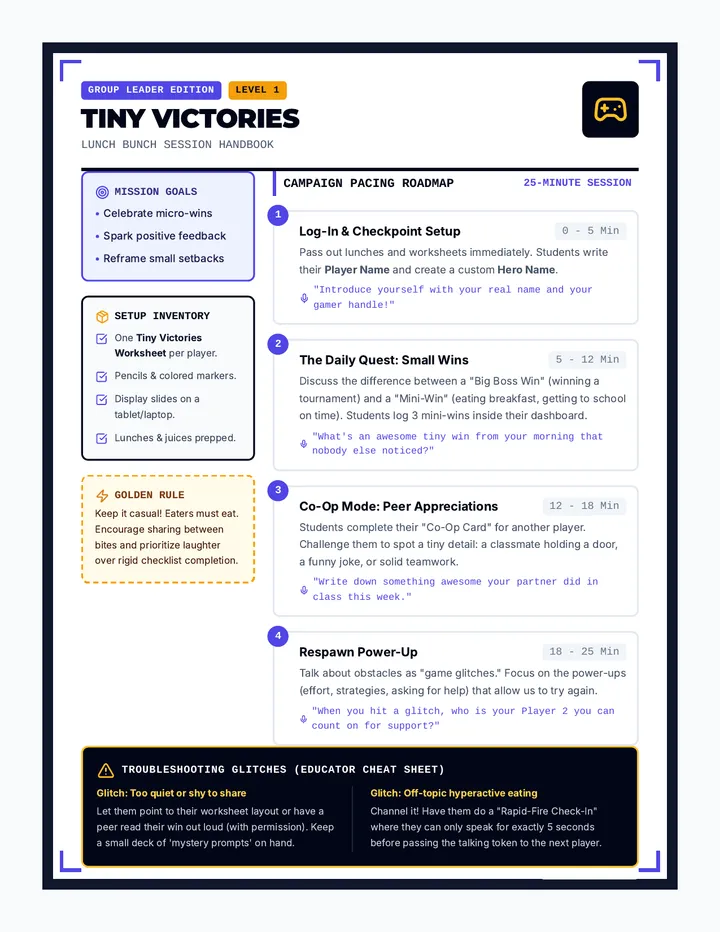
A 1-page facilitation guide for school counselors or educators to lead a structured, high-energy Lunch Bunch session. It includes a game-themed pacing timeline, active discussion prompts, and strategies for managing a group of distracted eaters.
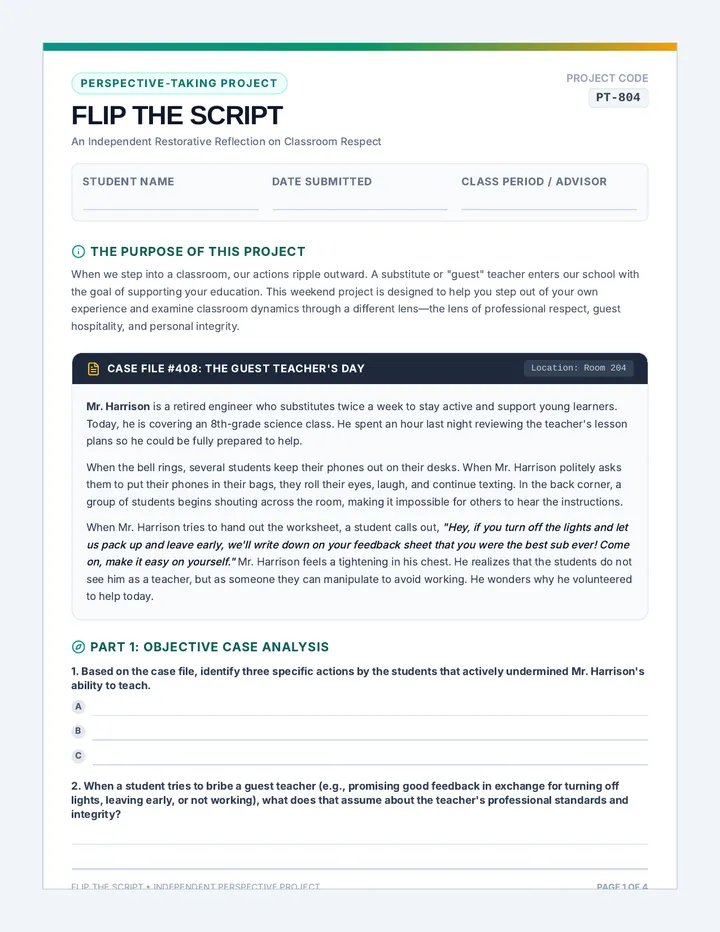
An independent, structured reflective writing packet for 8th-grade students to process disrespectful behavior toward a substitute teacher. The packet focuses on perspective-taking, empathy, and personal accountability, and now includes a 4th page with structured formal templates for writing letters of apology to both the guest teacher and their regular teacher.