A 15-minute, Tier 1 classroom lesson for 1st graders on the skill of taking turns using evidence-based strategies like modeling and guided practice.
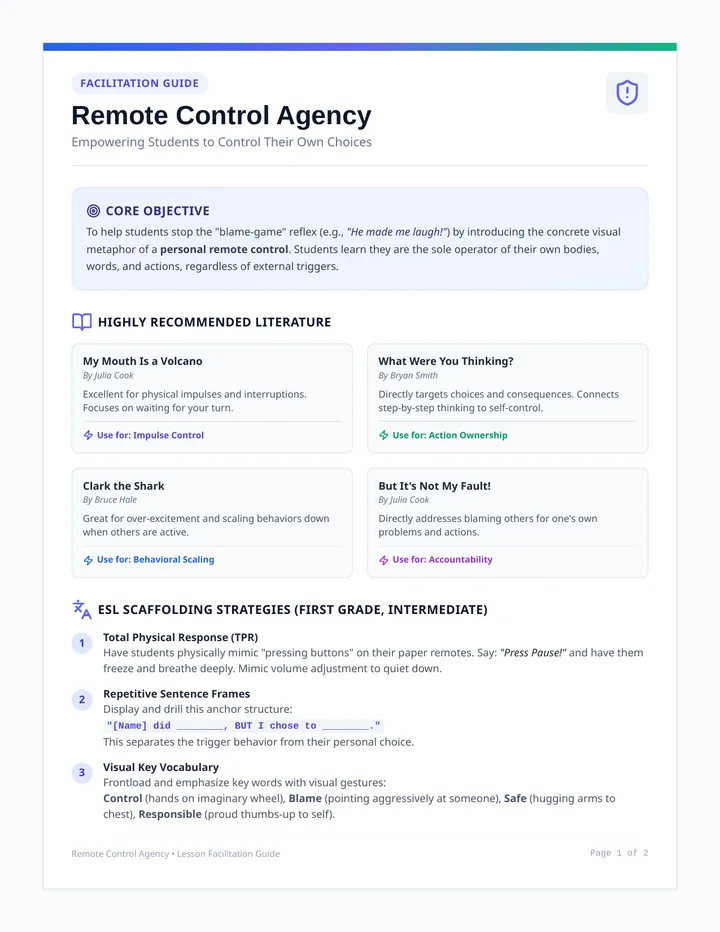
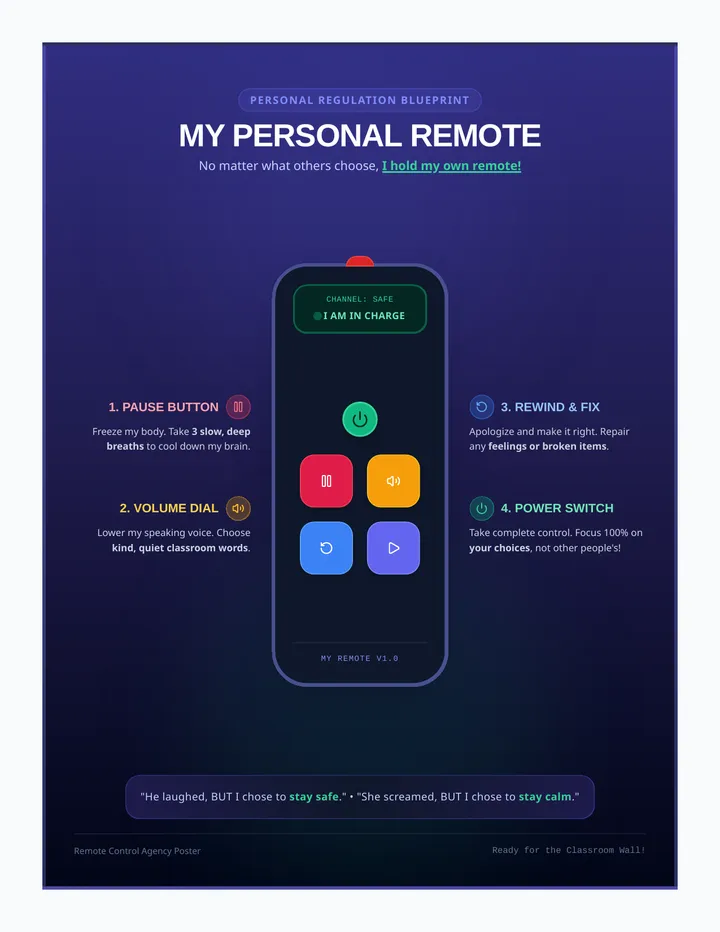
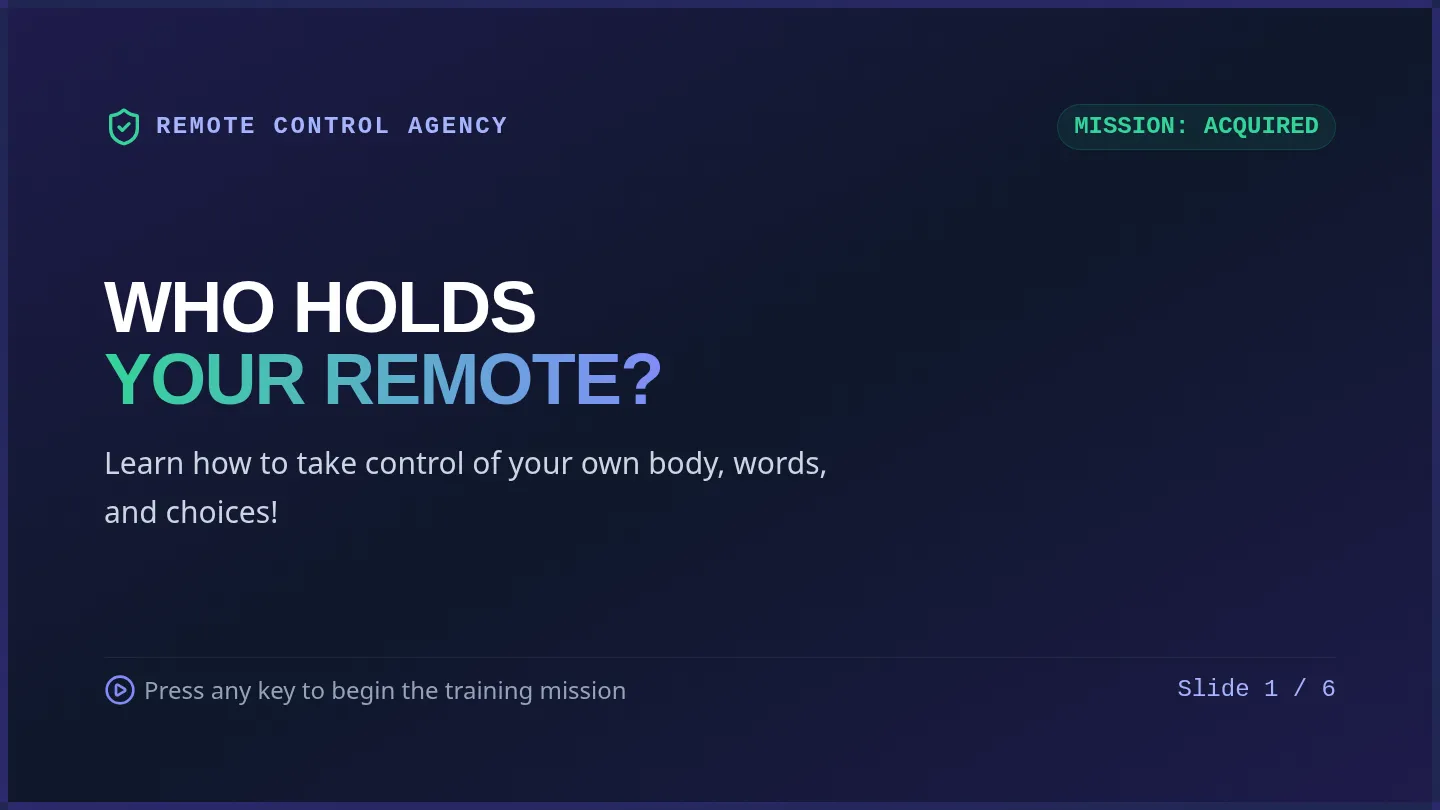
A specialized social-emotional learning unit for young learners to understand personal accountability and self-regulation. Using the metaphor of a personal remote control, students learn that they are in charge of their own actions, words, and safety, regardless of what others do.
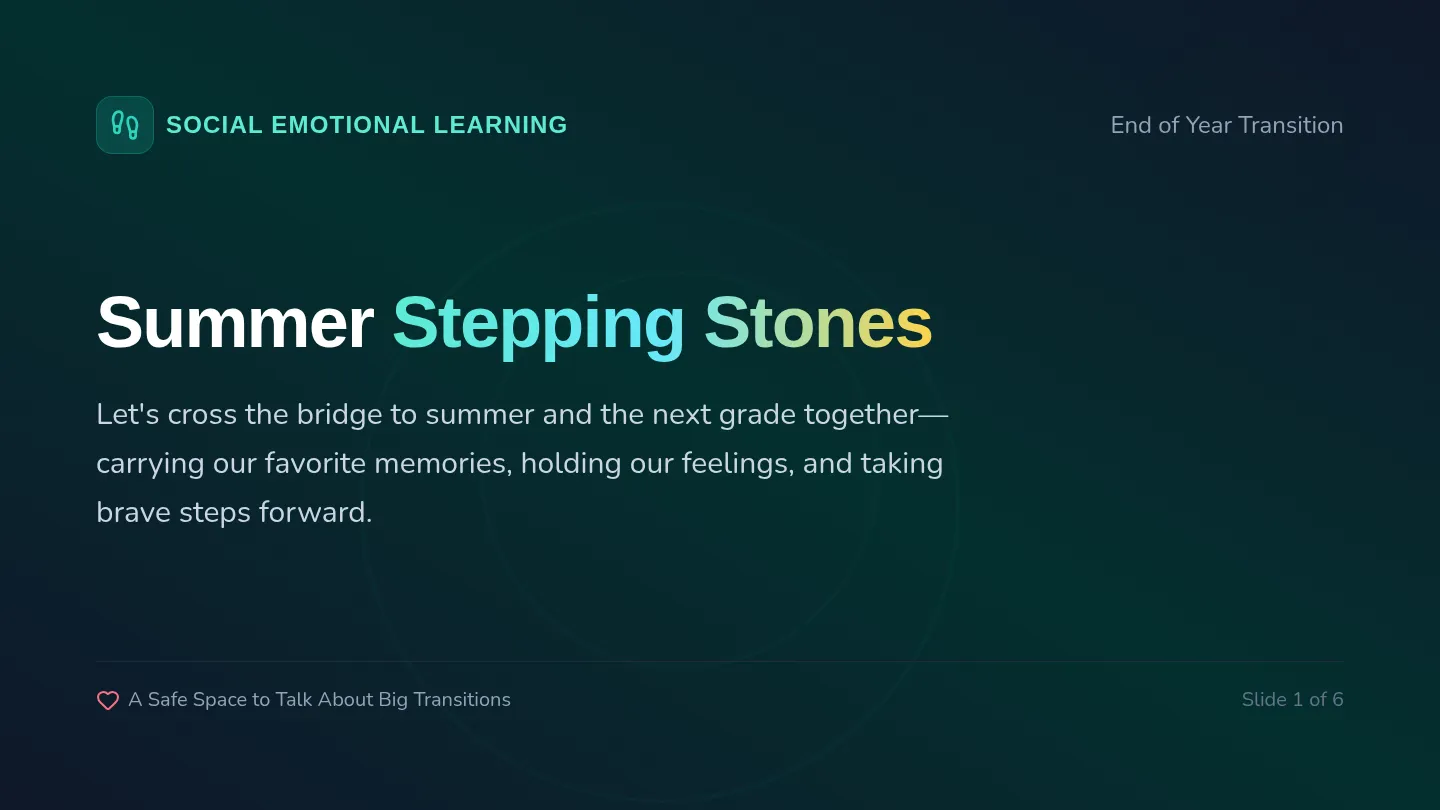
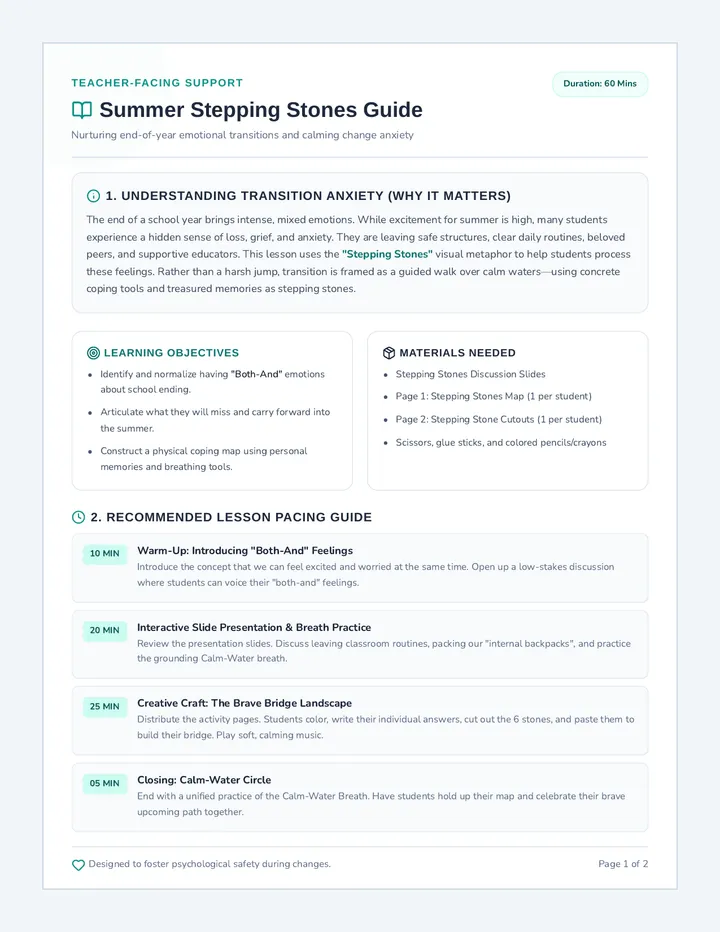
A supportive, social-emotional learning lesson designed to help students navigate end-of-the-year transition anxiety. Through a supportive slide-guided discussion and a hands-on "Stepping Stones" cut, paste, and color craft, students celebrate their growth, process what they will miss, and build coping strategies for entering summer and the next grade.
A comprehensive teacher guide featuring step-by-step lesson pacing, slide-by-slide scripts, transition anxiety background knowledge, and actionable strategies to help students navigate end-of-the-year mixed feelings.
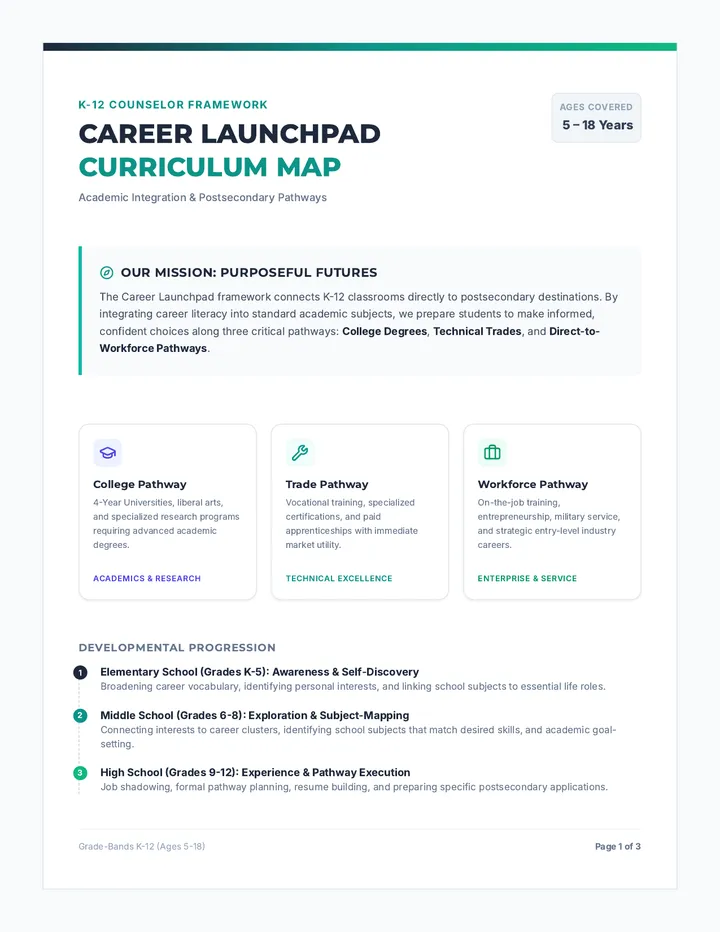
A comprehensive career exploration framework and counselor planning toolkit for grades K-12. This curriculum maps academic subjects to real-world career paths (college, trade school, and workforce) and provides counselors with implementation templates, annual pacing calendars, and a school-wide Career Day blueprint.
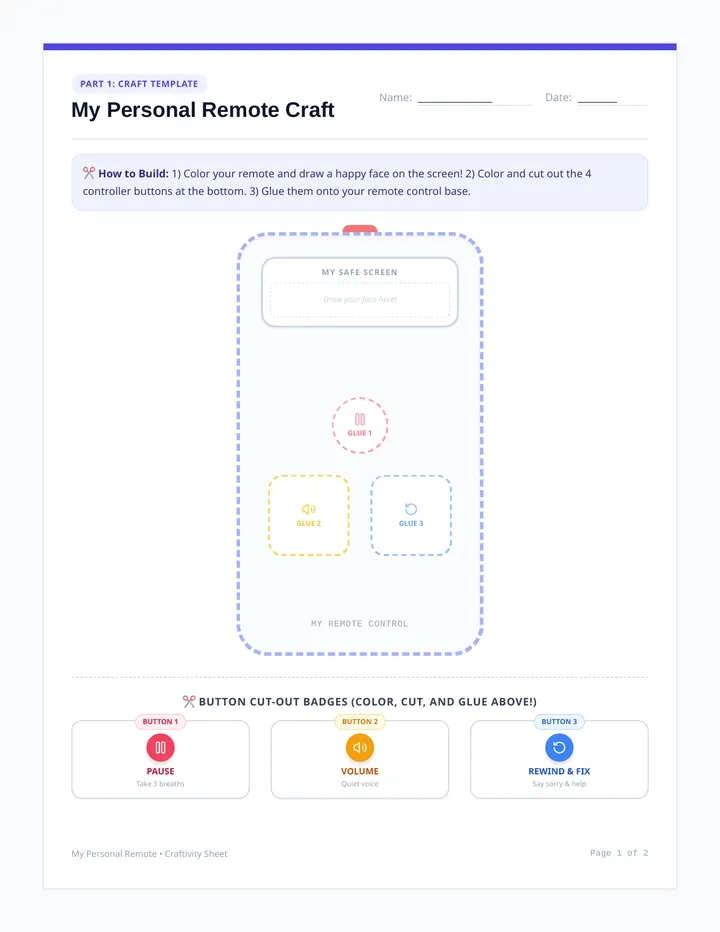
An interactive, hands-on lesson designed for first-grade ESL students struggling with blame and behavioral accountability. Through a social story, roleplay scenarios, and a hands-on remote control craftivity, students practice taking charge of their own behaviors.
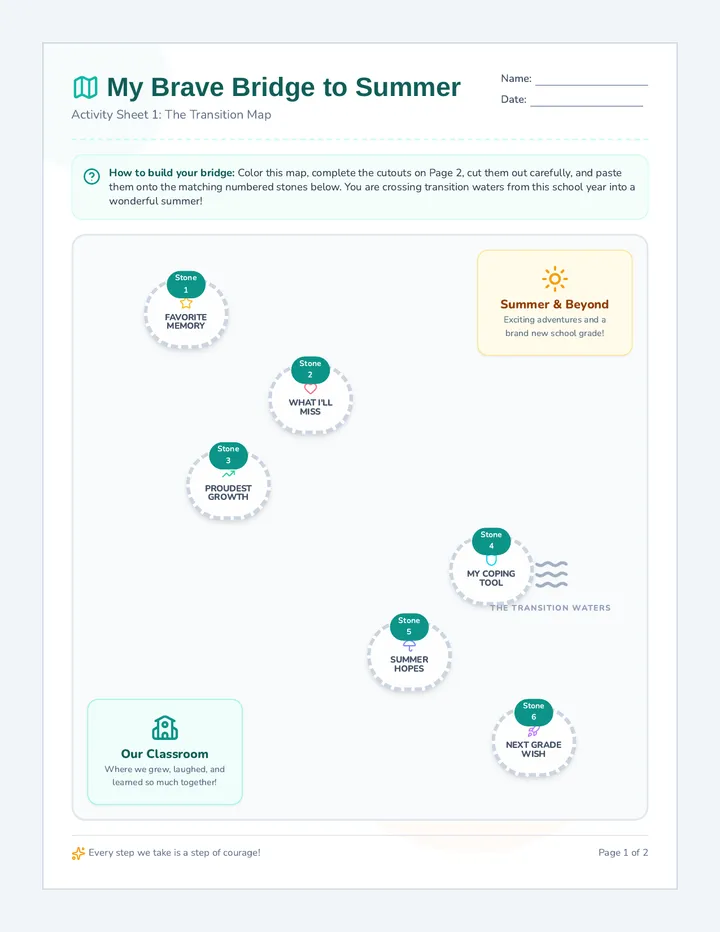
A two-page printable student activity sheet and craft. Page 1 features a "Brave Bridge to Summer" landscape map across transition waters, and Page 2 provides 6 beautifully designed interactive "Stepping Stone" cutouts for students to color, personalize, cut, and paste.
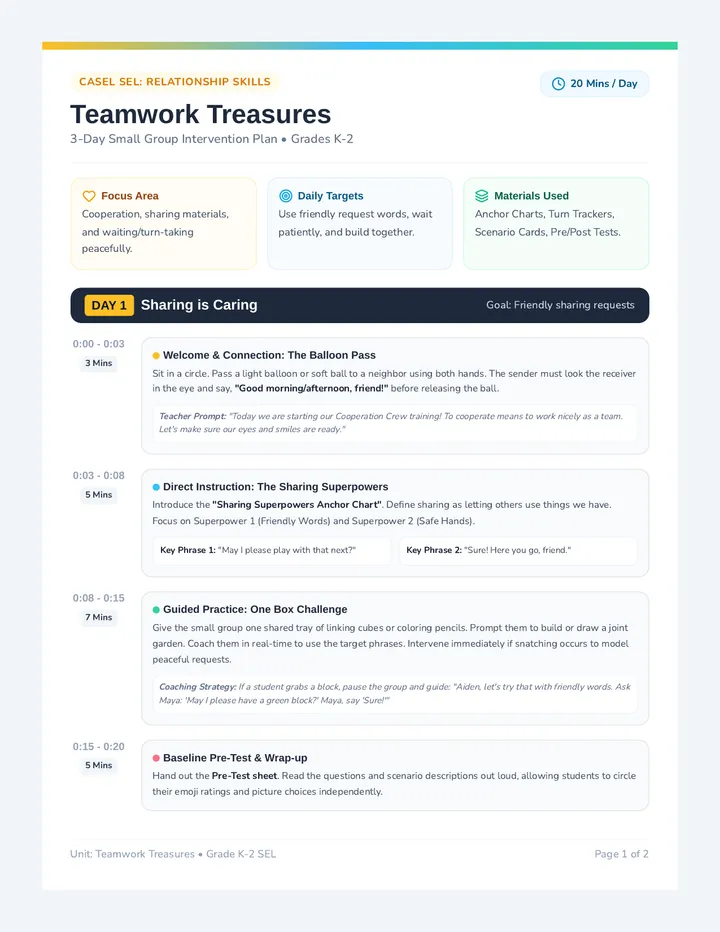
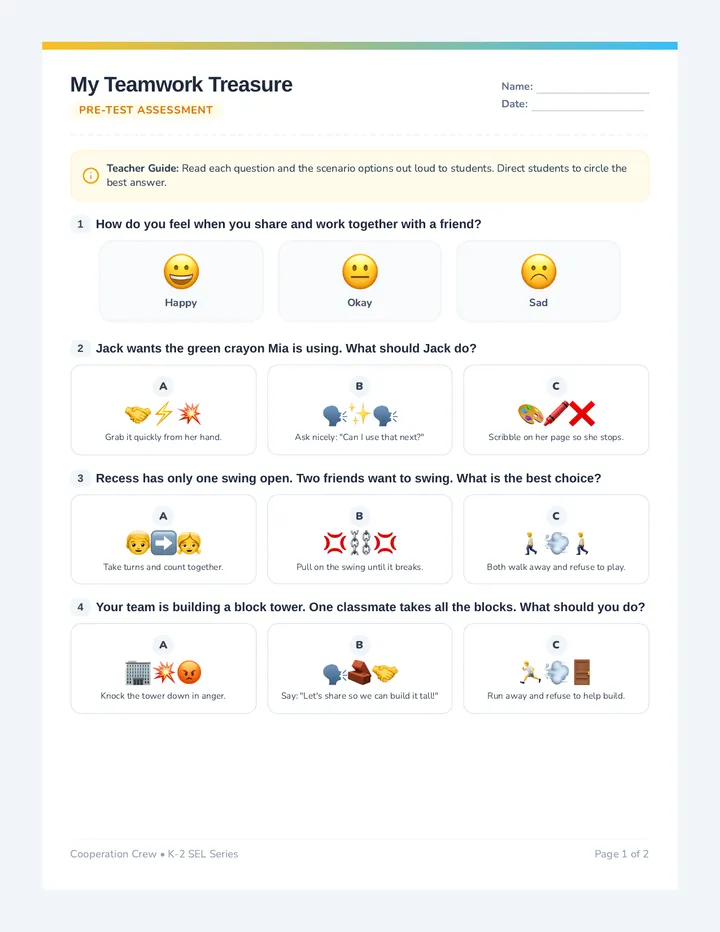
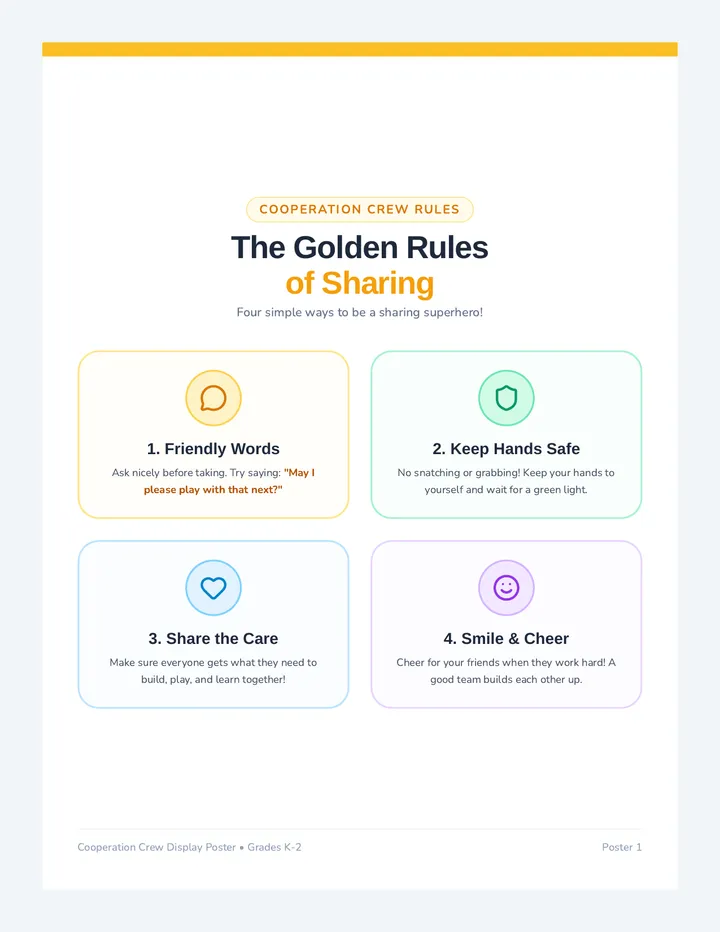
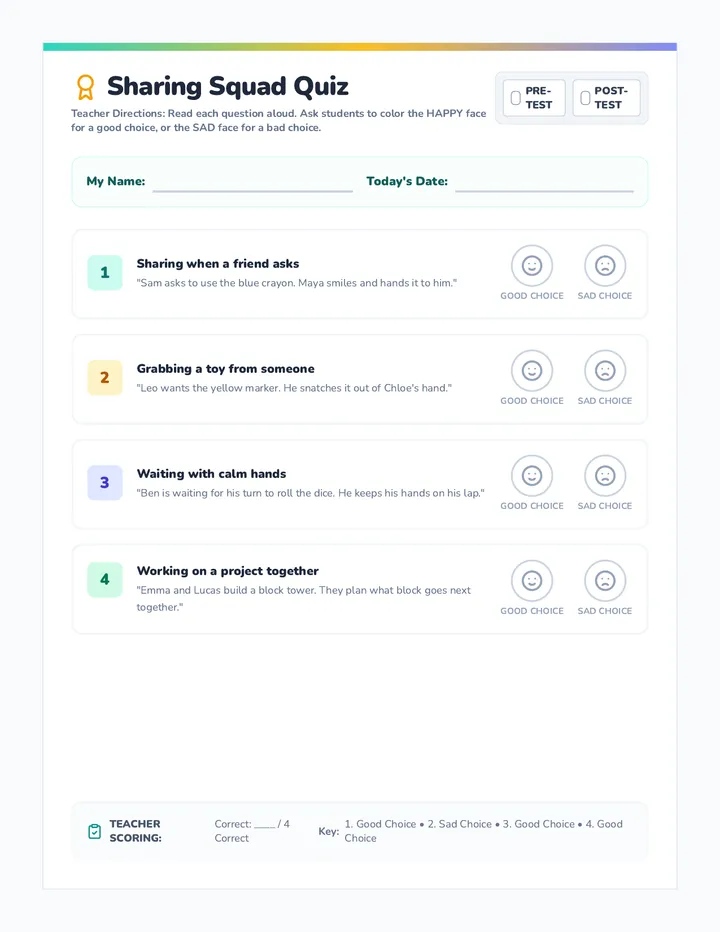
A 3-day social-emotional learning series for grades K-2 focusing on cooperation, sharing, and peaceful turn-taking, aligned with the CASEL Relationship Skills competency.
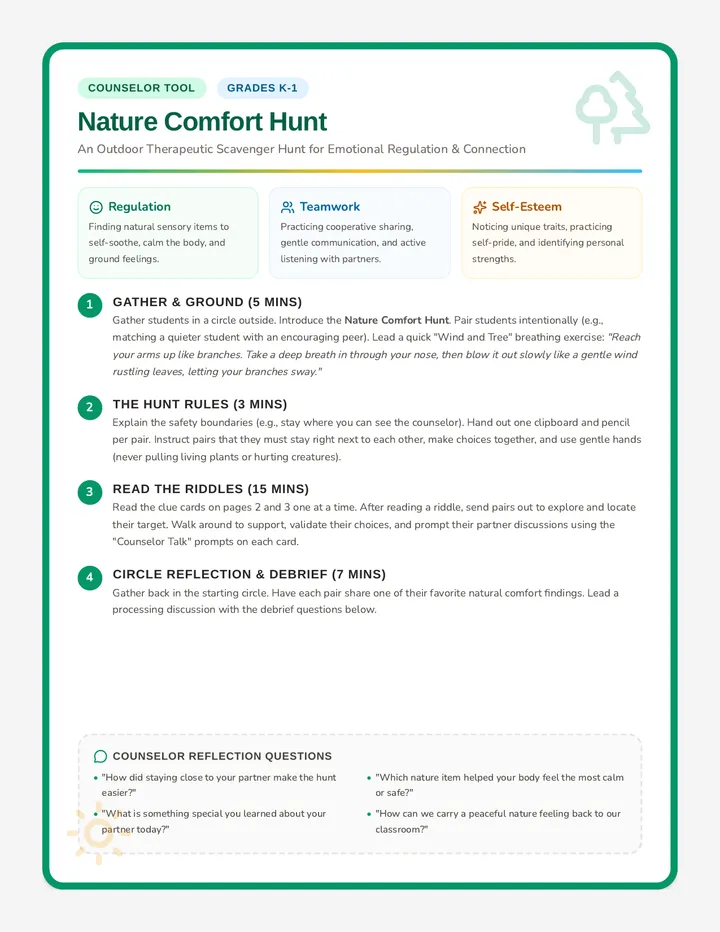
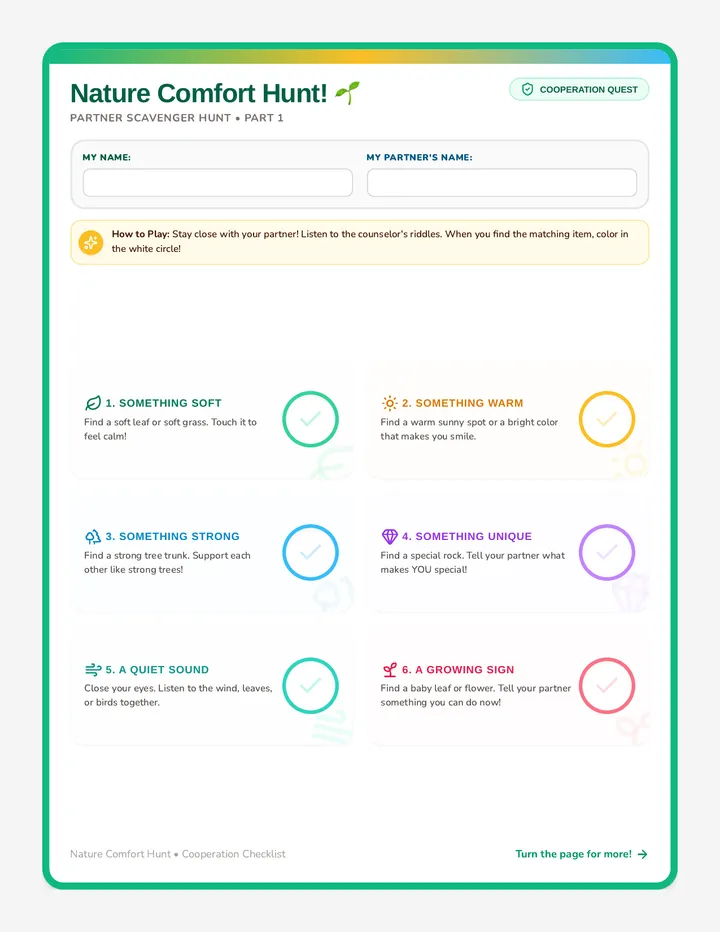
An outdoor therapeutic scavenger hunt lesson designed for Kindergarten and 1st-grade students. It uses nature-based exploration to teach emotional regulation, cooperative social skills, and self-esteem through counselor-guided riddles.
An interactive slide presentation designed to lead a comforting, classroom-wide SEL discussion about end-of-the-year transitions. It normalizes mixed feelings, introduces the stepping-stone metaphor, and guides students through managing transition anxiety.
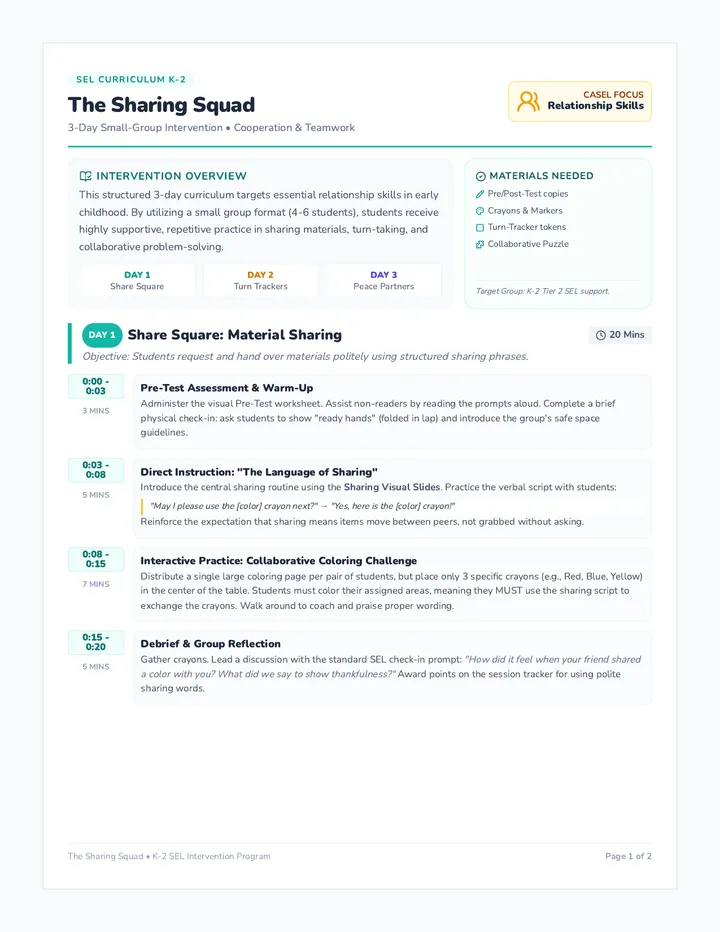
A 3-day SEL small-group intervention for grades K-2 focused on material sharing, turn-taking, and peaceful collaboration, aligned with the CASEL Relationship Skills competency. Each daily session is designed for 20 minutes with specific timestamps.
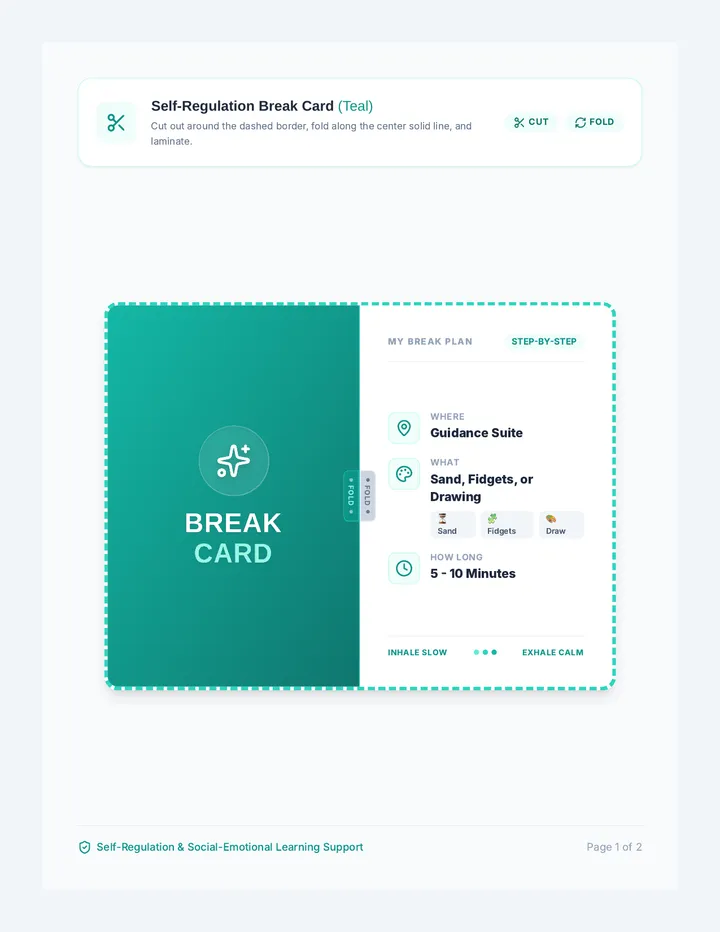
A collection of visual prompts and break cards designed to support students in self-regulation and managing emotions within the school environment.
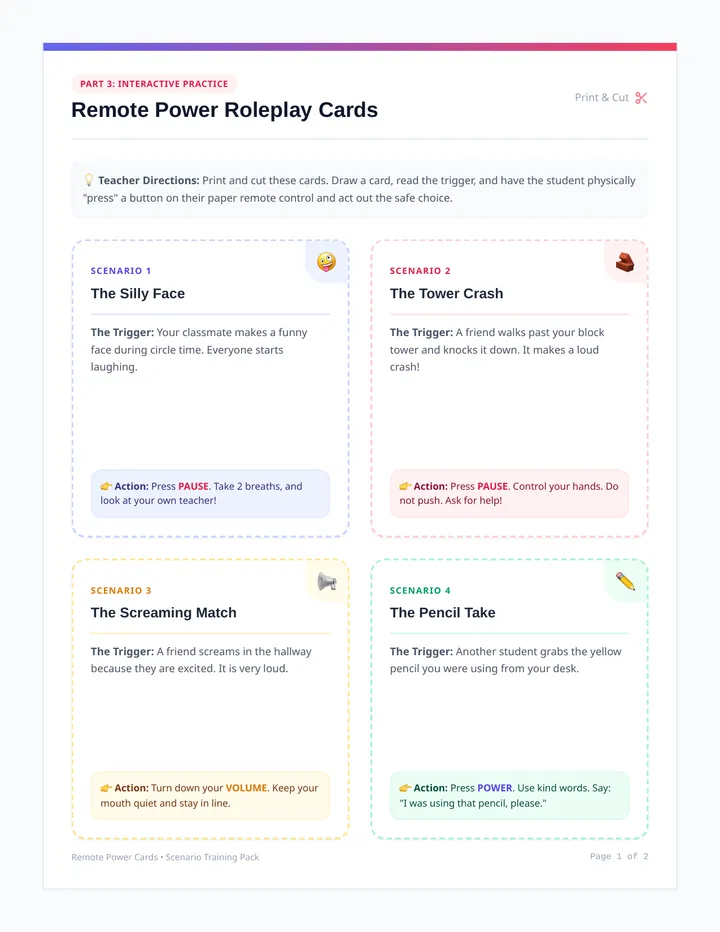
A 2-page printable card deck featuring 8 high-contrast, scenario roleplay cards. Designed for small-group physical practice where students practice pointing to or pressing buttons on their crafted remotes to respond safely to triggers.