A fun, imaginative lesson that uses the concept of time travel to teach 6th-grade students about planning and foresight, enhancing their ability to anticipate and prepare for future tasks through time management skills.
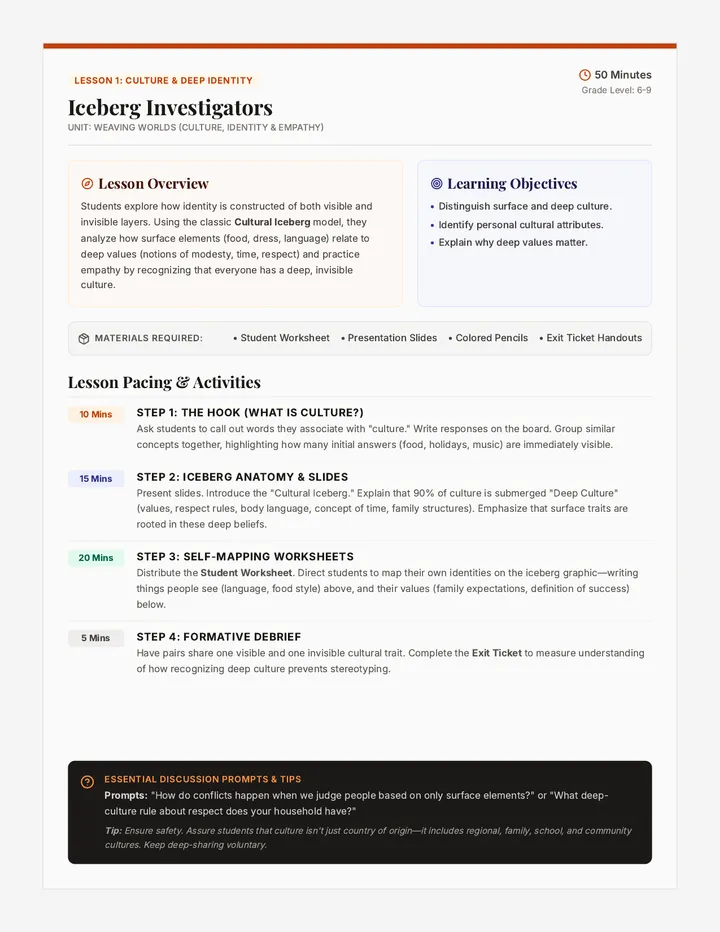
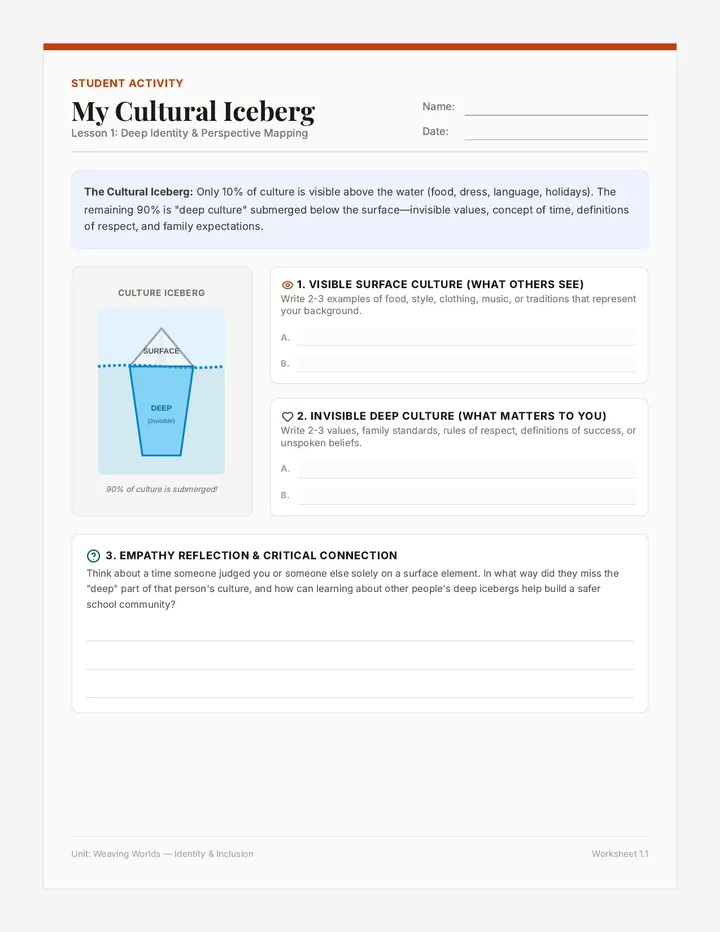
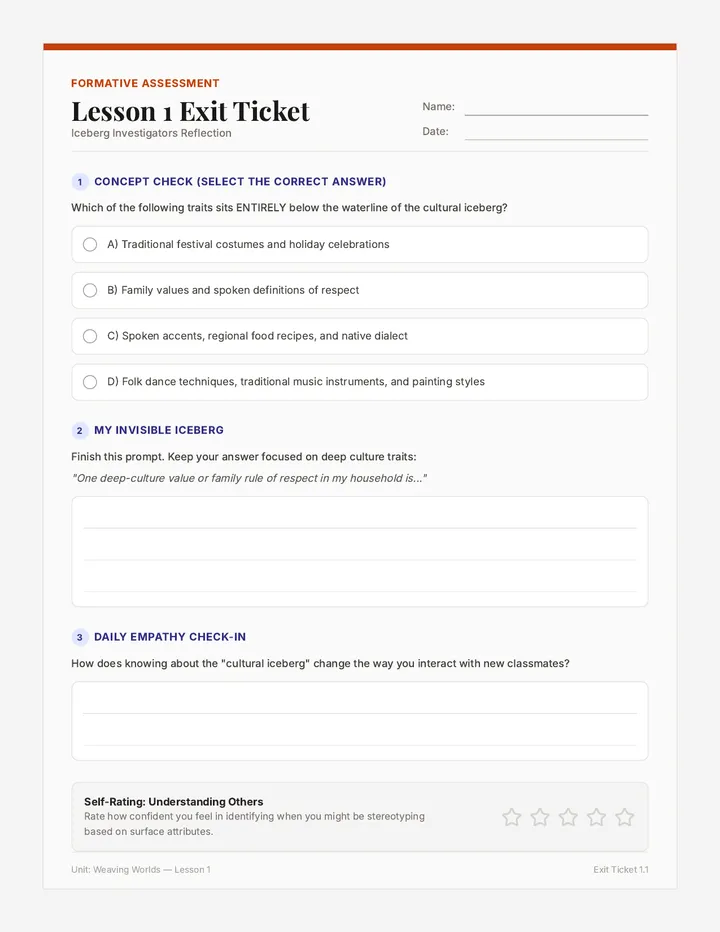
A 3-lesson unit on culture, identity, empathy, and building an inclusive school community. Students explore the cultural iceberg, share personal perspective narratives, and collaborate on actionable school-wide inclusion plans.
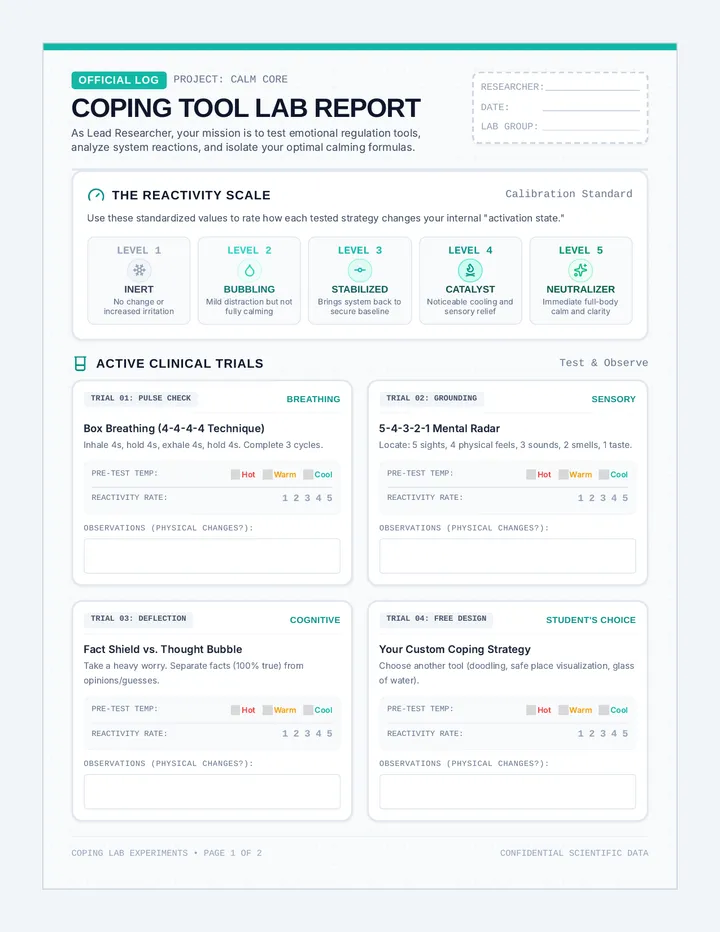
An engaging, science-themed counseling lesson where students become 'researchers' to test, rate, and formulate their own personalized mental health coping tools. Students track their emotional 'reactions' and compile a custom recipe for self-care and emotional regulation.
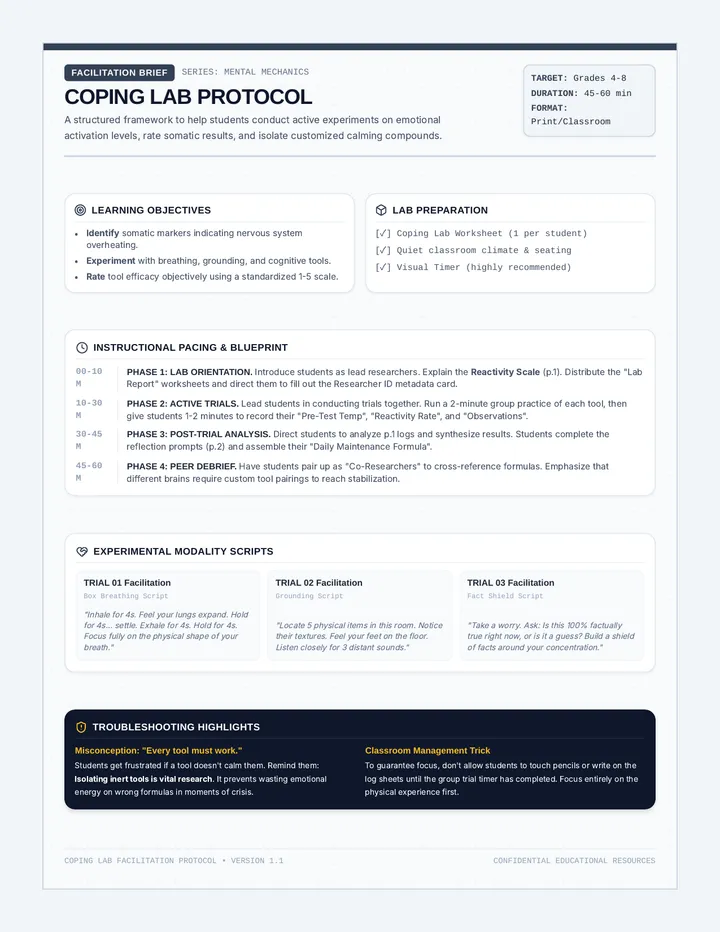
A professional 1-page teacher facilitator guide for running the Coping Lab lesson. It provides instructional pacing, precise prompts for conducting the experiments, student-facing scripts, troubleshooting advice, and common misconceptions.
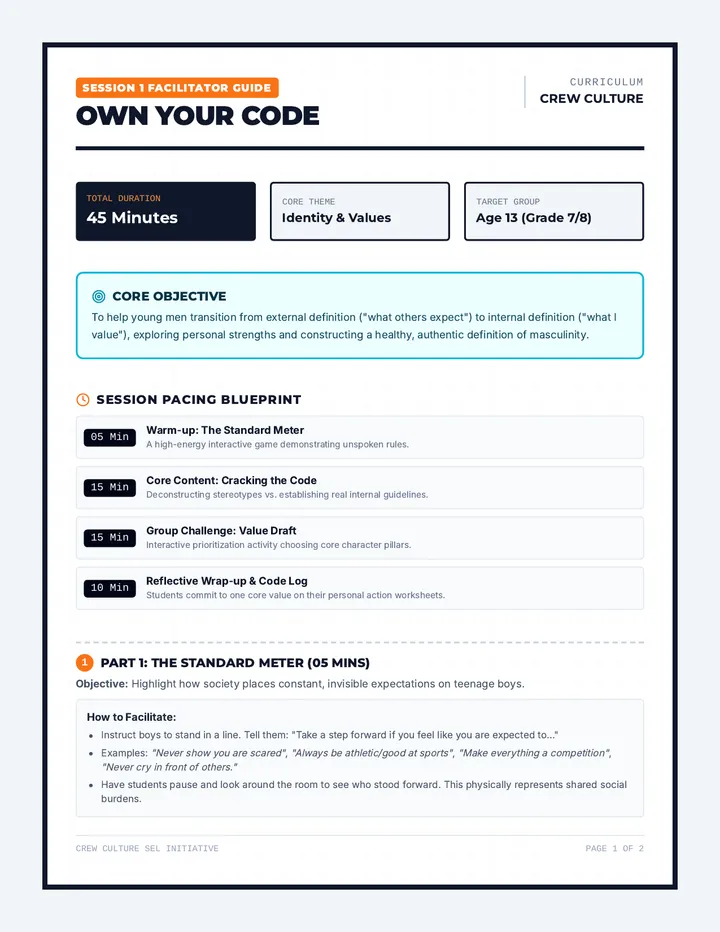
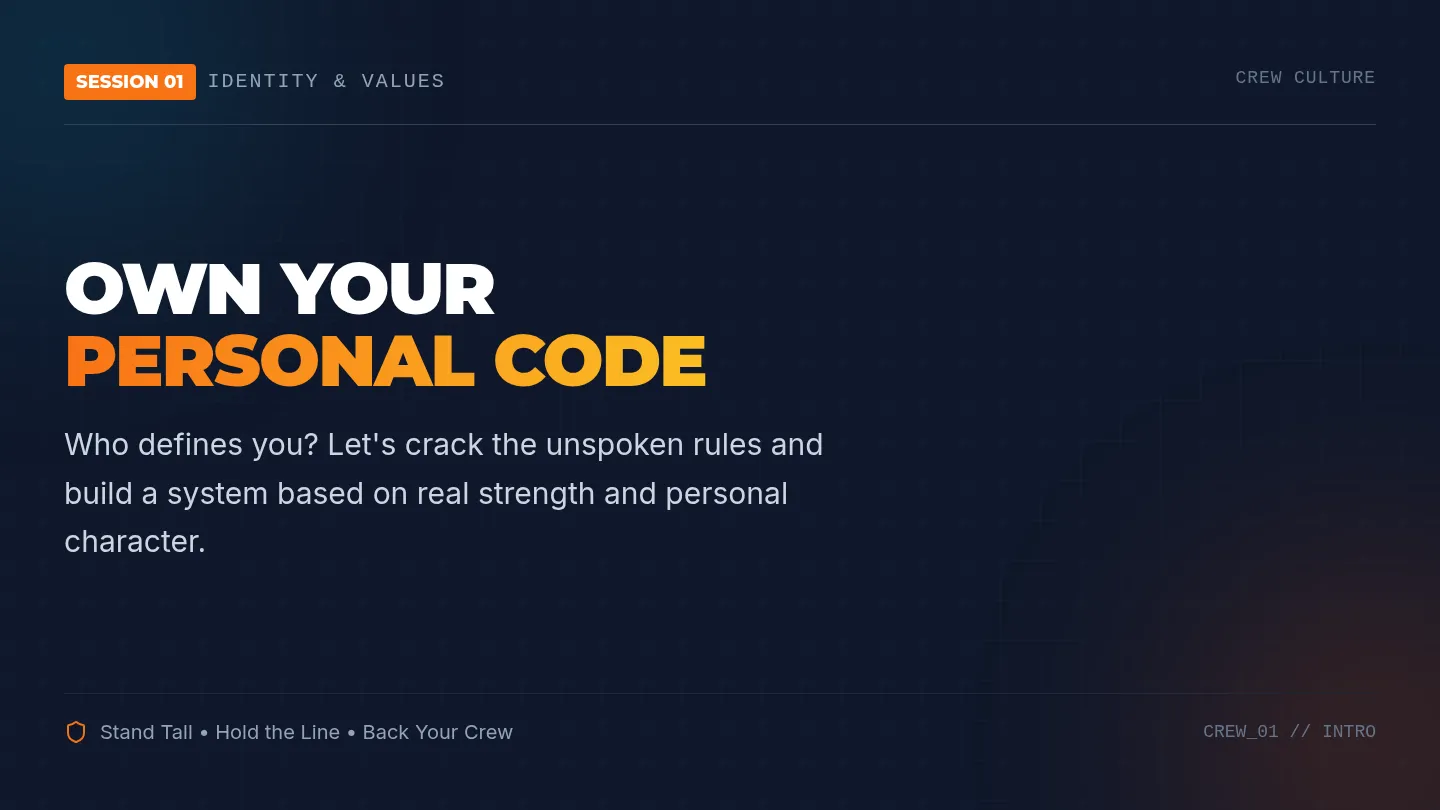
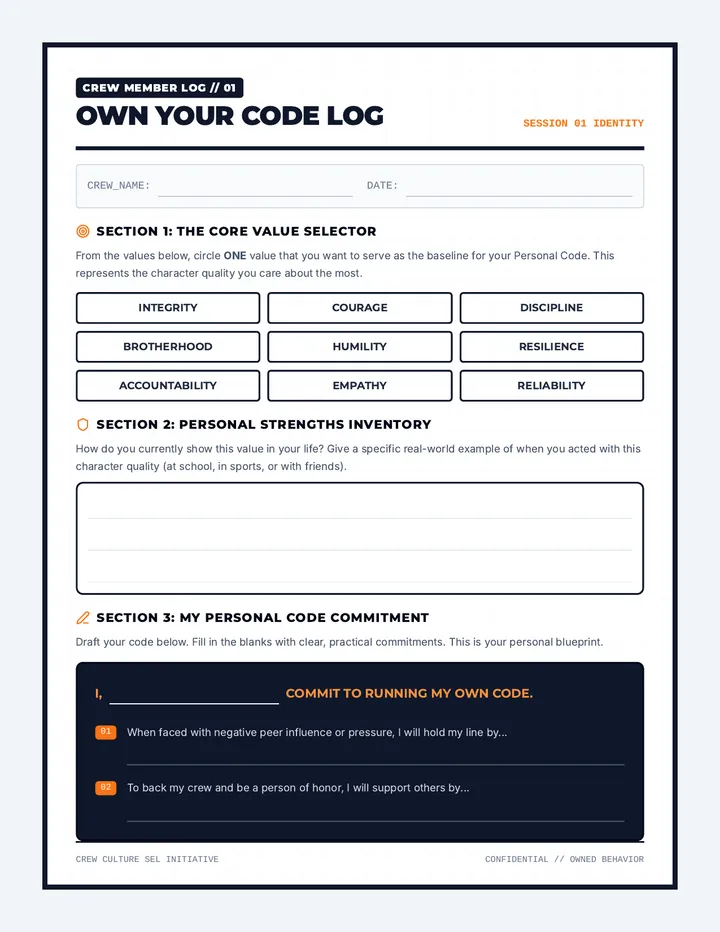
A three-part social-emotional learning curriculum designed specifically for middle school boys to develop self-esteem, manage digital pressure, and build authentic peer relationships.
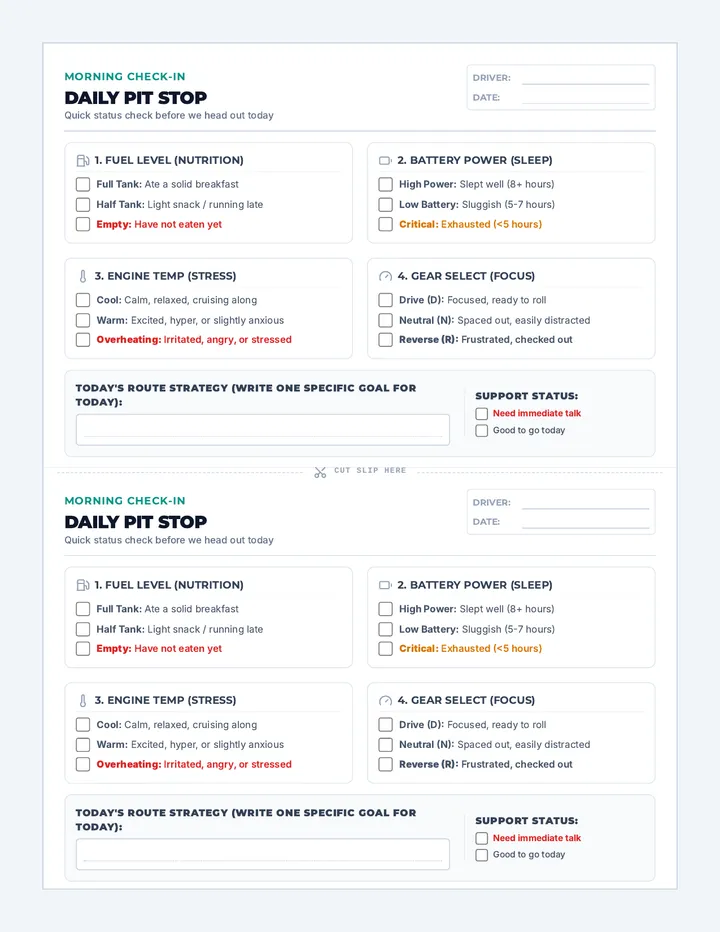
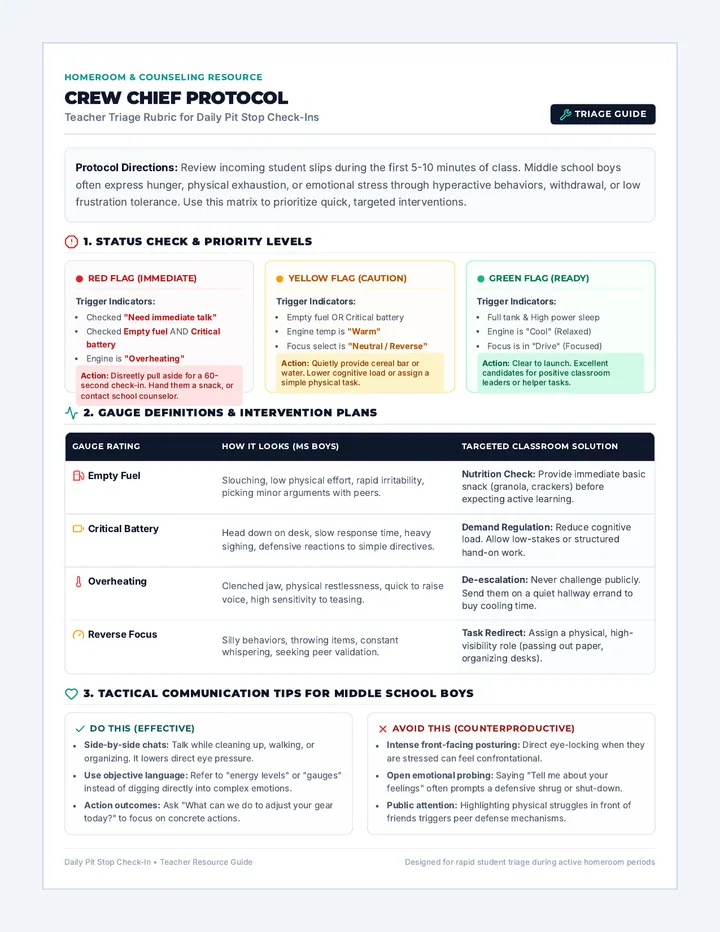
A daily morning check-in system designed for middle school boys to assess basic physical and emotional needs during the final week of school, paired with a teacher triage guide for immediate prioritization and action.
A highly visual, science-themed 2-page worksheet where students act as lead researchers. Page 1 contains a custom 1-5 'Reactivity Scale' and a 2x2 grid to test and observe 4 active coping experiments. Page 2 includes post-experiment reflection prompts and a 'Daily Maintenance Formula' coping plan styled as a custom chemical recipe.
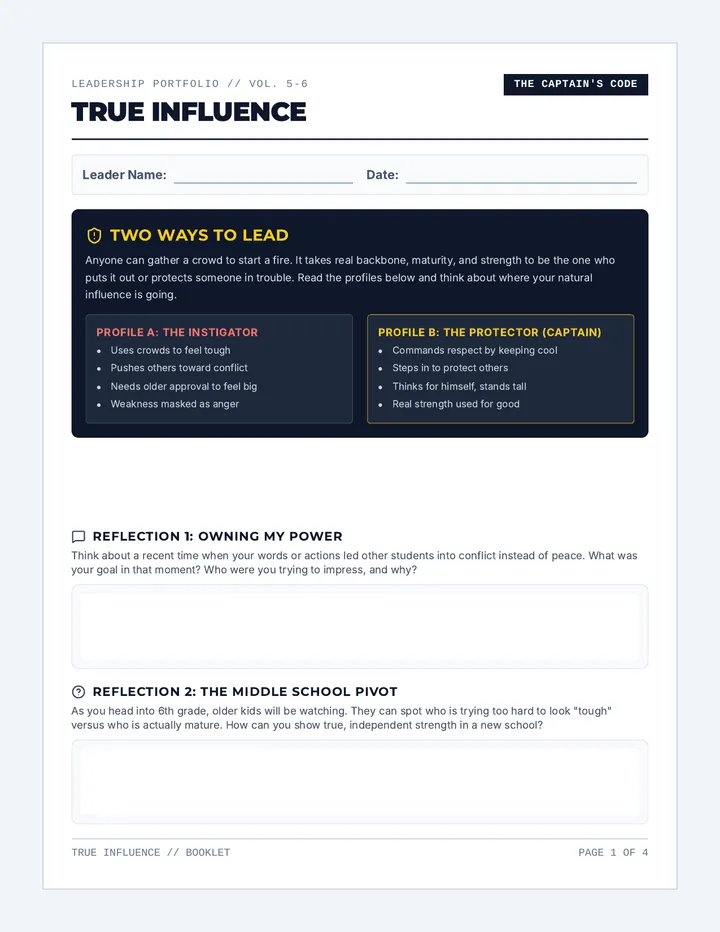
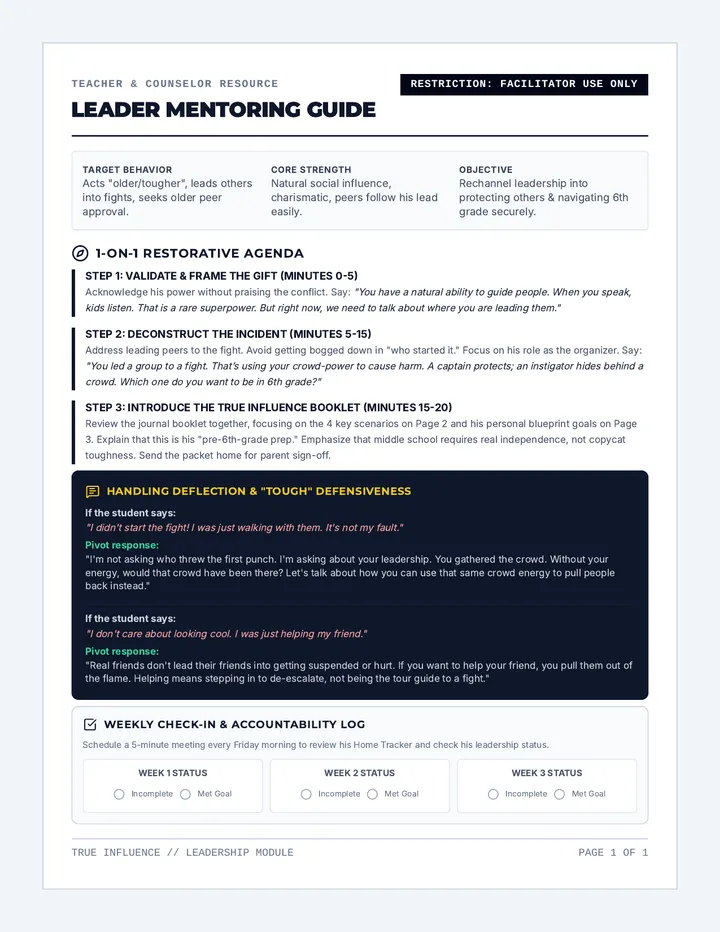
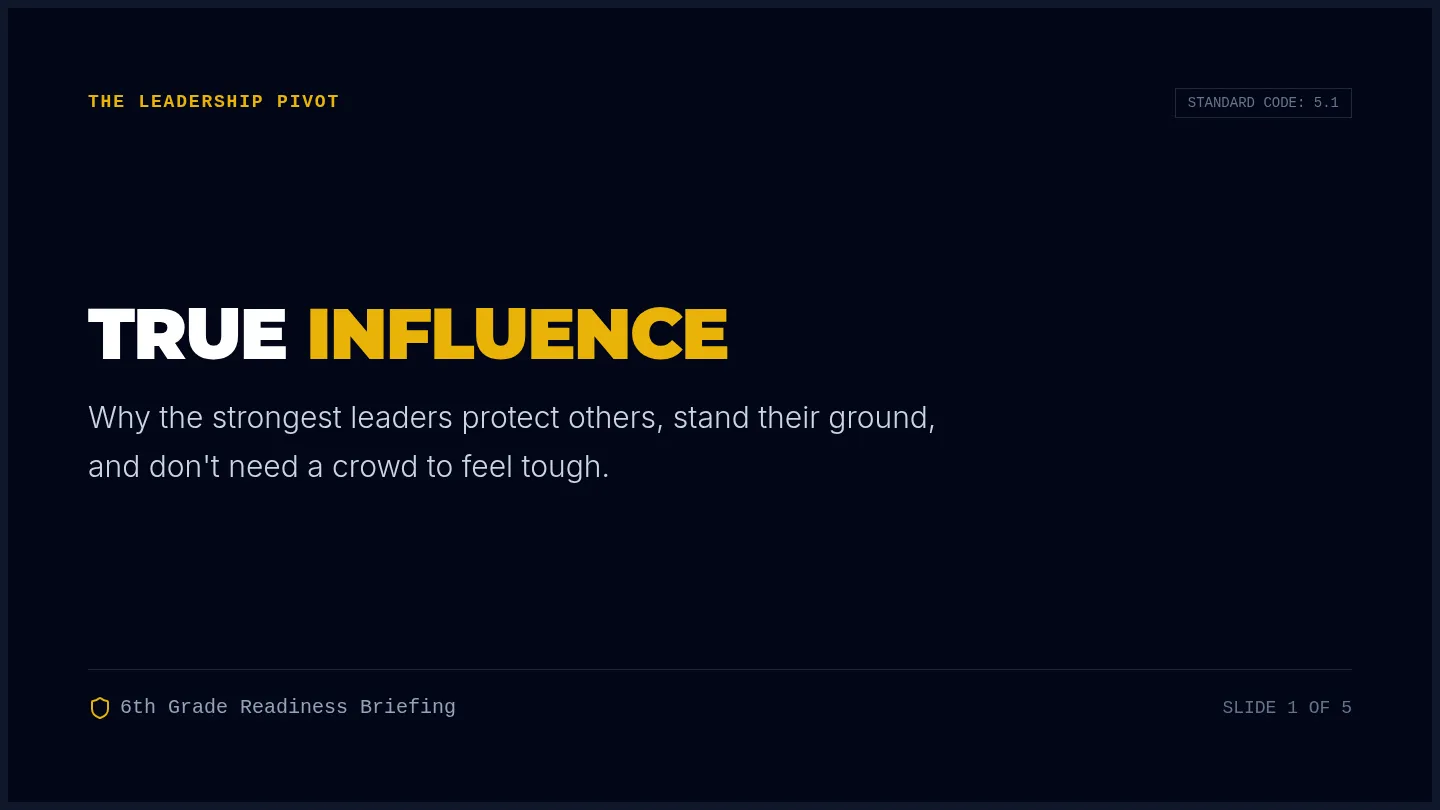
A comprehensive restorative leadership and peer advocacy sequence designed for students transitioning to middle school. It guides students from understanding their social influence to actively protecting peers and spreading positive school culture.
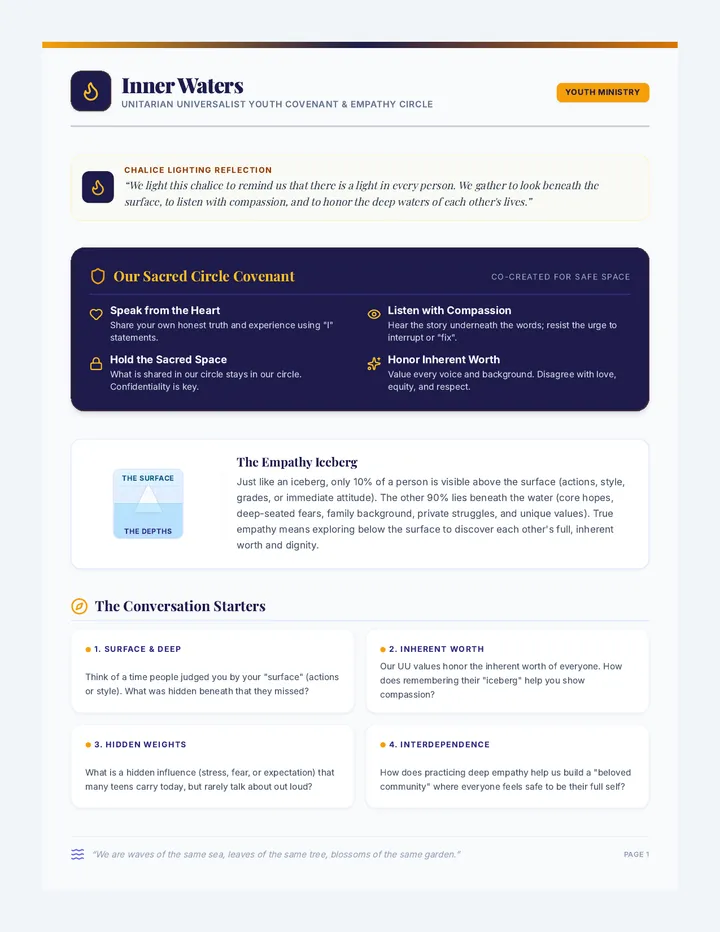
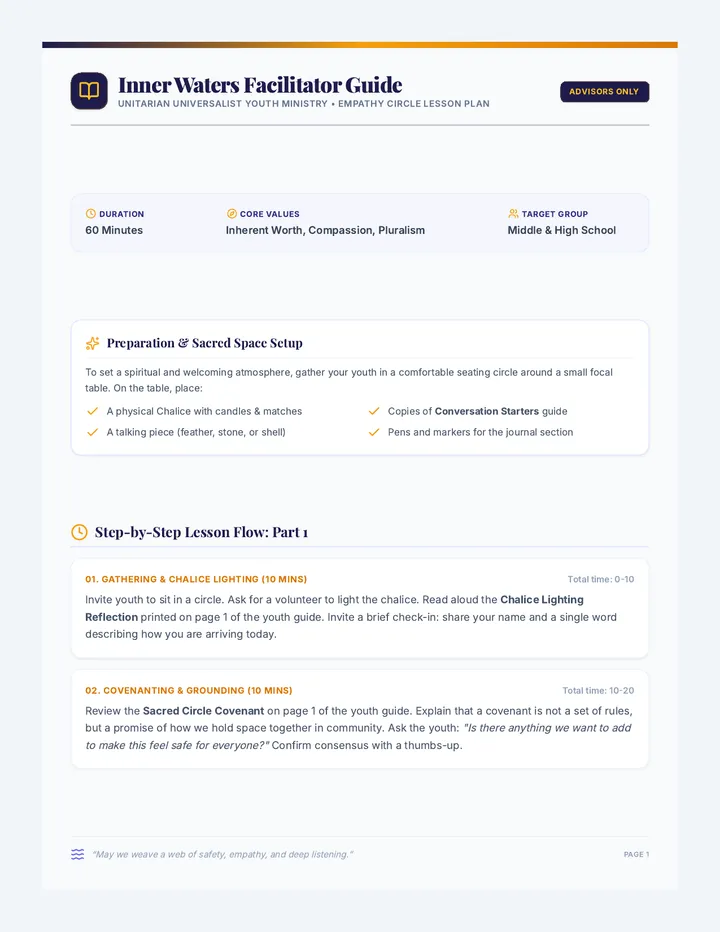
A Unitarian Universalist youth group session designed to foster empathy, respect, and deep connection using the Empathy Iceberg model, small-group covenants, and a sacred chalice ritual.
A single-page educator reference guide containing a triage rubric, action items, and student support strategies for physical, emotional, and social needs during the final week of school.
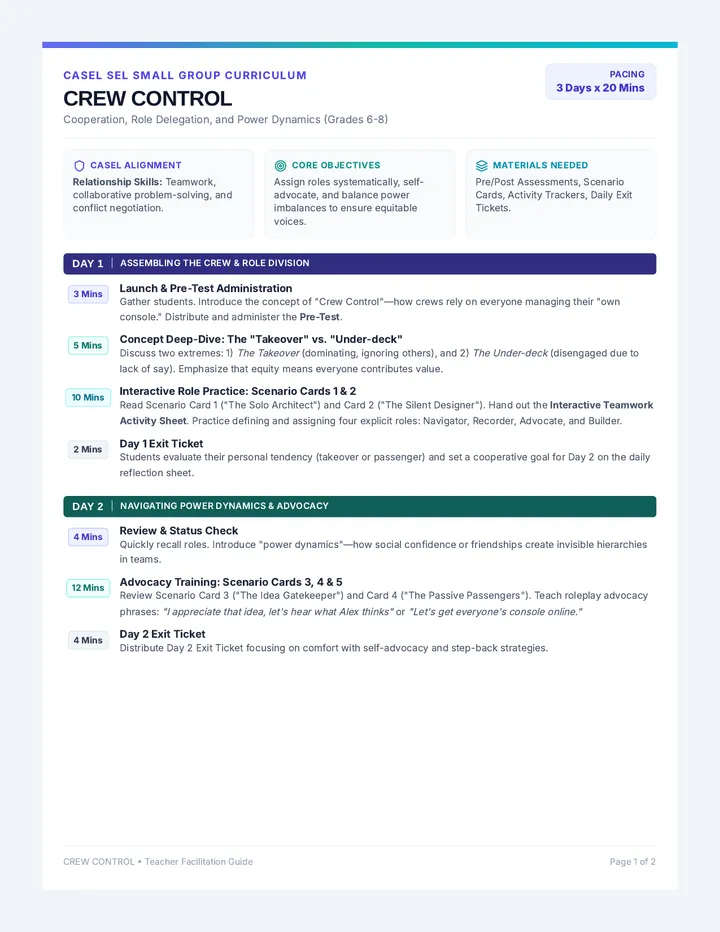
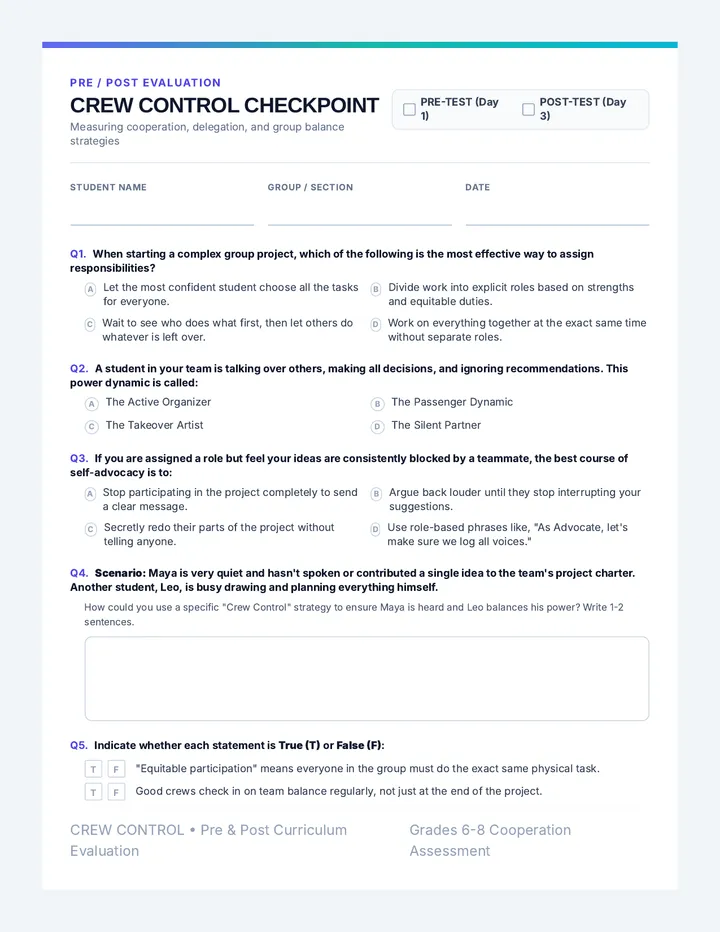
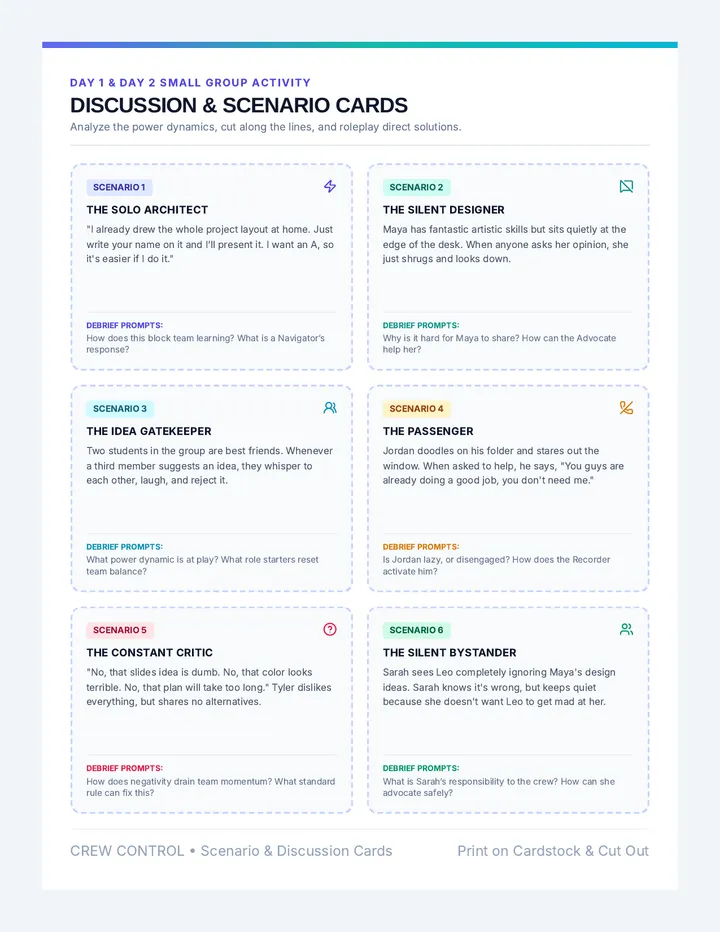
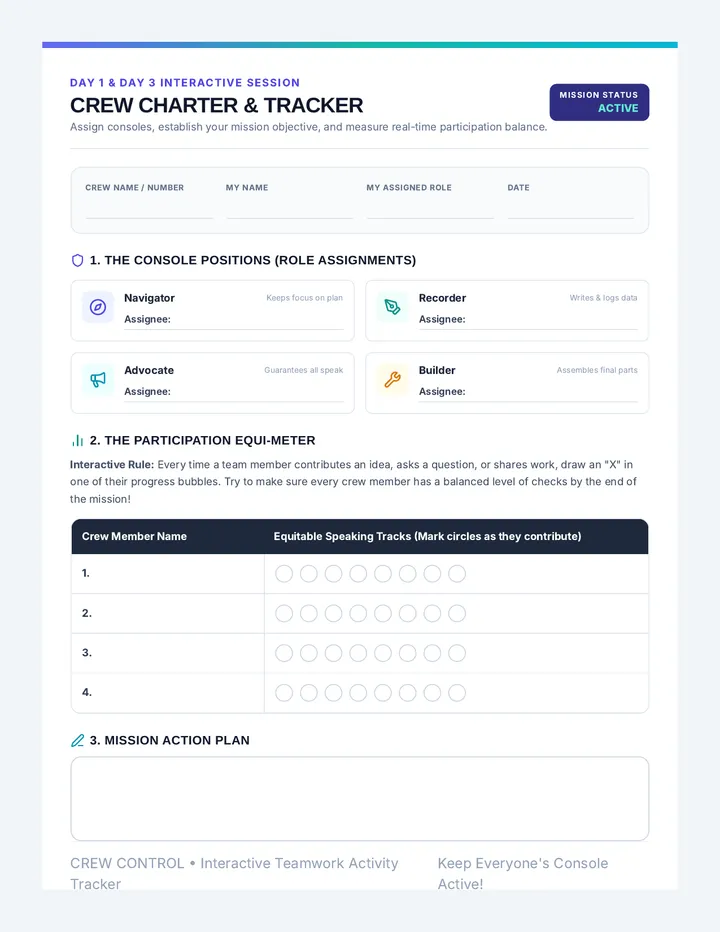
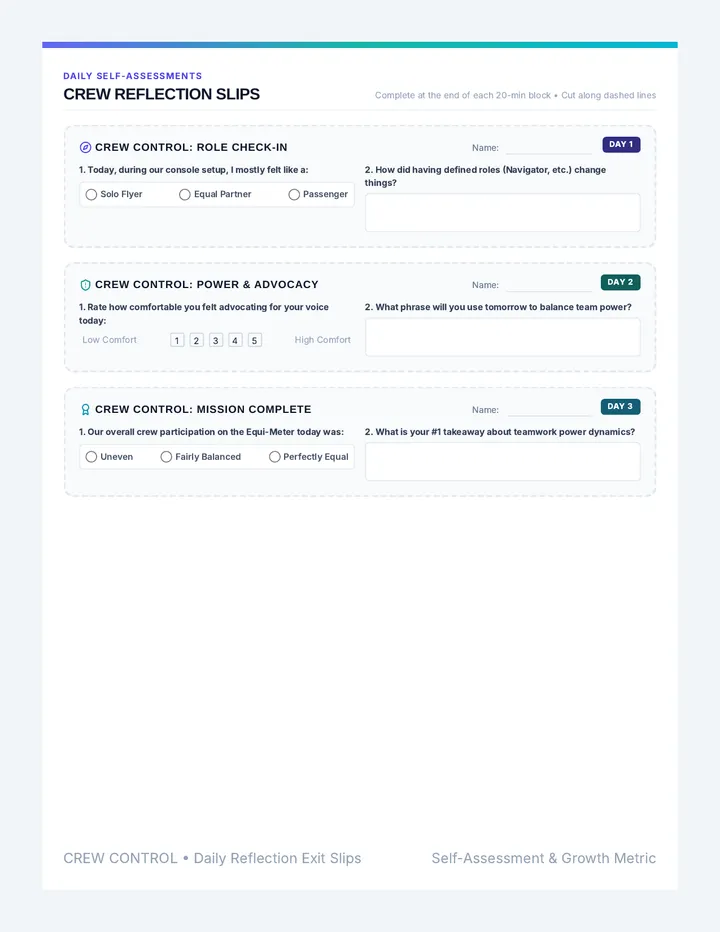
A 3-day small group curriculum for middle schoolers (grades 6-8) focused on cooperation, role delegation, navigating power dynamics, and ensuring equitable team participation. Aligns with CASEL's Relationship Skills and Responsible Decision-Making core competencies.
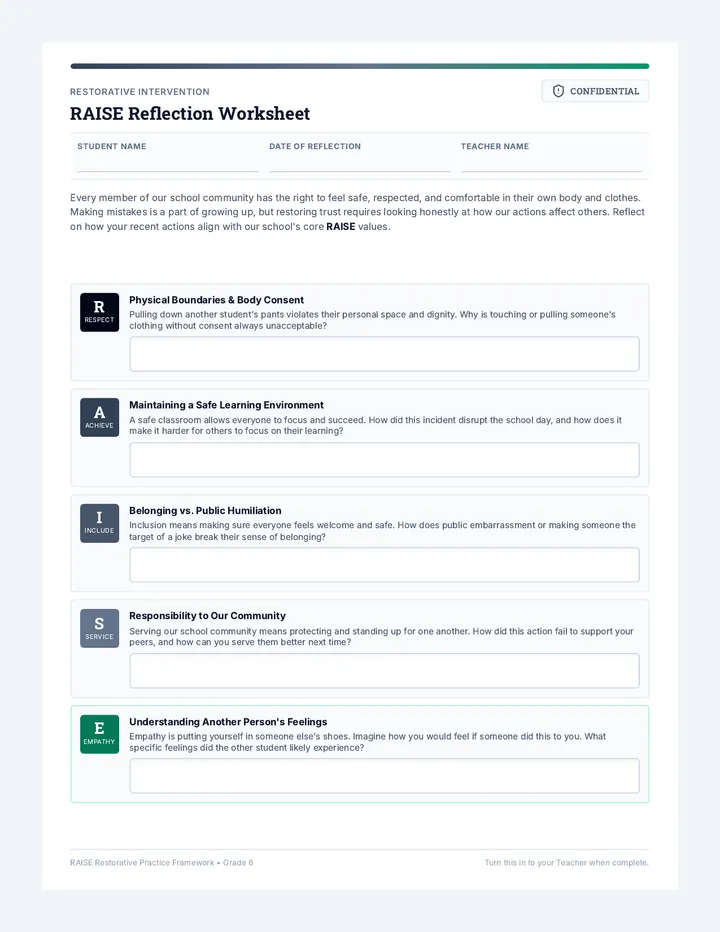
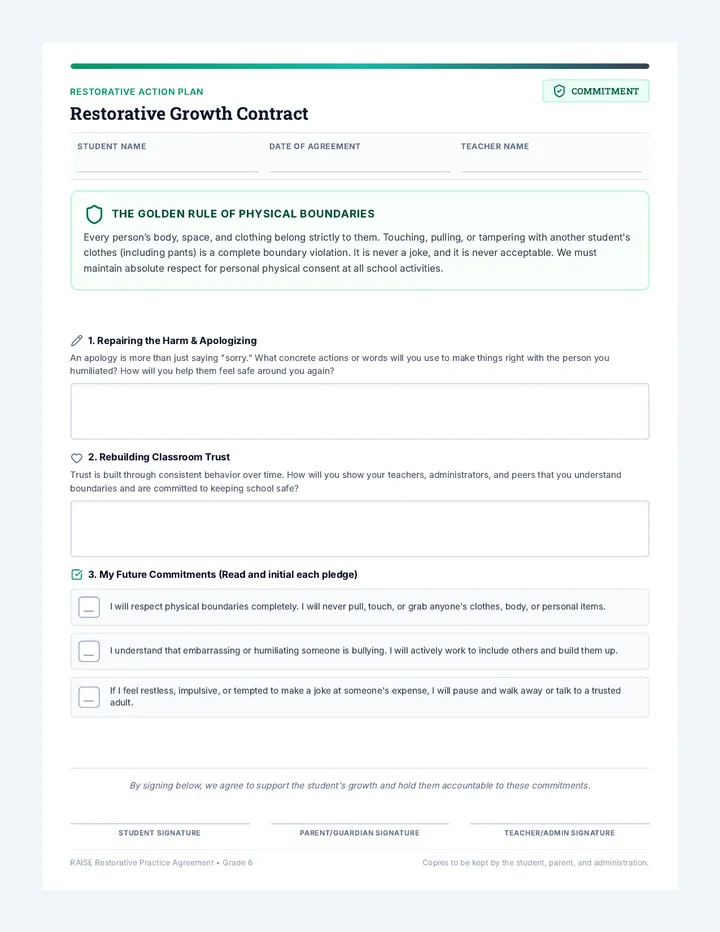
A restorative two-part intervention lesson designed for 6th-grade students to reflect on physical boundaries, consent, and school values (RAISE) after an incident of physical boundaries violation. Focuses on accountability, empathy, and making an actionable plan to repair harm.
A simplified, printable single-page document containing two identical, print-and-cut generic morning check-in slips with dashboard-style needs assessments (food, sleep, mood, focus) for middle school boys.