A foundational lesson for Kindergarten students to learn the components of Whole Body Listening through visual aids, interactive slides, and a hands-on cut-and-paste activity.
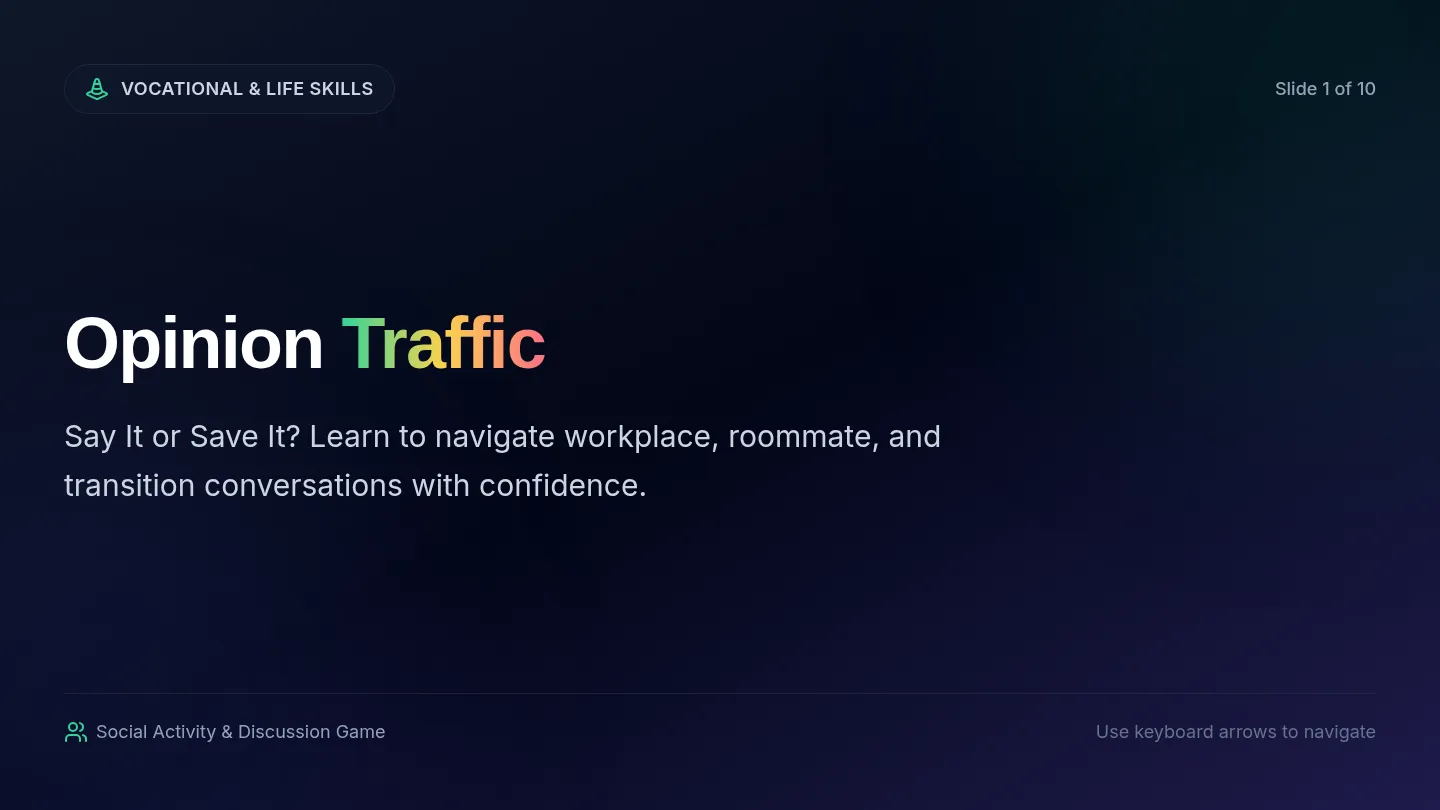
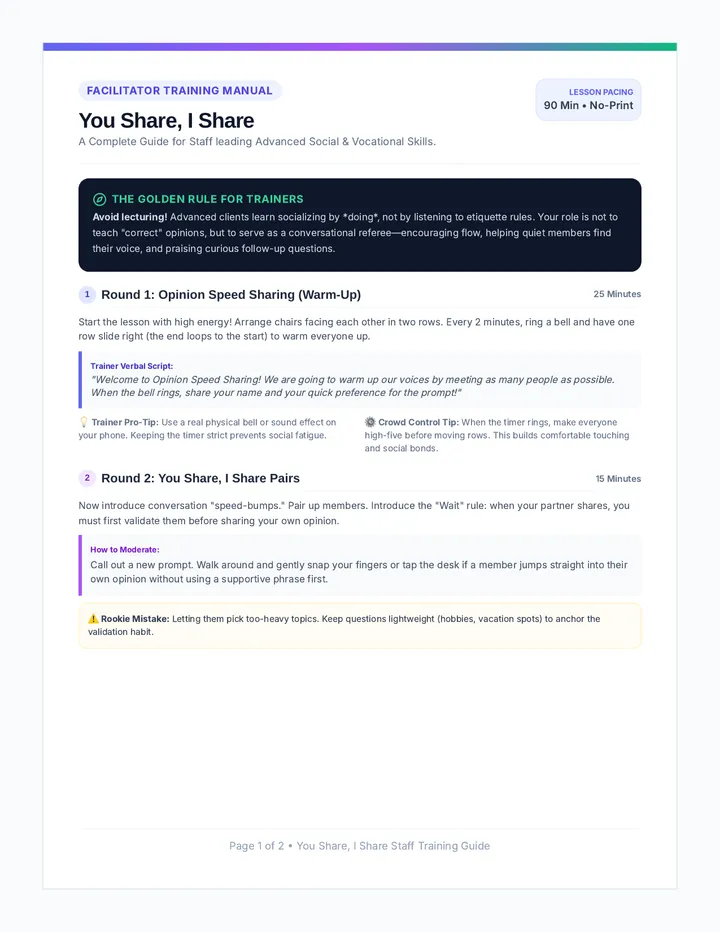
A dual-level social skill sequence designed to help participants navigate sharing opinions, active listening, and building conversations in personal, roommate, and vocational settings.
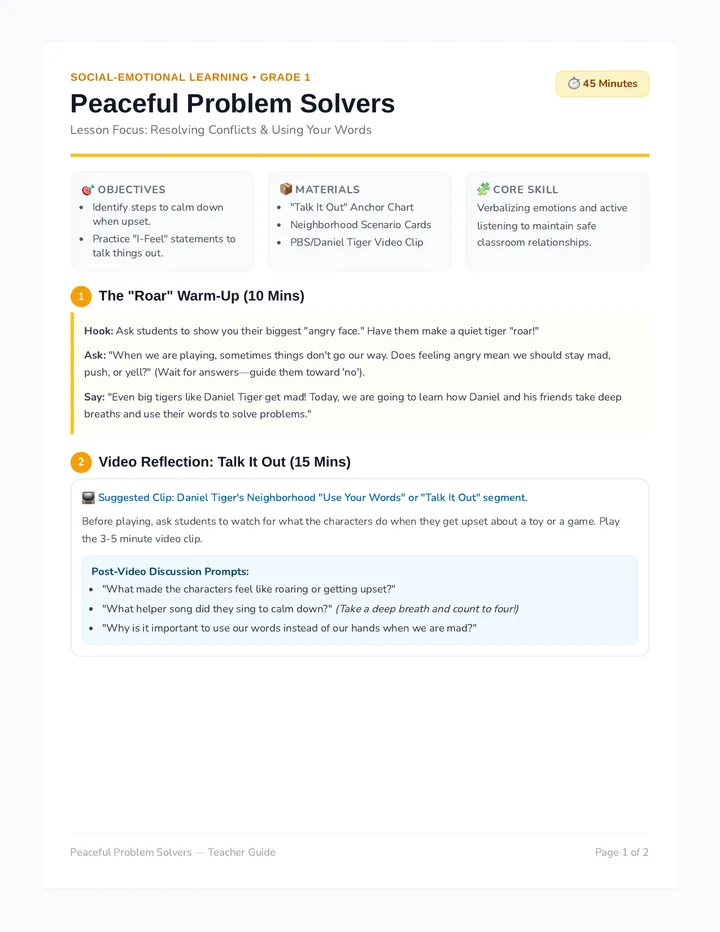
A social-emotional learning lesson for 1st graders focused on conflict resolution, utilizing a Daniel Tiger video clip to teach children how to use their words and talk things out.
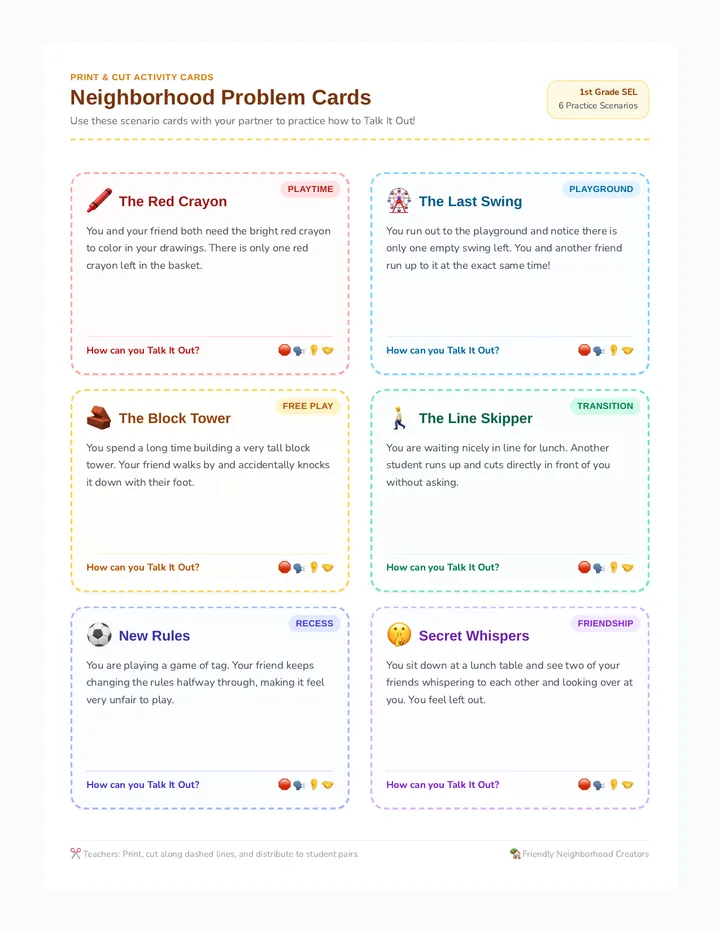
A set of six printable, easy-to-cut scenario cards containing common 1st-grade friendship conflicts (sharing toys, taking turns, playground rules) to use during the role-play activity.
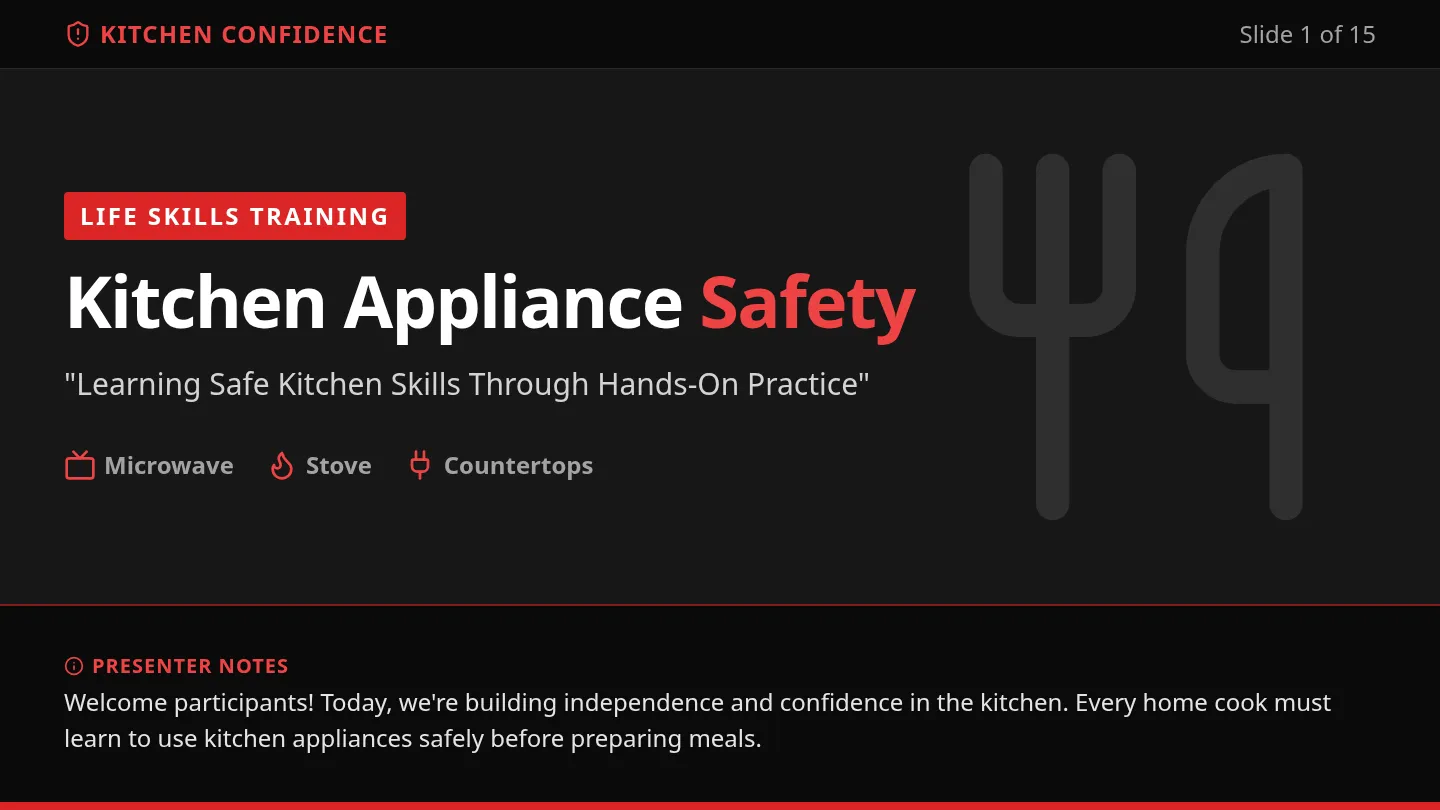
A comprehensive life skills program structured over two progressive lessons—first building visual hazard recognition through the Video Learning Academy, followed by physical, supervised kitchen practice during the Hands-On Appliance Lab.
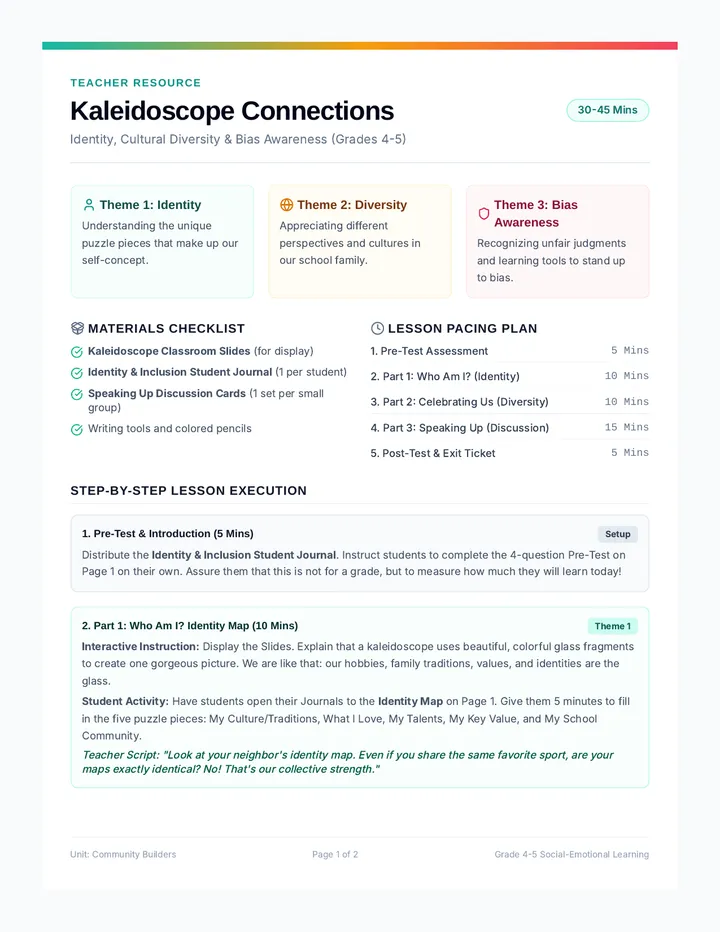
A transformative 4th and 5th-grade lesson exploring self-identity, cultural appreciation, and bias awareness. Through self-mapping, collaborative scenario cards, and self-reflection, students learn to celebrate differences and stand up against bias.
A complete, 2-page step-by-step teacher guide and lesson plan outlining how to deliver the conflict resolution lesson, facilitate video viewing, and model the 'Talk It Out' steps with students.
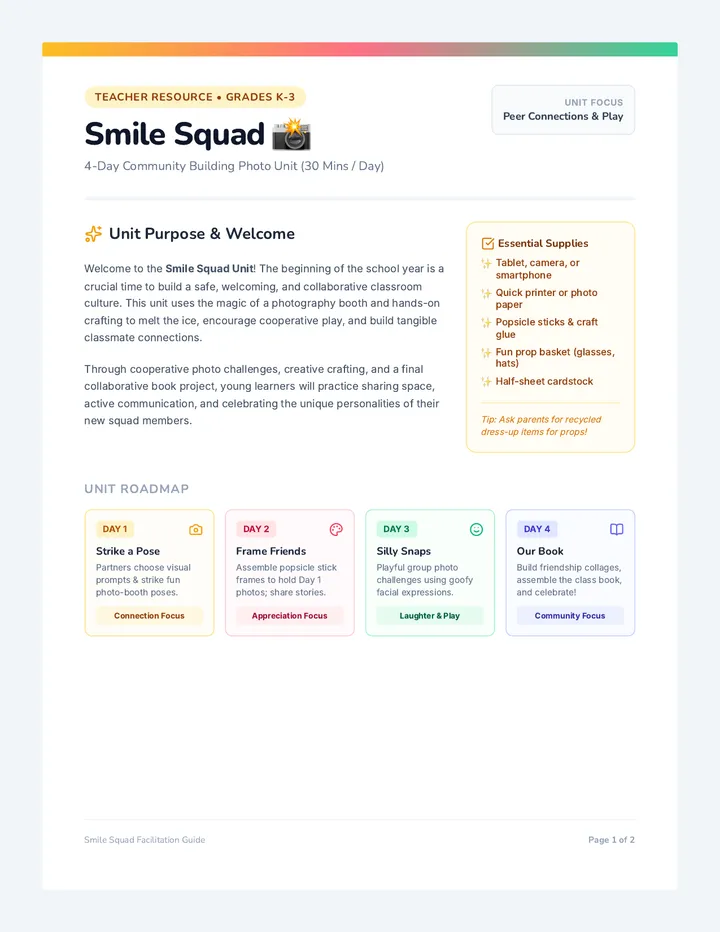
A four-day, 30-minute creative unit for grades K-3 designed to foster early-year friendships and community bonds. Students participate in cooperative photo booth sessions, craft personalized frames, and design a collaborative class book.
An advanced conversational social skills lesson focused on active listening, turn-taking, and professional conversation formulas like Agree, Add, Ask.
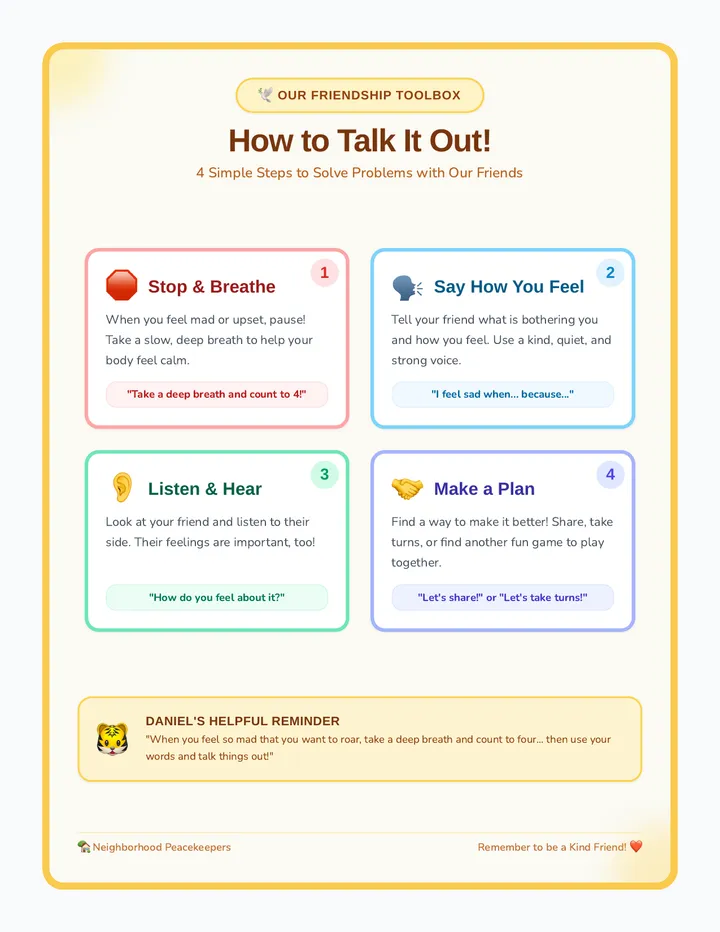
A bright, highly visual, and student-friendly printable anchor chart for 1st graders outlining four simple steps to resolve conflicts peacefully, inspired by the neighborhood 'talk it out' theme.
A 3-part Social-Emotional Learning journey that empowers students to map their emotional landscapes, decode personal triggers, and construct a personalized self-regulation toolkit using mindfulness practices.
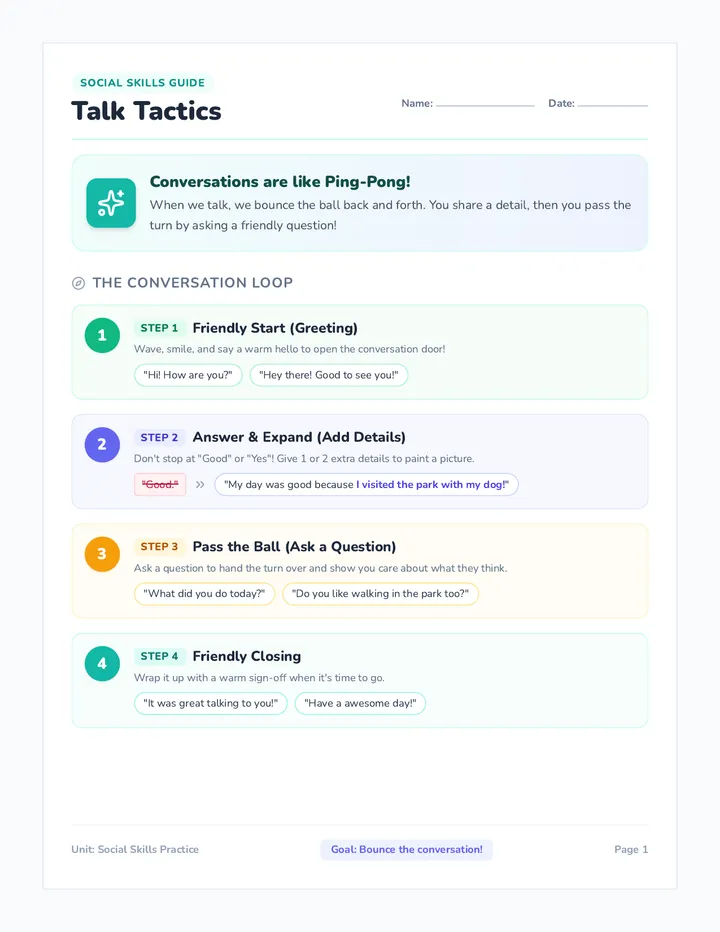
A practical, step-by-step social skills lesson focused on helping students hold engaging conversations, share details, and ask thoughtful follow-up questions using visual supports.
A three-day back-to-school sequence focused on welcoming students to the aftercare room and building a supportive community. Students introduce themselves, design custom name badges, complete creative 'Getting to Know Me' coloring sheets, and celebrate with a shared movie screening and treats.