Staying Safe Lesson Plan STAYING SAFE, STAYING SMART
Tier 1 Staff Training | Kindergarten
30 Minutes
Safety Blueprint
Objective
Staff will be able to identify unsafe student situations and implement strategies to ensure their own safety while de-escalating student behaviors, focusing on non-physical interventions.
Why It Matters
Ensuring staff safety is paramount, as it directly impacts their ability to effectively support students and maintain a secure learning environment for everyone.
Preparation
Review Materials (10 min)
• Study the Slide Deck
• Internalize the Script
• Print Discussion Guides & Cool Downs
Materials Checklist
Smart Slides Deck
Facilitation Script
Discussion Guide
Cool Down Sheets
Audience
Kindergarten Instructional Staff
Instructional Sequence
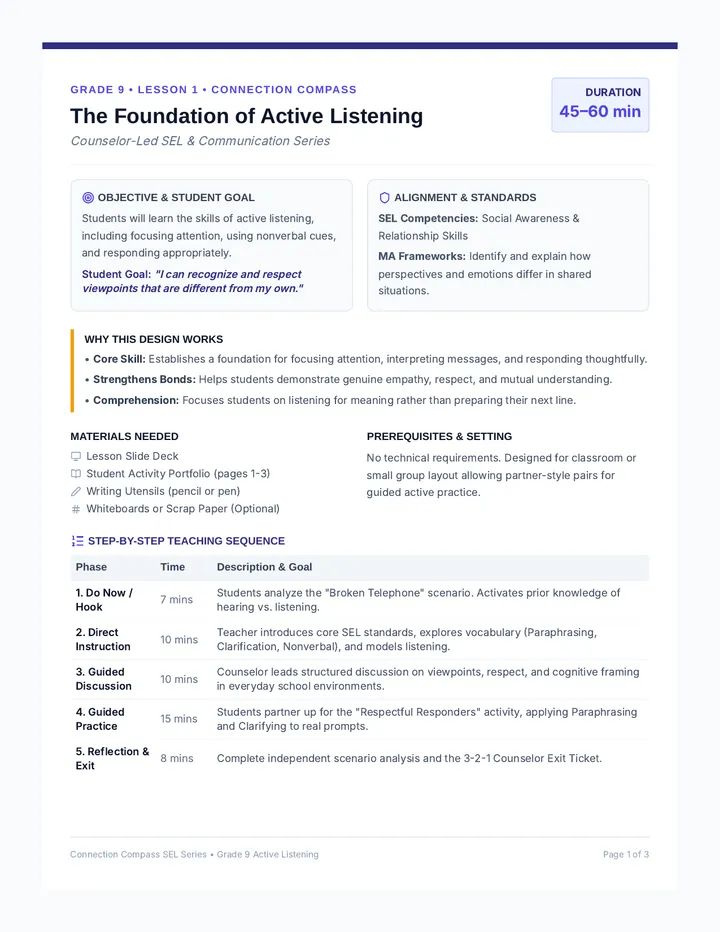
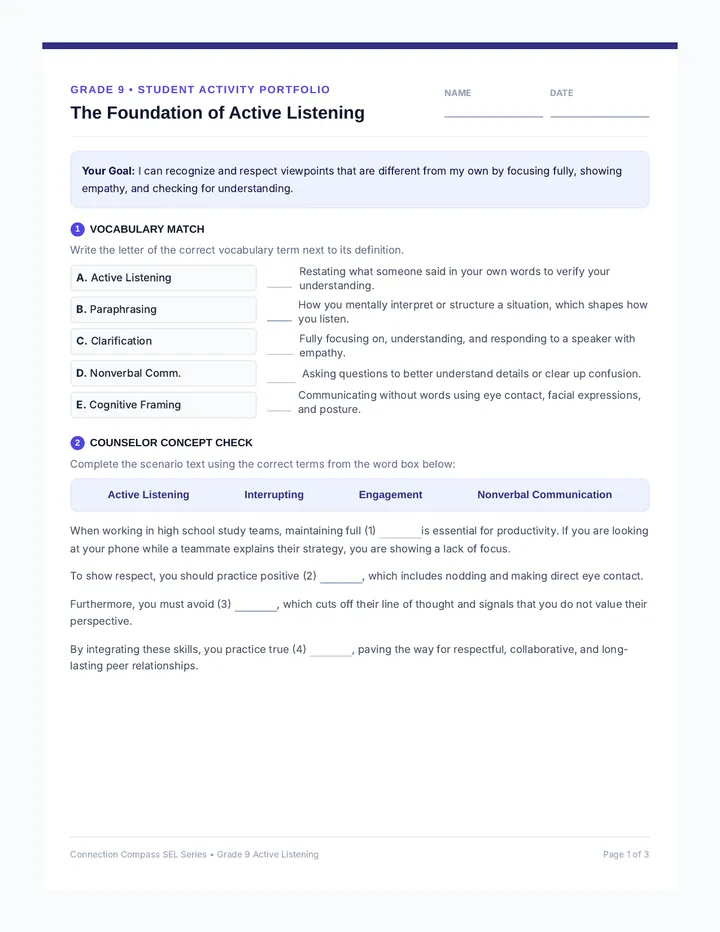
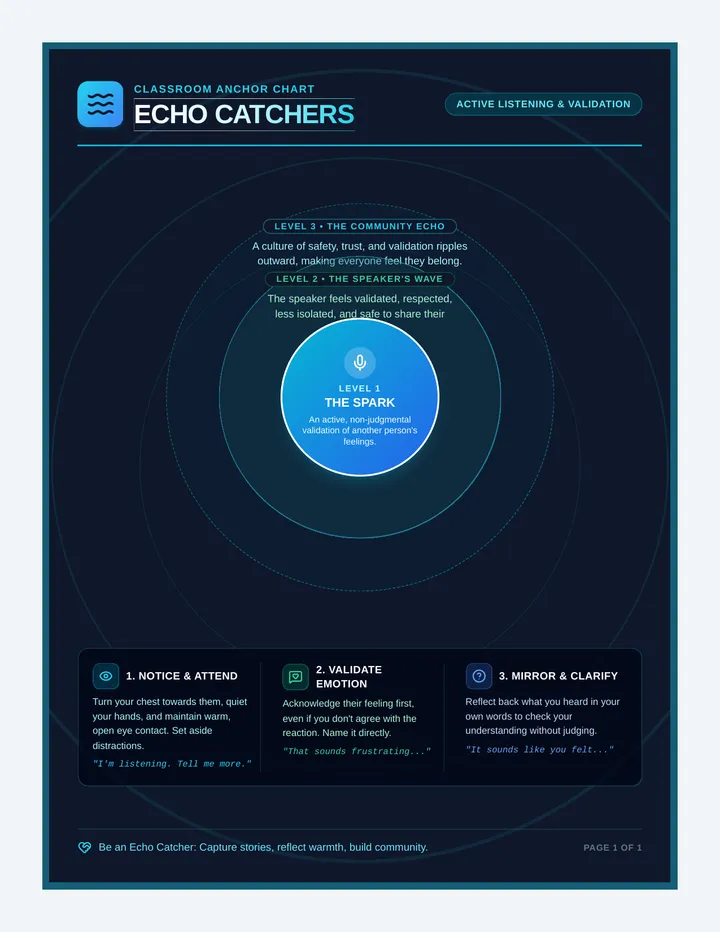
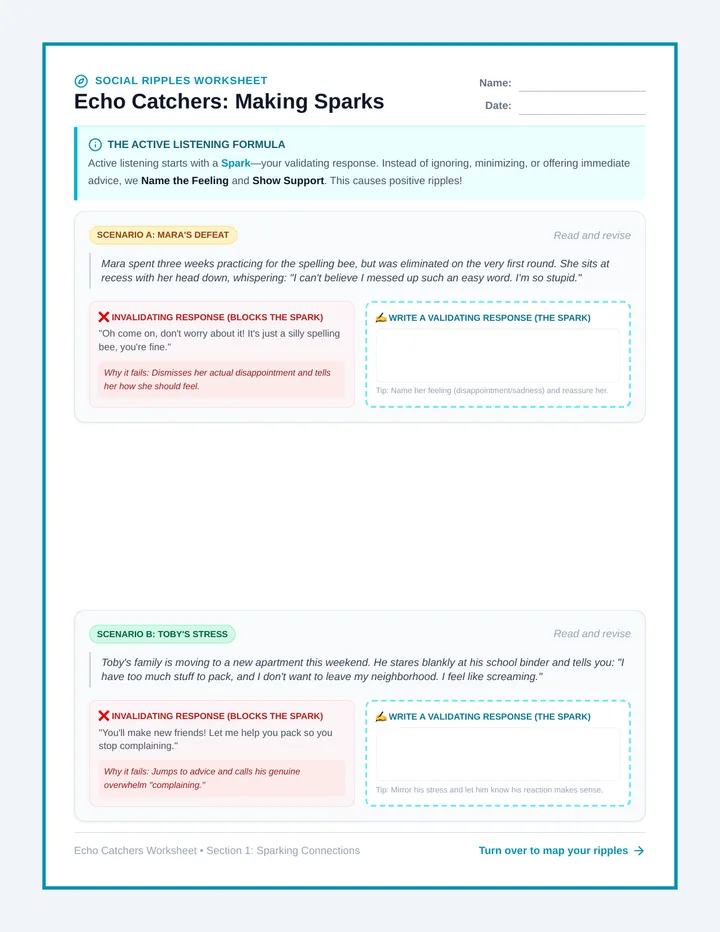
Introduction & Warm-Up
5 MIN
• Present Staying Safe, Staying Smart Slide Deck and follow the Script .
• Brainstorm: "What does 'safety' mean in our classroom, for both students and staff?" Record key themes on a whiteboard.
Understanding Unsafe Situations
10 MIN
• Define "unsafe situations" as behaviors involving physical harm to self or others.
• Analysis: Present throwing or hitting scenarios. Ask staff to share immediate reactions and "the why" behind their urge to intervene directly.
Prioritizing Safety & Strategies
10 MIN
• Introduce the core principle: Your safety first. Discuss how physical intervention can escalate risks.
• Review Smart Strategies: Maintaining distance, verbal de-escalation, calling for support, and clearing a perimeter.
• Use the Discussion Guide to apply these to the previous scenarios.
Practice & Wrap-Up
5 MIN
• Micro-Roleplay: Practice stepping back and using calm verbal cues.
• Reflect: Distribute Cool Down sheets for individual reflection on one key safety takeaway.
• Reinforce teamwork and communication as final thoughts.
Staying Safe Slides Deck Staff Safety Training
STAYING SAFE,
STAYING SMART
Prioritizing Your Safety in Challenging Classroom Moments
Safe Response Blueprint
When Things Get Tricky...
What moments make you want to jump in?
"They are throwing things!"
"They are being unsafe!"
"I need to move them!"
Think & Share
The Golden Rule
SAFETY FIRST!
Your personal safety is paramount .
You cannot help if you are hurt .
Direct intervention can sometimes escalate a situation.
Protect yourself so you can protect others.
Smart Strategies for Safety
1
Maintain Distance
Create physical space between yourself and the student.
2
Verbal De-escalation
Use a calm, low, and steady voice.
3
Call for Assistance
Know your school's specific protocol for support.
4
Protect Others
Guide other students to a safe, designated area.
5
Observe & Assess
Understand the "why" and "what" before acting.
These strategies empower you to respond effectively without escalating.
Applying Our Strategies
Scenario 1: Student throwing objects.
Scenario 2: Student hitting classmates.
Scenario 3: Non-compliance / Needing to move.
Discussion
• How do you apply 'Safety First' to each?
• What is your safe, smart response?
Teamwork Makes the
Dream Work
Safety is Foundational
De-escalation over Confrontation
Utilize Your Support System
We are all in this together!
Please complete your Safety Check Cool Down sheet.
Staying Safe Script Manual FACILITATOR SCRIPT
Staying Safe, Staying Smart
Internal Use Only
Kindergarten Staff Training
Introduction & Warm-Up
SLIDE 1 | 5 MINUTES
"Good morning, everyone! Thanks for being here. Today, we're going to dive into a really important topic: 'Staying Safe, Staying Smart.' This isn't just about student safety, but YOUR safety too, especially during those challenging classroom moments. Our goal is to make sure you feel confident and prepared when those moments arise."
"To start, when you think about 'safety' in our Kindergarten classroom, what comes to mind? What does it mean for our students, and for us as staff? Let's take a quick minute to share a few ideas."
Facilitation Note:
Allow 1-2 minutes for brief sharing. Record key themes on a board if available. Reiterate that safety is foundational to all learning.
Understanding Unsafe Situations
SLIDE 2 | 10 MINUTES
"Now, let's talk about those moments when things get tricky. We've all been there. A student might be having a really hard time, and their behavior becomes unsafe. This could look like throwing objects, hitting another student, or refusing to comply when asked to move."
"When you encounter a situation where a student is, for example, hitting another student, what are some of the immediate thoughts that go through your head? What do you FEEL you need to do? I often hear things like, 'They are throwing things, I need to stop it!' or 'They are being unsafe, I must intervene!' or 'I need to move them to keep others safe!'"
"These are very natural and valid instincts. We care about our students and want to protect them. But let's pause and consider: what are the immediate dangers TO YOU if you rush into a situation without a plan? What are the potential risks if you try to physically intervene with a student who is actively engaged in unsafe behavior?"
Facilitation Note:
Allow 2-3 minutes for sharing. Validate their feelings of care for students while gently guiding them toward the idea of potential personal risk (injury, escalation, legal/professional liability).
Safety & De-escalation
SLIDES 3-4 | 10 MINUTES
"(Slide 3) This brings us to our golden rule for today: Your personal safety is paramount. This is not selfish; it’s essential. You cannot effectively help a child or protect other students if you are hurt. Sometimes, our direct physical intervention, even with the best intentions, can unintentionally escalate a situation. We want to de-escalate, not escalate."
"(Slide 4) So, how do we prioritize our safety while still responding effectively? We use smart strategies. Let's look at a few key approaches:"
This is your first line of defense. Create space between yourself and the student who is dysregulated. This gives you time to assess and react.
Safety First Discussion Guide Worksheet SAFETY FIRST DISCUSSION GUIDE
Strategic Responses for Challenging Classroom Moments
Core Principle
"Your Safety First! Use these scenarios to practice applying safe and smart strategies to ensure both staff and student well-being."
1
The Projectile Problem
Description: A student in the block corner begins to rapidly throw blocks across the room, some narrowly missing other students. Your first instinct is to rush in and grab the blocks.
What are your immediate safety concerns for yourself and other students?
How can you maintain a safe distance?
What verbal cues could you use?
2
The Hitting Hurt
Description: You see a student hitting another student repeatedly during free play. Your immediate thought is, "They are being unsafe, I need to stop them!"
Potential risks of physical intervention?
Primary goal (safety first)?
Describe your step-by-step safe response to protect the other student.
3
The Refusal to Move
Description: A student is highly agitated and refuses to move from a dangerous area (blocking an exit). They are shouting, "I won't move!" You feel you need to move them right now.
Why is physical movement risky here?
What alternatives exist if they refuse?
Effective verbal de-escalation strategies?
How does assistance fit into this plan?
Safety Check Cool Down Reflection Safety Check
Cool Down Reflection
Staff Name:
1 What is ONE key takeaway or strategy you will commit to using to ensure your own safety when a student situation becomes challenging?
2 Why is this particular strategy important to you and your role in the Kindergarten classroom?
"Supporting our students starts with keeping ourselves safe."
Blueprint for Classroom Safety